
New River
Commercial HVAC Maintenance in New River, AZ.
- (480) 771-3252
- Serving the entire Phoenix metro — we come to you
- Office: Mon–Fri 8:00 AM – 5:00 PM · 24/7 emergency service
- 2-year workmanship warranty · 1-year parts warranty
- Veteran-owned & operated · residential + commercial
- 66 five-star Google reviews
Preventive maintenance is the quiet paperwork that keeps a hot afternoon from becoming a tenant meeting. In New River, where commercial buildings can sit on larger desert lots with dusty approaches and fewer neighboring services nearby, documented HVAC care is often the difference between a manageable service note and a cooling failure that disrupts rent, staff, customers, or appointments. The climate gives equipment long duty cycles, while unpaved drives and open desert exposure load coils and filters faster than many owners expect. A small retail strip, office suite, service business, or restaurant near the north edge of Anthem may not have a full-time facility department, but it still needs records, priorities, and a plan before July tests every weak capacitor, belt, motor, and drain. Many New River operators like to handle problems directly, yet they also know that guessing at rooftop equipment is a poor use of a workday. Yeti Pros provides commercial HVAC maintenance in New River with scheduled visits, written findings, and straight recommendations. Yeti Pros is veteran-owned, AZ ROC #363372 · ROC #363423. To set up maintenance or ask about service coverage, call (480) 771-3252.
ZIPs served: 85087
What HVAC Maintenance covers in New River.
Seasonal cooling checks
We inspect commercial systems before peak summer load, focusing on airflow, coils, electrical components, motors, drains, controls, and visible wear. The goal is to catch weak points before New River heat turns a small maintenance finding into an occupied-space failure.
Rooftop unit maintenance
Package units need regular attention on dusty roofs and exposed sites. We check operating condition, coil cleanliness, electrical parts, belts where applicable, blower behavior, condensate issues, and control response, then document findings for owners, tenants, or facility managers.
Filter and airflow programs
Dust from desert lots and unpaved drives can load filters faster than expected. We help businesses create filter and airflow routines that fit the site, equipment, and occupancy so the system does not lose capacity from avoidable restriction.
Repair recommendations
When maintenance finds a failing part or unsafe condition, we separate observation from approved repair. You receive a written quote before work begins, with practical explanation of what is urgent, what can be planned, and what should be watched.
Documentation for managers
Commercial maintenance should leave a usable record. We identify equipment, note conditions, summarize work performed, and provide recommendations that help property managers, tenants, and business owners make decisions without relying on memory or vague service notes.
Multi-system scheduling
For properties with several systems, we coordinate maintenance around business hours, tenant access, roof access, and seasonal priorities. A planned schedule keeps units from being forgotten until the first high-load week exposes every neglected component.
What we see for HVAC maintenance in New River.
Commercial HVAC maintenance in New River is shaped by dust, distance, and heat. A unit serving a rural office, restaurant, small medical space, or service building may run for months with filters loaded from desert air and coils collecting fine debris from long drives and open lots. The system may still cool well enough in spring, then lose capacity when the first stretch of severe heat arrives. Maintenance is where those weak points show up early, before the call becomes an occupied-space complaint.
We also see properties without a centralized facilities team. The owner may be busy running the business, the tenant may be unsure who maintains the unit, and the landlord may only hear about the system when the indoor temperature rises. That creates a documentation gap. A maintenance visit should not just say “checked unit.” It should identify the equipment, note the condition, document the work performed, and call out problems that need approval. That record helps when multiple tenants, managers, or property owners share responsibility.
Newer subdivisions and commercial pockets near Anthem’s northern edge can have equipment that looks modern but still needs disciplined care. Newer units are not immune to dirty condenser coils, weak electrical components, clogged drains, poor filter discipline, or control settings that do not match operating hours. Older or custom properties may add their own concerns, including unusual access, patched ductwork, mixed equipment ages, and prior repairs that were never documented. A maintenance program has to meet the building where it is.
APS energy costs also make maintenance more than a comfort issue. A commercial unit that runs with dirty coils, poor airflow, or failing parts can draw more power while delivering less cooling. Demand and usage matter when a business is already paying to keep employees, customers, and equipment comfortable. Preventive work cannot eliminate every failure, but it can reduce preventable breakdowns, give managers a clearer budget picture, and keep emergency repairs from becoming the only HVAC strategy.
- 01 Airflow and static pressure
- 02 Electrical: capacitors, contactors, draws
- 03 Refrigerant-circuit behavior
- 04 Drains, safeties, and float switches
- 05 Thermostat, controls, and cycling
- 06 Ducts, returns, and room-by-room comfort
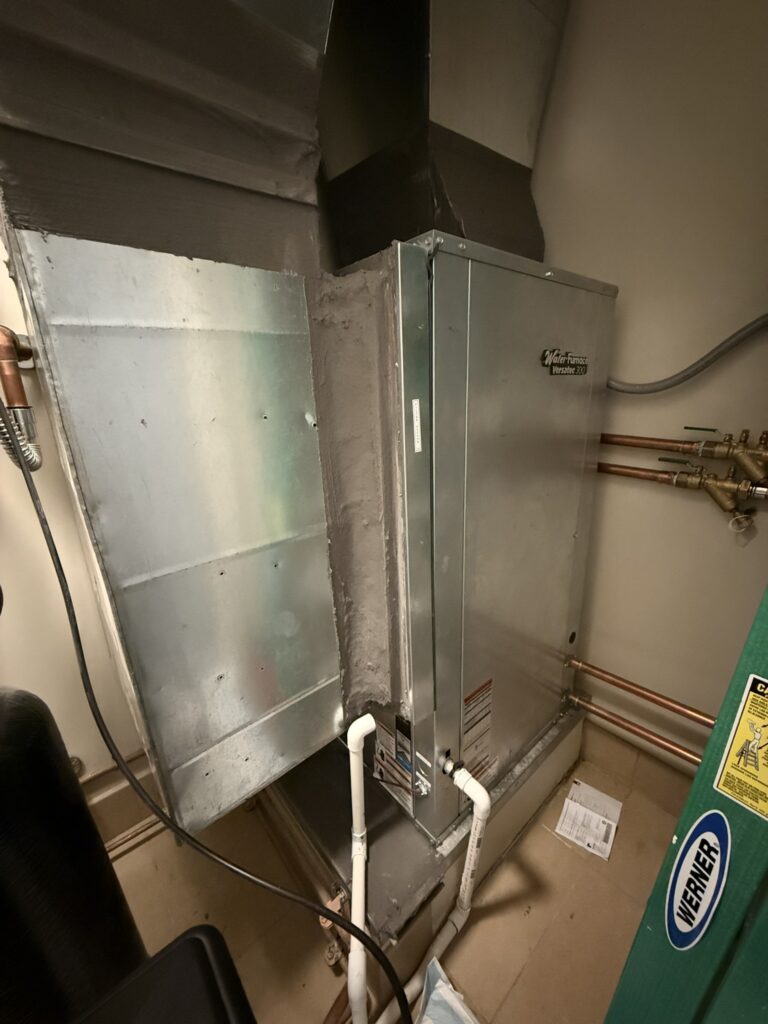
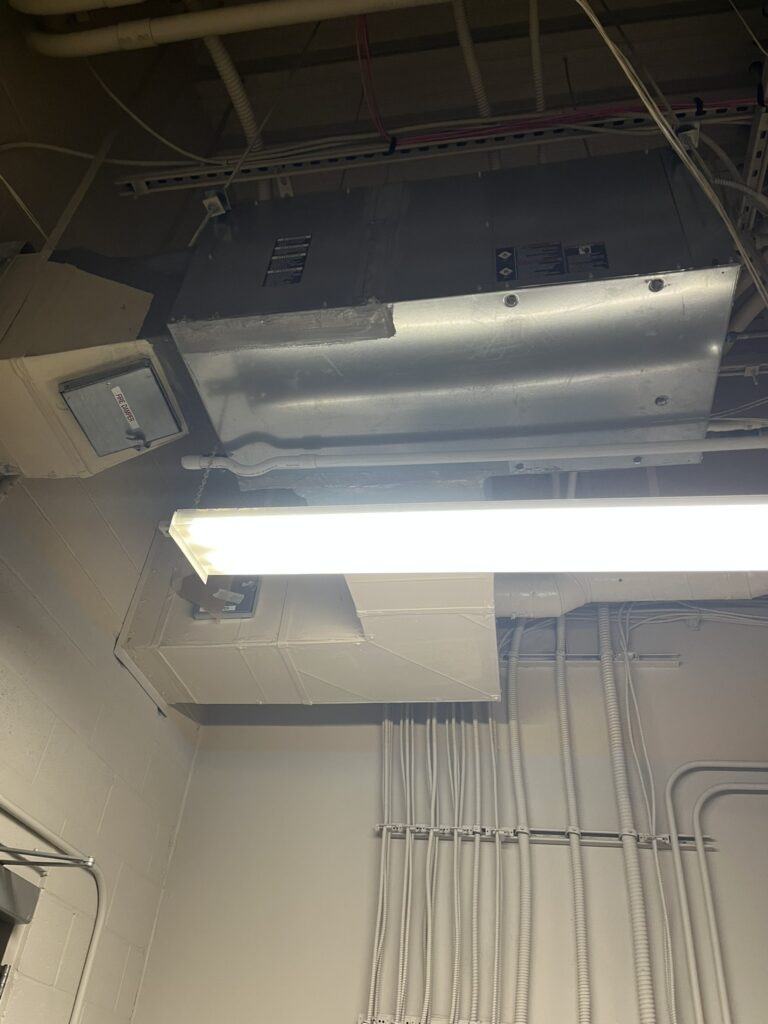
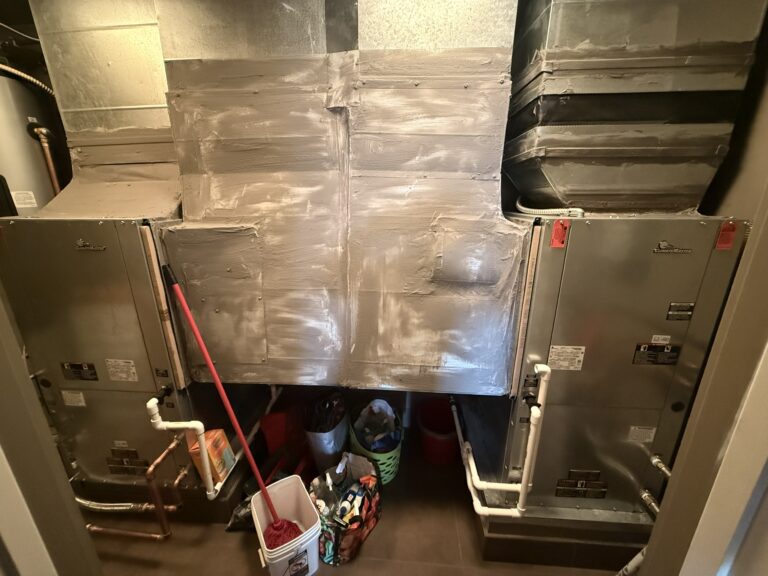
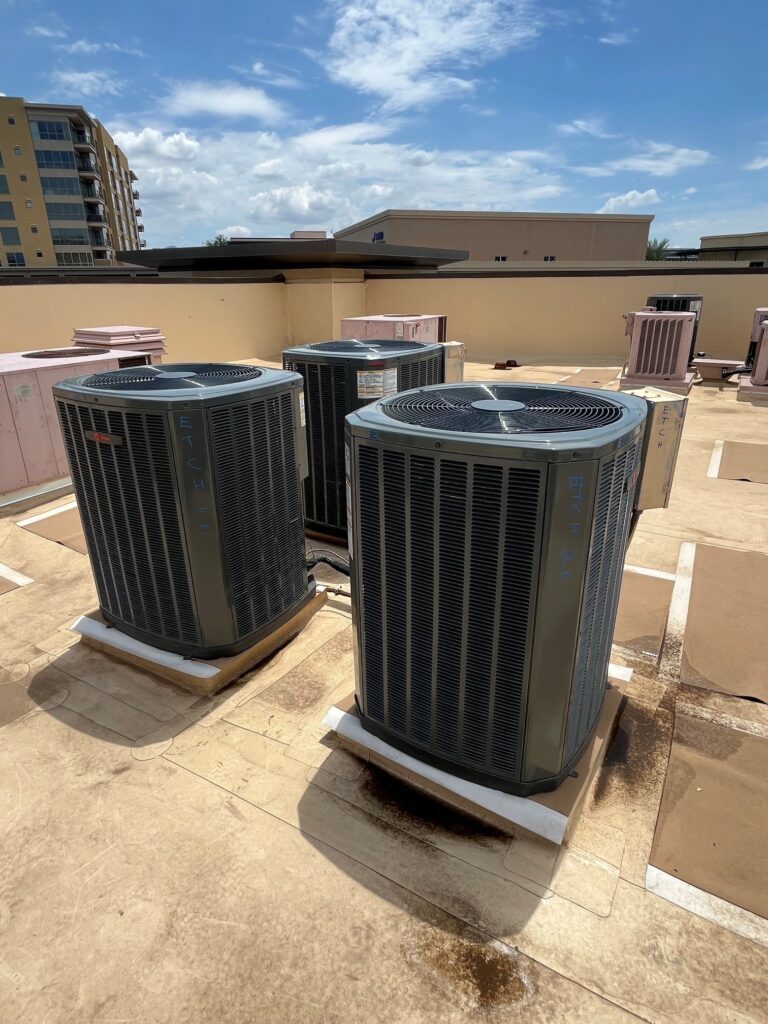
Commercial jobs we have documented.
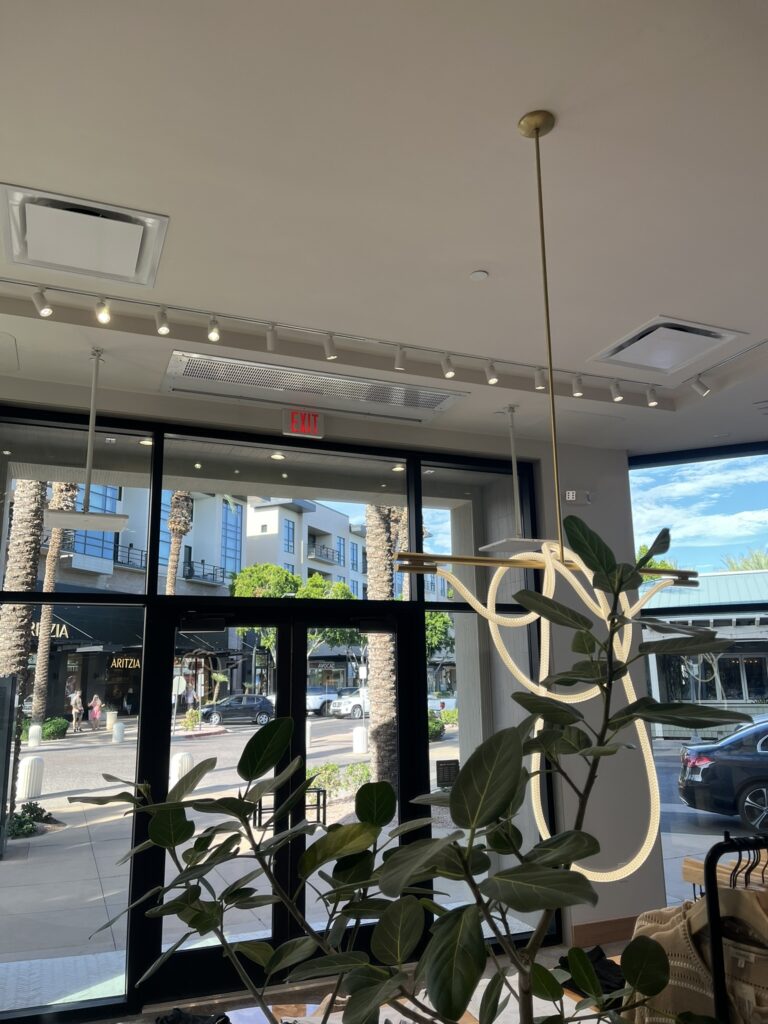
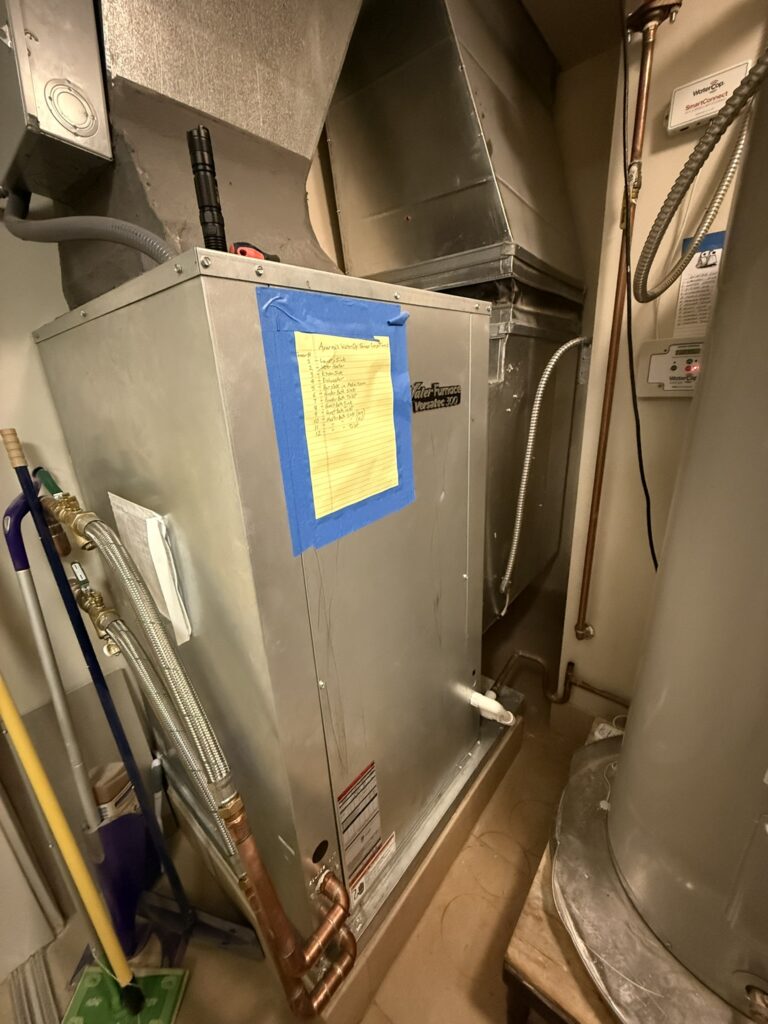
Photos from our own commercial projects across the Phoenix metro — equipment we installed, in buildings we service.
How the job typically runs.
We begin by identifying the equipment, access requirements, operating hours, tenant or manager contacts, and the level of documentation the property needs. Maintenance can be built around rooftop package units, split systems, controls, filters, coils, drains, electrical components, belts where applicable, and operating checks. The diagnostic or service-call fee is disclosed at booking when a service call is needed and credited toward approved repair work.
During a maintenance visit, the technician checks the system according to the equipment and season. Cooling-season visits focus on airflow, coil condition, electrical readings, motor operation, drains, thermostat or control behavior, and visible wear. When a repair is recommended, we provide a flat-rate written quote before work begins. The quoted number is what you pay unless we find something new and stop to re-quote.
After the visit, you receive documentation of findings and recommendations. That matters for businesses with off-site owners, multi-tenant spaces, or managers who need to justify budget decisions. Yeti Pros is a service-area business with no public street address; we come to you. Office hours are Monday through Friday, 8 to 5, and 24/7 emergency service is available when maintenance finds a problem too late or a unit fails after hours.
- 01 Booking, with the diagnostic fee disclosed
- 02 In-person diagnosis with real readings
- 03 Written flat-rate quote before work begins
- 04 The work: repair, install, or maintenance
- 05 Startup, documentation, and warranty handoff
Routine commercial HVAC maintenance usually does not trigger permitting, but maintenance can uncover conditions that do. Electrical changes, equipment replacement, roof penetrations, structural support issues, duct modifications, ventilation changes, or condensate corrections may require review by Maricopa County or the authority tied to the property. Yeti Pros performs its work to code and pulls the permits and inspections our own scope requires. Landlord or lease approvals, insurance decisions, and building-wide operational compliance stay with the property owner or operator — but licensed, code-compliant workmanship on what we install or repair is on us.
Yeti Pros is licensed under AZ ROC #363372 · ROC #363423. The Arizona Registrar of Contractors publishes the Minimum Workmanship Standards, and maintenance records are one way commercial owners keep mechanical work accountable. A clear service history can support warranty conversations, property management decisions, and capital planning without pretending that maintenance guarantees inspection, insurance, or future failure outcomes.
Pricing, financing & the 10% military & first responder discount.
Maintenance pricing depends on the number of systems, equipment type, access, filter needs, visit frequency, documentation requirements, and whether the property needs after-hours coordination. A small office with one split system is not the same as a multi-tenant building with several rooftop units. We discuss the property first, then quote a maintenance plan or repair scope in writing after the equipment is understood.
For repair work found during maintenance, the diagnostic or service-call fee policy is disclosed at booking when applicable and credited toward approved work. Repairs are quoted flat-rate in writing before they begin. Yeti Pros provides a 2-year written workmanship warranty, and repair parts carry a 1-year manufacturer parts warranty. Financing is available for qualifying work, and our 10% military, veteran & first responder discount is available for qualifying customers.
- 01 Flat-rate written quote after an in-person look
- 02 Diagnostic fee disclosed at booking, credited to the repair
- 03 Financing available on replacements
- 04 2-year workmanship warranty; 1-year manufacturer parts warranty
- 05 10% military, veteran & first responder discount
Why a licensed HVAC contractor matters.
FAQs: Commercial HVAC Maintenance in New River, AZ.
How often should a New River business schedule HVAC maintenance?
Most commercial systems should be checked at least twice a year, with cooling-season attention especially important before summer. Some New River sites need more frequent filter or coil attention because dust from unpaved drives, open lots, and desert wind can load equipment quickly. Restaurants, medical offices, multi-tenant buildings, and spaces with long operating hours may also need tighter schedules. We recommend frequency after seeing the equipment, access, and actual business use.
What do you include in commercial HVAC maintenance?
The exact checklist depends on the equipment, but typical cooling maintenance includes airflow review, filter condition, coil condition, electrical component checks, motor operation, drains, thermostat or control behavior, visible wear, and operating observations. Rooftop units may also require attention to belts, panels, access, and weather exposure. We document what was checked, what was corrected during the visit, and what needs a written repair quote before additional work proceeds.
Can maintenance prevent every commercial AC breakdown?
No, and any contractor promising that is overselling. Maintenance reduces preventable failures by catching dirty coils, poor airflow, weak electrical parts, drain issues, control problems, and visible wear before they become larger breakdowns. It cannot guarantee that a compressor, motor, control board, or power-related component will never fail. The practical value is fewer surprises, better documentation, clearer budgeting, and faster decision-making when something does go wrong.
Do you provide written maintenance records?
Yes. Written records are central to commercial maintenance because owners, tenants, property managers, and facility contacts may all need the same information. We document the equipment, visit findings, work performed, recommendations, and quoted repairs when needed. That record helps with budget planning, warranty questions, lease conversations, and deciding whether repeated repairs are pointing toward replacement. It also keeps maintenance from becoming a vague line item with no operational value.
Can you maintain HVAC systems for multi-tenant properties?
Yes. We work with multi-tenant commercial properties where several units, tenants, thermostats, and approval paths are involved. The important step is identifying which equipment serves which space and documenting the condition of each system. We can coordinate access with the property contact and provide recommendations that separate tenant comfort complaints from mechanical failures. That helps managers respond with facts instead of guessing which unit belongs to which suite.
What happens if maintenance finds a repair?
If we find a needed repair, we explain the issue and provide a flat-rate written quote before beginning that repair. The quoted number is what you pay for the approved scope unless something materially different is discovered and we stop to re-quote. Minor maintenance adjustments may be handled within the visit when they are part of the approved service, but component replacement or larger work is documented and authorized first.
Other services we run in New River.
HVAC Maintenance in nearby cities.
Looking for something else nearby? All HVAC services in New River
Every major brand, serviced and installed.
Phoenix metro: Most days a tech is already working somewhere in the Valley, so same-day appointments happen when the schedule allows. After-hours emergencies are dispatched when a licensed tech is available — a real person answers and tells you the ETA on the call.
Call (480) 771-3252Request an estimate.
No pressure, no door knockers. We look at the HVAC system, tell you what it needs (and what it doesn’t), and put the number in writing.