
Phoenix Metro
Commercial RTU Repair in Phoenix.
- (520) 556-8929
- Serving the entire Phoenix metro — we come to you
- Office: Mon–Fri 8:00 AM – 5:00 PM · 24/7 emergency service
- 2-year workmanship warranty · 1-year parts warranty
- Veteran-owned & operated · residential + commercial
- 23 five-star Google reviews
Commercial jobs we have documented.
Photos from our own commercial projects — equipment we installed, in buildings we serviced.
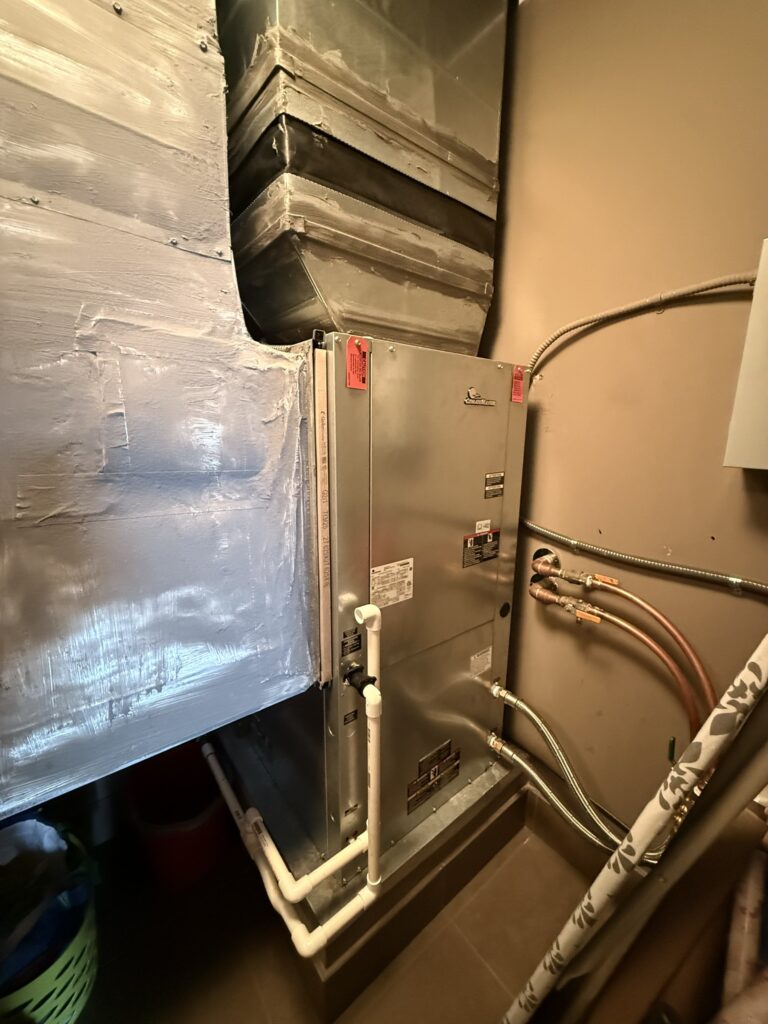
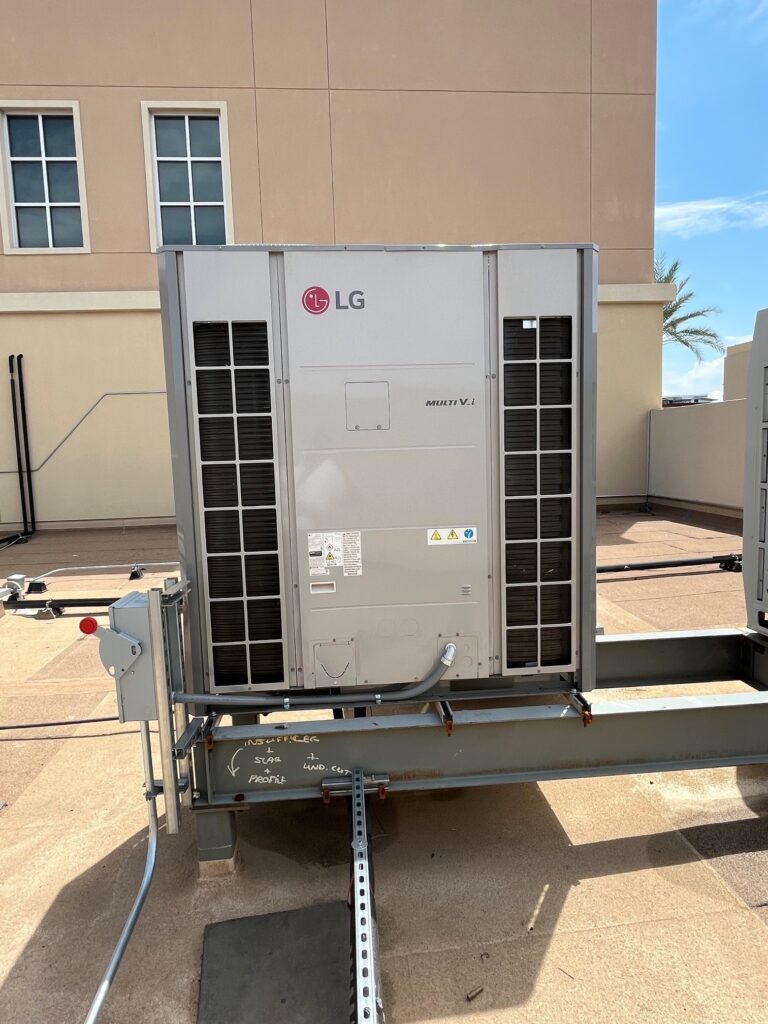
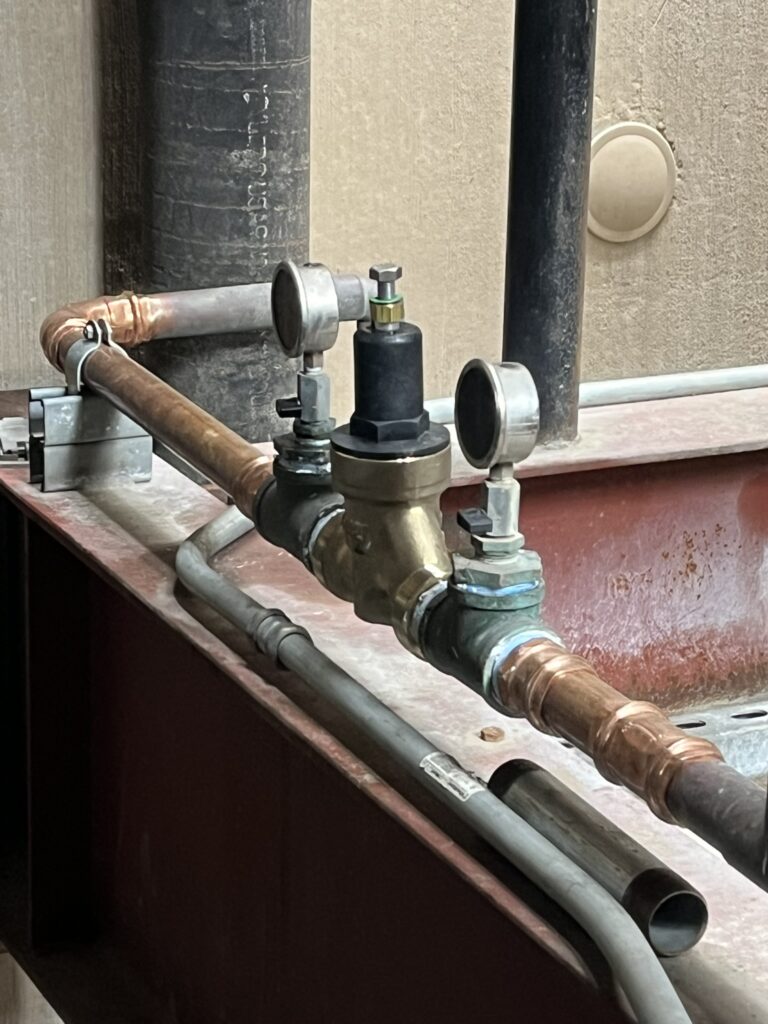
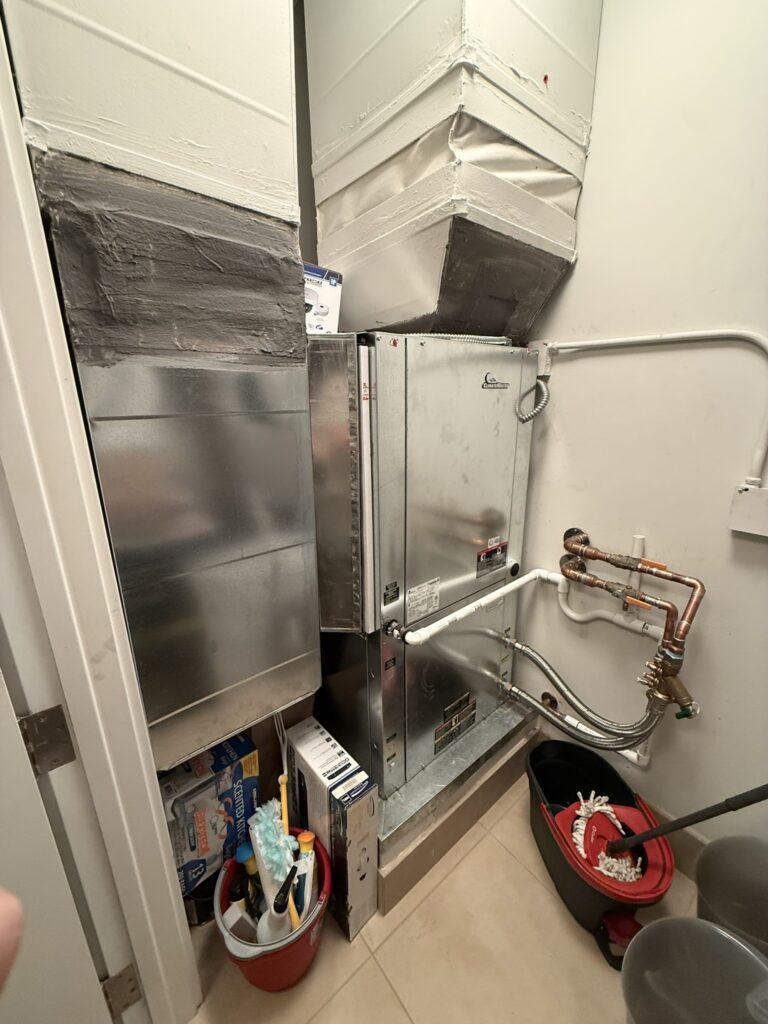
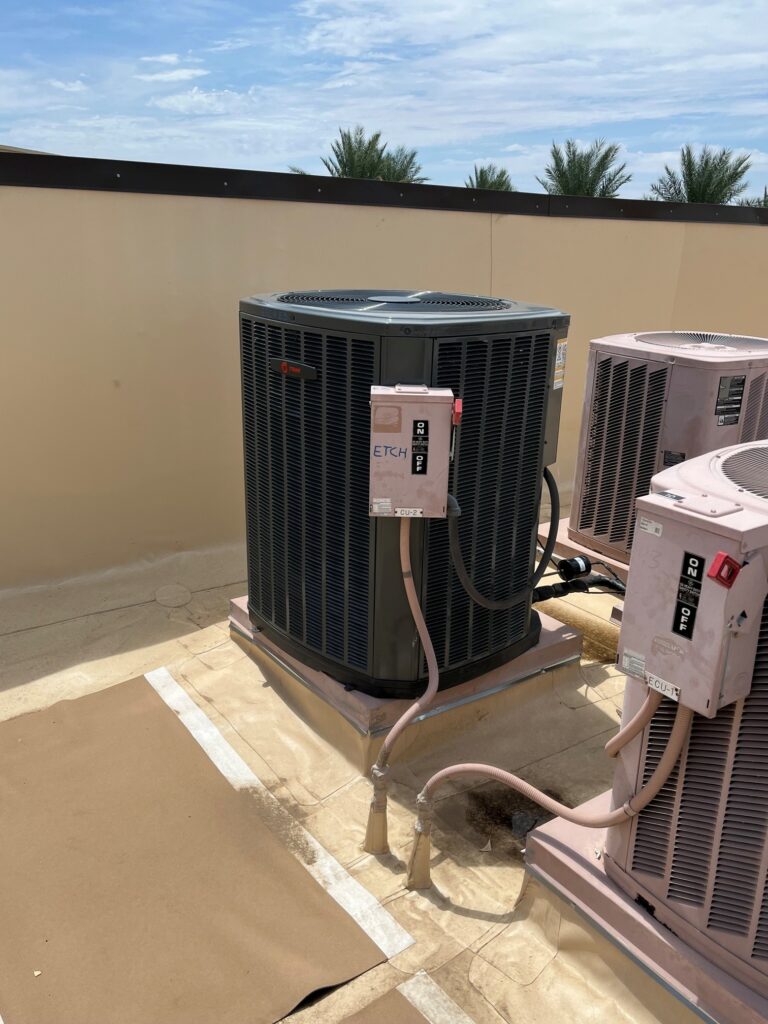
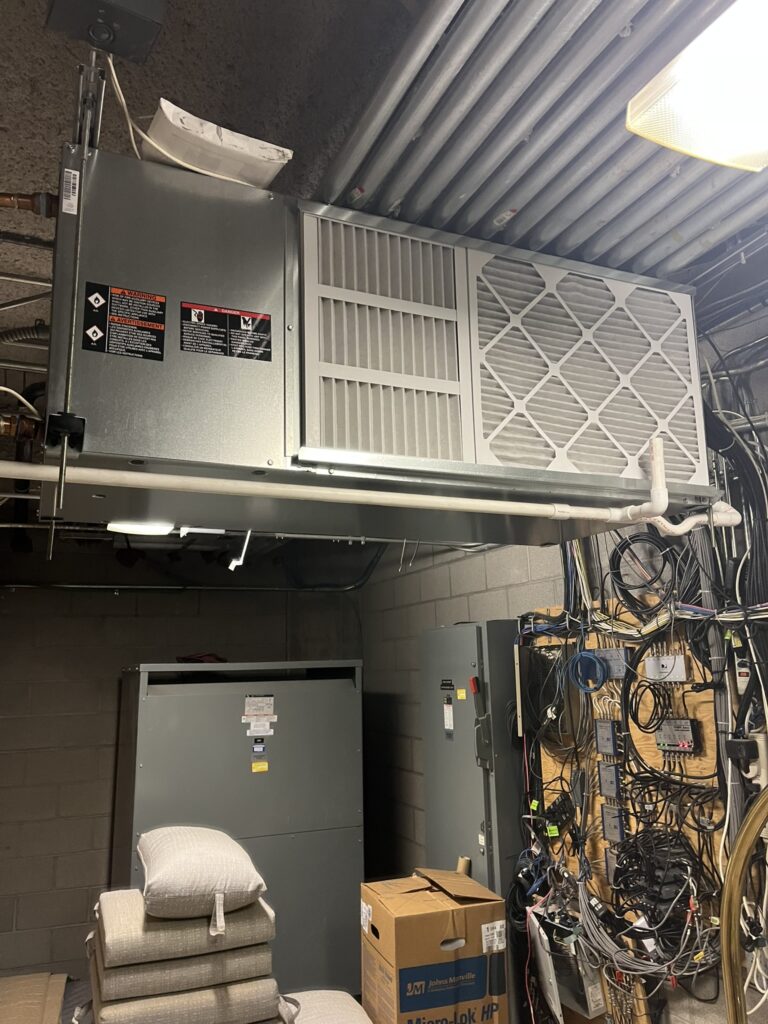
Packaged rooftop units carry most of the cooling load in the Valley’s commercial corridors, and when one dies in July, the tenants under it feel it within the hour. Yeti Pros handles commercial RTU repair in Phoenix and across the metro — component-level diagnosis, economizer service, gas-heat section work, and straight answers when a unit is past saving. Veteran-owned and operated under ROC #363372 · ROC #363423, with a real person answering the emergency line 24/7. Call (520) 556-8929 and tell us which unit is down.
The workhorse on every Valley commercial roof
Drive any commercial strip in Phoenix, Mesa, Chandler, or Glendale and look up: rows of packaged rooftop units cooling strip malls, professional offices, retail pads, churches, and light industrial space.
The RTU’s appeal is the same reason its failure hurts — everything lives in one cabinet on the roof. All packaged together, all exposed to Arizona weather, all representing a single point of failure for the space below. When the cabinet has a problem, the suite has a problem.
- Compressors
- Condenser and evaporator coils
- Blower
- Controls
- Often a gas heating section
That concentration is why we treat rooftop package equipment as a core service line under our commercial HVAC operation rather than a sideline.
What a Phoenix roof does to rooftop equipment
Manufacturers rate this equipment for outdoor duty, but a Valley rooftop is outdoor duty on hard mode.
Summer deck temperatures on dark single-ply and foam roofs push past 160°F, causing every capacitor, contactor, and control board in the cabinet to spend months soaking in heat far beyond its design assumptions.
Relentless UV embrittles wiring insulation, gasketing, and damper seals.
Haboob dust mats condenser coils and packs economizer intakes in a single storm.
Grid disturbances take out boards and variable-frequency drives.
Microburst winds pry at access panels and flue hoods.
A ten-year-old Phoenix RTU has lived a harder life than a fifteen-year-old unit almost anywhere else.
Common RTU repairs we make in Phoenix
Most of the calls we run trace back to a familiar cast of failed components:
- Capacitors and contactors. Heat is the enemy of both, and a July rooftop cabinet is the worst place a capacitor can live. Bulged caps and pitted, chattering contactors top our invoices — inexpensive parts that take whole suites offline.
- Condenser fan motors. Bearings dry out and windings cook, especially on motors fighting a dirty coil. A dead condenser fan drives head pressure straight to compressor trips.
- Compressors. The expensive one. Some compressor failures are genuine end-of-life; plenty are the final symptom of something cheaper — fouled coils, low airflow, or a slow leak. We find the root cause before quoting, because a compressor replaced into the same conditions just schedules the next failure.
- Belt and pulley wear. Belt-drive blowers still power a huge share of the Valley’s older RTU fleet. Glazed belts, worn sheaves, and drifting alignment quietly cut airflow long before the belt actually snaps.
- Boards and VFDs. Monsoon-season electrical events kill more control boards and drives in August than fail all winter. We carry surge-related failure patterns in mind whenever a unit goes dark after a storm.
- Ignition and gas-heat sections. Igniters, flame sensors, pressure switches, and inducer motors on the heating side sit idle all summer, then get asked to perform in December. We test the full ignition sequence and inspect heat exchangers on every gas-section call.
The stuck economizer: your roof’s silent energy waster
Economizers deserve their own paragraph because they fail silently.
Stuck Open
When the damper linkage seizes or the actuator dies stuck open, the unit pulls in 110°F outside air and mechanically cools it all summer. Comfort complaints stay minimal, so nobody investigates, while the electric bill absorbs the damage.
Stuck Closed
You lose free cooling in the mild months and can starve the space of ventilation air.
Field studies routinely find most installed economizers not working as designed, and Valley roofs are no exception. Every RTU we service gets its damper stroke, actuator, and sensor logic actually exercised — not just glanced at.
Multi-unit fleets: labeling, history, and triage
Most of our commercial customers don’t have an RTU — they have nine, or forty across three properties. Managing that fleet well starts with boring discipline:
Every unit is numbered and tagged.
Every serial is recorded.
Every repair is logged against the specific asset instead of a vague “HVAC service” line.
When we take on a multi-unit roof, we build that asset list on the first visit, noting age, refrigerant type, and condition per unit.
We report against the asset list from then on.
This discipline means “Unit 12 is down” becomes a dispatch instruction instead of a scavenger hunt, repeat offenders reveal themselves in the history, and when capital planning season comes, you’re ranking units by documented condition rather than guessing.
How an RTU service call runs
The dispatch fee is disclosed up front when you book, and credited toward the repair when you approve work.
On the roof, the technician diagnoses to the failed component, verifies the root cause behind it, and writes a flat-rate quote before touching a wrench.
Refrigerant work is performed and documented by EPA 608-certified techs.
After the repair, we run the unit under real load and confirm temperature split, amp draws, and pressures before climbing down, because a repair that only works at 8 a.m. isn’t a repair in Phoenix.
Everything we do is backed by our written warranty, over and above the Minimum Workmanship Standards that Arizona’s ROC requires of every licensed contractor.
If the failure has your space unusable right now, our 24/7 emergency HVAC line moves you to the front of the day.
Repair or change-out? We’ll show you honest math
Not every RTU should be repaired, and we’d rather lose a repair ticket than sell you a part your unit will outlive by a month.
Factors Pushing Toward Replacement
- Units past the 15-year mark in this climate.
- R-22 systems where refrigerant costs climb every season.
- Compressors failing on equipment with rusted cabinets and tired coils.
- Repair quotes stacking up year over year on the same serial number.
Commercial Change-Out Project Scope
A change-out on a commercial roof is a logistics project that includes:
- Crane scheduling
- Curb adapters when the new footprint doesn’t match the old curb
- Gas and electrical reconnection
- Permits
- Startup documentation
We manage all of this through our commercial installation team. You’ll get the repair number and the replacement number side by side, in writing, and the decision stays yours.
Maintenance is cheaper than a crane
Almost every emergency we run in July was preventable in April. Here are key maintenance activities and their benefits:
Before monsoon season, this protects compressors from the head pressures that kill them.
These catch drivetrain wear while it’s a scheduled fix instead of a Saturday failure.
This keeps the silent energy waster honest.
These find the swollen capacitor before it strands a tenant.
That’s the whole argument for a planned maintenance contract: predictable small costs replacing unpredictable big ones, plus priority dispatch when the Valley’s first heat wave takes down half the roofs in your zip code. Our commercial HVAC maintenance page covers what a visit actually includes, line by line.
Veteran-owned, metro-wide
We run RTU calls across the entire Phoenix metro, including:
- Phoenix
- Scottsdale
- Tempe
- Mesa
- Gilbert
- Chandler
- Glendale
- Peoria
- Surprise
- Goodyear
- Avondale
- Queen Creek
- And everywhere between
Yeti Pros is veteran-owned and operated, and the habits carry over:
- Show up when promised
- Work to standard
- Document everything
For the people behind the buildings — owners, engineers, and staff who served — our 10% military, veteran & first responder discount applies on the residential side, for their own homes.
RTU repair questions Phoenix facility managers ask
How fast can you get to a down rooftop unit?
Emergency calls are answered by a live person 24/7 and dispatched by severity — an occupied medical suite at 90°F outranks a vacant unit. Maintenance-contract customers hold priority in the queue, which matters most during the first 110°F week when demand spikes Valley-wide.
Do you repair economizers, or just disable them?
We repair them — actuators, linkages, sensors, and controls. Disabling a broken economizer is common in this market because it silences complaints, but it locks in higher energy bills permanently. We’d rather fix the thing that was designed to save you money.
The unit runs, but the space never gets cool. What’s likely?
The classic Phoenix trio: a fouled condenser coil strangling capacity, a slipping blower belt cutting airflow, or an economizer stuck open feeding 110°F air into the return. One diagnostic visit sorts out which you have.
Is a 17-year-old R-22 unit worth repairing?
Usually only for small, cheap failures that buy planning time. Major components on R-22 equipment rarely pencil out, since reclaimed refrigerant keeps getting pricier and the rest of the unit is equally aged. We’ll quote both paths honestly and let the numbers argue.
Which brands do you service?
All the majors found on Valley roofs — Trane, Carrier, Lennox, York, Daikin, Rheem, Goodman, and the rest. Packaged rooftop architecture is similar across brands; what matters is diagnosing to the component.
Can you handle every unit on our roof under one agreement?
Yes — that’s the ideal setup. One contract covering the full fleet, each unit tagged and tracked, with unified condition reporting. Multi-site portfolios get the same treatment with consolidated scheduling and a single point of contact.
What should I have ready when I call?
The site address, the unit number or its location on the roof, what the space is reporting (no cooling, weak cooling, odd noise, breaker trips), and roof access details. Ten seconds of information often saves an hour on site.
Do you provide documentation for landlords or corporate?
Every job closes with a written service report — findings, work performed, readings, and photos where useful — plus EPA 608 refrigerant documentation when applicable.
RTU down or limping? Call (520) 556-8929 for commercial RTU repair anywhere in the Phoenix metro — veteran-owned, flat-rate in writing, ROC #363372 · ROC #363423.
Permits and inspections
Most repairs are ordinary service work; bigger scopes can involve city permitting. We perform our work to code, pull the permits our scope requires, and put what we did in writing.
What's covered
Workmanship is covered for two full years, in writing, and repair parts carry a 1-year manufacturer parts warranty — we document installs and repairs so those claims stay simple to make
Why a licensed HVAC contractor matters.
Commercial RTU Repair in Phoenix, city by city.
Every city below has its own local page for this service — local FAQs, utility territory, housing stock, and dispatch reality included.
Every major brand, serviced and installed.

Phoenix metro: Most days a tech is already working somewhere in the Valley, so same-day appointments happen when the schedule allows. After-hours emergencies are dispatched when a licensed tech is available — a real person answers and tells you the ETA on the call.
Call (520) 556-8929Request an estimate.
No pressure, no door knockers. We look at the HVAC system, tell you what it needs (and what it doesn’t), and put the number in writing.