
Phoenix Metro
Commercial Boiler Repair in Phoenix.
- (520) 556-8929
- Serving the entire Phoenix metro — we come to you
- Office: Mon–Fri 8:00 AM – 5:00 PM · 24/7 emergency service
- 2-year workmanship warranty · 1-year parts warranty
- Veteran-owned & operated · residential + commercial
- 23 five-star Google reviews
Commercial jobs we have documented.
Photos from our own commercial projects — equipment we installed, in buildings we serviced.
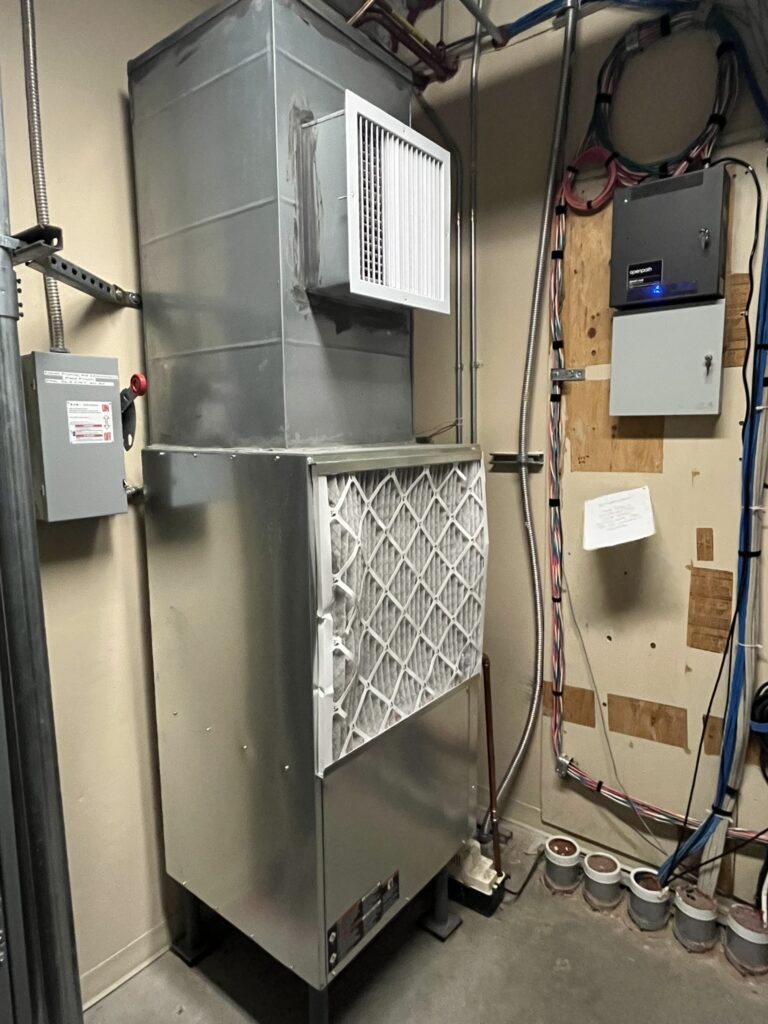
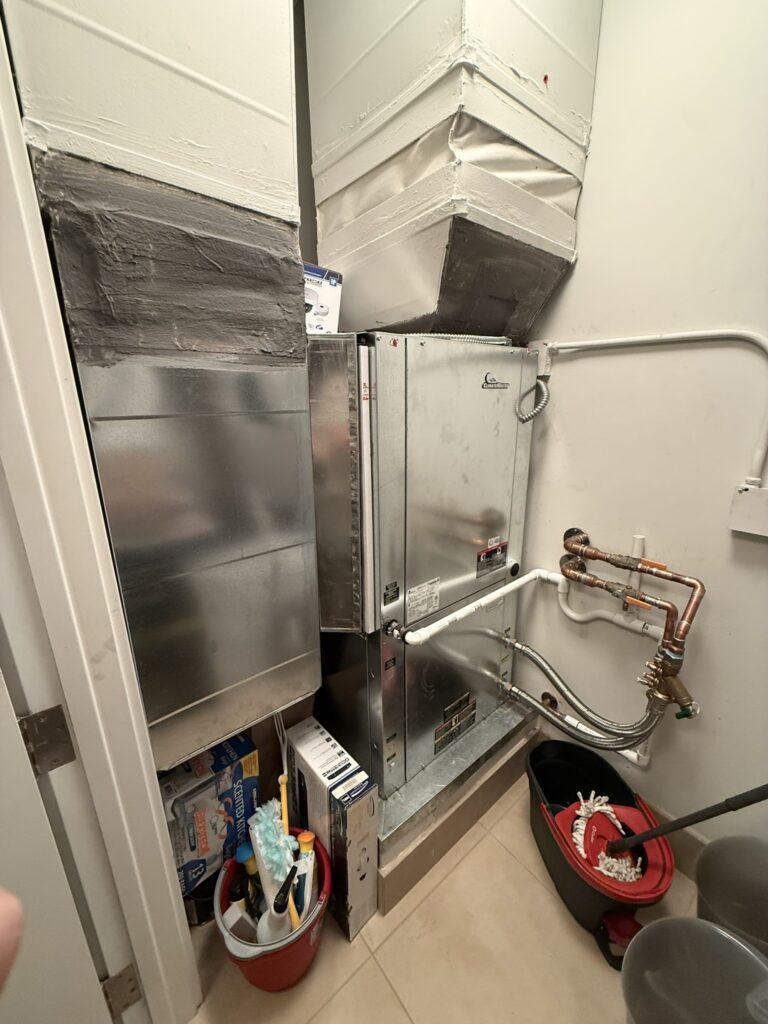
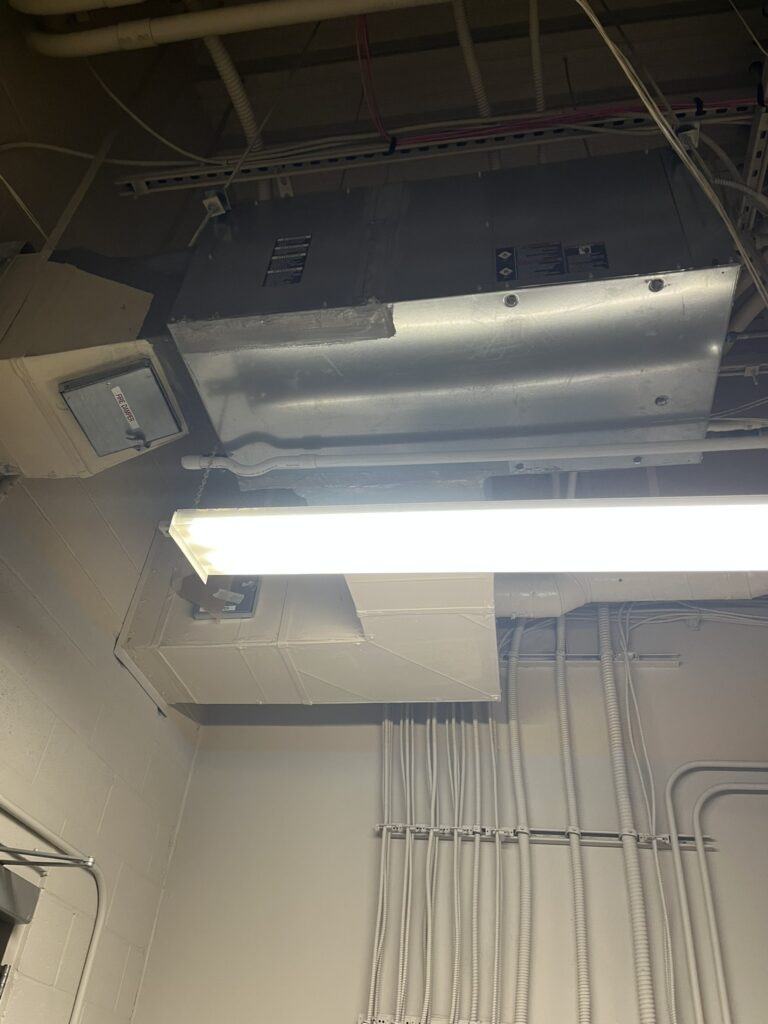
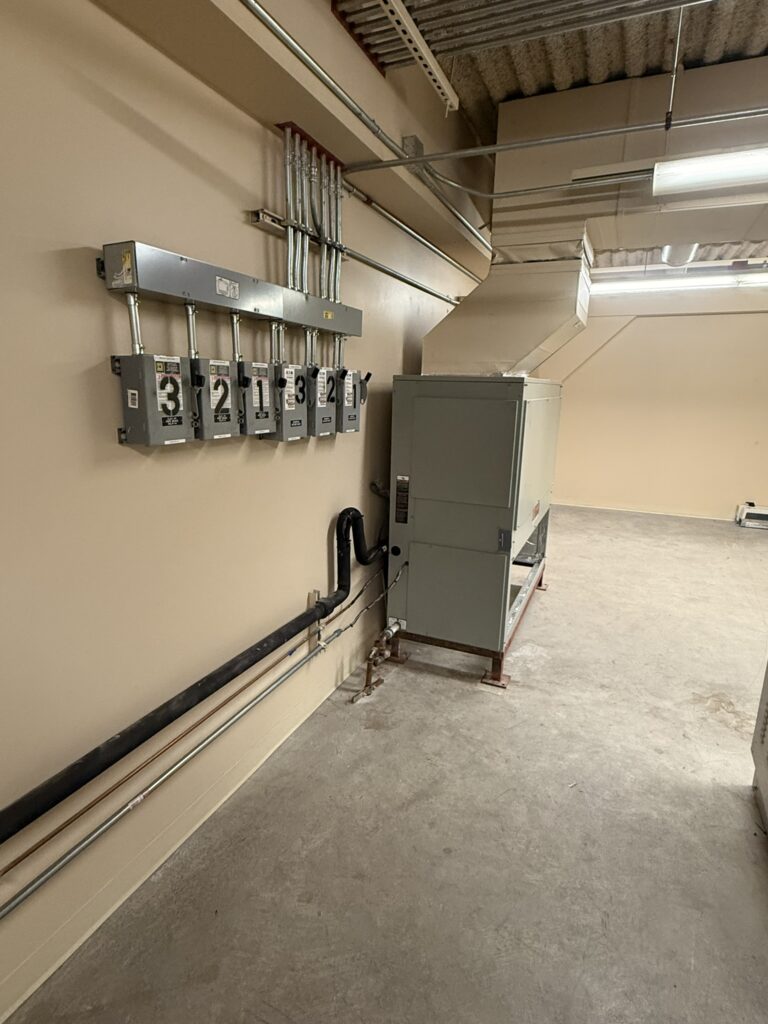
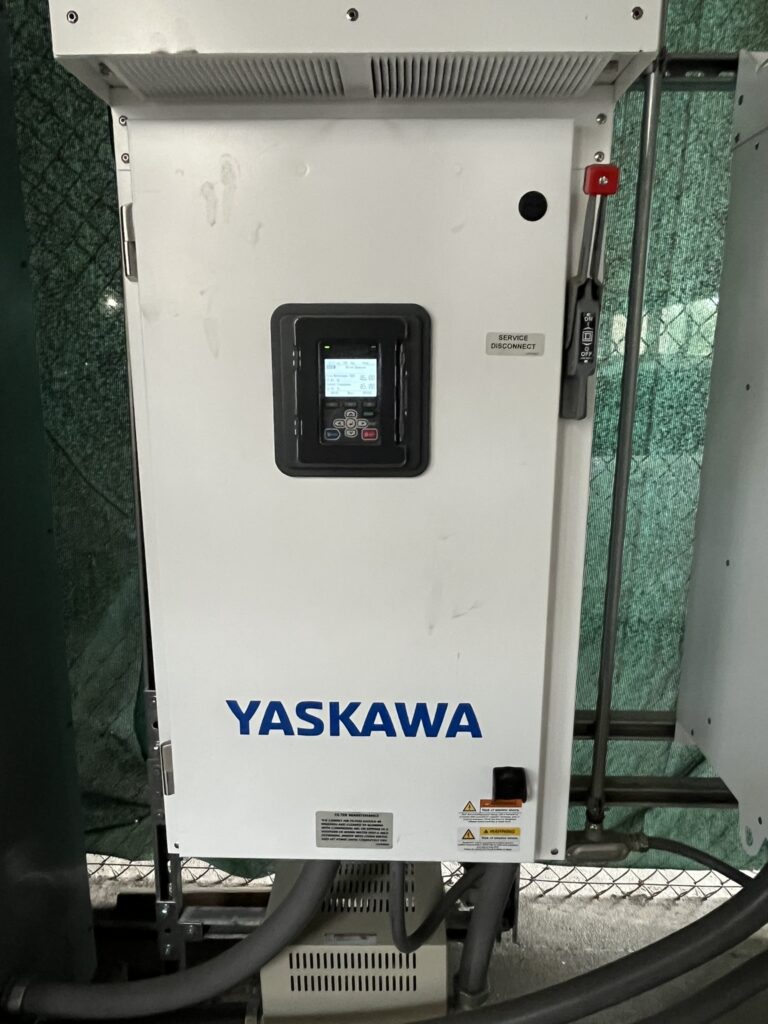
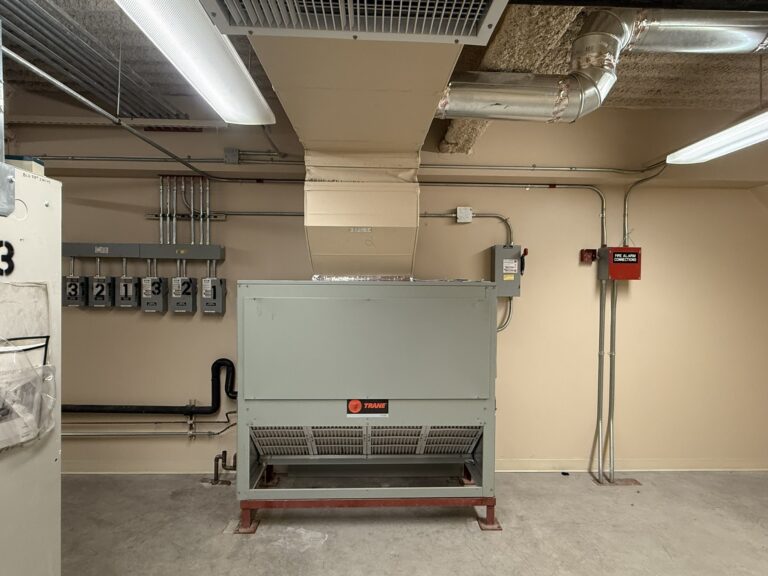
Nobody moves to Phoenix for the heating season, but the Valley still runs on boilers — they’re just doing different work here than they do in Chicago. Hotel guests expect hot showers at 6 a.m. in any climate, pools and spas need heat most of the year’s calendar, and multi-family central plants and commercial laundries never get a season off. Yeti Pros provides commercial boiler repair in Phoenix and across the metro:
- Ignition and flame-safeguard diagnostics
- Gas-train work
- Circulator and hydronic repairs
- Scale problems our hard water guarantees
Veteran-owned and operated, holding ROC #363372 · ROC #363423. Call (520) 556-8929 — a real person answers 24/7.
Where boilers actually earn their keep in the Valley
Let’s be honest about the market: space heating is a minor character in Phoenix boiler work. The machines that page us at midnight are making:
- Domestic hot water for resorts and hotels
- Holding pools and spas at temperature through the tourism high season
- Feeding commercial laundries
- Serving multi-family buildings with central hot-water plants
- Carrying process loads in medical sterilization and industrial settings
Those duties share a defining trait — they’re continuous. A comfort-heating boiler in Ohio gets a summer vacation; a domestic-hot-water boiler at a Scottsdale resort fires every day of the year, piling up burner hours and waterside wear faster than operators from heating country expect. That’s the fleet we service under our commercial HVAC operation — “boiler season” barely exists on our dispatch board.
Hydronic heating where it does exist
That said, hydronic space heating isn’t extinct here. Older office buildings, schools, churches, and mid-century properties around central Phoenix run hot-water loops with perimeter radiation or hydronic coils in air handlers, and some hotels heat corridors and ballrooms the same way. These systems bring their own repair vocabulary:
- Balancing problems
- Air-bound loops
- Failed zone valves
- Waterlogged expansion tanks
Because they only run a few months a year, their failures cluster in the same December week the first real cold front lands. We service the loop end to end, not just the box making the heat.
What fails on commercial boilers in Phoenix
Pilots, spark and hot-surface igniters, and flame rods foul and fail — the boiler equivalent of a car that cranks but won’t start, and the most common no-hot-water call we run.
The safety brain that proves flame before and during firing. Lockouts here need real diagnosis, because the control is usually reporting a genuine problem — a dirty scanner, a weak flame signal, a combustion-air fault — not inventing one.
Regulators, safety shutoff valves, and pressure switches. Strictly licensed-professional territory; every connection we disturb gets leak-checked before we leave.
Seals weep, bearings howl, couplings shear, and motors cook. A dead circulator strands heat in the boiler while the building’s taps and loops go cold.
A waterlogged tank sends system pressure climbing with every firing cycle, which is often the real story behind a relief valve that keeps dripping.
The device that keeps a boiler from firing dry is only as good as its last test. We test them properly — actual water-level response, not a glance at a light.
A weeping relief valve is a message: overpressure, thermal expansion, or a valve past its service life. Plugging or ignoring one is how boilers make the evening news; we replace and re-test instead.
Hard water: the Valley’s quiet boiler killer
Phoenix water carries some of the highest mineral content of any major U.S. metro, and a boiler is the best scale-manufacturing machine ever put in a mechanical room. Every gallon heated drops its minerals on the hottest surfaces — precisely the heat-exchange surfaces you need clean. Scale causes several problems:
- It insulates, so fuel bills climb.
- It overheats exchanger metal underneath the deposit, so tubes and sections crack.
- It flakes off and clogs strainers, valves, and pumps.
Domestic-hot-water boilers suffer worst because they see fresh mineral-laden water constantly instead of recirculating a sealed loop.
Descaling, sensible water treatment, and softener checks aren’t add-ons here — in this water, they’re the difference between a fifteen-year boiler and a seven-year boiler.
Combustion analysis: the discipline that separates pros from parts-changers
Any tech can make a burner fire. Making it fire correctly requires a combustion analyzer — measured oxygen, carbon monoxide, and flue temperature, with the burner tuned to the manufacturer’s numbers and the results printed for your file. We run analysis on every boiler we service for these reasons:
- Eyeballing flame color misses a burner drifting toward incomplete combustion: wasted fuel at best, carbon monoxide production at worst.
- Combustion numbers tell on other problems early — a rising flue temperature is often the first written evidence of scale building on the waterside.
If your current vendor has never handed you a combustion report, you’ve been getting burner adjustment by folklore.
Gas plus pressure vessels: why this is licensed territory
A commercial boiler combines an open flame, a pressurized gas train, and a vessel full of scalding water under pressure — a machine that is perfectly safe when maintained by people who respect it and genuinely hazardous when handled casually. That’s the spirit in which we work:
- Safety devices get tested rather than bypassed.
- Gas piping gets leak-checked rather than sniffed at.
- Venting gets inspected for corrosion and spillage.
- CO gets measured in the mechanical room and the flue, not assumed away.
We also urge every client with fuel-fired equipment to keep CO monitoring in adjacent occupied spaces. Arizona’s ROC sets the legal floor for licensed work in its Minimum Workmanship Standards; our written warranty and our safety habits are built to clear that floor with room to spare.
Winter readiness for hotels and multi-family plants
The Valley’s hospitality calendar is merciless: high season for tourism is exactly when overnight lows dip and hot-water demand peaks — full houses, golf-trip mornings, spa loads, and holiday occupancy all hitting the plant at once. A boiler limping through October will be a boiler down in January, with every room occupied. The fix is a fall readiness pass:
Ensures efficient and safe operation.
Verifies critical safety functions.
Addresses hard water issues.
Ensures proper system pressure and flow.
Provided while parts still ship on normal lead times.
Our maintenance contracts schedule this automatically, and our broader commercial maintenance programs fold boilers in alongside the cooling plant. When something fails at the worst hour anyway, the emergency line is picked up by a live human who can send a truck, whatever the hour.
Repair or replace: the efficiency math
Repair Considerations
We lay out the decision honestly, considering factors such as repair cost against age, waterside condition, section or exchanger integrity, and parts availability.
Replacement Benefits
Boiler replacement conversations in Phoenix hinge on runtime. A domestic-hot-water plant firing year-round burns enough gas that efficiency gains repay themselves far faster than a lightly-used heating boiler would — which means an old atmospheric boiler running scaled-up in a resort mechanical room is often quietly expensive to keep. Consider fuel savings from modern condensing equipment where the application suits it.
Flat-rate written quotes either way, the fee disclosed at booking and credited to approved work, and no manufactured urgency. Buildings running chilled-water cooling alongside their boiler plant can put both under one roof with our chiller repair team.
Veteran-owned, and the whole metro is our territory
From resort corridors in Scottsdale to multi-family plants in Tempe and laundries on the west side, we cover the entire Phoenix metro. Yeti Pros is veteran-owned and operated, bringing:
- Checklist discipline
- Honest reporting
- Showing up when we said we would
These values came with the training. Owners and staff who served can use our 10% military, veteran & first responder discount on their own homes through our residential side — a household offer, not a commercial-invoice promise.
Commercial boiler questions we field in the Valley
Our boiler keeps locking out and the reset button fixes it for a day. Now what?
Stop feeding the reset button. Repeated lockouts mean the flame safeguard keeps detecting a real fault — weak flame signal, dirty flame rod or scanner, combustion-air trouble, or gas-pressure issues. Resetting without diagnosing erases the evidence and re-runs the risk. One proper diagnostic visit ends the cycle.
Why does our relief valve keep dripping?
Usually system overpressure from a waterlogged expansion tank or a failing fill valve — the relief valve is the messenger, not the problem. Sometimes the valve itself is worn. Either way, the answer is diagnosis and repair, never a plug or a bucket.
How often should a commercial boiler be descaled in Phoenix?
It depends on duty and water treatment, which is why we base the interval on evidence — flue temperature trends, inspection findings, and flow performance — rather than a one-size calendar. Domestic-hot-water boilers on untreated Valley water need attention far more often than sealed heating loops.
Can you get our pool and spa heat back before the weekend?
Hospitality timelines are exactly why our line is answered 24/7. Tell us the equipment, the symptom, and the occupancy pressure; down-plant calls at full-house properties get triaged accordingly.
Do we really need combustion analysis every year?
Yes — it’s the only objective proof your burner is running clean and efficient, and it catches drift toward carbon monoxide production before it becomes dangerous. It also documents due diligence for your insurer and ownership group.
Is carbon monoxide actually a risk with a properly working boiler?
A well-tuned, well-vented boiler produces minimal CO and sends it safely up the flue. The risk comes from drift: blocked or corroded venting, deteriorating burners, and depleted combustion air. That’s why we measure CO on every visit and recommend monitoring in occupied spaces near fuel-fired equipment.
Our building has an old hydronic heating loop. Do you work on those?
Yes — boilers, circulators, zone valves, expansion tanks, air separation, and balancing on hot-water loops in older Valley buildings. December’s first cold snap fills our board with these calls, so a fall checkout is worth scheduling.
No hot water, a locked-out burner, or a plant you don’t trust? Call (520) 556-8929 — commercial boiler repair, Valley-wide, quoted flat-rate in writing before work begins. Veteran-owned. ROC #363372 · ROC #363423.
Permits and inspections
Most repairs are ordinary service work; bigger scopes can involve city permitting. We perform our work to code, pull the permits our scope requires, and put what we did in writing.
What's covered
Workmanship is covered for two full years, in writing, and repair parts carry a 1-year manufacturer parts warranty — we document installs and repairs so those claims stay simple to make
Why a licensed HVAC contractor matters.
Commercial Boiler Repair in Phoenix, city by city.
Every city below has its own local page for this service — local FAQs, utility territory, housing stock, and dispatch reality included.
Every major brand, serviced and installed.

Phoenix metro: Most days a tech is already working somewhere in the Valley, so same-day appointments happen when the schedule allows. After-hours emergencies are dispatched when a licensed tech is available — a real person answers and tells you the ETA on the call.
Call (520) 556-8929Request an estimate.
No pressure, no door knockers. We look at the HVAC system, tell you what it needs (and what it doesn’t), and put the number in writing.