
Phoenix Metro
Commercial AC Repair in Phoenix.
- (520) 556-8929
- Serving the entire Phoenix metro — we come to you
- Office: Mon–Fri 8:00 AM – 5:00 PM · 24/7 emergency service
- 2-year workmanship warranty · 1-year parts warranty
- Veteran-owned & operated · residential + commercial
- 23 five-star Google reviews
Commercial jobs we have documented.
Photos from our own commercial projects — equipment we installed, in buildings we serviced.
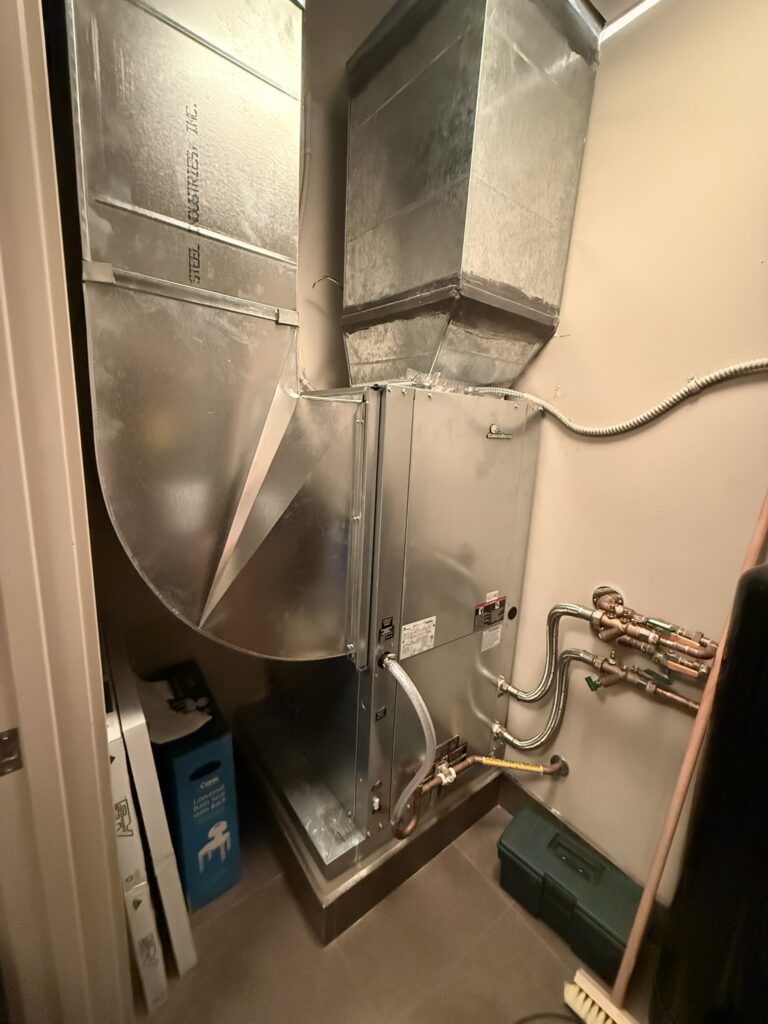
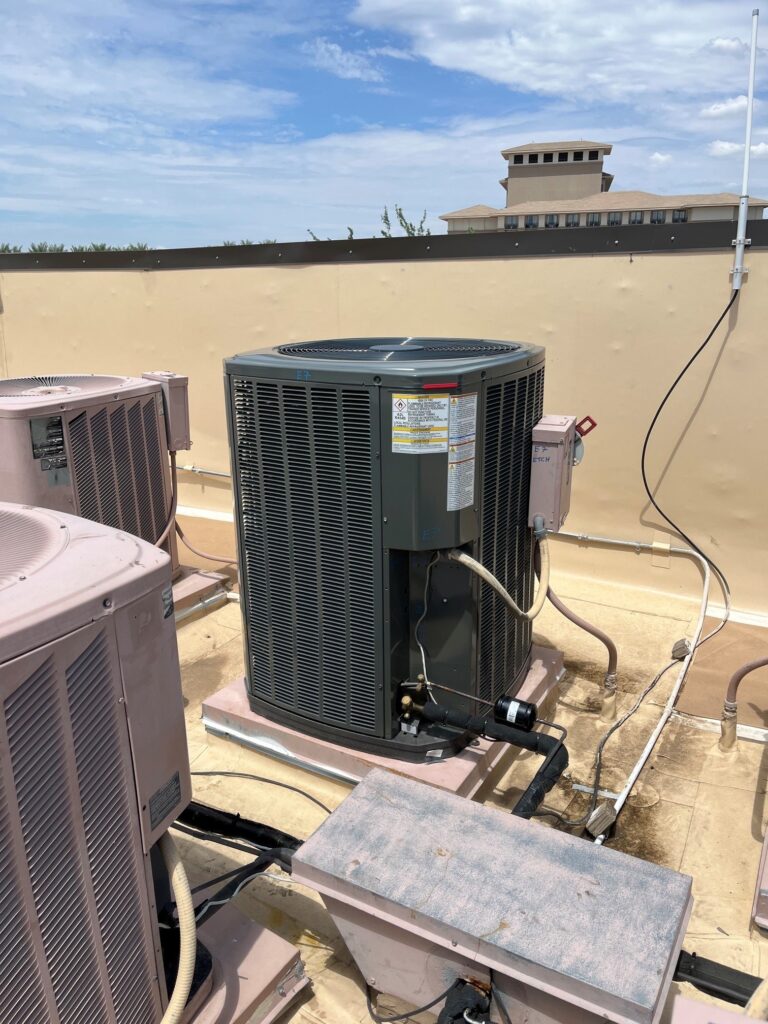
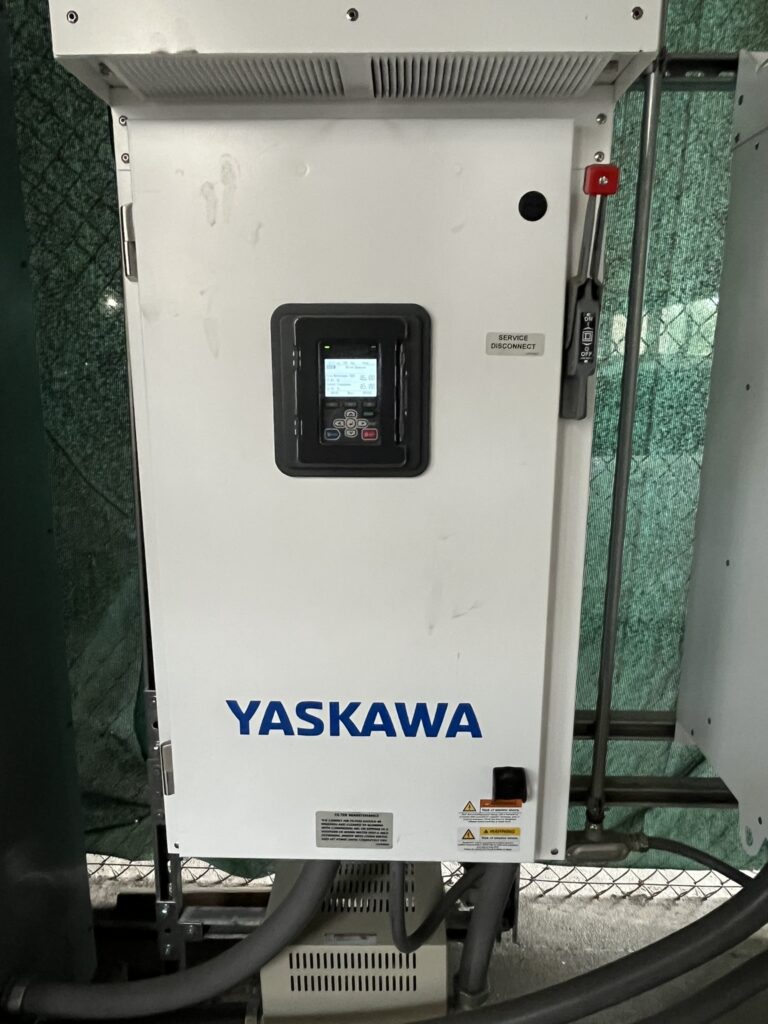
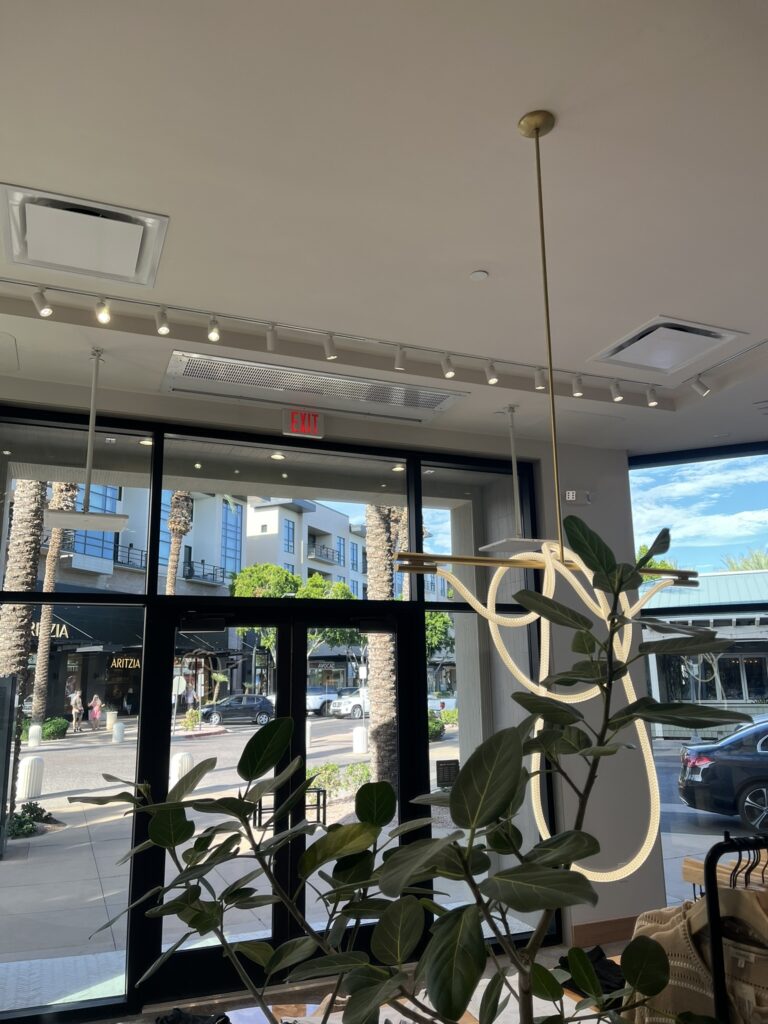
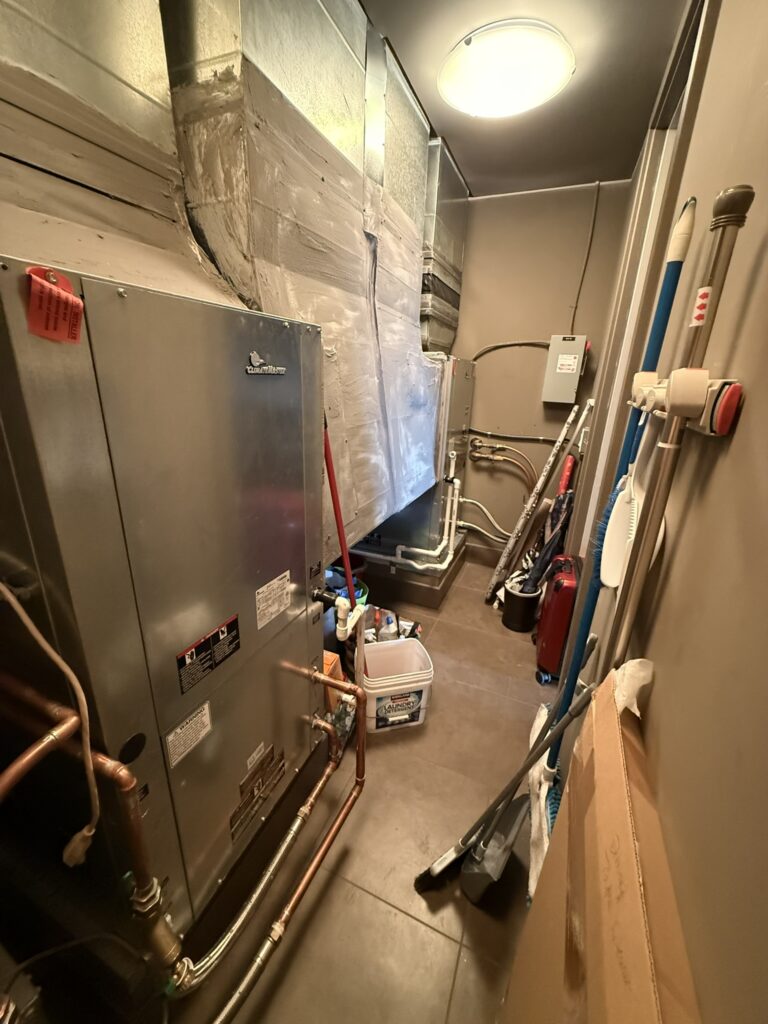
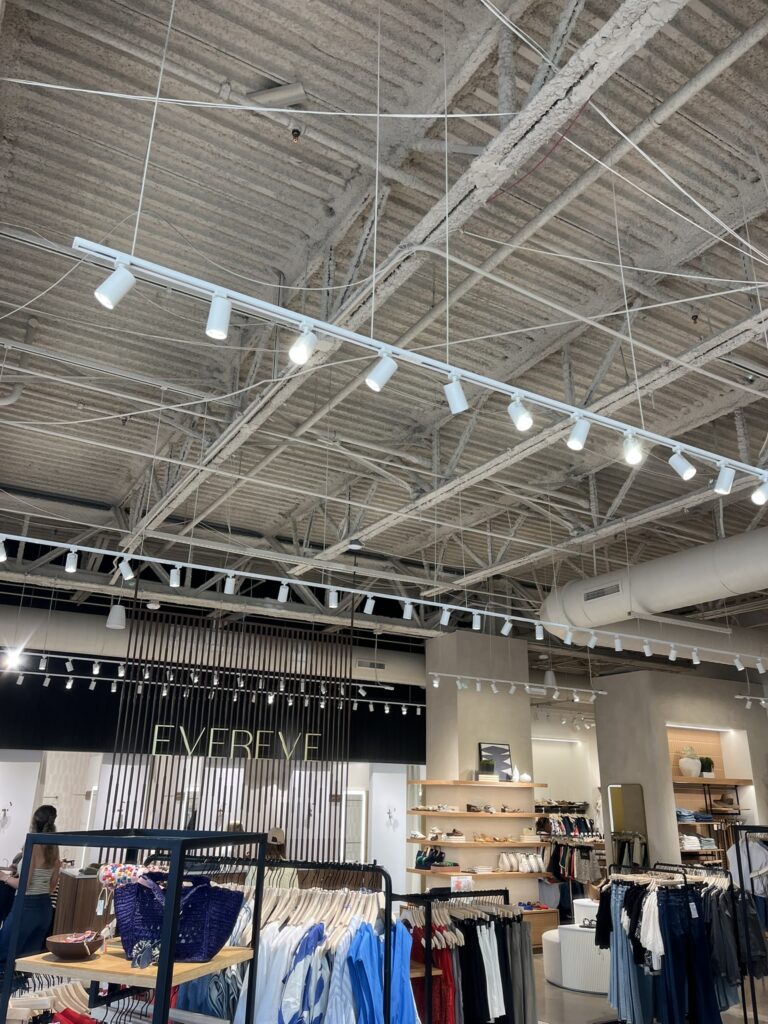
A commercial cooling failure doesn’t schedule itself around your slow season — it hits on a 112°F Wednesday with the building full. Yeti Pros handles commercial AC repair in Phoenix and across the Valley metro with the urgency that moment deserves: veteran-owned and operated, licensed under ROC #363372 and ROC #363423, with EPA 608-certified technicians who diagnose with instruments, quote flat-rate in writing, and verify every repair under load before packing up. One number reaches a live human at any hour: (520) 556-8929.
Downtime has a meter running
Facility managers already know this in their bones, but it’s worth stating plainly because it shapes how we operate.
that climbs past 85°F clears out mid-service and takes the evening’s revenue with it.
without cooling bleeds foot traffic while rent and payroll march on.
sends productivity off a cliff long before anyone officially goes home.
that crosses its thermal alarm threshold starts shutting hardware down on its own schedule, not yours.
Multiply any of those by hours-until-repair, and your contractor’s response becomes the single largest variable in what the failure actually costs. We built our commercial repair operation around compressing that number.
Commercial cooling equipment we repair
Our technicians work across the platforms that cool Valley businesses:
The default equipment on Phoenix strip malls, offices, and light industrial. We repair all major RTU brands; for change-outs, economizer rebuilds, and end-of-life planning, see RTU repair and replacement.
Condensing units paired with indoor air handlers, common in professional offices, retail suites, and medical tenant spaces.
Variable refrigerant flow platforms with inverter compressors, branch controllers, and communication buses that demand manufacturer-literate diagnosis rather than guesswork.
Including terminal equipment in buildings served by central chilled-water plants.
Dedicated mini-splits and computer-room units where a failure is measured in data and hardware, not comfort.
What fails first under Phoenix duty cycles
Commercial AC failures in Phoenix come from duty cycles few places in the country can match. A rooftop unit here can log more compressor hours in one Phoenix summer than a Midwest unit accumulates in three years, and the failure patterns follow directly from that arithmetic:
components rated for a certain number of cycles reach that number early here. Pitted contactors and drifting run capacitors are the most frequent close-outs on our commercial tickets, and catching a weak capacitor before it takes the compressor down with it is one of the cheapest saves in this trade.
pulling 115°F rooftop air across a coil all afternoon cooks bearings and windings. When the fan quits, head pressure spikes and the unit trips out — or keeps limping until the compressor pays the bill.
the expensive one. Most commercial compressor deaths we autopsy trace back to a preventable upstream cause: starved airflow from packed coils, flooding from a failed metering device, or a voltage problem nobody chased.
stuck dampers, dead actuators, and miswired logic quietly force mechanical cooling when free cooling was available, inflating APS and SRP bills for months before anyone notices.
a single haboob can coat a rooftop coil badly enough to drive head pressure into high-pressure lockout. After every major dust event, our board fills with calls that share the same diagnosis.
How we triage when the whole Valley is hot
During a heat emergency, every commercial contractor’s queue overflows — the difference is whether the queue has logic. Ours does, and we’re transparent about it.
Cooling there is a patient-safety issue, not a comfort complaint.
Operations with product at risk come next, because their losses compound by the hour.
Spaces facing hardware shutdown follow.
These facilities are addressed after server rooms and other critical spaces.
These properties are addressed last in the priority queue.
Customers on our maintenance contracts move to the front of their tier — that’s a stated benefit of the agreement, and we honor it even in the weeks when honoring it is hard.
Instrument-verified diagnosis, not parts roulette
The most expensive sentence in commercial HVAC is “let’s try replacing this and see.”
Our technicians carry commercial-grade instrumentation — digital manifolds and probes, clamp meters, megohmmeters for winding insulation, static-pressure tools, and airflow measurement gear — and the discipline to use them before quoting anything.
Superheat and subcooling get measured, not eyeballed. A compressor doesn’t get condemned without electrical testing that would survive a warranty audit. Refrigerant handling follows EPA 608 practice on every call, with recovery and charge quantities logged in writing — a detail that matters more each year as older Valley buildings still running R-22 face a shrinking, ever-pricier reclaimed supply.
You get the readings in your service report, so the diagnosis is an argument from evidence, not a request for blind trust.
Commercial AC repair that works around business hours
Closing your doors so a technician can enjoy daytime hours gets the priorities exactly backwards.
Scheduled Repairs: Minimize Disruption
For repairs that can be scheduled, we routinely work nights, early mornings, and weekends. This ensures any disruption lands while your customers are asleep — a repair finished at 5 a.m. is invisible to your Tuesday.
24/7 Commercial Emergency Service
For failures that can’t wait for a calendar at all, our 24/7 commercial emergency service dispatches around the clock.
Either way, the service-call fee is disclosed when you book and credited toward the repair. The repair itself is quoted flat-rate in writing before a single part goes in.
The repair-versus-replace conversation, played straight
Phoenix rooftops carry one of the oldest commercial cooling fleets in the country — equipment hung during the 2000s building boom is now deep into borrowed time, and plenty of it still runs R-22.
Making the Right Decision
When a fifteen-plus-year-old unit needs a major component, we’ll quote the repair honestly, but we’ll also hand you the replacement math:
An estimate of the unit’s remaining operational life.
The efficiency difference at Phoenix runtimes compared to a new unit.
What a planned off-season change-out costs against an emergency one in July.
If replacement wins, our commercial AC installation team takes it from load calculation through commissioning. The decision stays yours; our job is making sure you make it with real numbers in hand.
Documentation your corporate office will accept
Every commercial repair leaves a paper trail built for the people above and behind you: itemized service reports with measured readings, refrigerant logs that satisfy EPA 608 recordkeeping, photos of the failure and the finished work, and warranty terms in writing. When a claim adjuster, an auditor, or a facilities director three states away asks what happened on your roof and when, you answer with documents instead of memory. Beneath our warranty sits the floor Arizona law sets for every licensed contractor — the ROC’s Minimum Workmanship Standards — and we’re glad to be held to both.
One repair operation, the whole metro
We run commercial AC repair across the entire Phoenix metro under one dispatch and one standard. Our service area includes:
- Phoenix
- Scottsdale
- Mesa
- Chandler
- Gilbert
- Glendale
- Tempe
- Peoria
- Surprise
- Goodyear
- Avondale
- Buckeye
- Queen Creek
- Apache Junction
Consistent Service for Multi-site Operators
Multi-site operators get consistent technicians and an identical reporting format at every address.
Veteran-Owned & Military Discount
As a veteran-owned company, we offer a benefit worth sharing: veterans and military families on your staff qualify for a 10% military discount on the residential side of their lives — their home systems, not your commercial invoice.
Commercial AC repair questions we field constantly
We dispatch by triage tier and give you a straight arrival window on the phone rather than a fantasy number. Occupied medical facilities and food-service operations with product at risk move first; contract customers lead their tier. If the honest answer is “this evening,” that’s what you’ll hear — not “twenty minutes.”
Yes — Trane, Carrier, York, Lennox, Daikin, Rheem, Goodman, Mitsubishi, LG, and the rest of the commercial market. Platform matters more than the badge: packaged unit, split, VRF, or air handler, we service it.
Often that’s our preference too. Night and weekend repair windows are standard practice on occupied businesses — the work happens while the building is empty, and your customers never learn anything was wrong.
Almost certainly. Haboob dust loads condenser coils fast enough to trip high-pressure safeties, and storm-borne electrical surges take out boards and motors. Post-storm coil cleaning resolves most of these; surge protection is cheap insurance against round two.
Sometimes — a modest electrical repair on an otherwise-healthy unit can be rational. But R-22 hasn’t been produced since 2020, reclaimed supply keeps climbing in price, and any leak repair on those systems carries refrigerant costs that push the math toward replacement. We’ll show you both numbers side by side.
Yes, and you’ll hear the exact amount when you book — never as a surprise on the invoice. It credits toward the repair once you approve the work.
Yes — itemized findings with measured readings, photos, refrigerant documentation, and written warranty terms, formatted so an off-site approver can sign off without a phone call.
Planned maintenance, genuinely. Most failures on this page announce themselves at the readings level months in advance. Our commercial HVAC maintenance visits catch weak capacitors, drifting amp draws, and fouling coils before July does — and our commercial HVAC overview shows how the full program fits together.
Cooling down and losing money by the minute? Call (520) 556-8929 — veteran-owned commercial AC repair, metro-wide, ROC #363372 · #363423.
Permits and inspections
Most repairs are ordinary service work; bigger scopes can involve city permitting. We perform our work to code, pull the permits our scope requires, and put what we did in writing.
What's covered
Workmanship is covered for two full years, in writing, and repair parts carry a 1-year manufacturer parts warranty — we document installs and repairs so those claims stay simple to make
Why a licensed HVAC contractor matters.
Commercial AC Repair in Phoenix, city by city.
Every city below has its own local page for this service — local FAQs, utility territory, housing stock, and dispatch reality included.
Every major brand, serviced and installed.



Phoenix metro: Most days a tech is already working somewhere in the Valley, so same-day appointments happen when the schedule allows. After-hours emergencies are dispatched when a licensed tech is available — a real person answers and tells you the ETA on the call.
Call (520) 556-8929Request an estimate.
No pressure, no door knockers. We look at the HVAC system, tell you what it needs (and what it doesn’t), and put the number in writing.