
Phoenix Metro
Commercial HVAC Maintenance in Phoenix.
- (520) 556-8929
- Serving the entire Phoenix metro — we come to you
- Office: Mon–Fri 8:00 AM – 5:00 PM · 24/7 emergency service
- 2-year workmanship warranty · 1-year parts warranty
- Veteran-owned & operated · residential + commercial
- 23 five-star Google reviews
Commercial jobs we have documented.
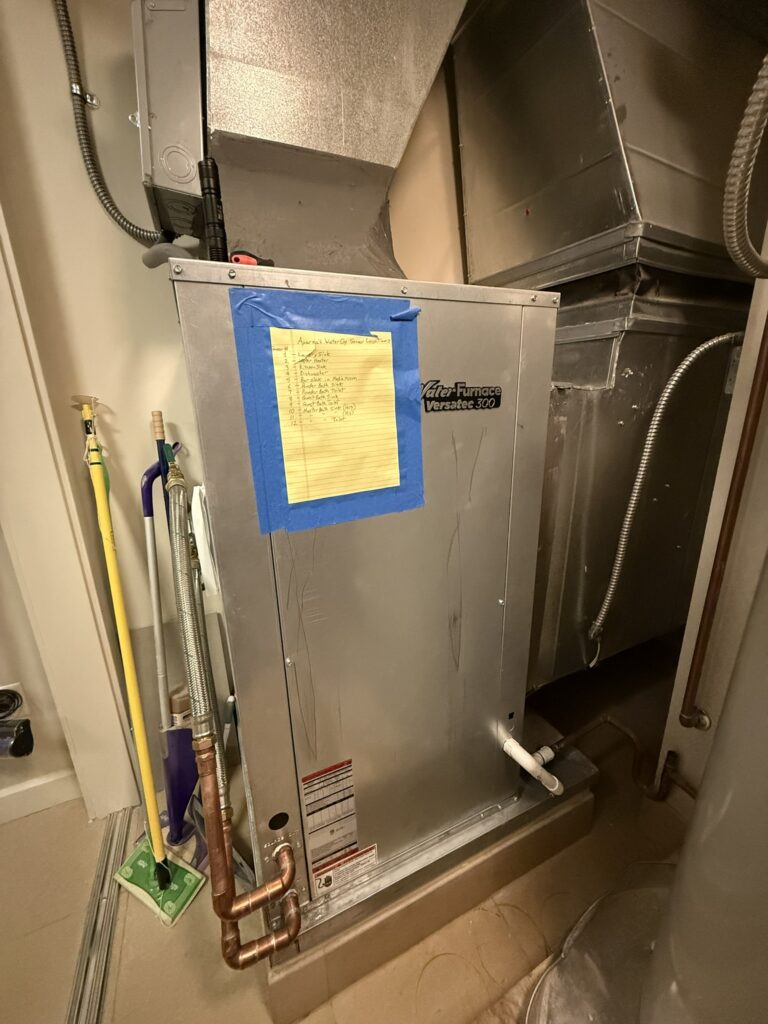
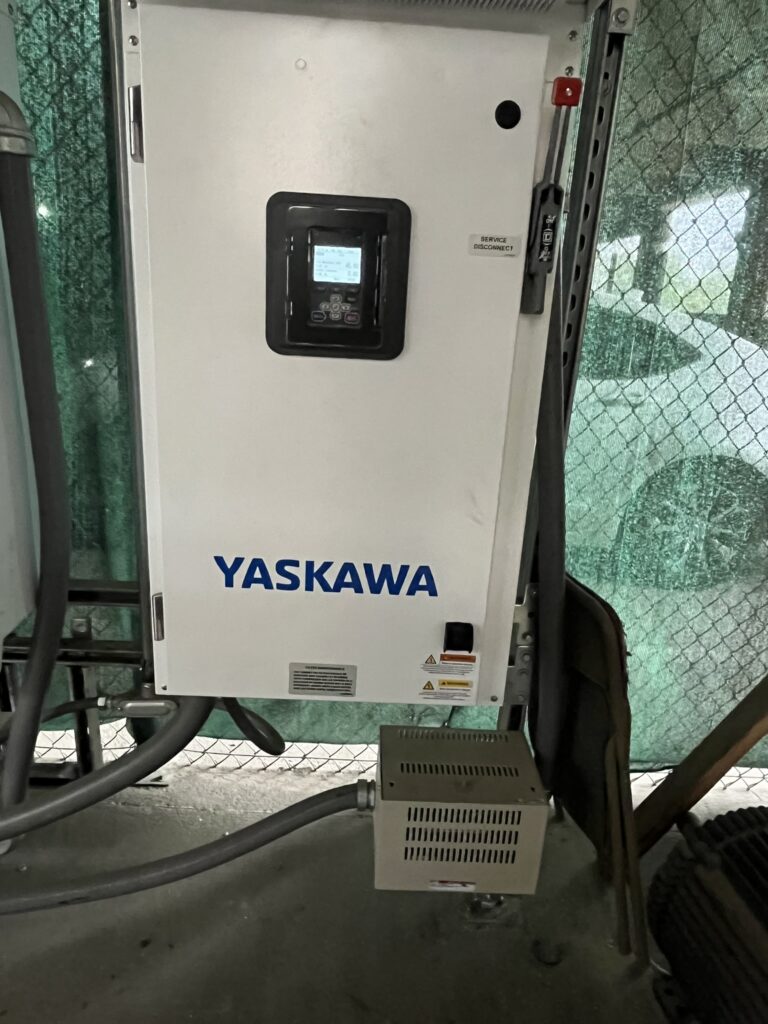
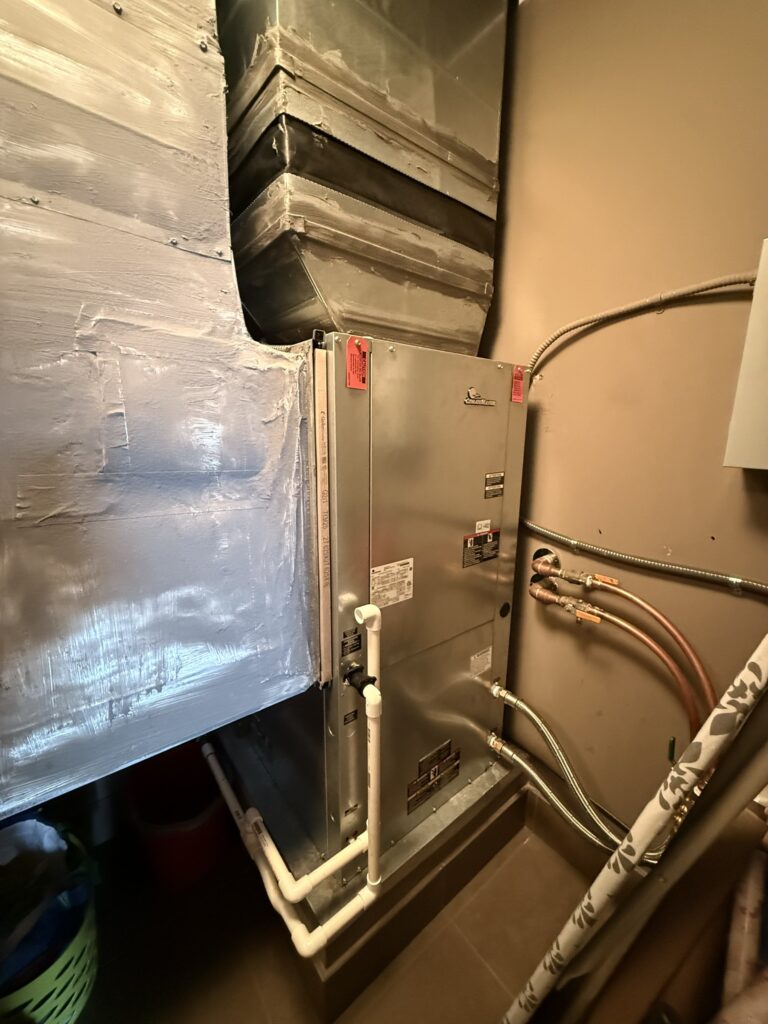
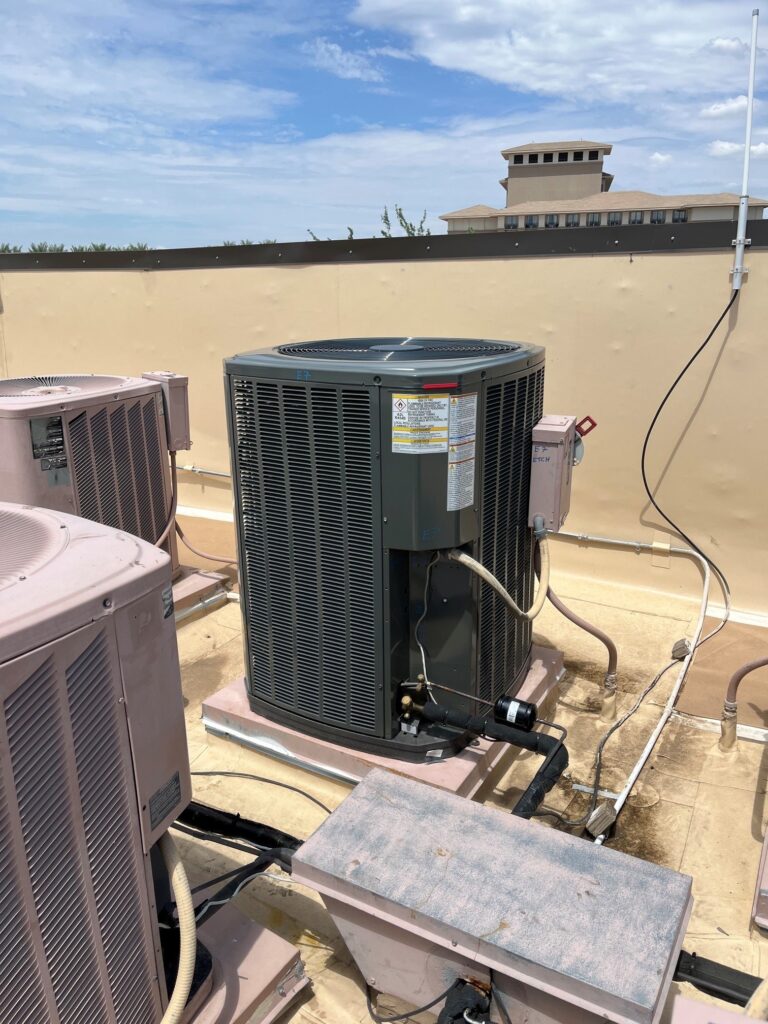
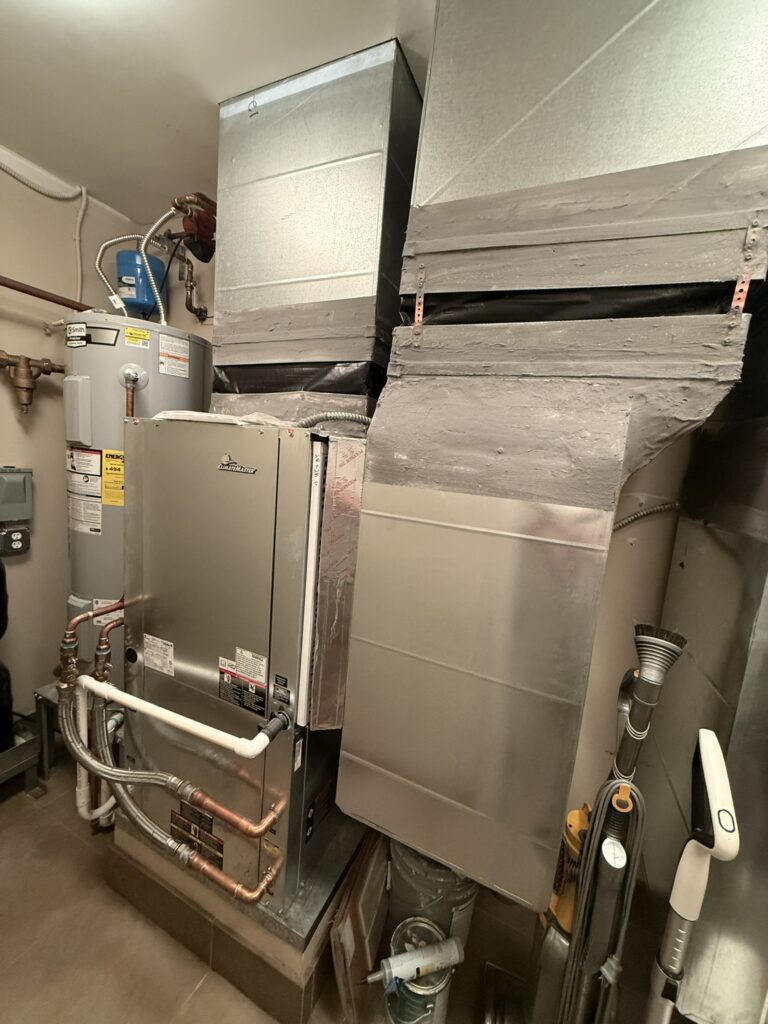
Photos from our own commercial projects — equipment we installed, in buildings we serviced.

Commercial HVAC maintenance in Phoenix isn’t a courtesy inspection — it’s instrumented work performed on equipment that runs harder here than almost anywhere in the country. Yeti Pros delivers measurement-driven preventive maintenance across the Valley: rooftop units, split systems, VRF, and the refrigeration that keeps restaurants and stores in business.
Every visit produces numbers on paper, trended against the last visit, so your equipment’s future stops being a guess.
Veteran-owned and operated, EPA 608-certified technicians, licensed under ROC #363372 · ROC #363423, serving the entire Phoenix metro. Call (520) 556-8929.
Why Phoenix doubles the stakes on PM
Three climate facts drive the way this work gets handled. A maintenance program built on a national template misses all three; ours is built around them.
A Valley rooftop unit logs cooling hours from March into November, so wear components age on a compressed calendar — a belt or contactor that would last years in Denver gets consumed here in a season or two.
Between any two quarterly visits, desert air is packing condenser coils, filters, and economizer screens with fine particulate, and each haboob does a month of fouling in an hour.
May and June are for storm prep — securing panels, verifying surge exposure, clearing drainage — and every major storm earns a post-event check for wind damage, dust-choked coils, and electronics hit by grid disturbance.
What a commercial PM visit actually involves
Here’s the work itself, asset class by asset class — because “we checked the unit” is not a scope.
Package rooftop units (RTUs)
- Coils. Condenser coils inspected and cleaned of dust and debris load; evaporator coils checked for fouling and biological growth. In this climate, coil condition is capacity.
- Electrical, measured not eyeballed. Capacitors tested in microfarads against rating, contactors inspected for pitting and welding, compressor and fan motor amp draws compared to nameplate, terminals torqued, disconnects and wiring inspected. Most July compressor deaths telegraph themselves in these readings months earlier.
- Belts and bearings. Belt tension, alignment, and glazing checked — Phoenix rooftop heat destroys belts on an accelerated schedule — pulleys inspected for wear, bearings lubricated and listened to before they announce themselves.
- Economizer function. Dampers stroked, actuators and sensors verified, linkages freed. A stuck-open economizer pulls 110° air into your building; a stuck-closed one throws away every free-cooling hour the desert’s cool nights and winters offer.
- Refrigerant circuit verification. Operating pressures with superheat and subcooling readings — the honest way to confirm charge — plus temperature split across the coil, handled by EPA 608-certified techs with documentation to match.
- Condensate. Drains flushed, pans inspected, traps and switches tested. Dry all spring, Valley condensate systems clog precisely when monsoon humidity spikes — and on a roof, an overflow finds your ceiling tiles first.
Split systems, air handlers, and VRF
Ductless and VRF systems get their own discipline:
Condition checked.
Tested.
Inspected — Arizona UV disintegrates exposed insulation in a few summers, quietly taxing efficiency.
Verified.
Pulled from VRF controllers, because those systems log developing faults long before occupants feel a symptom.
Verified against how the space is actually used, which alone recovers real energy waste in most buildings we take over.
Refrigeration add-ons
For restaurants, groceries, and convenience stores we fold refrigeration into the same visit:
Walk-in door gaskets and sweeps, evaporator and condenser coil condition, defrost operation, and drain lines on walk-in coolers and freezers.
Condition checks on reach-ins and prep tables.
A walk-in limping through June on a fouled condenser is a spoiled-inventory claim with a date already on it.
Filter programs: MERV by environment, cadence by reality
Commercial filtration fails two ways — wrong filter or wrong schedule — and Phoenix punishes both.
MERV by Environment
We match MERV rating to the space: MERV 8 territory for warehouses and back-of-house, MERV 11–13 where offices, medical suites, and tenant comfort demand finer capture, always balanced against what the blower’s static pressure can afford, because over-filtering suffocates a system as surely as a dirty filter does.
Cadence by Reality
Cadence is set by environment, not habit: a dental office on a landscaped campus and a shop bay off a dirt lot do not change filters on the same calendar, and everything tightens up during monsoon season. Every change is logged with the size and rating, so replacements stay right after we’re gone — and buildings that eat filters faster than their PM interval get scheduled filter-only visits in between.
Coil cleaning: capacity insurance at 115°
A condenser coil is where your system exhausts heat, and dust is its insulation. At 95° ambient a marginal coil is an efficiency problem; at 115°, it’s the difference between a unit that carries the load and one that trips on head pressure at 3 p.m. with a lobby full of customers. Of everything on the PM task list, this line does the most visible work on an SRP or APS demand bill.
As the coil fouls, head pressure climbs, amp draw rises, capacity falls, and run hours stretch — a triple penalty of higher electric bills, faster component wear, and less cooling delivered exactly when the building needs the most.
We chemically clean condenser coils on schedule ahead of summer, rinse dust loads after major storms, and treat evaporator coils that have begun fouling or growing.
The written condition report, every asset, every visit
Each visit ends with a report a facility manager can actually use:
Every reading recorded — microfarads, amp draws, pressures, temperature splits, static pressure where warranted — and trended against previous visits, so drift becomes visible while it’s still cheap.
Each asset carries a condition grade and a remaining-life estimate, updated as the numbers move, with photos where they tell the story faster.
That trend line is the entire point of instrumented maintenance: a capacitor at 88% of rating isn’t a failure, but a capacitor that read 96% last quarter and 88% now is a scheduled replacement — and the difference between those two sentences is data.
How findings become planned repairs instead of emergencies
When a reading crosses a threshold, you get a flat-rate written quote with the measurement that justifies it — no scare narration, just the number, the spec, and the price. Maintenance doesn’t eliminate failures; it moves them from the worst possible moment to a Tuesday morning you chose. And when a diagnostic call is needed between visits, the fee is disclosed up front and credited toward the repair.
Planned Repair
Approve it and the repair goes on the calendar at your convenience: the weak capacitor swapped in April for the cost of a part, the howling bearing replaced before it seizes the blower, the aging compressor on a 15-year-old RTU flagged early enough to plan a change-out instead of absorbing one.
Emergency Repair
The same failure discovered in July arrives as downtime, an emergency dispatch, and queue time during the exact week the whole Valley is calling.
Most commercial maintenance we handle runs under a written agreement with scheduled visits, priority emergency status, and preferred labor rates. One part covers the work itself; the other explains how the agreements are set up.
Who’s doing the work
It shows in the habits maintenance lives or dies on: arriving when promised, working the task list completely, and documenting everything.
Technicians are EPA 608-certified for refrigerant work, and everything we touch is held to the Arizona ROC’s Minimum Workmanship Standards.
A real person answers our line 24/7 — the same company maintaining your equipment is the one that shows up when something breaks anyway.
We handle commercial HVAC across the entire Phoenix metro, and owners or employees who served can take the 10% military, veteran & first responder discount home with them — it applies on residential service for their own houses.
Commercial maintenance questions we field weekly
How often should commercial HVAC equipment be serviced in Phoenix?
Quarterly is the working baseline for comfort-cooling equipment here, driven by runtime and dust load. Critical or heavily loaded assets justify shorter intervals; lightly used equipment can sometimes stretch. The honest answer comes from a site walk, not a brochure.
What exactly gets done on an RTU during a PM visit?
Coil inspection and cleaning, capacitor and contactor testing, motor amp draws against nameplate, belt and bearing service, economizer verification, refrigerant performance readings, condensate service, and a condition report with every number recorded and trended.
Can you maintain our VRF system? Our last vendor only did rooftops?
Yes — VRF, splits, and air handlers get manufacturer-appropriate procedures, including pulling controller fault histories that reveal developing problems no visual inspection catches.
Do you do one-time maintenance, or contracts only?
Both. Plenty of relationships start with a single tune-up or a pre-summer coil cleaning. Recurring programs earn priority dispatch and preferred rates, but we’ll never hold a one-time visit hostage to a signature.
What is monsoon prep, concretely?
Before the season: panels and rain shields secured, condensate paths cleared and tested, coils cleaned, electrical connections verified. After major storms: coil dust loads rinsed, controls checked for surge damage, and a quick verification that economizers and fans survived the wind.
Will maintenance actually lower our utility bills?
Clean coils, correct charge, and correct filtration measurably reduce the energy a system burns per hour of cooling — and Phoenix hands you more cooling hours than any market in the country, so percentage gains multiply. The condition report gives you the readings behind the claim.
Do you take care of filters between quarterly visits?
Yes — high-dust sites often need filter changes more often than full PM visits, so we schedule filter-only stops at whatever cadence the environment demands and log every change.
Get your equipment on a measured schedule before summer sets it for you. Call (520) 556-8929 for a free site walk and a PM scope in writing.
Permits and inspections
Most repairs are ordinary service work; bigger scopes can involve city permitting. We perform our work to code, pull the permits our scope requires, and put what we did in writing.
What's covered
Workmanship is covered for two full years, in writing, and repair parts carry a 1-year manufacturer parts warranty — we document installs and repairs so those claims stay simple to make
Why a licensed HVAC contractor matters.
Commercial HVAC Maintenance in Phoenix, city by city.
Every city below has its own local page for this service — local FAQs, utility territory, housing stock, and dispatch reality included.
Every major brand, serviced and installed.

Phoenix metro: Most days a tech is already working somewhere in the Valley, so same-day appointments happen when the schedule allows. After-hours emergencies are dispatched when a licensed tech is available — a real person answers and tells you the ETA on the call.
Call (520) 556-8929Request an estimate.
No pressure, no door knockers. We look at the HVAC system, tell you what it needs (and what it doesn’t), and put the number in writing.