
Phoenix Metro
Package Unit Repair in Phoenix.
- (520) 556-8929
- Serving the entire Phoenix metro — we come to you
- Office: Mon–Fri 8:00 AM – 5:00 PM · 24/7 emergency service
- 2-year workmanship warranty · 1-year parts warranty
- Veteran-owned & operated · residential + commercial
- 23 five-star Google reviews
Residential HVAC across the Valley.
Air conditioning, heating, and cooler work at homes across the Phoenix metro.
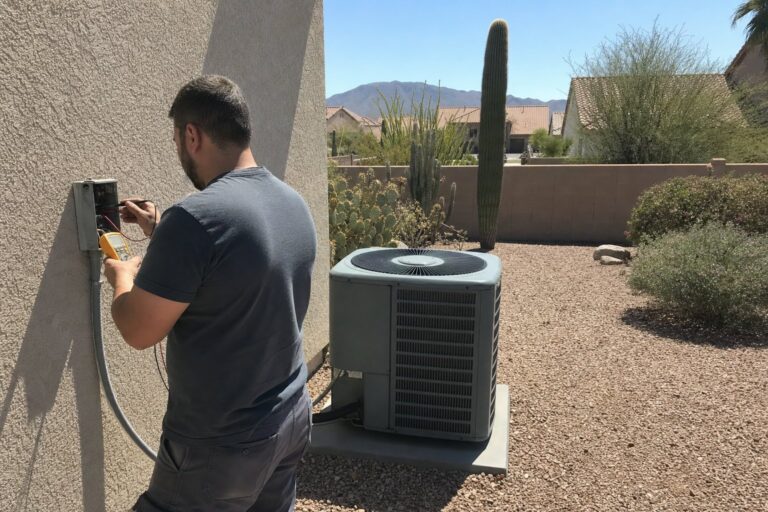
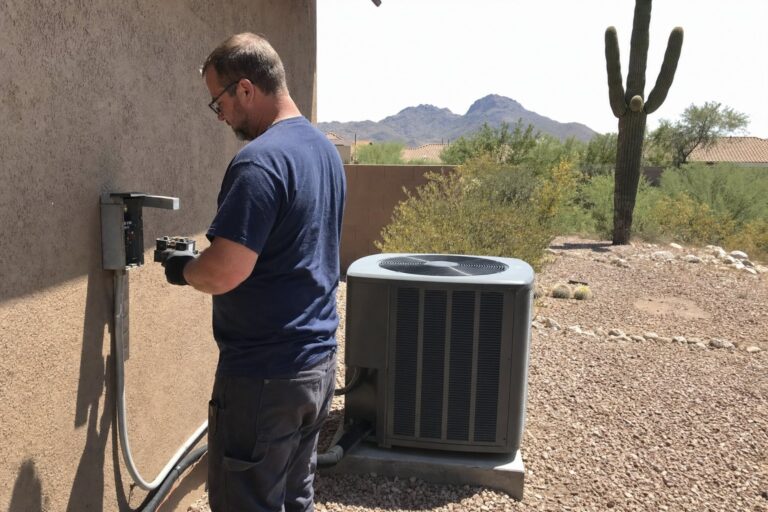
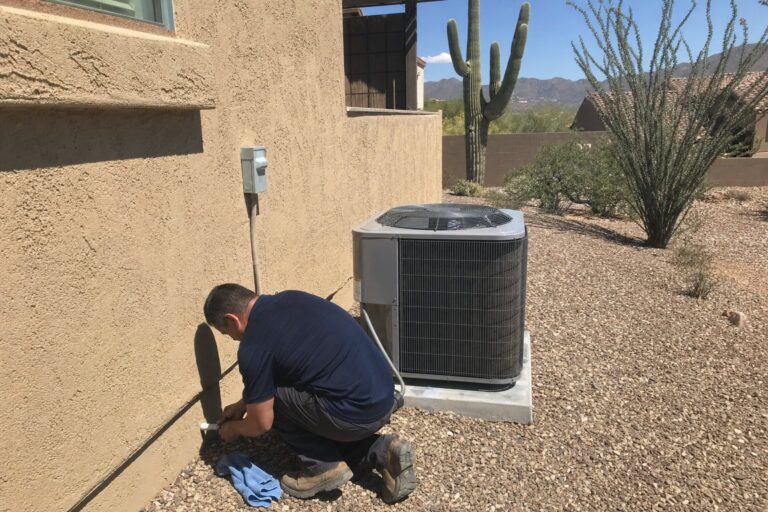
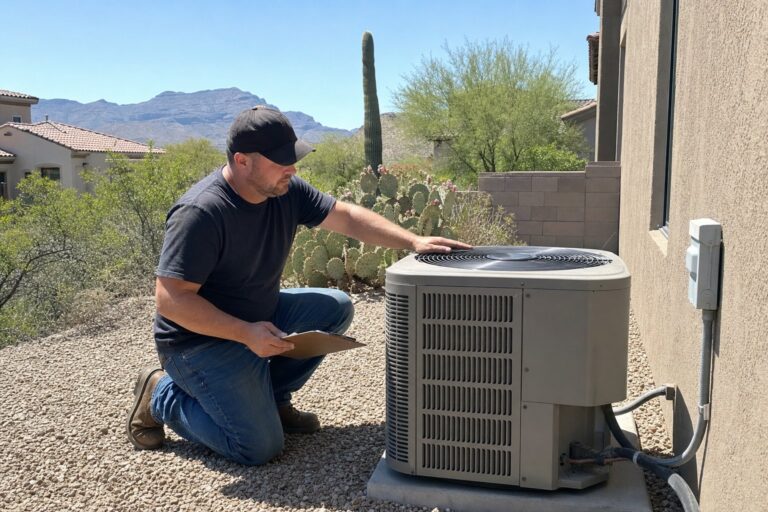
Drive through Sun City, Maryvale, or the older grid blocks of Mesa and Glendale and look up: the air conditioner is on the roof. Rooftop package units — self-contained systems that put the compressor, coils, blower, and often the furnace into a single cabinet — are a Phoenix residential signature, sitting on thousands of Valley homes built from the 1960s through the 1990s.
Yeti Pros delivers package unit repair throughout the Phoenix metro with technicians who work these systems every week. Veteran-owned and operated, licensed under ROC #363372 · ROC #363423, flat-rate written quotes, and a live person answers around the clock at (520) 556-8929.
Why the Valley put its air conditioners on the roof
Slab-built ranch homes with tight side yards and no basements left builders two options: carve out yard and closet space for a split system, or set one cabinet on the roof and duct straight down into the house. Across huge swaths of the metro — the Sun City and Sun City West retirement communities, Maryvale, older Peoria, mid-century Mesa, Glendale, and Tempe — the roof won.
The Phoenix Rooftop Challenge
It’s a sensible design with one catch: every component now lives in the harshest microclimate in Arizona, and servicing it takes crews who are equipped for rooftop work and disciplined about it. Not every company is. We are, and it’s a core piece of our residential HVAC service. (Ground-level split system instead? That’s covered under AC repair.)
Booking, pricing, and where the trucks roll
Every job starts with a human being who tells you the exact service-call fee up front — it’s credited toward your repair. Diagnosis ends with a flat-rate quote in writing before any work begins.
Genuine no-cool emergencies get 24/7 dispatch; see emergency AC repair when it can’t wait for morning.
Our written warranty exceeds the Minimum Workmanship Standards that Arizona’s ROC requires of every licensed contractor, and military families and veterans always receive 10% off from this veteran-owned company.
Coverage is the full metro: Phoenix, Scottsdale, Mesa, Chandler, Gilbert, Glendale, Tempe, Peoria, Surprise, Goodyear, Avondale, Buckeye, Queen Creek, San Tan Valley, Apache Junction, Sun City, Sun City West, Fountain Hills, Paradise Valley, Anthem, Cave Creek, Maricopa, and Casa Grande.
Gas-packs, heat-pump packages, and straight-cool: know what you own
- Gas/electric package units — “gas-packs.” Electric cooling paired with a natural-gas furnace section inside the same cabinet. Common wherever gas service runs. The furnace side has its own winter failure list, covered below.
- Heat-pump package units. One refrigerant circuit that cools all summer and reverses to heat in winter — a natural match for Phoenix’s short, mild heating season and for all-electric neighborhoods.
- Straight-cool package units. Cooling only, typically backed by electric resistance strips for the handful of genuinely cold Valley mornings.
We diagnose and repair all three, along with the curbs, gaskets, and duct transitions they sit on. Not sure which type is over your head? Read us the model number from the data plate over the phone, or we’ll identify it in seconds on arrival.
What a Phoenix roof does to HVAC equipment
Roof surfaces here can pass 160°F on summer afternoons, and the unit sits in that radiant bath while trying to reject heat into 115° air. Add year-round UV that embrittles wire insulation and cabinet gaskets, monsoon dust that packs the condenser coil, wind-driven rain probing every worn seal, and the occasional hail cell, and rooftop equipment simply ages faster than the identical machine on a shaded ground pad. That isn’t a scare tactic — it’s the plain reason the repair list below looks the way it does.
Common package unit repairs in Phoenix
Heat kills them, and a rooftop cabinet runs hotter than any ground-level condenser — so these parts get baked to failure noticeably faster up there. Classic symptoms: a hum with no start, hard starting, warm air from the vents.
Bearings and windings cooked by cabinet heat. A seized condenser fan spikes head pressure and knocks the system offline — or takes the compressor with it if it’s ignored.
Monsoon lightning, grid surges, and UV-brittled wire jackets account for a steady stream of no-cool and maddening intermittent-fault calls.
Hot-surface igniters, flame sensors, pressure switches, gas valves — the winter list, best caught at a fall inspection instead of the season’s first cold snap.
Vibration and corrosion open leaks at coils and fittings. Our EPA 608 certified techs locate the leak, repair it, and weigh the charge back to factory spec — not a yearly top-off habit.
Wind-thrown debris, hail-flattened coil fins, lifted access panels, water intrusion past failed gaskets — after a strong monsoon cell we see all of it, sometimes on the same roof.
A deteriorated curb gasket bleeds your cooled air — and sometimes rainwater — into the attic. It’s a genuine efficiency and moisture problem that many companies never even look for.
Rooftop discipline: how we work above your ceiling
Our techs use proper ladder setup and secured access, respect surface temperatures — deep-summer roof calls get scheduled early, before tile and foam become dangerous to kneel on.
Protect the roof itself while working: no tools dragged across foam coatings, no cracked tiles left behind, load spread carefully on walk paths.
Before climbing down, we check the curb flashing and penetrations around the unit, because an HVAC visit that creates a roof leak isn’t a repair.
If we spot existing roofing trouble near the equipment, you get photos from up there and a straight explanation — not a mystery invoice line.
Repair or replace — and who wrangles the crane
Repair
When repair is the smarter call, that’s what we’ll tell you; we fix far more rooftops than we swap.
Replace
The repair-versus-replace question carries extra weight with package units because replacement is a logistics project: a crane set, usually a curb adapter so the new cabinet mates cleanly to the existing duct openings, electrical and gas reconnections, and city permits with inspection. When repair stops making sense — a failed compressor in an aging cabinet, a cracked heat exchanger, an obsolete refrigerant that’s priced like a collector’s item — we manage the entire sequence ourselves: crane scheduling, curb adapters, permits, inspection day. Our AC replacement page walks through how those projects run.
Winter on the roof: heating service for package units
Half the reason to know your unit type is what happens in December. A gas-pack carries a real furnace up there — burners, heat exchanger, venting — and it deserves the same annual safety inspection any furnace gets, including heat-exchanger checks that protect your household from carbon monoxide. Heating faults on rooftop gas-packs fall under our furnace repair service; heat-pump packages that won’t heat fall under heat pump repair. Same trucks, same rooftop discipline, kinder weather.
Package unit questions from Valley rooftop owners
How do I know if my rooftop unit is a gas-pack or a heat pump?
Look for a gas line running to the unit and a small flue vent on the cabinet — that’s a gas-pack. No gas line and it heats anyway? Heat pump. The model number settles it definitively, and you’re welcome to read it to us over the phone so we arrive with the right parts on the truck.
Why does my package unit trip the breaker on hot afternoons?
Common culprits: a weakening capacitor, a compressor drawing locked-rotor amps as it struggles, a seizing fan motor, or a dust-packed condenser coil driving pressures sky-high. Repeated trips are a warning, not a quirk — stop resetting it and get a diagnosis before something expensive lets go.
Water is dripping from my roof unit. Is that normal?
Summer condensate drainage is normal, but it should route to a proper drain, not sheet across the roof or stain a ceiling. Water showing up inside the house near the duct chase points to a clogged drain or a curb leak — call promptly, because monsoon-season moisture damage compounds quickly.
Do you really need a crane to replace one?
Almost always. Residential package units weigh several hundred pounds and sit above tile and foam surfaces nobody should drag equipment across. We schedule the crane, the curb adapter, and the permits as part of the replacement — you don’t coordinate any of it.
My unit is from the 1990s and still runs. Repair or replace?
If it runs on R-22, major repairs rarely pencil out — that refrigerant has been out of production since 2020 and is priced accordingly. Minor electrical fixes can be worth it while you plan ahead. We put both numbers in writing and let the math make the call.
Can you handle the heating side too?
Yes — gas-pack furnace sections, heat-pump heating, and electric strip heat are all in scope, including fall safety inspections with heat-exchanger and carbon monoxide checks on gas-fired units.
Will the repair visit damage my tile or foam roof?
Protecting the roof is written into how we work: careful access points, load-spreading walk paths, nothing dragged across the surface, and a flashing check before we leave. If we find pre-existing damage near the unit, we photograph it and show you — no surprises in either direction.
Rooftop unit down? One call to (520) 556-8929 puts a rooftop-fluent, veteran-owned crew on the way — with the price in writing before the work starts.
Permits and inspections
Most repairs are ordinary service work; bigger scopes can involve city permitting. We perform our work to code, pull the permits our scope requires, and put what we did in writing.
What's covered
Workmanship is covered for two full years, in writing, and repair parts carry a 1-year manufacturer parts warranty — we document installs and repairs so those claims stay simple to make
Why a licensed HVAC contractor matters.
Package Unit Repair in Phoenix, city by city.
Every city below has its own local page for this service — local FAQs, utility territory, housing stock, and dispatch reality included.
Every major brand, serviced and installed.



Phoenix metro: Most days a tech is already working somewhere in the Valley, so same-day appointments happen when the schedule allows. After-hours emergencies are dispatched when a licensed tech is available — a real person answers and tells you the ETA on the call.
Call (520) 556-8929Request an estimate.
No pressure, no door knockers. We look at the HVAC system, tell you what it needs (and what it doesn’t), and put the number in writing.