
Phoenix Metro
AC Replacement in Phoenix.
- (520) 556-8929
- Serving the entire Phoenix metro — we come to you
- Office: Mon–Fri 8:00 AM – 5:00 PM · 24/7 emergency service
- 2-year workmanship warranty · 1-year parts warranty
- Veteran-owned & operated · residential + commercial
- 23 five-star Google reviews
Residential HVAC across the Valley.
Air conditioning, heating, and cooler work at homes across the Phoenix metro.
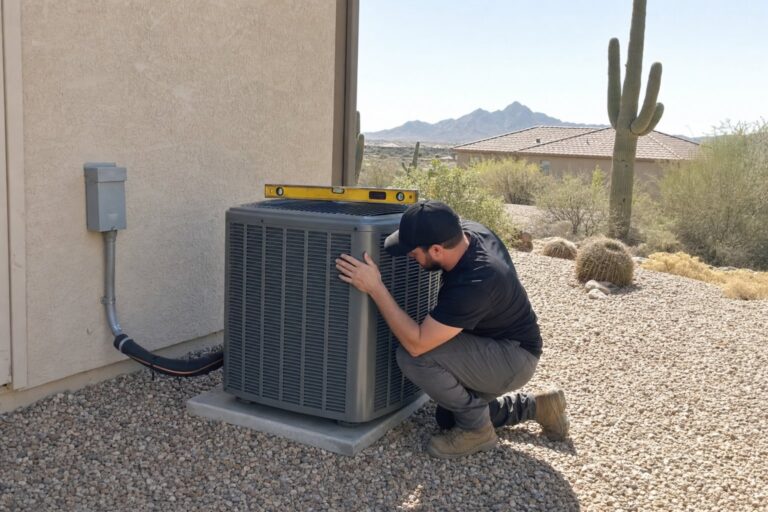
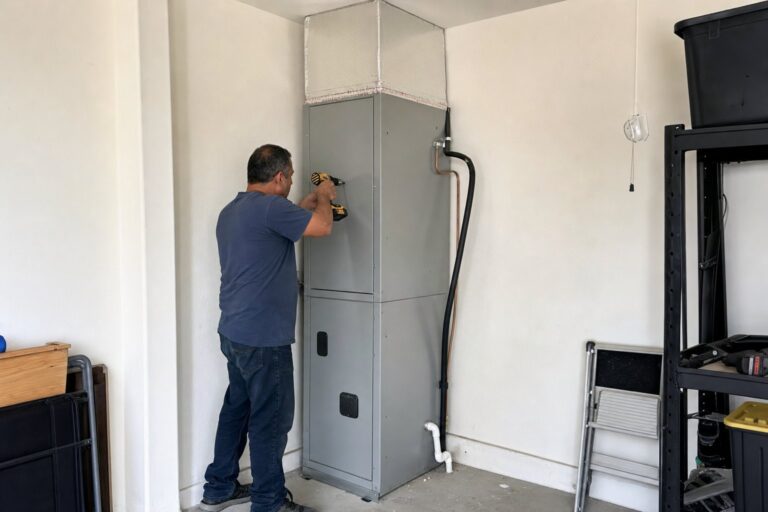
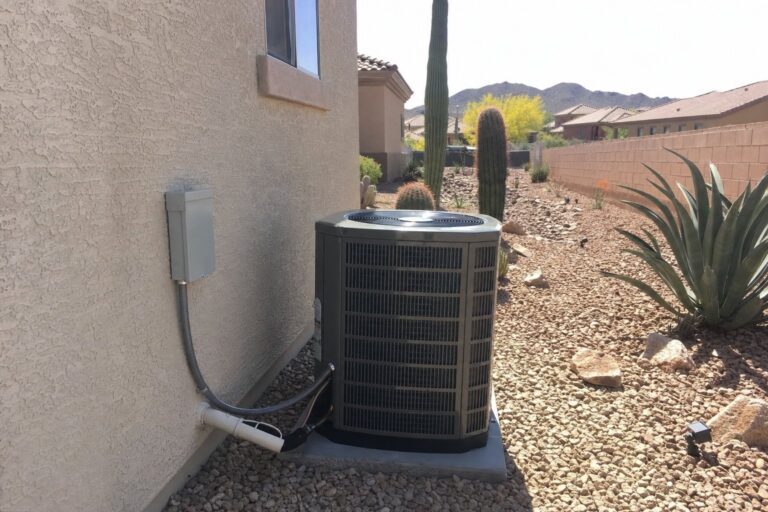
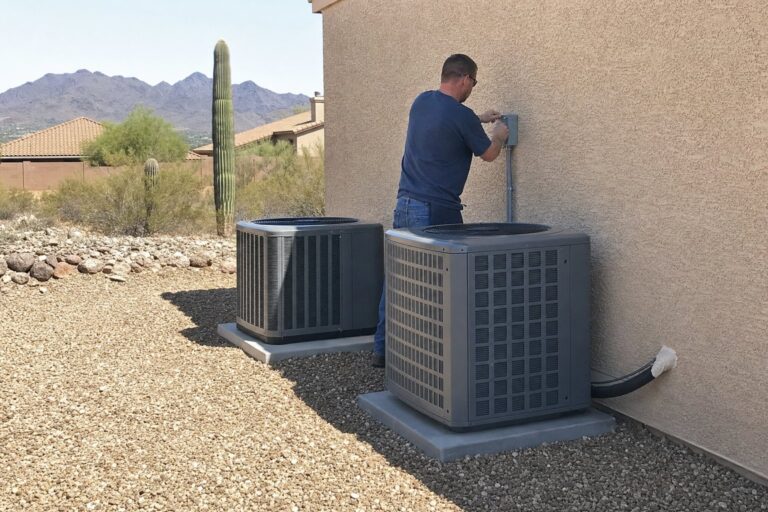
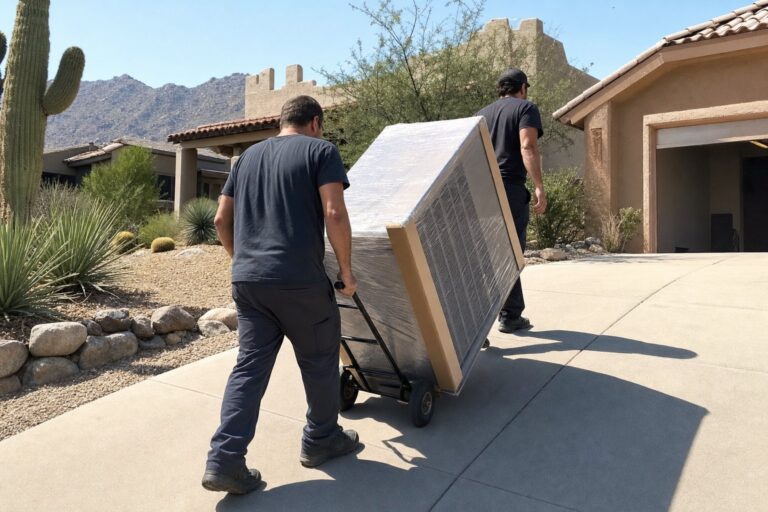
Nobody wakes up wanting to buy an air conditioner. The old system is dying expensively, and someone, whether us or a competitor, just handed you a repair quote big enough to raise the real question: is this system still worth putting money into? Yeti Pros replaces cooling systems across the Phoenix metro with honest replace-versus-repair math, flat-rate written quotes, permitted installs, and zero today-only pressure tactics. Veteran-owned and operated, ROC #363372 · #363423. Call (520) 556-8929.
The replace-or-repair decision, without the sales theater
Here’s the framework we use on our own homes. Multiply the repair quote by the system’s age in years. Under roughly $5,000, the repair usually deserves to win. Over $5,000–6,000, replacement usually does. A $450 fan motor on a 7-year-old system? Fix it (that’s $3,150 on the scale — fine). A $2,600 compressor on a 14-year-old unit? That’s $36,400 on the scale — put the money toward equipment that isn’t already old.
The multiplier exists because age predicts what’s next. Phoenix systems live hard lives — 12–16 hour summer days at the top of their pressure curves — and a 14-year-old unit that just ate a compressor has coils, motors, and a metering device with the same mileage. You’re not buying one repair; you’re buying a subscription to that unit’s remaining failures.
Three thumbs on the scale worth knowing about:
- R-22 refrigerant. If your system predates ~2010, it may run R-22 — out of production since 2020, with reclaimed supply priced accordingly. Any major R-22 repair is money into a platform whose refrigerant alone argues for retirement.
- Your summer utility bill. A 15-year-old builder-grade unit against a modern SEER2 variable-speed system is not a fair fight. On Phoenix runtimes the efficiency gap shows up on every APS/SRP bill from May to October — real dollars that belong in the math.
- The breakdown pattern. One repair in five years is a system having a bad day. Three repairs in two summers is a system telling you something. Believe it.
When you call us out, you get both numbers in writing — the repair and the replacement — with the math shown. We repair more systems than we replace, and we’re happy for it to stay that way; the point is that you decide with real figures, not adrenaline.
What it costs, and how people actually pay for it
Factors Influencing Replacement Pricing
Driven by the tonnage of the system.
From single-stage to variable-speed.
Split versus rooftop package (with crane).
Whether your ductwork needs attention while walls are open.
Our Transparent Quoting Process
We quote it flat-rate, in writing, usually as two or three tiers with the operating-cost difference shown at Phoenix runtimes. The quote holds, because a decision this size deserves a night’s sleep.
Flexible Payment Options & Savings
Financing
Financing spreads the hit into a monthly number.
Utility Rebates
APS and SRP rebates apply to qualifying high-efficiency equipment. We file the rebate paperwork; you keep the folder.
Federal Tax Credit
The federal 25C credit returns up to 30% (capped) on qualifying systems at tax time.
Military & First Responder Discount
The 10% military, veteran & first responder discount stacks with all of the above.
Signs your AC is telling you it’s done
Especially with original major components. (Find the manufacture date on the condenser’s data plate — we’ll show you where.)
On 110°+ afternoons despite a clean filter and full charge — capacity loss from tired compressors and fouled coils.
With no rate change — efficiency bleeding out.
That’s not maintenance; that’s a slow leak subsidizing nobody but the refrigerant supplier.
Humidity during monsoon season, short-cycling, or grinding/screeching that comes back after repairs.
What replacement day looks like
Floor protection is laid, old refrigerant recovered per EPA 608 (never vented), and old equipment hauled for recycling.
The new system is installed per manual: new filter drier, nitrogen-purged brazing, pressure test, deep vacuum verified by decay test, weighed-in charge, static-pressure and airflow checks, and full-cycle commissioning with readings documented.
Rooftop package units include a crane set; we schedule the crane, handle street logistics, and treat curb and electrical properly.
City permit inspection (required in every Valley city), manufacturer warranty registration, and rebate paperwork filing are completed.
Most replacements are a single day. Expect cooling by dinner, and all paperwork finalized by end of week.
Don’t replace the equipment and keep the problem
A new condenser bolted to failing ductwork is half a job.
Valley duct systems live in 140°F attics, and after 15–20 years the leaks, crushed runs, and dry-rotted flex often waste 20–30% of the cooling you’re about to pay premium dollars to produce.
Replacement day is the cheapest moment to fix it — the crew is there, the system is open, and sealing or targeted duct replacement gets quoted as a line item you can accept or decline.
Same honest treatment for the maintenance plan that keeps warranty conditions satisfied: offered once, in writing, no browbeating.
Warranties, in plain English
Commonly 10 years, registration required — we register it for you, because unregistered warranties quietly shrink.
Covers the workmanship.
Every Arizona contractor owes you this under the ROC’s Minimum Workmanship Standards.
If any contractor won’t put warranty terms on paper, that’s your cue to keep shopping.
Timing the replacement: the Valley calendar matters
Buyer’s Season: October through April
If your system is giving you the choice — limping but alive — when you replace is worth real money. During this period, you benefit from:
- Install crews booking normally instead of triaging emergencies.
- Crane scheduling for rooftop units being days instead of weeks out.
- Equipment distributors having full warehouses instead of allocation lists.
- The ability to sleep on quotes without sweating through the decision.
- Opportunities to be choosier about pairing the job with duct work, insulation, or thermostat upgrades while access is cheap.
A planned February replacement beats an emergency July one on price, choice of equipment, and stress — every time.
Peak Season: May through September
This period flips every one of those advantages, with the first heat wave impacting hardest. During these months:
- The Valley’s replacement demand spikes.
- Lead times stretch.
- You’re deciding under a 95° roof.
The pattern repeats every single year. If we’ve told you your system is on its last legs, believe the calendar: an emergency July replacement will be worse on price, choice of equipment, and stress.
Replacement questions we answer every week
That’s $19,800 on the multiplier — deep in replacement territory on the math. But context matters: what failed, what refrigerant, how the system has behaved. We’d want the diagnosis in front of us, and we’d show you both quotes and the utility-bill math. Sometimes an 11-year-old system with one bad component and a clean history earns the repair.
Sometimes — and when the limp is safe, we’ll help you plan it: stabilize the old unit, schedule the replacement for shoulder season when crane and equipment availability is easy. When the failure mode is the dangerous kind (electrical, compressor grenading), we’ll tell you that too.
Yes — refrigerant recovered per EPA 608, equipment hauled and recycled, included in the quote. Nothing left rusting in the side yard.
No — and walk away from anyone who suggests it without a load calculation. Oversized systems short-cycle, control humidity poorly, and die younger. We size with Manual J; details on the installation page.
Realistically 10–15 years for hard-run Valley systems — this climate is the tax. Annual maintenance is what pushes you toward the far end of the range and keeps the parts warranty’s conditions satisfied.
Bring us the other company’s writeup and we’ll give you a free second opinion on it. Sometimes we confirm it and quote the replacement. A surprising percentage of the time, the “dead” system needs a capacitor. Either way you’ll know before spending five figures — and second opinions have paid for themselves in this market for as long as we’ve been in it.
The industry just moved to R-454B equipment, and equipment prices have climbed industry-wide in recent years — waiting rarely makes systems cheaper. What actually saves money: shoulder-season scheduling, rebate capture, and buying the right size instead of the biggest one.
Got a repair quote in hand and want the second opinion? Call (520) 556-8929. We’ll give you the straight math — repair and replace, side by side, in writing. Veteran-owned, ROC #363372 · #363423.
Permits and inspections
Most repairs are ordinary service work; bigger scopes can involve city permitting. We perform our work to code, pull the permits our scope requires, and put what we did in writing.
What's covered
Workmanship is covered for two full years, in writing, and repair parts carry a 1-year manufacturer parts warranty — we document installs and repairs so those claims stay simple to make
Why a licensed HVAC contractor matters.
AC Replacement in Phoenix, city by city.
Every city below has its own local page for this service — local FAQs, utility territory, housing stock, and dispatch reality included.
Every major brand, serviced and installed.





Phoenix metro: Most days a tech is already working somewhere in the Valley, so same-day appointments happen when the schedule allows. After-hours emergencies are dispatched when a licensed tech is available — a real person answers and tells you the ETA on the call.
Call (520) 556-8929Request an estimate.
No pressure, no door knockers. We look at the HVAC system, tell you what it needs (and what it doesn’t), and put the number in writing.