
Phoenix Metro
AC Repair in Phoenix.
- (520) 556-8929
- Serving the entire Phoenix metro — we come to you
- Office: Mon–Fri 8:00 AM – 5:00 PM · 24/7 emergency service
- 2-year workmanship warranty · 1-year parts warranty
- Veteran-owned & operated · residential + commercial
- 23 five-star Google reviews
Residential HVAC across the Valley.
Air conditioning, heating, and cooler work at homes across the Phoenix metro.
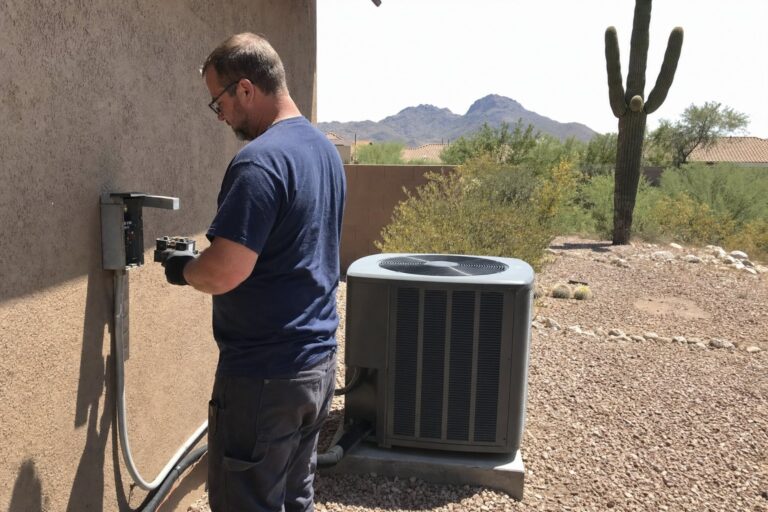
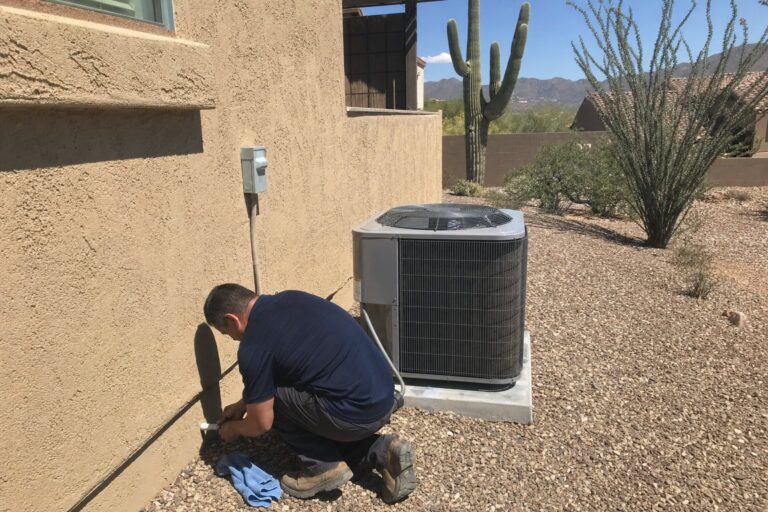
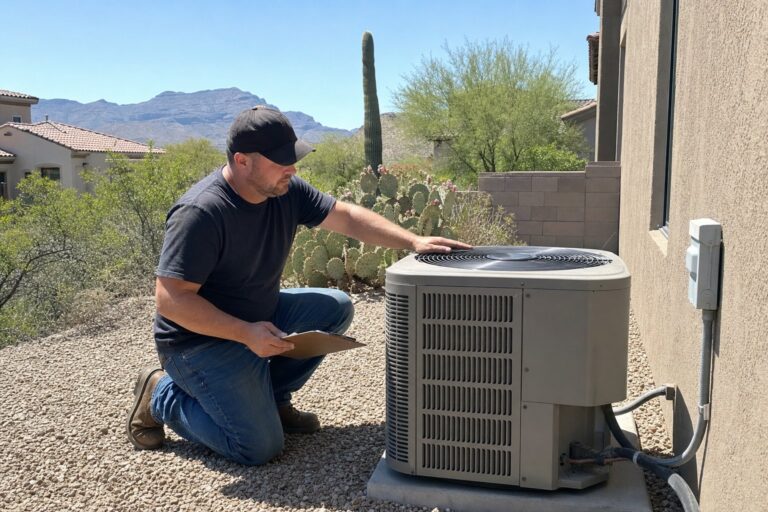
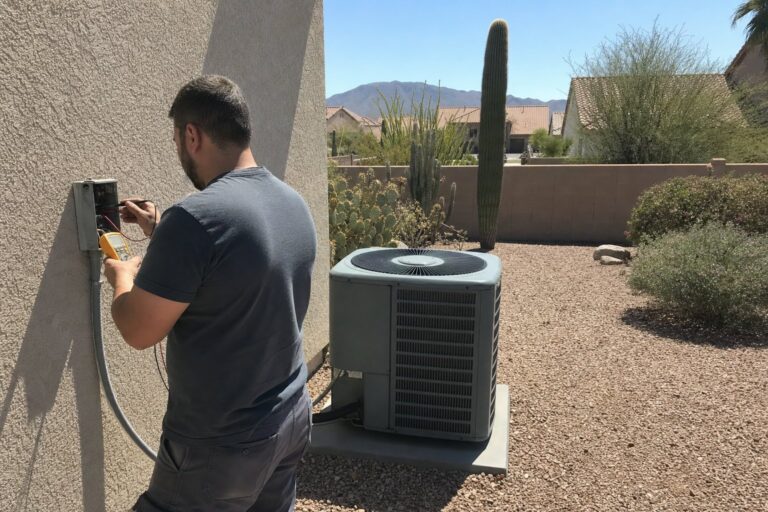
When your air conditioner quits in Phoenix, it isn’t a comfort problem — between June and September it’s a safety problem. Indoor temperatures in an un-cooled Valley home can pass 95°F within hours.
Yeti Pros runs same-day AC repair across the entire Phoenix metro, with 24/7 emergency dispatch, flat-rate written quotes, and a veteran-owned crew licensed under ROC #363372 and ROC #363423. Call (520) 556-8929 and a real person answers.
What actually breaks on Phoenix air conditioners
After enough summers in this market, the failure list gets predictable. Phoenix runtime — 12 to 16 hours a day at 110°F+ — kills specific parts in a specific order:
The single most common summer failure in the Valley. Heat degrades the electrolyte; the compressor or fan won’t start, and you get warm air or a dead unit. Cheap part, fast fix — if it’s caught before it takes the compressor’s start windings with it.
The relay that switches your condenser on and off, thousands of cycles per summer. Pitted contacts cause hard starts, chattering, or a unit that won’t shut off.
They live outside in direct Arizona sun, moving 160°F air off the coil. When one seizes on a July afternoon, head pressure spikes and the system shuts down — or worse, cooks the compressor.
The heart of the system, and the most expensive electromechanical part. In Phoenix they run at the top of their pressure range all summer. We test before we condemn one — plenty of “dead compressors” are actually dead capacitors — and when one truly fails on an older R-410A or R-22 system, we’ll give you honest replace-versus-repair math.
Vibration, age, and corroded coils bleed charge. Low refrigerant means long run times, ice on the lines, and slow cooling loss. We find leaks with electronic detection and dye, fix the leak, and recharge to spec — we don’t just “top it off” every June and call it service.
Dry all spring, slammed in monsoon season. Algae and dust plug the line, the float switch trips, and the AC shuts off — or the pan overflows through your ceiling.
Monsoon lightning and grid surges take out boards, transformers, and low-voltage wiring. If your system died the same night as a storm, this is the first place we look.
One haboob can coat a coil badly enough to cut capacity by double digits. Restricted coils run hot, trip on high pressure, and shorten compressor life.
Pricing, financing, and 10% off for military families
Flat-rate quotes in writing.
The service-call fee disclosed when you book and credited toward the repair.
Financing available for the big-ticket surprises.
A permanent 10% military, veteran & first responder discount — we’re veteran-owned and operated, and that one’s not a promotion, it’s policy.
Split systems, heat pumps, and rooftop package units
We repair every configuration the Valley actually runs: conventional split systems, heat pumps (which most Phoenix homes use for both cooling and heating), ductless mini-splits, and — a true Phoenix specialty — rooftop package units. Gas-packs and heat-pump packages sit on thousands of Valley roofs, from Sun City retirement communities to Maryvale ranch homes, where roof surface temperatures pass 160°F in summer. Rooftop work is its own discipline: safe access, sun-baked electrical components, and units that were installed decades ago to different codes. Our techs do it daily. If your unit needs full replacement, our package unit team handles crane scheduling and city permits as part of the job.
How an AC repair call runs
Call (520) 556-8929. We tell you the exact service-call fee on that call — before we roll a truck, not after.
The technician tests the system, then shows you what failed — the bulged capacitor, the seized motor, the pressure readings. You’ll understand what broke and why before anyone talks price.
One number, before work starts. The service-call fee applies toward the repair. If we open things up and find more, we stop and re-quote — you approve every dollar before it’s spent.
We don’t leave until the system is pulling the right temperature split and holding it. Every repair is documented and backed by our written warranty — which sits on top of the workmanship floor Arizona law already guarantees you (see below).
Repair or replace? The honest math
Phoenix summers age equipment fast, so this question comes up constantly. We’ll show you both numbers and let you decide — we repair far more systems than we replace, and we’re comfortable with that.
Consider Repair
Our rule of thumb: multiply the repair cost by the system’s age in years. If the result is below $5,000–$6,000, repair usually wins. Example: A $600 repair on a 6-year-old system? Fix it.
Consider Replacement
If the result of (repair cost x system age) passes $5,000–$6,000, replacement usually wins. Example: A $2,400 compressor on a 13-year-old R-410A unit that’s already had three summer breakdowns? Put that money toward a new SEER2 system that cuts your APS or SRP bill every month instead.
A word on refrigerants (R-22, R-410A, R-454B)
If your system predates roughly 2010, it may still run R-22 — banned from production since 2020, with reclaimed supply getting scarcer and pricier every year. A major R-22 repair is usually money thrown at a system whose refrigerant alone argues for retirement. R-410A remains the Valley workhorse, and new equipment is moving to R-454B under the 2025 EPA transition. Whatever’s in your lines, we service it with EPA 608-certified techs, we weigh in charges to factory spec, and we fix leaks instead of selling you an annual top-off subscription.
Monsoon season: when Phoenix ACs fail in bulk
July through September is our busiest stretch, and it isn’t just the heat. After every major storm we run extended hours, and surge-related failures are one more reason we recommend whole-home or condenser surge protection — a small add-on that has saved more than one control board on our watch.
Dust storms clog coils and burn out fan motors.
Lightning surges kill boards.
Humidity floods condensate lines.
Permits, code, and the Arizona workmanship standard
Permits & City Codes
Like-for-like repairs don’t need a permit in Valley cities. Replacements and refrigerant-circuit changes often do, and requirements vary between Phoenix, Mesa, Scottsdale, Chandler, and the rest — we handle the permit and the inspection when the job calls for it.
Workmanship & Warranty
Every ROC-licensed Arizona contractor is legally bound by the state’s Minimum Workmanship Standards. That’s your floor by law. Our written warranty is the layer we add on top of it, and we’ll happily put both in writing on your invoice.
Where we repair ACs
The entire Phoenix metro:
- Phoenix
- Scottsdale
- Mesa
- Chandler
- Gilbert
- Glendale
- Tempe
- Peoria
- Surprise
- Goodyear
- Avondale
- Buckeye
- Queen Creek
- San Tan Valley
- Apache Junction
- Sun City
- Sun City West
- Fountain Hills
- Paradise Valley
- Anthem
- Cave Creek
- Maricopa
- Casa Grande
and everywhere in between. Wherever you are in the Valley, the truck comes to you.
AC repair questions we answer every week
My AC is running but blowing warm air. What is it?
Most often: a failed capacitor keeping the outdoor unit from starting, low refrigerant from a leak, or a dust-packed condenser coil. Set the thermostat 5° below room temp, check that the outdoor fan is spinning, and check your air filter. If the outdoor unit hums but won’t start, shut the system off and call — running it that way can damage the compressor.
Why is there ice on my AC lines in the middle of summer?
Ice means low airflow or low refrigerant. Turn cooling off and run the fan only so it thaws — then get it diagnosed. Running an iced system risks flooding the compressor with liquid refrigerant, which turns a moderate repair into a major one.
How much does AC repair cost in Phoenix?
Common repairs (capacitors, contactors, drain clears) typically land in the low hundreds. Motors and refrigerant repairs run mid-hundreds to low four figures depending on the system. Compressors are the big one. You’ll have an exact flat-rate number in writing before we touch anything, the service-call fee is disclosed at booking and credited to the repair, and military families take 10% off.
Can you actually come today?
Usually, yes — same-day for most calls placed by mid-afternoon, and 24/7 for emergencies. The exception is the first heat wave of the season, when the whole Valley calls at once. Even then, no-cool calls jump the line.
Should I just replace my old unit instead of repairing it?
Sometimes. Multiply repair cost by system age — past ~$5–6k, replacement usually wins, especially for R-22 systems. We’ll give you both numbers, straight up. We repair more than we replace.
Do you service my brand?
Yes — Trane, Carrier, Lennox, Goodman, Rheem, Ruud, American Standard, York, Bryant, Amana, Daikin, Mitsubishi, and the rest. Parts for common Valley equipment ride on the truck.
No cool air right now? Call (520) 556-8929 — 24/7, a real person answers, and a veteran-owned team gets rolling.
Permits and inspections
Most repairs are ordinary service work; bigger scopes can involve city permitting. We perform our work to code, pull the permits our scope requires, and put what we did in writing.
What's covered
Workmanship is covered for two full years, in writing, and repair parts carry a 1-year manufacturer parts warranty — we document installs and repairs so those claims stay simple to make
Why a licensed HVAC contractor matters.
Related specialty services.
AC Repair in Phoenix, city by city.
Every city below has its own local page for this service — local FAQs, utility territory, housing stock, and dispatch reality included.
Every major brand, serviced and installed.





Phoenix metro: Most days a tech is already working somewhere in the Valley, so same-day appointments happen when the schedule allows. After-hours emergencies are dispatched when a licensed tech is available — a real person answers and tells you the ETA on the call.
Call (520) 556-8929Request an estimate.
No pressure, no door knockers. We look at the HVAC system, tell you what it needs (and what it doesn’t), and put the number in writing.