
Phoenix Metro
Blower Motor Replacement in Phoenix.
- (520) 556-8929
- Serving the entire Phoenix metro — we come to you
- Office: Mon–Fri 8:00 AM – 5:00 PM · 24/7 emergency service
- 2-year workmanship warranty · 1-year parts warranty
- Veteran-owned & operated · residential + commercial
- 23 five-star Google reviews
Residential HVAC across the Valley.
Air conditioning, heating, and cooler work at homes across the Phoenix metro.
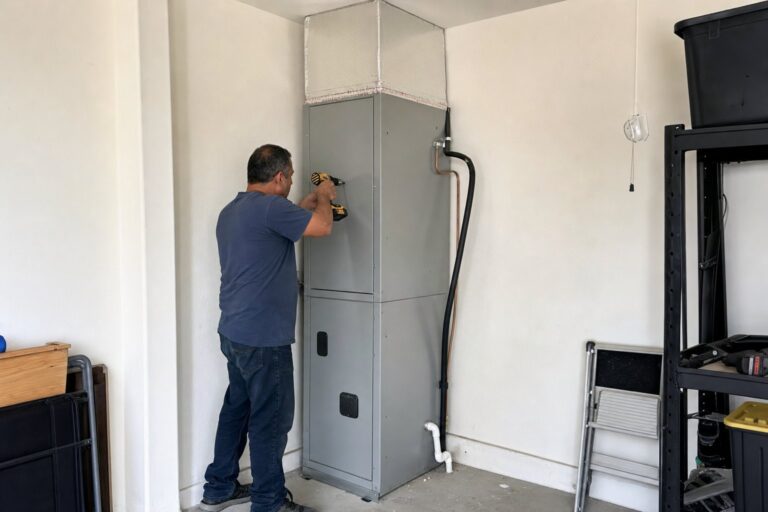
AC blower motor replacement is the repair that restores indoor airflow when the motor that moves air through the coil and ductwork has failed or is too weak to do the job. You need it when the outdoor unit runs but little or no air comes from the vents, the indoor fan hums, trips, surges, or quits. Yeti Pros tests the motor and controls before quoting replacement.
Why a bad blower motor can take down the whole system
The blower is the indoor air mover. It pulls return air through the filter, pushes it across the evaporator coil, and sends conditioned air through the ducts. If the blower fails, the AC may still have a working outdoor unit, refrigerant circuit, and thermostat, but the house will not cool because air is not crossing the coil. In Phoenix, weak airflow gets punished fast because heat load is high and run times are long.
A failing blower can create a death spiral. Low airflow makes the evaporator coil too cold, which can lead to freezing. Ice blocks even more airflow. The compressor keeps working against bad conditions. Rooms get hot, humidity rises, and the system may short-cycle, trip limits, or run continuously without comfort. Sometimes the blower motor is the root cause. Sometimes the blower is a victim of a clogged filter, dirty coil, collapsed duct, failed capacitor, bad relay, control board issue, or high static pressure.
Motor type matters. Older and simpler systems often use PSC motors with a run capacitor. If the capacitor is weak, the motor may hum, start slowly, overheat, or fail to start. Replacing the motor without checking the capacitor and amp draw is sloppy. Many newer systems use ECM motors, which have electronics that control speed and efficiency. ECM failures can involve the motor module, the motor itself, control signal problems, or power issues. A wrong diagnosis can turn an electrical repair into an unnecessary parts replacement.
Duct conditions matter too. Arizona is slab-on-grade, so ductwork usually lives in attics, not basements. Attics can hit 150°F+, and ducts up there see heat, dust, crushed runs, torn flex, and return leaks. A new motor installed into a high-static duct system may run hot and fail early. Our residential AC repair process checks the motor and the airflow conditions around it.
How the job actually goes
We start with what the system is doing. Is the outdoor condenser running while the indoor fan is dead? Does the blower run in fan-only mode but not cooling? Is there a hum from the cabinet? Does the motor start after a push or quit after warming up? Those details point the diagnosis in the right direction before any panel comes off.
Then we test. Depending on the equipment, we check line voltage, low-voltage call, capacitor rating and actual microfarads on PSC systems, motor amp draw, wheel condition, relay or board output, ECM control signals, harnesses, module condition, and safety switches. We also inspect the blower wheel and cabinet. A dirty wheel can move much less air than it should and overload a motor. A wheel that is loose, damaged, or rubbing can sound like a motor failure when the problem is mechanical.
If the motor has failed, we identify the correct replacement path. PSC motors need the correct horsepower, voltage, rotation, speed, frame, shaft, mounting, and capacitor match. ECM motors may need an OEM module, programmed motor, or exact compatible replacement depending on the unit. Universal parts can be useful in the right setting, but they are not a free pass to ignore manufacturer requirements. We explain the option that fits the equipment, not the quickest part on a truck shelf.
Before work starts, you get a flat-rate written quote after the in-person look. The quoted number is what you pay unless we find something new and stop to re-quote. The diagnostic or service-call fee is disclosed at booking and credited toward the repair. During replacement, power is shut off, the blower assembly is accessed, the old motor is removed, the wheel and housing are inspected and cleaned as needed, the new motor is mounted, wiring is secured, and the system is tested under operation.
At handoff, we verify airflow behavior, temperature split when cooling operation is available, amp draw or operating data, noise, vibration, and fan-speed operation. If we find duct restrictions, a dirty coil, or a filter problem that contributed to the failure, we show you. To schedule across Phoenix and the Valley, use contact or call (520) 556-8929. We are a service-area business, so we come to you.
Airflow symptoms and what they point to
Blower problems are often misread because the outdoor unit gets most of the attention. If the condenser is loud and visible, people assume the AC is running. But cooling depends on indoor airflow just as much as outdoor operation. Here is how the common signs sort out.
| What you notice | What it usually means | This service or something else? |
|---|---|---|
| Outdoor unit runs, no air at vents | Indoor blower is not running, or a control/safety issue is stopping it | Blower diagnosis first |
| Motor hums but does not start | Weak capacitor, seized motor, bad winding, or stuck blower wheel | PSC motor and capacitor testing |
| Airflow is weak in every room | Dirty filter, dirty blower wheel, weak motor, dirty coil, or duct restriction | Airflow diagnosis before replacement |
| Fan speed surges or acts random | ECM module, control signal, harness, or board issue may be present | ECM testing, not a guess |
| Coil freezes and vents fade | Airflow may be too low, or refrigerant may be low | Blower, filter, coil, and refrigerant checks |
| Burning smell from indoor cabinet | Overheated motor, wiring issue, or failed component may be present | Shut it down and schedule repair |
Phoenix-metro realities that change blower work
Blower motors here live a hard life because they run for long cooling seasons and push air through duct systems that are often in brutal attic conditions. A motor that might coast through a mild summer elsewhere can overheat or show weakness quickly in a Phoenix-metro home. Long run times expose weak capacitors, dirty wheels, tight bearings, bad modules, and high-static duct conditions.
Attic ductwork is a major part of the story. With slab-on-grade construction, the duct system is usually overhead. Attics can hit 150°F+, and that heat works against everything: flex duct, insulation, air handlers, control wiring, and the technician trying to service the blower. A crushed return, undersized filter grille, dirty coil, or closed-off supply path can raise static pressure. The blower then works harder to move less air. That can shorten motor life and make a new motor look bad if the airflow problem is ignored.
Dust is constant. Fine desert dust gets past poor filter setups, return leaks, and open construction gaps. It sticks to blower wheel blades. A dirty wheel may still spin, but it loses its ability to scoop and move air. That means less airflow across the coil, longer run times, higher electric use, and more motor heat. Cleaning or correcting the airflow path can be just as important as replacing the failed part.
Equipment mix matters too. The Valley has older PSC systems, newer ECM air handlers, rooftop package units, split systems, heat pumps, and variable-speed equipment. A PSC motor and capacitor repair is a different job from an ECM module diagnosis. The correct repair depends on model data, electrical readings, and airflow conditions. We do not treat every dead indoor fan as the same part.
What affects the written quote
The quote depends on motor type, access, control failure, wheel condition, and whether airflow problems need correction. PSC motors are usually more straightforward than programmed ECM replacements, but the exact equipment decides the repair. An attic air handler with tight access takes different labor than a garage unit. A dirty blower wheel, failed control board, damaged harness, or high-static duct problem can change the scope.
After the in-person look, Yeti Pros gives a flat-rate written quote. The quoted number is what you pay unless we find something new and stop to re-quote before continuing. The diagnostic or service-call fee is disclosed at booking and credited toward the repair. Repair workmanship is backed by a 2-year written workmanship warranty, and repair parts carry a 1-year manufacturer parts warranty. The work is held to the AZ ROC Minimum Workmanship Standards.
Yeti Pros is veteran-owned and operated. AZ ROC #363372 · ROC #363423. Office hours are Mon-Fri 8-5, with 24/7 emergency service. Financing is available, and we offer a 10% military, veteran and first responder discount. For more repair-scope detail, read our blower motor cost guide.
Straight answers
How do I know if my AC blower motor is bad?
Strong signs include no air from the vents while the outdoor unit runs, humming at the indoor cabinet, a motor that starts and stops, burning smell, or weak airflow with abnormal motor readings. We still test capacitors, boards, switches, and airflow before calling the motor bad.
What is the difference between PSC and ECM blower motors?
PSC motors are simpler motors that typically use a run capacitor and fixed speed taps. ECM motors use electronics to control speed and efficiency. ECM diagnosis needs power and signal testing because the module, motor, harness, or control board can be the problem.
Can a dirty filter ruin a blower motor?
A dirty filter can restrict airflow and raise static pressure. That makes the blower work harder and can add heat and stress. It may not be the only cause of failure, but poor airflow is one of the first things we check.
Do you replace blower motors after hours?
Yes, when parts and conditions allow. Office hours are Mon-Fri 8-5, and 24/7 emergency service is available. Call (520) 556-8929. We come to you, diagnose the failure, and provide the written quote before work starts.
Permits and inspections
Most repairs are ordinary service work; bigger scopes can involve city permitting. We perform our work to code, pull the permits our scope requires, and put what we did in writing.
What's covered
Workmanship is covered for two full years, in writing, and repair parts carry a 1-year manufacturer parts warranty — we document installs and repairs so those claims stay simple to make
Why a licensed HVAC contractor matters.
Every major brand, serviced and installed.


Phoenix metro: Most days a tech is already working somewhere in the Valley, so same-day appointments happen when the schedule allows. After-hours emergencies are dispatched when a licensed tech is available — a real person answers and tells you the ETA on the call.
Call (520) 556-8929Request an estimate.
No pressure, no door knockers. We look at the HVAC system, tell you what it needs (and what it doesn’t), and put the number in writing.