
Phoenix Metro
Heat Pump Installation in Phoenix.
- (520) 556-8929
- Serving the entire Phoenix metro — we come to you
- Office: Mon–Fri 8:00 AM – 5:00 PM · 24/7 emergency service
- 2-year workmanship warranty · 1-year parts warranty
- Veteran-owned & operated · residential + commercial
- 23 five-star Google reviews
Residential HVAC across the Valley.
Air conditioning, heating, and cooler work at homes across the Phoenix metro.
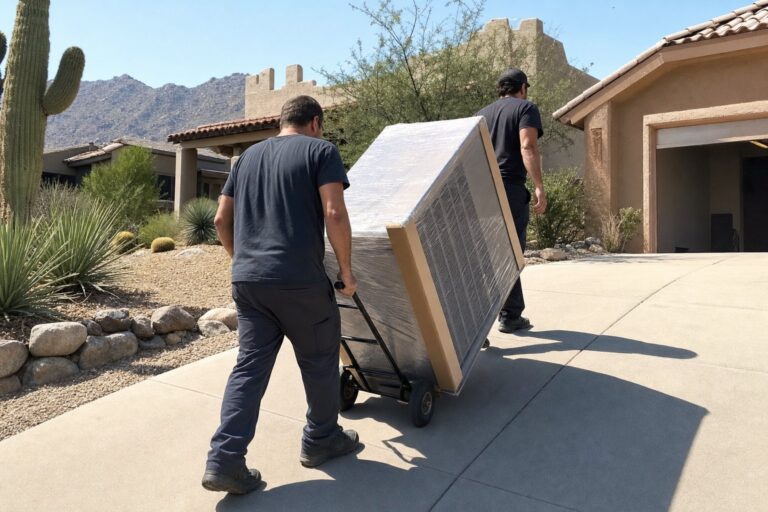
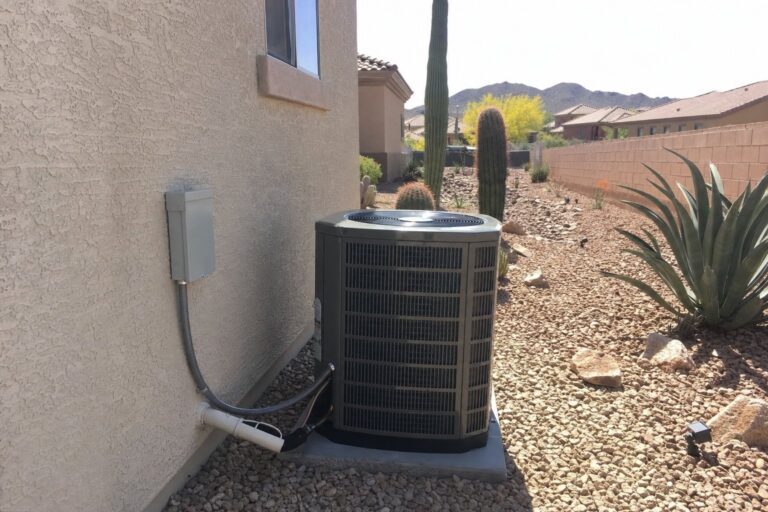
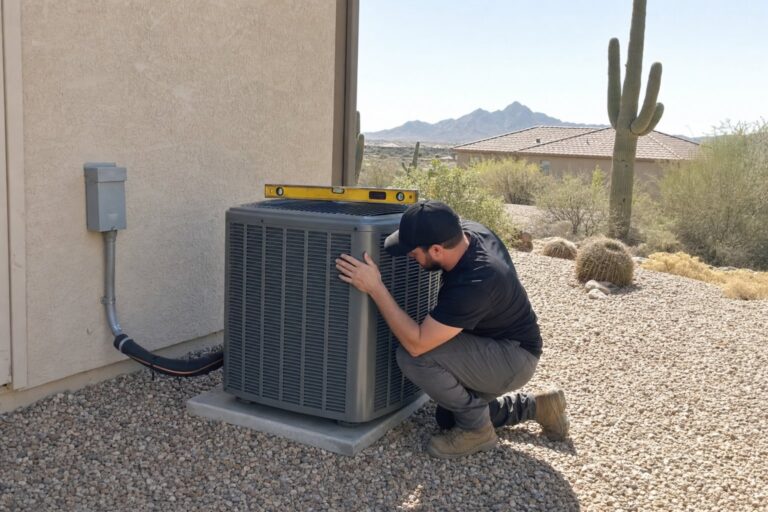
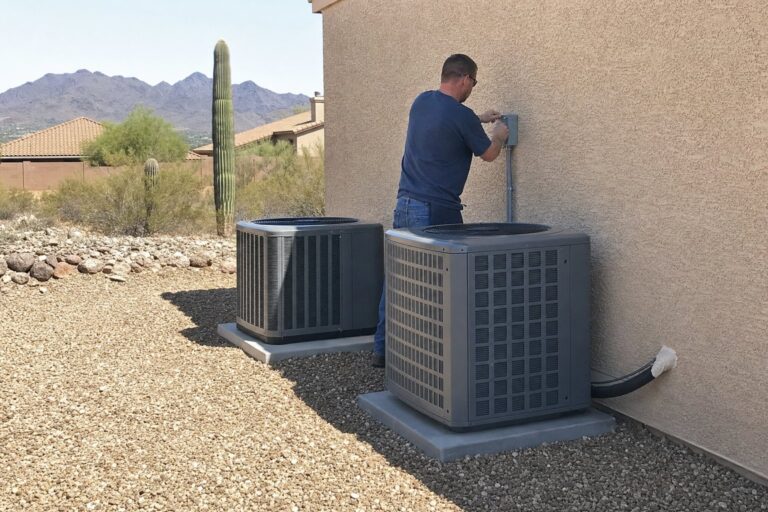
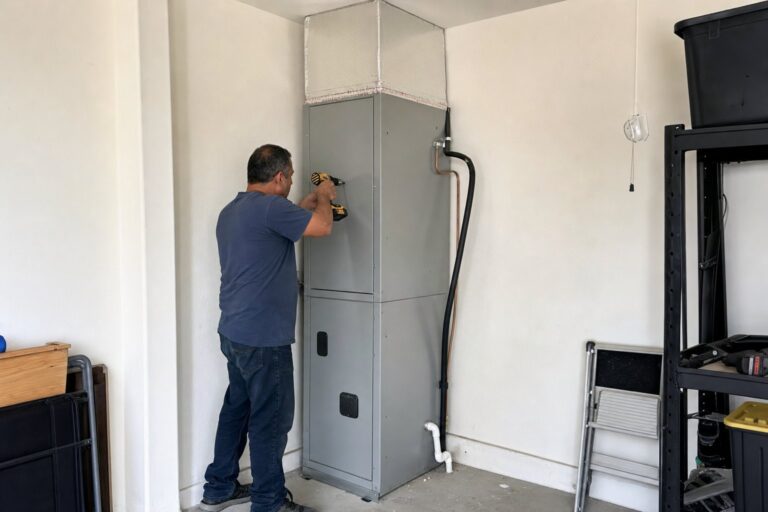
Phoenix is one of the strongest markets in America for heat pump installation. Our mild winters are a good fit for heat pumps, and our summers already call for a strong air conditioner, which a heat pump is with heating built in. One outdoor unit, one air handler, one system to maintain, no gas line required.
Yeti Pros designs and installs heat pumps across the entire Phoenix metro: veteran-owned and operated, ROC #363372 · ROC #363423, flat-rate written proposals, and rebate paperwork handled for you. Call (520) 556-8929 to start with a real conversation instead of a sales script.
Why heat pumps fit Phoenix better than almost anywhere
If you’re buying an excellent air conditioner anyway, stepping up to a heat pump buys your heating almost as an afterthought.
Phoenix winter design temperatures sit far above the range where heat pumps lose their efficiency edge, so a properly sized unit here heats comfortably without leaning hard on backup strips.
Homes in APS and SRP territory run electric cooling regardless, and both utilities offer rate plans that reward efficient equipment.
Compare that with owning a furnace that burns Southwest Gas a few hundred hours a year while you pay the connection charge twelve months a year — for many Valley homes, the all-electric math simply wins.
Replacing an AC-and-furnace combo with one machine
The most common installation we quote isn’t heat-pump-for-heat-pump — it’s a homeowner with an aging air conditioner and a gas furnace deciding whether the next system should consolidate.
Conversion Process
A new outdoor heat pump replaces the condenser.
A matched air handler with backup strips replaces the furnace.
The old gas line gets capped safely.
Benefits of Consolidation
You retire a combustion appliance (and the carbon monoxide risk that travels with it).
You drop a monthly gas base charge if the furnace was your last gas appliance.
You end up with one system on one maintenance schedule.
If your furnace has been limping along through repairs — our furnace repair page covers that decision in detail — the conversion conversation is worth having before you sink more money into old equipment.
Sizing comes first: the Manual J load calculation
The fastest way to ruin a new heat pump is to size it by rule of thumb.
Manual J Load Calculation Factors
Orientation, window area and shading.
Insulation levels, duct location.
Ceiling heights — because Phoenix homes vary wildly, from tight new builds in Queen Creek to 1970s block construction in Tempe with ducts running through a 140°F attic.
Oversized Systems
Short cycle, dehumidify poorly during monsoon season, and wear out early.
Undersized Systems
Run flat-out and still lose ground at 115°F.
The right size, matched to ductwork that can actually deliver the airflow — we evaluate ducts on every quote and offer ductwork installation when the existing runs can’t keep up — is the difference between a system that merely works and one that works for fifteen years.
Efficiency ratings and equipment tiers, translated
Two numbers describe a heat pump’s efficiency: SEER2 for cooling and HSPF2 for heating. In Phoenix, weight SEER2 heavily — cooling dominates your bills — but don’t ignore HSPF2, since it’s free efficiency in a machine you’re buying anyway.
Beyond the ratings, the real choice is staging:
- Single-stage systems are all-or-nothing: full blast or off. Lowest cost, proven, and fine for budget-driven replacements.
- Two-stage systems add a lower gear for mild days, cutting cycling and improving comfort at a moderate premium.
- Variable-speed (inverter) systems modulate continuously, sipping power at partial load and stretching smoothly to meet extreme heat. They deliver the best efficiency, the quietest operation, and the steadiest temperatures — and in a climate with a seven-month cooling season, that efficiency delta compounds fast.
We quote more than one tier and walk through the operating-cost logic of each, using your actual APS or SRP rate plan as the backdrop.
The R-454B transition, briefly
New heat pumps are moving from R-410A to R-454B, a lower-global-warming-potential refrigerant mandated under the 2025 EPA transition.
Practical Notes for You
New-equipment purchases today should be R-454B so you aren’t buying into a sunsetting refrigerant.
The handling requirements differ slightly, and our EPA 608 certified technicians are trained and tooled for it.
It’s also one more reason a failing R-410A system in 2026 is often worth replacing rather than heavily repairing.
Install day: what a proper heat pump installation in Phoenix looks like
Brand matters less than installation quality — a mid-tier unit installed correctly will outperform a premium unit installed carelessly.
Our checklist is non-negotiable:
- Nitrogen flowing while brazing, so no oxidation scale forms inside the line set to circulate later and grind through the compressor.
- A real vacuum, proven by decay test — we pull the system down and confirm it holds, demonstrating the circuit is dry and leak-tight before any refrigerant enters.
- Refrigerant charged by weight to the manufacturer’s specification, then verified against measured line conditions — never “feels cold enough” guesswork.
- Full commissioning: static pressure, temperature splits, subcooling and superheat, strip-heat staging, defrost operation, and thermostat configuration — all recorded and left with you in writing.
Labor Warranty
Every installation is backed by our written labor warranty, layered on top of Arizona’s ROC Minimum Workmanship Standards.
Manufacturer Parts Warranty
Manufacturer parts warranties commonly run ten years with registration required — we register the equipment for you so that clock actually starts ticking.
Permits and inspections in Valley cities
System replacements and new installations require permits in Phoenix, Mesa, Scottsdale, Chandler, Gilbert, Glendale, and the metro’s other jurisdictions — each with its own process and inspection quirks.
Our Permit & Inspection Process
We pull the permit.
Schedule the inspection.
Stand next to the inspector when they show up.
An unpermitted install can complicate a home sale and undermine insurance claims later; it’s a corner some outfits cut, and we won’t.
Rebates, the federal 25C credit, and 10% off for military families
Incentives & Our Service
High-efficiency heat pumps frequently qualify for utility incentives — APS and SRP have both run rebate programs rewarding efficient electric equipment.
The federal 25C energy-efficiency tax credit has covered up to 30% of qualifying heat pump project costs, subject to an annual cap.
Programs and eligibility rules change from year to year, so we verify what’s current when we quote, spec qualifying equipment where it makes sense, and prepare the rebate paperwork ourselves rather than handing you a brochure.
Veterans and active-duty military also take our permanent 10% discount on top.
And if a ducted system isn’t the right fit — a casita, a garage conversion, an addition — ask about ductless mini-split installation instead.
Where we install
Everywhere in the metro: Phoenix, Scottsdale, Mesa, Chandler, Gilbert, Glendale, Tempe, Peoria, Surprise, Goodyear, Avondale, Buckeye, Queen Creek, San Tan Valley, Apache Junction, Sun City, Sun City West, Fountain Hills, Paradise Valley, Anthem, Cave Creek, Maricopa, and Casa Grande — part of our complete residential HVAC lineup.
Heat pump installation questions, answered straight
Will a heat pump really keep my house warm in winter?
In Phoenix, easily. Heat pumps lose capacity in severe cold, but Valley winter mornings in the 30s and 40s sit comfortably within their strong operating range, and the backup electric strips cover the handful of genuinely freezing nights. This is about as close to an ideal heat pump climate as the country offers.
How long does installation take?
A straightforward changeout is typically a single day. Conversions from gas furnace to heat pump, electrical panel work, or duct modifications can stretch that to two. You’ll know the schedule before we start, in writing.
Is it worth replacing a working AC and furnace with a heat pump?
Rarely, if both are young and healthy. The conversion math shines when the AC is nearing the end anyway — you’re buying a new outdoor unit regardless, so consolidating into a heat pump captures the heating side nearly free. We’ll tell you honestly if keeping what you have is smarter; sometimes a repair is the right call.
What size heat pump does my house need?
Whatever the Manual J calculation says — not a tons-per-square-foot shortcut. Identical square footage in a shaded 2005 Gilbert build and a sun-blasted 1978 Phoenix ranch can need meaningfully different systems. Sizing off the old unit’s label just repeats the last contractor’s guess.
Should I buy discounted R-410A equipment or go straight to R-454B?
For a full new system, go R-454B. R-410A isn’t disappearing overnight, but a new installation should aim at the refrigerant the industry is standardizing on, so parts and service stay simple for the system’s whole life.
Do rebates and tax credits really move the price much?
They can, meaningfully — utility rebates plus the 25C credit (up to 30% of qualifying costs, capped) have taken real bites out of high-efficiency installs. Rules shift annually, which is exactly why we confirm current program details during the quote and handle the applications for you.
Does a variable-speed system justify its price in Phoenix?
More often here than almost anywhere, because our cooling season is so long that partial-load efficiency pays off month after month, and the smooth low-draw operation plays nicely with APS and SRP time-of-use plans. It’s still a budget decision — we’ll show you the tiers side by side.
Thinking about a heat pump? Call (520) 556-8929 for a flat-rate written installation quote from a veteran-owned Phoenix crew — sizing, permits, and rebate paperwork included.
Permits and inspections
Most repairs are ordinary service work; bigger scopes can involve city permitting. We perform our work to code, pull the permits our scope requires, and put what we did in writing.
What's covered
Workmanship is covered for two full years, in writing, and repair parts carry a 1-year manufacturer parts warranty — we document installs and repairs so those claims stay simple to make
Why a licensed HVAC contractor matters.
Heat Pump Installation in Phoenix, city by city.
Every city below has its own local page for this service — local FAQs, utility territory, housing stock, and dispatch reality included.
Every major brand, serviced and installed.





Phoenix metro: Most days a tech is already working somewhere in the Valley, so same-day appointments happen when the schedule allows. After-hours emergencies are dispatched when a licensed tech is available — a real person answers and tells you the ETA on the call.
Call (520) 556-8929Request an estimate.
No pressure, no door knockers. We look at the HVAC system, tell you what it needs (and what it doesn’t), and put the number in writing.