
Phoenix Metro
Emergency AC Repair in Phoenix.
- (520) 556-8929
- Serving the entire Phoenix metro — we come to you
- Office: Mon–Fri 8:00 AM – 5:00 PM · 24/7 emergency service
- 2-year workmanship warranty · 1-year parts warranty
- Veteran-owned & operated · residential + commercial
- 23 five-star Google reviews
Residential HVAC across the Valley.
Air conditioning, heating, and cooler work at homes across the Phoenix metro.
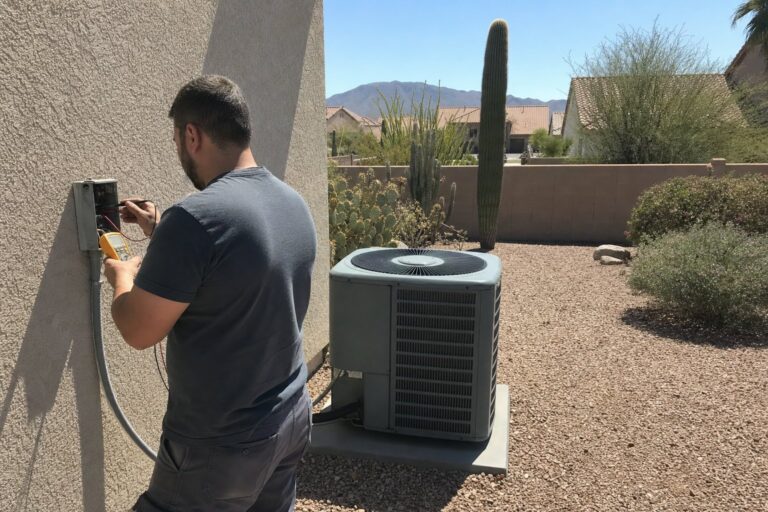
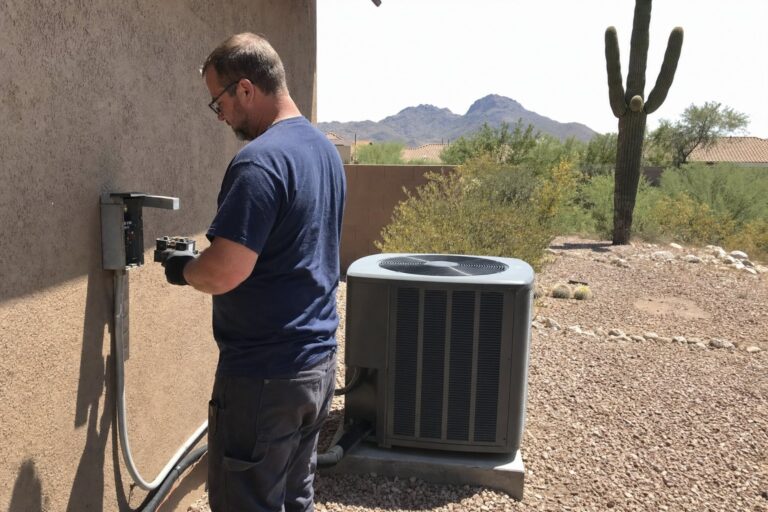
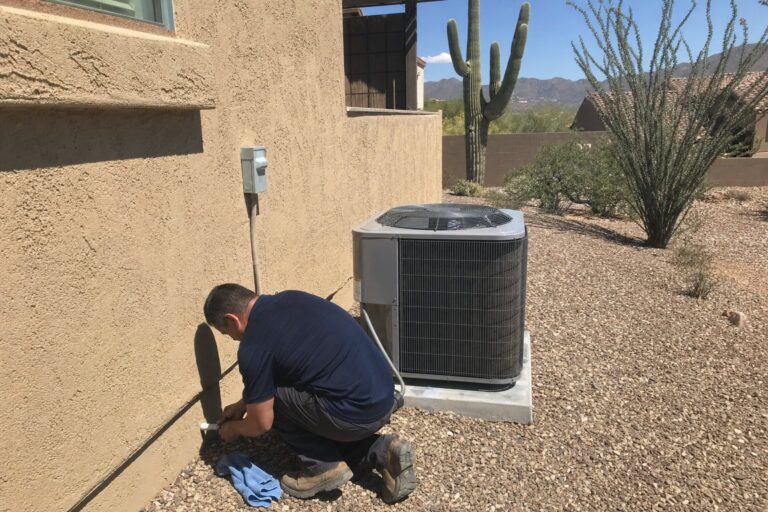
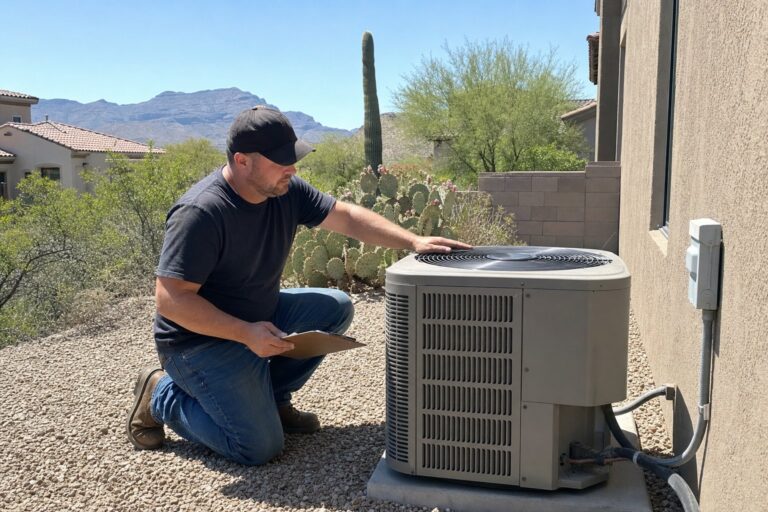
Some AC failures can wait until Tuesday. A house at 97°F with a toddler, an oxygen concentrator, or an 85-year-old in it cannot. Yeti Pros runs true 24/7 emergency AC repair across the Phoenix metro — nights, weekends, holidays, and the middle of a haboob. Call (520) 556-8929 at any hour and you get a person who can dispatch a truck, not a voicemail promising a callback “during business hours.”
In Phoenix, a dead AC is a medical clock
The Deadly Reality of Phoenix Heat
This is the part out-of-state franchises don’t internalize: heat is the deadliest weather phenomenon in Arizona, and it kills indoors. Maricopa County records hundreds of heat-associated deaths in bad summers, and a meaningful share happen inside homes where the cooling failed or was never turned on. When outdoor temps sit at 110–118°F, an un-cooled Valley home climbs past 90°F within a few hours and keeps going — overnight lows in July barely dip below 90°F, so the house never recovers on its own.
Our Emergency Call Triage Process
That’s why we triage emergency calls the way we do.
No-cool calls with vulnerable people in the house — infants, elderly residents, anyone on home medical equipment, pregnant women — go to the front of the line, full stop.
Everyone else with a genuine no-cool gets the next available truck.
“My AC is making a weird noise but still cooling” waits until morning, and we’ll tell you that honestly instead of charging you a 2 a.m. premium to hear it.
Straight answers about emergency pricing
Techs on call at 2 a.m. are a real cost, and we won’t pretend otherwise.
The service-call fee is quoted on the phone before dispatch. The repair itself is quoted flat-rate in writing before work starts. Our numbers are the same whether you sound desperate or not.
Military families: your 10% discount applies at 2 a.m. exactly like it does at 2 p.m. As a veteran-owned company, this commitment never sleeps.
What counts as an AC emergency
during June–September heat — always an emergency in this market.
burning smells, a breaker that re-trips immediately, buzzing from the disconnect or air handler. Shut the system off at the breaker and call — this one’s a fire-safety issue, not just comfort.
a failed condensate system flooding drywall gets more expensive by the hour.
running it that way can slug the compressor with liquid refrigerant and turn a repair into a replacement.
the system that died the night of a monsoon storm usually took a surge hit; boards and transformers are the common casualties.
While you wait for the truck
A few things that genuinely help, from crews who see heat stress up close:
— usually the lowest floor, north side — and close off unused rooms.
Moving air across skin buys real physiological margin even at high room temps.
Damp towels on necks and wrists, cool showers. Skip alcohol; it accelerates dehydration.
No oven, no dryer, minimal lights.
Heat stroke moves fast. The AC can wait; a person can’t.
Thermostat batteries, the air filter (a fully clogged filter can shut a system down), and the breaker — one clean reset is fine. If it trips again, leave it off.
What the after-hours call actually looks like
We confirm the situation, tell you the after-hours service-call fee on the phone — before dispatch, so there’s zero mystery — and give you a real arrival window.
Capacitors, contactors, universal motors, fan blades, float switches, refrigerant, boards for common platforms. The majority of emergency calls are fixed on the first visit from truck stock — that’s deliberate, because “we’ll order the part Monday” is a useless sentence at 1 a.m. in July.
Emergency timing never becomes pricing leverage. You see the written number, you approve it, then we work. The service-call fee credits toward the repair like always.
Temperature split checked, system observed through a full cycle, and the repair documented and warrantied in writing — on top of the workmanship floor Arizona law already guarantees from any ROC-licensed contractor. We’re ROC #363372 · #363423.
The failures we see at midnight
Capacitors finally quit after weeks of hard starts.
Condenser fan motors seized during the evening peak.
Tripped float switches from monsoon-clogged drain lines.
Surge-killed boards after storms.
Compressors on overworked systems chose the hottest week to die.
If it’s the last one on an aging unit, we’ll stabilize what can be stabilized and give you honest replacement math in daylight — nobody should approve a five-figure decision at 3 a.m., and we won’t push you to.
Rooftop units, mobile homes, and everything else
Covered by our emergency service.
Covered by our emergency service.
Yes, we do roofs at night — safely, with proper lighting and access.
Covered by our emergency service.
Covered by our emergency service.
Still cooling thousands of Valley homes. If a swamp cooler pump dies during a 113° stretch, that’s as real an emergency as any compressor failure.
Avoiding the next emergency
Early Warning Signs of AC Trouble
- A hard start
- An unusual hum
- A breaker trip
- Weak airflow
Preventative Habits to Avoid Emergencies
Ensure your AC filter is changed monthly, especially during summer.
Schedule a pre-season tune-up every spring. This catches weak capacitors and dying motors at readings-level before they strand you.
Benefit of a Maintenance Plan
Maintenance plan members also jump the emergency queue — pleasant to have in your pocket during the first heat wave, when the whole Valley is calling at once.
The Phoenix emergency calendar
After enough summers you can predict the phone.
Usually late May or early June, this is the year’s biggest failure event. Systems limping through spring get their first 12-hour shift; weak ones fail within 48 hours.
From July to September, monsoon nights bring surge and dust failures, typically 8 p.m. to 2 a.m. as storms roll through.
These weekends earn their reputation. The Fourth of July is our busiest single day most years, as full houses push systems hard and only we answer phones.
In December, the first cold snap flips the pattern to no-heat calls overnight.
We staff for this calendar instead of being surprised by it annually — and if you know your system is marginal, the smartest move is a tune-up before Memorial Day, while this page is still theoretical.
Everywhere in the Valley, at every hour
Our Service Area
- Phoenix
- Scottsdale
- Mesa
- Chandler
- Gilbert
- Glendale
- Tempe
- Peoria
- Surprise
- Goodyear
- Buckeye
- Queen Creek
- San Tan Valley
- Anthem
- Apache Junction
- Maricopa
- Casa Grande
Emergency Coverage Details
Emergency coverage spans our full service area. Night arrival windows stretch a bit at the metro’s far edges, and we’ll tell you honestly what the window looks like when you call — not promise twenty minutes and deliver ninety.
Emergency AC questions, answered straight
Do you really answer at 3 a.m.?
Yes — a person who can dispatch, every hour of every day, including holidays. Peak-season heat waves can stretch arrival windows, but no-cool calls with vulnerable people in the house always move first.
How much more does emergency service cost?
The after-hours service-call fee is higher than the daytime one, and we tell you the exact number on the phone before a truck moves. The repair itself is quoted flat-rate in writing before work starts — emergency timing doesn’t inflate part or labor pricing.
Can you actually fix it at night, or just look at it?
Most emergency calls are completed on the spot — trucks carry the parts Phoenix actually kills: capacitors, contactors, motors, float switches, refrigerant, common boards. When a repair genuinely needs a daylight part (a specific OEM compressor, a coil), we stabilize what we can and return first thing with priority.
My AC died during a dust storm. Coincidence?
Probably not. Haboobs pack condenser coils with dust (overheating shutdown) and monsoon lightning surges kill boards. Both are fixable; surge protection is the cheap insurance against round two.
Should I run my AC while I wait if it’s still limping?
If it’s cooling weakly but the lines aren’t iced and nothing smells hot — yes, keep it running. If lines are iced, run fan-only. If anything smells burnt or the breaker keeps tripping, shut it off completely.
Do you charge to come out if the fix is something silly like a breaker?
The service-call fee applies to the visit — that’s disclosed up front — but if it’s a 30-second fix, that’s all you pay, and we’ll show you what it was so you can catch it yourself next time. No invented repairs to justify the trip. Ever.
House heating up right now? Call (520) 556-8929. Real person, real truck, any hour — veteran-owned, ROC #363372 · #363423.
Permits and inspections
Most repairs are ordinary service work; bigger scopes can involve city permitting. We perform our work to code, pull the permits our scope requires, and put what we did in writing.
What's covered
Workmanship is covered for two full years, in writing, and repair parts carry a 1-year manufacturer parts warranty — we document installs and repairs so those claims stay simple to make
Why a licensed HVAC contractor matters.
Emergency AC Repair in Phoenix, city by city.
Every city below has its own local page for this service — local FAQs, utility territory, housing stock, and dispatch reality included.
Every major brand, serviced and installed.





Phoenix metro: Most days a tech is already working somewhere in the Valley, so same-day appointments happen when the schedule allows. After-hours emergencies are dispatched when a licensed tech is available — a real person answers and tells you the ETA on the call.
Call (520) 556-8929Request an estimate.
No pressure, no door knockers. We look at the HVAC system, tell you what it needs (and what it doesn’t), and put the number in writing.