
Chandler
AC Repair in Chandler, AZ.
- (520) 556-8929
- Serving the entire Phoenix metro — we come to you
- Office: Mon–Fri 8:00 AM – 5:00 PM · 24/7 emergency service
- 2-year workmanship warranty · 1-year parts warranty
- Veteran-owned & operated · residential + commercial
- 23 five-star Google reviews
Chandler built itself in a hurry. The subdivisions that filled in around the Price Corridor through the 1990s and early 2000s went up street by street, which means their air conditioners — mostly builder-grade systems chosen off a spreadsheet — are now aging out street by street too. Builder-grade equipment in this climate reliably starts dying between years twelve and fifteen, and much of Chandler's housing stock is sitting squarely inside that window. The result is a distinctly Chandler phenomenon: one summer a cul-de-sac has no HVAC trouble at all, and the next summer three households on it are comparing quotes. Add the two-story floor plans that dominate these subdivisions — one system asked to cool both floors, upstairs bedrooms running hot every evening — plus Ocotillo's larger homes with higher-end equipment on lake-adjacent lots, and you have a city with its own repair personality.
Yeti Pros does the ac repair Chandler AZ households in that failure window actually need: honest triage between a fixable fault and a system reaching its natural end. We're veteran-owned, carrying ROC #363372 and ROC #363423, and we've made a habit of telling people when a repair is worth it — which is most of the time — and when it's throwing money at equipment whose identical twins next door are already in the landfill. Diagnostics happen in front of you, the quote arrives written and flat-rate, and the fix is proven against a thermometer before the truck leaves. Chandler runs on SRP, where time-of-use plans make evening inefficiency expensive, so a correctly diagnosed system pays you back monthly. For residential AC repair, we work through the problem methodically; you can also call (520) 556-8929.
ZIPs served: 85224, 85225, 85226, 85248, 85249
What AC Repair covers in Chandler.
Capacitor & Contactor Swaps
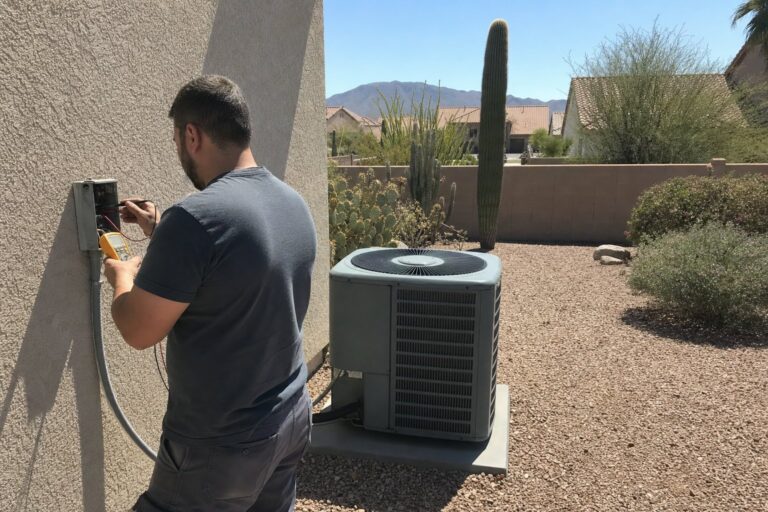
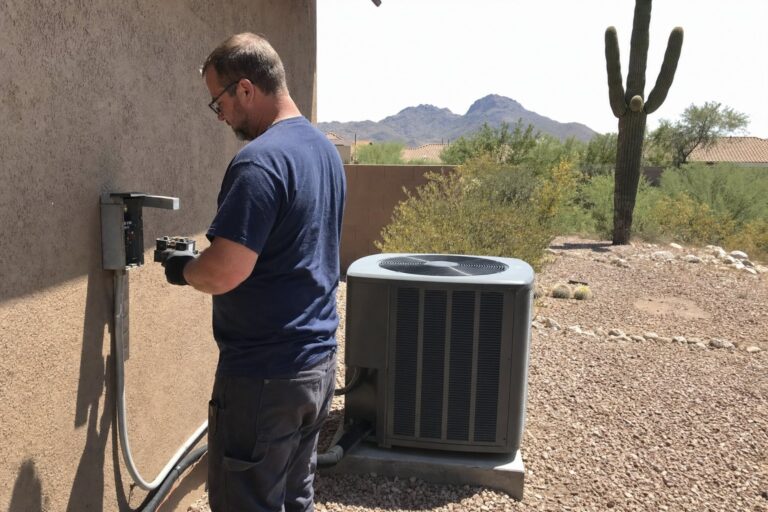
The opening move in most Chandler failures — builder-grade condensers from the late nineties and 2000s eat run capacitors on a schedule, and contactors follow close after. We meter rather than eyeball, install parts rated above the bare minimum the equipment shipped with, and inspect the wiring that fifteen Arizona summers have been baking alongside them while the panel is open.
Condenser Fan Motors
Production-home fan motors were built to a budget, and Chandler's are aging out in bulk. A seized motor turns into a cooked compressor fast, so we treat these calls with urgency: common frames ride on the truck, the run capacitor gets matched correctly, and rotation, amp draw, and head pressure all get confirmed before the job is called finished.
Compressor Diagnosis & Replacement
Before anyone in Chandler pays for a compressor, we prove the old one is actually dead — winding resistance, insulation tests, start-gear trials — because a misdiagnosed compressor is the most expensive mistake in this trade. When one truly fails at year fourteen, we quote the replacement honestly against the system's remaining life and put both paths in writing.
Leak Detection & Refrigerant Recharge
Thin builder-grade evaporator coils are Chandler's slow-leak factory — capacity fades across a season and the upstairs gets blamed for it. We find leaks with electronic detection, confirm the location, repair when the coil allows it, and weigh the charge to factory specification. Topping off every year without finding the leak is a subscription, and we don't sell subscriptions.
Condensate Drain Clearing
When monsoon humidity finally arrives, Chandler's dust-lined drain lines clog in clusters, tripping float switches in two-story homes where the air handler sits above bedrooms. We clear the blockage, flush and treat the line, verify the float switch actually cuts power, and check the secondary pan — because ceiling repairs cost more than drain maintenance ever will.
Control Boards & Electrical
A Chandler system that quit the night of a monsoon storm usually took a surge through the board, transformer, or thermostat wiring. We test instead of guessing, replace only what genuinely failed, sort out smart-thermostat wiring conflicts that mimic equipment failure, and recommend surge protection sized for grid events so the replacement board survives the next storm season.
What we see for AC repair in Chandler.
Chandler's dominant patient is the builder-grade split system installed between roughly 1995 and 2008, and its failure sequence is predictable enough to set a watch by. Run capacitors go first, usually in the second half of summer. Contactors pit and stick next. Then condenser fan motors, which were rarely the premium option on a production home, give up their bearings. Somewhere in the same stretch, the evaporator coil — thin-walled and built to a price — starts seeping refrigerant, and cooling capacity erodes so gradually that families adapt without realizing it until the system can't hold setpoint through a July evening.
The two-story complaint deserves its own paragraph, because we hear it weekly: downstairs comfortable, upstairs miserable. In most Chandler subdivisions a single system serves both floors through ducts designed for the version of the house on the sales brochure. Undersized upstairs returns, long flex runs draped through a 140-degree attic, and zero zoning mean the master bedroom runs several degrees behind the thermostat. Sometimes that's a repair issue — crushed flex, disconnected runs, a blower losing capacity — and sometimes it's a design limit we can improve honestly rather than oversell.
Ocotillo breaks the pattern: larger custom and semi-custom homes, multiple systems, better original equipment now old enough to need real diagnostics, and owners who want the analysis, not a sales pitch. Humidity off the neighborhood lakes is mild, but pool equipment sharing electrical panels with condensers gives us a steady trickle of breaker-related no-cool calls.
Two more Chandler regulars: smart thermostats installed by homeowners onto systems that lack a common wire, producing ghost faults and short cycling that get blamed on the equipment; and monsoon-season surges through the grid taking out boards on unprotected systems. Both look like catastrophic failures. Both are usually afternoon fixes. Distinguishing the cheap fault from the expensive one is essentially the whole job, and it's the part we refuse to rush.
- 01 Airflow and static pressure
- 02 Electrical: capacitors, contactors, draws
- 03 Refrigerant-circuit behavior
- 04 Drains, safeties, and float switches
- 05 Thermostat, controls, and cycling
- 06 Ducts, returns, and room-by-room comfort
Residential HVAC across the Valley.
Air conditioning, heating, and cooler work at homes across the Phoenix metro.
How the job typically runs.
The call begins with a person who quotes the service-visit charge on the spot, so the only surprise left is what the diagnosis finds. Chandler is a two-earner, tech-schedule city, and we book like we know it: appointment windows honored, a heads-up when the technician is en route, and no requirement that you burn a vacation day to get your house cooled.
Diagnosis is show-and-tell by design. The tech measures — capacitance, amp draw, pressures, temperature split, static pressure when airflow looks suspect — then walks you through the readings right next to the equipment. If your complaint is the classic hot upstairs, we check the duct side, not just the refrigerant side, because in Chandler's two-story stock that's where the answer often hides.
Quotes come as one flat number, written, covering everything the fix requires; approve it and the visit charge comes off the total. Discover-as-you-go surprises pause the job for a revised figure — you'll never learn about an add-on from the invoice.
Verification closes every call: the system runs under load until the numbers hold steady, and the paperwork records what failed, what was done, and what the warranty covers. If your subdivision's systems are all the same age — and in Chandler they usually are — we'll tell you honestly what this failure suggests about the next few years, then leave the decision entirely with you.
- 01 Booking, with the diagnostic fee disclosed
- 02 In-person diagnosis with real readings
- 03 Written flat-rate quote before work begins
- 04 The work: repair, install, or maintenance
- 05 Startup, documentation, and warranty handoff
Like-for-like component repairs don't trigger permits in Chandler — a capacitor, motor, coil repair, or board swap generates an invoice, not an inspection. Replacing a complete system does involve the city's permitting process, and because so much of Chandler's stock is entering replacement age simultaneously, we've built that workflow to run without homeowner effort: we file, we schedule the inspection, we meet the inspector. If an HOA governs your subdivision, exterior equipment changes may need its sign-off too, and we'll prepare whatever spec sheet the architectural committee wants to see.
Behind every job sits a legal floor most homeowners have never read: the Arizona Registrar of Contractors' Minimum Workmanship Standards, binding on every licensed contractor in the state. It defines the worst work you can legally be given. We treat it as a starting line — our written warranty commits to more than the statute requires, and it's spelled out on your invoice where you can hold us to it. When you're comparing contractors during Chandler's replacement wave, ask each one to put workmanship terms on paper. The hesitation you sometimes get is itself informative.
Pricing, financing & the 10% military & first responder discount.
Repair pricing here works one way: a written flat-rate price before wrenches move, with the diagnostic visit charge you were quoted at booking deducted from the repair total when you approve it. The number covers the complete fix — no hourly clock, no parts-markup mysteries, no discovering a second line item after the fact. If the diagnosis shows a repair that doesn't make sense on a system this old, we'll say so plainly and show the replacement math beside it, because a repair you'll regret in eight months is a bad product and we don't sell those.
For the big failures — compressors, coils — financing exists, and in a city where whole subdivisions hit equipment end-of-life together, spreading a cost can beat draining an emergency fund the same summer the water heater goes.
Chandler's Air Force families, Guard members, and veterans get our permanent military discount of 10% — we're veteran-owned, and the policy applies to any repair, any size, in every Chandler zip we serve: 85224, 85225, 85226, 85248, and 85249. Mention your service when you book; that's the entire process.
- 01 Flat-rate written quote after an in-person look
- 02 Diagnostic fee disclosed at booking, credited to the repair
- 03 Financing available on replacements
- 04 2-year workmanship warranty; 1-year manufacturer parts warranty
- 05 10% military, veteran & first responder discount
Why a licensed HVAC contractor matters.
FAQs: AC Repair in Chandler, AZ.
Why is my upstairs so much hotter than downstairs every summer evening?
Because most two-story Chandler homes ask one system to cool both floors through ducts that were value-engineered at construction. Heat rises all day, west sun loads the second story, and undersized upstairs returns can't pull that hot air back fast enough — so bedrooms lag the thermostat by several degrees exactly when you want to sleep. Diagnosis matters here: crushed attic flex, a blower losing capacity, or low charge each produce the same complaint with very different fixes. We test the duct side and the refrigerant side before recommending anything, because guessing wrong is expensive.
Half my street has replaced their AC recently. Is mine on borrowed time?
It's a reasonable read of the evidence. Chandler subdivisions were built in tight waves, most homes on your street likely received the same tier of builder-grade equipment the same year, and identical systems facing identical weather tend to fail on similar schedules. That doesn't mean yours dies this summer — installation quality, shade, and maintenance history all move the date. A proper inspection can tell you whether you're looking at years or months, which turns a midnight emergency into a planned decision made on your timeline instead of the weather's.
My AC died at night — should I wait until morning to call?
No — heat retention in a closed Chandler house makes overnight failures worse than they sound, especially upstairs where the day's heat is still trapped. If you're typing ac repair Chandler AZ into your phone at midnight, call us instead: the line is answered around the clock, genuine emergencies get dispatched, and everything else gets locked into the next day's schedule while you're still on the phone. At minimum you'll get honest advice for getting through the night safely, and no-cool homes with elderly residents or infants go to the top of the list.
I installed a smart thermostat and now the AC acts up. Related?
Quite possibly. Many Chandler systems from the builder-grade era lack the common wire newer thermostats want, and the workarounds — power-stealing modes, add-a-wire kits installed hastily — cause short cycling, ghost faults, and blowers that run when they shouldn't. The behavior looks exactly like equipment failure, which is how homeowners end up paying for parts they didn't need. We check thermostat wiring early in any diagnosis where the symptoms fit, and the fix is often correcting the control circuit rather than replacing hardware. Keep the old thermostat handy for the appointment if you still have it.
Does SRP time-of-use pricing change how I should run my AC?
It changes what inefficiency costs you. On SRP time-of-use plans, the expensive hours land exactly when a marginal system works hardest — late afternoon into evening — so a weak capacitor or dust-loaded coil doesn't just risk a breakdown, it multiplies your priciest kilowatt-hours. Pre-cooling strategies help, but they assume the equipment can actually get ahead of the heat, and a system down on charge can't. If your on-peak usage keeps climbing year over year, have the system tested; correcting a hidden fault often does more than any thermostat schedule.
Is a significant repair still worth it on my thirteen-year-old Ocotillo system?
Sometimes, yes — Ocotillo homes often received better-than-builder-grade equipment, and a well-installed premium system at thirteen can justify a meaningful repair where a production-grade unit wouldn't. The deciding factors are the compressor's health, the coil's condition, refrigerant type, and how the repair cost stacks against realistic remaining life. We put both paths on paper: the flat-rate repair and the replacement figure, with our honest read on each. Plenty of our Ocotillo customers repair and get years more service; the point is deciding with the numbers in front of you.
Every major brand, serviced and installed.





Phoenix metro: Most days a tech is already working somewhere in the Valley, so same-day appointments happen when the schedule allows. After-hours emergencies are dispatched when a licensed tech is available — a real person answers and tells you the ETA on the call.
Call (520) 556-8929Request an estimate.
No pressure, no door knockers. We look at the HVAC system, tell you what it needs (and what it doesn’t), and put the number in writing.
Need AC repair in Chandler? A real person answers.
Other services we run in Chandler.
AC Repair in nearby cities.
Looking for something else nearby? All HVAC services in Chandler