
Buckeye
Boiler Repair in Buckeye, AZ.
- (520) 556-8929
- Serving the entire Phoenix metro — we come to you
- Office: Mon–Fri 8:00 AM – 5:00 PM · 24/7 emergency service
- 2-year workmanship warranty · 1-year parts warranty
- Veteran-owned & operated · residential + commercial
- 23 five-star Google reviews
Commercial boilers are genuinely uncommon in a cooling-dominated Buckeye market, and we will tell you plainly where they still apply. When they do show up, they usually serve hot water, sanitation, hydronic heat, or process needs that cannot be brushed off as a comfort issue. A restaurant, school, church, clinic, laundry, or light industrial building may depend on a boiler quietly until recovery slows, a pump stops moving water, a safety trips, or staff loses hot water during the workday. Buckeye’s newer retail and warehouse growth is mostly RTU country, but that makes the buildings with boilers more important to identify correctly. Dust, heat around mechanical rooms, neglected pumps, drifting controls, and inconsistent maintenance can turn a background system into an operations problem fast. Yeti Pros provides commercial boiler repair Buckeye operators can use when they need a straightforward diagnosis, a written scope, and an honest line between repair, maintenance, and a larger regulated project. We do not make a boiler sound common just to sell the call. Yeti Pros is veteran-owned, licensed under AZ ROC #363372 · ROC #363423. If hot water or boiler operation is threatening the day in Buckeye, call (520) 556-8929.
ZIPs served: 85326, 85396
What Boiler Repair covers in Buckeye.
Commercial boiler diagnostics
We diagnose Buckeye commercial boilers by tracing the complaint back through the operating sequence, controls, pumps, safeties, valves, leaks, and electrical components. That matters in schools, churches, medical spaces, kitchens, and industrial buildings where a vague hot-water issue can mean lost operating time. You get findings in writing before approving the repair.
Hot-water recovery problems
When a restaurant, clinic, or campus restroom group cannot recover hot water fast enough, the issue may be controls, scaling, pump performance, valve behavior, or a boiler fault. We identify the limiting point and quote the correction clearly, so Buckeye managers are not stuck guessing whether the system can support daily demand.
Pump and circulation repairs
Circulation problems can make a boiler look failed even when the heat source is capable. We repair pump, relay, control, valve, and piping-related issues that keep hot water or hydronic heat from reaching the load. For larger Buckeye facilities, that prevents a mechanical-room repair from leaving distant areas of the building underserved.
Safety and control troubleshooting
Boiler safeties exist for a reason, and repeated lockouts should not be bypassed or ignored. We troubleshoot limits, ignition-related symptoms, control calls, wiring, and operating conditions so the system returns to service correctly. Buckeye property managers receive documentation that explains whether the issue was a failed part or a condition that needs follow-up.
Leak and piping corrections
Small leaks around valves, fittings, pumps, and near-boiler piping can become tenant complaints, corrosion, or shutdown risks. We evaluate the leak source, quote the repair after seeing the system, and coordinate timing around occupancy. For Buckeye businesses in busy retail centers or campuses, clean staging matters as much as the mechanical fix.
Planned boiler maintenance
Written maintenance agreements help Buckeye facilities keep boiler work from becoming an emergency. We document operating condition, visible wear, controls behavior, pump performance, and repair recommendations on a schedule that fits the building. That record helps owner-operators, property managers, and regional facility teams plan budgets instead of reacting to avoidable shutdowns.
What we see for boiler repair in Buckeye.
Buckeye boiler calls are not as common as RTU calls, but the ones that happen tend to be high-consequence. In a restaurant or commissary space serving the new retail growth around the city, hot water is tied directly to sanitation and food-service continuity. In a school, church, medical, or dental building, domestic hot water may be part of restrooms, cleaning, patient support, or kitchen use. In a larger warehouse, manufacturing, or light industrial facility near I-10 and the Loop 303 influence zone, a boiler may support process water or specialty operations that are not obvious from the front office. When those systems fail, the problem rarely stays in the mechanical room. It becomes a closed kitchen, a delayed shift, a tenant complaint, a compliance concern, or a facilities ticket that regional management wants documented before they approve the repair.
The pattern in Buckeye is a mix of newer construction and harsh West Valley operating conditions. Newer commercial shells often have cleaner mechanical rooms than older parts of the Valley, but newer does not mean immune. Dust works into combustion air paths, controls cabinets, pump assemblies, and equipment rooms connected to warehouse or service areas. Long summer heat cycles affect surrounding electrical components even when the boiler itself is not carrying the same cooling burden as an RTU. Buildings that sit near active construction, logistics traffic, and open land can collect fine dust faster than a manager expects, especially when maintenance has been focused on rooftop units and the boiler is treated as a background system until it quits. That is where nuisance lockouts, inconsistent hot-water recovery, noisy pumps, tripped safeties, and unreliable controls start showing up.
We also see a management gap. Buckeye is attracting national retailers, restaurant groups, medical users, and industrial operators that rely on regional facility contracts and documented service histories. A local owner-operator may make the decision on site, while a chain location may need photos, readings, failure notes, and a written quote sent to an off-site approver. The mechanical issue might be identical, but the workflow is not. Yeti Pros builds that documentation into the call so the property manager is not stuck translating a boiler problem to someone who has never seen the building.
Energy cost matters as well. APS commercial rate plans can make poorly scheduled equipment and inefficient operation more expensive than the repair alone suggests. A boiler that short-cycles, struggles to recover, or runs against failed controls can waste fuel and create secondary electrical cost through pumps and support equipment. In Buckeye, where many businesses are already watching utility demand charges on cooling-heavy buildings, any mechanical system that runs inefficiently deserves attention before it becomes another operating-budget surprise.
- 01 Airflow and static pressure
- 02 Electrical: capacitors, contactors, draws
- 03 Refrigerant-circuit behavior
- 04 Drains, safeties, and float switches
- 05 Thermostat, controls, and cycling
- 06 Ducts, returns, and room-by-room comfort
Commercial jobs we have documented.
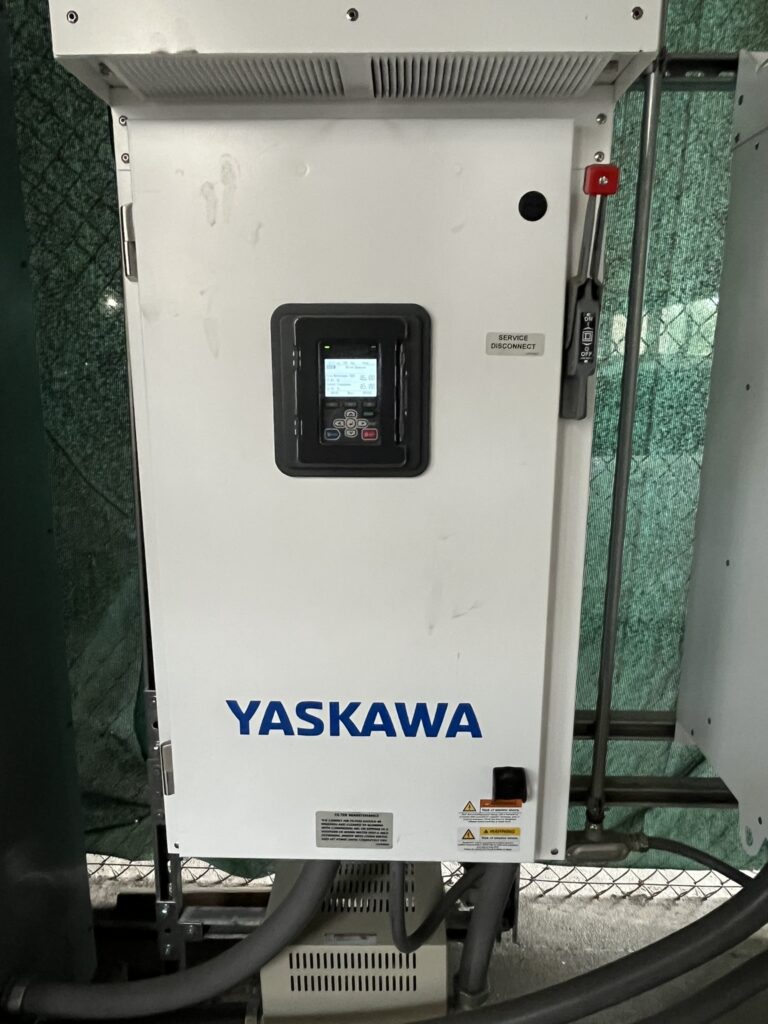
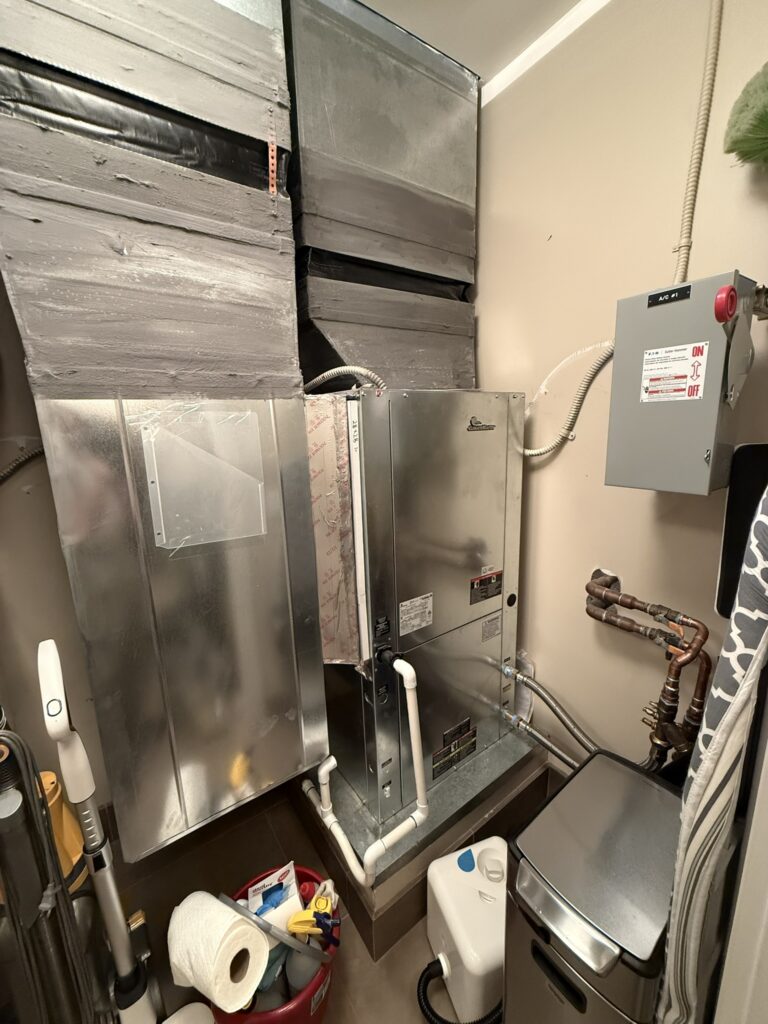
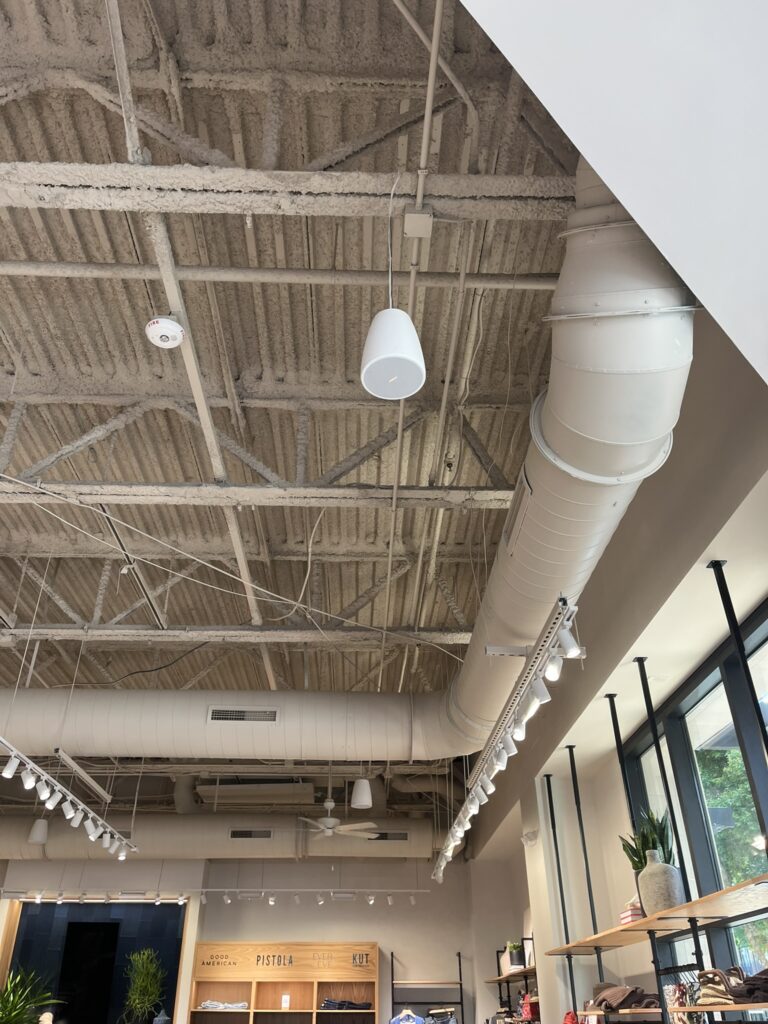
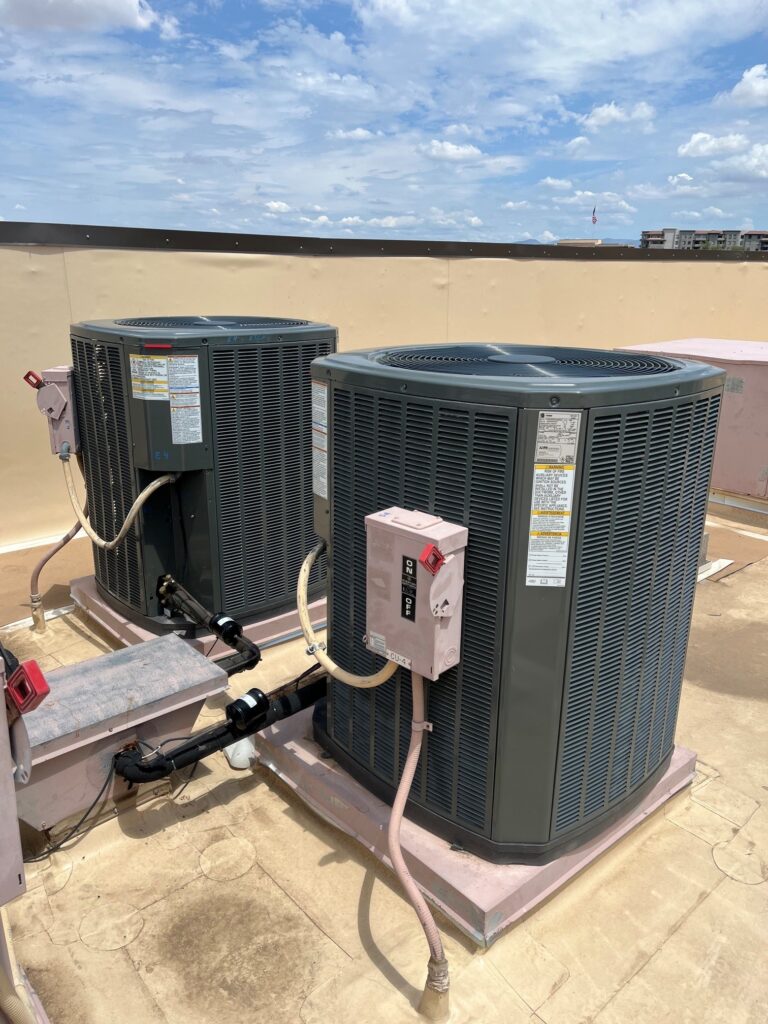
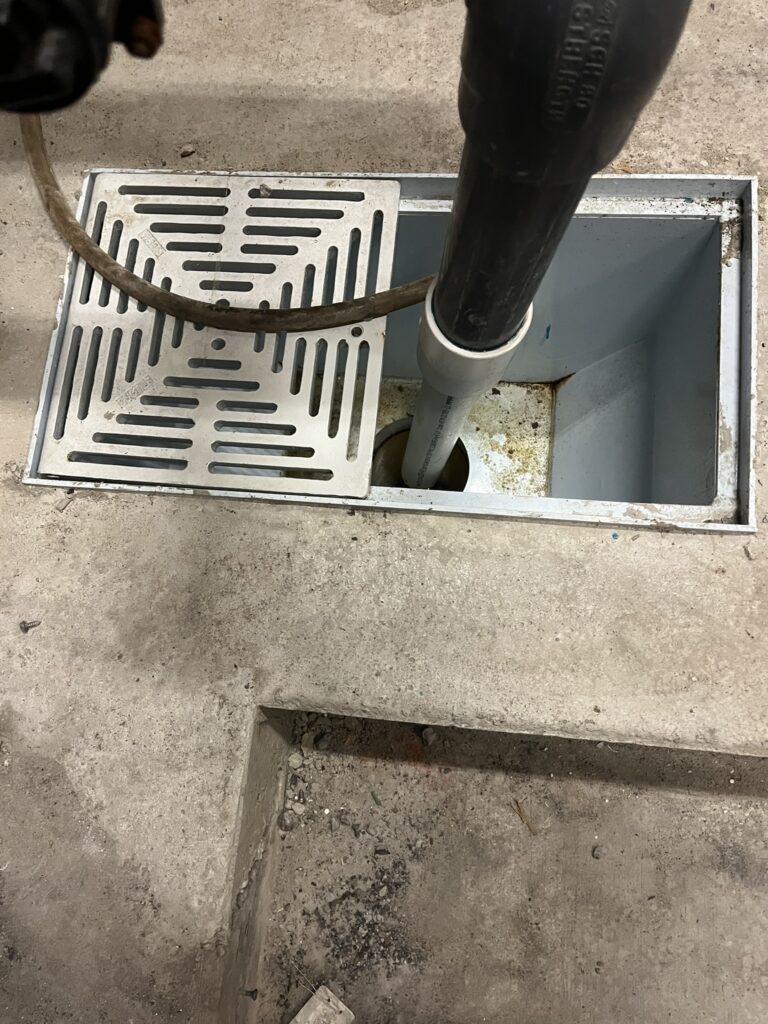
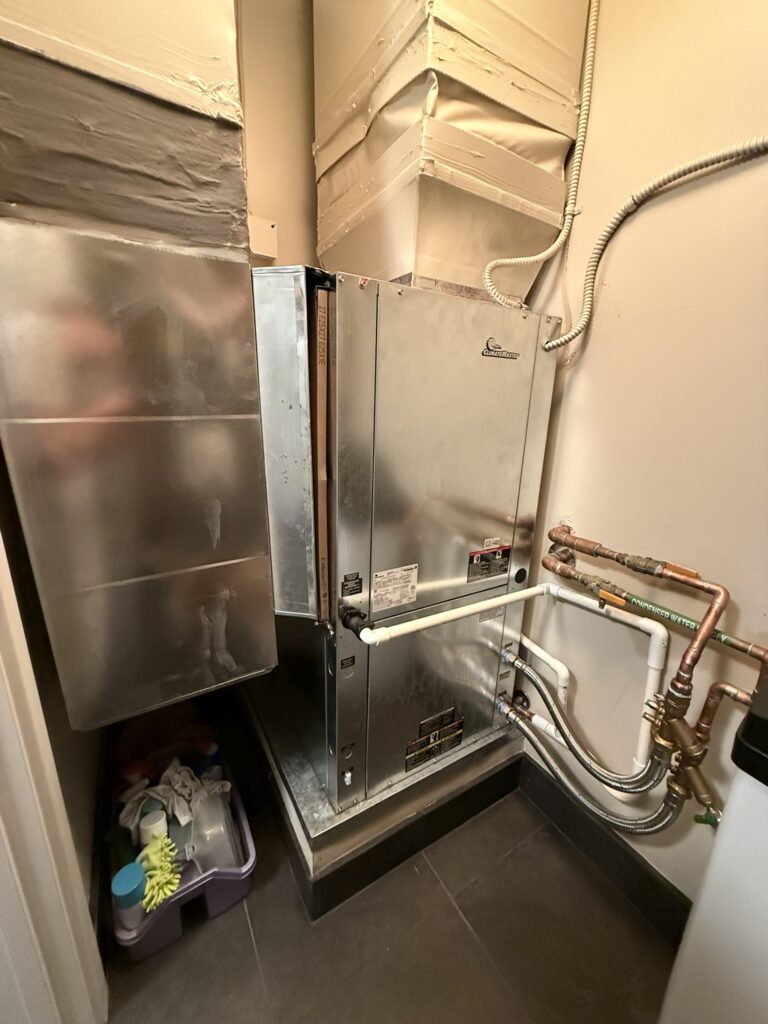
Photos from our own commercial projects across the Phoenix metro — equipment we installed, in buildings we service.
How the job typically runs.
A Buckeye commercial boiler call starts with access and urgency. When you book, we disclose the diagnostic or service-call fee and explain that it is credited toward the approved repair. We also ask what the boiler serves, who needs to approve work, whether the building is occupied, and whether after-hours access will reduce disruption. For a restaurant, that might mean arriving after a meal period. For a school, church, or medical office, it may mean working around staff, students, patients, or scheduled events. For an industrial facility, it may mean coordinating with a shift lead, safety contact, or property manager before anyone enters the mechanical area.
On site, we diagnose the system before quoting. That means checking the condition of the boiler, safeties, controls, pumps, valves, electrical connections, combustion-related components where applicable, piping concerns, leaks, and the symptoms the staff actually observed. We do not turn a vague hot-water complaint into an open-ended repair ticket. Once the failure is identified, you receive a flat-rate written quote that explains the scope, the parts or labor involved, and any operational limits we see. If the best business decision is a repair that stabilizes the system now and a planned replacement later, we say that plainly. If the repair affects safety or code boundaries, we say that before work begins.
Execution is planned around downtime. A Buckeye facility manager may be responsible for several tenants, multiple rooftops, a kitchen, and a hot-water system at the same time, so the boiler repair has to leave a clean record. We complete the approved work, test the system through a meaningful operating cycle, verify that hot-water delivery or heating function has returned, and leave written documentation. For chain stores, campuses, and managed commercial buildings, that paperwork gives the off-site decision maker a clear answer: what failed, what was repaired, what remains to watch, and what warranty applies.
- 01 Booking, with the diagnostic fee disclosed
- 02 In-person diagnosis with real readings
- 03 Written flat-rate quote before work begins
- 04 The work: repair, install, or maintenance
- 05 Startup, documentation, and warranty handoff
Many Buckeye commercial boiler repairs are component-level or like-for-like corrections that do not require a separate permit, but commercial mechanical work has a clear line. When the scope changes equipment, gas piping, venting, electrical service, or other regulated building systems, permitting and inspection may apply through the City of Buckeye, Maricopa County, or the authority that governs the specific property. We do not ask a facility manager to guess where that line is. If the repair scope points toward a permit or a replacement discussion, we explain it before work proceeds.
Arizona also sets workmanship expectations for licensed contractors through the Registrar of Contractors. Yeti Pros frames its written warranty to exceed the ROC baseline, and we recommend that commercial owners understand that floor by reviewing the Minimum Workmanship Standards. For a Buckeye business, code-aware work is not paperwork for its own sake. It protects occupancy, insurance posture, tenant confidence, and the ability to show an owner or regional facilities department that the repair was handled correctly.
Pricing, financing & the 10% military & first responder discount.
Commercial boiler pricing should not feel like a meter running in the background while your staff waits for hot water. Yeti Pros provides flat-rate written quotes after an in-person look, and the number holds for the approved scope. The diagnostic or service-call fee is disclosed at booking and credited toward the repair, so the first visit produces useful information instead of an ambiguous invoice. For Buckeye properties with multiple systems, a written preventive maintenance agreement can reduce surprise boiler calls by keeping pumps, controls, safeties, valves, and operating behavior on a documented schedule. That helps owner-operators and regional facility managers budget work before it becomes an emergency purchase. We also offer a 10% military, veteran & first responder discount, and because Yeti Pros is veteran-owned, we are direct about where discounts, service agreements, and repair quotes apply. On APS commercial rate plans, efficient operation and smart scheduling matter; the cheapest boiler repair is rarely the one that leaves the system short-cycling into the next utility cycle.
- 01 Flat-rate written quote after an in-person look
- 02 Diagnostic fee disclosed at booking, credited to the repair
- 03 Financing available on replacements
- 04 2-year workmanship warranty; 1-year manufacturer parts warranty
- 05 10% military, veteran & first responder discount
Why a licensed HVAC contractor matters.
FAQs: Boiler Repair in Buckeye, AZ.
Do Buckeye commercial buildings still need boiler repair if most new construction uses RTUs?
Yes. RTUs dominate Buckeye strip retail, offices, warehouses, and many new commercial shells, but boilers still appear in schools, churches, medical buildings, larger facilities, restaurants, and specialty industrial or process applications. When they fail, the impact is usually operational rather than cosmetic: sanitation, hot-water recovery, heating loops, or process support. We treat those calls as business-continuity work, not a side issue, and provide written findings for the manager or off-site approver.
Can you respond after hours for a Buckeye boiler problem?
Yes. Yeti Pros has office hours Monday through Friday, 8-5, and real 24/7 emergency service. For Buckeye businesses, after-hours work often makes more sense than interrupting a school day, church event, clinic schedule, production shift, or restaurant service. We discuss access, urgency, and approval requirements when you book, then route the call with a realistic arrival window. The service-call fee is disclosed at booking and credited if you approve the repair.
Will you give our property manager documentation for the repair?
Yes. Buckeye is seeing more regional facility contracts, chain restaurants, medical groups, and managed commercial properties, so documentation is part of the job. We provide written findings, the approved flat-rate scope, notes on the failed component or condition, and warranty terms. If an off-site owner or facilities coordinator needs to understand why the boiler was down, the report gives them a clear record without relying on a verbal handoff from the site manager.
Do commercial boiler repairs in Buckeye require permits?
Simple component repairs often do not, but equipment replacement, gas piping changes, venting changes, electrical changes, and broader mechanical alterations may require permitting or inspection through the governing Buckeye or Maricopa County authority. We identify that boundary during the in-person evaluation. If the scope needs a permit, we tell you before work starts rather than creating a compliance problem for your business later.
How do you price boiler repair for a business?
We do not quote commercial boiler repairs blindly over the phone. The diagnostic or service-call fee is disclosed at booking, credited toward approved work, and followed by a flat-rate written quote after we inspect the equipment. That gives a Buckeye owner, facility manager, or property manager a real number to approve instead of an open labor clock. If a maintenance agreement would reduce repeat failures, we explain that option separately.
Can boiler maintenance fit into a larger Buckeye facility plan?
Yes. Many Buckeye properties are already managing RTUs, refrigeration, exhaust, and tenant comfort across fast-growing retail, school, church, office, and industrial sites. A written maintenance agreement can include boiler checks so the hot-water system is not ignored until it fails. Scheduled visits also help with budgeting, approval workflows, and recordkeeping, which is especially useful when regional facilities teams need a documented service history.
Every major brand, serviced and installed.
Phoenix metro: Most days a tech is already working somewhere in the Valley, so same-day appointments happen when the schedule allows. After-hours emergencies are dispatched when a licensed tech is available — a real person answers and tells you the ETA on the call.
Call (520) 556-8929Request an estimate.
No pressure, no door knockers. We look at the HVAC system, tell you what it needs (and what it doesn’t), and put the number in writing.
Need boiler repair in Buckeye? A real person answers.
Other services we run in Buckeye.
Boiler Repair in nearby cities.
Looking for something else nearby? All HVAC services in Buckeye