
Buckeye
Chiller Repair in Buckeye, AZ.
- (520) 556-8929
- Serving the entire Phoenix metro — we come to you
- Office: Mon–Fri 8:00 AM – 5:00 PM · 24/7 emergency service
- 2-year workmanship warranty · 1-year parts warranty
- Veteran-owned & operated · residential + commercial
- 23 five-star Google reviews
Chillers are the exception in Buckeye, not the rule, so the honest first move is confirming you actually have chilled water. Many local commercial buildings rely on RTUs or split systems, and treating every warm-building complaint like a central-plant failure wastes time. Where a chilled-water system does exist, the problem may live at the plant, in the pumps, through the controls, at a valve, or out at the air handler serving the warm zone. Buckeye heat and dust still matter, especially for air-cooled equipment, but a chiller call needs a wider view than a rooftop no-cool visit. Low flow, dirty heat rejection surfaces, failed sensors, closed valves, clogged strainers, pump issues, and building automation confusion can all look like one simple comfort complaint from the occupied space. Yeti Pros provides Buckeye chiller repair with clear boundaries: we verify the system type, document what the readings and alarms show, and explain when manufacturer, controls, water-treatment, or specialty support belongs in the next step. Yeti Pros is veteran-owned, licensed under AZ ROC #363372 · ROC #363423. If your Buckeye facility has a chiller alarm or chilled-water comfort issue, call (520) 556-8929.
ZIPs served: 85326, 85396
What Chiller Repair covers in Buckeye.
Chiller Diagnostics
We evaluate chiller alarms and comfort complaints by looking at the equipment, controls, flow symptoms, pumps, safeties, electrical components, and connected air-side equipment. The written finding identifies what we can verify.
Air-Cooled Chiller Review
For air-cooled chillers, we inspect visible condenser condition, fan operation, electrical components, safeties, sensors, and operating indicators. Dust and heat can affect performance even when the plant has not fully shut down.
Pump and Flow Checks
Low flow can create alarms and warm zones. We review pump operation, accessible strainers, valve positions, air-side symptoms, and controls signals to determine whether the problem is distribution-related or at the chiller.
Controls Coordination
Building automation readings do not always match field conditions. We compare control calls, sensors, actuators, safeties, and equipment response, then document when a controls contractor or integration specialist is needed.
Air Handler Support
Warm areas may come from an air handler, coil, valve, actuator, filter, or blower issue instead of the chiller. We trace the complaint at the zone level before assuming plant failure.
Capital Planning Notes
When a chiller issue points to age, recurring alarms, obsolete parts, or major plant work, we document the concern for budgeting. Facility managers get repair information and planning notes in one record.
What we see for chiller repair in Buckeye.
Chiller-related complaints are often reported as warm spaces, but the failed part may not be the chiller itself. A building can have a healthy chiller and still suffer from a failed pump, closed valve, clogged strainer, bad actuator, air handler issue, controls fault, sensor problem, or poor water flow. The first diagnostic question is where the capacity is being lost: at the plant, in distribution, at the coil, in the controls, or in the occupied zone.
In Buckeye, we are careful not to assume every commercial property has a central plant. Many retail, office, and warehouse buildings rely on rooftop package units. Chilled-water systems are more specialized and usually appear where the building size, owner preference, institutional use, or design history supports them. That means the service call should start with equipment information: chiller make and model, air-cooled or water-cooled, pump arrangement, control system, maintenance records, water treatment history, and the exact alarms or symptoms.
Heat, dust, and long runtime still matter. Air-cooled chillers can suffer from dirty coils, condenser fan problems, electrical faults, sensor failures, and high-pressure conditions. Water-side problems can include low flow, fouled strainers, pump issues, air in the loop, valve position problems, or inadequate maintenance records. Controls can add another layer, especially when the building automation system reports a condition but the field device, sensor, or actuator tells a different story.
Documentation is important because chiller repairs can affect more than one room or tenant. Facility managers need readings, alarm notes, observed conditions, and a practical separation between immediate repair, water-side maintenance, controls follow-up, and longer-term capital planning. We document what we can verify, identify where a specialty vendor or manufacturer support is appropriate, and avoid treating a complex central system like a simple unit swap.
- 01 Airflow and static pressure
- 02 Electrical: capacitors, contactors, draws
- 03 Refrigerant-circuit behavior
- 04 Drains, safeties, and float switches
- 05 Thermostat, controls, and cycling
- 06 Ducts, returns, and room-by-room comfort
Commercial jobs we have documented.
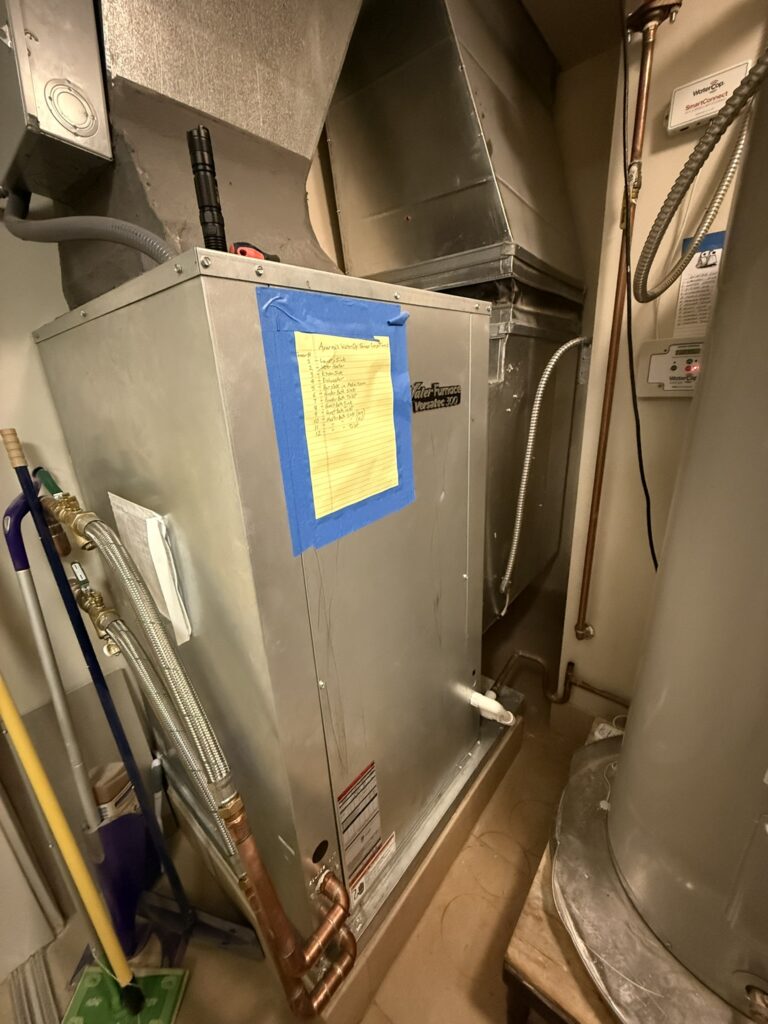
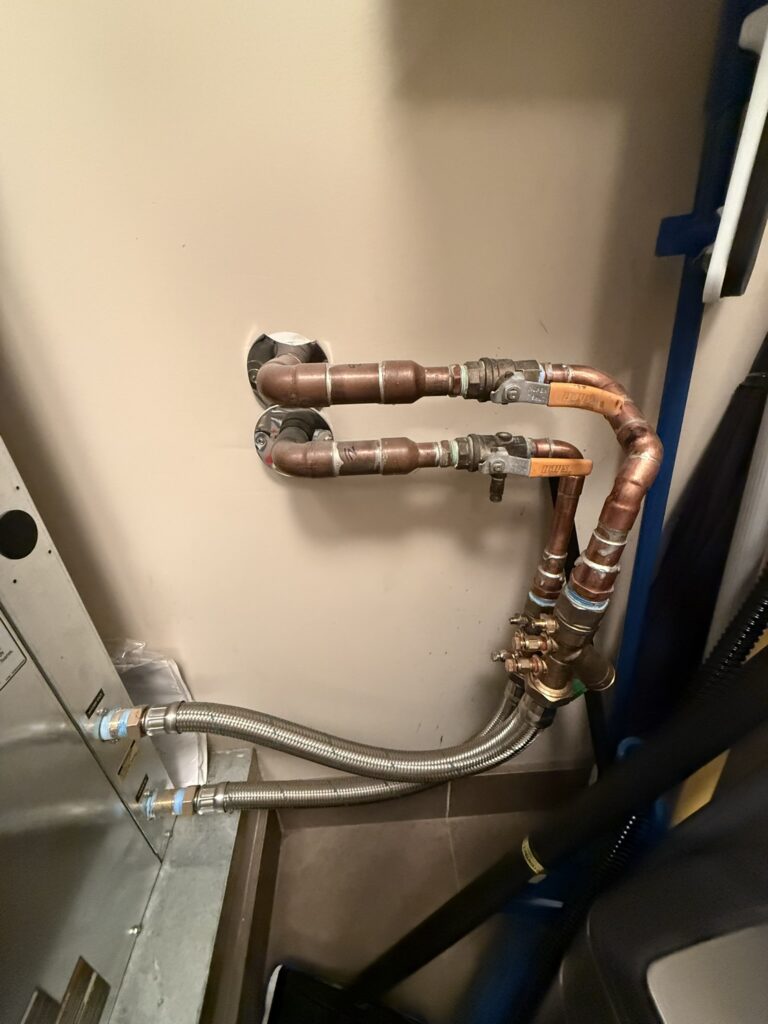
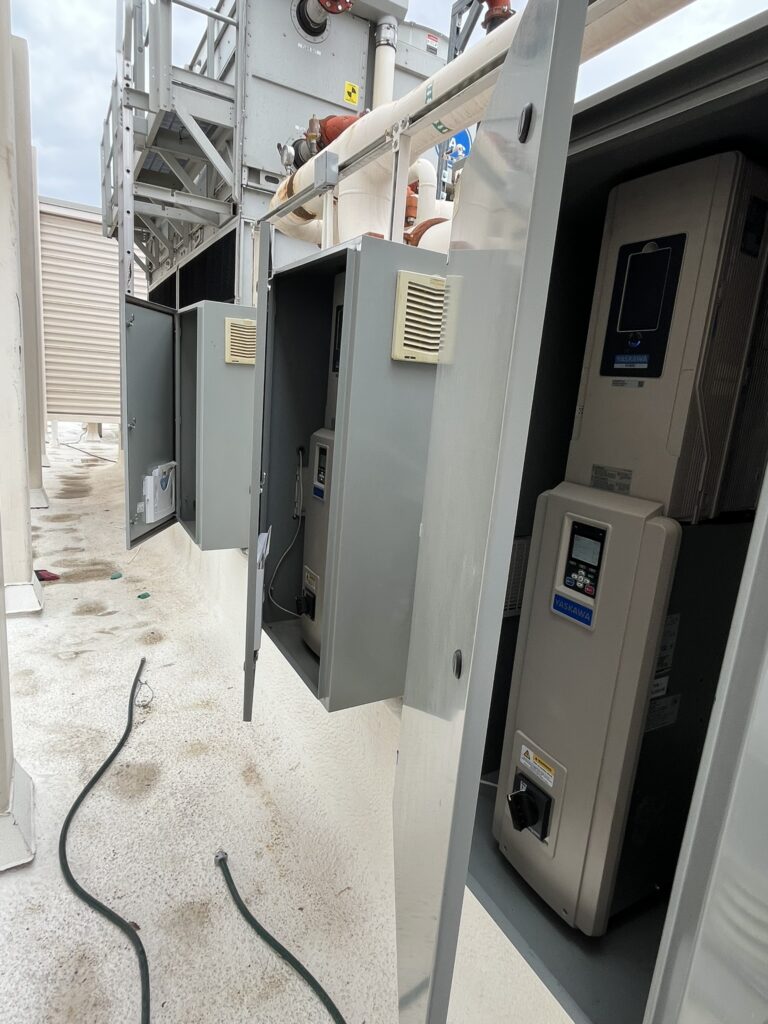
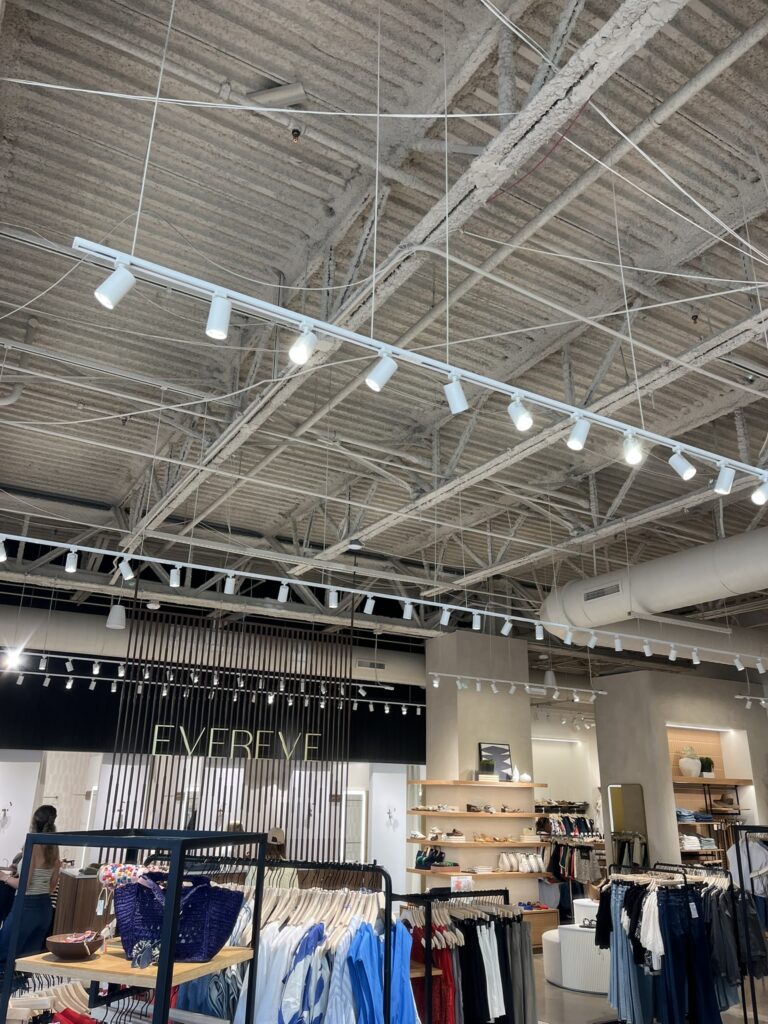
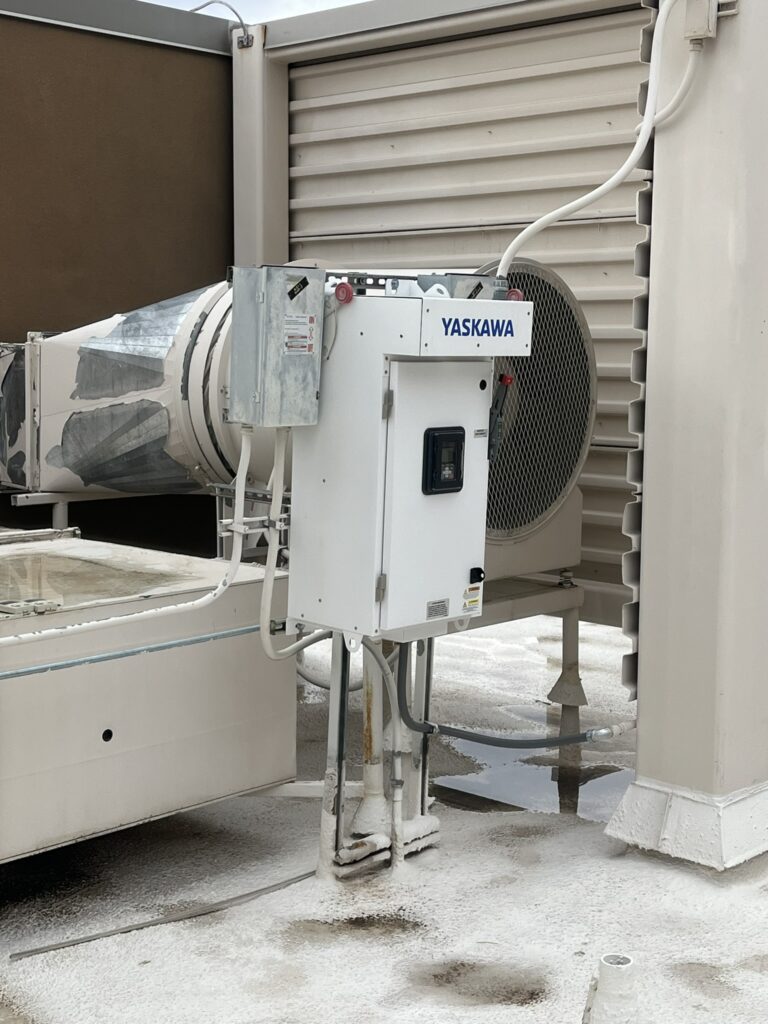
Photos from our own commercial projects across the Phoenix metro — equipment we installed, in buildings we service.

How the job typically runs.
We start by confirming that the building actually has a chilled-water system and gathering the equipment information, alarms, affected areas, access rules, and maintenance history. If the issue may be with air handlers, pumps, valves, or controls rather than the chiller, we include those possibilities in the diagnostic plan.
On site, we review the complaint path from the occupied space back toward the plant. Depending on the system, that may include control calls, water temperature indicators, pump operation, flow symptoms, strainers where accessible, valves and actuators, condenser condition, electrical components, safeties, alarms, and connected air-side equipment. We stay within the work that can be performed safely and properly.
After diagnosis, we provide a written finding and flat-rate quote for repair work we can perform. If the next step requires manufacturer service, controls integration, water treatment, major plant engineering, or a specialty contractor, we document that boundary clearly so the facility manager can coordinate the right resource.
- 01 Booking, with the diagnostic fee disclosed
- 02 In-person diagnosis with real readings
- 03 Written flat-rate quote before work begins
- 04 The work: repair, install, or maintenance
- 05 Startup, documentation, and warranty handoff
Minor chiller-related repairs may be service work, but larger changes can trigger review. Pump replacement, electrical changes, equipment replacement, refrigerant-circuit work, controls modifications, structural work, piping changes, crane work, or plant alterations may require permit coordination through the City of Buckeye or Maricopa County depending on the property and scope. Yeti Pros identifies those boundaries in the written recommendation and separates immediate diagnostic work from larger regulated projects.
Yeti Pros is licensed under AZ ROC #363372 and ROC #363423. We provide a written workmanship warranty for covered work, held to the AZ ROC Minimum Workmanship Standards. We perform and document our work; building ownership remains responsible for approvals, inspections, engineering, water treatment obligations, manufacturer requirements, insurance conditions, and any authority requirements tied to the facility.
Pricing, financing & the 10% military & first responder discount.
Chiller repair pricing depends on system type, access, alarm history, controls, pumps, water-side condition, heat rejection equipment, electrical faults, parts, manufacturer requirements, and whether specialty support is needed. Yeti Pros discloses the diagnostic fee at booking and credits it toward approved work. Repairs we perform are quoted flat-rate in writing after the site evaluation. We do not quote chiller work blindly because a low-flow alarm, failed sensor, dirty air-cooled condenser, pump issue, and compressor fault are not comparable scopes.
For facilities with central plants, written maintenance agreements or documented service plans are especially useful because readings and history matter. APS commercial rates can make plant performance important to operating cost, but we do not promise savings without data. Ask about the 10% military discount where applicable.
- 01 Flat-rate written quote after an in-person look
- 02 Diagnostic fee disclosed at booking, credited to the repair
- 03 Financing available on replacements
- 04 2-year workmanship warranty; 1-year manufacturer parts warranty
- 05 10% military, veteran & first responder discount
Why a licensed HVAC contractor matters.
FAQs: Chiller Repair in Buckeye, AZ.
Are chillers common in Buckeye commercial buildings?
Many Buckeye commercial buildings use rooftop package units or split systems, especially retail, office, restaurant, and light industrial spaces. Chillers are more likely in larger facilities, schools, institutional buildings, specialty properties, or buildings designed around a central plant. That is why we first confirm the system type before treating a warm-building complaint as chiller repair. The right service path depends on the equipment actually serving the space.
How do you diagnose a chilled-water comfort complaint?
We work from the occupied area back toward the plant. The issue may be the chiller, but it may also be a pump, valve, actuator, strainer, sensor, air handler, coil, thermostat, or controls sequence. We gather alarms and history, then check field conditions within the accessible scope. The written diagnosis explains whether the problem appears mechanical, electrical, water-side, controls-related, or outside the work we can properly perform.
Do you repair both air-cooled and water-cooled chillers?
We can evaluate chiller-related issues and perform repair work within our licensing, training, access, and the equipment scope involved. Air-cooled and water-cooled systems have different components and may require manufacturer service, controls support, water treatment, or specialty contractors for certain repairs. We are direct about those boundaries. If a repair requires a resource beyond our scope, we document the finding so the facility manager can coordinate the correct next step.
Can a chiller alarm be caused by something outside the chiller?
Yes. Low flow, pump failure, closed valves, clogged strainers, bad sensors, controls faults, dirty coils, failed fans, air in the loop, or air-handler problems can create alarms or warm spaces that look like chiller failure. That is why a useful diagnosis includes the water side, controls, and air side where accessible. Replacing a component at the plant without checking distribution can leave the original complaint unresolved.
Do you provide emergency service for Buckeye chiller problems?
Yes, Yeti Pros provides 24/7 emergency commercial HVAC service. For chiller-related emergencies, we need as much information as possible: equipment type, alarm text or codes, affected areas, access requirements, maintenance history, and whether sensitive operations are involved. A first visit may restore operation, identify a temporary operating path, or document that manufacturer, controls, water-treatment, or specialty support is needed for the permanent repair.
What records help with chiller repair?
Helpful records include equipment make and model, maintenance logs, water treatment history, alarm history, control screenshots, pump information, prior repair invoices, design documents if available, and notes about which areas are warm. Chiller systems depend heavily on trends and history. Even if records are incomplete, we can begin with field diagnosis, but better documentation helps separate a new failure from a recurring operating condition.
Every major brand, serviced and installed.


Phoenix metro: Most days a tech is already working somewhere in the Valley, so same-day appointments happen when the schedule allows. After-hours emergencies are dispatched when a licensed tech is available — a real person answers and tells you the ETA on the call.
Call (520) 556-8929Request an estimate.
No pressure, no door knockers. We look at the HVAC system, tell you what it needs (and what it doesn’t), and put the number in writing.
Need chiller repair in Buckeye? A real person answers.
Other services we run in Buckeye.
Chiller Repair in nearby cities.
Looking for something else nearby? All HVAC services in Buckeye