
Goodyear
RTU Repair in Goodyear, AZ.
- (520) 556-8929
- Serving the entire Phoenix metro — we come to you
- Office: Mon–Fri 8:00 AM – 5:00 PM · 24/7 emergency service
- 2-year workmanship warranty · 1-year parts warranty
- Veteran-owned & operated · residential + commercial
- 23 five-star Google reviews
Goodyear runs on logistics, and logistics runs on rooftop units. Along the I-10 corridor, massive distribution and fulfillment warehouses stretch for acres, and above them sit fleets of packaged rooftop units — sometimes dozens on a single building — conditioning office space, keeping pick-and-pack floors workable, and protecting temperature-sensitive inventory. When one goes down over a fulfillment operation in July, the cost is not measured in comfort; it is slowed throughput, heat-stressed staff, and product that cannot sit in a 100-degree aisle. Yeti Pros provides rtu repair Goodyear operations managers can build a schedule around — fleet-scale diagnostics, honest repair-versus-replace calls, and documentation that fits a national distributor's facilities system. We are veteran-owned and operated, licensed under ROC #363372 and ROC #363423, and a real person answers the line 24/7. Goodyear's roofs bake past 160 degrees at the metro's western edge, take open-desert dust, and ride out August grid surges — and a big warehouse fleet multiplies every one of those failure points across its whole rooftop. We diagnose down to the failed part, show you the evidence on the roof, and commit a flat-rate number to writing before anyone starts, with records clean enough for a corporate asset-management system. Our crews handle the full range, from a single unit over a PebbleCreek-area retail suite to a forty-unit fleet on an I-10 distribution building, and we track every multi-unit roof as numbered, documented assets. Goodyear RTU repair has to fit the warehouse corridor and the fleets sitting on those roofs. Call (520) 556-8929 and tell us which unit is down.
ZIPs served: 85338, 85395
What RTU Repair covers in Goodyear.
Rooftop Diagnostics & Baked Capacitors
A capacitor baked flat is one of the most common single-unit failures on a Goodyear warehouse roof, and across a large fleet several are always close to going. We isolate the exact failed component, confirm the capacitor is the true cause, carry common values so cooling returns fast to the floor below, and log what else on that unit is trending toward failure while we are up there.
Contactor & Motor Replacement
Long warehouse run-hours pit contactors and cook condenser fan motor bearings faster than a retail duty cycle would, and a seized fan drives head pressure straight to a compressor trip over a working floor. We install correctly rated replacements, not the nearest part on the truck, and confirm the whole cooling stage holds under full load before we move to the next unit.
Compressor Service
A compressor failure over a Goodyear fulfillment floor is the expensive one, and on warehouse equipment it is usually the end of a long runtime story — a fouled coil or low airflow that overworked it for months. We find the root cause before quoting, because a new compressor dropped into the same conditions just schedules the next outage across the fleet.
Economizer Damper & Actuator Repair
Economizers across a Goodyear warehouse fleet fail quietly and add up fast at scale. Stuck open, a unit hauls 112-degree desert air across the coil all summer while the meter runs; stuck closed, the floor loses ventilation. We exercise the damper, test the actuator and sensors, and restore genuine free cooling on each unit rather than disabling a control that lowers your load when it works.
Belt & Pulley Service
Belt-drive blowers move serious air on warehouse rooftop units, and continuous run-hours glaze belts and wear sheaves faster than lighter duty does — quietly cutting the airflow a hot pick-and-pack floor depends on. We inspect belt and sheave, correct alignment, and set tension to spec so the unit delivers its full rated air across the space it serves.
Board & VFD Surge Repair
Goodyear's newer retail and medical equipment along the corridor is dense with boards and variable-frequency drives, and August grid surges take out more of them than fail all winter. When a unit goes dark after a monsoon storm, we trace the surge path, renew the burned board or drive, and inspect the electrical supply so the western edge's next storm does not cook the new part.
What we see for RTU repair in Goodyear.
Goodyear's failure patterns are a fleet story more than a single-unit story. On the big I-10 distribution and fulfillment roofs, a building may carry twenty, forty, or more packaged units, and at that scale the question is never whether something is failing — it is which unit, and whether you knew before the space below noticed. We see the full spread playing out across these fleets at once: capacitors baking flat in the western heat, contactors pitted from long warehouse run-hours, condenser fan motors cooking under continuous load, and coils matted with open-desert dust. Warehouse units run harder and longer than a typical retail rooftop, so accumulated runtime, not a single dramatic event, is what wears them down — and on a large fleet, several units are always somewhere on that curve.
The rest of Goodyear's commercial base adds its own demands. Some manufacturing carries process and comfort loads together, where a rooftop failure can stall more than comfort. The ballpark and its seasonal crowds bring peak-load days a marginal unit cannot meet. Fast-growing retail and medical centers run newer, electronics-dense equipment — control boards and variable-frequency drives that August grid surges destroy — while the PebbleCreek-area commercial properties carry the steady comfort loads of an established community. Over all of it sits the western environment: 160-degree decks cooking capacitors and boards, UV hardening every gasket and wire, and dust matting condenser coils across acres of rooftop. What sets Goodyear apart is scale and runtime — a warehouse fleet does not fail politely one unit at a time on a schedule, it fails on its own runtime clock, which is why the operations that stay ahead of it pair repair with a planned maintenance contract and treat the whole roof as a managed asset base rather than a stack of units to fix reactively. On a fleet this size, tracking and prevention are not overhead; they are how you keep throughput off the weather's mercy.
- 01 Airflow and static pressure
- 02 Electrical: capacitors, contactors, draws
- 03 Refrigerant-circuit behavior
- 04 Drains, safeties, and float switches
- 05 Thermostat, controls, and cycling
- 06 Ducts, returns, and room-by-room comfort
Commercial jobs we have documented.
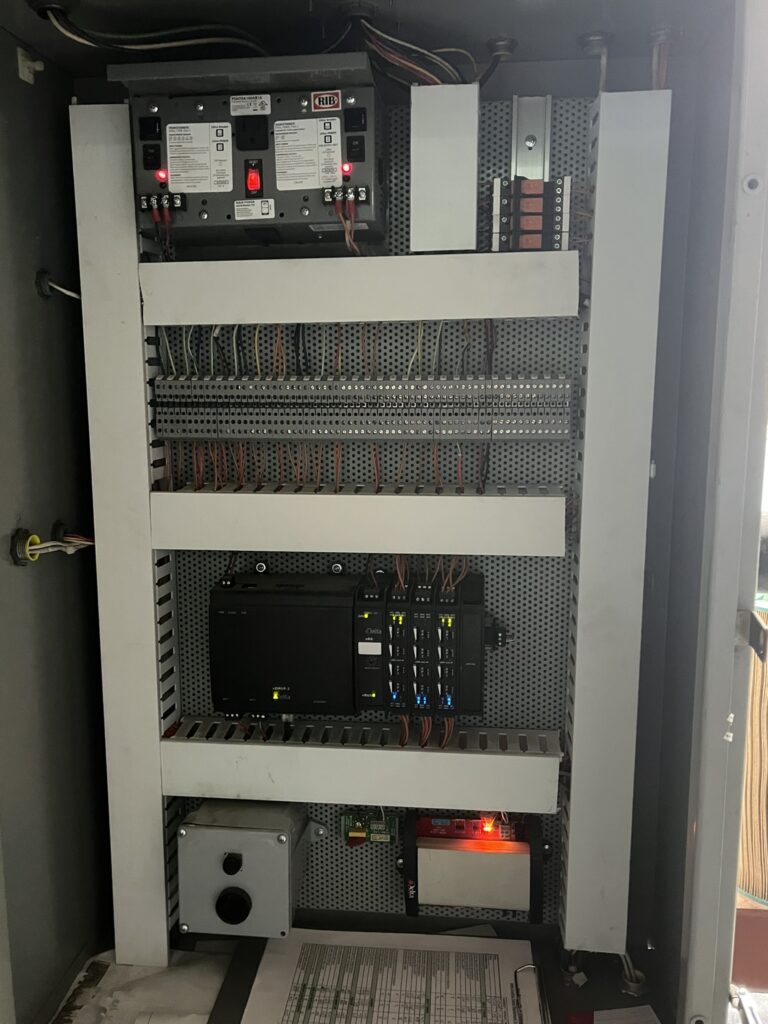
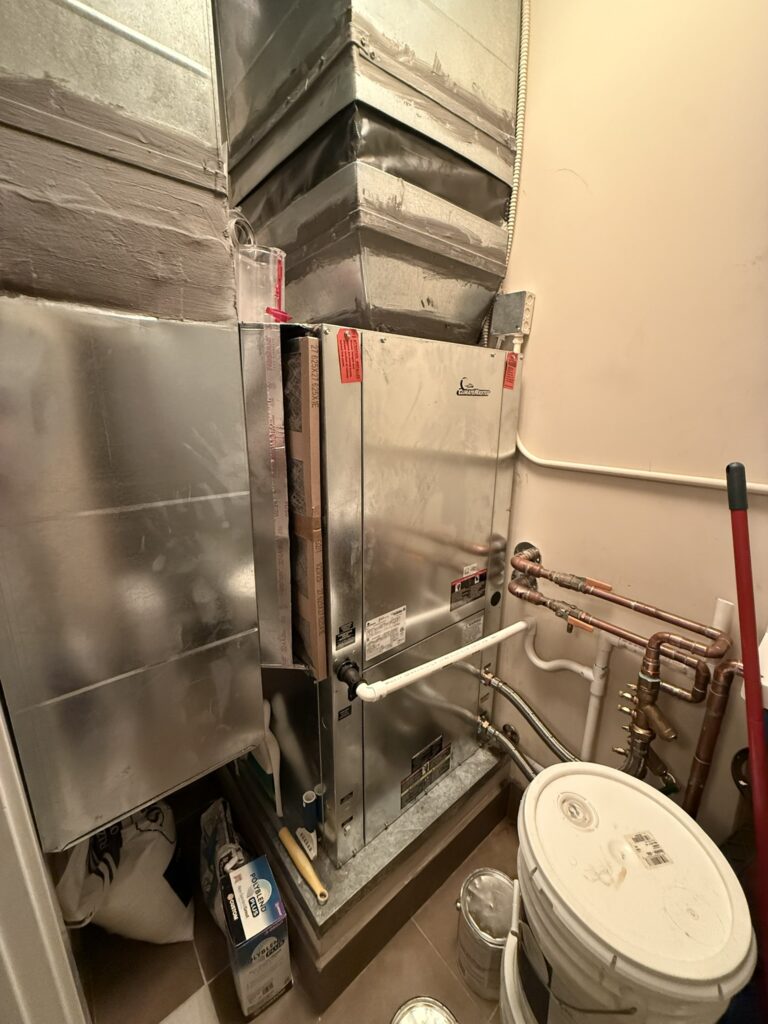
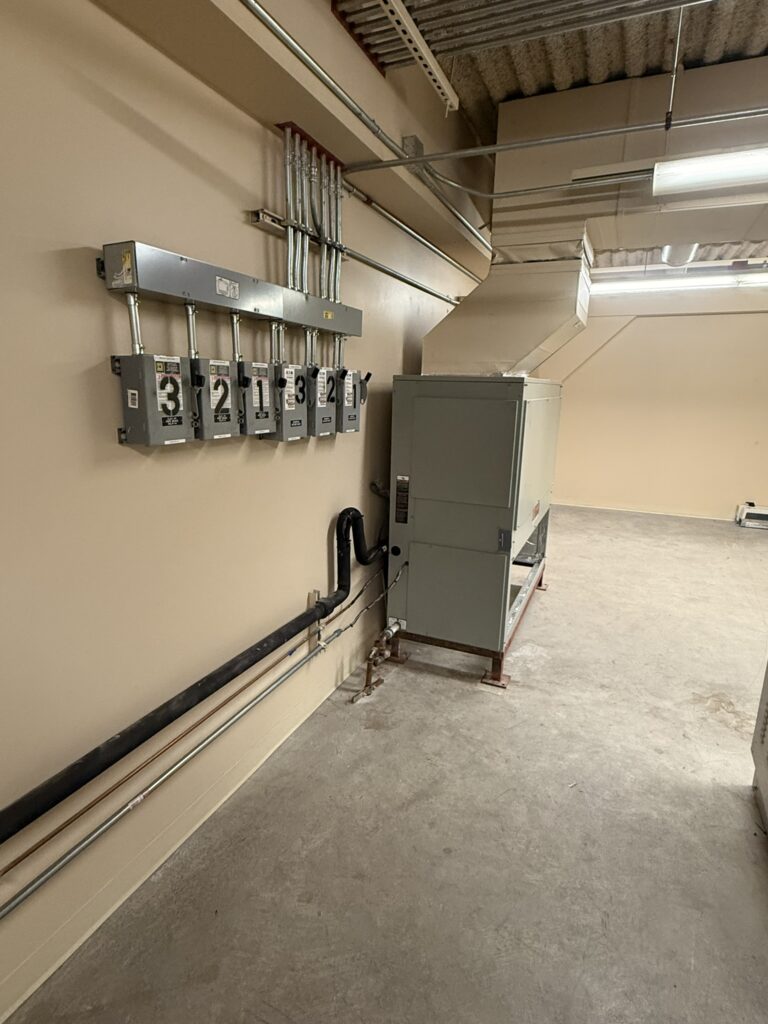
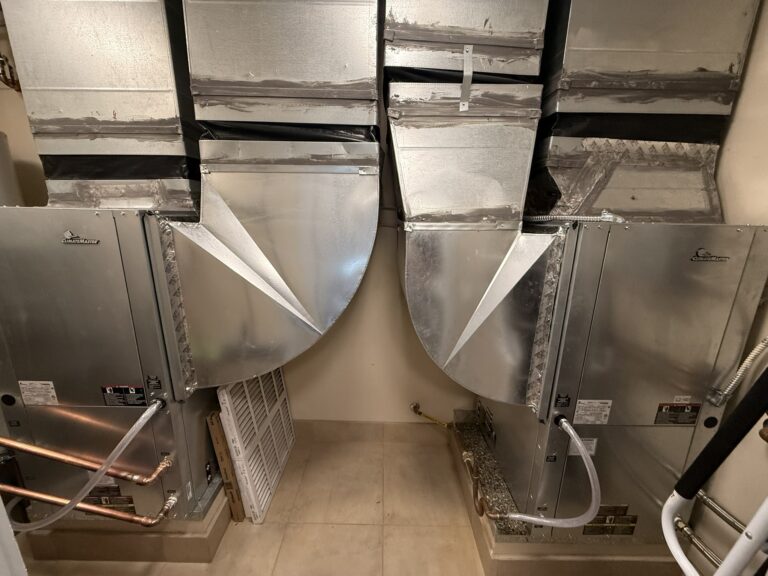
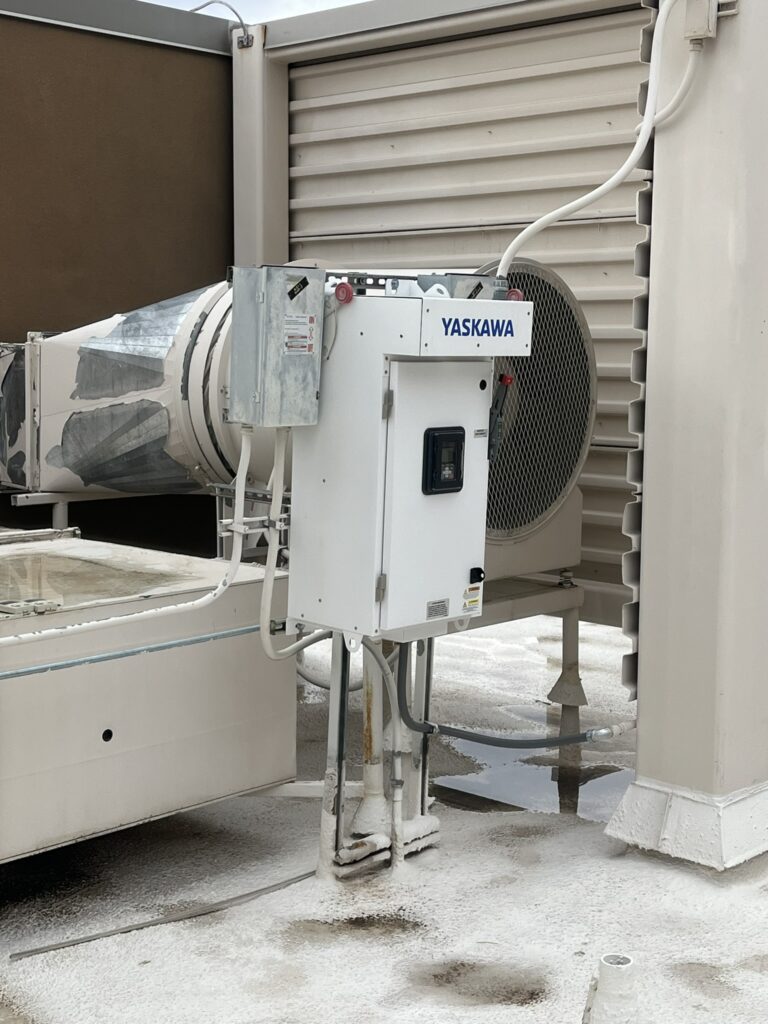
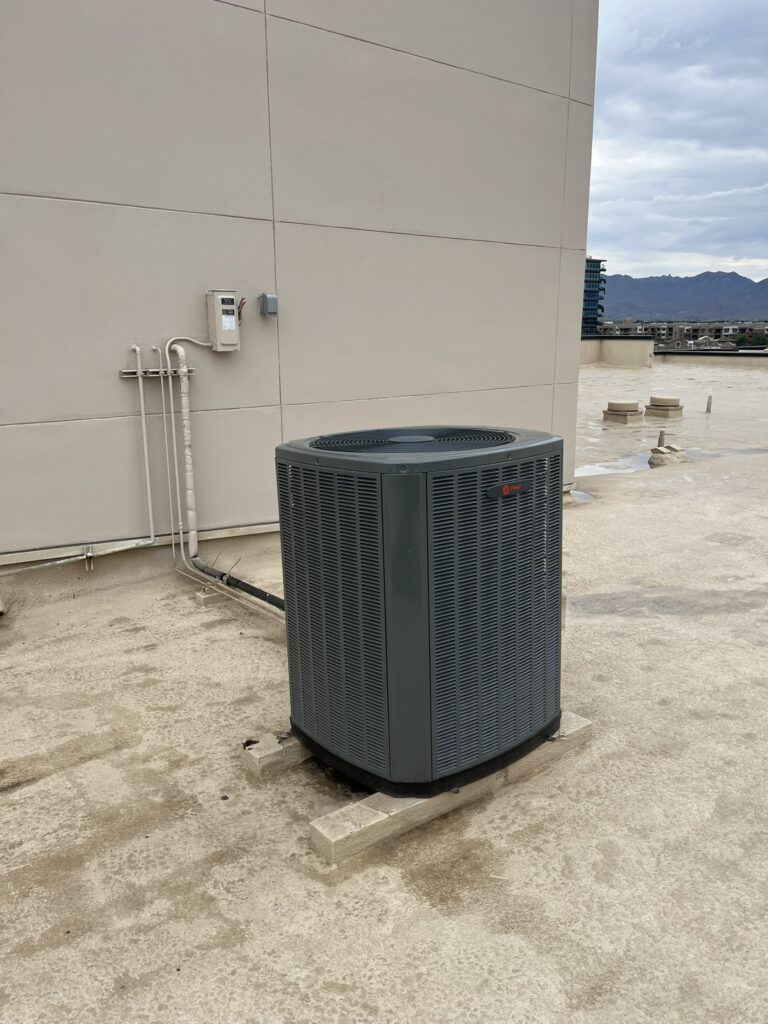
Photos from our own commercial projects across the Phoenix metro — equipment we installed, in buildings we service.
How the job typically runs.
When you schedule, you already know the service-call fee, and it rolls into the repair total once you sign off — disclosed at booking, never sprung on you at the unit. Goodyear's distribution and fulfillment operations often run around the clock, so we plan the visit around throughput: staged roof access, coordination with your facilities or shift supervisors, and after-hours diagnostics when a daytime interruption on the floor is off the table. On the roof, the technician diagnoses down to the failed part and shows you the proof — the pitted contactor, the glazed belt, the surge-killed drive — before a price is set, so a fleet decision rests on evidence rather than a hunch. Work begins only after you approve a flat-rate figure in writing, and refrigerant handling runs through EPA 608-certified technicians and is logged. Once the repair is in, we push the unit to full load and confirm temperature split, amp draw, and pressures before we climb down, because a warehouse floor that has to stay workable needs proof the fix holds at 112 degrees. The job wraps with a written report documenting findings, parts installed, readings, and photos where they matter — formatted to drop straight into a corporate asset-management system. Across a multi-unit fleet we report against numbered assets, so any unit's history is a single lookup. And when a failure has a fulfillment floor or a cold aisle in trouble right now, that call goes to the front of the day.
- 01 Booking, with the diagnostic fee disclosed
- 02 In-person diagnosis with real readings
- 03 Written flat-rate quote before work begins
- 04 The work: repair, install, or maintenance
- 05 Startup, documentation, and warranty handoff
A straightforward RTU repair in Goodyear — a failed part replaced in kind — generally proceeds without a City of Goodyear mechanical permit. The permit line is crossed once the repair becomes a full unit replacement, the gas-heat section is modified, or the electrical service changes; those require a permit and inspection, which we file so your team is not tracking it across a large fleet. Where a rooftop unit serves kitchen exhaust — in the retail and dining centers growing around the corridor — NFPA 96 governs the hood clearances and make-up air relationship we work within. All refrigerant recovery, charging, and leak repair is done by EPA 608-certified technicians and logged as federal law requires. This trade is licensed by the Arizona Registrar of Contractors, and its Minimum Workmanship Standards bind every licensed contractor statewide. Our written warranty rises above that legal minimum — the standard we commit to for your operation, not the least the state accepts. For distribution and manufacturing clients, permit-clean, documented work keeps your occupancy and insurance standing solid across every unit on the roof.
Pricing, financing & the 10% military & first responder discount.
Repairs are priced flat-rate and in writing before work begins. You approve a fixed figure instead of an open-ended labor clock, and the service-call fee stated at booking credits toward that repair once you approve — clarity that scales when you are managing dozens of units and cannot have surprise charges buried across a fleet. When a repair tips toward replacement, we put the repair number and the change-out number side by side, so a Goodyear operations or facilities manager makes the capital call on real figures. For fleets that cannot absorb reactive failures across a distribution roof, we can structure coverage that turns emergencies into scheduled, predictable costs with priority dispatch built in. We will not give a rebate or contract price we cannot back up. One note for the people behind these operations: our 10% military, veteran & first responder discount is a residential offer for the personal homes of owners and staff who have served — it applies to their own residences, never a commercial invoice — and with Luke Air Force Base right next door, a lot of Goodyear's workforce and leadership has earned it.
- 01 Flat-rate written quote after an in-person look
- 02 Diagnostic fee disclosed at booking, credited to the repair
- 03 Financing available on replacements
- 04 2-year workmanship warranty; 1-year manufacturer parts warranty
- 05 10% military, veteran & first responder discount
Why a licensed HVAC contractor matters.
FAQs: RTU Repair in Goodyear, AZ.
Can you manage a whole warehouse rooftop fleet, not just one unit?
Yes — that is the core of what we do in Goodyear. A distribution or fulfillment roof may carry dozens of packaged units, and we handle it as a managed asset base: on the first visit we number and tag every unit, record age, refrigerant type, and condition, and log each repair against the specific serial instead of a vague HVAC line. After that, a down unit is a dispatch instruction, not a rooftop scavenger hunt, the runtime repeat offenders reveal themselves, and capital planning ranks units by documented condition across the whole fleet.
What does a rooftop failure actually cost a distribution operation?
On a Goodyear fulfillment or distribution floor, far more than a comfort call. When a unit quits in July, throughput slows as the space heats, staff work harder in dangerous temperatures, and temperature-sensitive inventory cannot safely sit in a 100-degree aisle. That is why we treat warehouse rooftop failures as operations problems, not comfort tickets — we prioritize a down unit over a working floor, verify the fix under full load, and document it for your asset system. Across a large fleet, staying ahead of failures protects throughput far more cheaply than reacting to them one crisis at a time.
How fast can you get to rtu repair Goodyear warehouses need in peak heat?
A live person answers our line 24/7, so the rtu repair Goodyear warehouses call in for during peak heat gets triaged immediately by impact — a working fulfillment floor or a cold aisle outranks a vacant unit. Fleet-coverage customers hold priority in the queue, which counts most when the western edge's first 112-degree stretch stresses equipment across the whole I-10 corridor at once. Give us the site, the unit number off its tag, and what the space is reporting, and we route the nearest technician who can work your roof access and shift schedule.
A unit went dark right after a monsoon storm. What happened?
That usually means a grid surge killed a control board or a variable-frequency drive — the failure we see most in August across Goodyear's newer retail and medical equipment along the corridor. The unit loses its controls and stops. We trace the surge damage, replace the failed board or drive, and inspect the electrical supply feeding it so the next storm does not repeat the outage. On a warehouse fleet we prioritize any surge-killed unit sitting over a working floor, because every dark hour is throughput and staff comfort the operation cannot get back.
When should we replace a warehouse unit instead of repairing it?
When a unit is past roughly fifteen years, stacking repair tickets, or failing a major component on a runtime-worn cabinet, replacement usually wins the math even on a hard-working warehouse roof. A commercial change-out is a logistics project — crane scheduling, a curb adapter when the footprint does not match, gas and electrical reconnection, permits, and startup documentation. We give you the repair figure and the replacement figure side by side before you decide, so a unit on a busy Goodyear fleet gets planned into the schedule, not swapped in a panic during the worst week of summer.
Which rooftop brands do you service?
Every packaged make on Goodyear roofs — Carrier, York, Trane, Lennox, Daikin, Goodman, and Rheem, from single retail units to the heavy-duty tonnage on distribution buildings. Because packaged rooftop construction is broadly alike from one manufacturer to the next, what matters is correctly reading the failed component, not the label on the panel. No brand tie steers our recommendations, so our advice follows your equipment and your numbers only. From a PebbleCreek-area retail suite to a forty-unit I-10 fleet, that principle holds — and so does the documentation we leave on every unit.
Every major brand, serviced and installed.


Phoenix metro: Most days a tech is already working somewhere in the Valley, so same-day appointments happen when the schedule allows. After-hours emergencies are dispatched when a licensed tech is available — a real person answers and tells you the ETA on the call.
Call (520) 556-8929Request an estimate.
No pressure, no door knockers. We look at the HVAC system, tell you what it needs (and what it doesn’t), and put the number in writing.
Need RTU repair in Goodyear? A real person answers.
Other services we run in Goodyear.
RTU Repair in nearby cities.
Looking for something else nearby? All HVAC services in Goodyear