
Troon
Furnace Repair in Troon, AZ.
- (520) 556-8929
- Serving the entire Phoenix metro — we come to you
- Office: Mon–Fri 8:00 AM – 5:00 PM · 24/7 emergency service
- 2-year workmanship warranty · 1-year parts warranty
- Veteran-owned & operated · residential + commercial
- 23 five-star Google reviews
The first honest question on a Troon furnace call is whether the home actually has a furnace. In this part of Scottsdale, plenty of homes heat with heat pumps or mixed systems, so furnace repair starts with identification, then moves immediately to safety if gas heat is present. That matters in custom homes where equipment may be split between attics, closets, garages, and side-yard packages serving different wings. A guest suite may have one type of heat, the main living area another, and a thermostat label that tells only part of the story. The boulder-country setting adds its own rhythm: cool mornings, mild afternoons, seasonal occupancy, and homes built around views rather than simple duct runs. When a gas furnace is involved, comfort is not the only issue. Ignition, flame sensing, venting symptoms, rollout concerns, limit trips, and carbon-monoxide risk have to be checked without drama and without shortcuts. Yeti Pros is veteran-owned and operated, AZ ROC #363372 · ROC #363423. For furnace repair in Troon that verifies the equipment first and treats safety as non-negotiable, call (520) 556-8929.
What Furnace Repair covers in Troon.
Equipment identification
We first confirm whether your Troon home has a gas furnace, heat pump, electric heat, package unit, or mixed equipment. That prevents the wrong repair path and gives you clear language for what system serves each area of the house.
Ignition repairs
When a furnace will not light or shuts down after trying, we evaluate the ignition sequence, igniter, flame sensor, pressure behavior, gas-valve command, board response, and safety circuit before quoting the repair in writing.
Carbon-monoxide safety review
For gas heat, we treat carbon-monoxide risk and combustion-related symptoms carefully. We check visible safety concerns, venting symptoms, rollout indicators, limit behavior, and operating sequence, then explain what we found without exaggeration or pressure.
Blower and airflow repairs
A furnace can overheat, short cycle, or underperform when airflow is restricted. We inspect filters, blower operation, motor behavior, wheel condition, return limitations, and duct symptoms so the repair addresses more than the part that finally stopped.
Thermostat and control issues
Thermostats, low-voltage wiring, relays, boards, and staging settings can make a furnace appear failed. We trace the call for heat through the controls and equipment before recommending replacement of parts or changes to system setup.
Repair or replacement clarity
If a furnace is aging or has a safety-related concern, we explain the repair option and the remaining risk plainly. Replacement is discussed separately only when equipment condition, safety, repeated failures, or cost makes that conversation appropriate.
What we see for furnace repair in Troon.
Furnace calls in Troon often begin with uncertainty. The thermostat says heat, the air feels wrong, and the homeowner understandably calls it a furnace because that is the familiar word. Sometimes there is a gas furnace. Sometimes the system is a heat pump using electric auxiliary heat. Sometimes one side of the home has gas equipment while another uses a different setup. Before we talk about igniters or flame sensors, we confirm the equipment, fuel source, access, and which rooms the system serves.
When a true gas furnace is present, the most common complaints are no heat, short cycling, burners that light and shut down, a blower that runs after the heat stops, or a system locked out after repeated ignition attempts. Those symptoms can involve an igniter, flame sensor, pressure switch, limit circuit, gas valve, inducer, board, filter restriction, venting symptom, or airflow issue. A dirty flame sensor can be simple. A limit trip caused by poor airflow is not solved by resetting the unit and walking away.
Safety checks matter because many Troon homes are large, quiet, and intermittently occupied. A seasonal resident may not hear a furnace struggle through several cycles before it locks out. A homeowner may notice a smell at startup or a detector concern and not know whether it is dust burnoff, combustion trouble, or something unrelated. We do not use safety language to pressure people. We do treat combustion-related symptoms, venting concerns, and carbon-monoxide risk as reasons to slow down, test, and explain what is known.
We also see comfort complaints that are not furnace failures at all. Big volumes, long duct runs, high returns, glass exposure, and room additions can make a furnace look weak when the distribution system is the real limitation. In homes near Troon Village, one system may satisfy the main area while a distant bedroom wing lags behind. Repair should separate the failed component from the design or airflow issue that may remain after the furnace is operating correctly.
- 01 Airflow and static pressure
- 02 Electrical: capacitors, contactors, draws
- 03 Refrigerant-circuit behavior
- 04 Drains, safeties, and float switches
- 05 Thermostat, controls, and cycling
- 06 Ducts, returns, and room-by-room comfort
Residential HVAC across the Valley.
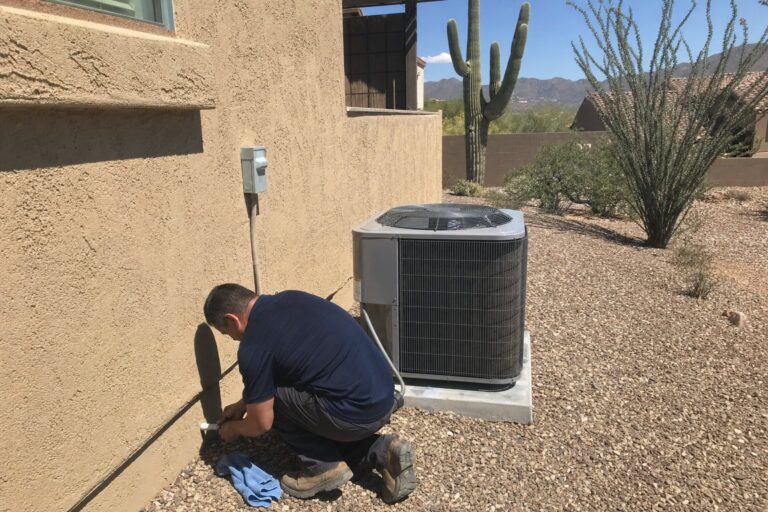
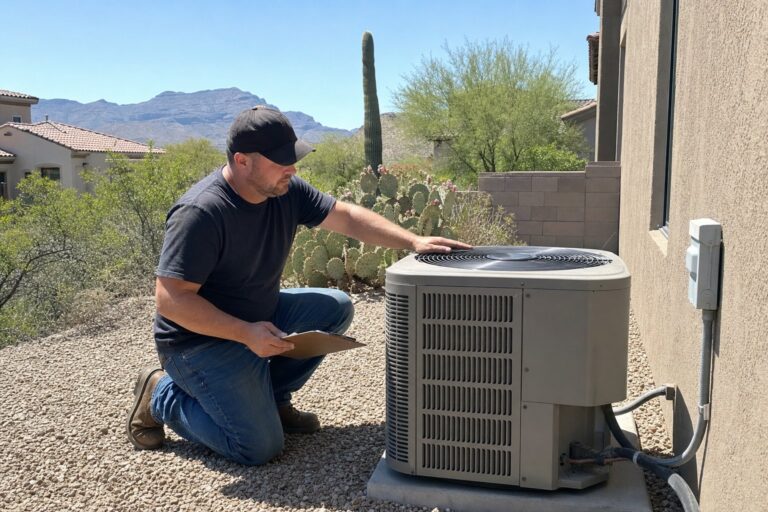
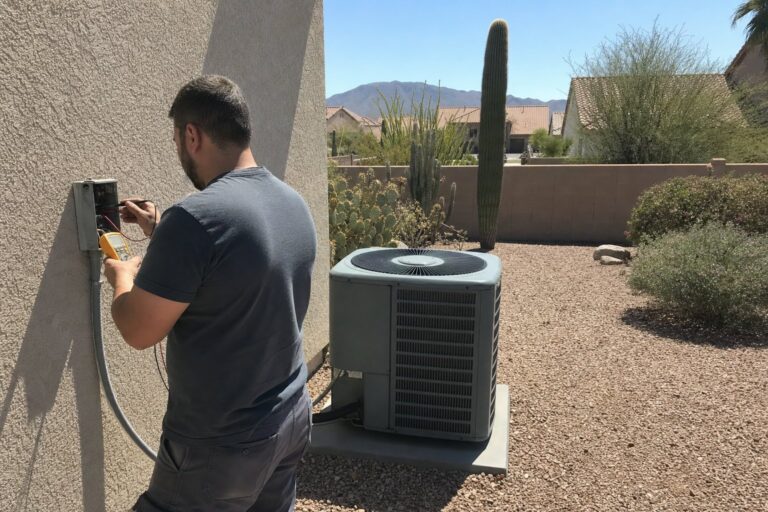
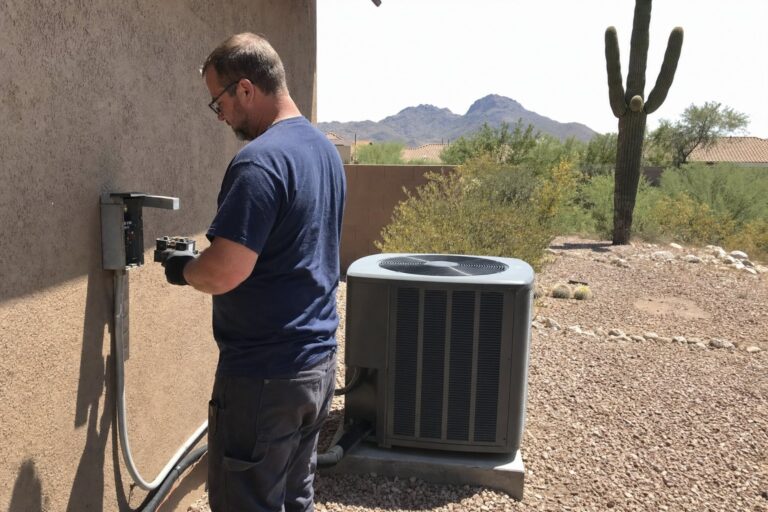
Air conditioning, heating, and cooler work at homes across the Phoenix metro.
How the job typically runs.
When you call, we ask whether you know the system is gas, electric, heat pump, or unknown; what the thermostat shows; whether the equipment starts; whether there are odors, unusual noises, or detector concerns; and whether the problem affects the whole home or one zone. We disclose the diagnostic or service-call fee at booking and credit it toward approved repair work. Office hours are Monday through Friday, 8-5, with 24/7 emergency service.
At the home, we come to you and start by identifying the equipment. For gas furnaces, we check the call for heat, ignition sequence, flame sensing, inducer and pressure behavior, limit circuit, blower operation, filter and airflow conditions, venting symptoms, and visible safety concerns. If the system is actually a heat pump, we shift the diagnosis to the correct equipment instead of forcing a furnace repair framework.
After the in-person diagnosis, we provide a flat-rate written quote before repair work begins. The quoted number is what you pay unless we find something new and stop to re-quote. Once approved, we complete the repair, test operation through a heating cycle, and explain what changed. Our workmanship carries a 2-year written workmanship warranty, and repair parts carry a 1-year manufacturer parts warranty.
- 01 Booking, with the diagnostic fee disclosed
- 02 In-person diagnosis with real readings
- 03 Written flat-rate quote before work begins
- 04 The work: repair, install, or maintenance
- 05 Startup, documentation, and warranty handoff
Most furnace repairs are service repairs and do not require a permit. Replacing an igniter, flame sensor, blower component, control board, thermostat, pressure switch, or similar failed part is different from replacing the furnace, altering fuel piping, changing venting, modifying electrical service, or redesigning ductwork. If the repair points to a larger scope that may require permit review through Scottsdale, Maricopa County, or the applicable authority, we explain that before the work changes.
Troon homes are typically slab-on-grade, so furnace access is usually in attics, closets, garages, mechanical areas, or packaged equipment locations rather than basements. Yeti Pros is licensed under AZ ROC #363372 and ROC #363423, and we provide written warranty terms for the work we perform. You can review the Arizona Registrar of Contractors Minimum Workmanship Standards for general workmanship context on residential trade work.
Pricing, financing & the 10% military & first responder discount.
Furnace repair pricing depends on the actual equipment, the failed component, access, safety findings, and whether the symptom is isolated or tied to airflow, venting, or control problems. An igniter replacement, flame-sensing issue, blower repair, board failure, limit trip, thermostat problem, or gas-valve diagnosis will not carry the same scope. The diagnostic or service-call fee is disclosed when you book and credited toward approved repair work.
After the in-person look, we provide a flat-rate written quote. The quoted number is what you pay unless we find something new and stop to re-quote before continuing. Financing is available when a larger repair or replacement discussion makes that useful. Yeti Pros also offers a 10% military, veteran & first responder discount. If the home does not have a furnace, we explain what system you do have and quote the appropriate repair path.
- 01 Flat-rate written quote after an in-person look
- 02 Diagnostic fee disclosed at booking, credited to the repair
- 03 Financing available on replacements
- 04 2-year workmanship warranty; 1-year manufacturer parts warranty
- 05 10% military, veteran & first responder discount
Why a licensed HVAC contractor matters.
FAQs: Furnace Repair in Troon, AZ.
How do I know if my Troon home has a furnace or a heat pump?
The simplest way is to identify the equipment, not the thermostat label. A gas furnace usually has a gas line, burner section, venting, and an indoor heating cabinet paired with an outdoor AC. A heat pump uses the outdoor unit for both cooling and heating, often with electric auxiliary heat. Some Troon homes have more than one system type serving different areas. If you are not sure, we can identify it during the visit and explain what each system does. That first step matters because furnace repairs and heat pump repairs follow different diagnostic paths.
What furnace problems create carbon-monoxide concerns?
Carbon-monoxide risk is tied to combustion, venting, and heat-exchanger-related concerns, not every furnace symptom. Warning signs can include detector alarms, unusual burner behavior, rollout symptoms, venting issues, repeated limit trips, or odors that deserve investigation. A failed igniter by itself is not the same as a combustion safety problem, but a furnace should still be checked as a system. We do not diagnose carbon monoxide from a phone call. If a detector alarms or anyone feels ill, leave the home and contact emergency services first, then arrange HVAC evaluation after the immediate safety concern is addressed.
Why does my furnace start and then shut off quickly?
Short cycling can come from several causes. The furnace may be losing flame signal, tripping a safety limit, struggling with airflow, seeing incorrect pressure-switch behavior, overheating because of a dirty filter, or responding to thermostat placement and control settings. In large Troon homes, a furnace may also satisfy one nearby area too quickly while distant rooms remain cool, which can look like a furnace problem but involve distribution. We test the ignition sequence, blower operation, airflow conditions, safety circuits, and thermostat call before deciding which repair is appropriate.
Can you repair a furnace in a seasonal home?
Yes. Seasonal homes can have furnace issues that go unnoticed until the owner returns or a guest uses the heat. Dust, idle time, old filters, thermostat programming, and missed maintenance can all contribute to startup problems or comfort complaints. We are a service-area business, so we come to you in Troon. If someone else is coordinating access, we still provide the diagnosis and written quote before approved work begins. After the repair, we test the system and explain any risk that stays with the operator, such as aging equipment or airflow limitations.
Do furnace repairs require permits in Scottsdale or Maricopa County?
Typical furnace service repairs usually do not require a permit. Replacing a failed igniter, flame sensor, blower component, control board, thermostat, or similar part is generally treated differently from replacing the furnace, changing fuel piping, altering venting, modifying electrical service, or changing duct design. If we find that the work needs to move beyond repair into a permitted scope, we explain the issue before the quote changes. The authority involved can depend on the property and scope, so we do not assume the answer before seeing the job.
What if my furnace is too old to repair responsibly?
If repair is technically possible but not a good recommendation, we explain why. Age alone does not decide it. Safety condition, heat-exchanger concerns, repeated failures, part availability, blower condition, control reliability, airflow problems, and the cost of the repair relative to the equipment all matter. You still get a written repair quote when a repair is appropriate. If replacement should be discussed, we separate that from the repair diagnosis and explain options clearly, with financing available when helpful and warranty terms provided in writing.
Every major brand, serviced and installed.
Phoenix metro: Most days a tech is already working somewhere in the Valley, so same-day appointments happen when the schedule allows. After-hours emergencies are dispatched when a licensed tech is available — a real person answers and tells you the ETA on the call.
Call (520) 556-8929Request an estimate.
No pressure, no door knockers. We look at the HVAC system, tell you what it needs (and what it doesn’t), and put the number in writing.
Need furnace repair in Troon? A real person answers.
Other services we run in Troon.
Furnace Repair in nearby cities.
Looking for something else nearby? All HVAC services in Troon