
Phoenix Metro
AC Capacitor Replacement in the Phoenix Metro.
- (480) 771-3252
- Serving the entire Phoenix metro — we come to you
- Office: Mon–Fri 8:00 AM – 5:00 PM · 24/7 emergency service
- 2-year workmanship warranty · 1-year parts warranty
- Veteran-owned & operated · residential + commercial
- 66 five-star Google reviews
Residential HVAC across the Valley.
Air conditioning, heating, and cooler work at homes across the Phoenix metro.
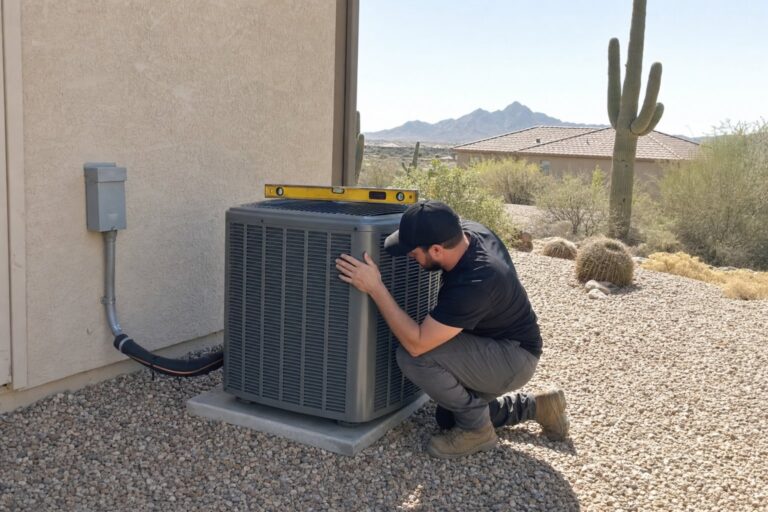
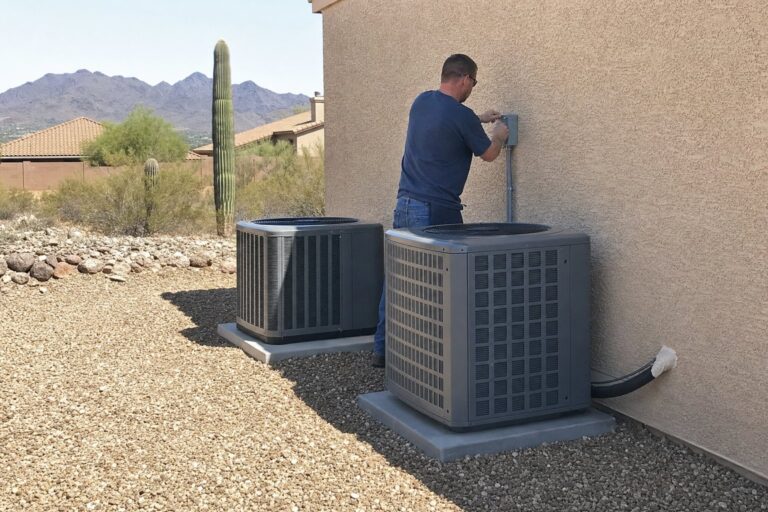
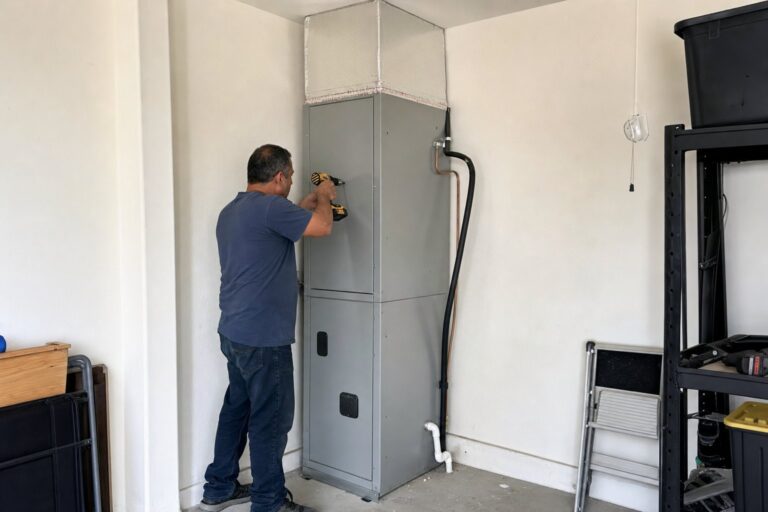
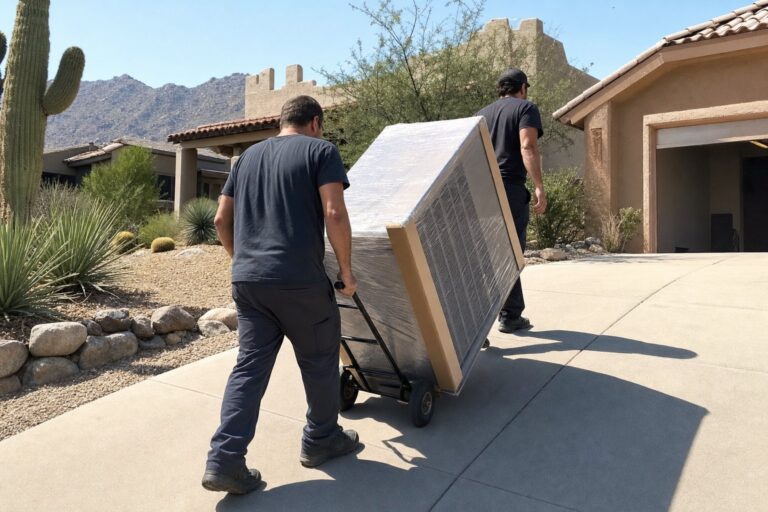
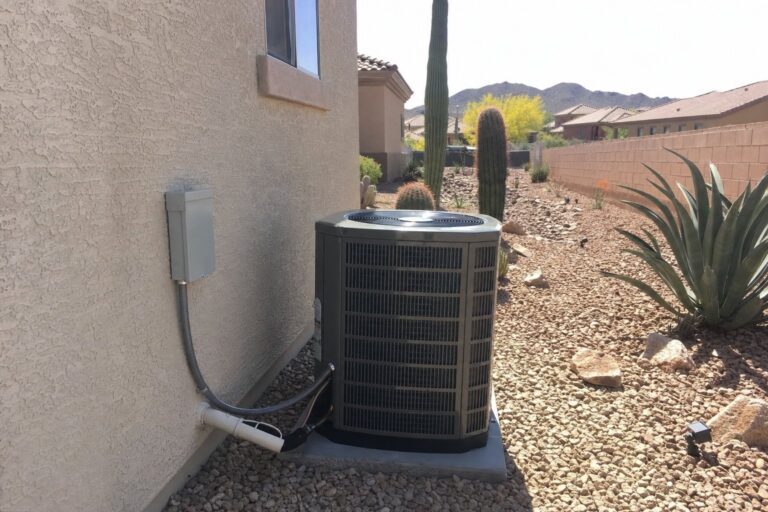
AC capacitor replacement is the repair you need when the outdoor unit hums, the fan will not spin, the compressor struggles to start, or the system quits on a hot run. We test the capacitor under real conditions, confirm it is the failed part, give a written flat-rate quote, and replace it cleanly if the numbers prove it.
Why capacitors fail so often here
A capacitor is a small electrical part with a hard job. It stores and releases the boost that helps the fan motor and compressor start and keep running. In the Phoenix metro, that part lives in an outdoor cabinet that bakes all day, then gets asked to start a heavy load over and over during long cooling cycles. Heat is not kind to electrical components. Dust, vibration, weak contactors, loose terminals, and aging motors all add stress.
That is why capacitor calls are common in Valley AC repair. The part may look swollen, oily, rusted, or perfectly normal. Looks are not enough. A good check uses a meter, compares the reading to the rating printed on the capacitor, and looks at the rest of the starting circuit. If the capacitor is weak but the fan motor is dragging, replacing only the capacitor may get the unit running for a while and still miss the real problem. If the compressor is locked or drawing bad amperage, a capacitor is not a magic reset button.
There is also a real safety issue. A capacitor can hold a stored electrical charge even after power is shut off. Touching the wrong terminals can hurt you, and guessing at the wrong size can damage equipment. This is not a part to swap by matching shape or taking advice from a label that may have been changed before. Our AC repair work starts with proving the failure, not assuming the cheapest-looking part is the answer.
When the capacitor is the problem, the repair is usually direct: isolate power, discharge safely, verify rating, replace with the correct microfarad and voltage-rated part, tighten connections, and test startup. The honest version is simple. It is often the Valley’s most-replaced AC part, but it still deserves proper diagnosis because the symptom can overlap with motor, compressor, contactor, or control problems.
Cost honesty without guessing
The quote for AC capacitor replacement depends on the capacitor type and rating, whether the unit uses a single or dual-run capacitor, access to the equipment, condition of the terminals and contactor, and whether the failed capacitor is tied to a motor or compressor problem. A simple confirmed capacitor failure is different from a call where the part failed because another component is pulling bad amperage.
Our process is the same either way. We inspect in person, explain what the readings show, then give a flat-rate written quote before work starts. The quoted number is what you pay unless we find something and stop to re-quote. The diagnostic/service-call fee is disclosed at booking and credited toward the repair. For a deeper explanation of what affects the job, see our capacitor replacement cost guide.
Repair parts carry a 1-YEAR manufacturer parts warranty, and our labor is backed by a 2-YEAR written workmanship warranty. Financing is available when the repair turns into a larger decision. We also offer a 10% military, veteran & first responder discount. Yeti Pros is veteran-owned & operated, AZ ROC #363372 · ROC #363423, and the work is held to the AZ ROC Minimum Workmanship Standards.
How the job actually goes
We come to you. Yeti Pros is a service-area business, so there is no shop counter or street address for you to drive to. You call (480) 771-3252, we disclose the diagnostic/service-call fee at booking, and that fee is credited toward the repair. Office hours are Mon-Fri 8-5, with 24/7 emergency service when the AC cannot wait.
On arrival, we start with the complaint you are seeing: dead outdoor unit, humming cabinet, fan needing a push, breaker trip, short cycling, or warm air. Then we shut power down properly and open the outdoor electrical compartment. The capacitor is tested against its rated value. We also check the contactor condition, wiring terminals, visible heat damage, motor amperage, compressor starting behavior, and whether the disconnect and breaker are acting normally. If the indoor blower or thermostat behavior matters to the symptom, we check that too.
Once we know what failed, we give a flat-rate written quote after the in-person look. The quoted number is what you pay unless we find something and stop to re-quote. That matters on capacitor work because a weak capacitor may be one failure, or it may be the first visible failure in a starting circuit that has been struggling for weeks. We do not keep working silently after the job changes.
If you approve the repair, we replace the capacitor with the correct size and rating, secure it in the cabinet, clean up questionable terminal fit, and verify the wiring before restoring power. Then we run the system. We listen to startup, check that the fan comes up cleanly, take amperage readings where needed, and confirm the compressor is not laboring against a deeper issue. We also watch the system long enough to make sure it does not immediately trip or short cycle.
At handoff, you get the written repair details, the part information, and warranty terms. Yeti Pros is veteran-owned & operated, AZ ROC #363372 · ROC #363423. Our workmanship is backed by a 2-YEAR written workmanship warranty, and repair parts carry a 1-YEAR manufacturer parts warranty. Work is held to the AZ ROC Minimum Workmanship Standards.
When a capacitor is likely, and when it is not
Capacitor problems have a few classic signs, but none of them are proof by themselves. The table below is how we think through the call before calling the part bad.
| What you notice | What it usually means | This service or something else? |
|---|---|---|
| Outdoor unit hums but fan does not spin | The fan capacitor may be weak, or the motor may be failing | Capacitor test first, then motor amperage and bearing check |
| Compressor tries to start, then stops | Weak capacitor, hard-start issue, bad contactor, or compressor trouble | Capacitor replacement only if readings prove it |
| Breaker trips when cooling starts | Electrical stress, shorted part, locked compressor, or wiring fault | Needs diagnosis before any part is replaced |
| System runs but shuts off quickly | Could be low voltage, controls, overheating motor, or pressure problem | May not be a capacitor call |
| Capacitor is swollen or leaking | The capacitor has physically failed | Replacement is likely, with startup checks after |
| Fan starts if pushed with a stick | Often a weak fan capacitor, but not always | Do not keep running it this way; test it safely |
The main point is that a capacitor is not diagnosed by sound alone. A meter reading, the printed rating, and the behavior of the connected motor all matter. If you need the system checked, use the contact form or call (480) 771-3252 and describe exactly what the unit is doing.
Phoenix-metro realities that change the repair
Phoenix AC equipment has a rough daily schedule. Outdoor condensers sit beside block walls, in gravel yards, on rooftops, and in narrow side yards with little shade. Cabinets pull in dust and cottonwood, then sit through monsoon humidity, wind, and heat. A capacitor in that cabinet does not fail in a clean lab setting. It fails inside a machine that has been running long cycles in real Valley conditions.
Long run time matters. On mild days, a weak capacitor may still get the motor started. On the hottest days, the same weak part can fall apart because the compressor is hotter, refrigerant pressures are higher, and every electrical connection is working harder. That is why some homeowners say the AC was fine yesterday and dead today. The part may have been drifting out of spec for months before the failure showed up.
Access matters too. Many Phoenix-metro homes are slab-on-grade, with no basements. The air handler or furnace may be in a closet, garage, or attic, while the condenser is outside. Ducts often live in attics that hit 150°F+. A capacitor repair is done at the outdoor unit, but we still pay attention to airflow and indoor operation because poor airflow can raise system stress and make electrical parts work harder. A dirty filter, blocked return, weak blower, or matted condenser coil can shorten the life of the next part.
Monsoon season adds another layer. Wind-driven dust, water intrusion, and power interruptions can expose weak electrical components. We look for burned terminals, loose spade connectors, pitted contactors, and signs that the cabinet has been getting wetter or dirtier than it should. Replacing the capacitor without tightening the rest of that small circuit is sloppy work. The Valley does not reward sloppy electrical repair.
Straight answers
Can I replace my own AC capacitor?
You can buy the part, but the danger is real. Capacitors can store a charge after power is off, and the wrong rating or wiring can damage the fan motor or compressor. If you are not trained to discharge, test, and wire the part correctly, this is a bad DIY bet.
How do I know the capacitor is bad?
Common signs are humming, a fan that will not start, a swollen capacitor, or an outdoor unit that clicks but does not run. The real answer comes from testing microfarads against the printed rating and checking the connected motor. Symptoms point the direction; readings make the call.
Will a new capacitor fix a hard-starting compressor?
Sometimes. If the run capacitor is weak, replacement can restore normal startup. If the compressor is mechanically tight, overheated, or drawing bad amperage, a capacitor may not solve it. We test startup behavior after the repair so you are not left with a fresh part on a failing compressor.
Do you handle emergency capacitor calls?
Yes. Office hours are Mon-Fri 8-5, and we provide 24/7 emergency service across the Phoenix metro. Call (480) 771-3252. We come to you, diagnose the failure, disclose the written quote, and complete the repair when the approved fix is clear.
Permits and inspections
Most repairs are ordinary service work; bigger scopes can involve city permitting. We perform our work to code, pull the permits our scope requires, and put what we did in writing.
What's covered
Workmanship is covered for two full years, in writing, and repair parts carry a 1-year manufacturer parts warranty — we document installs and repairs so those claims stay simple to make
Why a licensed HVAC contractor matters.
Every major brand, serviced and installed.





Phoenix metro: Most days a tech is already working somewhere in the Valley, so same-day appointments happen when the schedule allows. After-hours emergencies are dispatched when a licensed tech is available — a real person answers and tells you the ETA on the call.
Call (480) 771-3252Request an estimate.
No pressure, no door knockers. We look at the HVAC system, tell you what it needs (and what it doesn’t), and put the number in writing.