
Phoenix Metro
Condenser Fan Motor Replacement in Phoenix.
- (480) 771-3252
- Serving the entire Phoenix metro — we come to you
- Office: Mon–Fri 8:00 AM – 5:00 PM · 24/7 emergency service
- 2-year workmanship warranty · 1-year parts warranty
- Veteran-owned & operated · residential + commercial
- 66 five-star Google reviews
Residential HVAC across the Valley.
Air conditioning, heating, and cooler work at homes across the Phoenix metro.
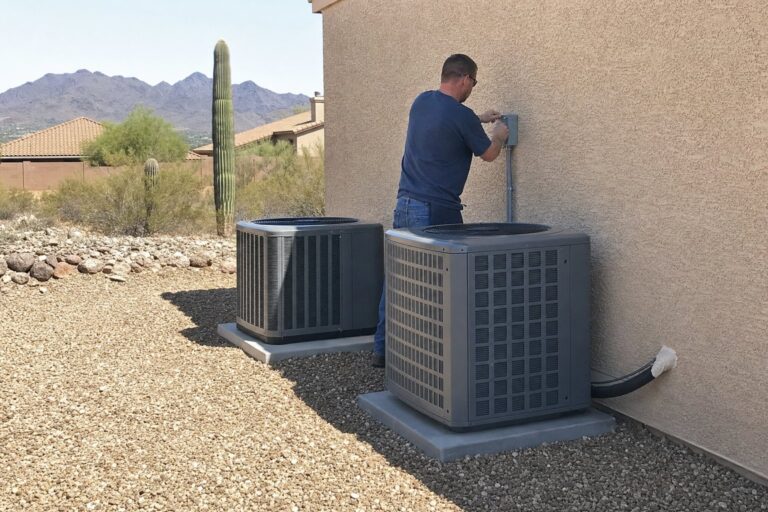
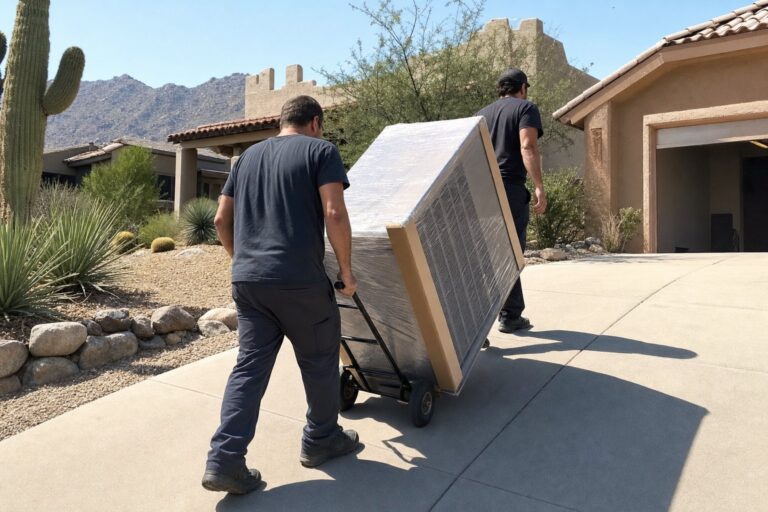
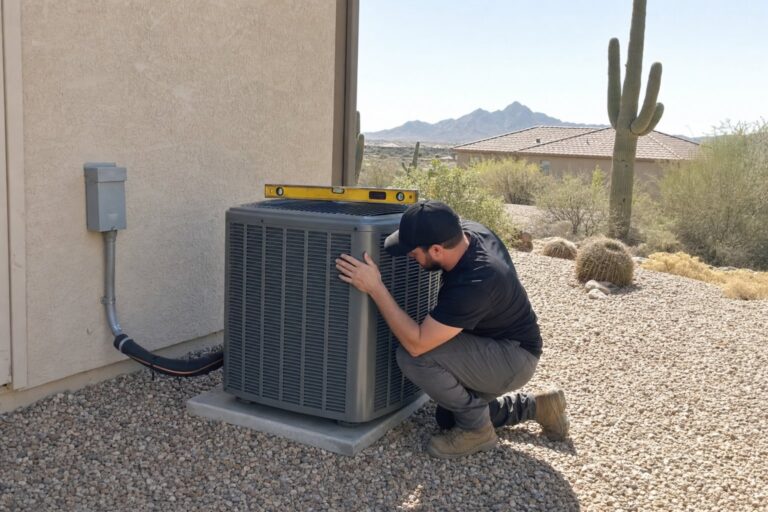
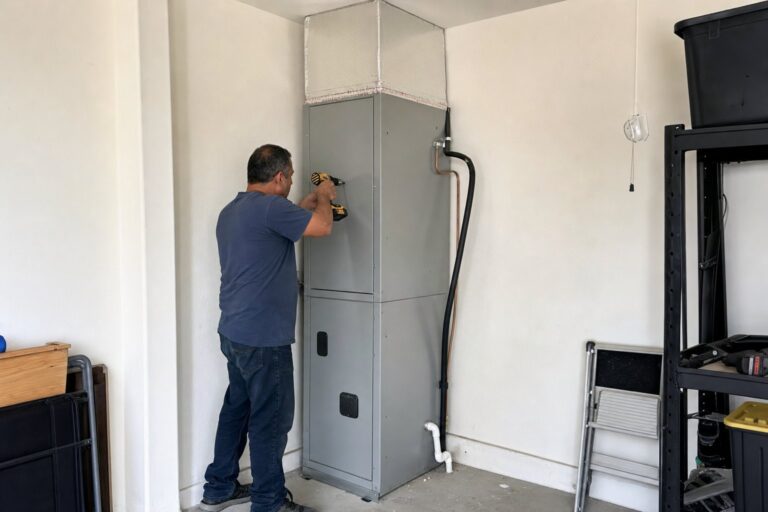
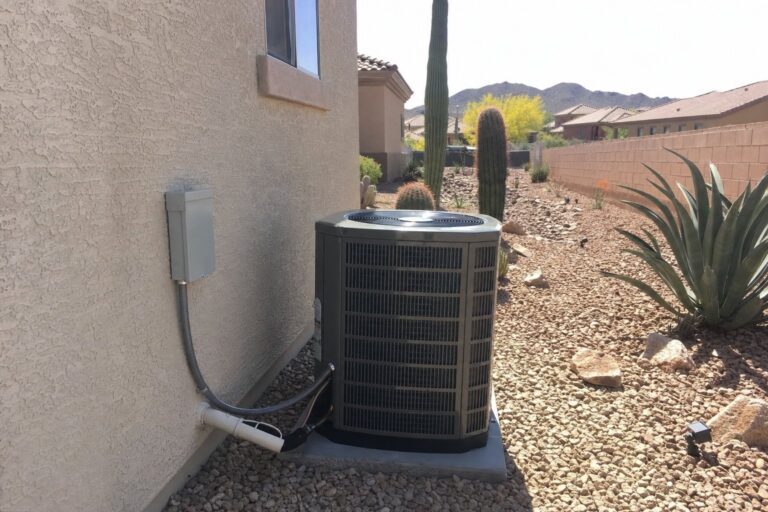
AC fan motor replacement usually means replacing the condenser fan motor in the outdoor unit, the motor that pulls air through the condenser coil and rejects heat outside. You need it when the outdoor unit hums, the compressor runs hot, the fan blade will not spin, or the motor quits during the hottest part of the day. Yeti Pros tests the motor, capacitor, blade, and controls before quoting repair.
Why condenser fan motors fail hard in summer
The condenser fan has one job: move outdoor air across the condenser coil so the refrigerant can dump heat. If that motor slows down, overheats, or stops, the outdoor unit cannot reject heat properly. The compressor may continue trying, pressures rise, and the system can shut down on thermal protection or run itself into serious trouble. In Phoenix, this failure is a summer killer because the outdoor unit is already working in extreme ambient heat.
A dead fan motor is not always just a dead motor. A weak run capacitor can keep the motor from starting or make it run hot. A damaged fan blade can shake the motor apart or move the wrong amount of air. A failing contactor, loose wiring, bad control board, or incorrect replacement part can create the same no-fan call. Some motors fail electrically. Some fail mechanically with tight bearings, heat damage, or oil loss. Others run when cool and quit when the sun is on the unit because heat exposes the weakness.
The condenser coil adds another variable. If the coil is packed with dust, lint, cottonwood, or yard debris, the fan has to work against poor heat transfer. The motor may be blamed, but the system also needs airflow through the coil. A new motor installed on a filthy coil can still leave the AC running hot. That is why diagnosis includes the condition of the coil, the blade, the capacitor, and operating behavior after repair.
Replacement choice matters. OEM motors are built for the unit specifications. Universal motors can be useful when matched correctly, but they need the right voltage, horsepower, RPM, rotation, mounting, shaft size, capacitor match, and wiring. The wrong motor or blade position can create noise, poor airflow, high head pressure, or early failure. Our residential AC repair process checks the whole condenser side before making the call.
How the job actually goes
We start by listening to what happened. Did the fan stop but the compressor kept humming? Did the unit trip a breaker? Did it run in the morning and quit in the afternoon? Did someone spin the blade with a stick and it started? Those details matter. A motor that starts only with help often points toward a capacitor or motor winding problem. A motor that runs until hot may have bearing or thermal issues. A breaker trip can mean a deeper electrical problem.
At the unit, we shut power off before opening panels. We inspect wiring, contactor condition, capacitor rating and actual reading, motor leads, blade condition, shaft play, signs of overheating, and coil cleanliness. If the motor is still running, we check amp draw and listen for bearing noise. If it is not running, we verify power and control before calling the motor failed. Guessing is expensive, especially when a capacitor or contactor is the actual failed part.
If replacement is needed, we match the motor to the equipment. OEM is often the cleanest path when availability and unit requirements call for it. A properly selected universal motor can also be a solid repair when it matches the electrical and mechanical requirements. The blade is marked or measured so it returns to the correct position in the shroud. That detail matters because blade depth affects airflow and noise. We secure wiring away from the blade, replace the capacitor when the motor requires a matched capacitor, and confirm rotation.
Before work starts, you get a flat-rate written quote after the in-person look. The quoted number is what you pay unless we find something new and stop to re-quote. The diagnostic or service-call fee is disclosed at booking and credited toward the repair. After installation, we run the system, verify fan operation, check for vibration, listen for abnormal noise, and confirm the condenser is rejecting heat properly. When conditions allow, we review temperature split and operating behavior so the repair is not judged by fan spin alone.
Yeti Pros is a service-area business, so we come to you across Phoenix and the Valley. Schedule through contact or call (480) 771-3252. Office hours are Mon-Fri 8-5, and 24/7 emergency service is available for no-cooling calls.
Outdoor fan symptoms and what they point to
When the condenser fan stops, the outdoor unit may still make noise because the compressor or contactor is energized. That can fool people into thinking the AC is running normally. The fan blade, motor temperature, and compressor behavior tell the better story.
| What you notice | What it usually means | This service or something else? |
|---|---|---|
| Outdoor unit hums, fan blade does not spin | Weak capacitor, failed motor, seized bearing, or power issue | Fan motor and capacitor diagnosis |
| Fan starts if pushed, then runs | Capacitor is suspect, but motor winding condition still needs testing | Electrical testing before replacement |
| Fan quits during afternoon heat | Motor may be overheating, bearings may be failing, or coil heat load is high | Motor, amp draw, and coil inspection |
| Unit is loud or shaking after repair | Blade may be bent, mounted wrong, or motor match may be off | Blade and motor setup correction |
| Compressor shuts off but fan is dead | High pressure or thermal protection may be reacting to no condenser airflow | Stop running it and schedule service |
| Breaker trips when outdoor unit starts | Motor, compressor, capacitor, wiring, or breaker issue may be present | Full electrical diagnosis |
Phoenix-metro realities that change condenser fan work
Outdoor units in the Valley sit in harsh conditions: direct sun, dust, roof heat on package units, reflected heat from walls and pavers, and long run times. A condenser fan motor that is marginal may survive a mild morning and fail when the afternoon load peaks. That timing is common. The hotter the air around the condenser, the more important correct airflow becomes.
Dust and debris matter. Desert dust coats condenser coils. Yard debris, lint, leaves, and blown trash can collect at the cabinet. A dirty coil raises operating pressure and heat. The fan motor then works in a hotter environment while the compressor struggles to reject heat. Replacing the motor without looking at the coil misses part of the failure environment. We inspect coil condition and airflow because a clean heat-rejection path helps the new motor and the compressor.
Equipment location changes the work. Some Phoenix-metro homes have split-system condensers on the ground. Others have rooftop package units. Rooftop work means ladder access, roof conditions, sun exposure, and safe handling of parts above the home. Ground units may have tight side-yard access, landscaping packed against the cabinet, or poor clearance that restricts airflow. We account for access before quoting and during setup.
Arizona homes are slab-on-grade, so the outdoor unit and line-set routing often have different access patterns than basement-based systems in other regions. That does not usually complicate a fan motor directly, but it affects how the condenser is positioned and serviced. The bigger point is heat rejection: the outdoor unit must breathe. In this climate, small setup mistakes are not small. Wrong rotation, wrong RPM, wrong blade depth, or a dirty coil can show up quickly as high pressure, poor cooling, or another shutdown.
What affects the written quote
The quote depends on motor type, OEM versus properly matched universal options, capacitor requirements, blade condition, access, and whether other electrical parts are failed. A simple motor and capacitor replacement is different from a rooftop package unit with damaged wiring, a bent blade, a bad contactor, or a condenser coil that needs cleaning before the system can run correctly.
After the in-person look, Yeti Pros gives a flat-rate written quote. The quoted number is what you pay unless we find something new and stop to re-quote before continuing. The diagnostic or service-call fee is disclosed at booking and credited toward the repair. Repair workmanship is backed by a 2-year written workmanship warranty, and repair parts carry a 1-year manufacturer parts warranty. The work is held to the AZ ROC Minimum Workmanship Standards.
Yeti Pros is veteran-owned and operated. AZ ROC #363372 · ROC #363423. Financing is available, and we offer a 10% military, veteran and first responder discount. For more repair-scope detail, read our condenser fan motor cost guide.
Straight answers
Can I run the AC if the outside fan is not spinning?
No. If the condenser fan is not moving air, the compressor can overheat or shut down on protection. Turn the system off and schedule service. We test the motor, capacitor, and controls before quoting the repair.
Should I choose OEM or a universal fan motor?
It depends on the unit and the match. OEM is often the cleanest fit. A universal motor can be fine when voltage, horsepower, RPM, rotation, mounting, shaft, capacitor, and wiring are matched correctly. The wrong match creates real problems.
Is the capacitor always replaced with the fan motor?
Often, but it depends on the motor and test results. A replacement motor needs the correct capacitor rating. If the existing capacitor is weak, wrong, or not matched to the new motor, it should not stay in the system.
Do you offer emergency condenser fan motor replacement?
Yes. Office hours are Mon-Fri 8-5, and 24/7 emergency service is available. Call (480) 771-3252. We come to you, diagnose the outdoor unit, and give a written quote before repair work starts.
Permits and inspections
Most repairs are ordinary service work; bigger scopes can involve city permitting. We perform our work to code, pull the permits our scope requires, and put what we did in writing.
What's covered
Workmanship is covered for two full years, in writing, and repair parts carry a 1-year manufacturer parts warranty — we document installs and repairs so those claims stay simple to make
Why a licensed HVAC contractor matters.
Every major brand, serviced and installed.




Phoenix metro: Most days a tech is already working somewhere in the Valley, so same-day appointments happen when the schedule allows. After-hours emergencies are dispatched when a licensed tech is available — a real person answers and tells you the ETA on the call.
Call (480) 771-3252Request an estimate.
No pressure, no door knockers. We look at the HVAC system, tell you what it needs (and what it doesn’t), and put the number in writing.