
Phoenix Metro
High-Efficiency AC Installation in Phoenix.
- (520) 556-8929
- Serving the entire Phoenix metro — we come to you
- Office: Mon–Fri 8:00 AM – 5:00 PM · 24/7 emergency service
- 2-year workmanship warranty · 1-year parts warranty
- Veteran-owned & operated · residential + commercial
- 23 five-star Google reviews
Residential HVAC across the Valley.
Air conditioning, heating, and cooler work at homes across the Phoenix metro.
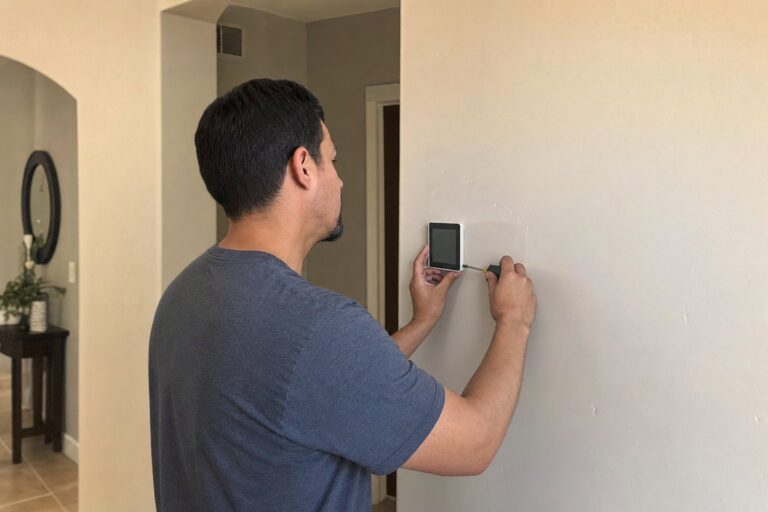
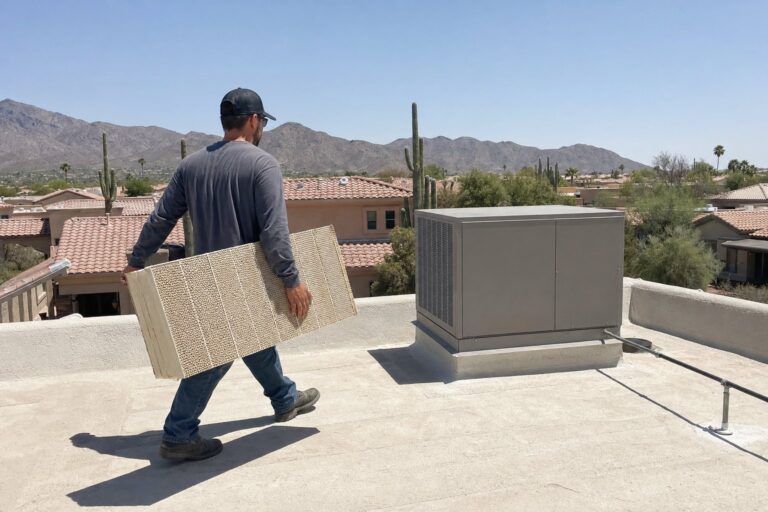
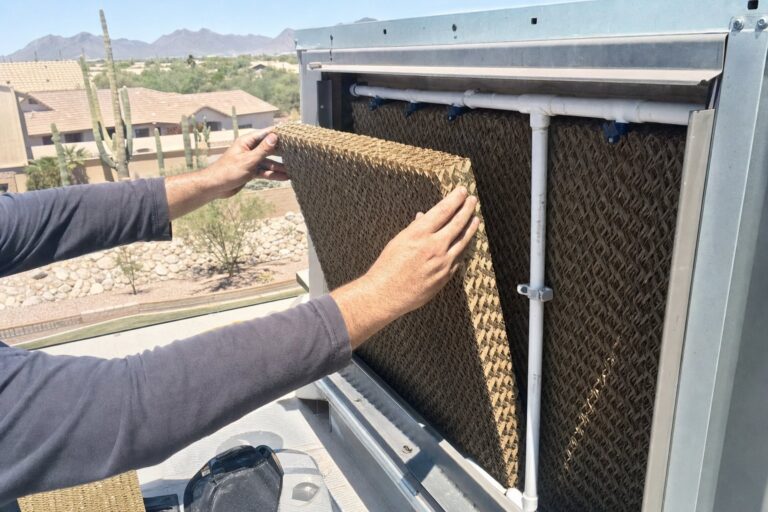
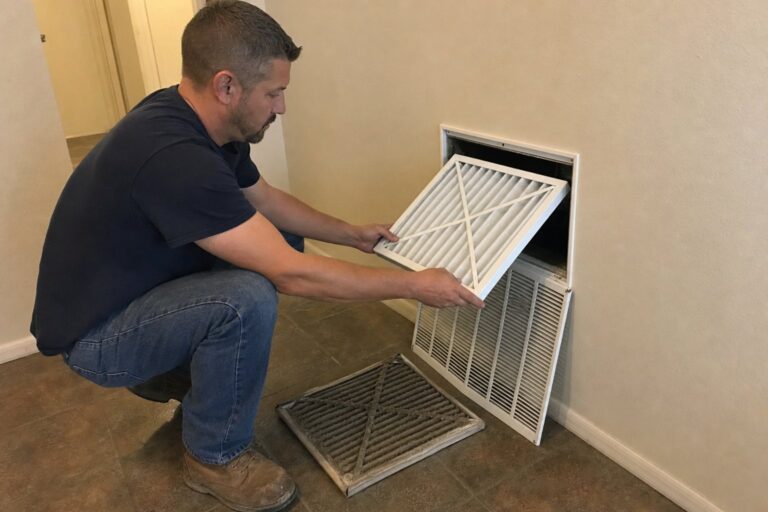
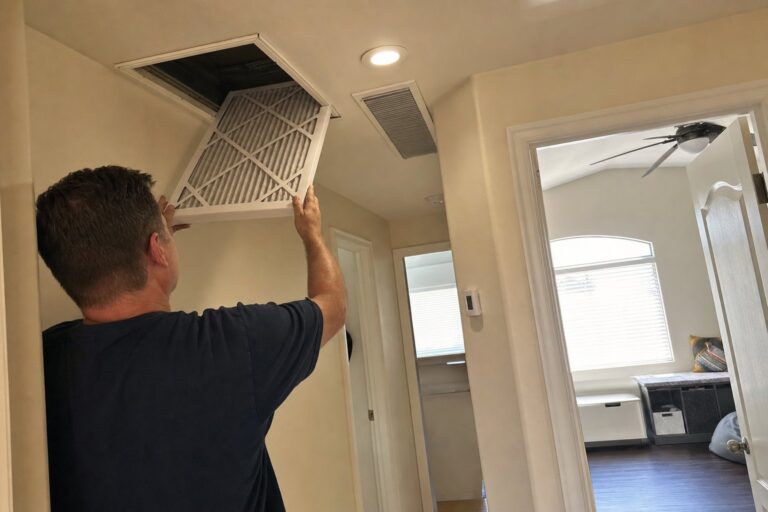
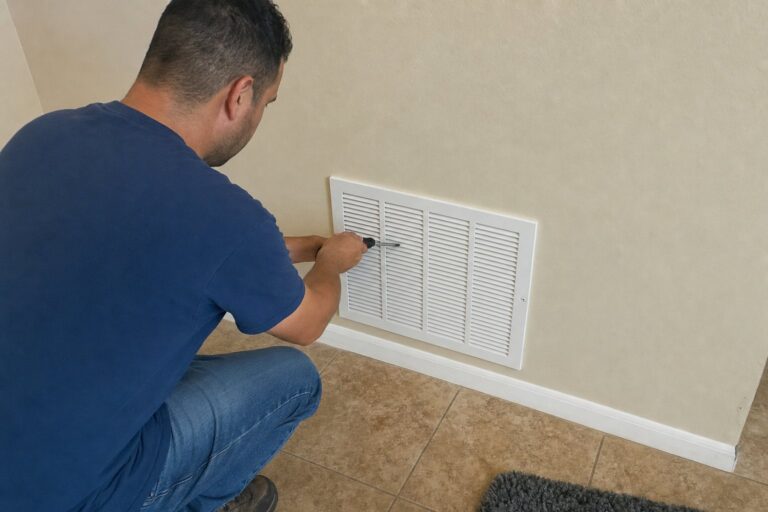
High-efficiency AC installation is the replacement of a standard cooling system with equipment that uses less power to move the same heat out of the house. You need it when the old unit is aging, bills keep climbing, comfort is uneven, or you want the next system chosen by load, duct reality, and actual Phoenix runtime instead of a guess.
What high efficiency really means in a Phoenix home
High efficiency is not a sticker on the condenser. It is a full installation decision: equipment rating, indoor coil match, blower setup, refrigerant charge, duct condition, thermostat control, and whether the house can actually use the extra capability you are buying. In Phoenix, the system has long cooling seasons and heavy afternoon load, so small errors show up fast. A higher SEER2 rating can help, but only when the system is sized and installed like it has to work here, not like it is sitting in a mild climate catalog.
SEER2 is the current efficiency rating used for new residential equipment. Higher tiers usually mean better compressor and fan technology, tighter equipment matching, and more careful airflow requirements. That does not automatically mean the highest tier is the right choice for every house. A leaky attic duct system can waste good equipment. A poorly sized unit can short cycle, miss humidity control, and wear harder. A weak return can choke airflow and make a premium system act ordinary.
The Valley also gives AC equipment a workload that makes runtime matter. Around 3,000 cooling hours is a useful way to think about the decision, because efficiency only pays back while the system is running. A high-efficiency system has more opportunity to matter here than in a short-summer market, but the right tier still depends on how long you plan to keep the home, how the ductwork looks, and whether comfort problems come from the old unit or the house around it.
Cost honesty without numbers
The quote for high-efficiency AC installation moves up or down based on equipment tier, system size, indoor coil access, line-set condition, electrical work, thermostat and staging needs, duct corrections, crane or roof work when applicable, drain repairs, and whether the old installation left problems that have to be fixed before the new equipment can be trusted. A higher SEER2 rating can cost more, but bad airflow can waste that upgrade, so we price the actual job after seeing it.
Yeti Pros gives flat-rate written quotes after an in-person look. The quoted number is what you pay unless we find something and stop to re-quote. The diagnostic or service-call fee is disclosed at booking and credited toward the repair. Installation workmanship is backed by a 2-YEAR written workmanship warranty. Repair parts carry a 1-YEAR manufacturer parts warranty. Work is held to the AZ ROC Minimum Workmanship Standards. Financing is available, and we offer a 10% military, veteran & first responder discount.
For a plain-spoken breakdown of when a higher efficiency tier is worth considering, read the SEER2 upgrade cost guide. To schedule an in-person look, use contact or call (520) 556-8929.
SEER2 tiers and two-stage choices
Most Phoenix homeowners comparing high-efficiency AC equipment are really choosing between a better single-stage unit, a two-stage system, or a variable-capacity design. This page is focused on high-efficiency central AC installation, with two-stage equipment often sitting in the practical middle. A two-stage compressor can run at a lower output for longer stretches, then step up when the home needs full capacity. That can reduce harsh starts, improve air mixing, and make the house feel steadier when the install is done right.
The catch is that two-stage equipment still needs the rest of the system to cooperate. The indoor coil has to match. The blower has to be set correctly. Static pressure has to be checked. The thermostat has to control staging correctly. If the house has restricted ducts or a return that is too small, the system cannot breathe. High efficiency is a system result, not just an outdoor unit upgrade.
When Yeti Pros looks at a high-efficiency replacement, we do not start by pushing a tier. We start by measuring what is there: equipment size, duct layout, return path, line-set condition, electrical requirements, clearances, and the symptoms you are trying to solve. Then we explain which SEER2 level makes sense and where the money is better spent. Sometimes that is a higher tier. Sometimes it is a solid efficient unit plus duct correction that does more for comfort than a prettier rating sheet.
How the job actually goes
We come to you as a service-area business. The visit starts with the existing system and the house, not a brochure. We check model numbers, age, refrigerant type, breaker and disconnect condition, indoor coil access, drain routing, thermostat wiring, air filter setup, supply and return layout, and signs of past airflow trouble. If the old system still runs, we take operating readings where they are useful: temperature split, pressures when appropriate, amperage, static pressure, and basic airflow indicators. If it is dead, we still inspect the parts of the installation that will affect the new unit.
After the in-person look, you get a flat-rate written quote before work starts. The quoted number is what you pay unless we find something that changes the work; if that happens, we stop and re-quote before moving forward. The diagnostic or service-call fee is disclosed at booking and credited toward the repair. For installation, the written scope spells out the equipment, indoor and outdoor work, thermostat or control needs, drain work, electrical items included, and any duct or airflow corrections being handled at the same time.
On install day, we protect the work areas, recover refrigerant properly when the old system is still charged, remove the old equipment, set the new condenser, install or adapt the indoor coil, connect the line set, pressure test, evacuate the system, set the refrigerant charge by the manufacturer method, confirm electrical safety, and verify airflow. We clean up the job site and hand over the equipment documentation, warranty information, and operating notes. If financing is part of the job, that is handled before scheduling so the install day is about the work, not paperwork.
Yeti Pros is Veteran-owned & operated, licensed as AZ ROC #363372 · ROC #363423. Office hours are Mon-Fri 8-5, with 24/7 emergency service. For a broader view of replacement options, see our AC installation service page.
When high efficiency is the right move
These are the decisions we see most often across the Phoenix metro. The table is not a diagnosis by itself, but it helps separate a true high-efficiency replacement conversation from a repair, duct, or controls problem.
| What you notice | What it usually means | This service or something else? |
|---|---|---|
| Old unit runs constantly and bills are climbing | The equipment may be losing capacity, oversized duct leakage may be wasting runtime, or both | High-efficiency replacement may fit, but airflow and ducts need inspection |
| Rooms never even out in the afternoon | Load, duct balance, return path, or insulation may be the main issue | Install can help only if the system design is corrected |
| You are replacing a working but aging system | This is the cleanest time to compare SEER2 tiers without emergency pressure | Good candidate for an efficiency quote |
| The current unit short cycles | Oversizing, controls, airflow restriction, or low load can cause it | Do not solve with size alone; sizing and staging matter |
| You plan to stay in the home | Runtime and comfort benefits have more time to matter | Higher SEER2 or two-stage may make practical sense |
Phoenix-metro realities that change the install
Phoenix is hard on AC equipment because the system is not just cooling air; it is rejecting heat into outdoor air that can already be brutal. Condensers sit in yards, side setbacks, roofs, and tight utility areas where clearance and coil cleanliness matter. A high-efficiency condenser with poor airflow around it is being asked to do premium work while breathing poorly. That is why placement, pad condition, clearances, and coil access are part of the quote.
Inside the home, Arizona construction is usually slab-on-grade, with no basements. That means the air handler, furnace, or indoor coil is commonly in a closet, garage, attic, or horizontal attic setup, and the ducts often live above the ceiling. Attics here can hit 150°F+, so duct leakage and insulation problems are not small side issues. A supply leak in a hot attic is paid for twice: first by losing cooled air, then by pulling the house out of balance. A return leak can drag attic heat and dust into the system.
Dust and monsoon weather add their own mess. Coils load up, drains need to be routed and cleared correctly, and electrical connections live through heat cycles that loosen weak work. In the Phoenix metro, an efficient system needs a clean install because the margin gets eaten up by field conditions. We look at condensate protection, access for future service, filter rack sealing, duct transitions, and thermostat placement. The goal is not a showroom install. It is a system that can run long hours in the Valley without wasting the efficiency you paid for.
Straight answers
Is a higher SEER2 AC always worth it in Phoenix?
No. Phoenix runtime gives efficiency more chances to matter, but the house has to support the equipment. If the ducts leak, the return is undersized, or the unit is sized wrong, a higher rating can underperform. We compare tiers after checking the actual installation conditions.
Should I choose two-stage AC or standard high efficiency?
Two-stage can be a smart middle choice because it runs longer at lower output and steps up when needed. It can improve comfort and reduce harsh cycling. It still needs correct controls, airflow, and ductwork. Without those, the extra capability does not deliver much.
Can you install high-efficiency AC in an older Phoenix home?
Usually, yes, but older homes often need extra attention around ducts, returns, electrical clearance, drain routing, and line-set condition. We check those items before quoting. The right answer may be equipment plus corrections, not just a new condenser and coil.
How fast can you replace my AC?
Timing depends on equipment availability, access, and the scope of work. Office hours are Mon-Fri 8-5, and we also provide 24/7 emergency service. If the system is down, we can inspect it, explain the options, and give a written quote after the in-person look.
Permits and inspections
Most repairs are ordinary service work; bigger scopes can involve city permitting. We perform our work to code, pull the permits our scope requires, and put what we did in writing.
What's covered
Workmanship is covered for two full years, in writing, and repair parts carry a 1-year manufacturer parts warranty — we document installs and repairs so those claims stay simple to make
Why a licensed HVAC contractor matters.
Every major brand, serviced and installed.



Phoenix metro: Most days a tech is already working somewhere in the Valley, so same-day appointments happen when the schedule allows. After-hours emergencies are dispatched when a licensed tech is available — a real person answers and tells you the ETA on the call.
Call (520) 556-8929Request an estimate.
No pressure, no door knockers. We look at the HVAC system, tell you what it needs (and what it doesn’t), and put the number in writing.