
Phoenix Metro
HVAC Maintenance Plans in Phoenix.
- (520) 556-8929
- Serving the entire Phoenix metro — we come to you
- Office: Mon–Fri 8:00 AM – 5:00 PM · 24/7 emergency service
- 2-year workmanship warranty · 1-year parts warranty
- Veteran-owned & operated · residential + commercial
- 23 five-star Google reviews
Residential HVAC across the Valley.
Air conditioning, heating, and cooler work at homes across the Phoenix metro.
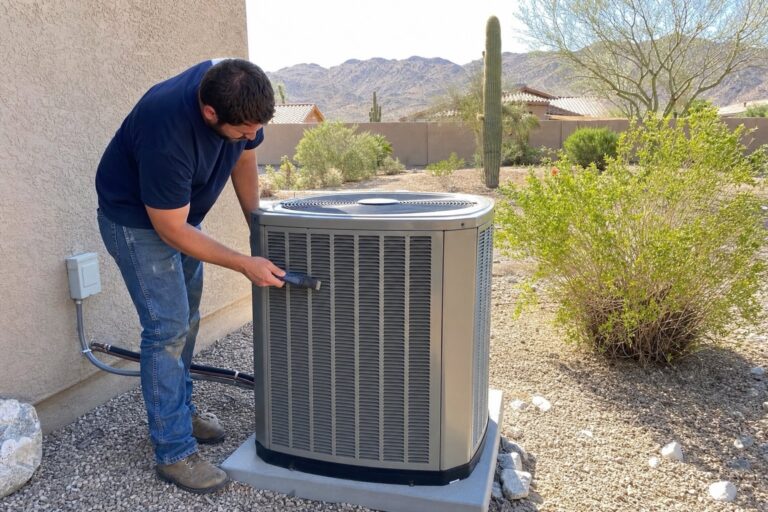
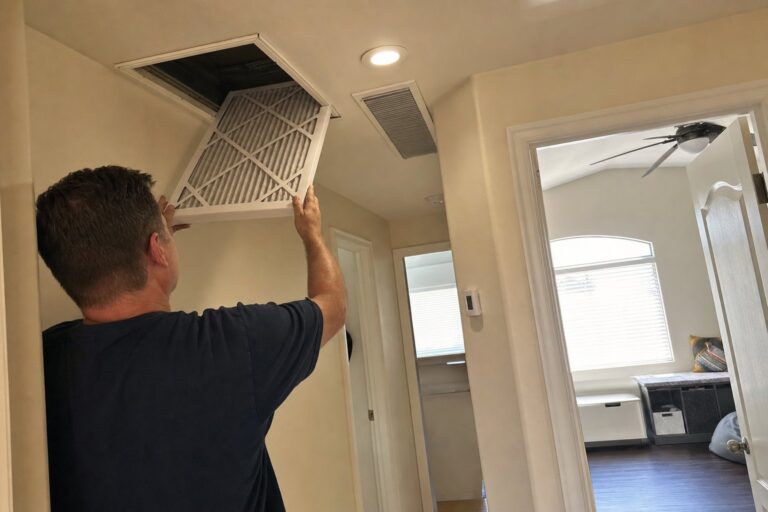
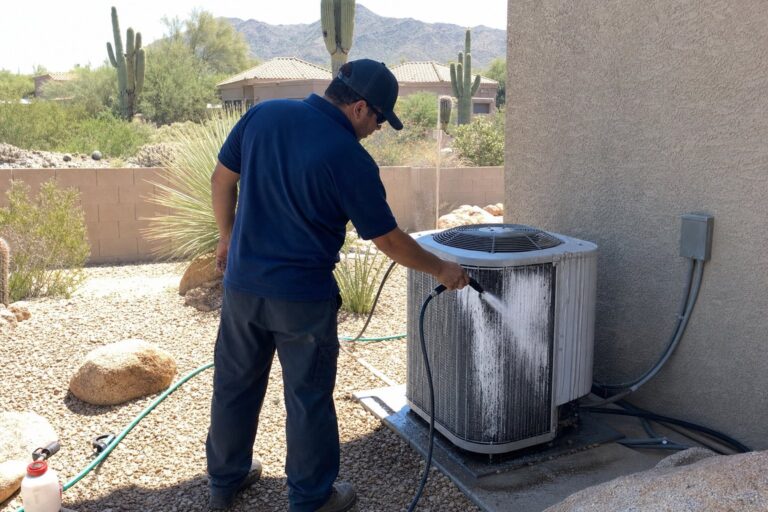
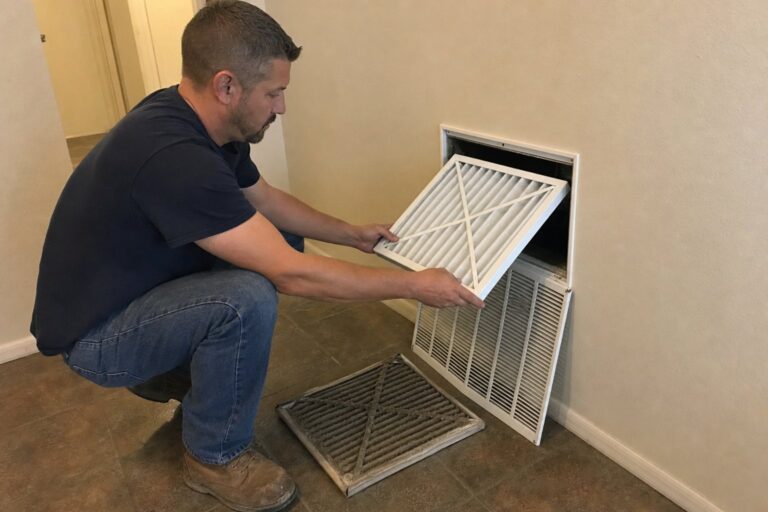
An HVAC maintenance plan is scheduled service that keeps your heating and cooling equipment clean, tested, and documented before small problems turn into no-cool calls. You need it when you want fewer surprises, better airflow, and a technician who actually checks the system instead of waving a flashlight at it. We inspect, measure, clean what should be cleaned, and show you what we found.
What a real maintenance plan is supposed to catch
A useful plan is not a sticker on the air handler and a reminder postcard. Phoenix systems work hard for long stretches, and the failures usually start quietly. A weak capacitor can still start the compressor today. A dirty condenser coil can still cool the house, just with higher head pressure and longer run time. A loose electrical connection can look fine until heat, vibration, and load finish the job.
Good maintenance is built around measurements. We look at temperature split, refrigerant behavior, amperage, capacitor strength, blower operation, contactor condition, drain performance, thermostat function, filter condition, duct symptoms, and the basic cleanliness of the indoor and outdoor equipment. Those readings tell us whether the system is just dirty, wearing normally, or starting to drift toward a repair.
In the Phoenix metro, the outdoor unit lives through dust, sun, monsoon debris, and long cooling cycles. Indoors, a lot of air handlers and ducts are in attic spaces that can hit 150°F+. That changes what matters. A marginal blower motor, brittle wiring, clogged drain, or restricted return can become a comfort problem fast when the system is already fighting attic heat and a long run schedule.
The point is not to scare you into repairs. The point is to give you a clear condition report. If the equipment is healthy, we say that. If something is weak, we show the reading or the visible problem and explain whether it is urgent, worth watching, or better handled before peak heat.
Cost honesty without the guessing game
Factors Affecting Maintenance Plan Cost
The cost depends on what equipment is being covered.
How many systems are in the home impacts the overall cost.
A rooftop package unit, an attic air handler, and a simple ground-level split system do not take the same amount of time or carry the same access issues.
The dirtiness or neglect of the equipment can affect maintenance time and cost.
Whether the visit stays maintenance-only or turns up a repair influences the final cost.
Transparent Repair Quoting
Flat-Rate Written Quotes
When repair work is needed, we give a flat-rate written quote after an in-person look. The quoted number is what you pay unless we find something else and stop to re-quote.
Diagnostic Fee Policy
The diagnostic or service-call fee is disclosed at booking and credited toward the repair. That keeps the decision in front of you before the work starts.
Our Commitment & Savings
Workmanship & Parts Warranties
Our workmanship is backed by a 2-YEAR written workmanship warranty. Repair parts carry a 1-YEAR manufacturer parts warranty. Work is held to the AZ ROC Minimum Workmanship Standards.
Financing & Discounts
Financing is available when the repair or replacement scope calls for it, and we offer a 10% military, veteran & first responder discount.
For a broader explanation of tune-up cost factors, visit our AC tune-up cost guide. To schedule maintenance or ask what plan fits your equipment, use contact Yeti Pros or call (520) 556-8929.
How the job actually goes
Our Service Model
Yeti Pros is a service-area business, not a shop you drive equipment to. We come to you. Office hours are Mon-Fri 8-5, and 24/7 emergency service is available when the system is down and waiting is not realistic. We are veteran-owned & operated, and our licensing is AZ ROC #363372 · ROC #363423.
The Maintenance Visit
We start with what you have noticed, how the system has been running, any hot rooms, odd noises, drain issues, thermostat complaints, or recent repairs.
We inspect the outdoor unit, checking coil condition, fan operation, contactor, capacitor, wiring, disconnect, refrigerant behavior, amperage, and general cabinet condition.
We inspect the indoor equipment, checking blower operation, filter condition, evaporator coil access where practical, drain line behavior, safety switch condition, temperature split, and signs of duct or airflow trouble.
If a Repair is Needed
If the system needs a simple cleaning or adjustment that belongs inside the maintenance visit, we handle it.
If we find a repair, we stop and explain it to you.
Repairs are quoted as flat-rate written quotes after an in-person look. The quoted number is what you pay unless we find something else and stop to re-quote.
The diagnostic or service-call fee is disclosed at booking and credited toward the repair.
Why the Written Quote Matters
Maintenance should not become a moving target. You should know what is included in the visit, what is optional, and what is actually broken. We believe in full transparency:
Clear Issue Identification
If a capacitor is weak, we show the reading. If a contactor is burned, we show the condition. If the drain is backing up, we show the water path and the safety issue.
Honest Solutions
If the ductwork is the real problem, we do not pretend a tune-up will fix airflow it cannot fix.
Job Handoff & Next Steps
At handoff, you get the condition of the system in plain language. We tell you what we did, what readings mattered, what needs attention now, and what can wait. If the maintenance points toward a broader residential HVAC issue, we can connect it to the larger service work described under residential HVAC service without turning the visit into a sales script.
What the symptoms usually mean
Maintenance is often booked because something feels a little off, not because the system has fully failed. The table below is the way we sort common calls during an HVAC maintenance plan visit in Phoenix homes.
| What you notice | What it usually means | This service or something else? |
|---|---|---|
| System runs longer than it used to | Dirty coil, weak airflow, refrigerant issue, aging components, or duct heat gain | Maintenance can identify the cause; repair may be needed |
| One or two rooms stay hot | Return restriction, duct leakage, poor balancing, attic heat load, or undersized delivery | Maintenance can flag it, but duct work may be the fix |
| Outdoor unit buzzes before starting | Weak capacitor, contactor wear, voltage issue, or compressor start stress | Maintenance often catches this before a no-cool call |
| Water near the indoor unit | Clogged condensate drain, cracked pan, poor slope, or safety switch issue | Maintenance may clear minor issues; active leaks need repair |
| Air feels weak at the vents | Dirty filter, blower problem, coil restriction, return issue, or duct problem | Maintenance starts the diagnosis; airflow repairs may follow |
| Energy use jumps without a lifestyle change | Longer run time from dirt, airflow restriction, failing parts, or control issues | Maintenance gives readings instead of guesses |
The value is in separating normal wear from a real failure path. A plan should not treat every symptom like a replacement pitch. It should narrow the problem, document the condition, and give you a practical next step.
Phoenix-metro realities that change maintenance
Arizona homes are slab-on-grade, so there are no basements hiding mechanical rooms and duct trunks the way you see in other parts of the country. Equipment is commonly split between outdoor pads, garages, closets, rooftops, and attics. Ducts often live in attic spaces that hit 150°F+, so the system is moving air through a punishing environment before that air ever reaches the room.
That attic reality changes a maintenance visit. We pay attention to airflow, return restrictions, duct insulation clues, drain routing, and signs that the equipment is working harder than it should. A perfectly clean condenser cannot overcome a crushed return, a leaking supply run, or a blower wheel packed with dust. A new filter cannot fix a duct system pulling hot attic air through gaps.
Dust is another Phoenix-metro issue. Fine dust loads coils, blower wheels, electrical compartments, and filters. Monsoon season adds wind-driven debris and sudden drain problems. After a storm, an outdoor coil may be partially blocked, a panel may be loose, or a drain line that was barely flowing may finally back up. Maintenance is where those small conditions get caught before they become a service call on a bad day.
Heat also shortens the patience of electrical parts. Capacitors, contactors, wiring insulation, fan motors, and compressor terminals live under load. We do not call a part bad because it is old. We look for measurements, wear, heat marks, pitting, swelling, noise, and operating behavior. That is the difference between useful maintenance and a quick glance.
Across the Valley, a maintenance plan also needs timing that makes sense. Waiting until the first hard heat wave can mean finding a weak part when appointment schedules are already tight. The better approach is to inspect before the season is at full load, then keep a written record so changes are easier to spot next visit.
Straight answers
How often should I have HVAC maintenance in Phoenix?
Most Phoenix homes are best served by regular cooling-season maintenance because the air conditioner carries the main load here. If you also rely on a heat pump or gas furnace in winter, that side should be checked too.
Is an HVAC maintenance plan worth it if my system is newer?
Yes, if the plan includes actual readings and documentation. Newer equipment still needs airflow, drains, electrical parts, coils, and controls checked. Maintenance gives you a baseline while the system is healthy, which makes later changes easier to see. It also catches installation or duct issues that do not care how new the outdoor unit is.
Will maintenance stop every breakdown?
No. Any company that says that is selling comfort, not reality. Maintenance reduces preventable failures and catches weak parts before they fail in many cases, but it cannot guarantee that a motor, board, compressor, or control will never quit. What it can do is replace guessing with measured condition checks and clear repair options.
Do you service older HVAC systems?
Yes. Older systems can often be maintained and repaired, but we are direct about limits. If parts are failing repeatedly, airflow is poor, or the equipment is using more effort to deliver less comfort, we will explain the repair path and the replacement path. You decide with the facts in front of you.
Permits and inspections
Most repairs are ordinary service work; bigger scopes can involve city permitting. We perform our work to code, pull the permits our scope requires, and put what we did in writing.
What's covered
Workmanship is covered for two full years, in writing, and repair parts carry a 1-year manufacturer parts warranty — we document installs and repairs so those claims stay simple to make
Why a licensed HVAC contractor matters.
Every major brand, serviced and installed.




Phoenix metro: Most days a tech is already working somewhere in the Valley, so same-day appointments happen when the schedule allows. After-hours emergencies are dispatched when a licensed tech is available — a real person answers and tells you the ETA on the call.
Call (520) 556-8929Request an estimate.
No pressure, no door knockers. We look at the HVAC system, tell you what it needs (and what it doesn’t), and put the number in writing.