
Phoenix Metro
Mobile Home AC Installation in Phoenix.
- (480) 771-3252
- Serving the entire Phoenix metro — we come to you
- Office: Mon–Fri 8:00 AM – 5:00 PM · 24/7 emergency service
- 2-year workmanship warranty · 1-year parts warranty
- Veteran-owned & operated · residential + commercial
- 66 five-star Google reviews
Residential HVAC across the Valley.
Air conditioning, heating, and cooler work at homes across the Phoenix metro.
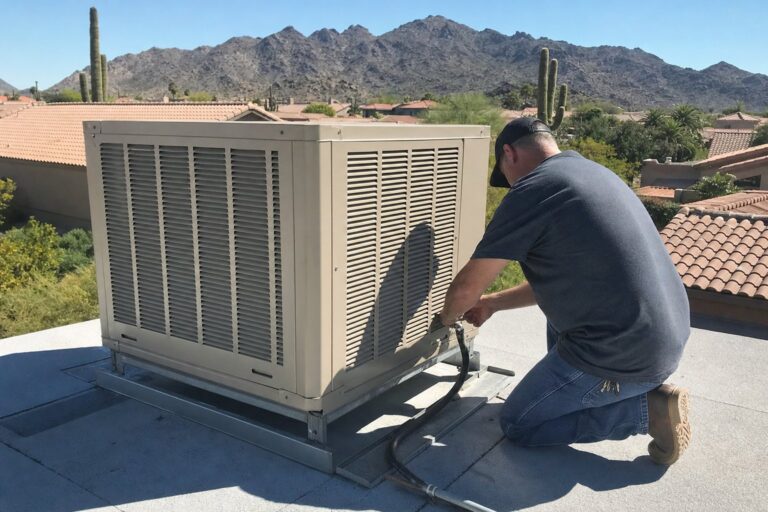
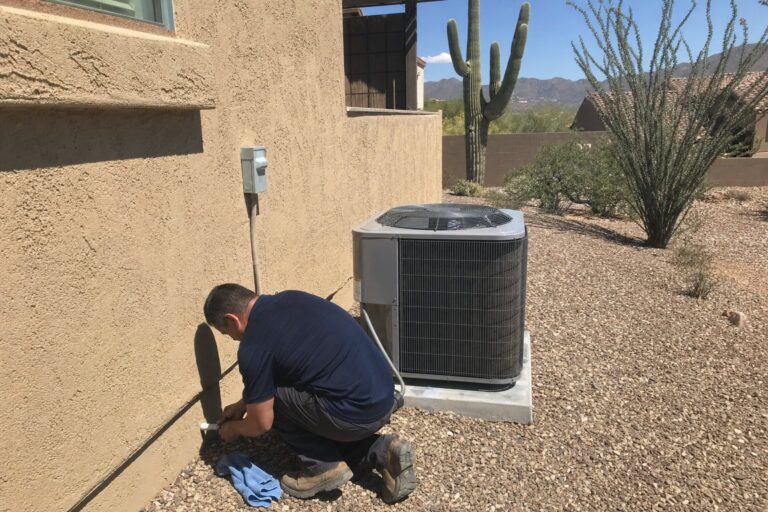
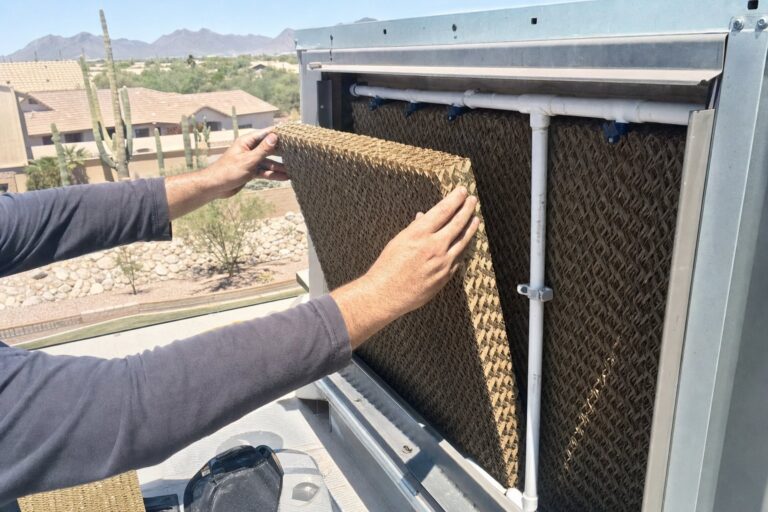
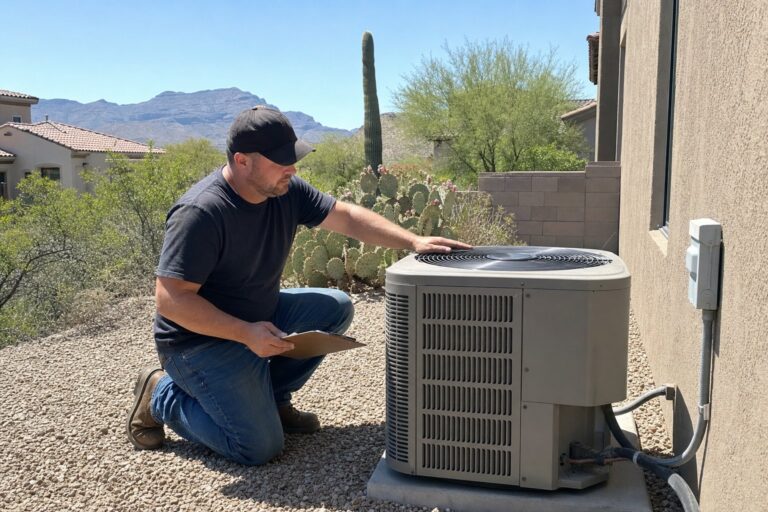
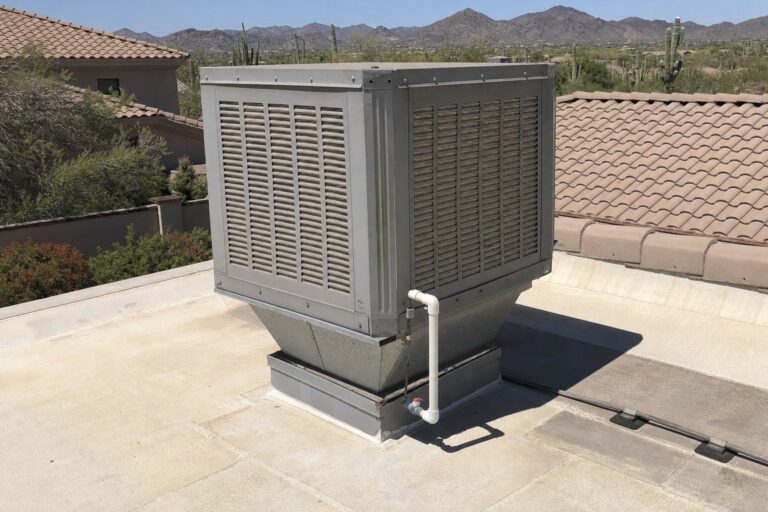
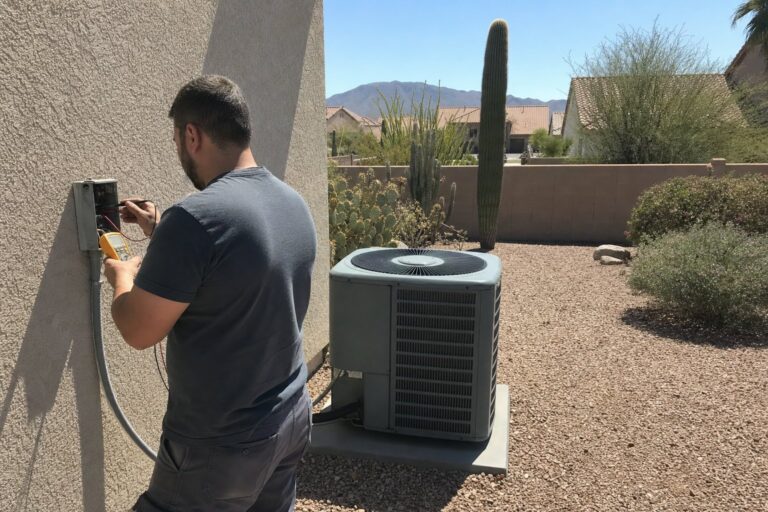
Mobile home AC installation is the replacement or setup of the cooling system built for a manufactured home, most often a package unit tied into ductwork under the home. You need it when the old unit can’t cool, keeps failing, or no longer matches the duct system. We inspect the whole setup first, then quote the job in writing.
Mobile home cooling is not the same as a block home
A mobile home AC installation has a different set of problems than a typical attic-split system. Most manufactured homes in the Phoenix metro use a package unit outside, with supply and return ductwork routed through the belly, skirting, or chase areas below the floor. That means the equipment choice is only part of the job. The duct size, return path, platform, electrical feed, and roof or sidewall transitions all have to match the home.
When a package unit is oversized, undersized, or tied into crushed duct, the house may never feel right. You can get short cycling, noisy airflow, rooms that never catch up, and humidity that hangs around longer than it should. When the under-home duct is torn or disconnected, cold air dumps into the crawl area while the thermostat keeps calling. In Phoenix heat, that turns into long run times and a system that works hard without delivering comfort.
We look for the field reality before pushing equipment. Is the return pulling from a clean, sealed path? Are the supply trunks supported? Has the old transition rusted out? Is the pad level enough to protect the compressor? Is the existing electrical whip and breaker correct for the new unit? Those details decide whether a new package unit actually fixes the cooling problem.
The underside of a manufactured home can tell a different story than the rooms above it. Skirting may hide sagging flex, torn belly wrap, loose boots, old tape, and places where a previous repair left gaps around the duct. In summer, that crawl area is hot, dusty, and tight, so small leaks matter. A return that pulls dusty air or a supply that spills cooled air below the floor can make a good unit look weak from the first day.
Yeti Pros is veteran-owned and operated, and we handle mobile home AC installation across Phoenix and the Valley as a service-area business. We come to you. For broader cooling work, see our AC installation service.
How the job actually goes
The visit starts with the home, not a catalog. We check the existing package unit, model and capacity, electrical data, duct connections, return path, thermostat wiring, pad or curb condition, and access around the equipment. If the system still runs, we take operating readings so we know whether the problem is equipment failure, airflow loss, duct leakage, electrical trouble, or a mix of issues.
That first look is hands-on. We look at the cabinet, disconnect, whip, condensate path, coil condition where accessible, blower behavior, and the way the metal transition meets the home. Around the skirt line, we check for crushed or unsupported duct, loose collars, gaps where dust can be pulled in, and places where the floor boot no longer lines up cleanly. If the old unit is loud, hot at the disconnect, icing, or struggling to start, those symptoms get separated from duct problems before we price replacement.
Then we explain the options plainly. If the old unit can be repaired in a way that makes sense, we say that. If the compressor is failing, the coil is leaking, the cabinet is rusted through, or the system is wrong for the home, we explain why replacement is the cleaner call. Before work starts, you get a flat-rate written quote after the in-person look. The quoted number is what you pay unless we find something hidden and stop to re-quote before moving ahead.
On installation day, we remove the old unit, protect the work area, set the new package unit correctly, seal and fasten transitions, connect electrical and low-voltage wiring, verify thermostat operation, and check airflow. Under-home duct connections get attention because one loose boot can make a new unit look bad. We clean up the old materials and walk the system through with you at the handoff.
The physical sequence matters. The old unit has to be disconnected, lifted or moved without damaging the skirt, pad, wall, or duct opening, and the new unit has to sit level enough for proper operation. Transitions are not just pushed together and hoped for; they need to be fitted, fastened, and sealed so vibration, heat, and monsoon wind do not open them back up. If the under-home duct needs correction, that work has to happen before startup readings mean anything.
Startup matters. We confirm voltage, amp draw, refrigerant performance where applicable, temperature split, blower operation, heat mode if included, and condensate handling. You should know what was installed, how it is controlled, what filter size it uses, and what readings we saw when we left. We document the work and leave you with the warranty terms in writing.
Our office hours are Mon-Fri 8-5, and 24/7 emergency service is available when cooling failure cannot wait. Call (480) 771-3252 to book. AZ ROC #363372 · ROC #363423.
What the symptoms usually point to
Mobile home cooling complaints can come from the unit, the duct system, the thermostat, or the way the package unit connects to the home. This table is not a diagnosis, but it helps separate a true installation problem from a repair or duct correction.
| What you notice | What it usually means | This service or something else? |
|---|---|---|
| AC runs all afternoon and never catches up | Weak equipment, duct leakage, poor return air, or wrong sizing | May be installation if the unit is failing or mismatched |
| Cold air near the unit but weak air inside | Disconnected, crushed, or leaking under-home duct | Duct repair may be needed before or with installation |
| Breaker trips when cooling starts | Compressor, wiring, breaker, or disconnect problem | Diagnosis first; replacement only if the unit is done |
| Old package unit is rusted, loud, and leaking | Cabinet and mechanical wear are stacking up | Often installation, especially if repairs no longer hold |
| New thermostat did not fix comfort | The control was not the main issue | System and airflow diagnosis before quoting equipment |
Phoenix-metro realities for manufactured homes
The Phoenix metro is tough on package units because they sit outside in direct heat, dust, monsoon wind, and roofline runoff. Cabinets bake. Electrical components live through long cooling seasons. Coils collect dust faster than they would in a milder climate. A unit that might limp in spring can fall apart once the Valley settles into sustained heat.
Manufactured homes add another layer. Ducts are often below the floor, where skirting, animals, old repairs, and settling can affect airflow. A supply trunk can be partly crushed and still look fine from inside the home. Return air can be restricted by undersized grilles or dirty filters. If the duct belly has been opened before, it may not be sealed the way the new unit needs it sealed.
Arizona is slab-on-grade for most site-built homes, with no basements, but mobile homes bring their own access problems. Instead of attic ductwork, we often have to work low, around skirting, stands, pads, and tight under-home connections. That changes labor, materials, and the order of the job. It also means the installer has to care about transitions, not just the metal box outside.
Monsoon season can expose bad seals and weak supports. Dust storms can load coils and filters. Long cooling calls punish marginal electrical connections. In this climate, a mobile home AC installation should leave with verified readings, sealed connections, and a clear explanation of what changed. A new package unit should not be treated like a drop-and-go appliance.
Heat and dust also change how parts behave. Contactors can chatter or pit, capacitors can weaken, fan motors can run hotter, and insulation around older wiring can get brittle. A slightly loose duct or electrical connection that seemed harmless in March can show up as poor cooling, nuisance trips, or noisy starts in July. That is why the install has to include the supporting pieces around the unit.
What drives the quote
The quote depends on the package unit size and type, access, platform or pad condition, duct transition work, electrical condition, thermostat needs, and whether the old system can be removed cleanly. Under-home duct correction can change the job because a new unit tied to failed ductwork will not deliver the comfort you are paying for.
We give flat-rate written quotes after an in-person look. The quoted number is what you pay unless we find something and stop to re-quote. The diagnostic or service-call fee is disclosed at booking and credited toward the repair. For background on package-unit cost drivers, read our package unit cost guide.
Yeti Pros provides a 2-YEAR written workmanship warranty. Repair parts carry a 1-YEAR manufacturer parts warranty. Work is held to the AZ ROC Minimum Workmanship Standards. Financing is available, and we offer a 10% military, veteran & first responder discount. We are veteran-owned and operated, serving Phoenix and the Valley without a storefront you have to visit. We come to you.
Straight answers
Can you put a regular house AC on a mobile home?
Sometimes, but most manufactured homes are set up for package units or specific duct layouts. The right answer depends on the home, duct path, electrical service, and return air. We check the existing setup before recommending equipment, because forcing the wrong system onto a mobile home can create airflow and comfort problems.
Do you inspect the ducts under the home?
Yes. Under-home ductwork is a major part of mobile home AC installation in Phoenix. If a trunk is torn, crushed, disconnected, or poorly sealed, the new unit can lose cooled air before it reaches the rooms. We include those findings in the written quote instead of pretending the equipment alone will fix it.
How fast can you replace a failed package unit?
Timing depends on equipment availability, access, electrical condition, and whether duct transition work is needed. Our office hours are Mon-Fri 8-5, with 24/7 emergency service available. Call (480) 771-3252, and we will tell you the booking fee up front and schedule the in-person look.
Do I need to be home for the estimate?
Yes, someone should be there. We need access to the thermostat, filter area, electrical panel when relevant, the existing unit, and the duct connection points. That lets us explain the findings clearly and give a written flat-rate quote. To schedule, use contact Yeti Pros or call (480) 771-3252.
Permits and inspections
Most repairs are ordinary service work; bigger scopes can involve city permitting. We perform our work to code, pull the permits our scope requires, and put what we did in writing.
What's covered
Workmanship is covered for two full years, in writing, and repair parts carry a 1-year manufacturer parts warranty — we document installs and repairs so those claims stay simple to make
Why a licensed HVAC contractor matters.
Every major brand, serviced and installed.




Phoenix metro: Most days a tech is already working somewhere in the Valley, so same-day appointments happen when the schedule allows. After-hours emergencies are dispatched when a licensed tech is available — a real person answers and tells you the ETA on the call.
Call (480) 771-3252Request an estimate.
No pressure, no door knockers. We look at the HVAC system, tell you what it needs (and what it doesn’t), and put the number in writing.