
Phoenix Metro
AC Refrigerant Leak Repair in Phoenix.
- (520) 556-8929
- Serving the entire Phoenix metro — we come to you
- Office: Mon–Fri 8:00 AM – 5:00 PM · 24/7 emergency service
- 2-year workmanship warranty · 1-year parts warranty
- Veteran-owned & operated · residential + commercial
- 23 five-star Google reviews
Residential HVAC across the Valley.
Air conditioning, heating, and cooler work at homes across the Phoenix metro.
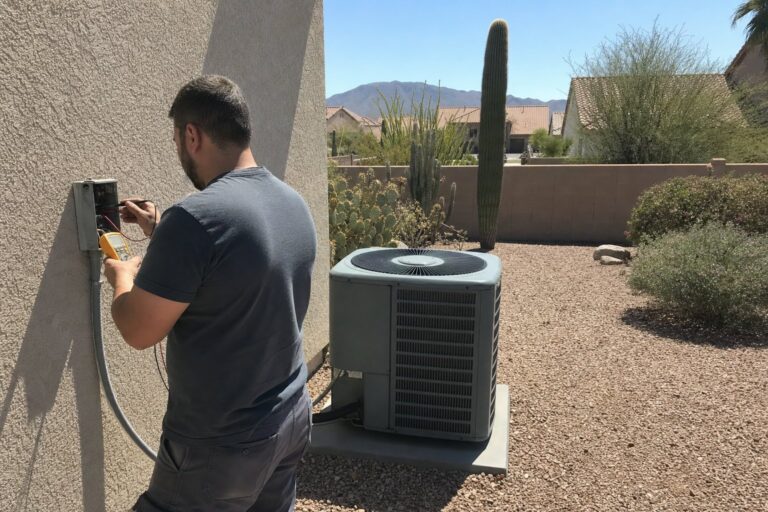
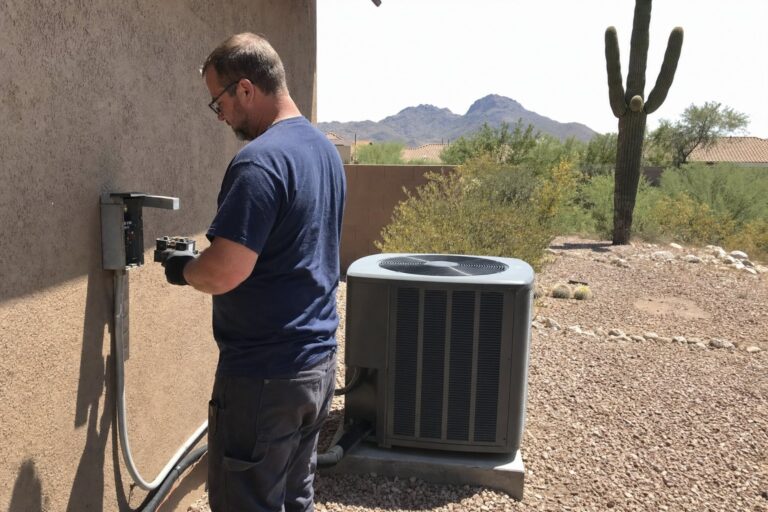
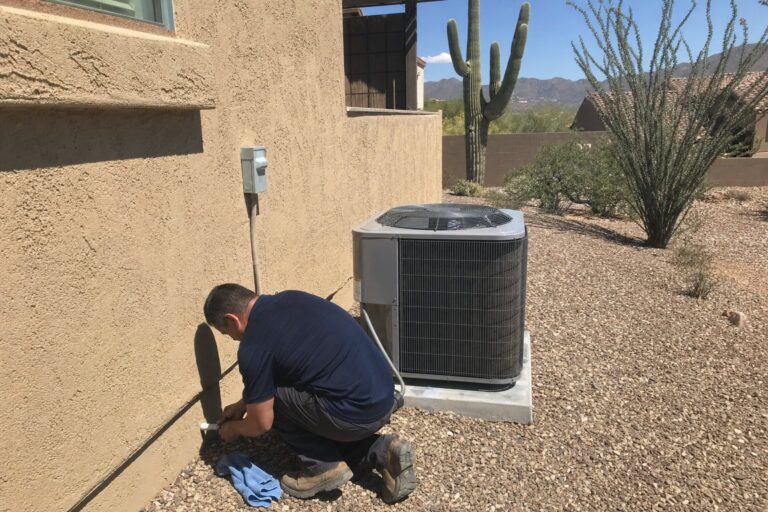
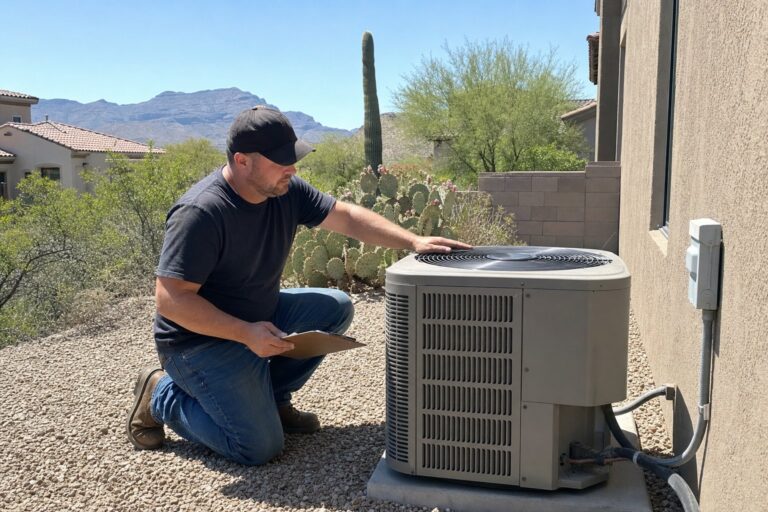
AC refrigerant leak repair is the work of finding where refrigerant is escaping, proving the failure, and fixing the part that is leaking instead of just adding charge and hoping. You need it when the system runs long, blows warm, freezes the coil, hisses, or keeps needing refrigerant. Yeti Pros checks the system, shows you what failed, and quotes the repair in writing before work starts.
Why refrigerant leaks turn into real AC trouble
Refrigerant is not fuel. A working air conditioner does not use it up. It moves heat through a sealed circuit: evaporator coil, line set, condenser coil, metering device, compressor, and service valves. When charge is low, the system is telling you there is a leak or that the prior charge was wrong. In Phoenix, low charge gets ugly fast because the unit is already trying to pull heavy heat out of the house for long stretches.
The first problem is capacity. Low refrigerant means the indoor coil cannot absorb heat the way it should. You may feel weak cooling, longer run times, or rooms that never quite catch up. The second problem is temperature. The coil can drop below freezing, ice can block airflow, and the system can look like it has an airflow problem when the real issue is refrigerant. The third problem is compressor stress. Refrigerant carries oil through the system. A badly undercharged system can run hot and hard, and the compressor is the expensive part nobody wants to gamble with.
Most leaks we see fall into a few buckets: evaporator coil leaks inside the air handler, condenser coil leaks outside, service valve leaks, braze joint leaks, or line-set damage. Coil leaks are common because coils live with vibration, moisture, dust, and formicary corrosion. Line-set leaks need a different kind of attention, especially in slab-on-grade Arizona homes where lines may run through walls, attics, or tight chases rather than basements. A quick top-off does not answer any of that. It may cool for a while, but it leaves the same failure in place.
That is why our residential AC repair work treats refrigerant loss as a diagnosis, not a refill order. We look for the leak, test the system, and separate what can be repaired from what needs a larger decision.
How the job actually goes
The visit starts with symptoms and operating checks. We ask what you have noticed: warm air, ice, high indoor humidity, longer cycles, repeated refrigerant additions, or a system that cools only after sunset. Then we take readings. That usually means temperature split, suction and liquid pressures, superheat, subcooling, static pressure when airflow is suspect, and visual inspection of the indoor and outdoor sections. Readings matter because a dirty coil, weak blower, restriction, or airflow problem can imitate a refrigerant issue.
If the evidence points to low charge, we do not treat the refrigerant port like a vending machine. We inspect likely leak points and use the right test method for the situation. That may include electronic leak detection, soap bubbles on accessible joints, dye when appropriate, or nitrogen pressure testing on a recovered and isolated circuit. Some leaks are obvious. Some take patience. An evaporator coil leak may show oil staining, corrosion, or a detector hit inside the cabinet. A line-set leak may require isolating sections so we are not guessing.
Once the problem is identified, you get a flat-rate written quote after the in-person look. The quoted number is what you pay unless we find something new and stop to re-quote before continuing. The diagnostic or service-call fee is disclosed at booking and credited toward the repair. That keeps the decision clean: you know what we found, what the repair includes, and what the handoff will look like before the work starts.
Repair steps depend on the leak. A valve-core leak may need a valve-core replacement and cap seal. A braze joint may need recovery, repair, pressure test, evacuation, and recharge by weight. A leaking evaporator or condenser coil may need coil replacement, filter drier replacement where required, deep evacuation, and final charge adjustment to manufacturer targets. A line-set repair can involve access work, brazing, pressure testing, evacuation, and insulation repair. We protect the work area, clean up, and document the readings at the end so you are not left with a vague story.
For scheduling, use contact or call (520) 556-8929. Yeti Pros is a service-area business, so we come to you. Office hours are Mon-Fri 8-5, and 24/7 emergency service is available when the system cannot wait.
What the symptoms usually mean
Refrigerant leaks do not always announce themselves clearly. A Phoenix-metro system can be low on charge and still limp along during cooler parts of the day, then fall behind when the afternoon load hits. This table is the kind of sorting we do before recommending refrigerant leak repair.
| What you notice | What it usually means | This service or something else? |
|---|---|---|
| AC runs constantly but the house stays warm | Low charge is possible, but airflow, dirty coils, or an undersized repair part can also cause it | Needs diagnosis before refrigerant is added |
| Ice on the copper line or indoor coil | The evaporator is too cold because of low refrigerant, weak airflow, or a restriction | Likely AC repair with refrigerant and airflow checks |
| System cooled after a top-off, then failed again | The leak was never corrected, or the charge was not verified correctly | Refrigerant leak repair is the right next step |
| Hissing, oil staining, or detector hit at a coil | Refrigerant and oil are escaping from the sealed circuit | Leak repair or coil replacement decision |
| High electric use with poor comfort | The system may be running longer because it cannot move heat efficiently | Full AC diagnosis, not a blind recharge |
| Outdoor unit short-cycles or struggles to start | Charge can be part of it, but electrical and compressor issues must be ruled out | Broader AC repair diagnosis first |
Phoenix-metro realities that change the repair
Refrigerant work in the Valley is not the same as working on a mild-climate system that runs lightly for part of the year. Here, the equipment carries a heavy load for months. Small charge errors show up quickly. A system that is a little low may still make cool air, but it may not remove enough heat during a long afternoon. That is why final charging and readings matter after the leak is fixed.
Arizona construction also changes access. Most homes are slab-on-grade, with no basement mechanical space. Air handlers and coils are often in attics, closets, garages, or rooftop package units depending on the home. Attics can hit 150°F+, and that affects both the technician and the equipment. Access panels, drain pans, insulation, line-set routing, and service clearances all matter when we are trying to inspect a coil or repair a line without damaging the surrounding home.
Dust is another constant. A dirty outdoor coil can raise head pressure and make a refrigerant problem look worse. A restricted indoor coil or plugged filter can lower suction pressure and mimic low charge. We do not want to condemn a leak because a system is starving for airflow. The right sequence is to check airflow and coil condition, then interpret refrigerant readings in that context.
Monsoon weather adds another layer. Wind-driven dust, moisture, and electrical stress can expose weak equipment. If a refrigerant circuit already has corrosion or a weak braze joint, hard seasonal operation can bring the failure to the surface. Phoenix-metro homes also vary widely: older split systems, newer high-efficiency equipment, rooftop package units, and long line sets all need slightly different leak-finding judgment. The goal is the same every time: prove the leak, fix the actual failure, and charge the system correctly.
What affects the written quote
The quote depends on where the leak is, how accessible it is, what parts are required, and what refrigerant the system uses. A valve-core repair is not the same job as replacing an evaporator coil. A clean, accessible outdoor joint is not the same job as tracing a line-set leak through a tight attic or wall chase. Age matters too. If a coil is leaking on an older system, we will talk plainly about whether repair makes sense compared with a larger equipment decision.
After the in-person look, Yeti Pros gives a flat-rate written quote. The quoted number is what you pay unless we find something new and stop to re-quote. The diagnostic or service-call fee is disclosed at booking and credited toward the repair. Repair workmanship is backed by a 2-year written workmanship warranty, and repair parts carry a 1-year manufacturer parts warranty. The work is held to the AZ ROC Minimum Workmanship Standards.
Yeti Pros is veteran-owned and operated. AZ ROC #363372 · ROC #363423. Financing is available, and we offer a 10% military, veteran and first responder discount. For more detail on warning signs before you book, read our refrigerant leak signs guide.
Straight answers
Can you just add Freon and leave?
If the system is low, refrigerant went somewhere. Adding charge without finding the leak may restore cooling for a short time, but it does not fix the sealed-circuit failure. We test first, explain what the readings show, and quote the repair that actually addresses the leak.
How do I know if the evaporator coil is leaking?
Common clues are ice, weak cooling, oil staining, repeated low-charge readings, or a detector hit inside the air handler. We still verify because airflow problems can create similar symptoms. A coil leak should be proven before anyone talks you into a major part.
Is a line-set leak worse than a coil leak?
Not always. It depends on location and access. Some line-set leaks are straightforward. Others run through finished areas or tight attic routes, which changes the labor. In slab-on-grade Phoenix homes, line routing matters because there usually is no basement access.
Do you handle emergency refrigerant leak repair?
Yes. Office hours are Mon-Fri 8-5, and 24/7 emergency service is available. Call (520) 556-8929. We come to you, diagnose the system, and give the written quote before repair work starts.
Permits and inspections
Most repairs are ordinary service work; bigger scopes can involve city permitting. We perform our work to code, pull the permits our scope requires, and put what we did in writing.
What's covered
Workmanship is covered for two full years, in writing, and repair parts carry a 1-year manufacturer parts warranty — we document installs and repairs so those claims stay simple to make
Why a licensed HVAC contractor matters.
Every major brand, serviced and installed.




Phoenix metro: Most days a tech is already working somewhere in the Valley, so same-day appointments happen when the schedule allows. After-hours emergencies are dispatched when a licensed tech is available — a real person answers and tells you the ETA on the call.
Call (520) 556-8929Request an estimate.
No pressure, no door knockers. We look at the HVAC system, tell you what it needs (and what it doesn’t), and put the number in writing.