
Phoenix Metro
Swamp Cooler to AC Conversion in Phoenix.
- (520) 556-8929
- Serving the entire Phoenix metro — we come to you
- Office: Mon–Fri 8:00 AM – 5:00 PM · 24/7 emergency service
- 2-year workmanship warranty · 1-year parts warranty
- Veteran-owned & operated · residential + commercial
- 23 five-star Google reviews
Residential HVAC across the Valley.
Air conditioning, heating, and cooler work at homes across the Phoenix metro.
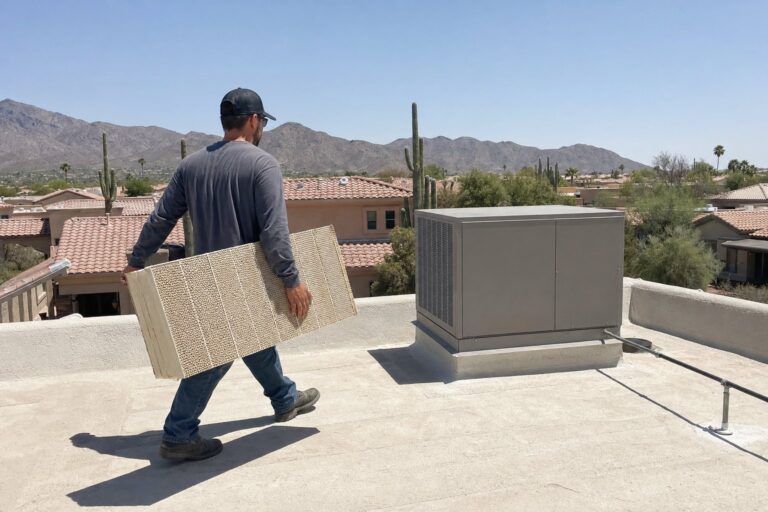
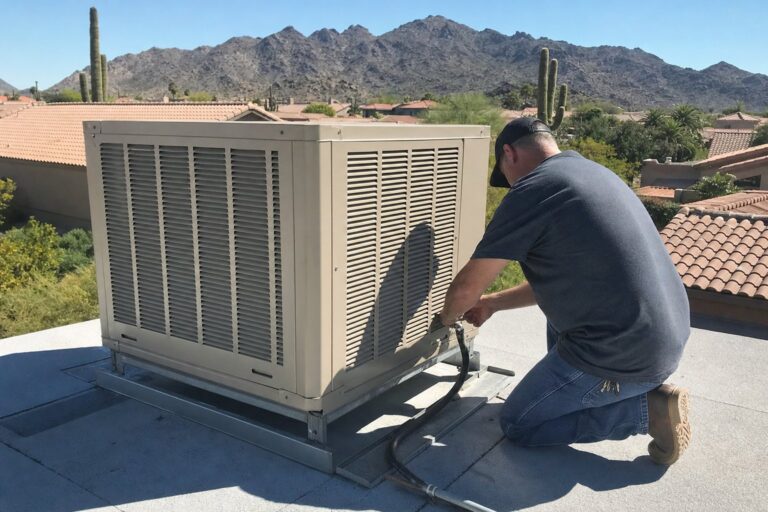
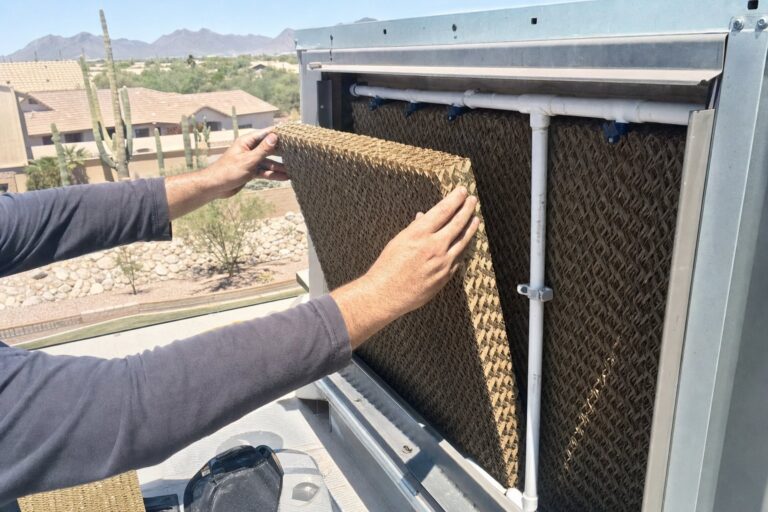
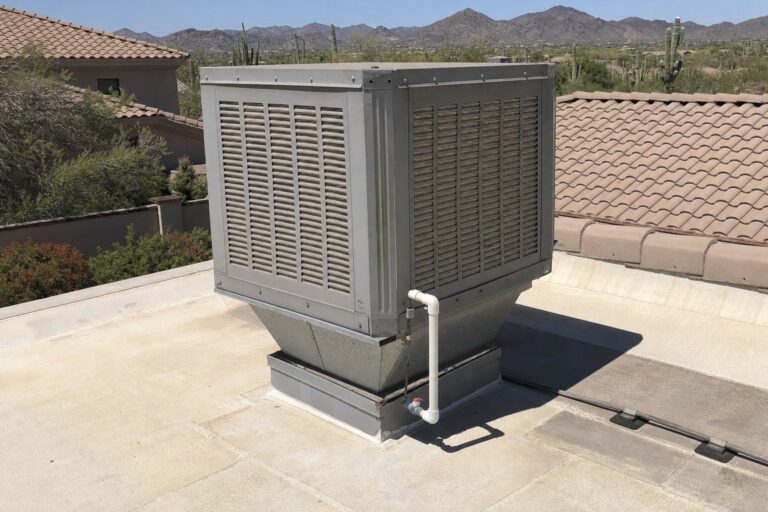
Swamp cooler conversion is the work of retiring an evaporative cooler and fitting the home for refrigerated AC. You need it when the cooler can’t keep up, humidity makes the house sticky, or the old roof unit has become a yearly project. We look at ducts, power, roof scope, and airflow before giving a written flat-rate quote.
What changes when a swamp cooler becomes AC
A swamp cooler and a refrigerated AC system do different jobs, so a conversion is not just swapping one box for another. Evaporative cooling pushes a lot of outside air through wet media and depends on dry air leaving the house through cracked windows or relief vents. Refrigerated AC recirculates indoor air, removes heat, pulls moisture out of the air, and needs a closed, balanced duct system that can handle static pressure.
That difference matters in Phoenix. A duct layout that felt acceptable with a swamp cooler may be leaky, oversized, undersized, poorly insulated, or routed through an attic that sees 150°F+ air. Arizona homes are slab-on-grade, so there is no basement duct chase hiding below the living space. Most of the work is above the ceiling, on the roof, at the electrical panel, or around the indoor return path. If those pieces are ignored, the new AC can be loud, weak in the far rooms, or harder on the equipment than it should be.
The roof opening also has to be handled correctly. Some conversions use existing roof access for a package unit. Others need the old cooler removed, the curb sealed, roof patching coordinated, and a split system or rooftop package unit planned around the house. Electrical is its own check. AC equipment needs the right circuit, disconnect, breaker capacity, and control wiring. Veteran-owned & operated Yeti Pros treats the conversion like a system change, not a sales shortcut. Our swamp cooler service background helps us tell when repair still makes sense and when conversion is the cleaner answer.
How the job actually goes
The first visit is a measured look, not a guess from the driveway. We check the existing swamp cooler, roof curb or penetration, duct connections, return-air path, thermostat wiring, panel capacity, and the rooms that are not cooling well. We look for disconnected duct, crushed flex, bad transitions, missing insulation, and places where attic heat is getting pulled into the system. We also ask how the house is used, because a conversion for a small occupied zone is different from a whole-home comfort problem.
After the in-person look, we write a flat-rate quote. The quoted number is what you pay unless we find something and stop to re-quote. The diagnostic or service-call fee is disclosed at booking and credited toward the repair or conversion work. That keeps the decision clear before roof work, electrical work, duct changes, or equipment setting begins. If a project needs roofing, structural curb work, or panel changes outside normal HVAC scope, we identify that before the job moves forward.
On installation day, we protect the work area, remove the old cooler as agreed, cap or transition duct connections, set the new equipment or prepare the indoor and outdoor sections, complete electrical and control wiring, seal duct transitions, and verify condensate routing where applicable. We do not treat cleanup as optional. Old pads, sheet metal, debris, and failed fittings are removed from the active work area so the handoff is understandable.
Commissioning is where a conversion either proves itself or exposes shortcuts. We take temperature readings, check airflow behavior, verify electrical operation, test thermostat control, inspect accessible duct connections, and document what was installed or changed. You get the written quote, the work notes, warranty information, and a plain explanation of what to watch during the first few days of use. To schedule the in-person look, use contact or call (520) 556-8929. We are a service-area business with no street address; we come to you. Office hours are Mon–Fri 8–5, with 24/7 emergency service.
Conversion signs and what they usually mean
Most homeowners start thinking about conversion after one bad summer, but the clue is not always temperature alone. The table below separates comfort complaints from scope questions, because some problems still belong in repair and others point toward AC.
| What you notice | What it usually means | This service or something else? |
|---|---|---|
| The cooler runs all day and rooms stay warm | The cooler may be undersized, poorly maintained, or past what evaporative cooling can deliver for the home | Conversion is worth pricing if repairs have not held |
| The house feels clammy during monsoon weather | Evaporative cooling depends on dry air, so higher humidity cuts performance | Refrigerated AC is the stronger fit |
| Air blasts one room but barely reaches another | Duct layout, leakage, or transitions may not support AC without correction | Conversion plus duct work may be needed |
| The roof unit leaks, rusts, or needs seasonal rebuilds | The cabinet, pan, pump, water line, or roof connection may be near the end | Compare repair against conversion |
| The electrical panel has limited capacity | AC may need electrical planning before equipment is selected | Conversion scope must include electrical review |
Phoenix-metro realities
In the Phoenix metro, conversions usually happen on houses built around evaporative cooling, older package units, or a mix of additions that were cooled different ways over time. That history matters. One part of the house may have hard duct from the original cooler while another has flex added later. A hallway may have no real return path. A roof curb may have been patched more than once. These details decide whether the new AC can breathe.
Dust is a serious part of the work. A swamp cooler brings outside air through wet pads, and years of mineral scale and dust can collect around ducts, registers, and the cooler drop. When converting, we look at what should be cleaned, sealed, replaced, or left alone because disturbing it would not improve performance. Monsoon weather also changes expectations. Evaporative cooling can feel fine in dry shoulder months, then fall apart when humidity rises. Refrigerated AC handles that weather differently, but only if the system is sized, ducted, and charged correctly.
Attics are another local reality. Arizona ducts live above the ceiling, not in basements, and attic temperatures can hit 150°F+. That means duct leakage and weak insulation cost comfort fast. During conversion planning, we pay attention to whether the duct system is worth adapting or whether certain sections need replacement. Roof access also has to be practical. A steep roof, fragile surface, tight equipment location, or old curb can change labor and sequencing. Across the Valley, the best conversion is the one that respects the house you actually have, not the one that looks easiest on paper.
What drives the written quote
A swamp cooler conversion quote moves up or down based on equipment type, roof access, duct condition, return-air needs, electrical capacity, thermostat wiring, condensate routing, and whether the old roof opening needs to be sealed or adapted. A clean package-unit conversion with usable duct is a different job from a home that needs new returns, major attic duct changes, and electrical upgrades. That is why the quote follows the in-person look.
Yeti Pros gives flat-rate written quotes after that look. The quoted number is what you pay unless we find something and stop to re-quote. The diagnostic or service-call fee is disclosed at booking and credited toward the repair or conversion work. For planning context, see our swamp-to-AC conversion cost guide, then expect the real quote to come from the actual roof, duct, and electrical conditions at your house.
Work is backed by a 2-YEAR written workmanship warranty. Repair parts carry a 1-YEAR manufacturer parts warranty. Our work is held to the AZ ROC Minimum Workmanship Standards. Yeti Pros is Veteran-owned & operated, AZ ROC #363372 · ROC #363423. Financing is available, and we offer a 10% military, veteran & first responder discount.
Straight answers
Can I use my swamp cooler ducts for AC?
Sometimes, but they have to be inspected. Swamp cooler ducts may move plenty of air while still being leaky, poorly insulated, or wrong for refrigerated AC static pressure. We check the drop, transitions, return path, and accessible attic duct before saying yes.
Does the old roof opening have to be removed?
It depends on the equipment plan. Some conversions adapt the existing location. Others remove the cooler and require sealing, patching, or a different equipment layout. We identify that scope before quoting so the roof work is not a surprise.
Will AC fix the sticky monsoon feeling?
Refrigerated AC is designed to remove heat and moisture from indoor air. It can handle monsoon comfort better than evaporative cooling, but duct leakage, wrong sizing, or poor airflow can still leave rooms uncomfortable. The install has to be commissioned correctly.
Do you replace the cooler or repair it instead?
We do both. If a pump, pad set, water line, or motor repair still makes sense, we will say so. If the cabinet, roof connection, duct condition, or comfort goal points to conversion, we quote that clearly after looking in person.
Permits and inspections
Most repairs are ordinary service work; bigger scopes can involve city permitting. We perform our work to code, pull the permits our scope requires, and put what we did in writing.
What's covered
Workmanship is covered for two full years, in writing, and repair parts carry a 1-year manufacturer parts warranty — we document installs and repairs so those claims stay simple to make
Why a licensed HVAC contractor matters.
Every major brand, serviced and installed.
Phoenix metro: Most days a tech is already working somewhere in the Valley, so same-day appointments happen when the schedule allows. After-hours emergencies are dispatched when a licensed tech is available — a real person answers and tells you the ETA on the call.
Call (520) 556-8929Request an estimate.
No pressure, no door knockers. We look at the HVAC system, tell you what it needs (and what it doesn’t), and put the number in writing.