
Sun City
HVAC for Cannabis Facilities in Sun City, AZ.
- (520) 556-8929
- Serving the entire Phoenix metro — we come to you
- Office: Mon–Fri 8:00 AM – 5:00 PM · 24/7 emergency service
- 2-year workmanship warranty · 1-year parts warranty
- Veteran-owned & operated · residential + commercial
- 23 five-star Google reviews
A cannabis grow in Sun City is not the usual picture people have in mind. Sun City is the original Del Webb 55+ age-restricted retirement community, with older small-format buildings, service corridors near recreation centers, and a market shaped more by retirees and seasonal homes than by industrial cultivation. If a cannabis operator is looking at Sun City, the real HVAC question is usually a small licensed retail-adjacent space, a compliant back-of-house room, or a nearby northwest Valley grow support site serving 85351 or 85373, not a massive warehouse hidden in an industrial district. Those smaller rooms can still be hard on mechanical equipment because lights, watering, filtration, people, and Arizona summer heat all stack inside a limited envelope. Yeti Pros handles cannabis facility HVAC near Sun City with that scale and sensitivity in mind: heat load, dehumidification, odor pressure, service access, and written records. We are veteran-owned & operated, AZ ROC #363372 · ROC #363423, and we come to you. Office hours are Mon-Fri 8-5, with 24/7 emergency service at (520) 556-8929.
ZIPs served: 85351, 85373
What Cannabis Facilities covers in Sun City.
Grow Room Cooling
We evaluate cooling capacity against lighting, occupancy, equipment heat, and room construction. Small Sun City-area rooms can carry more heat than the original system was built to remove.
Dehumidification Support
We inspect moisture removal, drain routing, coil behavior, runtime, and control placement. Cannabis spaces often need a moisture strategy beyond ordinary comfort cooling.
Odor-Control Airflow Review
We review HVAC and ventilation conditions that affect pressure, return paths, and exhaust interaction. We service and document HVAC; we do not certify odor compliance or provide legal advice.
Emergency Cooling Repair
When cooling or humidity control fails, we provide 24/7 emergency HVAC service at (520) 556-8929. We prioritize the mechanical failure and document findings plainly.
Preventive Maintenance
Maintenance covers coils, filters, drains, electrical components, refrigerant behavior, belts where present, and control accuracy. The goal is fewer surprises during high-load cycles.
Equipment Replacement
If the existing system cannot handle the room, we write a replacement scope around load, access, APS service, controls, condensate, roof conditions, and Maricopa County requirements.
What we see for cannabis facilities in Sun City.
The biggest mismatch we see is space type versus load. Older Sun City-area buildings were not built for cultivation humidity, constant lighting heat, carbon filtration, or odor-control airflow. A room that worked for storage, office use, or light retail can become unstable fast when plants, lights, water, and filtration are added. The structure may be small, but the internal load can act more like process space than comfort space.
Dehumidification is usually the hardest part. Standard comfort cooling removes some moisture, but grow rooms produce moisture continuously and need tighter control than a normal office. When the HVAC is asked to do both sensible cooling and moisture removal without the right strategy, operators get short cycling, wet coils, uneven canopy conditions, and drain problems. In the desert, people sometimes underestimate humidity because the outside air feels dry, but the room itself can become its own moisture source once irrigation and plant transpiration are active.
Odor control depends on pressure relationships as much as filters. In small-format Sun City buildings, doors open to shared corridors, neighboring suites, or customer areas. If exhaust, makeup air, and return paths are not balanced, odor can move where it should not. A carbon filter can be present and still perform poorly if the fan, duct, return path, or room pressure is working against it. We inspect the HVAC and ventilation conditions and document what we find; we do not certify odor compliance or issue legal opinions.
APS power, older electrical service, roof access, condensate routing, and heat rejection all matter. Grow loads can expose weak disconnects, undersized circuits, dirty condenser coils, or poor rooftop placement. Rooftop units and condensers in the northwest Valley also have to reject heat during long, high-temperature afternoons, when dirty coils and marginal airflow show up fast. We look at the equipment, controls, drains, airflow, and serviceability before recommending commercial AC repair, supplemental dehumidification, or replacement.
- 01 Airflow and static pressure
- 02 Electrical: capacitors, contactors, draws
- 03 Refrigerant-circuit behavior
- 04 Drains, safeties, and float switches
- 05 Thermostat, controls, and cycling
- 06 Ducts, returns, and room-by-room comfort
Commercial jobs we have documented.
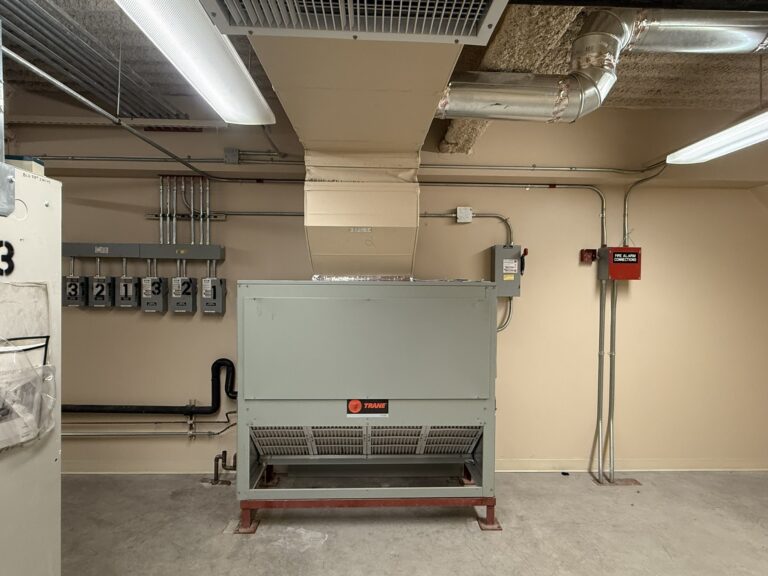
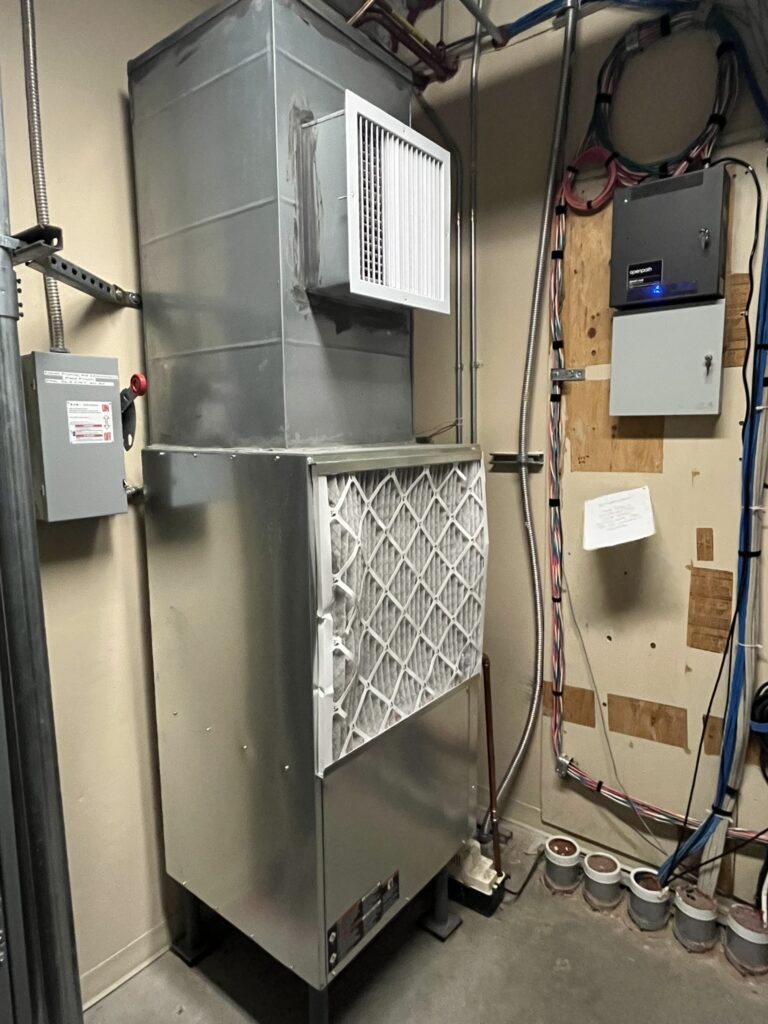
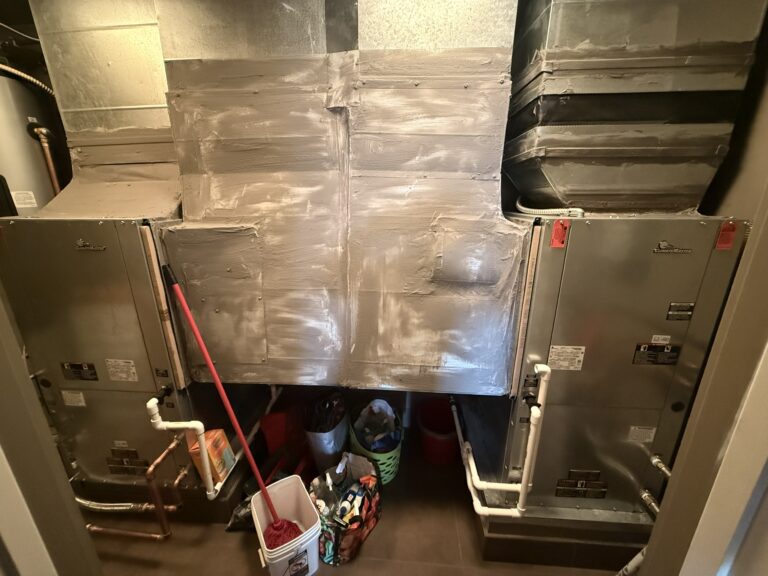
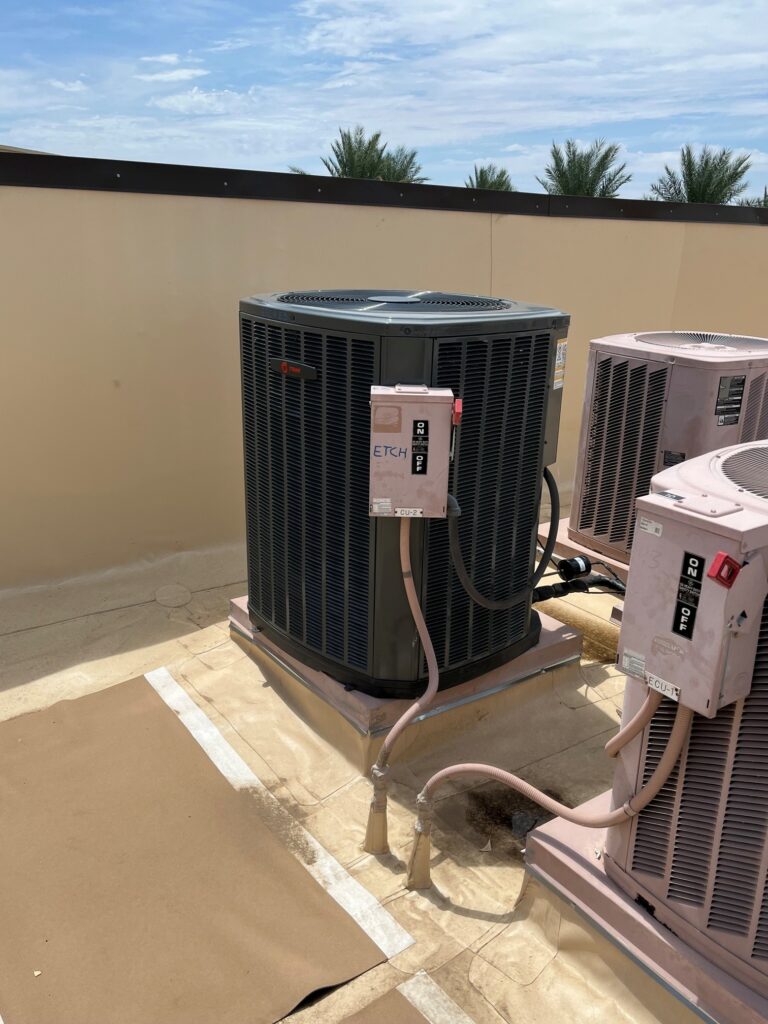
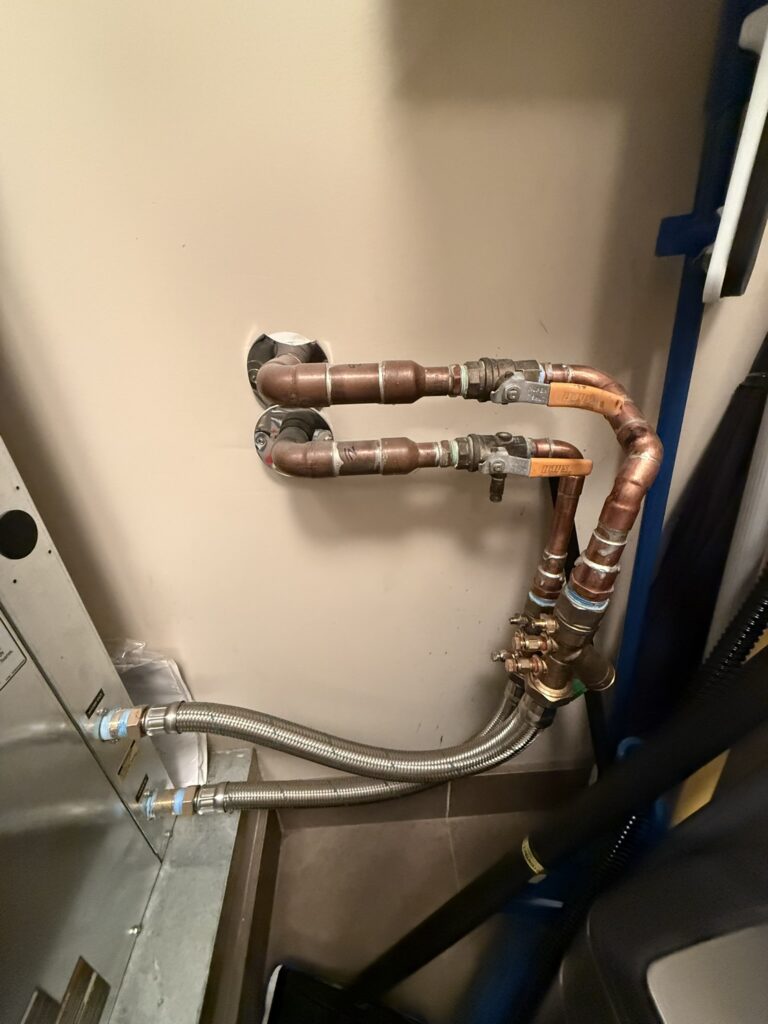
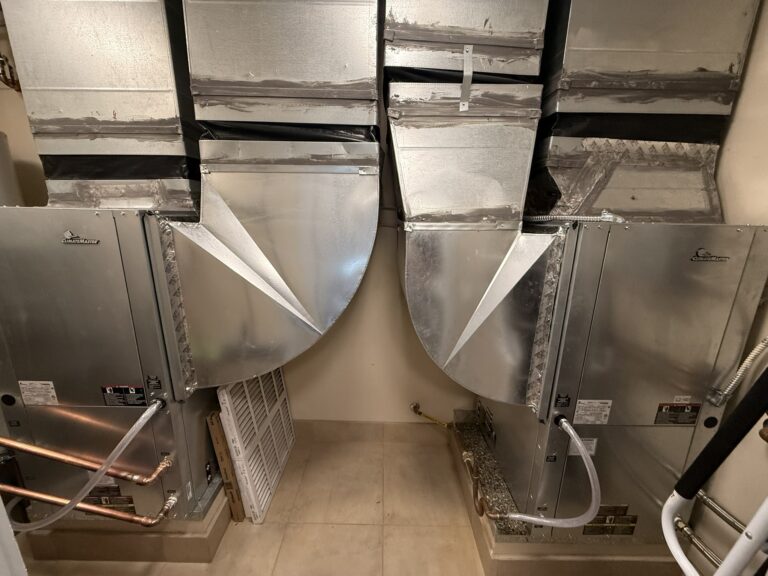
Photos from our own commercial projects across the Phoenix metro — equipment we installed, in buildings we service.
How the job typically runs.
Access for cannabis facilities has to be planned. We confirm who can authorize entry, which rooms can be opened, whether staff escort is required, and whether photos are allowed. If work is in or near controlled areas, we keep the HVAC scope clear and avoid wandering into compliance opinions outside our trade. That planning also helps when a roof ladder, locked electrical room, shared corridor, or neighboring suite affects how the technician reaches the equipment.
The visit focuses on loads and failure patterns. We check cooling capacity, coil condition, refrigerant behavior, static pressure, drains, thermostat or sensor placement, exhaust interaction, and dehumidification performance. For active rooms, we ask how the space is run: light cycle, watering cycle, occupied hours, odor-control equipment, and any temperature or humidity alarms. Those details matter because a room can look stable during a brief visit and still swing hard when lights change, irrigation runs, doors open, or summer roof temperatures rise.
Quotes are flat-rate and written after an in-person look. Scopes are documented in writing, the diagnostic/service-call fee is disclosed at booking and credited, and financing is available. Emergency service is available 24/7 at (520) 556-8929 when cooling, humidity, or ventilation problems threaten operations. For cannabis-related rooms, the written scope is especially useful because owners and managers need to separate mechanical findings from compliance, lease, and operational decisions.
- 01 Booking, with the diagnostic fee disclosed
- 02 In-person diagnosis with real readings
- 03 Written flat-rate quote before work begins
- 04 The work: repair, install, or maintenance
- 05 Startup, documentation, and warranty handoff
Sun City is in Maricopa County and uses APS. HVAC changes for cannabis-related spaces may involve equipment replacement, added dehumidification, exhaust changes, electrical coordination, roof work, or condensate changes. We handle and document the HVAC work we are licensed to perform. We do not certify cultivation compliance, issue health-code rulings, make zoning determinations, or give legal advice. If another professional is handling electrical, architectural, fire, lease, or cannabis licensing questions, our role is to keep the HVAC facts clear and documented.
Yeti Pros is veteran-owned & operated, AZ ROC #363372 · ROC #363423. Workmanship is backed by a 2-YEAR written workmanship warranty, and repair parts carry a 1-YEAR manufacturer parts warranty. Our written scopes are meant to help owners, managers, and project teams understand the HVAC facts on site, including access constraints, existing equipment condition, drain routing, control issues, and heat-load concerns. Arizona's workmanship standards are available here: ROC minimum workmanship standards PDF.
Pricing, financing & the 10% military & first responder discount.
Pricing for cannabis HVAC near Sun City depends on load, access, controls, moisture strategy, odor-control interaction, rooftop or ground equipment location, electrical readiness, and whether the space is active during work. Small spaces can still be complex when grow lights, water, carbon filters, exhaust, and tight room conditions are involved. A compact back room may need careful attention to drains, sensor placement, condensate routing, service clearance, and how the HVAC responds during the hottest part of the day.
We give flat-rate written quotes after an in-person site visit. The diagnostic/service-call fee is disclosed at booking and credited. Financing is available, and Yeti Pros offers a 10% military, veteran & first responder discount through our military discount page. We keep the scope focused on HVAC conditions, service access, equipment needs, and written documentation, so the operator can decide what to repair now, what to monitor, and what belongs in a larger buildout discussion.
- 01 Flat-rate written quote after an in-person look
- 02 Diagnostic fee disclosed at booking, credited to the repair
- 03 Financing available on replacements
- 04 2-year workmanship warranty; 1-year manufacturer parts warranty
- 05 10% military, veteran & first responder discount
Why a licensed HVAC contractor matters.
FAQs: HVAC for Cannabis Facilities in Sun City, AZ.
Is there really cannabis grow HVAC work in Sun City?
Sun City is not a typical large-grow market. It is an age-restricted 55+ retirement community with older commercial pockets and service spaces, not a heavy industrial cultivation zone. The real audience is usually a small licensed operator, a retail-adjacent room, a back-of-house controlled space, or an owner considering whether a nearby northwest Valley site can support the load. We address that reality directly instead of pretending Sun City is full of warehouse grows. The HVAC concerns are still serious because even a small controlled room can carry lighting heat, moisture, filtration restriction, and odor-pressure concerns that a normal office system was never asked to handle.
Can a normal commercial AC handle a small grow room?
Sometimes it can handle part of the cooling load, but grow rooms are not normal offices. Lights, water, plant moisture, fans, filtration, and sealed-room operation change the load. Standard AC may cool the air while failing to manage humidity, or it may short cycle and leave the room damp. It may also read correctly at the thermostat while canopy-level conditions, corners, or back-of-house areas are different. We check temperature, humidity behavior, airflow, drains, coil condition, and control placement before recommending repair, supplemental dehumidification, or replacement.
Do you certify cannabis compliance or odor compliance?
No. We service and document HVAC conditions. We do not certify cultivation compliance, issue health-code rulings, make zoning determinations, or provide legal advice. For odor-related concerns, we can inspect pressure relationships, exhaust interaction, return paths, filtration-related airflow restrictions, and equipment condition. We can also explain whether mechanical operation appears to be helping or hurting room control. That documentation can help the operator understand the mechanical situation, but compliance decisions belong with the proper professionals and authorities.
What HVAC problems hurt a cannabis room fastest?
Loss of cooling, poor dehumidification, blocked drains, dirty coils, failed contactors, weak capacitors, and bad sensor placement can all create fast problems. In small Sun City-area buildings, older roof units or split systems may also struggle with heat rejection during summer. If exhaust and makeup air are not balanced, the room can also lose control even when the main AC appears to run. A dirty coil, pinched drain, or sensor mounted in the wrong air stream can create misleading readings. We diagnose the system and the room conditions together.
Can you work around restricted access areas?
Yes, as long as access is authorized and the expectations are clear. We confirm who can let us in, where we can go, whether an escort is required, and what documentation is allowed. For active cannabis spaces, that planning matters because HVAC equipment may serve controlled rooms, roofs, corridors, or back-of-house areas. We also clarify whether photos, equipment labels, roof access, and electrical panels are available before work begins. We keep our work focused on the mechanical scope and provide written findings for the manager or owner.
What drives the cost of cannabis HVAC near Sun City?
The main drivers are heat load, moisture load, equipment condition, electrical readiness, access, control needs, odor-control interaction, and whether work must happen around active operations. Older small buildings can add complexity when ducts, drains, roof curbs, or disconnects were never intended for grow loads. Desert heat adds another layer because condensers and rooftop units have less margin when coils are dirty or airflow is weak. We provide flat-rate written quotes after an in-person look, with the diagnostic/service-call fee disclosed at booking and credited.
Every major brand, serviced and installed.

Phoenix metro: Most days a tech is already working somewhere in the Valley, so same-day appointments happen when the schedule allows. After-hours emergencies are dispatched when a licensed tech is available — a real person answers and tells you the ETA on the call.
Call (520) 556-8929Request an estimate.
No pressure, no door knockers. We look at the HVAC system, tell you what it needs (and what it doesn’t), and put the number in writing.
Need cannabis facilities in Sun City? A real person answers.
Other services we run in Sun City.
Cannabis Facilities in nearby cities.
Looking for something else nearby? All HVAC services in Sun City