
Goodyear
Commercial AC Installation in Goodyear, AZ.
- (520) 556-8929
- Serving the entire Phoenix metro — we come to you
- Office: Mon–Fri 8:00 AM – 5:00 PM · 24/7 emergency service
- 2-year workmanship warranty · 1-year parts warranty
- Veteran-owned & operated · residential + commercial
- 23 five-star Google reviews
Along Goodyear's run of I-10, the roofs are vast and so are the rooftop fleets riding on them. The West Valley's logistics and distribution corridor filled the area with fulfillment centers, warehouses, and manufacturing, and cooling that space is a fleet exercise, with dozens of units aging in near-lockstep, better replaced in planned waves than one emergency at a time. Yeti Pros designs and installs commercial cooling across that whole landscape: the distribution and manufacturing floors lining the interstate, the retail and medical growth filling in behind them, the ballpark-area commerce, and the PebbleCreek-side business district. As a veteran-owned outfit holding ROC #363372 and ROC #363423, we commit to a flat written total mapped to a defined scope up front, instead of an open-ended estimate that climbs as the job unfolds. One contractor, one chain of accountability, is what design-build gives commercial ac installation Goodyear operators: the load study, the equipment decision, the permits, and the start-up records all resting on the same shoulders, with no finger-pointing between drawing and reality. For a warehouse-scale change-out, that means a phased plan across a big fleet so the floor never stops. For a fit-out carving retail or a clinic from a shell, it means the mechanical scope is settled before drywall. The engineering work includes occupancy load calculation, RTU-versus-VRF selection, and commissioning, not just choosing equipment. Goodyear brings I-10 warehouse fleets, heavy ventilation loads, and distribution downtime measured by the hour. With Luke Air Force Base at the doorstep, many of the people who run and staff these buildings have served. Phone (520) 556-8929 and we begin with the building.
ZIPs served: 85338, 85395
What AC Installation covers in Goodyear.
Commercial Occupancy Load Calculation
A warehouse is not a tall office. High-bay heat stratifies, dock doors dump conditioned air, and ventilation plus make-up air are loads themselves; add process heat and mandated outside air, and the honest number looks nothing like a square-foot guess. We calculate all of it, so the Goodyear floor stays productive deep into a brutal August.
Equipment Selection: RTU, Split, VRF
At fleet scale, serviceability and standardization matter as much as capacity. Rooftop packages keep a big roof consistent to maintain; splits cover a metered suite; VRF suits mixed-exposure medical and office. We attach lifecycle and demand numbers, because on a large Goodyear roof, staged capacity keeps the peak APS and SRP charge for in check.
Phased Cutover Around Operations
A distribution or manufacturing floor never stops, so a fleet change-out moves in waves, units pulled by condition while the rest keep the building conditioned. Picks happen between shifts, cooling stays on the zones that must stay live, and you get each section's plan in advance. A Goodyear retrofit never feels like the whole roof went dark.
Crane and Structural Coordination
On big Goodyear roofs the pick is serious: staging for several units, early windows before the wind builds, and traffic and neighbor coordination across the site. Because new gear seldom matches old curbs, adapters bridge each one while a roofer seals disturbed flashing, and we verify the deck bears the weight before the crane rolls in.
Permits and Mechanical Plan Review
Goodyear permitting is ours from filing to sign-off, sealed drawings and review for new space or the lighter path for equivalent swaps across a fleet. We assemble submittals, book inspections, and meet the inspector on the roof. Review windows go into the schedule early, because a hang-up that freezes a retrofit or a crew accrues cost by the day.
Commissioning Documentation
On a fleet the paperwork is the proof. We document each unit's start-up, airflow against design, charge trued by superheat and subcooling, economizer and controls run, and safeties checked, then turn over one package covering the whole set: readings, balancing, warranty registrations, and permit sign-offs. Every ounce of refrigerant is handled to EPA 608 across the roof.
What we see for AC installation in Goodyear.
Goodyear's commercial cooling problem is a problem of scale. One distribution building along I-10 can carry a whole fleet of rooftop units, and because they went up together they tend to reach end of life together, which turns a replacement from a single repair into a fleet decision that has to be phased so the operation never halts. We map those change-outs into waves, ranking which units to pull first by condition and criticality, so a fulfillment floor keeps moving while the roof gets worked section by section. Warehouse cooling brings its own engineering. High-bay volume lets heat stratify toward the ceiling while people work down at floor level, big doors cycling open dump conditioned air and drag in 110-degree outside air, and ventilation and make-up air stand as heavy loads in their own right, so a calculation that skips them yields a system that runs nonstop and still loses the afternoon. Manufacturing floors pile on process heat that no generic rule of thumb captures, and a mislabeled occupancy classification can understate the required outside air badly enough to sink the whole design. Past the interstate, retail and medical growth brings fit-out work where the mechanical design has to pass review the first time. The ballpark-area commerce swings with spring-training season, and the PebbleCreek-side business district carries the blended hospitality and office loads of a maturing corner of the West Valley. Dust and long runtimes lean on all of it, fouling coils and straining gear that was often specified to a developer's budget rather than the West Valley's reality. The through-line in Goodyear is that big buildings punish shortcuts at big scale, whether an undersized fleet, a ventilation load left out of the math, or a phased plan nobody thought through. The system that keeps a distribution floor productive deep into a brutal August is the one engineered for this building's real heat, its real air changes, and a replacement order that respects a schedule the business cannot afford to pause.
- 01 Airflow and static pressure
- 02 Electrical: capacitors, contactors, draws
- 03 Refrigerant-circuit behavior
- 04 Drains, safeties, and float switches
- 05 Thermostat, controls, and cycling
- 06 Ducts, returns, and room-by-room comfort
Commercial jobs we have documented.
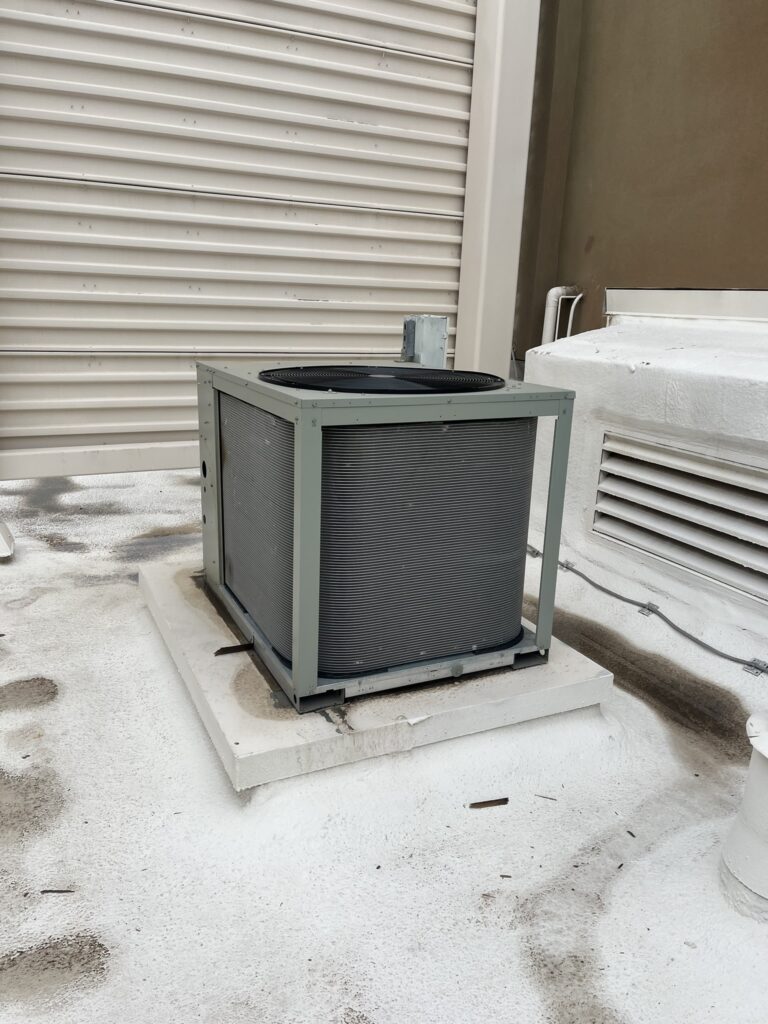
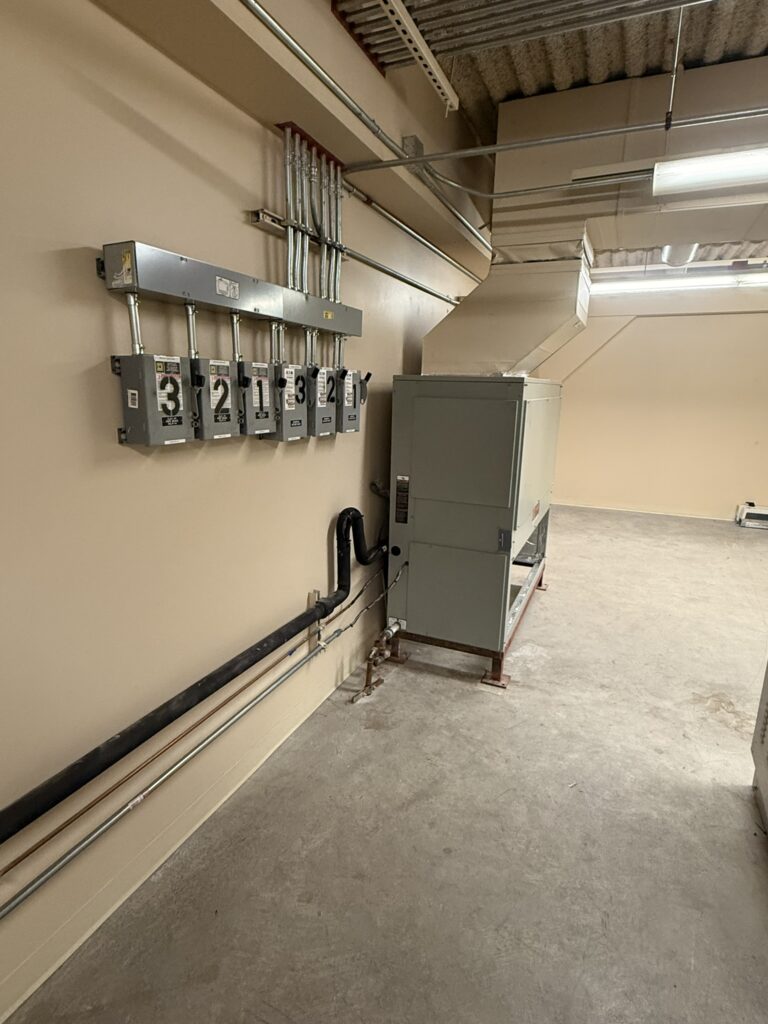
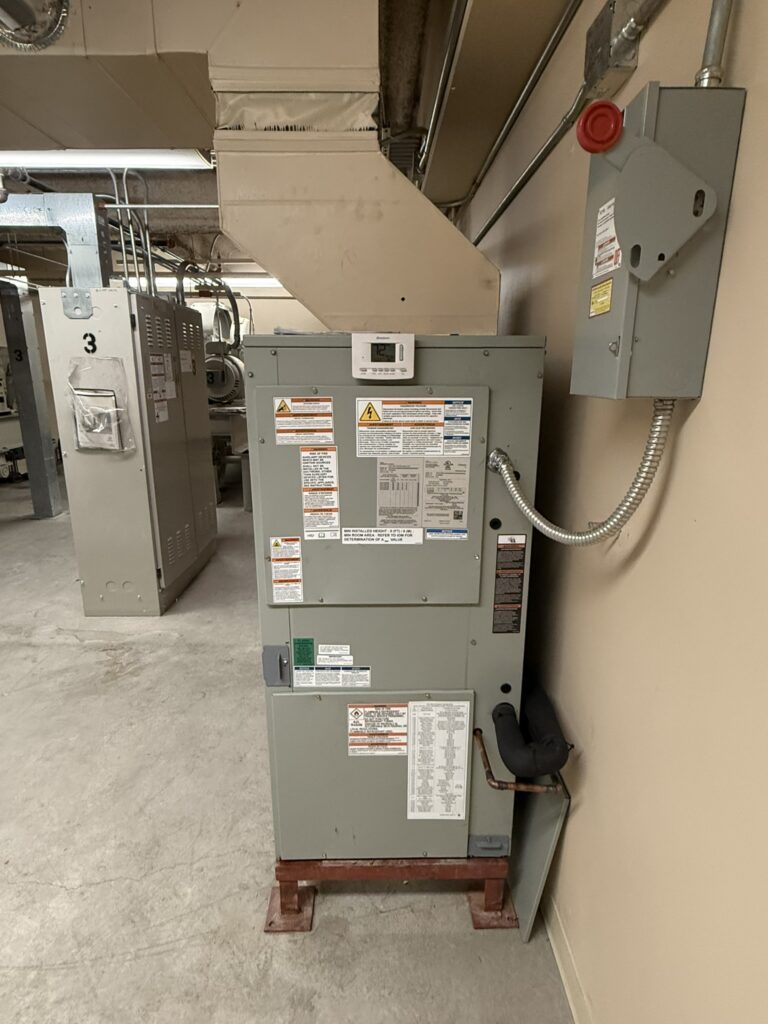
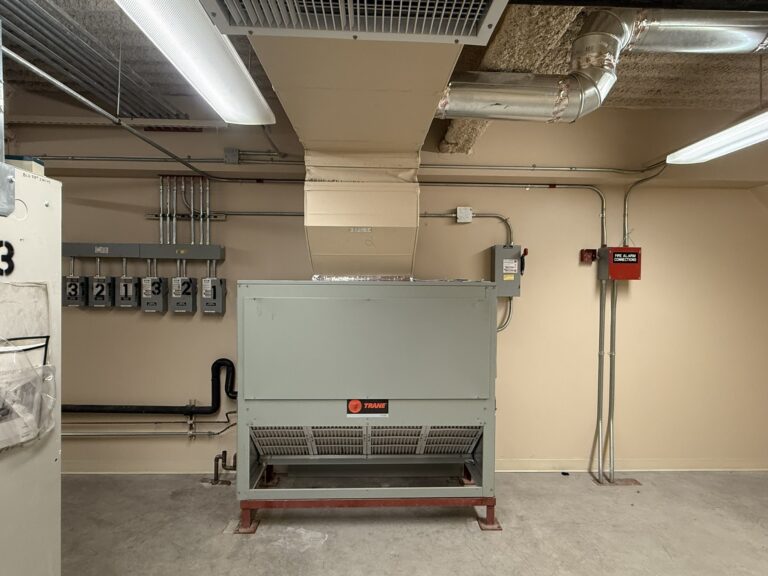
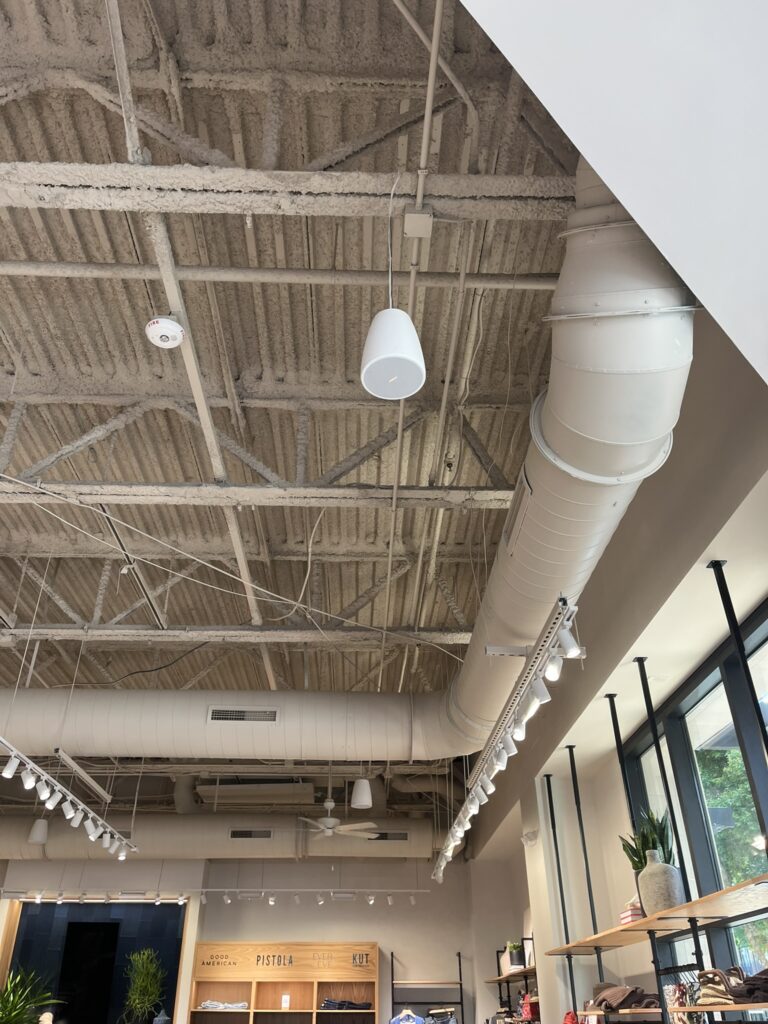
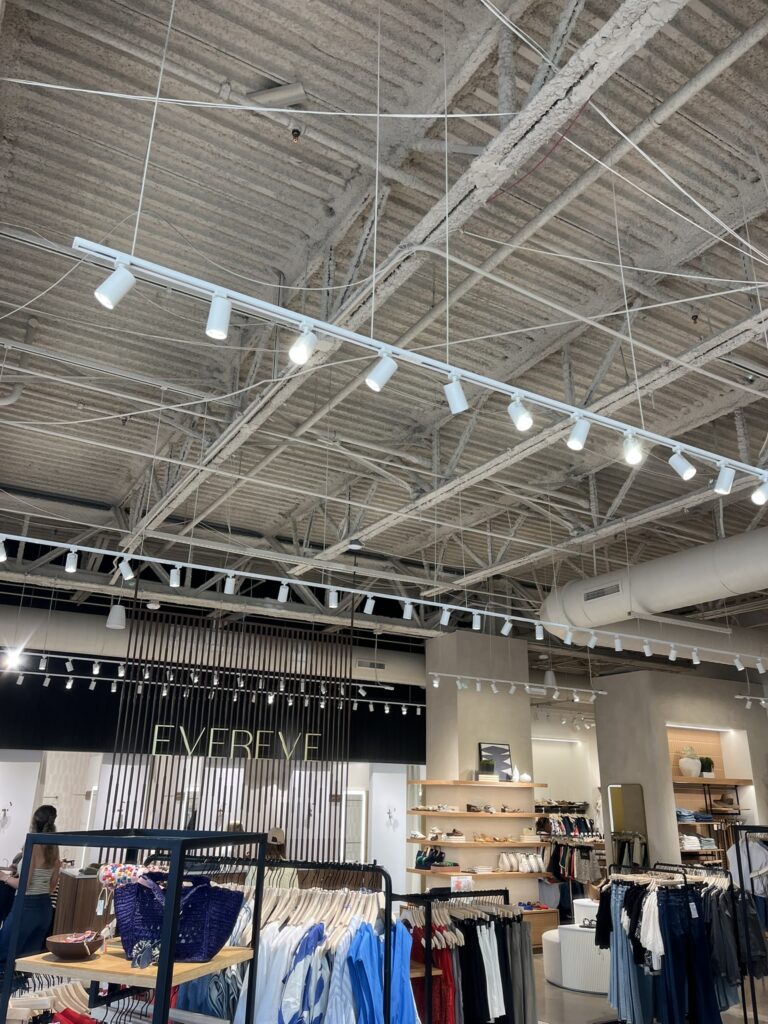
Photos from our own commercial projects across the Phoenix metro — equipment we installed, in buildings we service.
How the job typically runs.
A Goodyear project turns on disclosure. You learn the assessment fee while scheduling, nothing hidden until the visit, and it is subtracted from the total once you formally commit. On site the assessment covers the fleet's condition unit by unit, the deck, the curbs, and the ventilation and process loads the space really carries, all shown to you plainly rather than summarized after the fact. That produces a flat written total broken out across a clear scope, equipment platform and phased cutover included, so a facilities lead can present it upward with no gaps to fill in. Because distribution and manufacturing floors run the clock, the work fits between shifts with sectioned lifts, a fleet taken down in parts, and conditioning kept on wherever it has to stay live. Our line is answered by a human around the clock, so a mid-project issue after hours never dead-ends at voicemail; it reaches someone who can act. After start-up we confirm the numbers on each unit, measured airflow, charge trued by superheat and subcooling, and controls exercised, then turn over a full documented closeout for your files. For a large fleet, upkeep is the whole game, so every install can fold into a fleet maintenance contract that holds the entire roof to schedule. The order never changes, because each step is what makes the next one trustworthy on a roof this size.
- 01 Booking, with the diagnostic fee disclosed
- 02 In-person diagnosis with real readings
- 03 Written flat-rate quote before work begins
- 04 The work: repair, install, or maintenance
- 05 Startup, documentation, and warranty handoff
Commercial mechanical work in Goodyear moves through the city on a permit, and the path depends on scope. New tenant space generally demands sealed drawings and plan review, but a straight equivalent-unit replacement, even repeated across a fleet, usually clears on a lighter path. We prepare the submittals, coordinate inspections, and write realistic review windows into the schedule so a permit lag never leaves a general contractor's trades, or a warehouse retrofit, idle on the clock. If a commercial kitchen is part of the scope, its exhaust hood and make-up air bring NFPA 96 to bear, and we address it in design from the outset instead of at inspection. All refrigerant is managed and documented per EPA 608, which is no small matter at fleet volume. Across a phased fleet, inspections get sequenced so each wave is signed off and returned to service without waiting on the whole roof. Arizona sets a legal minimum through the Registrar's Minimum Workmanship Standards, the floor for any licensed shop. Our written warranty and documented start-up exceed it comfortably, and the records are yours to keep.
Pricing, financing & the 10% military & first responder discount.
Pricing in Goodyear starts plainly: a phased fleet change-out and a lone shell fit-out are different animals, and a phone number cannot separate them. We therefore price after the site visit, in writing, as a flat total tied to a scope you can trace, and for a fleet, split by phase so the spend is plannable. The fee quoted when you booked comes off the total as you proceed, so nothing about the assessment is throwaway. Financing on approved credit lets a large fleet project spread across a planned timeline rather than land as one emergency, and we will lay the terms out. For a multi-phase fleet program, we can align the written scope with your capital calendar so each wave carries its own approved number. Commercial pricing rests on the scope alone. Separately, with a veteran-owned crew and Luke Air Force Base at the doorstep, our 10% discount for veterans and military covers the home HVAC of those who served, a thank-you to the individual rather than something folded into a facility invoice. What you authorize is what lands on the bill.
- 01 Flat-rate written quote after an in-person look
- 02 Diagnostic fee disclosed at booking, credited to the repair
- 03 Financing available on replacements
- 04 2-year workmanship warranty; 1-year manufacturer parts warranty
- 05 10% military, veteran & first responder discount
Why a licensed HVAC contractor matters.
FAQs: Commercial AC Installation in Goodyear, AZ.
Can you replace a whole warehouse rooftop fleet without stopping the floor?
Yes, fleet work is planned so the operation keeps running. We rank the units by condition and criticality, then swap them in waves while the rest of the fleet keeps the building conditioned. Picks land between shifts, and cooling stays on the zones that cannot lose it. You get the sequence for each phase up front, so a Goodyear distribution or manufacturing floor never faces the entire roof going dark. The result is a full replacement that respects a schedule the business cannot afford to pause.
What does commercial ac installation Goodyear cost for a distribution building?
It rides on scope, and a firm number before we have walked the roof would be a guess. A phased change-out across dozens of rooftop units is a different project than a single in-kind swap. Every commercial ac installation Goodyear operators approve with us is a flat written quote tied to a defined scope, and for a fleet, split by phase so the spend is plannable. You see the equipment and options as plain numbers, and the figure you authorize is the figure you are billed.
How do you size cooling for high-bay warehouse space?
Not with a square-foot rule, which misses everything that makes a warehouse hard. We account for heat stratifying in the high-bay volume, conditioned air lost as dock doors cycle, the 110-degree outside air pulled in behind it, and the heavy ventilation and make-up air loads big buildings carry, plus process heat on a manufacturing floor. Along Goodyear's I-10 corridor those factors dominate the load. Fold them into the calculation and the system holds the floor in August; leave them out and it runs nonstop and slips.
Should we replace the whole fleet at once?
Not necessarily all at once, but planned as one program rather than one emergency. Because the units went up together, they tend to fail together, and reacting unit by unit means repeat downtime. We assess the whole fleet, rank replacements by condition and criticality, and lay out a phased plan you can budget around. Some units get swapped now, others in a later wave, all under one design standard so the Goodyear roof ends up consistent to maintain. That beats a run of August emergencies.
Do warehouse and retail build-outs here need plan review?
Usually. A shell built into retail, a clinic, or conditioned warehouse space in Goodyear typically needs sealed mechanical drawings and plan review, while a straight equivalent-unit replacement generally clears on a lighter path. Scope and city thresholds decide. We prepare the submittals either way, coordinate the inspection, and fold review windows into the schedule so the general contractor is never left waiting. Getting the mechanical design right the first time keeps a build along the I-10 corridor on its calendar instead of stalled at a counter.
How do demand charges factor into a big rooftop fleet?
Heavily, because APS and SRP meter commercial accounts on peak demand, and a large fleet of oversized single-stage units can stack a punishing monthly peak when they all pull hard together. Staged or inverter-driven equipment tracks the moment and flattens that peak across the fleet, saving on both consumption and demand. On a big Goodyear distribution roof, the difference is real money every billing cycle. We put the projection in writing against your actual rate schedule, so the standard you set for the fleet is a numbers decision.
Every major brand, serviced and installed.




Phoenix metro: Most days a tech is already working somewhere in the Valley, so same-day appointments happen when the schedule allows. After-hours emergencies are dispatched when a licensed tech is available — a real person answers and tells you the ETA on the call.
Call (520) 556-8929Request an estimate.
No pressure, no door knockers. We look at the HVAC system, tell you what it needs (and what it doesn’t), and put the number in writing.
Need AC installation in Goodyear? A real person answers.
Other services we run in Goodyear.
AC Installation in nearby cities.
Looking for something else nearby? All HVAC services in Goodyear