
Goodyear
Commercial HVAC Maintenance in Goodyear, AZ.
- (520) 556-8929
- Serving the entire Phoenix metro — we come to you
- Office: Mon–Fri 8:00 AM – 5:00 PM · 24/7 emergency service
- 2-year workmanship warranty · 1-year parts warranty
- Veteran-owned & operated · residential + commercial
- 23 five-star Google reviews
Goodyear runs on logistics, and logistics runs on uptime. The West Valley's distribution corridor along I-10 is lined with massive warehouses and fulfillment centers whose rooftop fleets number in the dozens, and downtime in a climate-sensitive facility is not a comfort complaint; it is stalled throughput and at-risk product. Yeti Pros delivers commercial HVAC maintenance in Goodyear as a technical preventive-maintenance visit, instrumented per-asset work on the equipment itself, because a warehouse or fulfillment operation cannot run its cooling to failure and hope. We are veteran-owned and operated, EPA 608-certified for refrigerant work, and licensed under ROC #363372 and ROC #363423. From the I-10 logistics parks and manufacturing sites to the retail and medical growth near the ballpark and the commercial serving PebbleCreek, we service package rooftop units, split systems, warehouse cooling, and the refrigeration that keeps operations moving. The visit is about measurement: reading a large rooftop fleet asset by asset, catching a drifting compressor or a dust-loaded coil with a meter on a scheduled morning, instead of discovering it when a July afternoon takes a unit and a section of the building. Every stop produces written per-asset readings trended against the last, so a facility manager overseeing a big fleet works from data, not from whichever unit fails loudest, and knows which rooftop to fund next. A real person picks up our line 24 hours a day, every quote is flat-rate and in writing. A full-site maintenance plan should account for every unit, access point, runtime pattern, and repair priority across the property. On a fleet that large, the gap between a documented plan and a guess is measured in idled lines, missed outbound trucks, and temperature-controlled loads that never should have warmed. That is why every rooftop leaves our visit with its own number, not a fleet-wide shrug.
ZIPs served: 85338, 85395
What HVAC Maintenance covers in Goodyear.
Scheduled RTU and Split-System PM
The core visit for Goodyear's large rooftop fleets: every package unit and split worked in sequence, electricals tested against nameplate, refrigerant performance measured, and wear flagged before a unit drops a section of a distribution building. Across dozens of assets on one roof, we measure each individually and trend it, so a logistics manager learns which rooftops are drifting first.
Coil Cleaning as Capacity Insurance
Open West Valley dust loads a warehouse fleet's condenser coils unevenly and relentlessly, and a fouled coil is lost capacity on equipment already moving huge air against high load. We clean condenser coils before summer and rinse them after storms, because a dust-blanketed coil drives head pressure and amps up while tonnage falls, idling a climate-sensitive zone at the peak.
Belt, Bearing and Motor Service
Fleet equipment moving warehouse-scale air runs belts, bearings, and motors hard, and staggered wear across many units is easy to miss. We check belt tension, alignment, and glazing, inspect pulleys, lubricate and listen to bearings before they seize, and read motor amps against nameplate on every unit. A bearing caught early beats a stalled zone at peak load.
Economizer and Controls Verification
Across a big fleet, seized economizers and drifted controls waste energy at a scale that shows on the bill. We stroke dampers, verify actuators, sensors, and linkages, and confirm controls match how each space is used, since offices, pick modules, and cold storage all differ. Multiplied across dozens of Goodyear rooftops, a stuck damper compounds fast.
Filter Program Management
On a Goodyear fleet exposed to open-desert dust, filtration is a program, not an afterthought: wrong filter or schedule and grit reaches coils across the whole roof. We match MERV rating to each space, warehouse back-of-house to office and medical fine capture, within blower static limits, add filter-only stops at high-dust sites, and log every change by size and rating.
Written Per-Asset Condition Reports
Every visit closes with numbers for each rooftop, capacitance, amps, pressures, and temperature splits, trended against the last visit so drift surfaces early across the whole fleet. Each unit carries a condition grade and remaining-life estimate, exactly what a Goodyear logistics manager needs to turn dozens of opaque assets into a prioritized, budgeted list of what to fund next.
What we see for HVAC maintenance in Goodyear.
Scale is the defining feature of Goodyear commercial HVAC, and it changes what maintenance has to catch. A single I-10 fulfillment or distribution building can carry dozens of rooftop units cooling office mezzanines, pick modules, and climate-sensitive storage, and across that many assets, failure is not a question of if but of which one and when. On large fleets we consistently find the same silent drift: coils fouling unevenly across the roof, a handful of units carrying more runtime than their neighbors, capacitors and contactors aging on staggered clocks, and nobody tracking which rooftop is sliding because sheer tonnage hides a marginal unit until it drops on the hottest afternoon.
Warehouse cooling adds its own physics: big open volumes, high ceilings, dock doors cycling heat in all day, and equipment that must move enormous air against a relentless load. Manufacturing sites layer process heat on top, pushing equipment even harder. The West Valley's open-desert dust feeds all of it, packing condenser coils between visits and forcing head pressure and amp draw up right when a summer afternoon demands peak capacity. For a logistics operator, the cost math is unforgiving: a cooling failure in the wrong zone can idle a line, threaten temperature-controlled inventory, or shut a section mid-shift.
The ballpark district and the retail and medical growth around it bring the more familiar patterns, occupancy swings, comfort expectations, and refrigeration risk, while PebbleCreek-area commercial adds steady service demand and its own aging rooftops. Underneath every profile, the constant is fleet scale: many units, uneven wear, and a desert that accelerates all of it. Our per-asset instrumented visit turns a large, opaque rooftop fleet into a documented, trended, manageable list, so a facility manager knows which unit to fund next, instead of learning it from a hot dock and a stalled shift during peak season. On a roof carrying dozens of units, that uneven wear is invisible without a meter and a record, which is exactly what we bring to it.
- 01 Airflow and static pressure
- 02 Electrical: capacitors, contactors, draws
- 03 Refrigerant-circuit behavior
- 04 Drains, safeties, and float switches
- 05 Thermostat, controls, and cycling
- 06 Ducts, returns, and room-by-room comfort
Commercial jobs we have documented.
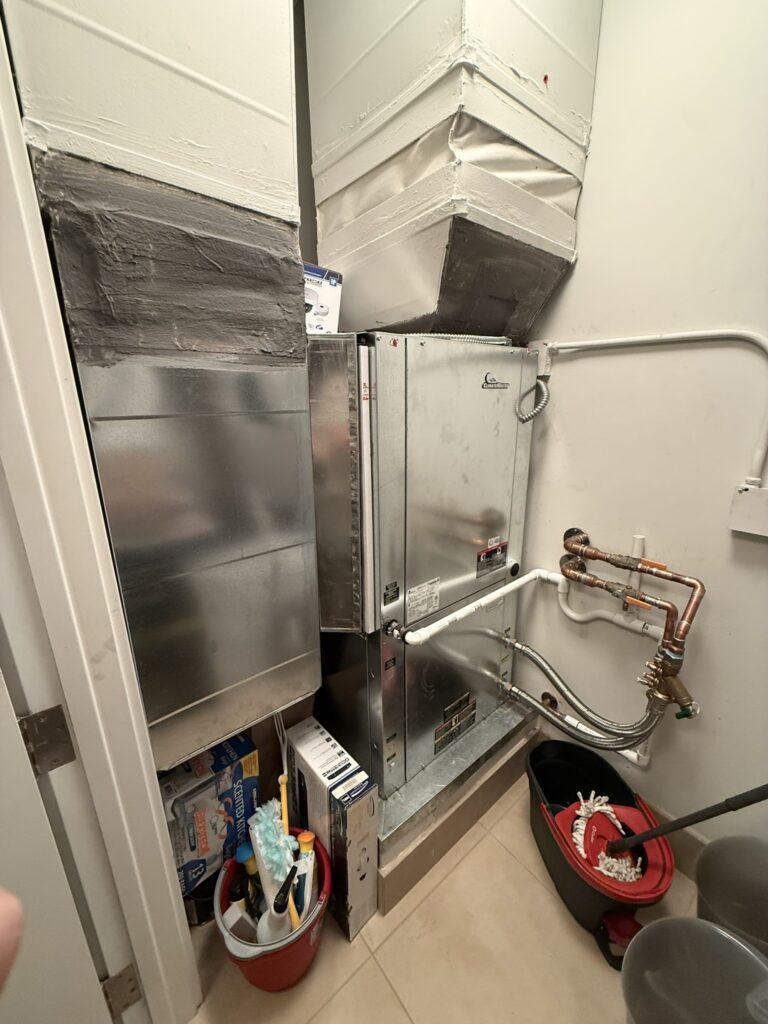
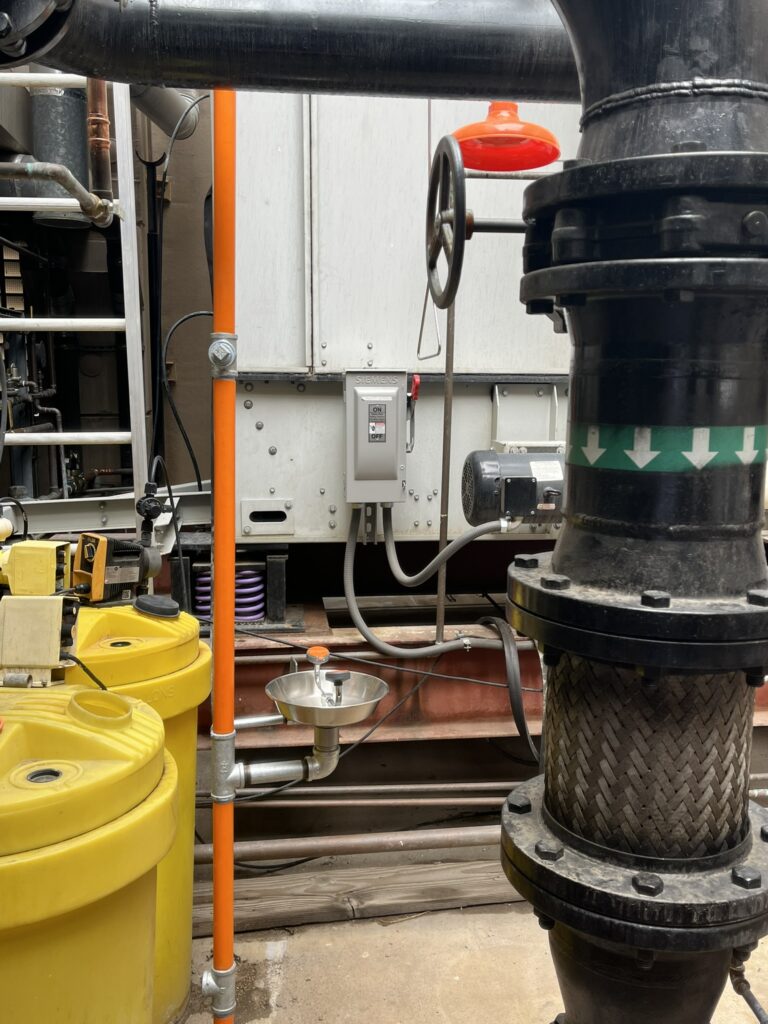
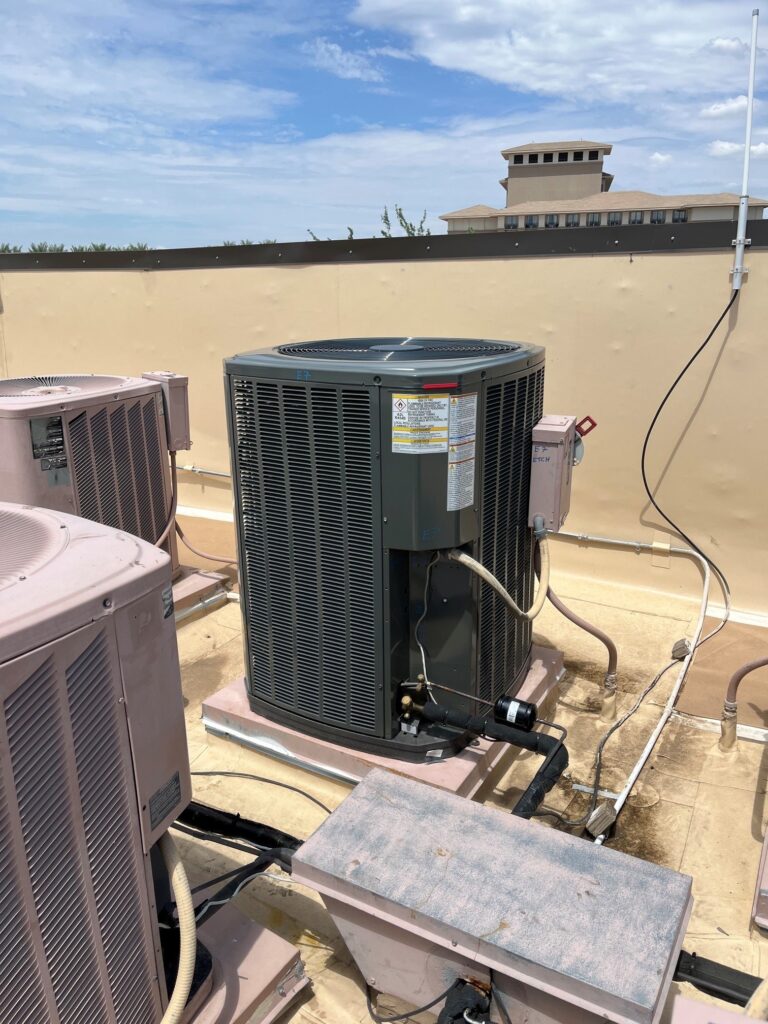
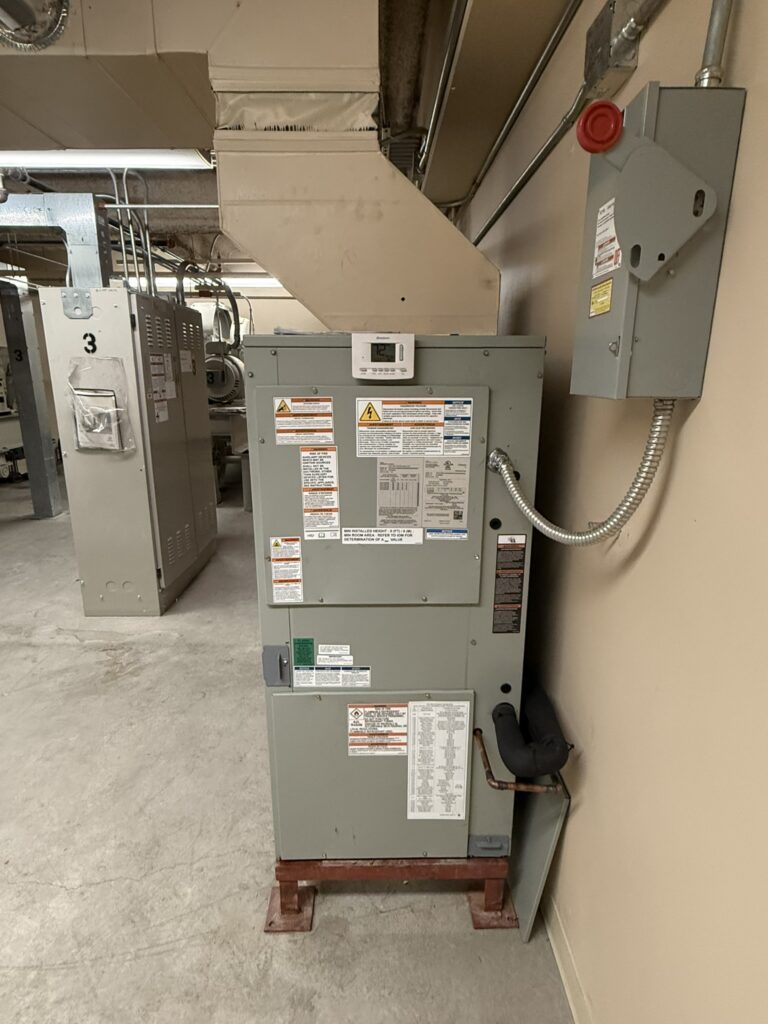
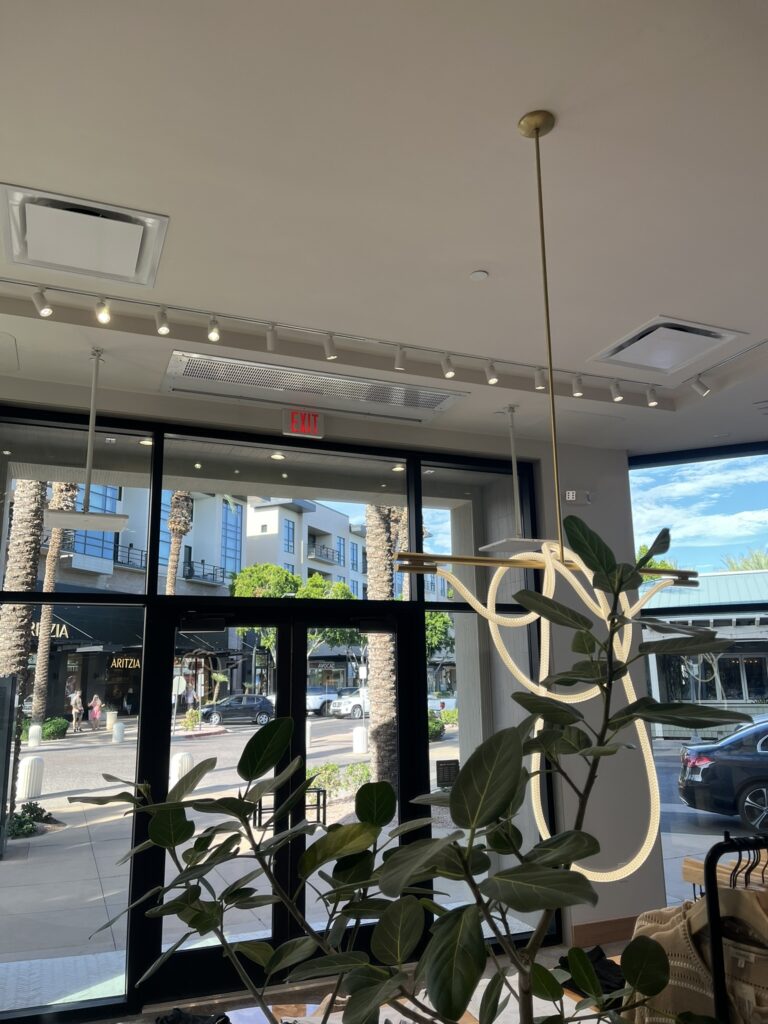
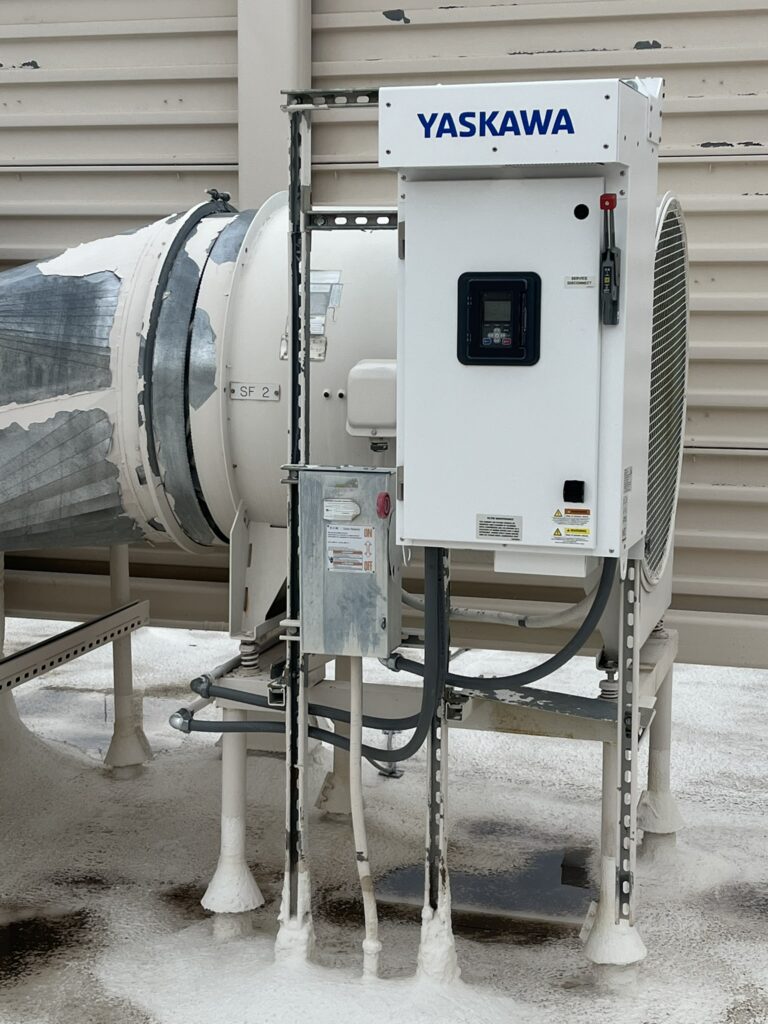
Photos from our own commercial projects across the Phoenix metro — equipment we installed, in buildings we service.
How the job typically runs.
A Goodyear PM visit is scheduled around operations that often never fully stop. For an I-10 distribution building running multiple shifts, we work the roof in coordination with your operations team so a fleet gets serviced without interrupting throughput, and off-hours access is routine. The service-call fee is disclosed at booking, never a surprise on the invoice, and applied against whatever repair the visit uncovers. Across a large fleet we work unit by unit off meters, not impressions: when a reading crosses a threshold, we show you the number and what it means for that specific rooftop, the only way to manage dozens of assets rationally. Any repair past routine service returns as a flat-rate written quote with the reading that supports it, so a facility manager can approve, defer, or route it to ownership with the data attached. Approved work is verified before we leave, the corrected charge or cleaned coil confirmed on the gauge. Then you get a per-asset condition report covering the whole fleet, ready to file, forward, or budget from. Fixed-cadence visits with locked dates and priority dispatch across a large site belong in a maintenance agreement; the visit itself is the hands-on work. A real person answers 24/7, so a between-shift failure reaches a dispatcher. For a fulfillment building that ships around the clock, that coordination is the difference between service and disruption.
- 01 Booking, with the diagnostic fee disclosed
- 02 In-person diagnosis with real readings
- 03 Written flat-rate quote before work begins
- 04 The work: repair, install, or maintenance
- 05 Startup, documentation, and warranty handoff
Preventive maintenance itself seldom needs a permit, but the repairs a fleet visit uncovers frequently do, and commercial code runs stricter than residential, more so on the large-footprint buildings common in Goodyear. Like-for-like part replacement generally proceeds without paperwork, while a rooftop change-out, new curb adapter, gas-line work, or electrical modification pulls a mechanical permit and inspection, and on a warehouse fleet those can stack up across a full replacement program. The retail and ballpark-district kitchens we serve bring NFPA 96 into play, since commercial cooking exhaust and its makeup air are a regulated system of their own, and we keep our maintenance clear of anything that would compromise it. Refrigerant work stays with EPA 608-certified technicians, logged as federal regulation demands on every commercial circuit. Each repair we complete satisfies or surpasses the Arizona ROC's Minimum Workmanship Standards, and the warranty we document deliberately exceeds that floor. Each permitted change-out across a large fleet is filed and inspected correctly, keeping the building's compliance record clean for insurers, corporate, and lease obligations. On a fleet that size, one clean, inspected change-out at a time keeps corporate and the landlord satisfied.
Pricing, financing & the 10% military & first responder discount.
Yeti Pros prices commercial maintenance flat-rate and in writing, because a Goodyear facility manager budgeting a large rooftop fleet cannot plan against an hourly meter. The service-call fee is quoted at booking and credited toward any repair the visit produces, so a diagnostic is never money lost. When the PM finds work, you get a written flat-rate quote tied to the reading that prompted it; approve, defer, or escalate with the data attached, exactly what prioritizing a fleet's repairs against a budget requires. For larger repairs or a staged warehouse change-out program, financing keeps capital fixes moving without stalling on a single budget cycle, and recurring service can run under an agreement with predictable scheduled pricing. With Luke AFB right next door, many of the owners and staff at the businesses we serve have served themselves, and our 10% military, veteran & first responder discount is a residential offer that applies to their own homes, not commercial invoices, so they can take that military discount back to their own thermostats. The commercial side stays flat-rate and transparent. A staged, documented plan is how a large West Valley fleet stays funded without a budget shock.
- 01 Flat-rate written quote after an in-person look
- 02 Diagnostic fee disclosed at booking, credited to the repair
- 03 Financing available on replacements
- 04 2-year workmanship warranty; 1-year manufacturer parts warranty
- 05 10% military, veteran & first responder discount
Why a licensed HVAC contractor matters.
FAQs: Commercial HVAC Maintenance in Goodyear, AZ.
How do you maintain a warehouse with dozens of rooftop units?
Systematically and per asset. On a Goodyear I-10 distribution building, we work the fleet unit by unit, taking readings off meters, capacitance, amps, pressures, and temperature splits, and trending each rooftop against its own history. Because sheer tonnage hides a marginal unit until it drops, the only rational way to manage that many assets is to measure each one and document it. The result is a per-asset condition report covering the whole fleet, so you see which rooftops carry excess runtime, which are drifting, and which to fund next.
Can you service our fleet without interrupting operations?
Yes. Many I-10 logistics and fulfillment buildings run multiple shifts, so we coordinate roof access with your operations team and work off-hours where needed, servicing the fleet without stalling throughput. The goal is that maintenance never becomes downtime of its own. If a unit fails outside a scheduled visit, in the middle of a shift or overnight, a real person answers our line 24 hours a day and dispatches, because the same company maintaining your rooftops is the one that shows up when one quits. Uptime is the whole point here.
What should maintenance on a Goodyear logistics building include?
Effective commercial HVAC maintenance in Goodyear logistics buildings is per-asset technical work across the whole fleet, not a spot check. On each rooftop we inspect and clean coils, test capacitors and contactors, compare motor amps to nameplate, service belts and bearings, verify economizers and controls, check refrigerant performance with EPA 608-certified procedures, and clear condensate. Warehouse cooling and climate-sensitive zones get attention matched to their load. Every reading lands on a written per-asset condition report trended against the last visit. On a fleet this large, that per-asset record is what keeps a warehouse cool and shipping.
How does maintenance protect temperature-sensitive storage?
By catching drift before it becomes a failure in the wrong zone. In a Goodyear warehouse with climate-sensitive storage or manufacturing process areas, a rooftop losing capacity threatens product and throughput, not just comfort. Our instrumented visit reads each unit serving those zones, flags a compressor or coil sliding toward trouble, and gives you a written quote to correct it on a planned schedule. For any refrigeration or cold storage, we check condenser and evaporator coils, defrost, gaskets, and drains too. The documentation proves that equipment is measured, not assumed.
Do you offer anything for veterans on staff near Luke AFB?
With Luke Air Force Base right next door, a lot of the owners and staff at the businesses we serve have served themselves, and we honor that with a 10% military, veteran & first responder discount. It is a residential offer, applying to work on their own homes, not to commercial invoices, so the people keeping a Goodyear operation running can take the discount back to their own houses. As a veteran-owned company, that is our way of thanking the military community woven through the West Valley.
How does maintenance help us budget a large fleet's repairs?
The per-asset condition report turns a big Goodyear rooftop fleet into a prioritized spend plan. Every unit carries a condition grade and remaining-life estimate, trended over time, so instead of guessing you can see which rooftops are near end of life and sequence change-outs across seasons and budget cycles. When a repair is needed, you get a flat-rate written quote tied to the reading behind it, and financing exists for larger or staged work. That lets a facility manager fund the fleet from evidence, not from the next breakdown.
Every major brand, serviced and installed.
Phoenix metro: Most days a tech is already working somewhere in the Valley, so same-day appointments happen when the schedule allows. After-hours emergencies are dispatched when a licensed tech is available — a real person answers and tells you the ETA on the call.
Call (520) 556-8929Request an estimate.
No pressure, no door knockers. We look at the HVAC system, tell you what it needs (and what it doesn’t), and put the number in writing.
Need HVAC maintenance in Goodyear? A real person answers.
Other services we run in Goodyear.
HVAC Maintenance in nearby cities.
Looking for something else nearby? All HVAC services in Goodyear