
Maricopa
AC Maintenance in Maricopa, AZ.
- (520) 556-8929
- Serving the entire Phoenix metro — we come to you
- Office: Mon–Fri 8:00 AM – 5:00 PM · 24/7 emergency service
- 2-year workmanship warranty · 1-year parts warranty
- Veteran-owned & operated · residential + commercial
- 23 five-star Google reviews
For Maricopa homeowners, routine service turns a dusty cooling season into measured proof that coils, airflow, electrical parts, and warranty requirements were not ignored. AC maintenance in Maricopa matters because many homes are new enough that warranty questions still matter, yet exposed enough to dust, long run times, and attic heat that neglect shows up quickly. A system can look ordinary from the hallway thermostat while the outdoor coil is packed with fine grit, the capacitor is drifting, the drain safety is one clog from shutting cooling down, and the filter or return setup is quietly starving airflow. The city’s far-south location adds another layer: when summer service gets busy, a documented maintenance history is better than trying to reconstruct care after a failure. In Province, steady comfort may matter more than aggressive thermostat swings; in family-heavy subdivisions, the equipment may run hard around packed schedules and closed bedroom doors. Yeti Pros is veteran-owned and operated, AZ ROC #363372 · ROC #363423, and we maintain systems with records, readings, and plain recommendations. To schedule service that protects the system you already own, call (520) 556-8929.
ZIPs served: 85138, 85139
What AC Maintenance covers in Maricopa.
Seasonal tune-ups
We check system operation before peak heat exposes weak points. Seasonal maintenance includes practical testing, inspection, cleaning where appropriate, and clear documentation. The visit helps confirm that the AC is cooling, breathing, draining, and starting properly before long desert run times make small issues harder to ignore.
Warranty documentation
Many manufacturer warranties expect professional care. We document maintenance findings, readings, visible concerns, and recommendations so the system’s care history is not based on memory. Warranty coverage still depends on the manufacturer’s terms, but records make future part or failure questions easier to support.
Coil and airflow checks
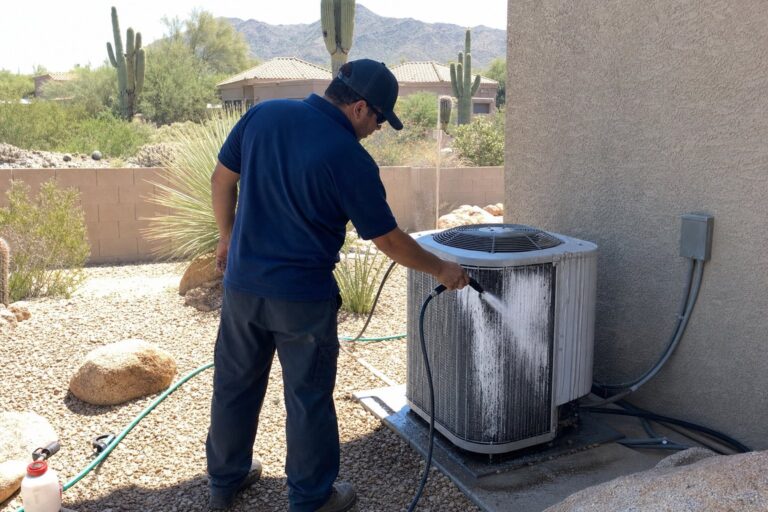
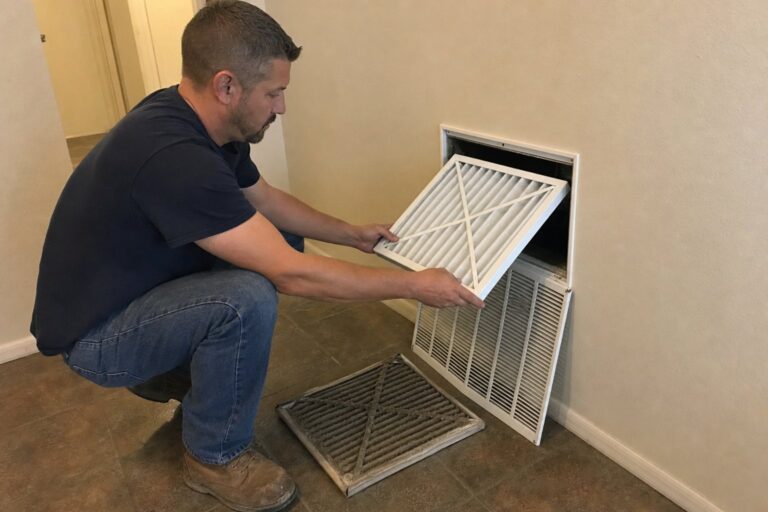
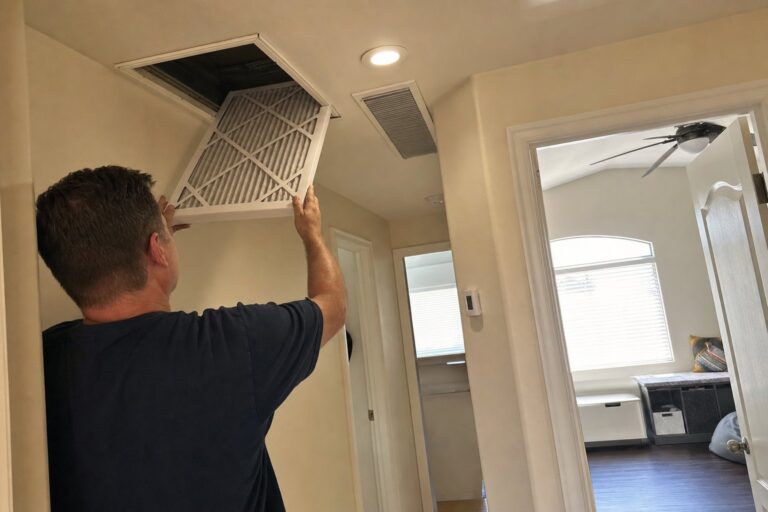
Dusty coils and restricted airflow make cooling equipment work harder. We inspect outdoor coil condition, filter and return clues, blower behavior, temperature split, and visible duct symptoms. Keeping the system breathing is especially important in dry, dusty subdivisions and during long Maricopa cooling seasons.
Electrical readings
Capacitors, contactors, motors, wiring, and controls can show early warning signs before a no-cool failure. We take practical electrical readings and inspect condition so weak parts can be discussed before they leave the home hot. Any repair recommendation is quoted separately in writing.
Drain inspection
Condensate drains and safety switches can shut cooling down when they clog or trip. We inspect the drain path, pan, switch condition, and signs of slow drainage. Even in a dry climate, condensate management matters because a preventable water or shutdown issue can create avoidable disruption.
Comfort notes
Maintenance is a good time to discuss uneven rooms, long run times, noise, thermostat behavior, or rising ED3 usage. We note whether the clues point toward maintenance, repair, airflow, duct, thermostat, or equipment-age concerns. That helps prioritize practical next steps instead of guessing.
What we see for AC maintenance in Maricopa.
We see maintenance visits where the system is still cooling, but the evidence says it is working harder than it should. The outdoor coil may be dusty, the indoor airflow may be restricted, the capacitor may test weak, the blower area may show buildup, or the drain line may be slow enough to become a summer shutdown. Those are not dramatic failures yet. They are small conditions that can become expensive when the system is asked to run through long afternoons and hot nights without a break.
Warranty defensibility is a major reason to keep maintenance documented. Many manufacturer warranties expect professional care, and when a major part fails, a homeowner may be asked for proof that the system was maintained. The exact warranty terms depend on the brand, registration, part, and installation history, but a clean maintenance record is stronger than memory. We record what we checked, what we found, and what we recommended so the system’s care history does not vanish when a failure happens later.
Maricopa’s environment is hard on coils and airflow. Open lots, construction activity, gravel landscaping, dust, and long dry cooling seasons can load the outdoor coil and filter faster than a homeowner expects. Attic ductwork and air handlers operate in punishing heat, so small airflow restrictions can turn into comfort complaints or icing symptoms. Maintenance cannot change the climate, but it can keep the system breathing, help electrical components stay within healthier ranges, and identify weak parts before they stop the home from cooling.
We also see maintenance misunderstood as a quick glance. A useful visit should test, clean where appropriate, inspect, and explain. It should not invent problems, and it should not ignore early warnings because the system happened to be running that day. We look at thermostat operation, electrical readings, coil condition, drain performance, blower and fan behavior, filter and airflow clues, temperature split, and visible installation concerns. The result should be a clearer picture of the system’s condition, not a vague sticker on the unit.
- 01 Airflow and static pressure
- 02 Electrical: capacitors, contactors, draws
- 03 Refrigerant-circuit behavior
- 04 Drains, safeties, and float switches
- 05 Thermostat, controls, and cycling
- 06 Ducts, returns, and room-by-room comfort
Residential HVAC across the Valley.
Air conditioning, heating, and cooler work at homes across the Phoenix metro.
How the job typically runs.
When you schedule maintenance, we ask about system age, recent repair history, filter habits, comfort complaints, unusual noises, thermostat issues, and whether you have warranty documentation. We disclose any diagnostic or service-call fee at booking and explain what the visit includes. Office hours are Monday through Friday, 8-5, with 24/7 emergency service available if maintenance has turned into an actual no-cool problem.
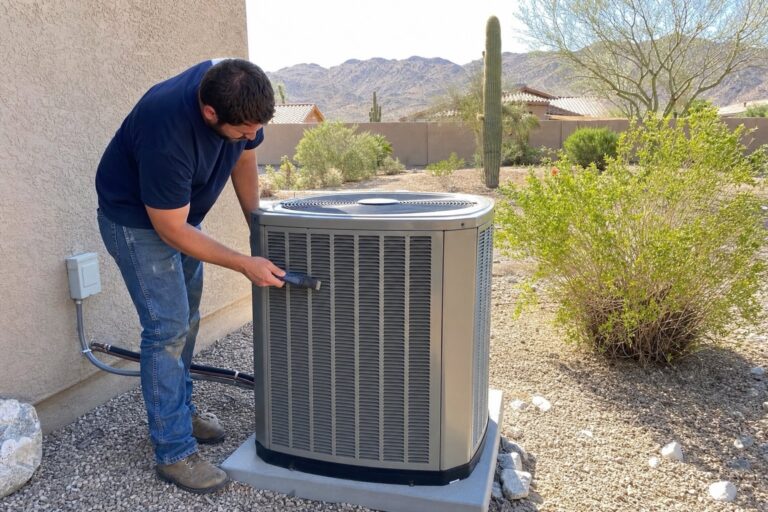
At the home, the technician checks operation and condition. The visit may include thermostat testing, electrical readings, capacitor condition, contactor inspection, motor operation, outdoor coil condition, indoor airflow clues, filter and return review, drain line and safety switch inspection, temperature split, and visible duct or installation concerns. We document findings and distinguish between normal wear, recommended maintenance, and repair needs.
If maintenance reveals a needed repair, we explain the evidence and provide a flat-rate written quote before repair work begins. The quoted number is what you pay unless we find something new and stop to re-quote. If the system is healthy, we say that plainly and note the next reasonable maintenance interval, filter considerations, and any items worth watching.
- 01 Booking, with the diagnostic fee disclosed
- 02 In-person diagnosis with real readings
- 03 Written flat-rate quote before work begins
- 04 The work: repair, install, or maintenance
- 05 Startup, documentation, and warranty handoff
Routine AC maintenance does not usually require a permit because it is inspection, cleaning, testing, and minor service rather than equipment replacement or major alteration. If the visit identifies a repair need, most small component repairs are still service work. Equipment replacement, significant duct modification, electrical changes, or installation-level scope may require a permitted path through the applicable City of Maricopa or Pinal County authority. We explain that boundary before maintenance turns into a larger project.
Most Arizona homes are slab-on-grade, so maintenance access usually involves attic, closet, garage, roofline, side-yard, or package-unit equipment rather than basement systems. Yeti Pros is licensed under AZ ROC #363372 and ROC #363423, and repair work we perform is backed by written workmanship warranty terms held to the Arizona Registrar of Contractors minimum. You can review the Minimum Workmanship Standards. Maintenance records matter because documented care can support warranty questions and future service decisions.
Pricing, financing & the 10% military & first responder discount.
Maintenance pricing depends on the equipment, number of systems, access, condition, and whether the visit remains maintenance or reveals repair work that needs a separate quote. Scope can change with one accessible split system, a rooftop or package unit, multiple systems, heavy coil buildup, or drain concerns. Any diagnostic or service-call fee is disclosed at booking when applicable.
If a repair is needed, we provide a flat-rate written quote after the in-person look. The quoted number is what you pay unless we find something and stop to re-quote before continuing. Financing is available when a larger repair or replacement scope makes that useful, and Yeti Pros offers a 10% military, veteran & first responder discount. Maintenance is best understood as risk management: it documents care, keeps airflow and coils in better condition, and helps identify weak parts before the hottest week exposes them.
- 01 Flat-rate written quote after an in-person look
- 02 Diagnostic fee disclosed at booking, credited to the repair
- 03 Financing available on replacements
- 04 2-year workmanship warranty; 1-year manufacturer parts warranty
- 05 10% military, veteran & first responder discount
Why a licensed HVAC contractor matters.
FAQs: AC Maintenance in Maricopa, AZ.
How often should I schedule AC maintenance?
Most homes benefit from professional maintenance at least once a year before peak cooling demand, and some systems may deserve more attention depending on age, dust exposure, run time, pets, filter habits, and warranty expectations. In Maricopa, long cooling seasons and dusty outdoor conditions make pre-summer maintenance especially useful. The goal is to verify operation, clean or inspect key areas, document care, and catch weak electrical, airflow, coil, or drain conditions before they become a no-cool call. If your system has warranty requirements, follow those written terms first.
Does maintenance help protect my manufacturer warranty?
It can help because many manufacturer warranties expect regular professional maintenance, though the exact requirements depend on the brand, registration, model, part, and warranty language. Maintenance does not guarantee coverage, and it cannot override manufacturer terms, but documented care is much stronger than trying to prove later that the system was looked after. We record what we checked, what readings or conditions were found, and what recommendations were made. If a major part fails later, that record may help support the warranty conversation.
What do you check during maintenance?
A maintenance visit may include thermostat operation, filter and return-air clues, blower behavior, outdoor coil condition, capacitor readings, contactor condition, motor operation, temperature split, drain line and safety switch inspection, visible duct concerns, and general equipment condition. The exact scope depends on the system type and access. We are looking for three things: whether the system is cooling correctly now, whether it is working harder than it should, and whether there are weak points that should be watched or repaired before peak heat.
Can maintenance prevent every summer breakdown?
No. Maintenance reduces risk, but it cannot prevent every failure. Electrical parts can fail suddenly, motors can give out, control boards can stop working, and refrigerant-side problems can appear even on systems that were recently checked. What maintenance does is improve the odds by keeping coils and airflow healthier, verifying drain operation, identifying weak readings, and documenting the system’s condition. It also gives you a clearer baseline. If a breakdown happens later, the technician has a better record of what was normal and what changed.
Is maintenance still important on a newer home?
Yes. Newer does not mean maintenance-free. Many homes in newer Maricopa subdivisions have systems that are still within useful warranty windows, and that is exactly when documentation can matter. Dust, construction activity, gravel yards, long run times, clogged filters, and attic heat can affect newer equipment quickly. Maintenance helps keep the coil breathing, confirms electrical components are within reasonable readings, checks drain safety, and notes comfort complaints before they become repair calls. It also creates a care history for the system while the equipment is still young.
What happens if you find a repair during maintenance?
If maintenance reveals a needed repair, we explain the finding and provide a flat-rate written quote before repair work begins. The maintenance visit does not give us permission to replace parts without approval. The quoted number is what you pay unless something new is discovered and we stop to re-quote before continuing. We separate normal maintenance recommendations from actual repair needs so the decision is clear. If the system is healthy, we document that too and tell you what to watch before the next visit.
Every major brand, serviced and installed.



Phoenix metro: Most days a tech is already working somewhere in the Valley, so same-day appointments happen when the schedule allows. After-hours emergencies are dispatched when a licensed tech is available — a real person answers and tells you the ETA on the call.
Call (520) 556-8929Request an estimate.
No pressure, no door knockers. We look at the HVAC system, tell you what it needs (and what it doesn’t), and put the number in writing.
Need AC maintenance in Maricopa? A real person answers.
Other services we run in Maricopa.
AC Maintenance in nearby cities.
Looking for something else nearby? All HVAC services in Maricopa