
Paradise Valley
Commercial AC Installation in Paradise Valley, AZ.
- (520) 556-8929
- Serving the entire Phoenix metro — we come to you
- Office: Mon–Fri 8:00 AM – 5:00 PM · 24/7 emergency service
- 2-year workmanship warranty · 1-year parts warranty
- Veteran-owned & operated · residential + commercial
- 23 five-star Google reviews
Paradise Valley properties deserve AC planning based on actual use, comfort expectations, and operating patterns rather than a leftover equipment match. Commercial AC installation in Paradise Valley should begin with occupancy, hours, glass exposure, ventilation, controls, and business use, not with a shortcut that repeats an old load problem in newer equipment. In this ultra-luxury pocket between Phoenix and Scottsdale, a quiet wellness suite, a resort-adjacent restaurant, a private office, and an estate operations building can all have very different cooling profiles even when the square footage looks similar. Many properties are custom, privacy-conscious, and carefully finished, so the installation has to respect access, sound, screening, drainage, electrical limits, and the way people move through the space. APS service, Maricopa County conditions, and the brutal roof temperature of a summer afternoon make right-sizing and documentation more than engineering niceties. Yeti Pros is veteran-owned and operated, licensed under AZ ROC #363372 · ROC #363423. We come to you, evaluate the building in person, and provide a flat-rate written quote that explains the equipment and scope. To discuss a commercial AC installation, call Yeti Pros at (520) 556-8929.
ZIPs served: 85253
What AC Installation covers in Paradise Valley.
Commercial system replacement
We replace failed or aging commercial cooling systems after evaluating the space, equipment, access, controls, and load drivers. The written quote explains the approved scope instead of treating the job as a simple nameplate match.
Rooftop unit installation
For offices, retail spaces, restaurants, and managed properties, we install packaged rooftop equipment with attention to access, curb condition, electrical connections, condensate, controls, startup, and documentation for the owner or property manager.
Split-system installation
Split systems can serve specialty rooms, small offices, estate workspaces, and areas where rooftop equipment is not the right answer. We review condenser placement, sound, line routing, air distribution, and service access before quoting the work.
Controls and zoning setup
New equipment performs better when controls match occupancy and use. We review thermostats, scheduling, zoning, sensor locations, and operating expectations so the installed system supports the business instead of fighting the building.
Phased replacement planning
Multi-system properties often need a plan, not a one-time equipment scramble. We identify which units are critical, which can be monitored, and how a phased replacement can reduce tenant disruption and budget surprises.
Startup and documentation
After installation, we verify operation as conditions allow and provide written documentation. That record helps business owners, property managers, and estate managers track equipment, warranty information, scope, and future maintenance needs.
What we see for AC installation in Paradise Valley.
Paradise Valley commercial installation often starts with a mismatch between the building’s finish level and the mechanical assumptions behind it. A former boutique office becomes a medical or wellness use. A restaurant adjusts seating, kitchen equipment, or hours. A private club expands event use. An estate support building adds staff, storage, technology, or conditioned workspace. If the replacement system is chosen only by reading the tonnage on the old nameplate, the new equipment may inherit the same comfort complaints, humidity issues, short cycling, electrical strain, or poor zoning that made the old system frustrating.
Large custom buildings and high-end commercial spaces also place limits on where equipment can go and how it can be seen. Rooftop units may sit behind screens. Split-system condensers may need careful placement for sound and appearance. Ductwork may be difficult to access because interiors are finished, occupied, or architecturally sensitive. Restaurants and resort-adjacent spaces may have ventilation and kitchen loads that change the way cooling behaves during service. Those realities do not prevent good installation, but they punish assumptions. The survey has to include the business, not just the equipment pad.
We frequently see multi-system properties where no single unit carries the whole building. That can be useful, because zoning allows different areas to operate independently, but it also means replacement decisions should consider sequencing, controls, and the systems that remain. Installing one new high-efficiency unit next to neglected older units can create uneven comfort and confusing tenant feedback. The better approach is to identify the affected area, verify load drivers, review control strategy, and explain whether the project is a single-system replacement or part of a phased plan.
Approval structure matters here as much as design. A Paradise Valley business owner may want a direct equipment recommendation, while a property manager may need a written scope, model information, warranty terms, access notes, crane or lift assumptions, and coordination expectations. We build the quote so it can be read by the person on site and the person paying for the work. The result is not a generic equipment swap. It is an installation plan tied to actual use, access, comfort, and long-term serviceability.
- 01 Airflow and static pressure
- 02 Electrical: capacitors, contactors, draws
- 03 Refrigerant-circuit behavior
- 04 Drains, safeties, and float switches
- 05 Thermostat, controls, and cycling
- 06 Ducts, returns, and room-by-room comfort
Commercial jobs we have documented.
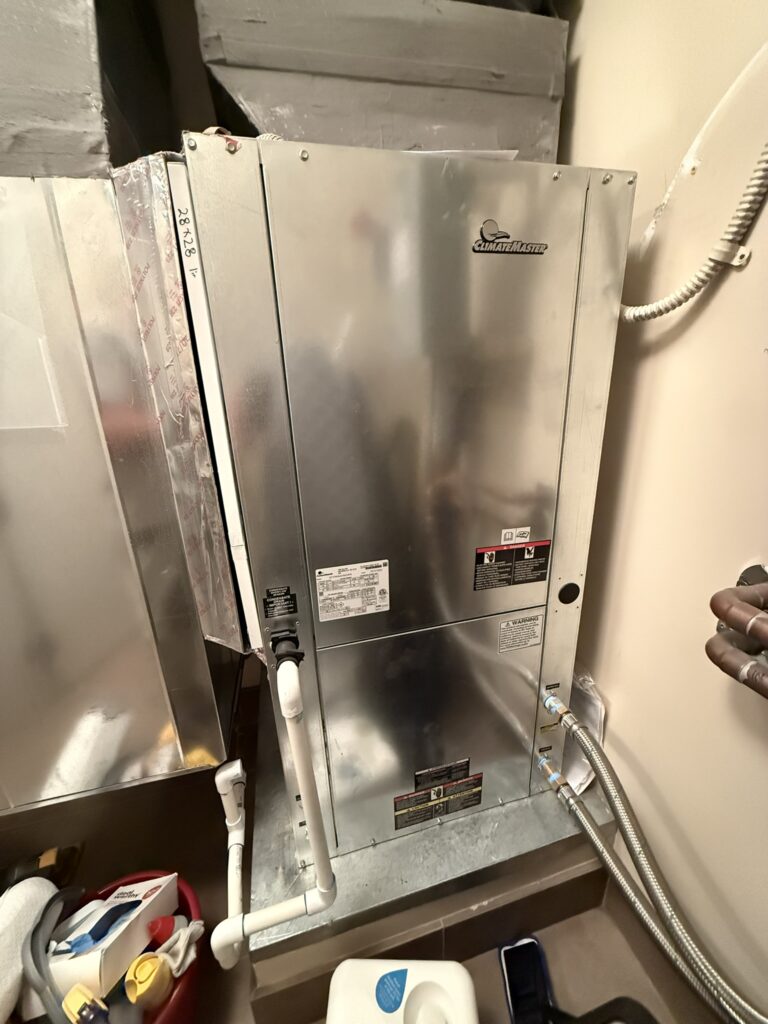
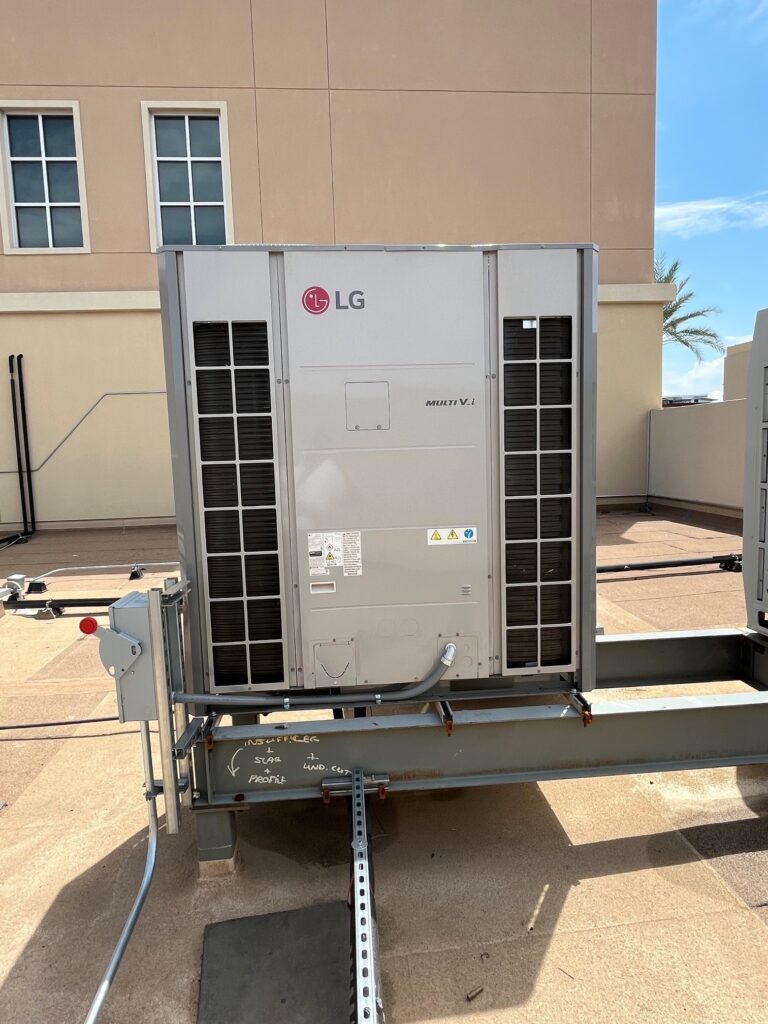
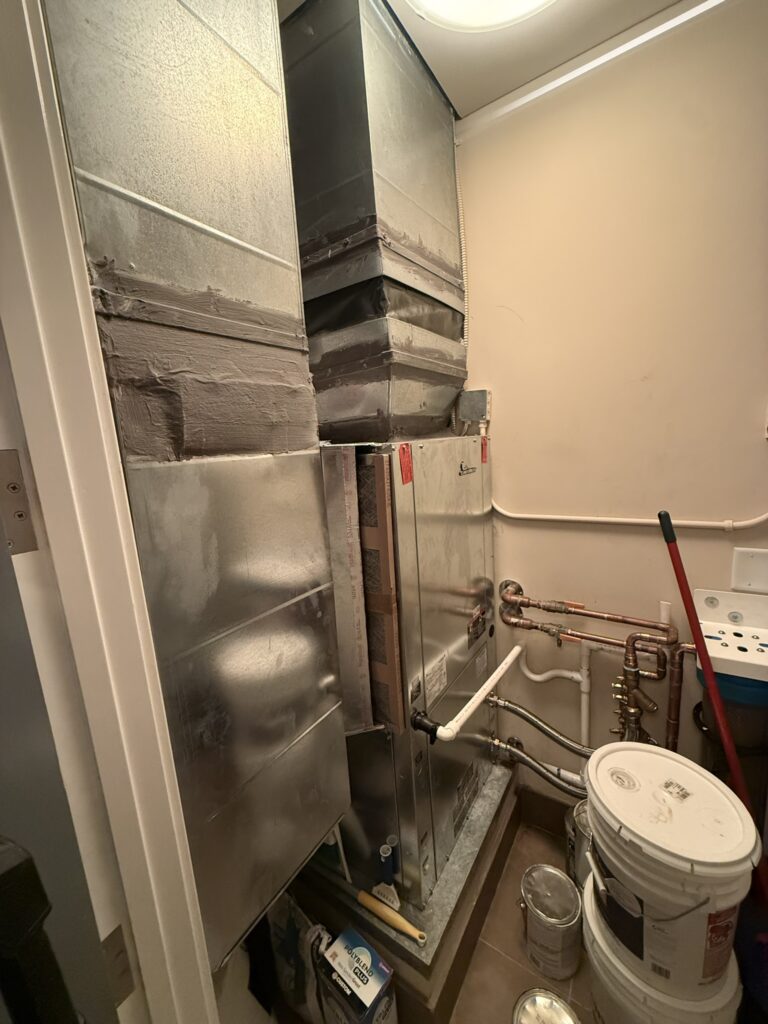
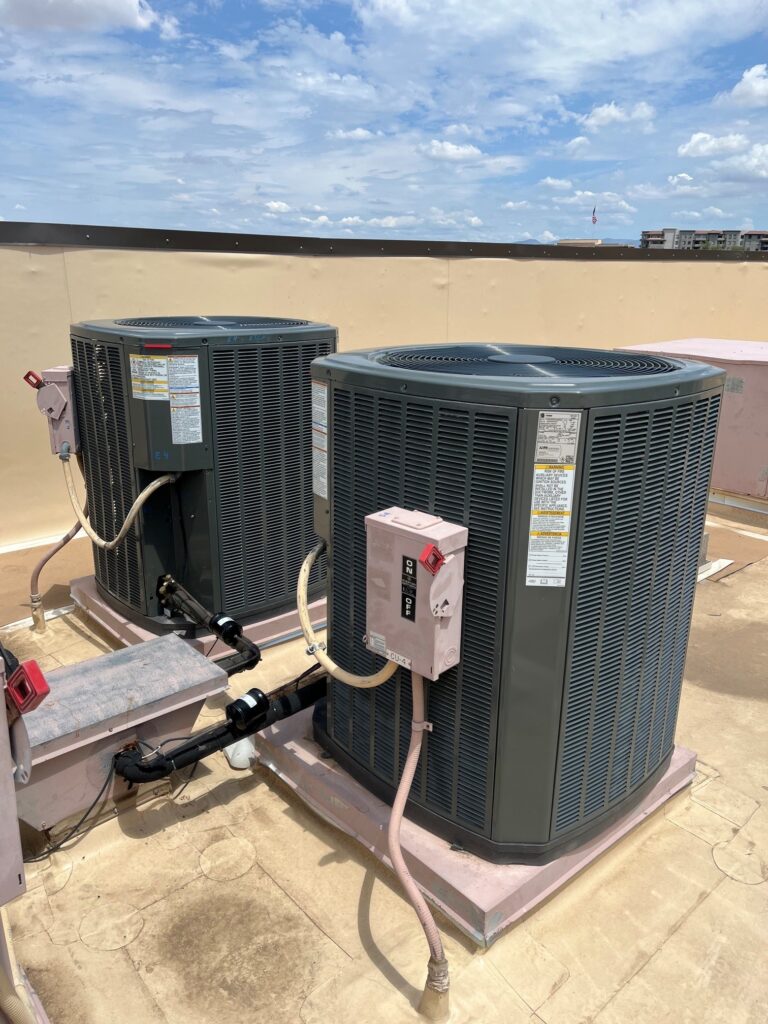
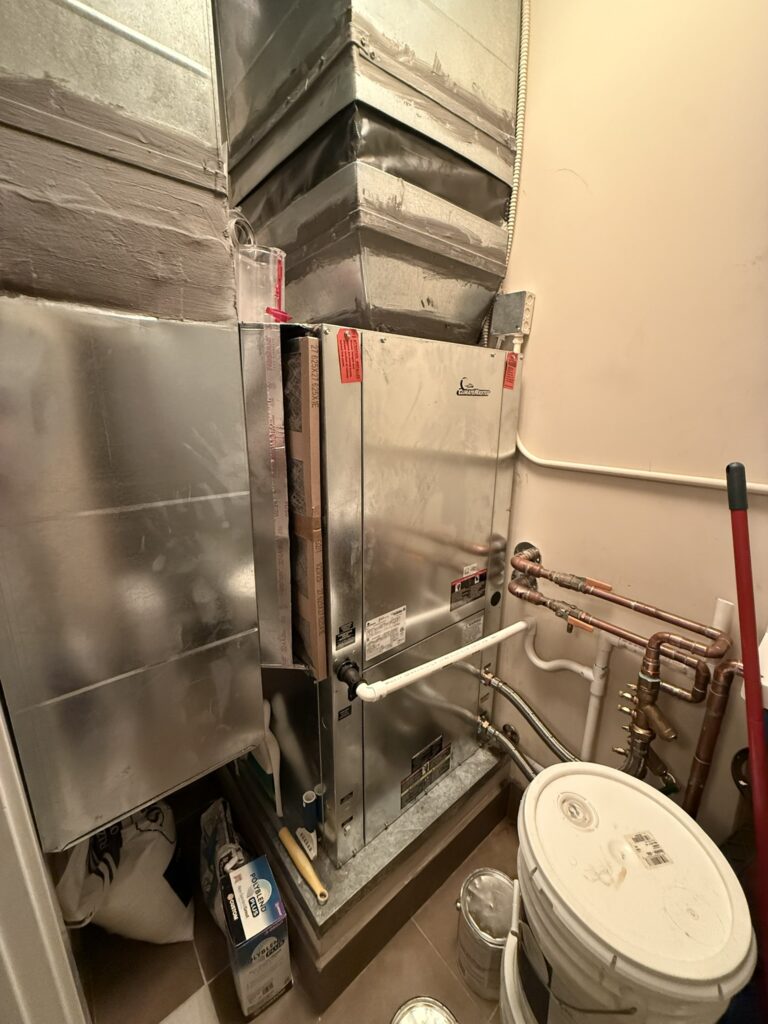
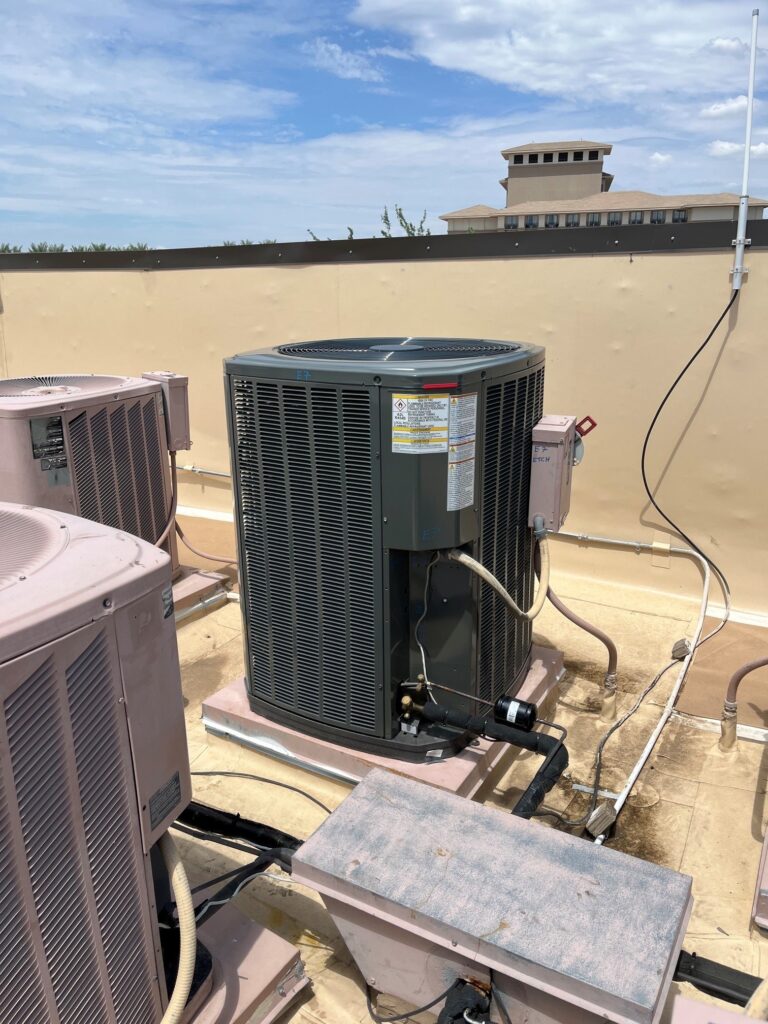
Photos from our own commercial projects across the Phoenix metro — equipment we installed, in buildings we service.
How the job typically runs.
The installation process begins with an in-person look at the building, equipment, electrical service, duct or air distribution, controls, roof or pad access, condensate routing, and the way the space is occupied. We ask how the business runs because a quiet office, restaurant, salon, gallery, and managed estate workspace do not cool the same way. The diagnostic or service-call fee, when applicable, is disclosed at booking and credited toward approved work.
After the site review, we provide a flat-rate written quote describing the approved installation scope. That may include equipment, removal, setting, connection, controls, startup, and any known access coordination. If the scope changes because we uncover a condition that was not visible, we stop and re-quote before continuing. The quoted number is what you pay for the approved work.
Yeti Pros is a service-area business, so we come to you rather than asking you to visit a storefront. Office hours are Monday through Friday, 8 to 5, and 24/7 emergency service is available for failures that cannot wait. Once installation is complete, we verify operation, review basic system behavior with the site contact, and leave documentation for the owner, property manager, or facilities file.
- 01 Booking, with the diagnostic fee disclosed
- 02 In-person diagnosis with real readings
- 03 Written flat-rate quote before work begins
- 04 The work: repair, install, or maintenance
- 05 Startup, documentation, and warranty handoff
Commercial AC installation can trigger permitting, inspection, equipment access, electrical, structural, roof, condensate, and code considerations depending on the property and scope. Paradise Valley buildings may also involve landlord requirements, architectural controls, roof screening, access rules, or documentation for estate and property managers. Yeti Pros identifies installation conditions that need formal handling before the work proceeds, but the owner, operator, or responsible party remains accountable for permit, inspection, insurance, and property approval outcomes.
We perform and document the HVAC work within our licensed scope. Arizona’s Registrar of Contractors publishes the Minimum Workmanship Standards, and our written workmanship warranty is 2-year written workmanship warranty . That matters on commercial installations because the record should show what was installed, what was approved, and how the work was completed. We do not promise that any agency, insurer, landlord, or association will approve a project; we provide the workmanship and documentation needed for the responsible parties to manage those requirements.
Pricing, financing & the 10% military & first responder discount.
Commercial AC installation pricing depends on capacity, equipment type, access, controls, roof or pad conditions, ductwork, electrical requirements, condensate routing, removal, and scheduling constraints. In Paradise Valley, the building finish and access rules can matter as much as the equipment itself. We give the real price after we have seen the property. After an in-person review, we provide a flat-rate written quote so the owner, business manager, or property manager can approve the work with a clear scope.
Financing is available, and our 10% military, veteran & first responder discount is available when applicable. For APS customers, installation choices can also affect operating cost through efficiency, runtime, and demand. A cheaper shortcut that leaves the wrong size system, poor airflow, or weak controls in place may cost more over time than a properly scoped installation. We explain options plainly and quote the approved path in writing.
- 01 Flat-rate written quote after an in-person look
- 02 Diagnostic fee disclosed at booking, credited to the repair
- 03 Financing available on replacements
- 04 2-year workmanship warranty; 1-year manufacturer parts warranty
- 05 10% military, veteran & first responder discount
Why a licensed HVAC contractor matters.
FAQs: Commercial AC Installation in Paradise Valley, AZ.
How do you size a commercial AC installation?
We start with how the space is used. Square footage matters, but it is not enough. We look at occupancy, hours, glass exposure, roof exposure, kitchen or equipment loads, ventilation, controls, ductwork, zoning, and the system being replaced. Paradise Valley properties often have custom layouts and multiple systems, so simply matching the old unit can repeat old problems. The goal is to recommend equipment and scope that fit the actual business use, then put that recommendation into a written quote.
Can you replace one unit on a multi-system property?
Yes, when one system is the right scope. Many commercial and estate-managed properties use several units to serve separate areas. We identify which equipment serves the affected space, evaluate the remaining systems enough to understand interaction, and explain whether a single-unit replacement is reasonable. If the other systems are aging or causing comfort imbalance, we note that separately. You can approve the immediate installation without being forced into unrelated work, and you receive documentation for future planning.
Do commercial AC installations require permits?
They often can, depending on the scope, equipment, electrical changes, structural support, roof work, and local requirements. We identify permitting-related conditions during the site review and document the installation scope, but permit, inspection, insurance, landlord, and property approval outcomes remain the responsibility of the owner or operator. Yeti Pros performs and documents the HVAC work within our licensed scope. When a project involves requirements beyond ordinary replacement, those should be handled before work proceeds.
Will you coordinate discreetly around customers or tenants?
Yes. Paradise Valley businesses and managed properties often require quiet, organized service because customers, tenants, guests, or owners are nearby. We discuss access, parking, roof entry, work windows, communication preferences, and who should receive updates. Some installation tasks are noisy or visible by nature, especially equipment removal and setting, but the process can still be coordinated professionally. We come to you, work through the approved site contact, and keep the written scope clear.
What happens if you find additional work during installation?
If we uncover a condition that changes the approved scope, we stop and explain it before continuing. That could include hidden electrical issues, roof or curb problems, duct concerns, condensate complications, or control conditions that were not visible during the initial look. The quoted number is what you pay for the approved work unless we find something different and re-quote. That policy protects both the customer and the technician from vague change orders.
Do you offer financing and discounts for installation?
Financing is available for approved installation work, and Yeti Pros offers a 10% military, veteran & first responder discount when applicable. We explain discount applicability plainly and do not inflate pricing around it. Because installation cost depends on equipment, access, controls, electrical conditions, roof or pad conditions, and scheduling, we provide a written quote after seeing the property. The quote gives the decision-maker a clear number and scope before work begins.
Every major brand, serviced and installed.


Phoenix metro: Most days a tech is already working somewhere in the Valley, so same-day appointments happen when the schedule allows. After-hours emergencies are dispatched when a licensed tech is available — a real person answers and tells you the ETA on the call.
Call (520) 556-8929Request an estimate.
No pressure, no door knockers. We look at the HVAC system, tell you what it needs (and what it doesn’t), and put the number in writing.
Need AC installation in Paradise Valley? A real person answers.
Other services we run in Paradise Valley.
AC Installation in nearby cities.
Looking for something else nearby? All HVAC services in Paradise Valley