
San Tan Valley
HVAC for Cannabis Facilities in San Tan Valley, AZ.
- (520) 556-8929
- Serving the entire Phoenix metro — we come to you
- Office: Mon–Fri 8:00 AM – 5:00 PM · 24/7 emergency service
- 2-year workmanship warranty · 1-year parts warranty
- Veteran-owned & operated · residential + commercial
- 23 five-star Google reviews
A cannabis grow HVAC San Tan Valley search usually does not point to a giant industrial cultivation campus. In this market, the realistic audience is smaller: owners evaluating Pinal County sites, compliant operators using limited industrial or agricultural-edge space, extraction-adjacent tenants, clone or nursery rooms, and small-format production rooms on the outer edges of an explosive exurban boom town. San Tan Valley is mostly master-planned neighborhoods like Johnson Ranch, Circle Cross Ranch, Pecan Creek, Encanterra, and Skyline Ranch, with larger lots and commercial pockets scattered around the edges. That makes HVAC planning more sensitive, not less. Heat rejection, humidity, odor-control equipment, electrical service from SRP, access, and neighbor impact all matter. Yeti Pros is veteran-owned and operated, AZ ROC #363372 · ROC #363423, and we come to you in 85140 and 85143. For the broader service category, see our cannabis facility HVAC page.
The desert climate adds another layer because cultivation rooms are not normal occupied rooms. Outdoor heat can punish condensers, indoor lighting and equipment can create steady heat, irrigation adds moisture, and filtration can restrict airflow if the system was never designed around it. A room can feel cold at the sensor and still have humidity, pressure, or odor movement problems. In San Tan Valley, where a facility may sit near residential growth or on an edge-lot property, those mechanical details are not background noise. They shape whether the building can be operated predictably.
ZIPs served: 85140, 85143
What Cannabis Facilities covers in San Tan Valley.
Grow room cooling repair
Repair for split systems, heat pumps, air handlers, and packaged equipment serving rooms with lights, irrigation, filtration, and tight temperature targets. We document actual operating conditions before quoting.
Dehumidification support
Service and replacement planning for rooms where humidity load exceeds ordinary comfort cooling. We check coil behavior, runtime, drains, controls, and equipment fit against how the room is actually used.
Odor-control HVAC coordination
Mechanical service around carbon filtration, exhaust, make-up air, and pressure concerns. We handle HVAC documentation and repair scope, without claiming to certify cannabis compliance or legal operation.
Emergency cooling service
24/7 emergency HVAC service for active production rooms, mother rooms, nursery areas, or equipment rooms where cooling loss can quickly create operational damage.
Controls troubleshooting
Diagnosis for thermostat, sensor, staging, schedule, and control issues that cause temperature swings, short cycling, humidity misses, or room alarms during light and dark cycles.
Replacement scoping
Written replacement scopes for failed or undersized equipment, aging builder-grade systems, damaged coils, weak air handlers, or setups that cannot manage heat and moisture loads.
What we see for cannabis facilities in San Tan Valley.
San Tan Valley cannabis HVAC is usually a load-control problem inside a building that was not originally designed for cultivation. Production suites, garage-style buildouts, small warehouse bays, agricultural-edge rooms, and converted commercial spaces can be packed with lights, irrigation, people, nutrients, filters, and controls. A comfort heat pump sized for office use cannot simply be asked to hold grow-room temperature and humidity under canopy load. The equipment may run nonstop, but constant runtime does not mean the room is being controlled correctly.
Dehumidification is the failure point operators underestimate. In a far southeast Valley market with brutal sensible heat outside and moisture being added inside, standard split systems short-cycle, miss humidity targets, or freeze coils when asked to behave like process equipment. Rooms can swing from wet overnight conditions to hot daytime spikes, and those swings show up as crop stress, odor movement, nuisance alarms, and equipment wear. A cold supply register may hide a weak latent strategy, especially when lights, irrigation timing, and room occupancy change across the day.
Odor-control equipment changes the HVAC picture. Carbon filtration, exhaust strategies, make-up air, sealed-room equipment, and pressure relationships all affect comfort, load, and how the building behaves near neighboring uses. In San Tan Valley, where many commercial pockets sit close to newer residential growth, operators need HVAC documentation and careful mechanical work. We service and document HVAC; we do not certify cannabis compliance, issue legal advice, or guarantee regulatory outcomes. We look at the mechanical side: airflow resistance, equipment strain, room pressure symptoms, condenser condition, drain behavior, and whether the system is being asked to do work outside its design.
Electrical limitations also show up quickly. SRP service areas, panel capacity, disconnect condition, condenser locations, and rooftop or ground-set equipment access can shape what is practical. Many San Tan Valley buildings are newer, but newer does not mean cultivation-ready. Builder-grade units, basic thermostats, and light commercial ductwork may be fine for retail or office tenants and completely wrong for rooms with lighting schedules, dehumidification loads, and filtration resistance. We also see rooms where sensors are placed in calm corners, ducts are blocked by racks, or return paths pull air from the wrong area, which makes the controls respond to the wrong reality.
- 01 Airflow and static pressure
- 02 Electrical: capacitors, contactors, draws
- 03 Refrigerant-circuit behavior
- 04 Drains, safeties, and float switches
- 05 Thermostat, controls, and cycling
- 06 Ducts, returns, and room-by-room comfort
Commercial jobs we have documented.
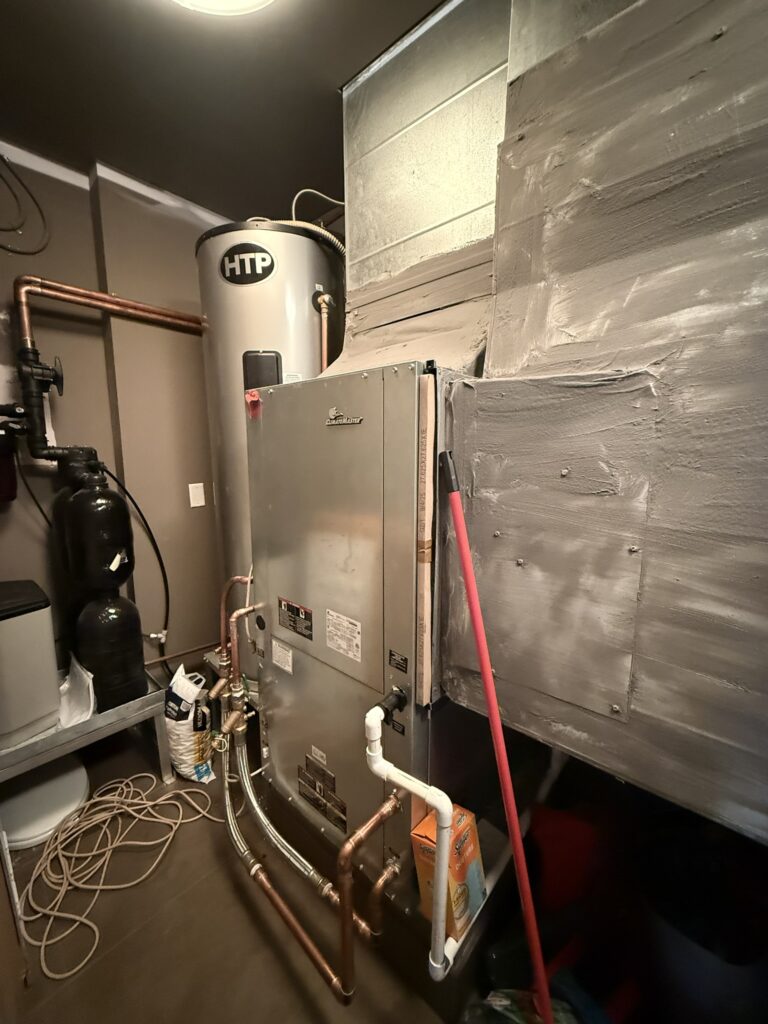
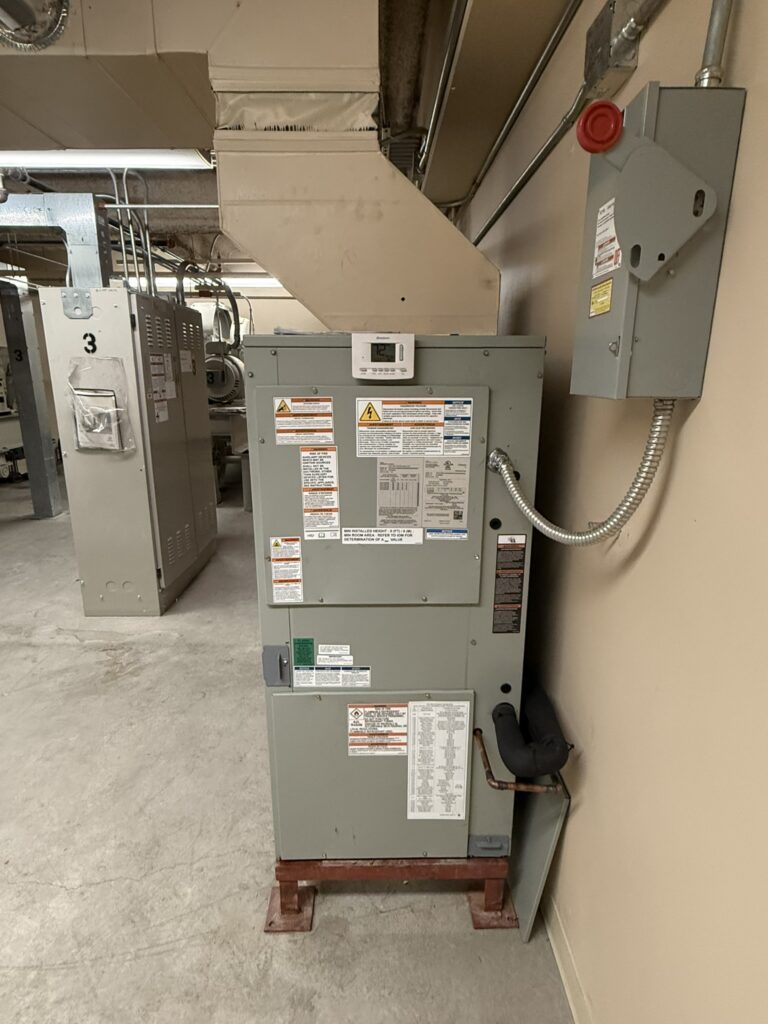
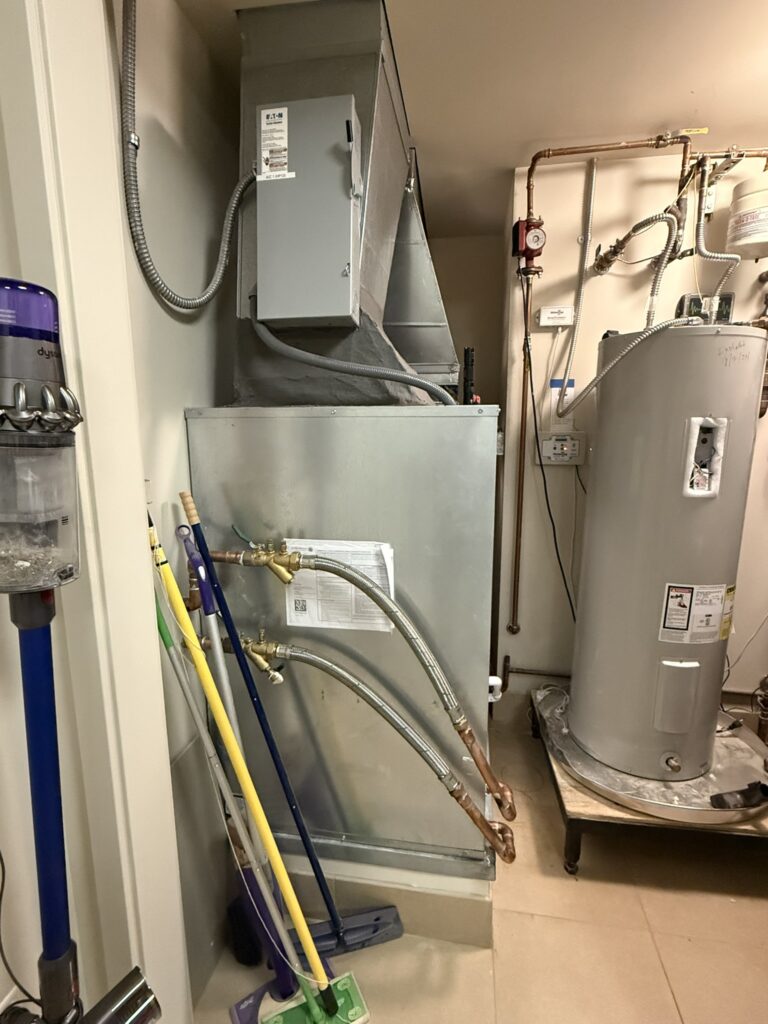
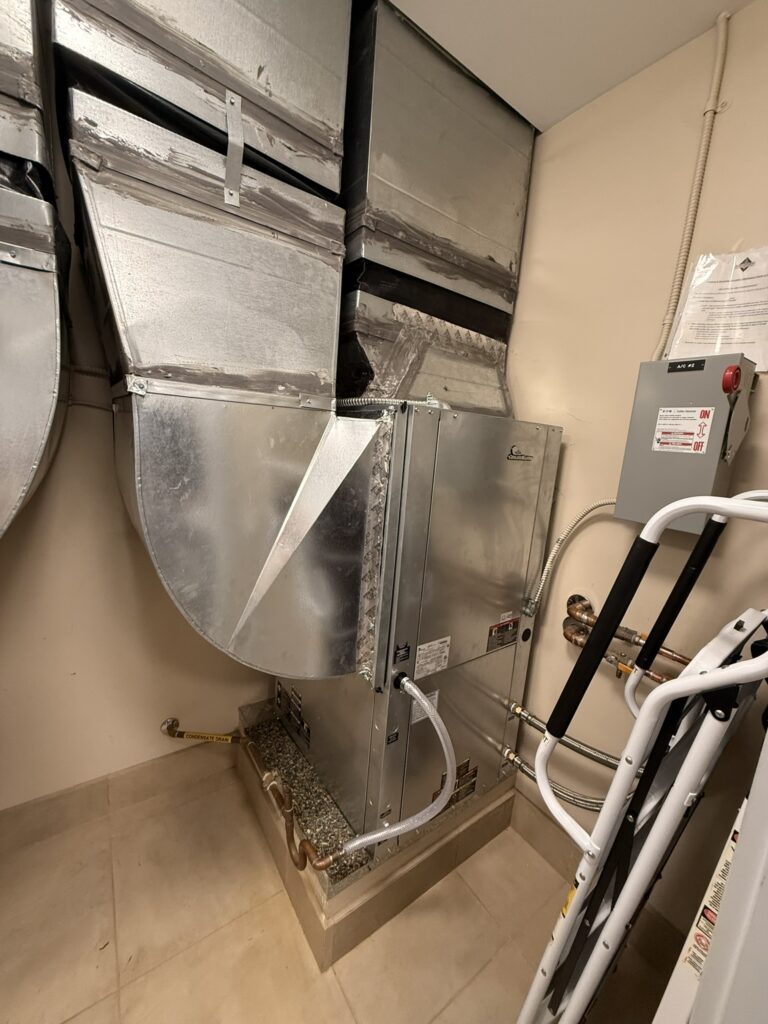
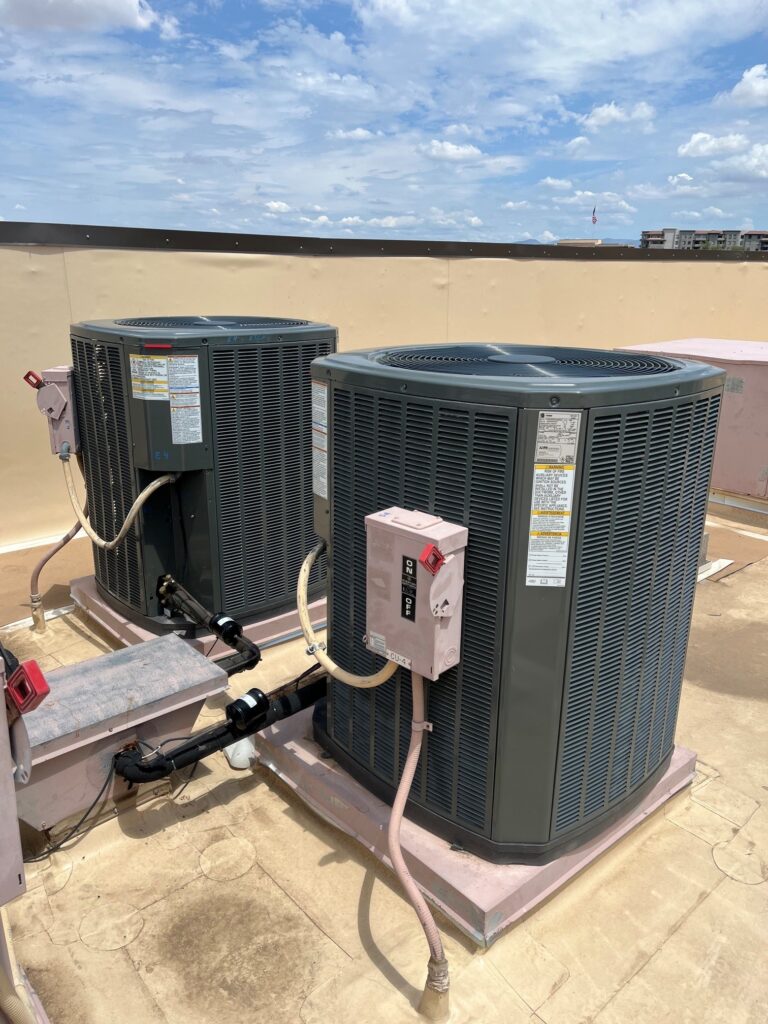
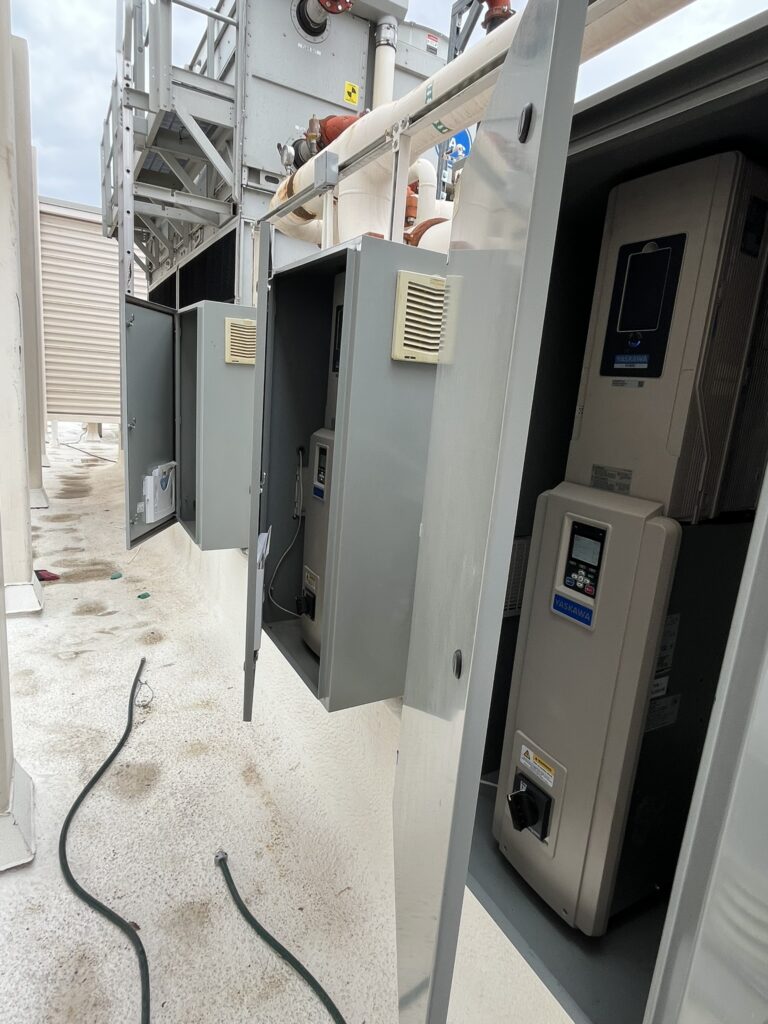
Photos from our own commercial projects across the Phoenix metro — equipment we installed, in buildings we service.
How the job typically runs.
We start with the room reality, not just the model number on the condenser. Before quoting, we look at equipment, access, room use, heat sources, dehumidification, filtration, controls, drains, electrical conditions, and whether work must happen around light schedules or restricted rooms. Call (520) 556-8929 for booking. Helpful information includes the room type, whether the issue happens during lights-on or lights-off periods, whether humidity is high or temperature is drifting, and whether odor-control equipment or alarms are part of the complaint.
Office hours are Mon-Fri 8-5, with 24/7 emergency service when cooling or humidity control fails. We provide flat-rate written quotes after an in-person look, with scopes documented in writing. The diagnostic/service-call fee is disclosed at booking and credited. If rooms have access limits, we need the authorized operator available. If a temporary repair can stabilize a room while replacement or control changes are planned, we separate that from the larger recommendation so the operator can make the decision with the production schedule in mind.
For active facilities, we work around biosecurity preferences, room access, wet floors, chemical storage, locked areas, and tenant or landlord rules. We can document HVAC conditions, repair actions, and equipment recommendations. We do not certify cleanrooms, issue health-code rulings, or give legal advice. When the complaint is recurring, we look beyond the failed component and check the operating environment, including airflow restrictions, drains, coil condition, thermostat or sensor placement, and whether connected equipment is adding more heat or moisture than the system can handle.
- 01 Booking, with the diagnostic fee disclosed
- 02 In-person diagnosis with real readings
- 03 Written flat-rate quote before work begins
- 04 The work: repair, install, or maintenance
- 05 Startup, documentation, and warranty handoff
San Tan Valley is in Pinal County, and much of the area is unincorporated. Required mechanical permits generally run through Pinal County, not a city of San Tan Valley. For cannabis-related spaces, permitting, licensing, zoning, and operational approvals can involve parties beyond the HVAC contractor. Yeti Pros handles HVAC service, repair, replacement scopes, documentation, and mechanical observations. We do not certify cannabis compliance or interpret licensing law. Equipment changes involving condensers, rooftops, electrical work, penetrations, make-up air, or exhaust paths should be reviewed before work begins. Arizona workmanship expectations are published here: Arizona ROC minimum workmanship standards.
For these rooms, the mechanical scope should be written clearly because several different parties may care about it: the operator, landlord, utility-side planner, compliance consultant, architect, or county reviewer. A like-for-like equipment repair is different from adding capacity, moving condensers, changing drain routing, modifying exhaust, or cutting new penetrations. We keep the HVAC facts specific to the equipment and work we perform so the project team can separate mechanical service from regulatory decisions.
Pricing, financing & the 10% military & first responder discount.
Cannabis facility HVAC pricing in San Tan Valley depends on room count, heat load, humidity load, filtration resistance, odor-control equipment, access limits, drain routing, electrical readiness, condenser placement, and whether the building was ever designed for production use. A small clone room and a sealed flowering room are not the same job. Pricing also changes when sensors are unreliable, controls are staged incorrectly, coils are dirty, drains are failing, or equipment is located where service access is difficult. We provide flat-rate written quotes after an in-person look. Financing is available. Yeti Pros also offers a 10% military, veteran & first responder discount through our military discount page. Repairs include a 2-YEAR written workmanship warranty and a 1-YEAR manufacturer parts warranty on repair parts.
The quote is based on the HVAC scope, not assumptions about the business. One room may need a repair to restore cooling, another may need control troubleshooting, and another may need replacement planning because comfort equipment is being pushed beyond its fit. We document what we see, identify the mechanical cause we can support, and avoid blending HVAC service with compliance promises or production guarantees.
- 01 Flat-rate written quote after an in-person look
- 02 Diagnostic fee disclosed at booking, credited to the repair
- 03 Financing available on replacements
- 04 2-year workmanship warranty; 1-year manufacturer parts warranty
- 05 10% military, veteran & first responder discount
Why a licensed HVAC contractor matters.
FAQs: HVAC for Cannabis Facilities in San Tan Valley, AZ.
Do you work on cannabis grow HVAC in San Tan Valley?
Yes, for HVAC service, repair, maintenance, and replacement scoping. San Tan Valley is not known for large industrial cultivation campuses, so we usually help smaller operators, production rooms, nursery spaces, edge-lot facilities, or owners evaluating a Pinal County site. We look at the actual room load, equipment condition, access, controls, drains, filtration, and heat rejection before writing a scope. We service and document HVAC. We do not certify cannabis compliance, provide legal advice, or issue regulatory approvals.
Can a normal commercial AC handle a grow room?
Often, no. A normal commercial AC is usually designed for people, lights, office equipment, and ordinary ventilation. Grow rooms add lighting heat, irrigation moisture, filtration resistance, plant transpiration, and stricter control targets. In San Tan Valley, outdoor heat pushes equipment even harder, especially when condensers are dusty, sun-exposed, or poorly accessed. A system may cool the room briefly but still miss humidity, short-cycle, freeze, or wear out quickly. We inspect the actual room and equipment before saying whether repair, control correction, dehumidification, or replacement is the right path.
Why is humidity high even when the room is cold?
That usually means the system is satisfying temperature before removing enough moisture, or the equipment is not matched to the latent load. Short cycling, oversized comfort units, weak airflow, dirty coils, poor drain performance, and room schedules can all contribute. Sensor placement, lights-off periods, irrigation timing, and filtration resistance can also make the room look controlled at one point while moisture remains in the canopy or production area. Cultivation rooms need humidity strategy, not just colder supply air. We check coil performance, runtime, controls, drains, and room conditions.
Do you handle odor-control compliance for cannabis facilities?
We handle the HVAC side of odor-control equipment: airflow, filtration impact, exhaust or make-up air interactions, equipment strain, and documentation of work performed. We do not certify compliance, interpret cannabis law, or guarantee approval from any authority. If your facility has regulatory requirements, your licensed compliance professional or attorney should define those requirements while we service the mechanical system. Our role is to identify what the HVAC equipment is doing, what it can support, and what repair or replacement scope is appropriate.
Who issues permits for HVAC work in San Tan Valley?
Much of San Tan Valley is unincorporated Pinal County, so required HVAC permits generally go through Pinal County rather than a city of San Tan Valley. Cannabis-related facilities may also have zoning, licensing, landlord, or operational approvals separate from mechanical work. The HVAC side can include equipment replacement, condenser placement, electrical connections, roof or wall penetrations, drains, make-up air, or exhaust changes. We document HVAC scopes clearly and can provide equipment details needed for the mechanical side of the project.
Can you come out after hours if a room loses cooling?
Yes. Yeti Pros has office hours Mon-Fri 8-5 and 24/7 emergency service. Call (520) 556-8929 and explain the room type, current temperature or humidity issue, access requirements, and whether lights are on or off. Also tell us whether the issue affects a mother room, nursery area, production room, equipment room, or odor-control equipment, and whether an authorized operator can provide access. We provide flat-rate written quotes after an in-person look, and the diagnostic/service-call fee is disclosed at booking and credited.
Every major brand, serviced and installed.





Phoenix metro: Most days a tech is already working somewhere in the Valley, so same-day appointments happen when the schedule allows. After-hours emergencies are dispatched when a licensed tech is available — a real person answers and tells you the ETA on the call.
Call (520) 556-8929Request an estimate.
No pressure, no door knockers. We look at the HVAC system, tell you what it needs (and what it doesn’t), and put the number in writing.
Need cannabis facilities in San Tan Valley? A real person answers.
Other services we run in San Tan Valley.
Cannabis Facilities in nearby cities.
Looking for something else nearby? All HVAC services in San Tan Valley