
Queen Creek
HVAC for Government Buildings in Queen Creek, AZ.
- (520) 556-8929
- Serving the entire Phoenix metro — we come to you
- Office: Mon–Fri 8:00 AM – 5:00 PM · 24/7 emergency service
- 2-year workmanship warranty · 1-year parts warranty
- Veteran-owned & operated · residential + commercial
- 23 five-star Google reviews
Government building HVAC in Queen Creek does not look like a downtown high-rise portfolio. It is a far southeast Valley mix of town offices, public counters, library and court-adjacent spaces, utility-facing buildings, community rooms, maintenance areas, and small administrative sites serving a town that grew fast from agricultural and equestrian roots. Around Queen Creek Marketplace, Ellsworth Road, Ocotillo Road, and the newer civic and commercial corridors, many facilities are modern low-rise buildings with packaged rooftop units, split systems, zoning controls, and public-facing rooms that swing from quiet mornings to full occupancy during hearings, programs, board meetings, and seasonal service demand. Some support properties sit closer to large lots, horse properties, well and septic edges, or the Maricopa/Pinal line, where dust, long roof exposure, and utility access can matter as much as the equipment nameplate. A building may be lightly occupied at 9 a.m., then full by afternoon when residents arrive for permits, payments, records, public meetings, or community programs. That uneven use changes how cooling complaints show up and how repairs need to be scheduled. Yeti Pros is Veteran-owned & operated, service-area based, and we come to you. For broader system context, see our government buildings HVAC work across the metro.
ZIPs served: 85142, 85144
What Government Buildings covers in Queen Creek.
Rooftop unit repair
Packaged rooftop units are common on Queen Creek public buildings. We troubleshoot no-cooling calls, weak airflow, compressor faults, blower failures, electrical wear, economizer issues, and thermostat problems, then provide a written repair scope that a facilities contact can route for approval without guessing at the technical details.
Preventive maintenance
Government sites need maintenance that respects public schedules and records. We inspect filters, coils, belts, drains, electrical components, refrigerant performance, controls, and operating temperatures, then document findings in writing so small problems do not become public-counter shutdowns during Queen Creek summer heat.
Controls and scheduling
Public rooms, offices, and staff-only areas rarely need the same schedule. We review thermostats, zoning behavior, locked settings, occupancy timing, and sensor placement so buildings near Queen Creek Marketplace, Ocotillo Road, and civic corridors stop wasting runtime while still staying usable.
Commercial replacement planning
When a unit is at the end of practical repair, we document replacement options, access needs, curb conditions, utility considerations, and permit triggers. The goal is a clean scope that fits procurement steps and avoids surprise field decisions once equipment is ordered.
Indoor air and ventilation service
We service HVAC components tied to filtration, outside-air intake, exhaust, and ventilation performance. That includes dirty coils, failed motors, stuck dampers, clogged filters, and restroom exhaust issues. We document HVAC conditions; we do not certify legal compliance or issue occupancy rulings.
Emergency commercial HVAC
When cooling fails in a public lobby, records area, staff office, or meeting room, we prioritize practical restoration. Our 24/7 emergency service covers Queen Creek sites in ZIPs 85142 and 85144, with arrival coordination around access, security, and operating hours.
What we see for government buildings in Queen Creek.
Queen Creek public buildings tend to run on practical commercial equipment: packaged rooftop units over lobby and office zones, split systems for smaller administrative rooms, mini-splits in IT closets or converted offices, and exhaust serving restrooms, records rooms, janitorial areas, and break rooms. The common problem is not exotic equipment. It is heat load, dust, occupancy swings, and service history that has not kept pace with how heavily the building is now used. A unit that looked adequate when a facility opened can be under more pressure after staffing grows, hours change, public traffic increases, or a room gets repurposed from storage to daily work.
In newer Queen Creek facilities, comfort complaints often come from zoning that was acceptable on paper but rough in daily use. A public counter near west glass gains heat differently than interior staff workstations. A community room that sits empty most of the day can become uncomfortable quickly when filled for a meeting. Thermostats get adjusted by multiple users, schedules drift, and one underperforming rooftop unit can make the whole building look poorly maintained. We also see sensors placed where they read a hallway or return path instead of the room people are actually using, which can hide the real complaint until the space is full.
Older or adapted government support spaces near the town’s rural edges bring different issues. Dust from lots, service yards, nearby construction, and equestrian properties can load filters faster than expected. Some buildings have additions, changed office layouts, or storage rooms turned into occupied space. We see undersized return paths, blocked diffusers, aging disconnects, worn contactors, weak capacitors, and condensate problems that show up during long summer run times. In monsoon season, rooftop exposure, roof drainage, and windblown debris can add another layer of stress to coils, panels, wiring, and condensate lines.
Documentation matters as much as the repair. Facility managers, procurement staff, and department heads need written scopes, model and serial information, photos when useful, and a clear record of what was found. A no-cooling call in a public lobby is not handled the same way as a planned replacement for a staff-only office area. We service and document HVAC. We do not issue legal advice or certify a building’s compliance posture. AZ ROC #363372 · ROC #363423.
- 01 Airflow and static pressure
- 02 Electrical: capacitors, contactors, draws
- 03 Refrigerant-circuit behavior
- 04 Drains, safeties, and float switches
- 05 Thermostat, controls, and cycling
- 06 Ducts, returns, and room-by-room comfort
Commercial jobs we have documented.
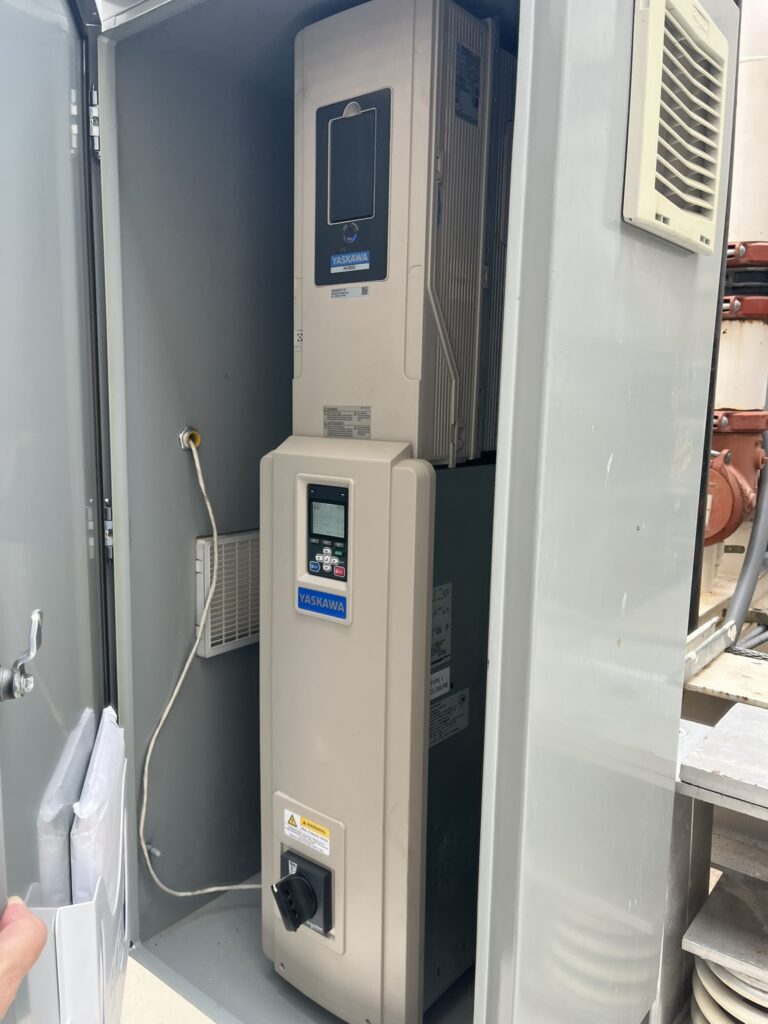
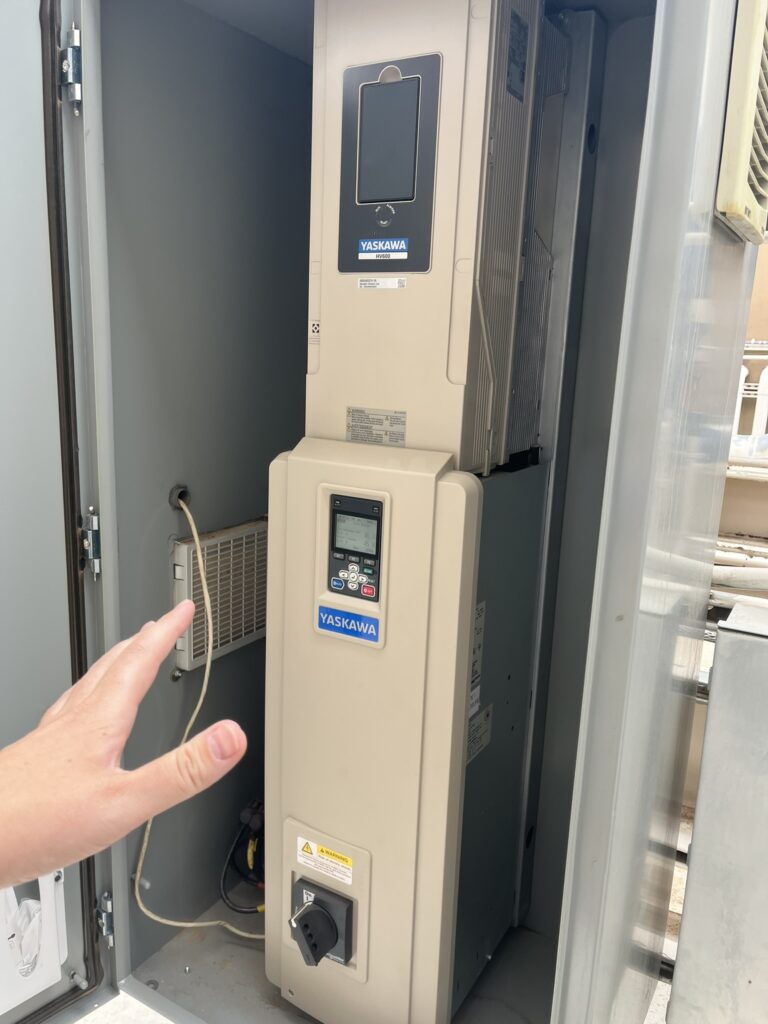
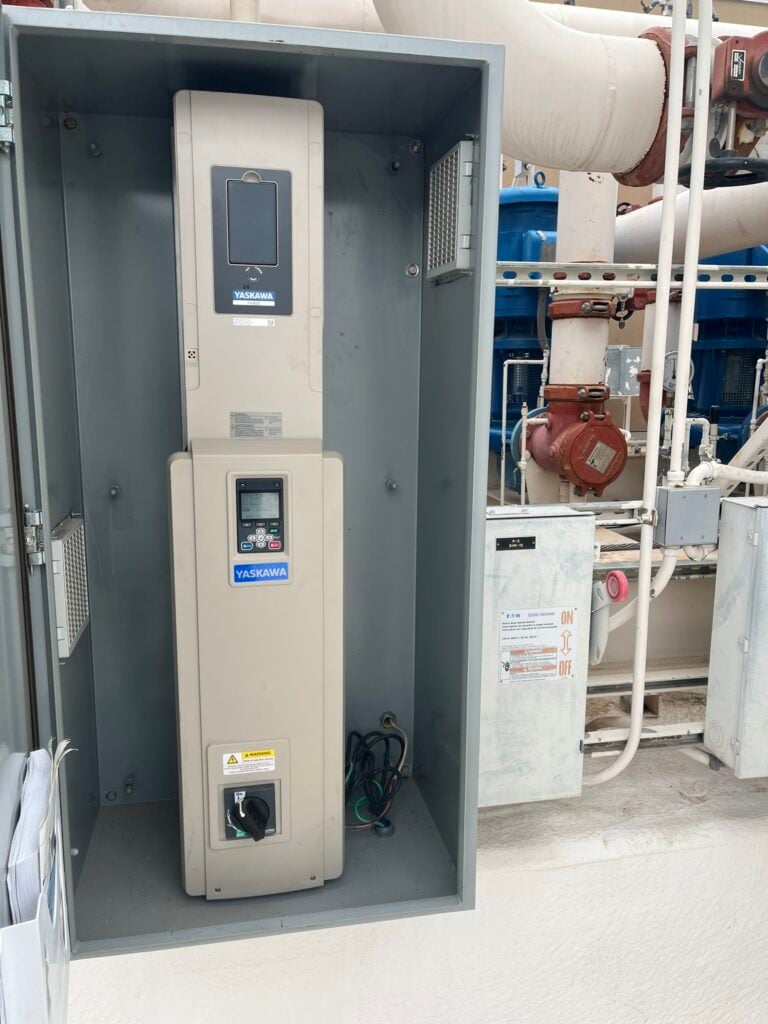
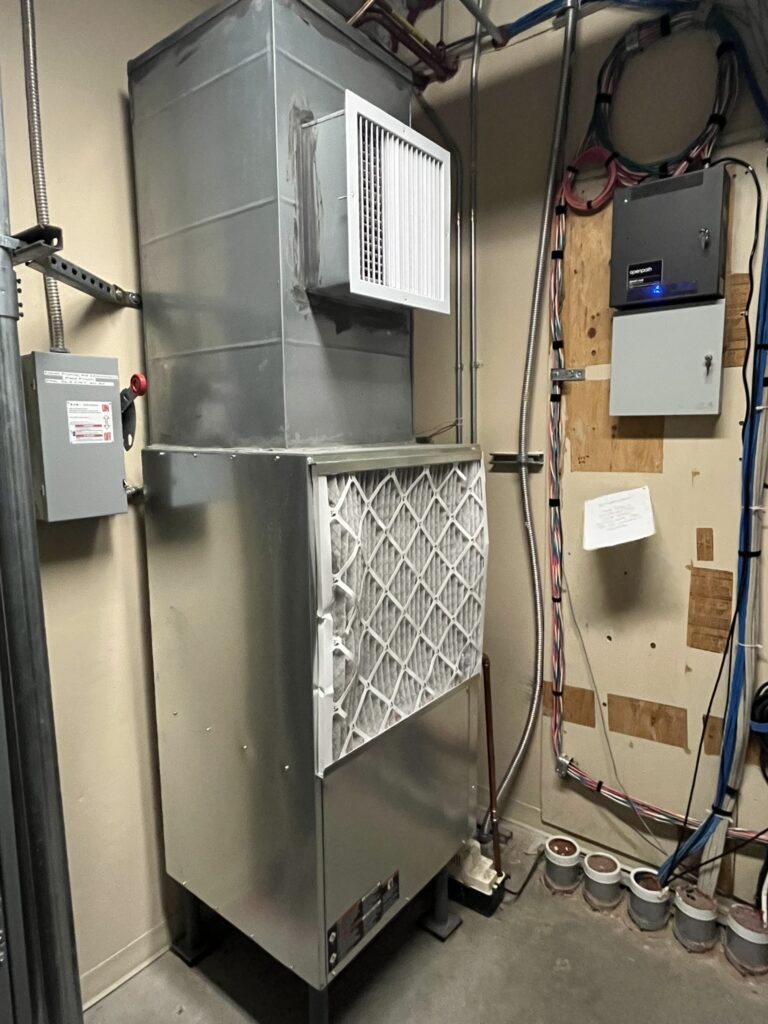
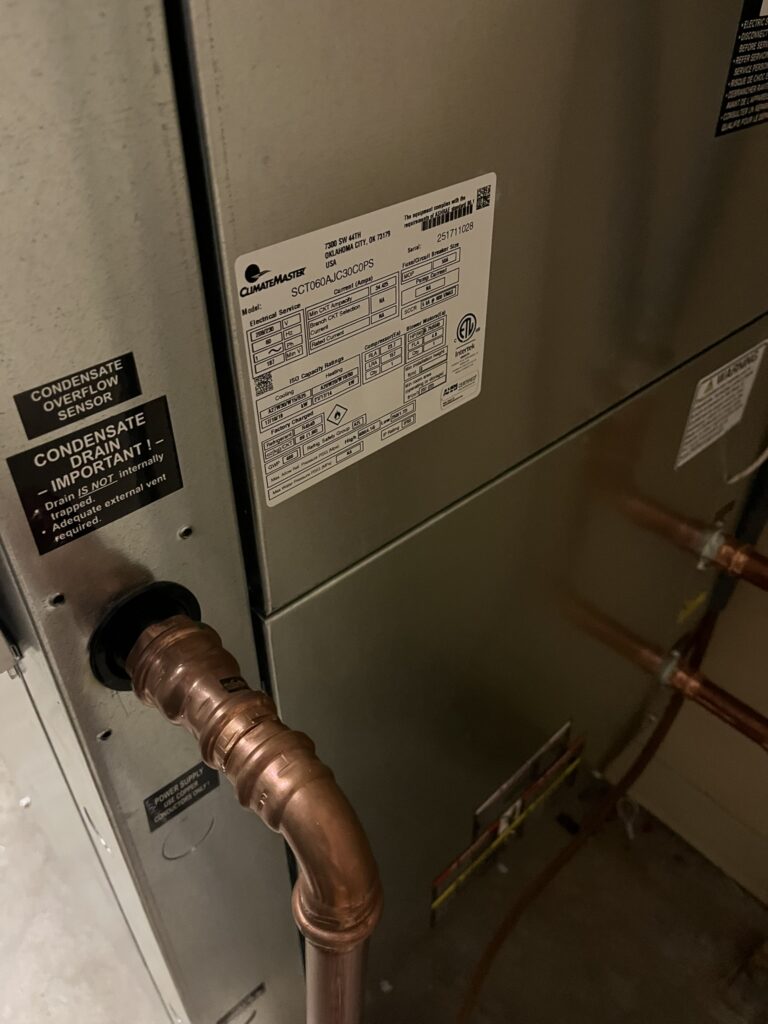
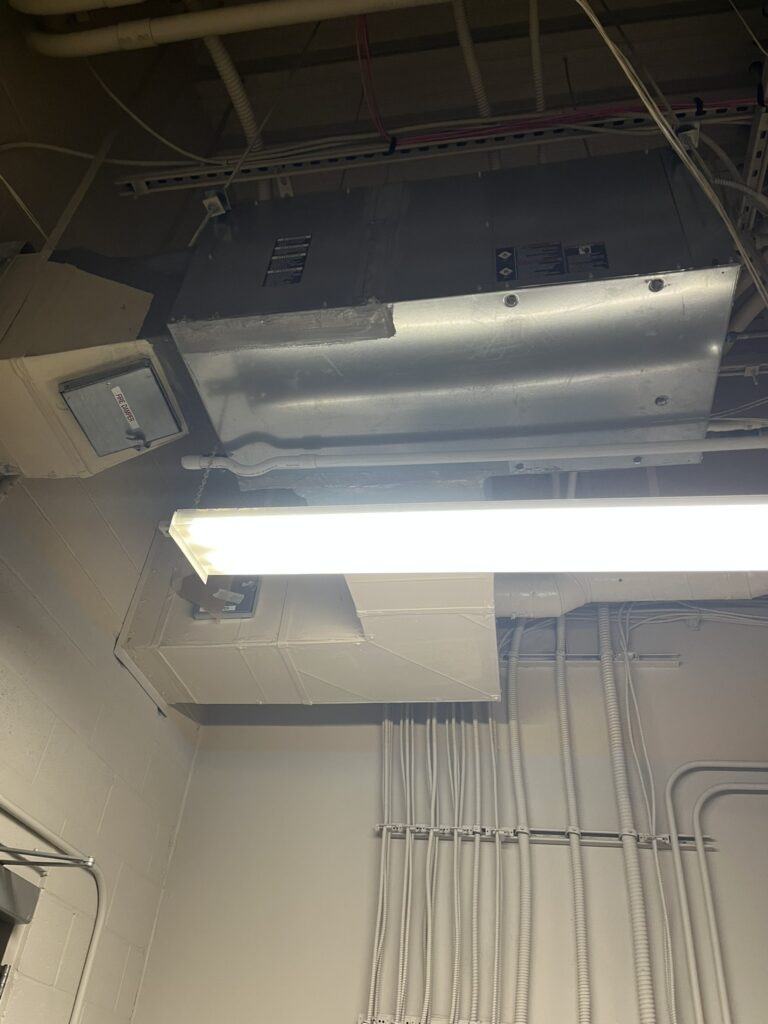
Photos from our own commercial projects across the Phoenix metro — equipment we installed, in buildings we service.
How the job typically runs.
We start with the operating reality of the site: public hours, staff-only areas, court or meeting schedules, security check-in, roof access, parking limits, and who can authorize work. Office hours are Mon–Fri 8–5, with 24/7 emergency service when a no-cooling call affects public operations, staff work areas, records rooms, or sensitive support spaces. Before dispatch, we try to understand whether the complaint is isolated to one room, one department, one rooftop unit, or a building-wide pattern, because that changes what we check first.
During the visit, we inspect the equipment in person before quoting. Flat-rate written quotes are provided after that look, and scopes are documented in writing. If the repair involves multiple options, we separate immediate restoration from recommended follow-up so a facilities lead can route approvals without rewriting the technical story. That may mean explaining the failed part, the affected zone, the access needed, and whether the system can operate temporarily while a longer repair or replacement path is reviewed.
The diagnostic/service-call fee is disclosed at booking and credited. For public buildings, we expect questions, documentation needs, and approval chains. We give the practical HVAC findings plainly, avoid overclaiming, and coordinate access so work does not collide with a council meeting, public program, voting-related use, or front-counter rush. When rooftops, ladders, locked rooms, or tenant-like department boundaries are involved, we make those access conditions part of the written scope instead of leaving them as assumptions.
- 01 Booking, with the diagnostic fee disclosed
- 02 In-person diagnosis with real readings
- 03 Written flat-rate quote before work begins
- 04 The work: repair, install, or maintenance
- 05 Startup, documentation, and warranty handoff
Queen Creek government facilities may fall under Town of Queen Creek permitting where incorporated, with some properties near the edges involving Maricopa County or Pinal County jurisdiction questions. Electrical service in the area is SRP, not APS, so replacement planning has to account for the correct utility when disconnects, electrical coordination, or load conversations come up. For equipment replacement, curb changes, gas piping changes, electrical modifications, or structural impacts, permitting may be required. A like-for-like service repair is different from changing equipment configuration, altering access, or modifying the supporting electrical or gas scope. We help document the HVAC scope, equipment data, and job conditions so the responsible party can route it through the right channel. We do not provide legal interpretations. Arizona workmanship expectations are published by the Registrar of Contractors here: ROC minimum workmanship standards.
Pricing, financing & the 10% military & first responder discount.
Cost drivers for a Queen Creek government building usually come down to access, equipment size, rooftop condition, controls, refrigerant type, electrical condition, after-hours scheduling, and how much documentation the approval path needs. A simple capacitor replacement in a small office suite is a different scope from troubleshooting a multi-zone rooftop unit serving public counters and staff offices during summer demand. Work may also take longer when roof access requires coordination, when public areas must stay open, or when parts of the building can only be interrupted outside normal operating hours. Financing is available where appropriate. We provide flat-rate written quotes after an in-person look, with documented scopes in writing. The diagnostic/service-call fee is disclosed at booking and credited. Veteran-owned & operated Yeti Pros also offers a 10% military, veteran & first responder discount; details are at military discount. Call (520) 556-8929.
- 01 Flat-rate written quote after an in-person look
- 02 Diagnostic fee disclosed at booking, credited to the repair
- 03 Financing available on replacements
- 04 2-year workmanship warranty; 1-year manufacturer parts warranty
- 05 10% military, veteran & first responder discount
Why a licensed HVAC contractor matters.
FAQs: HVAC for Government Buildings in Queen Creek, AZ.
Do you handle government building HVAC in Queen Creek with written documentation?
Yes. We service government building HVAC in Queen Creek and document findings, model and serial information when available, repair recommendations, and written scopes. That matters for town offices, public counters, meeting rooms, library-style spaces, and support buildings where approval may involve facilities staff, purchasing, or department leadership. We can note the affected equipment, the room or zone served, observed access conditions, and whether the issue appears urgent or better suited for planned follow-up. We are Veteran-owned & operated, AZ ROC #363372 · ROC #363423, and we come to you. We keep the HVAC scope clear and practical without claiming to provide legal, procurement, or code-certification services.
Can you work around public hours and meetings?
Yes. We ask about public access, staff-only areas, scheduled meetings, security procedures, parking, roof access, and the best contact before dispatch. Office hours are Mon–Fri 8–5, and 24/7 emergency service is available when a failure affects operations. For Queen Creek buildings with evening board meetings, public programs, or heavy counter traffic, we can separate diagnostic work, temporary restoration, and quoted repairs so the facility manager has usable information before scheduling disruptive work. If a room must remain usable for a specific meeting or service window, we include that timing in the coordination.
What HVAC problems are common in Queen Creek public buildings?
The most common calls are rooftop units that cannot keep up in sustained heat, thermostat schedules that do not match actual use, dirty coils from dust and construction activity, blower and capacitor failures, clogged condensate drains, and uneven temperatures between public counters, offices, and meeting rooms. In Queen Creek, the mix of newer low-rise buildings and older adapted support spaces creates different failure patterns, so we inspect the actual installation before writing the scope. We also look for return-air restrictions, blocked diffusers, worn electrical components, and control settings that may be making a mechanical problem feel worse.
Do Queen Creek government HVAC replacements need permits?
Some do. Permit needs depend on the property location, whether it is within incorporated Queen Creek, the type of equipment, and whether electrical, gas, structural, curb, or mechanical changes are involved. Queen Creek is mostly in Maricopa County with some Pinal County areas, and local jurisdiction should be confirmed for the specific site. We document the HVAC scope and equipment details so the responsible party can route permitting correctly. That documentation can include equipment information, access notes, utility considerations, and the basic field conditions that affect the replacement path.
Do you service SRP areas?
Yes. Queen Creek electrical service is SRP, not APS. That matters when a replacement or major repair involves disconnect condition, electrical coordination, equipment sizing, or utility-facing questions. We do not act as the utility, but we identify HVAC-side electrical concerns during service and document what we find. If a licensed electrical scope is needed beyond HVAC service, we call that out clearly. We also account for the practical field side of the work, such as rooftop disconnect condition, service access, and whether existing electrical components appear consistent with the equipment being served.
How do quotes work for public-sector approval?
We provide flat-rate written quotes after an in-person look. The diagnostic/service-call fee is disclosed at booking and credited. For government buildings, we write scopes in plain language with enough detail for approval routing: what failed, what is recommended, what equipment is affected, and what access or scheduling constraints matter. We can separate immediate repair from recommended maintenance or replacement planning when that helps the approval path. Repair workmanship is backed by a 2-YEAR written workmanship warranty, and repair parts carry a 1-YEAR manufacturer parts warranty.
Every major brand, serviced and installed.
Phoenix metro: Most days a tech is already working somewhere in the Valley, so same-day appointments happen when the schedule allows. After-hours emergencies are dispatched when a licensed tech is available — a real person answers and tells you the ETA on the call.
Call (520) 556-8929Request an estimate.
No pressure, no door knockers. We look at the HVAC system, tell you what it needs (and what it doesn’t), and put the number in writing.
Need government buildings in Queen Creek? A real person answers.
Other services we run in Queen Creek.
Government Buildings in nearby cities.
Looking for something else nearby? All HVAC services in Queen Creek