
Phoenix Metro
Variable-Speed & Inverter AC Installation in Phoenix.
- (520) 556-8929
- Serving the entire Phoenix metro — we come to you
- Office: Mon–Fri 8:00 AM – 5:00 PM · 24/7 emergency service
- 2-year workmanship warranty · 1-year parts warranty
- Veteran-owned & operated · residential + commercial
- 23 five-star Google reviews
Residential HVAC across the Valley.
Air conditioning, heating, and cooler work at homes across the Phoenix metro.
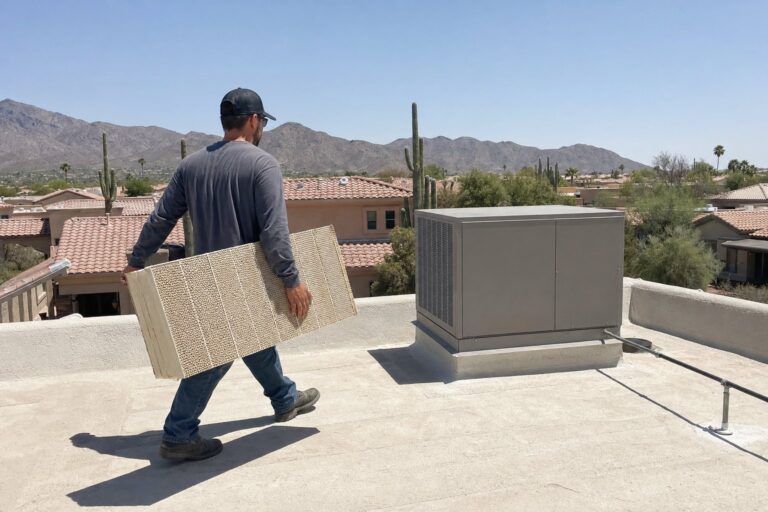
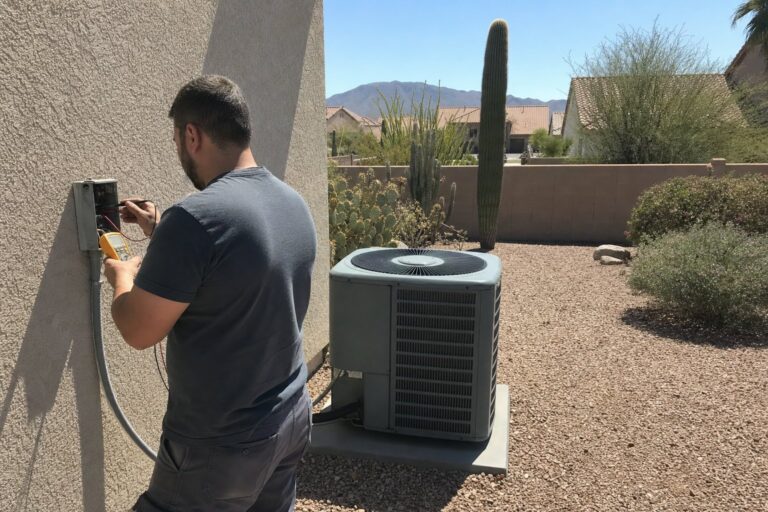
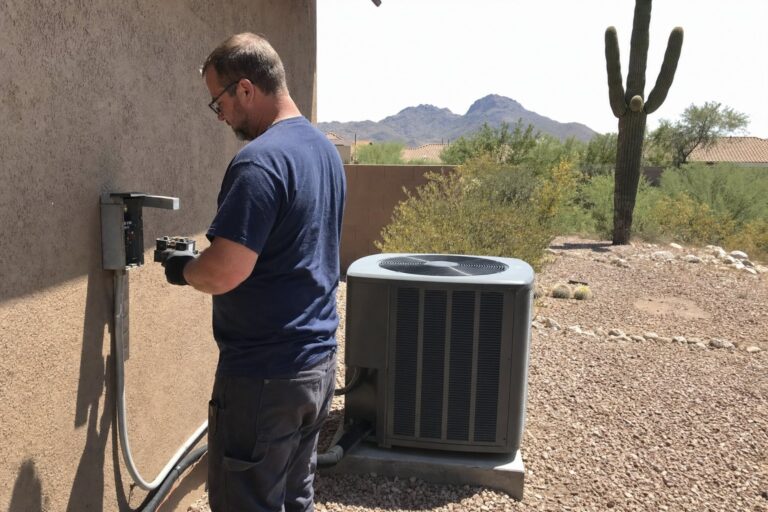
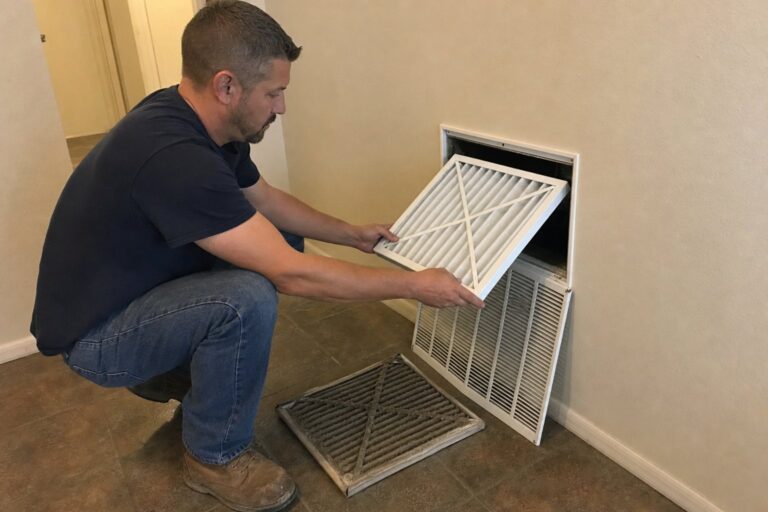
Variable-speed AC installation means replacing a standard on-off cooling system with equipment that can ramp output up and down instead of blasting at one speed. You need it when the house cools unevenly, feels clammy after short cycles, has loud starts, or you want steadier comfort from a Phoenix system that runs a lot of hours.
Why variable speed feels different
A standard single-stage AC is either on or off. That can work, but it is blunt. It starts hard, runs at full output, shuts off, then repeats. In a Valley home with heavy afternoon load, that pattern can leave rooms swinging between too warm and too cold. It can also move air poorly in the parts of the house farthest from the blower. Variable-speed and inverter systems are built to run longer at lower output, then ramp higher as the load rises. Instead of waiting for the house to drift and then hitting it hard, the system tries to hold the line.
The comfort difference often shows up in three places: temperature stability, airflow, and humidity control. Phoenix is dry much of the year, but monsoon season and tight modern homes can still make humidity noticeable. Longer, lower-speed runtime gives the indoor coil more time to pull moisture from the air when conditions call for it. It also keeps air mixing through the house, which can reduce hot rooms when the duct system is capable of delivering the air.
Variable speed does not fix every comfort problem by itself. If a room is hot because a duct is crushed, disconnected, undersized, or buried in a 150°F+ attic without enough insulation, a premium inverter condenser cannot magically deliver air to that room. If the return is too small, the system may ramp but still fight static pressure. That is why the installation has to include airflow readings and duct reality, not just equipment selection.
Cost honesty without numbers
Variable-speed AC installation costs more or less based on equipment size, inverter technology, indoor equipment match, control requirements, thermostat wiring, line-set condition, electrical changes, drain work, attic access, duct corrections, and how much of the old installation can be reused without creating problems. The quote can also change if the home needs return air improvements or static pressure correction before the system can run inside the manufacturer’s range.
We give flat-rate written quotes after an in-person look. The quoted number is what you pay unless we find something and stop to re-quote. The diagnostic or service-call fee is disclosed at booking and credited toward the repair. Installation workmanship is backed by a 2-YEAR written workmanship warranty. Repair parts carry a 1-YEAR manufacturer parts warranty. Work is held to the AZ ROC Minimum Workmanship Standards. Financing is available. We also offer a 10% military, veteran & first responder discount.
If you are comparing inverter equipment against other SEER2 options, the SEER2 upgrade cost guide explains the tradeoffs without pretending one answer fits every house. To book an in-person quote, use contact or call (520) 556-8929. Office hours are Mon-Fri 8-5, with 24/7 emergency service.
Inverter equipment and the Phoenix duty cycle
Inverter AC equipment changes compressor speed electronically. That lets the system match cooling output more closely to what the home needs at that moment. In Phoenix, that matters because the load is not the same at 9 a.m., 3 p.m., and after sunset. The system may spend many hours at partial capacity, then ramp hard during the hottest part of the day. That can mean quieter operation and less temperature swing when the system is sized and commissioned correctly.
The word inverter gets used loosely, so the details matter. Some systems are true variable-capacity designs with communicating controls. Some are multi-stage. Some indoor blowers have variable-speed capability, while the outdoor unit may not be fully variable. The quote should explain what equipment is being installed, how it will be controlled, what thermostat or communicating control is required, and what service access will look like later. A variable-speed system should not be treated like a basic swap-out.
Yeti Pros looks at the whole installation before recommending inverter equipment. We check the old system size, indoor coil space, line-set path, electrical requirements, return sizing, supply duct layout, filter setup, thermostat wiring, and the comfort complaint that started the call. Variable speed is often a strong choice for homeowners who want quieter, steadier cooling across the Phoenix metro. It is not always the right use of the budget if the house first needs duct correction, insulation work, or a simpler high-efficiency system installed properly.
How the job actually goes
The visit starts at the equipment and the rooms giving you trouble. We come to you, because Yeti Pros is a service-area business with no street address for customer visits. We inspect the condenser location, indoor equipment, coil access, line set, drain, disconnect, breaker, thermostat wiring, filter rack, supply and return layout, and any signs of airflow restriction. If the old system runs, we take readings that help us understand the job: temperature split, static pressure, amperage, refrigerant-side readings when appropriate, and blower behavior. If it does not run, we still check the installation conditions that will decide whether variable speed makes sense.
After the in-person look, we give a flat-rate written quote before work starts. The quoted number is what you pay unless we find something and stop to re-quote. The diagnostic or service-call fee is disclosed at booking and credited toward the repair. For a variable-speed installation, the written scope should be clear about the outdoor unit, indoor coil or air handler, controls, thermostat, drain work, electrical work, startup checks, and any duct or return corrections included.
On install day, we remove the old equipment, prepare the new set, connect the refrigerant lines, pressure test, evacuate, set the charge using the manufacturer’s procedure, wire the controls, configure the stages or communicating system, verify airflow, and test operation at low and high output where the equipment allows. We clean the work area and hand off the documents you need: equipment information, warranty paperwork, operating notes, and the basics of how the control should be used. Variable-speed equipment is more capable, but it also deserves a better startup. Skipping commissioning is how expensive equipment gets blamed for a cheap installation.
For the broader replacement category, see our AC installation service. Yeti Pros is Veteran-owned & operated, licensed as AZ ROC #363372 · ROC #363423.
When variable speed is the right call
These are the patterns that usually lead Phoenix homeowners to ask about variable-speed AC. The table is a starting point, not a substitute for measuring the system.
| What you notice | What it usually means | Variable speed or something else? |
|---|---|---|
| Temperature swings between cycles | The current system may be single-stage, oversized, or poorly controlled | Variable speed can help if sizing and airflow are right |
| Bedrooms are hot while main areas are cold | Duct balance, return path, or load differences may be driving it | Check ducts first; variable speed may be part of the fix |
| System starts loudly and hits hard | Full-output starts are normal for basic equipment | Inverter equipment can reduce the harsh feel |
| House feels sticky during monsoon weather | Short cycles may not be giving the coil enough runtime | Variable speed can improve moisture removal when set up correctly |
| You want a quieter premium replacement | Lower-speed runtime and better controls may fit the goal | Good candidate if budget and duct conditions support it |
Phoenix-metro realities that change the install
Variable-speed systems live or die by airflow, and Phoenix homes make airflow work harder. Most homes here are slab-on-grade, with no basements, so ducts are usually in the attic or above conditioned space. Attics can hit 150°F+, which means duct leakage, poor insulation, and bad transitions matter more than they might elsewhere. A variable-speed blower can adjust, but it cannot overcome a duct system that is too restricted without consequences. High static pressure can make the system noisier, reduce capacity, and shorten equipment life.
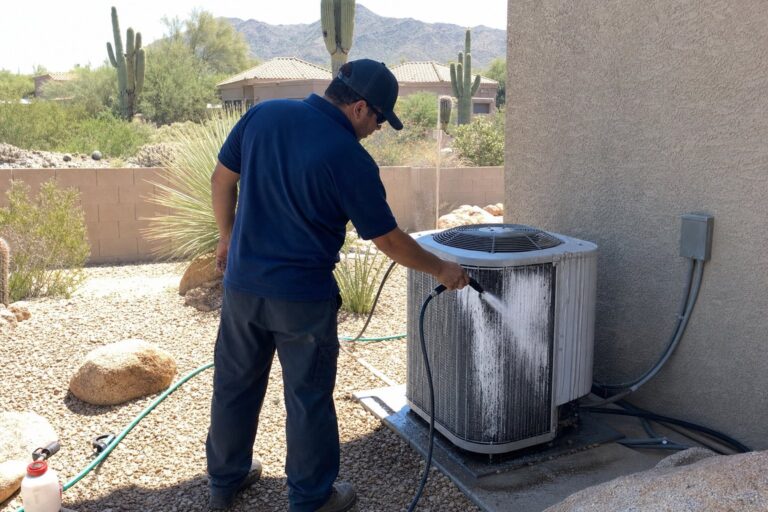
Outdoor placement matters too. Inverter condensers need good clearance and clean coils because they are rejecting heat into extreme outdoor air. Dust, landscaping debris, and tight side yards can make a high-end unit struggle. Monsoon winds can pack coils with dirt. Electrical work also needs attention because variable-speed equipment uses control boards and electronics that do not appreciate sloppy connections or poor protection. The install has to be clean, dry, accessible, and serviceable.
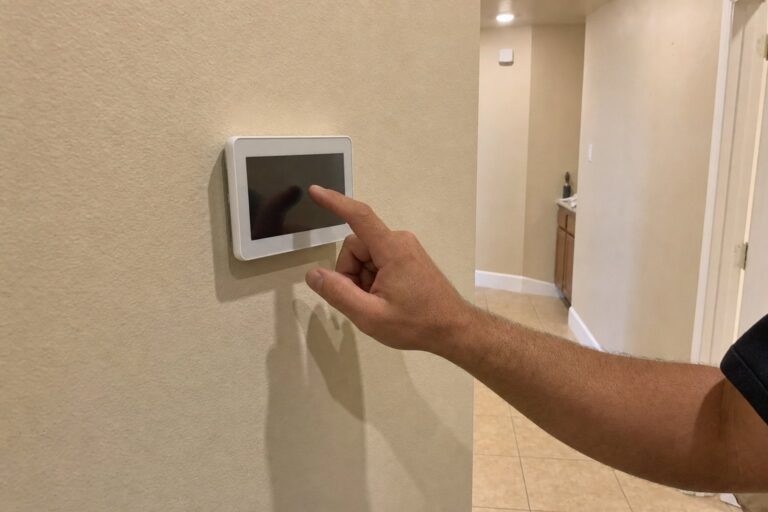
Across the Phoenix metro, we also see thermostat and control issues. A variable-speed system may need a communicating control or specific thermostat wiring to use its features. Reusing old thermostat wire without checking conductor count, condition, and routing can turn a premium system into a compromise. We look at where the thermostat is installed, whether it is affected by sun or supply air, and whether the control strategy matches how the home is used. The Valley rewards equipment that can modulate, but only when the field work supports the technology.
Straight answers
Is variable-speed AC better than two-stage AC?
It can be, but better depends on the house and the goal. Variable speed gives the system more range and smoother control. Two-stage is simpler and can still be a strong upgrade. We compare both after checking load, ducts, controls, and access.
Will inverter AC lower my electric bill?
It can reduce energy use when the system is correctly sized, installed, and allowed to run at lower output. Savings are not automatic. If the ductwork leaks badly or the airflow is wrong, the equipment cannot deliver its rated performance.
Does variable speed help with humidity in Phoenix?
Yes, especially during monsoon periods or in tighter homes where short cycling leaves the air feeling damp. Longer low-speed runs give the coil more time to remove moisture. The setup has to be correct, including airflow and control settings.
Can you replace my current AC with variable speed in one visit?
Sometimes, but the inspection comes first. We need to verify electrical requirements, indoor equipment fit, line-set condition, thermostat wiring, and duct performance. After that in-person look, we provide the written quote and schedule the installation around the actual scope.
Permits and inspections
Most repairs are ordinary service work; bigger scopes can involve city permitting. We perform our work to code, pull the permits our scope requires, and put what we did in writing.
What's covered
Workmanship is covered for two full years, in writing, and repair parts carry a 1-year manufacturer parts warranty — we document installs and repairs so those claims stay simple to make
Why a licensed HVAC contractor matters.
Every major brand, serviced and installed.




Phoenix metro: Most days a tech is already working somewhere in the Valley, so same-day appointments happen when the schedule allows. After-hours emergencies are dispatched when a licensed tech is available — a real person answers and tells you the ETA on the call.
Call (520) 556-8929Request an estimate.
No pressure, no door knockers. We look at the HVAC system, tell you what it needs (and what it doesn’t), and put the number in writing.