
Phoenix Metro
HVAC Damper Installation & Zoning Repair in Phoenix.
- (520) 556-8929
- Serving the entire Phoenix metro — we come to you
- Office: Mon–Fri 8:00 AM – 5:00 PM · 24/7 emergency service
- 2-year workmanship warranty · 1-year parts warranty
- Veteran-owned & operated · residential + commercial
- 23 five-star Google reviews
Residential HVAC across the Valley.
Air conditioning, heating, and cooler work at homes across the Phoenix metro.
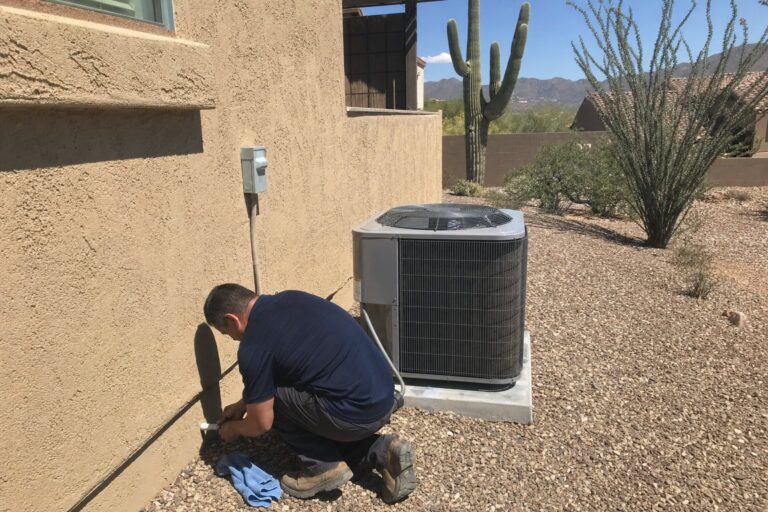
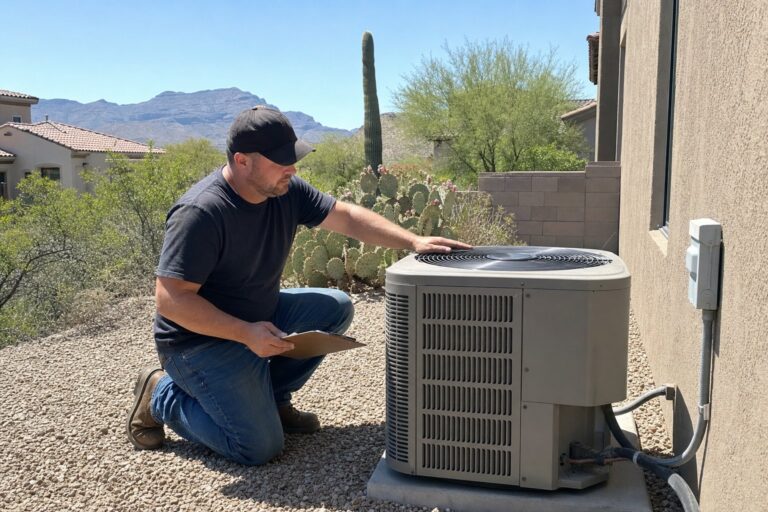
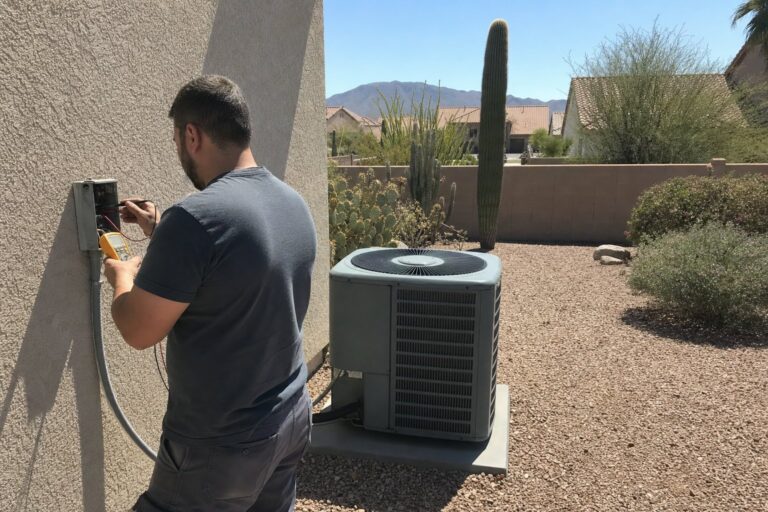
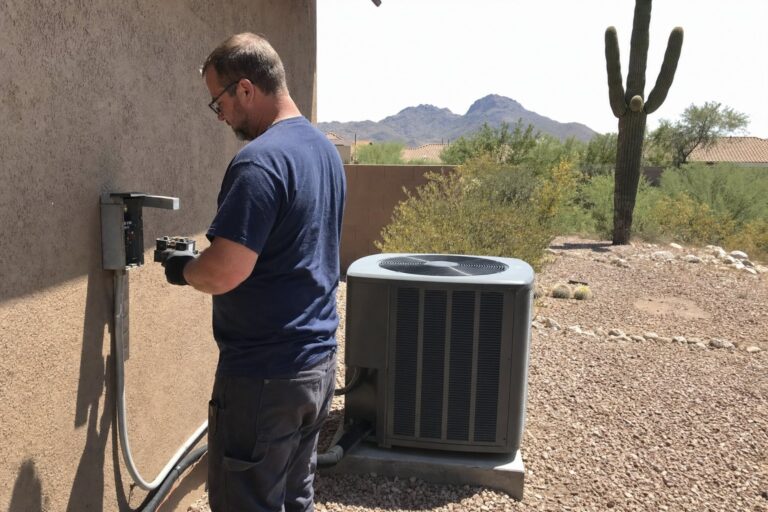
Damper installation and zoning repair means fixing or adding the controlled doors inside your duct system that send air to the right part of the house.
Another stays hot.
.
But airflow goes nowhere useful.
We test the controls, ducts, motors, and static pressure before quoting the repair.
Why zoning fails in Valley houses
Zoning looks simple from the thermostat: upstairs calls, downstairs rests, air goes where it should. In the attic, it is less simple. A zone system depends on dampers, motors, a zoning board, discharge-air sensing, bypass strategy, duct sizing, and equipment that can handle changing airflow. When one part is wrong, the whole house starts acting strange.
.
.
.
.
.
Two-story homes in the Phoenix metro make the problem obvious. Heat rises inside the house, sun hits upstairs walls and rooflines harder, and ducts sit in attics that hit 150°F+. If the upstairs zone is undersized, the damper is stuck, or the zoning board is not commanding correctly, the upstairs can lag all afternoon while the downstairs gets overcooled. People often blame the thermostat first. Sometimes that is right. Often the thermostat is only reporting a duct and control problem farther upstream.
Damper installation also has to respect equipment airflow. Closing too many ducts against a standard single-stage system can raise static pressure, increase noise, freeze coils, or stress the blower. A round blade that does not open fully can act like a hidden restriction. A motor that stalls halfway can make the board think the zone is open while the duct is still mostly blocked. Good zoning is not just cutting in a damper. It is deciding whether the ductwork, equipment, and controls can move air safely and quietly. This is why zoning belongs with full residential HVAC diagnostics, not handyman guesswork.
How the job actually goes
We start by listening to the pattern. Which zone is wrong, at what time of day, under heating or cooling, and after which thermostat call? Then we test instead of guessing. We check thermostat signals, zoning board outputs, damper motor voltage, damper blade movement, transformer condition, airflow at registers, filter condition, blower settings, temperature split, and static pressure where access allows. If the attic is the control center, we get into the attic and look at the actual duct layout.
That attic work matters. We trace trunks and branches, identify which damper feeds which area, and look for hand-written labels that no longer match the house. We check whether the actuator arm moves the blade or just moves itself, whether a set screw has slipped on the shaft, whether insulation is hiding a disconnected section, and whether flex duct is pinched where someone stored a box or stepped across a run. In hot weather, motors can be too hot to handle comfortably, plastic covers can be brittle, and old wire splices can fail when they are moved. Those details change the repair.
Failed Damper Repair
May be a new actuator, blade correction, wiring repair, board correction, or a replacement damper section.
Bad Layout Correction
May be adding a damper, moving one, correcting a bypass, or changing the zoning strategy.
For two-story comfort complaints, we also check whether the issue is really duct leakage, return shortage, insulation, solar gain, or equipment capacity. A damper cannot fix every upstairs-hot, downstairs-cold house. It can fix the right kind of zoning failure.
Before work starts, you get a flat-rate written quote after the in-person look. The quoted number is what you pay unless we find something hidden and stop to re-quote. The diagnostic or service-call fee is disclosed at booking and credited toward the repair.
During the Work, We:
.
.
.
.
.
.
.
.
When Replacing or Adding a Damper Section, We:
.
.
So the blade does not bind.
.
For future service.
At handoff, we show what was replaced or adjusted and how each zone should behave. To book the visit, use contact or call (520) 556-8929.
What your zoning symptoms usually mean
Zoning problems create confusing symptoms because the thermostat, equipment, and ductwork all interact. This table helps separate a likely damper issue from a broader HVAC problem.
| What you notice | What it usually means | Damper service or something else? |
|---|---|---|
| Upstairs stays hot while downstairs gets cold | Upstairs zone may not be opening fully, may be undersupplied, or may have attic duct losses | Damper and duct diagnosis first |
| One thermostat calls but no air comes out | Zone board, actuator, wiring, or damper blade may have failed | Likely zoning repair |
| Ducts boom or whistle when one zone runs | Static pressure may be too high with zones closed | Zoning design and airflow correction |
| The system starts and stops quickly | Airflow may be restricted, controls may be miswired, or equipment may be oversized for a small zone | Full system diagnosis |
| Both zones are weak all the time | Filter, blower, coil, duct leakage, or equipment issue may be present | Not just a damper call |
Phoenix-metro realities that change zoning work
Arizona homes are slab-on-grade, with no basements, so most zone dampers, duct junctions, and boards are in attic spaces. That means service access can be tight, hot, dusty, and crowded by flex duct, insulation, trusses, low roof pitch, and electrical runs. In summer, attics can hit 150°F+, and that heat punishes plastic gears, actuator motors, wiring, and control boards. A damper that looked fine in mild weather can fail when attic temperatures climb.
The Phoenix metro also has a lot of two-story homes where zoning was used to make a difficult layout feel manageable. Sometimes it was done well. Sometimes it was added to ductwork that was already marginal. When a system has one small downstairs zone and one large upstairs zone, the blower may not have a comfortable airflow path in every operating mode. That is where static pressure readings matter. Without them, a damper repair can hide a bigger airflow problem.
Dust and monsoon conditions matter too. Dust can settle around damper blades and linkages. Roof and attic work can disturb insulation. Monsoon power events can expose weak transformers or boards. A brief outage or voltage dip may not destroy a control board outright, but it can reveal loose terminals, tired relays, or a transformer that was already running warm. We also look for ducts pinched by storage, straps, or old repairs, because a damper may be blamed when the air is actually being choked by the duct run.
Older installations can have another problem: nobody left a map. One damper may feed a bedroom and a hallway, another may feed half an upstairs loft, and the board labels may say only zone one and zone two. We use thermostat calls, airflow changes, and the physical duct route to sort that out before replacing parts. If a bypass duct is present, we check whether it is actually moving relief air or just dumping conditioned air back where it should not go.
We are veteran-owned and operated, AZ ROC #363372 · ROC #363423. We are a service-area business with no street address; we come to you. Office hours are Mon–Fri 8–5, with 24/7 emergency service when a zoning failure leaves part of the house without workable cooling.
What drives the quote
The quote depends on:
.
.
.
.
.
.
.
.
Whether the repair is a single failed motor or a zoning layout that needs to be rebuilt.
A simple actuator replacement is different from cutting in a new damper in a tight attic trunk with poor access.
You get a flat-rate written quote after we inspect the system in person. The quoted number is what you pay unless we find something and stop to re-quote. The diagnostic or service-call fee is disclosed at booking and credited toward the repair. Financing is available when the scope fits, and there is a 10% military, veteran & first responder discount.
Workmanship Warranty
Workmanship is covered by a 2-YEAR written workmanship warranty and held to the AZ ROC Minimum Workmanship Standards.
Parts Warranty
Repair parts carry a 1-YEAR manufacturer parts warranty.
If your main complaint is a two-story temperature split, our upstairs hot, downstairs cold guide explains the same decision tree we use in the field: zoning, ductwork, insulation, airflow, and load all have to be separated before money is spent.
Straight answers
Can you add dampers to my existing HVAC system?
Sometimes. We need to see the duct layout, equipment type, blower capability, and static pressure before saying yes. Adding dampers to ductwork that cannot handle closed zones can create noise, short cycling, or equipment stress. If the system can support zoning, we quote the right controls and duct changes.
Why is my upstairs hot and downstairs cold?
It may be a stuck upstairs damper, failed actuator, bad zone board, poor duct design, attic duct loss, return-air shortage, insulation issue, or solar gain. The pattern matters. We test the zone controls and airflow so we are not replacing a damper when the real problem is duct or load related.
What is a zoning board?
A zoning board is the control panel that takes thermostat calls and tells dampers and equipment what to do. If it fails, one zone may not open, the equipment may not start correctly, or multiple zones may fight each other. We test board inputs and outputs before replacing it.
How do I schedule damper installation or repair?
Call (520) 556-8929. We will disclose the diagnostic or service-call fee at booking, come to you, test the zoning system, and give a written flat-rate quote before work starts. Office hours are Mon–Fri 8–5, with 24/7 emergency service.
Permits and inspections
Most repairs are ordinary service work; bigger scopes can involve city permitting. We perform our work to code, pull the permits our scope requires, and put what we did in writing.
What's covered
Workmanship is covered for two full years, in writing, and repair parts carry a 1-year manufacturer parts warranty — we document installs and repairs so those claims stay simple to make
Why a licensed HVAC contractor matters.
Every major brand, serviced and installed.




Phoenix metro: Most days a tech is already working somewhere in the Valley, so same-day appointments happen when the schedule allows. After-hours emergencies are dispatched when a licensed tech is available — a real person answers and tells you the ETA on the call.
Call (520) 556-8929Request an estimate.
No pressure, no door knockers. We look at the HVAC system, tell you what it needs (and what it doesn’t), and put the number in writing.