
Phoenix Metro
Furnace Installation & Replacement in Phoenix.
- (520) 556-8929
- Serving the entire Phoenix metro — we come to you
- Office: Mon–Fri 8:00 AM – 5:00 PM · 24/7 emergency service
- 2-year workmanship warranty · 1-year parts warranty
- Veteran-owned & operated · residential + commercial
- 23 five-star Google reviews
Residential HVAC across the Valley.
Air conditioning, heating, and cooler work at homes across the Phoenix metro.
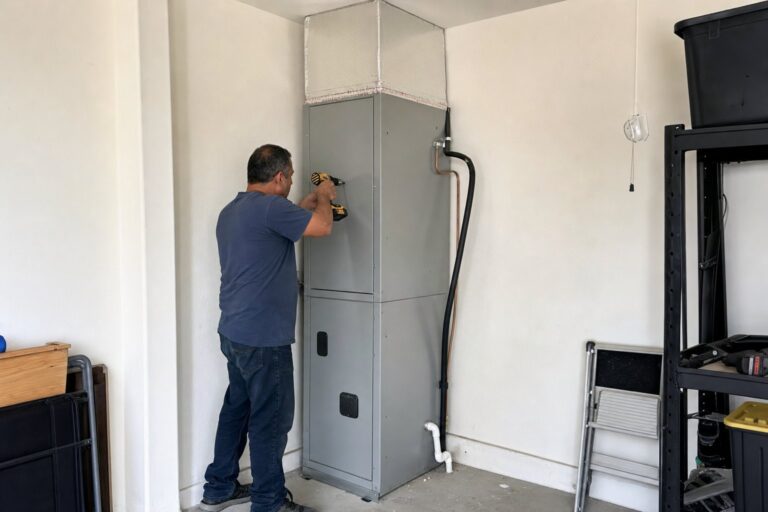
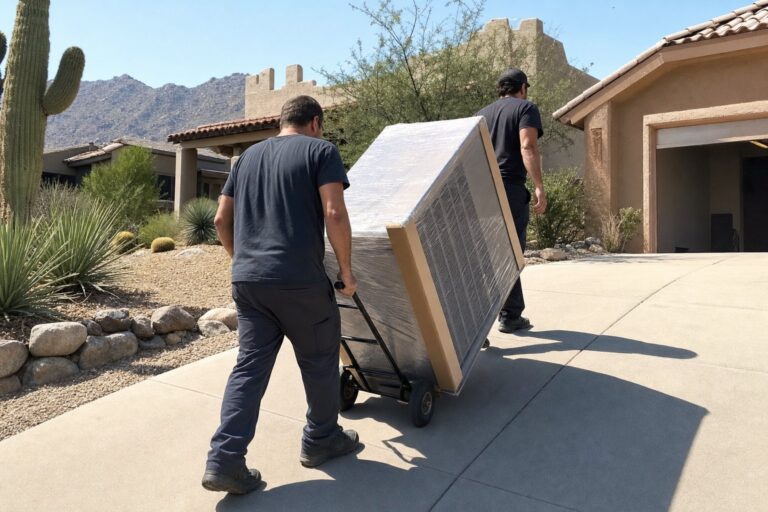
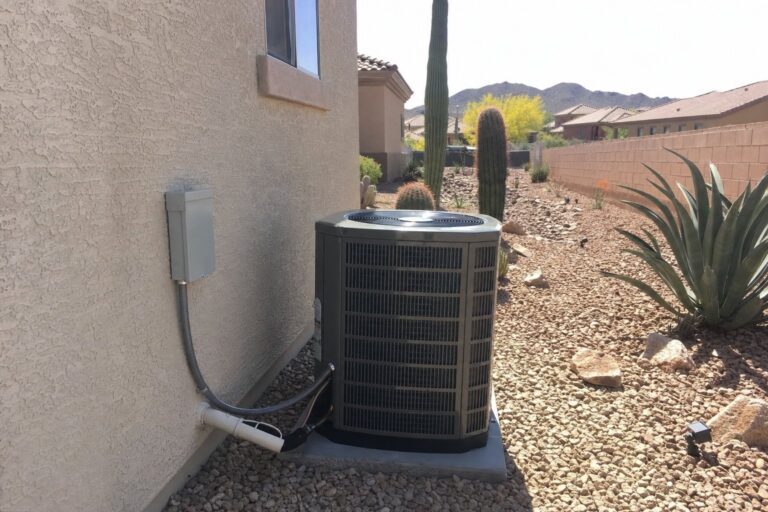
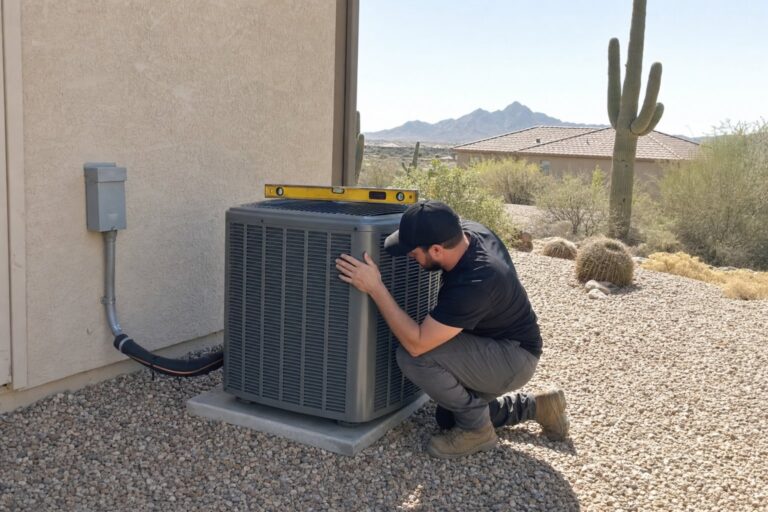
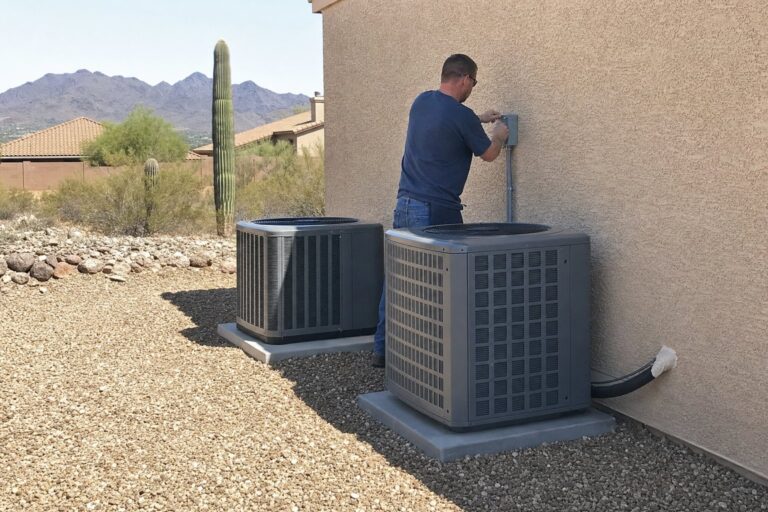
Furnace installation is the replacement of a gas heating unit that is unsafe, unreliable, poorly matched, or no longer worth repairing.
When ignition problems repeat.
When the heat exchanger or cabinet condition is a concern.
When airflow is wrong.
When you are pairing heat replacement with AC work.
We size, inspect, and quote the job after seeing the home.
Furnace replacement in a mild-winter market
Phoenix does not use heat the way colder markets do, and that changes the replacement conversation. A furnace here may run only part of the year, but when it does run it still needs safe combustion, correct venting, proper airflow, and controls that work every time. Light seasonal use can hide problems because the unit sits idle for long stretches, then gets asked to start cleanly on the first cold morning.
The big decision is not just brand or cabinet size. It is whether the home is better served by an 80% furnace, a higher-efficiency condensing furnace, a heat pump, or a furnace replacement paired with AC replacement.
80% Furnace
An 80% furnace can be the practical fit when venting, cost, equipment location, and runtime point that way.
96% Condensing Furnace
A 96% furnace can make sense in certain homes, but it brings condensate handling, venting requirements, and installation details that do not disappear just because the heating season is short.
The right answer comes from the house, not a generic efficiency pitch.
Arizona homes are slab-on-grade, so furnaces and air handlers are commonly in closets, garages, attics, or packaged with cooling equipment rather than tucked into basements. Ducts often run through attics that hit 150°F+.
If the furnace is paired with an existing AC coil and duct system, we have to check:
- Cabinet fit
- Airflow
- Drain setup
- Filter access
- Gas piping
- Venting
- Electrical
- Service clearance
Veteran-owned & operated Yeti Pros handles furnace installation inside residential HVAC work, with the same practical standard we bring to residential service: install what fits the house and explain why.
How the job actually goes
The first visit starts with the reason you are replacing the furnace. Reasons that point to different scope include:
Repeated ignition failures.
High-limit trips.
Blower problems.
Rust or cabinet damage.
Venting concerns.
Age or comfort complaints.
Pairing with AC replacement.
We inspect the following:
- Existing furnace
- Gas line
- Vent
- Electrical
- Thermostat wiring
- Return-air path
- Supply plenum
- Filter setup
- Equipment location
- AC coil or air handler connection (when present)
- Access (because a tight attic or closet changes labor and equipment choices)
We take measurements and readings where they matter. This can include:
- Temperature rise
- Static-pressure clues
- Blower operation
- Gas and venting observations
- Duct condition
- Fitment around the coil
Existing AC Coil
If the AC is staying, the new furnace has to work with it.
New AC System
If the AC is also being replaced, we can plan the system as a matched job instead of forcing new equipment onto old transitions. Pairing furnace and AC work can reduce duplicated labor and avoid mismatched airflow, but it is not automatic; we explain the tradeoffs after seeing the setup.
After the in-person look, you get a flat-rate written quote. The quoted number is what you pay unless we find something and stop to re-quote. The diagnostic or service-call fee is disclosed at booking and credited toward the installation or approved repair work.
The quote identifies:
- The equipment
- Major installation scope
- Venting approach
- Thermostat or control work
- Removal of old equipment
- Any duct, drain, or access issue that affects the job
During installation, we follow these steps:
Remove the old furnace.
Set and secure the new unit.
Connect gas, venting, electrical, controls, cabinet transitions, filter access, and the coil or plenum as quoted.
Test ignition, safeties, blower operation, temperature rise, thermostat control, and heating operation.
Handoff includes:
- The written workmanship warranty
- Manufacturer parts information
- Equipment documents
- A plain explanation of filter access and startup behavior
To schedule a look in the Phoenix metro, use contact or call (520) 556-8929.
Replacement signs and equipment decisions
Not every heating complaint means immediate replacement. Some furnaces need a repair. Others have enough age, condition, access, airflow, or pairing issues that replacement is the cleaner decision. This table shows how we sort the call.
| What you notice | What it usually means | Repair or installation? |
|---|---|---|
| Heat starts, then shuts off quickly | Limit trip, airflow issue, flame-sensing problem, or control fault | Diagnose first |
| Ignition parts fail repeatedly | Combustion, control, grounding, burner, or age-related issue | Repair may be possible, replacement may be smarter |
| Furnace is being replaced with AC | Shared blower, coil, duct, and controls need matching | Plan both systems together |
| Old venting or cabinet condition looks rough | Safety, corrosion, or fitment concerns may be present | Replacement discussion is likely |
| Rooms heat unevenly | Duct design, airflow, blower, or insulation may be the issue | Installation plus duct review |
| You are choosing 80% vs 96% | Venting, condensate, runtime, location, and budget drive the choice | House-specific selection |
Phoenix-metro realities
Heating in the Phoenix metro is easy to underrate until the house will not warm up. Because the season is shorter, some furnaces go years with minimal attention. That can leave:
- Burners dirty
- Igniters weak
- Blower wheels dusty
- Filters neglected
- Vents uninspected
When replacement finally comes up, the equipment may be buried in a closet, garage platform, or attic corner that was never friendly to service.
Attic installs deserve extra care. Ducts and equipment near 150°F+ summer attic air need sealed transitions, proper clearance, and service access that will still make sense later.
A furnace that looks fine in a brochure can be a poor fit if:
- The cabinet cannot be serviced
- The filter is awkward
- The coil transition is sloppy
- The vent route is wrong
Arizona’s slab-on-grade construction means we do not have a basement to make everything easy. The mechanical layout has to work where the house gives us room.
Efficiency choice is also local. A 96% condensing furnace needs condensate handling and different venting than a standard 80% unit. In a cold climate, the fuel savings conversation may dominate.
In the Valley, the shorter heating season means these factors matter heavily:
- Installation practicality
- Equipment pairing
- Comfort
- Long-term serviceability
Paired AC Replacement
If you are replacing AC at the same time, the furnace blower and coil match become a major part of the design.
Existing AC System
If the AC is staying, we pay close attention to compatibility so the new furnace does not create a cooling problem next summer.
What drives the written quote
A furnace installation quote depends on:
- Equipment size
- Efficiency type
- Location
- Access
- Venting
- Gas piping
- Electrical
- Thermostat controls
- Filter arrangement
- Duct transitions
- AC coil compatibility
- Old equipment removal
- Whether furnace replacement is paired with AC work
A closet 80% swap with clean venting is a different job from an attic condensing furnace with new vent routes, condensate planning, and coil transition work.
Yeti Pros gives flat-rate written quotes after an in-person look. The quoted number is what you pay unless we find something and stop to re-quote. The diagnostic or service-call fee is disclosed at booking and credited toward the installation or approved repair. For planning context before the visit, read our furnace replacement cost guide, then expect the real number to come from the actual house and equipment fit.
Workmanship Warranty
Work is backed by a 2-YEAR written workmanship warranty.
Manufacturer Parts Warranty
Repair parts carry a 1-YEAR manufacturer parts warranty.
- Our work is held to the AZ ROC Minimum Workmanship Standards.
- Yeti Pros is Veteran-owned & operated, AZ ROC #363372 · ROC #363423.
- Financing is available.
- We offer a 10% military, veteran & first responder discount.
- We are a service-area business with no street address; we come to you.
- Office hours are Mon–Fri 8–5, with 24/7 emergency service.
The sizing conversation matters more here than the brand conversation. Valley winters are short and mild, and an oversized furnace short-cycles through them — loud starts, uneven rooms, and wear the equipment never needed. We size from the load calculation, not the old nameplate, because the last furnace was often guessed bigger by a builder with a spreadsheet.
Straight answers
Should I install an 80% or 96% furnace in Phoenix?
It depends on venting, condensate routing, equipment location, heating runtime, and what else is being replaced. A 96% furnace is not automatically the better fit in a mild-winter market. We compare the real installation requirements before recommending one.
Is it smart to replace the furnace and AC together?
Sometimes. If the AC coil, blower, cabinet, and ducts are tied closely to the furnace, doing both can make the system cleaner and reduce duplicated labor. If the AC is newer and compatible, keeping it may make sense.
Do Phoenix furnaces need sizing?
Yes. Mild winters do not remove the need for correct sizing. An oversized furnace can short-cycle and feel uneven. An undersized or airflow-starved furnace can struggle and trip limits. We look at the home, duct system, and equipment match.
Can you replace a furnace in an attic?
Yes, when access, clearance, venting, gas, electrical, and service space can be handled correctly. Attic work is common here, but it has to account for heat, duct connections, and future maintenance. We inspect those details before quoting.
Permits and inspections
Most repairs are ordinary service work; bigger scopes can involve city permitting. We perform our work to code, pull the permits our scope requires, and put what we did in writing.
What's covered
Workmanship is covered for two full years, in writing, and repair parts carry a 1-year manufacturer parts warranty — we document installs and repairs so those claims stay simple to make
Why a licensed HVAC contractor matters.
Every major brand, serviced and installed.


Phoenix metro: Most days a tech is already working somewhere in the Valley, so same-day appointments happen when the schedule allows. After-hours emergencies are dispatched when a licensed tech is available — a real person answers and tells you the ETA on the call.
Call (520) 556-8929Request an estimate.
No pressure, no door knockers. We look at the HVAC system, tell you what it needs (and what it doesn’t), and put the number in writing.