
Phoenix Metro
Heat Exchanger Repair in Phoenix.
- (520) 556-8929
- Serving the entire Phoenix metro — we come to you
- Office: Mon–Fri 8:00 AM – 5:00 PM · 24/7 emergency service
- 2-year workmanship warranty · 1-year parts warranty
- Veteran-owned & operated · residential + commercial
- 23 five-star Google reviews
Residential HVAC across the Valley.
Air conditioning, heating, and cooler work at homes across the Phoenix metro.
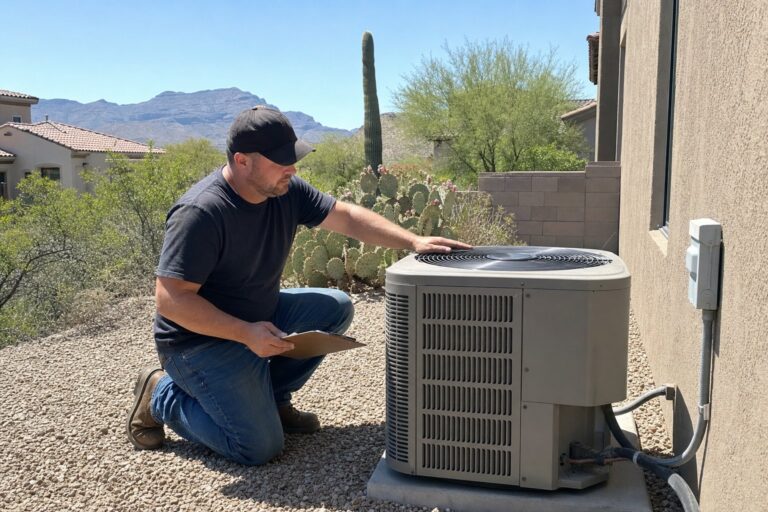
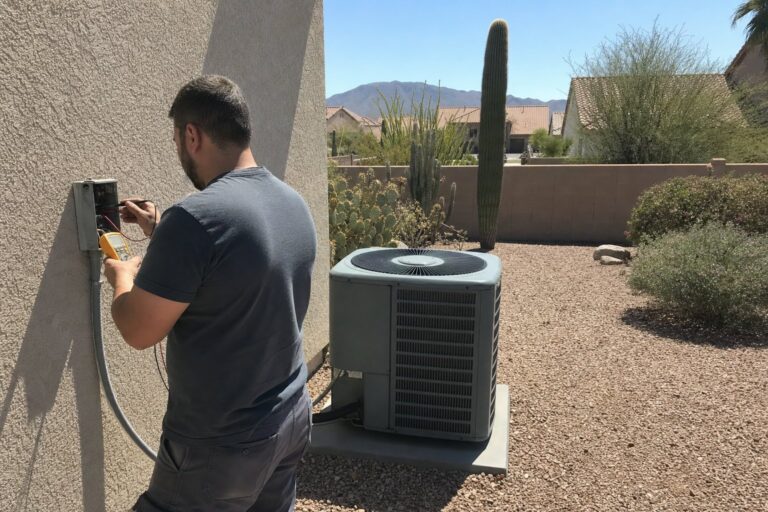
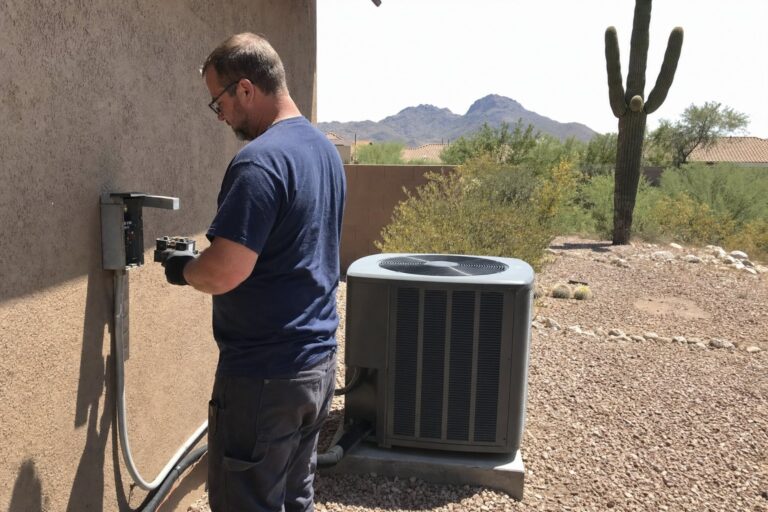
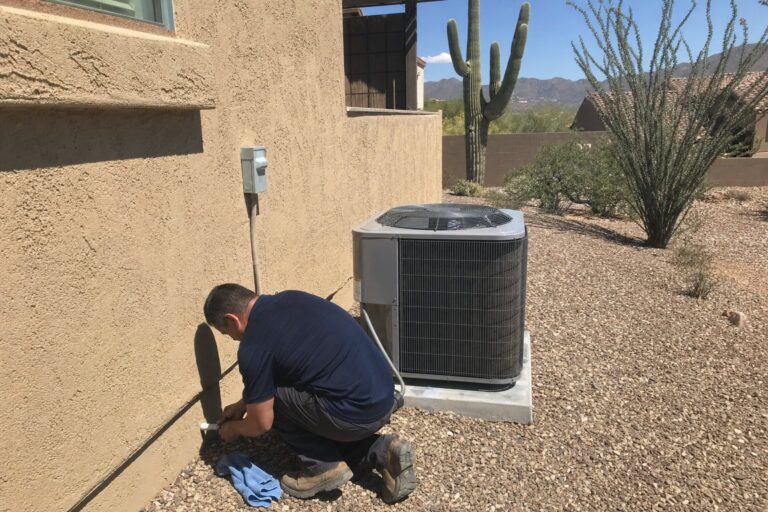
Heat exchanger repair is furnace safety work for the metal chamber that keeps combustion gases separate from the air blowing through your home. You need it when a technician finds a crack, rollout, rust-through, flame disturbance, or carbon monoxide concern. We verify the issue, explain what it means, and stop before quoting the next step.
A heat exchanger problem is a furnace safety problem
The heat exchanger is the part of a gas furnace that takes burner heat on one side and household airflow on the other. Those two streams are supposed to stay separate. When the exchanger cracks, corrodes, separates, or overheats badly enough to warp, combustion gas can move where it does not belong. That is why this service has to be handled differently than a noisy motor or bad ignitor.
In the Phoenix metro, furnaces may sit unused for long stretches, then get called on during a cold snap. That idle time can hide rust, dust, failed safety switches, and burner issues until the first real heating cycle. Some homes have gas furnaces in closets, garages, attics, or packaged systems. Each location changes how we inspect, how combustion air gets to the unit, and how safely the furnace can be tested.
Heat exchanger repair is also an honest decision point. Some exchangers can be replaced if parts are available and the furnace condition supports it. Some findings condemn the furnace because repair is not practical or the damage points to broader failure. We do not wave off carbon monoxide concerns, and we do not use them to scare people into equipment. We document what we can see and measure.
Yeti Pros is veteran-owned and operated. We handle furnace safety calls across Phoenix and the Valley as a service-area business, so we come to you. For related heating work, see our furnace repair service.
How the job actually goes
The visit starts with a controlled inspection. We ask what happened: smell, noise, burner shutdown, carbon monoxide alarm, flame rollout, short cycling, or another company’s finding. Then we inspect the furnace cabinet, burner compartment, blower section, flue connection, safety switches, wiring, gas line condition, and visible exchanger surfaces. We look for rust trails, flame rollout marks, burner distortion, soot, water damage, and signs of repeated overheating.
Testing depends on the equipment and the symptom. We may check temperature rise, static pressure, flame behavior, manifold pressure where appropriate, venting, limit operation, and carbon monoxide readings in the correct places. If the unit is unsafe to run, we do not force it through a full cycle just to gather more numbers. Safety controls exist for a reason.
If the heat exchanger is suspected but not visible enough to confirm, we explain the limits of the inspection. Some cracks are easy to see. Some require deeper teardown, camera inspection, or manufacturer-specific access. If we find a cracked or failed heat exchanger, we stop and explain whether a heat exchanger replacement is possible, whether parts are available, and whether furnace replacement is the more honest recommendation.
Before any repair or replacement work starts, you get a flat-rate written quote after the in-person look. The quoted number is what you pay unless we find something and stop to re-quote. We do not bury the decision in vague ranges. We show the reason for the recommendation and what the job includes.
At handoff, we document the finding, the work performed, and the operating readings we can safely take. Our office hours are Mon-Fri 8-5, with 24/7 emergency service available. Call (520) 556-8929. AZ ROC #363372 · ROC #363423.
What the symptoms usually point to
Not every furnace smell or shutdown means the heat exchanger is cracked. Some problems are burner, venting, airflow, or dust related. The table below shows why a real diagnosis matters before anyone labels the furnace unsafe or ignores a serious warning.
| What you notice | What it usually means | Heat exchanger or something else? |
|---|---|---|
| Carbon monoxide alarm goes off during heat | Possible combustion, venting, appliance, or alarm issue | Emergency safety inspection; do not keep running the furnace |
| Burning smell at first heat cycle | Dust burning off, electrical heat, blower issue, or overheating | Diagnosis needed; our guide covers common causes |
| Flames roll out or safety switch trips | Blocked exchanger, venting issue, burner problem, or cracked exchanger | Possible heat exchanger failure |
| Furnace shuts down on high limit | Low airflow, dirty filter, weak blower, restricted duct, or overheating exchanger | Could be airflow before exchanger damage |
| Soot, rust flakes, or flame changes | Combustion problem, corrosion, or exchanger breach | Needs safety inspection before normal use |
Phoenix-metro realities for furnace safety
Phoenix is known for cooling, but that is exactly why heating systems get neglected. A gas furnace might run only a small part of the year, so a problem can sit quietly. Then a cold morning hits, the furnace lights, dust burns, limits trip, or a burner pattern looks wrong. That gap between heating seasons is hard on confidence because homeowners often do not know what normal heat should smell or sound like.
Arizona is slab-on-grade, with no basements. Heating equipment is commonly in attics, closets, garages, or packaged rooftop and ground units. Attics in the Valley can hit 150°F+ in cooling season, and that heat ages wiring, plastics, controls, and cabinet seals even when the furnace side is not running. Dust also works into burner compartments and blower sections, which can affect airflow and combustion.
Ductwork usually lives in attics, not basements. Restricted attic duct, dirty filters, closed registers, and weak blower performance can overheat a furnace. Repeated overheating can stress a heat exchanger over time. That is why a safety visit should include airflow clues, not just a quick look through the burner opening.
Monsoon dust and roof leaks can add corrosion. Poor venting or damaged flue sections can change combustion safety. A heat exchanger decision in the Phoenix metro has to consider the whole furnace environment: gas, flame, vent, airflow, and cabinet condition. If the furnace is unsafe, we say so plainly. If the smell is dust and the readings are clean, we say that too. For related smell questions, read our heater burning smell troubleshooting guide.
What drives the quote
The quote depends on the furnace type, age, access, part availability, exchanger design, venting condition, and whether the furnace can be safely repaired. A heat exchanger buried deep in the cabinet takes different labor than a more accessible part. If the manufacturer no longer supports the part, or if the furnace has multiple safety and combustion problems, replacement may be the honest path.
We give flat-rate written quotes after an in-person look. The quoted number is what you pay unless we find something and stop to re-quote. The diagnostic or service-call fee is disclosed at booking and credited toward the repair. That keeps the decision tied to the actual furnace, not a phone guess.
Yeti Pros provides a 2-YEAR written workmanship warranty. Repair parts carry a 1-YEAR manufacturer parts warranty. Work is held to the AZ ROC Minimum Workmanship Standards. Financing is available when replacement or larger repair work is the right call, and we offer a 10% military, veteran & first responder discount. We are veteran-owned and operated, serving Phoenix and the Valley. We come to you.
The inspection has to earn the verdict. A heat exchanger conclusion comes from a camera on the cells and a combustion analysis, not a flashlight glance and a frightening speech — and the findings go in writing with photos, so a second opinion can check our work instead of taking anyone’s word for it.
Timing belongs in the decision too. A marginal exchanger found in October deserves a different conversation than the same finding in March — the heating season ahead, the equipment’s age, and the household’s tolerance for risk all get weighed in writing, so the choice between repair now, replace now, or monitor with a re-check lands with the homeowner, documented.
Straight answers
Can a cracked heat exchanger be repaired?
Usually the failed heat exchanger is replaced as a part, not welded or patched in place. Whether that makes sense depends on the furnace, part availability, labor, and overall condition. If the exchanger failure points to an unsafe or worn-out furnace, we will explain why replacement may be the cleaner recommendation.
Does a bad heat exchanger always mean carbon monoxide in the house?
No, but it means the separation between combustion gas and household air is compromised or suspect. Carbon monoxide risk depends on the crack, airflow, venting, burner operation, and furnace design. We treat it as a safety issue, take readings where appropriate, and do not tell you to keep running unsafe equipment.
What should I do if my CO alarm goes off?
Treat it as urgent. Leave the home if the alarm is active, follow the alarm manufacturer’s instructions, and have the issue checked before using fuel-burning equipment again. For HVAC-related inspection, call (520) 556-8929. We offer 24/7 emergency service, and the booking fee is disclosed before the visit.
Will you give me the repair choice in writing?
Yes. After the in-person inspection, we provide a flat-rate written quote for the recommended work. If repair is possible, we quote repair. If the furnace should be replaced because the heat exchanger or safety condition condemns it, we explain that clearly. You can schedule through contact Yeti Pros.
Permits and inspections
Most repairs are ordinary service work; bigger scopes can involve city permitting. We perform our work to code, pull the permits our scope requires, and put what we did in writing.
What's covered
Workmanship is covered for two full years, in writing, and repair parts carry a 1-year manufacturer parts warranty — we document installs and repairs so those claims stay simple to make
Why a licensed HVAC contractor matters.
Every major brand, serviced and installed.
Phoenix metro: Most days a tech is already working somewhere in the Valley, so same-day appointments happen when the schedule allows. After-hours emergencies are dispatched when a licensed tech is available — a real person answers and tells you the ETA on the call.
Call (520) 556-8929Request an estimate.
No pressure, no door knockers. We look at the HVAC system, tell you what it needs (and what it doesn’t), and put the number in writing.