
Phoenix Metro
Whole House & Attic Fan Installation in Phoenix.
- (520) 556-8929
- Serving the entire Phoenix metro — we come to you
- Office: Mon–Fri 8:00 AM – 5:00 PM · 24/7 emergency service
- 2-year workmanship warranty · 1-year parts warranty
- Veteran-owned & operated · residential + commercial
- 23 five-star Google reviews
Residential HVAC across the Valley.
Air conditioning, heating, and cooler work at homes across the Phoenix metro.
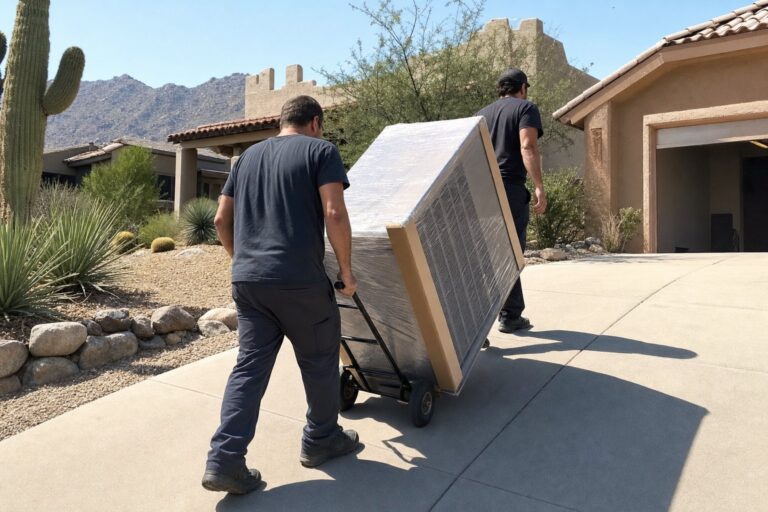
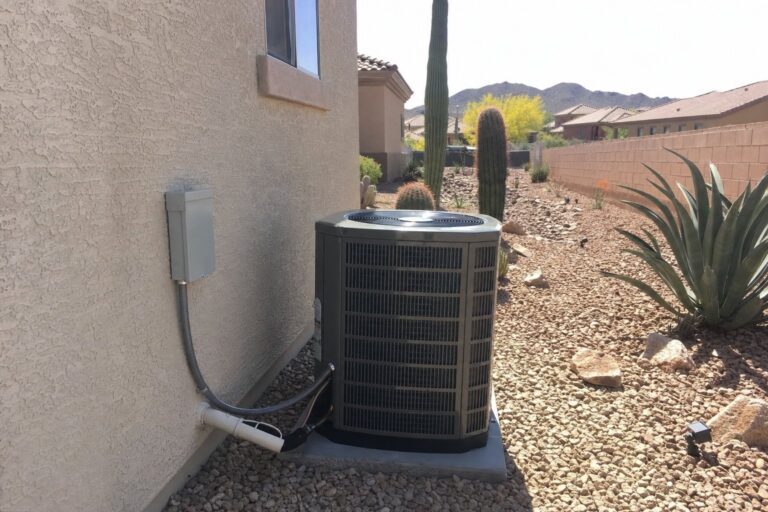
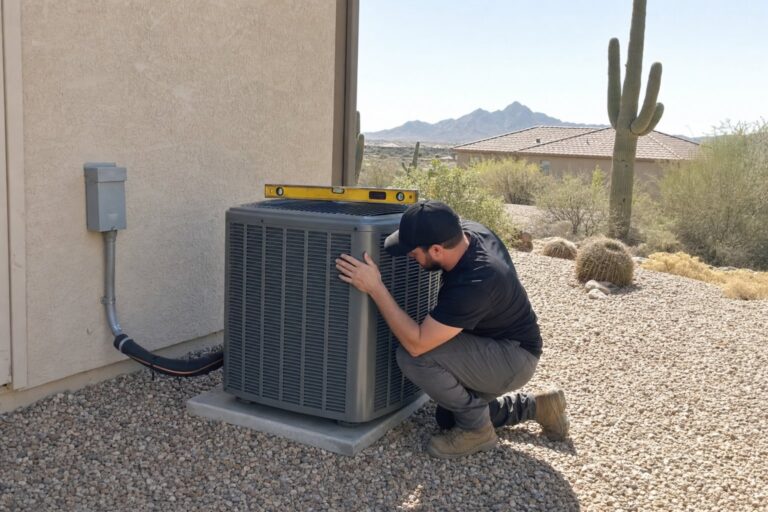
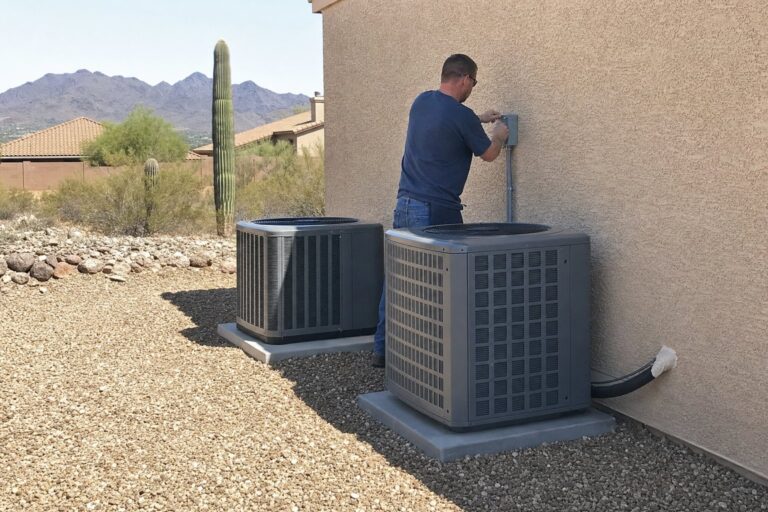
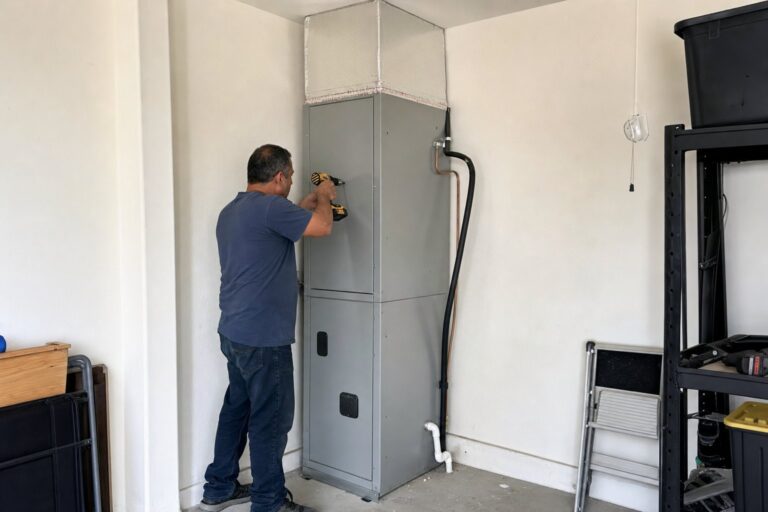
Whole house fan installation is adding a roof or attic-mounted ventilation system that pulls cooler outdoor air through the house and pushes trapped heat out of the attic. You need it when the house stays stuffy after sunset, the attic bakes the ceiling, or you want a shoulder-season tool that gives the AC a break. We size it, wire it, vent it, and quote it in writing after seeing the home.
What a whole house fan is really doing
What It Is
A controlled air exchange tool for the hours when outdoor air is actually better than indoor air. In spring, fall, and the right desert evenings, it can pull fresh air through open windows, clear stale indoor heat, and dump attic heat before it radiates back through the ceiling. Used correctly, it can make the house feel less trapped and reduce how long the AC has to fight yesterday’s heat load.
What It Isn’t
Not a replacement for air conditioning in Phoenix. Used at the wrong time, it just drags hot air inside.
The attic side matters as much as the fan. Arizona homes are slab-on-grade, so there is no basement buffer and most ductwork lives in an attic that can hit 150°F+. A fan that moves air into an attic without enough exhaust area can pressurize the space, push dusty attic air into leaks, and make the system noisy. We look at:
We look at attic vents.
We look at roof shape.
We look at insulation depth.
We look at access.
We look at framing.
We look at electrical routes.
We look at where the fan can land without fighting trusses or bedrooms.
This work belongs inside the broader residential HVAC conversation because it changes how the home breathes around the cooling system. The goal is not to sell a fan to every Phoenix home. The goal is to decide whether your house, roof, attic venting, and schedule make this tool useful.
How the job actually goes
We start with an in-person look. That means walking the house, checking the ceiling location, attic access, framing, electrical options, existing vents, and the path air will take from windows through the living space and out through the attic. We ask how you actually use the house: which rooms stay warm, when the house feels stale, whether allergies or dust are a problem, and whether the fan is meant for overnight cooling, evening purge, garage-adjacent heat, or general ventilation.
Ducted Whole House Fan
Quieter and easier to place away from a hallway.
Direct-Mounted Fan
Can be simpler but may be louder if the location is wrong.
Controls may be a timer, wall switch, speed control, or smart control depending on the model and wiring. We also check whether the attic has enough net free vent area. If it does not, the quote needs to include correcting that, because a powerful fan with bad attic exhaust is a bad install.
Before work starts, you get a flat-rate written quote after the in-person look. The quoted number is what you pay unless we find something hidden and stop to re-quote. The diagnostic or service-call fee is disclosed at booking and credited toward the repair or installation.
On install day, we:
Protect the work area.
Cut the ceiling opening.
Mount the fan assembly.
Run approved electrical.
Seal and insulate around the opening.
Verify airflow.
Check noise.
Clean up.
At handoff, we show you how to run it without pulling in heat, dust, or monsoon humidity at the wrong time.
For scheduling, use contact or call (520) 556-8929.
What you notice before calling
Whole house fans solve a specific comfort problem. They are not magic boxes, and they are not for every hour of a Phoenix summer. This table is the straight field version of what usually points toward this service and what may need a different fix.
| What you notice | What it usually means | This service or something else? |
|---|---|---|
| The house feels trapped and warm after sunset | Indoor heat is stored in walls, ceilings, furniture, and attic air | Whole house fan may help during cooler evenings |
| Bedrooms heat back up after the AC shuts off | Attic heat may be radiating through the ceiling or duct area | Check attic venting, insulation, ducts, and fan options |
| You want fresh air without running the blower all night | The home needs controlled air exchange during mild weather | Whole house fan can fit if outdoor air is favorable |
| The attic is extremely hot but the house air feels fine | Attic ventilation may be the main issue | Attic fan or passive vent correction may be better |
| Dust blows from ceiling gaps when fans run | The attic or building shell may be leaky | Seal and pressure issues before adding airflow |
Attic fan and solar fan choices
Whole House Fan
Pulls air through the living space.
Attic Fan
Ventilates the attic only. In the Phoenix metro, that distinction matters because most HVAC ducts are sitting in the attic, and the attic is often the hottest mechanical space in the house. An attic fan may help lower attic temperature if intake and exhaust are balanced. If intake is weak, it can pull conditioned air from the house through ceiling leaks. That is not a win.
Solar attic fans are attractive because they avoid some wiring work and run when the sun is strong. They also have limits:
Their output depends on sun exposure.
Their output depends on roof orientation.
Their output depends on panel condition.
Their output depends on attic vent layout.
Some homes need more exhaust area than one solar fan can provide.
Some homes need sealing, insulation, or duct work before any fan makes sense.
We are blunt about that because a fan installed into a bad attic can make comfort complaints harder to diagnose.
Window Habits & Phoenix Considerations
- The fan needs open windows or dedicated intake paths. If only one window is cracked, the fan may whistle, slam doors, or pull air through fireplaces, recessed lights, or attic leaks.
- In the Valley, we also think about dust storms, wildfire smoke days, and monsoon humidity. There are nights when running the fan is smart, and nights when the AC and filtration should stay in charge.
Phoenix-metro realities that change the install
Phoenix homes are not gentle on ventilation equipment. The attic can be a brutal work environment, roof penetrations need to be thought through, and the difference between a useful shoulder-season fan and a noisy dust mover is usually in the details. Arizona is slab-on-grade, so equipment choices are usually made around:
Attic access.
Ceiling cavities.
Garage transitions.
Roof structure, not basements or crawlspaces.
Environmental factors are a real consideration:
A fan that depressurizes the house can pull air through every weak spot if the window plan is wrong.
An evening may be cooler but humid and dusty, and pulling that air through the home may not feel good.
We explain when to use the fan and when to leave it off. That matters more than a brochure promise.
Noise in One-Story Layouts
A hallway grille outside bedrooms can be annoying if the fan is oversized or mounted poorly.
Noise in Two-Story Layouts
A ducted unit placed farther away can reduce noise, but it needs attic space and proper support.
In many Phoenix metro homes, the best installation is the one that respects how the house is actually framed, not the one that looks simplest on paper.
We are veteran-owned and operated, AZ ROC #363372 · ROC #363423, and we come to you as a service-area business. Office hours are Mon–Fri 8–5, with 24/7 emergency service. Emergency service is rarely needed for a whole house fan install, but it matters if the visit uncovers a cooling or electrical issue that cannot wait.
What drives the quote
The quote depends on:
Fan type.
Attic access.
Ceiling finish.
Framing.
Electrical distance.
Control choice.
Required attic venting.
Roof or gable work.
Whether old equipment needs removal.
A clean single-story attic with good vents is different from a tight two-story attic with limited access and ducts crowding the work area. We do not treat those as the same job.
You get a flat-rate written quote after the in-person look. The quoted number is what you pay unless we find something and stop to re-quote. The diagnostic or service-call fee is disclosed at booking and credited toward the repair or installation. Financing is available, and there is a 10% military, veteran & first responder discount.
Workmanship Warranty
Workmanship is covered by a 2-YEAR written workmanship warranty and held to the AZ ROC Minimum Workmanship Standards.
Repair Parts Warranty
Repair parts carry a 1-YEAR manufacturer parts warranty.
For timing and use cases around mild-weather cooling, our September shoulder-season guide gives the same practical view: use outdoor air when it helps, and do not force it when the desert is still working against you.
Straight answers
Is a whole house fan worth it in Phoenix?
It can be, but only as a shoulder-season and cool-evening tool. It is not for peak afternoon heat. If your house holds heat after sunset and you are willing to open windows when outdoor air is better, it can be useful. If you keep the house sealed all the time, it may not fit how you live.
Will a whole house fan make my house dusty?
It should not if the home has proper intake through open windows and the attic side is sealed and vented correctly. Dust problems usually come from pulling air through leaks, dirty attic paths, or running the fan during bad outdoor conditions. We check those details before recommending the install.
Can you install a solar attic fan instead?
Yes, when it makes sense. A solar attic fan ventilates attic air, not the living space. It may help attic conditions, but it will not flush the house the way a whole house fan does. We compare both options on site and explain the tradeoff plainly.
How do I schedule whole house fan installation?
Call (520) 556-8929. We will disclose the diagnostic or service-call fee at booking, come to you, inspect the attic and electrical path, and give a written flat-rate quote before work starts. Office hours are Mon–Fri 8–5, with 24/7 emergency service for urgent HVAC issues.
Permits and inspections
Most repairs are ordinary service work; bigger scopes can involve city permitting. We perform our work to code, pull the permits our scope requires, and put what we did in writing.
What's covered
Workmanship is covered for two full years, in writing, and repair parts carry a 1-year manufacturer parts warranty — we document installs and repairs so those claims stay simple to make
Why a licensed HVAC contractor matters.
Every major brand, serviced and installed.





Phoenix metro: Most days a tech is already working somewhere in the Valley, so same-day appointments happen when the schedule allows. After-hours emergencies are dispatched when a licensed tech is available — a real person answers and tells you the ETA on the call.
Call (520) 556-8929Request an estimate.
No pressure, no door knockers. We look at the HVAC system, tell you what it needs (and what it doesn’t), and put the number in writing.