
Biltmore
Furnace Repair in Biltmore, AZ.
- (520) 556-8929
- Serving the entire Phoenix metro — we come to you
- Office: Mon–Fri 8:00 AM – 5:00 PM · 24/7 emergency service
- 2-year workmanship warranty · 1-year parts warranty
- Veteran-owned & operated · residential + commercial
- 23 five-star Google reviews
In this part of Phoenix, the most honest furnace conversation often begins by confirming whether there is a furnace at all. Plenty of homes near the Arizona Biltmore rely on heat pumps, package units, or air handlers with electric heat, while some older estates and remodeled residences still have gas-fired equipment that demands a different level of combustion and carbon-monoxide attention. That distinction matters before anyone starts naming parts. A quiet patio home off the golf corridor, a long-held custom residence, and a condo tower mechanical closet can each produce the same complaint at the thermostat while hiding entirely different equipment behind the panel. For furnace repair in Biltmore, we treat carbon-monoxide safety as non-negotiable and comfort as a measured result, not a guess from warm air at the register. Yeti Pros is veteran-owned and operated, AZ ROC #363372 · ROC #363423, and we come to you with careful diagnostics, written quotes, and service manners suited to homes where access, noise, and documentation matter. If your heat is out or your gas furnace needs a real inspection, call (520) 556-8929.
What Furnace Repair covers in Biltmore.
Furnace identification
We confirm whether the home has a gas furnace, electric heat, heat pump, or mixed system before quoting a repair. That first step matters in Biltmore because many homes use non-furnace heating equipment even when the thermostat complaint sounds like a furnace problem.
Ignition and flame repair
Failed igniters, dirty flame sensors, gas valve issues, and interrupted ignition sequences can stop a furnace from heating. We test the sequence, verify safeties, and provide a written quote for the repair rather than replacing common parts without proving the failure.
Carbon-monoxide safety checks
Gas furnace work must account for combustion and venting safety. We look for symptoms involving rollout, venting, flame behavior, inducer operation, safeties, and heat exchanger concerns. If a condition appears unsafe, we explain it directly and do not treat heat output as proof of safety.
Blower and limit issues
A furnace can overheat or shut down when airflow is restricted or the blower is not moving enough air. We inspect filters, blower components, motors, capacitors, wheels, limits, and temperature rise so the repair addresses both comfort and operating safety.
Control board diagnostics
Modern furnaces rely on boards, low-voltage wiring, safeties, and thermostat signals. We trace the control path carefully, especially where equipment is tucked into closets or shared mechanical spaces. The goal is to correct the failed control without overlooking the condition that caused it.
Repair safety documentation
After an approved repair, we document what was corrected, test furnace operation, and explain any remaining observations. If the furnace is older, noisy, poorly vented, or showing signs of future risk, we separate those facts from the completed repair so decisions stay clear.
What we see for furnace repair in Biltmore.
Furnace calls in Biltmore are different from furnace calls in colder markets because gas heat is not automatic here. Some homes have true furnaces. Others have heat pumps that owners casually call furnaces because the thermostat says heat. Still others have older equipment that has been changed during remodels, additions, or condo maintenance cycles. We start by identifying the system, fuel source, venting, ignition type, blower arrangement, and safety controls. That prevents a simple terminology mix-up from turning into the wrong repair approach.
When a home does have a gas furnace, safety leads the visit. We look at ignition, flame behavior, rollout safeties, limit switches, inducer operation, pressure switch behavior, venting symptoms, blower operation, filter condition, and signs that the heat exchanger or combustion path deserves closer attention. We do not clear a furnace just because it lights. A furnace can produce heat and still have a safety, venting, or combustion concern that should be explained before continued operation.
In high-rise and patio-home enclaves, access and sound are often part of the diagnosis. A furnace or air handler in a closet near living space can make inducer noise, blower vibration, panel rattle, or air restriction more noticeable. In larger homes, one system may heat a guest wing while another handles the main living area, which means a single failed blower or board may affect only part of the house. We isolate the actual equipment and avoid treating the entire home as one system when it is not.
We also see deferred maintenance show up as a furnace repair call. Dirty filters, restricted returns, weak blower capacitors, cracked drain tubing on condensing equipment, failing igniters, and tired flame sensors can all interrupt heat. Some are straightforward repairs. Others point toward aging equipment or conditions that need planning. Our job is to explain what failed, whether the furnace is safe to run after repair, what warranty applies to the part, and what observations stay with the operator if the system is older.
- 01 Airflow and static pressure
- 02 Electrical: capacitors, contactors, draws
- 03 Refrigerant-circuit behavior
- 04 Drains, safeties, and float switches
- 05 Thermostat, controls, and cycling
- 06 Ducts, returns, and room-by-room comfort
Residential HVAC across the Valley.
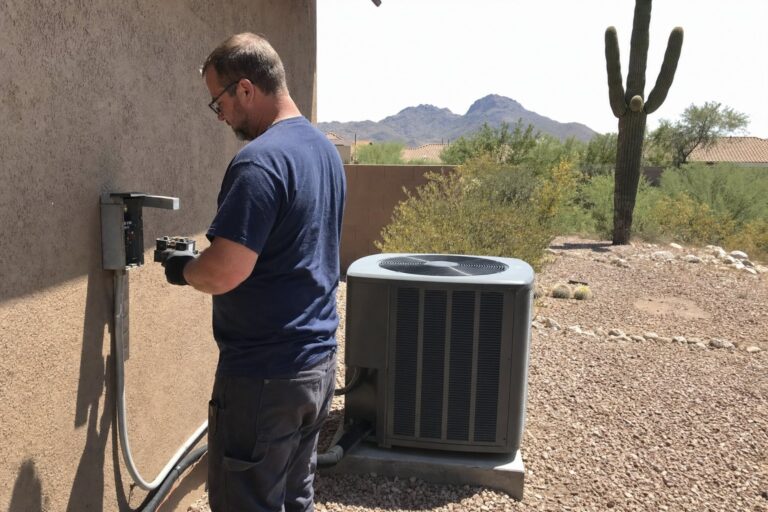
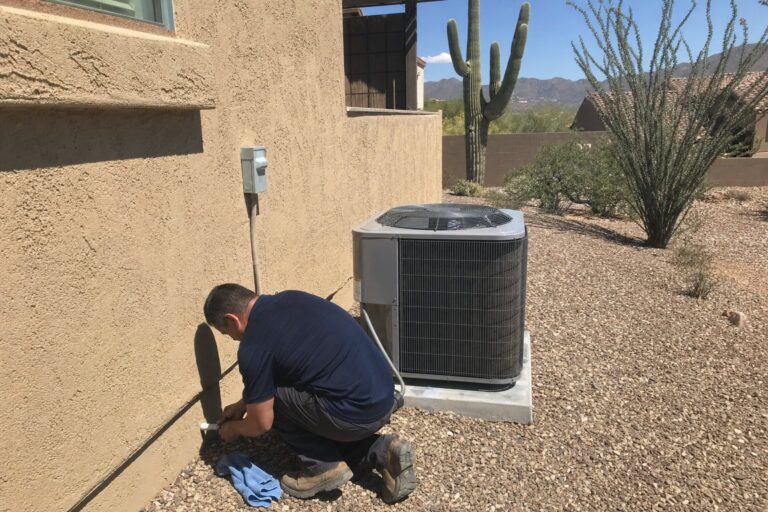
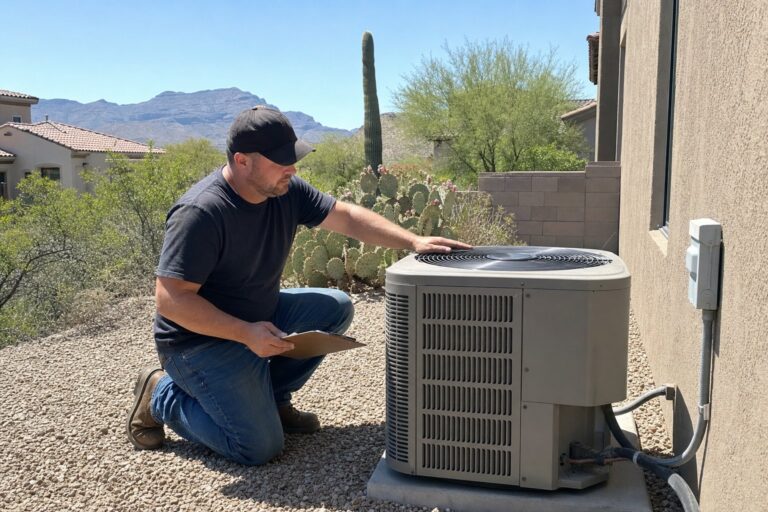
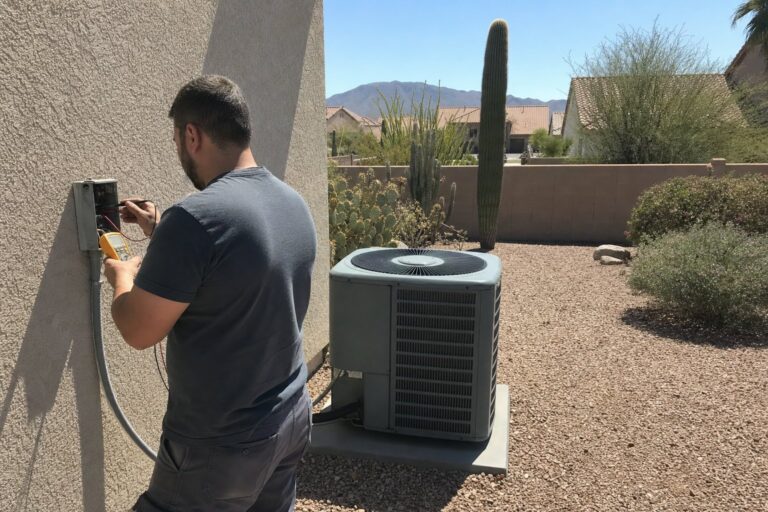
Air conditioning, heating, and cooler work at homes across the Phoenix metro.
How the job typically runs.
When you schedule a furnace visit, we ask what the thermostat is doing, whether you know if the system is gas or electric, whether you smell gas, whether carbon-monoxide alarms have activated, and whether the issue affects the whole home or one zone. If there is a gas odor or active alarm, we direct you to leave the area and contact the appropriate emergency utility or fire response before service. We disclose the diagnostic or service-call fee at booking and credit it toward approved repair work.
At the home, we identify the equipment before opening a repair path. For gas furnaces, that can include thermostat signals, ignition sequence, gas valve operation, flame sensing, safeties, inducer behavior, venting indicators, blower operation, temperature rise, and electrical controls. For non-furnace heating equipment, we explain that difference and diagnose the actual system instead of forcing the call into a furnace category.
After the in-person look, we provide a flat-rate written quote. The quoted number is what you pay unless we find something new and stop to re-quote. Office hours are Monday through Friday, 8-5, with 24/7 emergency service. If the repair is approved, we complete the work, test operation, and explain whether the furnace is safe to operate based on what we could inspect.
- 01 Booking, with the diagnostic fee disclosed
- 02 In-person diagnosis with real readings
- 03 Written flat-rate quote before work begins
- 04 The work: repair, install, or maintenance
- 05 Startup, documentation, and warranty handoff
Many furnace repairs are service repairs and do not require a permit, such as replacing an igniter, flame sensor, control board, blower component, limit switch, pressure switch, or thermostat. Permit questions become more likely when equipment is replaced, gas piping is altered, venting is changed, electrical service is modified, or ductwork is materially reworked. If a Biltmore-area repair uncovers a condition that may require a permitted mechanical or fuel-gas scope through Phoenix, Maricopa County, or another authority, we explain that before changing the work.
Furnace safety is also a code and workmanship issue, not just a comfort issue. Yeti Pros is licensed under AZ ROC #363372 and ROC #363423. We provide a 2-YEAR written workmanship warranty, and repair parts carry a 1-YEAR manufacturer parts warranty. Homeowners can review the Arizona Registrar of Contractors Minimum Workmanship Standards. We document the approved repair and the operational checks because gas heat should never be reduced to a handshake promise.
Pricing, financing & the 10% military & first responder discount.
Furnace repair pricing depends on what equipment is actually in the home, the failed part, the safety checks required, access, age, and whether the issue is isolated or connected to a larger combustion, airflow, or venting concern. A flame sensor cleaning, igniter replacement, blower repair, pressure-switch issue, or control-board failure each has a different scope. The diagnostic or service-call fee is disclosed when you book and credited toward approved repair work.
After we inspect the furnace in person, we provide a flat-rate written quote. The quoted number is what you pay unless we find something and stop to re-quote before proceeding. Financing is available for larger repair or replacement decisions. Yeti Pros also offers a 10% military, veteran & first responder discount. If the furnace is unsafe or replacement makes more sense, we separate that conversation from the repair quote and explain the evidence clearly.
- 01 Flat-rate written quote after an in-person look
- 02 Diagnostic fee disclosed at booking, credited to the repair
- 03 Financing available on replacements
- 04 2-year workmanship warranty; 1-year manufacturer parts warranty
- 05 10% military, veteran & first responder discount
Why a licensed HVAC contractor matters.
FAQs: Furnace Repair in Biltmore, AZ.
How do I know if I actually have a furnace?
The simplest answer is to look at the equipment, not the thermostat label. A true furnace usually has a gas line, burner section, ignition components, venting, and a blower. A heat pump or electric air handler may still say heat on the thermostat but works very differently. Some Biltmore-area homes also have package units or multiple systems from different eras of remodeling. During service, we identify the model, fuel source, venting, electrical setup, and heating sequence before recommending a repair. That keeps the diagnosis honest and prevents the wrong parts conversation.
What furnace problems can create carbon-monoxide risk?
Carbon-monoxide risk can come from combustion or venting problems, including blocked or damaged venting, poor draft, rollout conditions, heat exchanger concerns, improper burner operation, or unsafe installation conditions. A furnace that produces warm air is not automatically safe. If a carbon-monoxide alarm has activated, leave the area and contact emergency help before scheduling routine service. During a furnace visit, we inspect safety-related symptoms within the scope of the repair and explain anything that should stop operation. We also recommend keeping properly installed carbon-monoxide alarms in the home.
Can you repair furnaces in condo towers and patio homes?
Yes. Yeti Pros is a service-area business, so we come to you and can work with typical access details for condo towers, patio-home communities, and managed properties. We may need building access instructions, parking information, roof or mechanical-room procedures, and authorization from the responsible party. Equipment in these settings is often close to finished living space, so we pay attention to noise, vibration, cleanup, and documentation. If building rules or property management approval affect the work, those approvals stay with the operator or property representative.
Why does my furnace start and then shut off quickly?
Short cycling can come from several causes. A furnace may shut down because the flame sensor does not prove flame, the pressure switch does not close, the limit switch opens from overheating, the blower is not moving enough air, the thermostat is misreading, or a control board is interrupting the sequence. Dirty filters and restricted airflow can also make the furnace run hot and stop early. We test the sequence instead of guessing from the symptom. Once we know which safety or control is stopping operation, we can quote the correct repair.
Should an old furnace be repaired or replaced?
Age matters, but it is not the only factor. We look at the failed part, heat exchanger and safety observations, venting condition, blower condition, repair history, efficiency, access, and whether parts are available. A simple igniter or sensor issue on an otherwise sound furnace may be worth repairing. A furnace with safety concerns, repeated failures, or expensive parts may justify a replacement discussion. We provide the repair quote when repair is appropriate and keep replacement options separate so you can compare the decision without pressure.
What happens if you find my system is not a furnace?
We explain what you have and diagnose that equipment instead. If the system is a heat pump, the repair may involve reversing valve behavior, defrost controls, refrigerant-side symptoms, outdoor fan operation, auxiliary heat, or thermostat settings. If it is an electric air handler, the issue may involve heat strips, sequencers, breakers, safeties, or airflow. You still receive a flat-rate written quote after the in-person look, and the diagnostic or service-call fee disclosed at booking is credited toward approved repair work. The label matters less than the correct diagnosis.
Every major brand, serviced and installed.
Phoenix metro: Most days a tech is already working somewhere in the Valley, so same-day appointments happen when the schedule allows. After-hours emergencies are dispatched when a licensed tech is available — a real person answers and tells you the ETA on the call.
Call (520) 556-8929Request an estimate.
No pressure, no door knockers. We look at the HVAC system, tell you what it needs (and what it doesn’t), and put the number in writing.
Need furnace repair in Biltmore? A real person answers.
Other services we run in Biltmore.
Furnace Repair in nearby cities.
Looking for something else nearby? All HVAC services in Biltmore