
Phoenix Metro
Commercial Dehumidification in Phoenix.
- (520) 556-8929
- Serving the entire Phoenix metro — we come to you
- Office: Mon–Fri 8:00 AM – 5:00 PM · 24/7 emergency service
- 2-year workmanship warranty · 1-year parts warranty
- Veteran-owned & operated · residential + commercial
- 23 five-star Google reviews
Commercial jobs we have documented.
Photos from our own commercial projects — equipment we installed, in buildings we serviced.
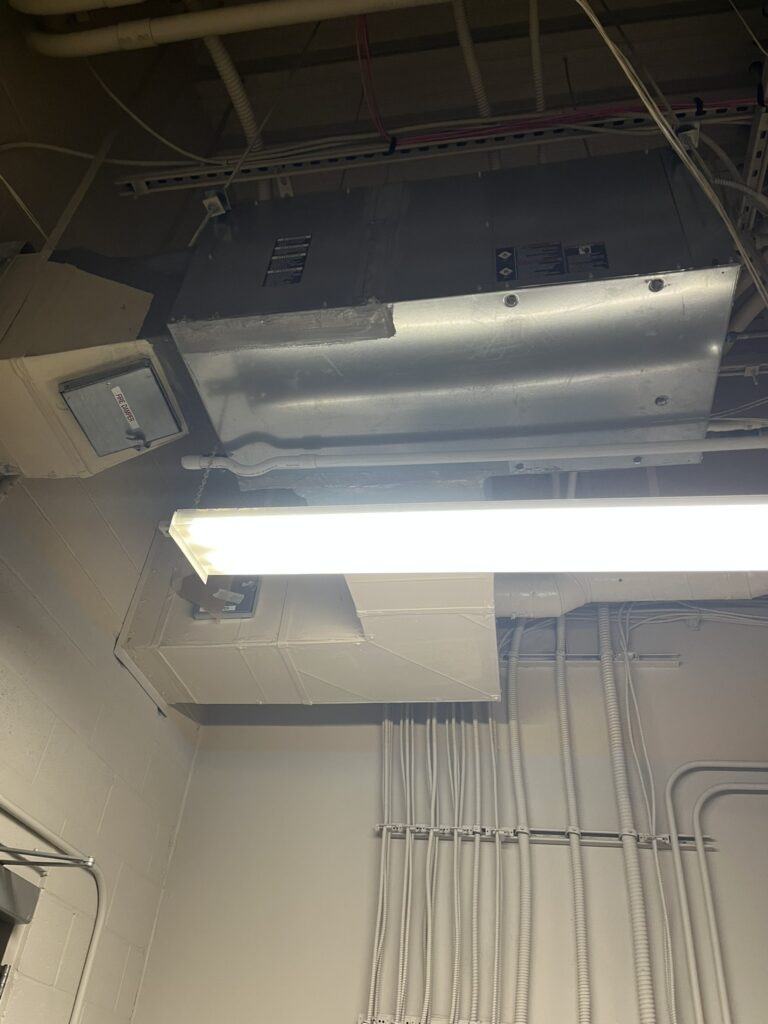
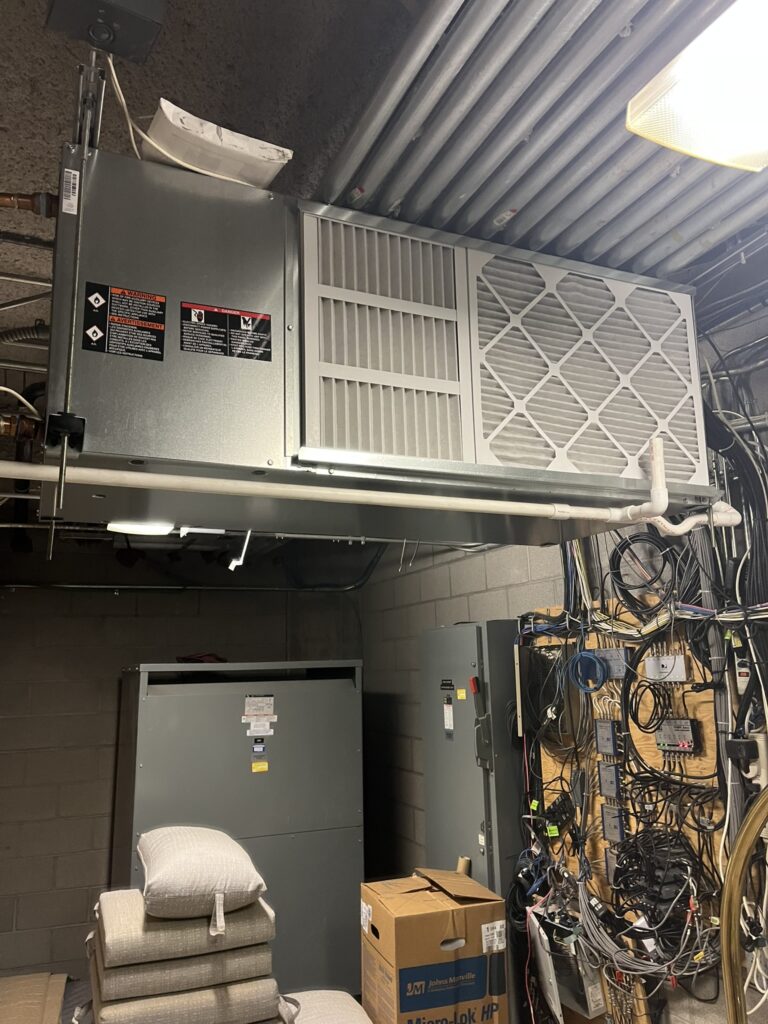
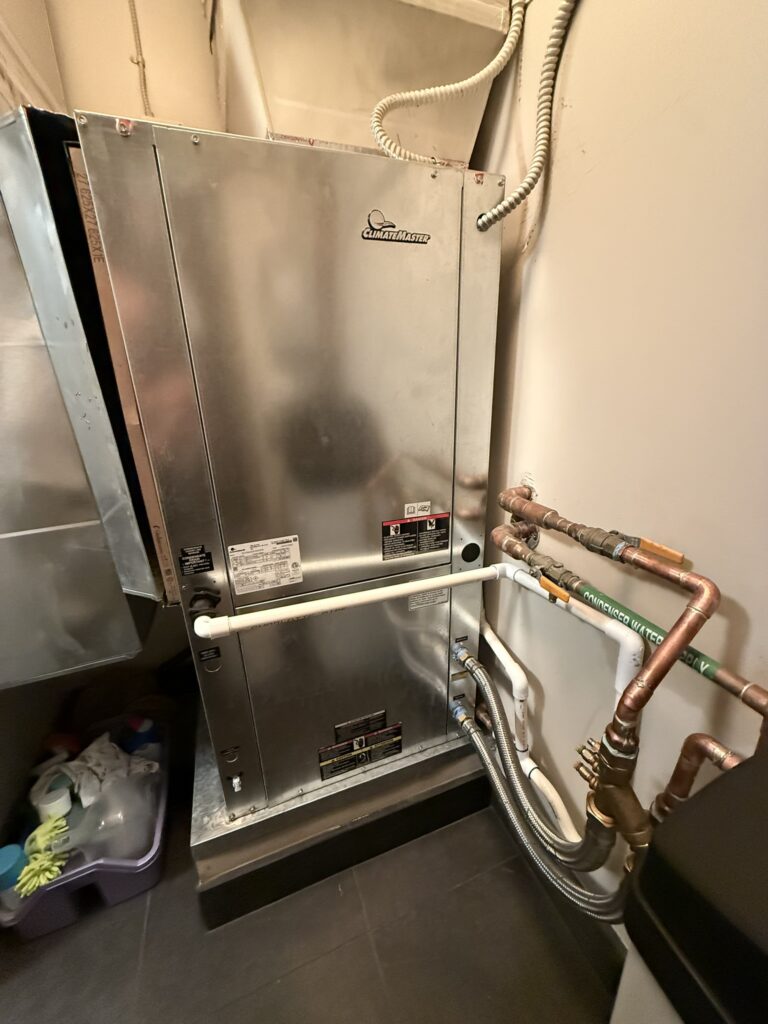
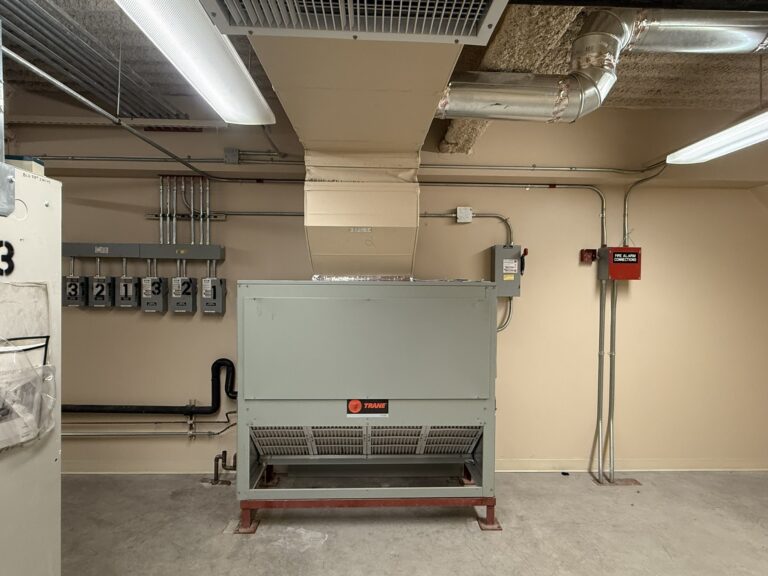
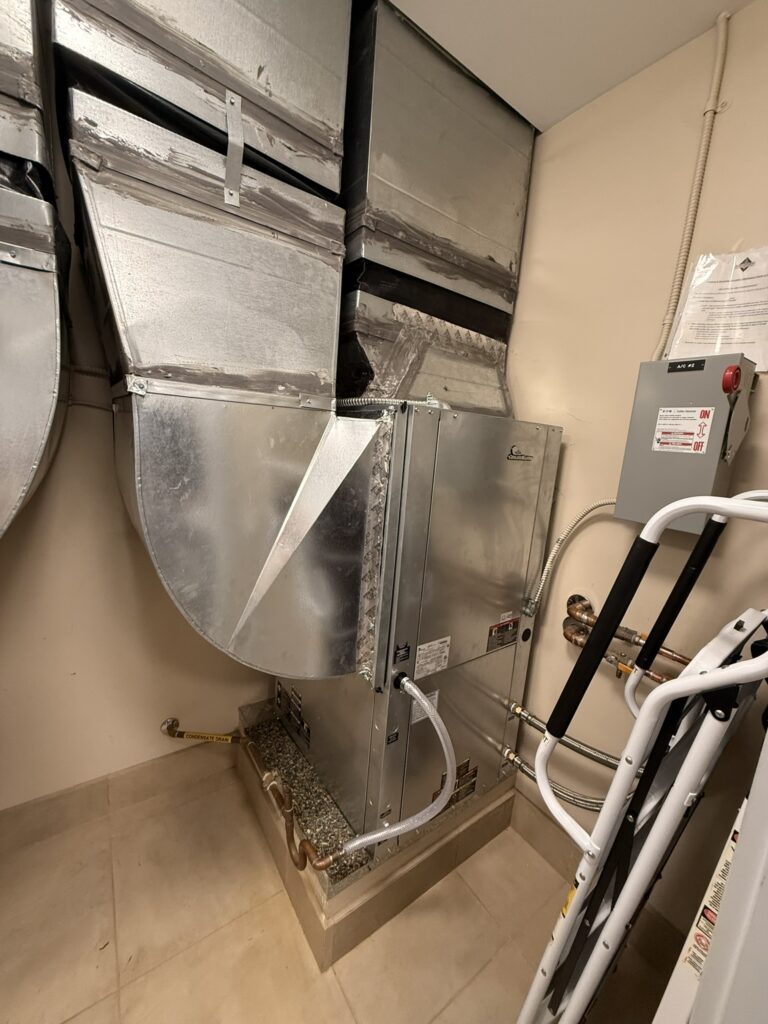
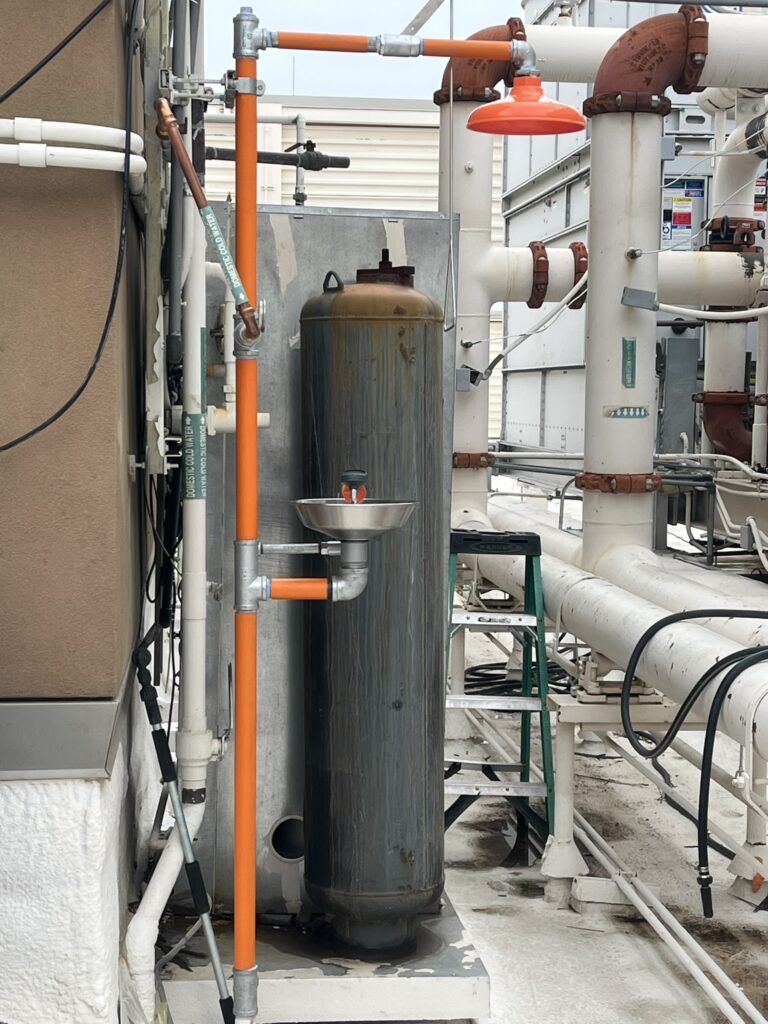
Commercial dehumidification controls moisture in spaces where standard cooling is not enough or not dependable enough. You need it when a server room, gym, storage area, office suite, or production space feels damp, smells musty, sweats at surfaces, or puts equipment and materials at risk. We find the moisture source, measure the conditions, and quote the right fix after seeing the building.
Why humidity becomes a building problem
Phoenix is dry most of the year, but commercial humidity problems still happen. They often stem from one of the following issues:
Outside air is pulled in without enough conditioning.
Cooling equipment short-cycles.
Ventilation is out of balance.
A space has a special internal load.
Water intrusion and poor drainage add moisture faster than the HVAC system can remove it.
Standard air conditioning removes some moisture as a side effect of cooling. That is not the same as designed dehumidification. Different commercial spaces present unique humidity challenges:
Server Rooms
May need steady temperature control without long cooling cycles.
Fitness Spaces
Can get bursts of moisture from people, showers, doors opening, and cleaning.
Storage Areas
May have materials that absorb moisture and release it slowly.
Small Commercial Suites
A package unit may cool the thermostat quickly but never runs long enough to dry the air.
Diagnosing Humidity Issues
The first step is separating a humidity problem from a cooling problem. Consider these scenarios:
Capacity, airflow, refrigeration, controls, or ventilation may be wrong.
The equipment may be satisfying temperature without removing enough moisture.
If humidity spikes after storms, cleaning, occupancy changes, or door activity, the load may be intermittent and control-based.
Commercial dehumidification in Phoenix has to be sized and controlled around the actual use of the room. A server room, records storage area, fitness space, lab-adjacent room, or inventory room can each need a different answer.
Potential Solutions
- Dedicated dehumidifier
- HVAC repair
- Ventilation correction
- Controls work
- Drainage correction
- Maintenance on equipment already supposed to handle the load
Cost honesty without numbers
What Affects Your Quote?
A controls adjustment, drain repair, coil cleaning, or ventilation correction is a different job from installing dedicated dehumidification equipment.
Rooftop equipment, ceiling work, occupied business hours, server room sensitivity, storage contents, and after-hours scheduling can all change the scope.
Our Transparent Quoting Process
Flat-Rate Written Quotes
We give flat-rate written quotes after an in-person look. The quoted number is what you pay unless we find something else and stop to re-quote.
Diagnostic & Service-Call Fee
The diagnostic or service-call fee is disclosed at booking and credited toward the repair. That keeps the decision tied to the real building instead of a guess over the phone.
Guarantees & Financial Options
Workmanship is backed by a 2-YEAR written workmanship warranty.
Repair parts carry a 1-YEAR manufacturer parts warranty.
Work is held to the AZ ROC Minimum Workmanship Standards.
Financing is available when the project scope calls for it.
We offer a 10% military, veteran & first responder discount.
Need More Help?
If the moisture issue is part of a broader equipment problem, our commercial HVAC service team can handle the repair path. To schedule an on-site look, use contact Yeti Pros or call (520) 556-8929.
How the job actually goes
We come to you. Yeti Pros is a service-area business, and we do not list a walk-in street address because commercial HVAC work happens at the equipment and the occupied space. We are veteran-owned & operated, licensed under AZ ROC #363372 · ROC #363423. Office hours are Mon-Fri 8-5, with 24/7 emergency service available when moisture, cooling, or equipment risk cannot wait.
The visit starts with the space, not the sales sheet. We ask what changed, when the issue happens, what equipment serves the area, what the space is used for, and whether moisture appears as odor, condensation, damaged materials, comfort complaints, corrosion, alarms, or visible water. Then we take readings and inspect the system. That can include temperature, relative humidity, supply and return conditions, airflow clues, equipment operation, drain performance, ventilation behavior, door or envelope conditions, thermostat and control settings, and whether the equipment is running long enough to remove moisture.
For server rooms, we look closely at heat load, runtime, control strategy, and whether the equipment is trying to cool sensitive electronics while also managing humidity. For gyms and training spaces, we look at occupancy swings, outside air, locker or shower influence where present, cleaning routines, and how the system recovers after peak use. For storage, records, inventory, and back-of-house rooms, we look for slow moisture accumulation, poor air movement, exterior wall conditions, slab conditions, drain issues, and equipment schedules.
After the in-person look, we give a flat-rate written quote for the recommended work. The quoted number is what you pay unless we find something else and stop to re-quote. The diagnostic or service-call fee is disclosed at booking and credited toward the repair. If the fix is maintenance, we say that. If the fix is a dedicated dehumidification unit, controls change, ventilation correction, drain repair, or commercial HVAC repair, we explain why.
When work is completed, we clean up the work area, review what changed, and document the condition at handoff. If the building needs ongoing checks to keep coils, drains, filters, and controls from drifting back into trouble, we can coordinate that through commercial HVAC maintenance instead of treating every moisture complaint like a one-time event.
What the symptoms usually point to
Humidity complaints can come from the HVAC system, the building, the use of the space, or all three. Here’s how we sort common commercial dehumidification calls in the Phoenix metro.
Equipment satisfies temperature before it removes enough moisture. Controls review, runtime correction, or dehumidification.
Surface temperature is below dew point, or humid air is hitting cold surfaces. Humidity readings, airflow check, insulation and ventilation review.
Low air movement, moisture source, drain issue, or materials holding moisture. Source inspection and moisture-control plan.
Cooling and moisture control are not matched to the load. Dedicated assessment of heat load, controls, and equipment operation.
Occupancy load, outside air, showers, or cleaning moisture overwhelms recovery. Ventilation and dehumidification evaluation.
Envelope leakage, drain problems, outside-air imbalance, or wet materials. Building and HVAC inspection together.
The important part is not jumping straight to equipment. A dehumidifier installed against an unresolved outside-air problem or drain issue may run constantly and still disappoint. The right job starts with finding the load.
Phoenix-metro realities for commercial moisture control
Commercial buildings in Phoenix handle moisture differently than houses. Equipment locations vary (rooftops, mechanical closets, above ceilings, beside buildings), often serving rooms repurposed from their original HVAC design. Examples include storage becoming electronics storage, offices becoming small server rooms, or retail adding fitness use, frequently with HVAC systems designed for the old load.
Arizona’s slab-on-grade construction means floor moisture and temperature matter in storage and ground-level spaces. Without basements, many rooms suffer poor air movement, exterior/roof heat gain, and frequent door openings. Ducts in attics or ceiling spaces can reach 150°F+, adding load and causing comfort complaints often mistaken for humidity alone.
Monsoon season is a key factor. The Valley quickly shifts from dry to humid, bringing wind-driven dust, roof drainage issues, and outside-air loads that expose weak controls. A rooftop unit with dirty coils, a poor drain, or an economizer problem can quickly make a space feel wrong. A commercial space fine in spring can struggle when occupancy, outside air, and storm humidity combine.
Dust significantly impacts performance. Neglected coils, filters, blower wheels, and drain pans don’t perform well. A dirty evaporator coil may not remove heat or moisture properly; a clogged drain can add water where it doesn’t belong; and a poor filter setup can overload equipment and reduce airflow. Often, the best dehumidification solution is to restore the existing HVAC system to correct operation before adding anything new.
Our Approach to Commercial Dehumidification
Commercial dehumidification in Phoenix should be treated as a building-performance issue, not a plug-in appliance decision. We look at the space, the equipment, the controls, the load, and the use pattern. That is how you avoid spending money on the wrong fix.
Straight answers
Do Phoenix businesses really need commercial dehumidification?
Some do. Phoenix is dry overall, but building use can create moisture problems anyway. Areas that can need dedicated moisture control or HVAC corrections that improve dehumidification include:
- Gyms
- Server rooms
- Storage areas
- Rooms with outside-air problems
- Spaces with poor airflow
- Buildings with drain or ventilation issues
Is this a dehumidifier problem or an HVAC repair?
It depends on the readings. There are two main scenarios:
HVAC System Issues
If the HVAC system is dirty, short-cycling, draining poorly, or moving the wrong amount of air, repair or maintenance may solve the problem.
Moisture Load Exceeds Design
If the space has a moisture load the cooling system cannot handle by design, dedicated dehumidification or control changes may be the right answer.
Can you work around sensitive equipment or occupied areas?
Yes, but that has to be planned during the visit. Different areas have specific access and shutdown concerns:
- Server rooms
- Inventory areas
- Clinics
- Offices
- Gyms
We look at the room, the equipment, and the business use before quoting the work so the scope matches the real operating constraints.
Will lowering the thermostat fix humidity?
Sometimes it helps, but often it just makes the room colder and still damp. Humidity control depends on several factors:
- Coil temperature
- Airflow
- Runtime
- Ventilation
- Drainage
- Moisture load in the room
If the system is satisfying temperature too quickly or outside air is uncontrolled, a lower setpoint may not solve the cause.
Permits and inspections
Most repairs are ordinary service work; bigger scopes can involve city permitting. We perform our work to code, pull the permits our scope requires, and put what we did in writing.
What's covered
Workmanship is covered for two full years, in writing, and repair parts carry a 1-year manufacturer parts warranty — we document installs and repairs so those claims stay simple to make
Why a licensed HVAC contractor matters.
Every major brand, serviced and installed.

Phoenix metro: Most days a tech is already working somewhere in the Valley, so same-day appointments happen when the schedule allows. After-hours emergencies are dispatched when a licensed tech is available — a real person answers and tells you the ETA on the call.
Call (520) 556-8929Request an estimate.
No pressure, no door knockers. We look at the HVAC system, tell you what it needs (and what it doesn’t), and put the number in writing.