
Queen Creek
HVAC for Cannabis Facilities in Queen Creek, AZ.
- (520) 556-8929
- Serving the entire Phoenix metro — we come to you
- Office: Mon–Fri 8:00 AM – 5:00 PM · 24/7 emergency service
- 2-year workmanship warranty · 1-year parts warranty
- Veteran-owned & operated · residential + commercial
- 23 five-star Google reviews
Queen Creek is not packed with large cannabis cultivation campuses, and we will not pretend otherwise. The real audience here is smaller: owners evaluating 85142 or 85144 industrial flex space, compliant operators considering a satellite site near the far southeast Valley, or controlled-environment rooms tucked into commercial property away from Queen Creek Marketplace and the main family retail corridors. The town’s former agricultural and equestrian character can make the market feel plausible, but the current built environment is mostly suburban growth, master-planned neighborhoods, large lots, and service businesses. A cannabis grow HVAC project here is about load control, humidity control, odor control support, documentation, and honest limits. In the desert, that means treating heat, moisture, roof exposure, condensate, and room pressure as connected problems, not separate service tickets. Yeti Pros is veteran-owned & operated, AZ ROC #363372 · ROC #363423. We service and document HVAC; we do not certify cannabis compliance, issue legal rulings, or replace specialized design professionals. Office hours are Mon–Fri 8–5 with 24/7 emergency service. We come to you. Call (520) 556-8929.
ZIPs served: 85142, 85144
What Cannabis Facilities covers in Queen Creek.
Grow room cooling repair
We repair cooling equipment serving cultivation rooms, dry rooms, mother rooms, veg rooms, support rooms, and small controlled environments. We check refrigerant-side performance, airflow, coils, motors, controls, and whether the system is actually removing heat under the site’s operating schedule.
Dehumidification troubleshooting
We diagnose dehumidifiers, latent-load problems, condensate removal, short-cycling cooling, and controls conflicts. In Queen Creek’s heat, temperature may look controlled while moisture remains wrong, so we evaluate both sensible and latent performance.
Odor-control airflow support
We do not certify odor compliance, but we can evaluate how fans, filters, ducts, room pressure, and HVAC airflow interact. Poor pressure control can pull conditioned air out of the room or push odor into neighboring spaces.
Controls and sequencing
We review thermostats, humidistats, dehumidifier staging, cooling calls, schedules, and equipment interaction. Cultivation rooms fail when equipment fights itself, especially around lights-on, lights-off, irrigation, exhaust, and setback periods.
Condensate and drain repair
High moisture loads create heavy condensate. We repair pumps, drain lines, float switches, pans, traps, and overflow problems that can damage rooms or stop equipment. We also document drainage concerns that need additional trade coordination.
HVAC replacement planning
For conversions or equipment failures, we document existing capacity, access, controls, electrical considerations, dehumidification needs, and room use. Written scopes help owners compare repair, replacement, and phased upgrade options without pretending the space is ordinary office HVAC.
What we see for cannabis facilities in Queen Creek.
Cannabis HVAC is not comfort cooling with a different label. Even a small Queen Creek grow room can push heavy latent load from irrigation, plant transpiration, lighting, sealed-room operation, and limited outside-air exchange. In flex suites or converted commercial spaces, standard rooftop units often short-cycle on temperature while humidity remains too high. That creates unstable vapor pressure conditions, odor migration concerns, wet surfaces, and equipment strain. The room may look acceptable on a thermostat while leaves, surfaces, ducts, and equipment are telling a different story.
Queen Creek’s building stock adds constraints. Newer commercial shells near growth corridors may have modern electrical service and roof access but were not built around cultivation loads. Older service buildings and edge-of-town spaces may have lower ceiling heights, limited condensate routing, uneven insulation, or utility limitations. Fringes with large lots, wells, septic, or agricultural remnants can create different access and drainage questions than a typical retail center. A space that seems private and practical on paper can still be difficult mechanically if there is no clean path for condensate, no room for equipment service, or no good way to separate grow conditions from the rest of the building.
We commonly look at dedicated dehumidification, staged cooling, mini-split or split-system support, condensate management, controls, filtration, outside-air strategy, and whether odor-control equipment is affecting airflow. Odor control is not just a carbon filter purchase. Fan pressure, duct leakage, room pressure, door cycles, and equipment placement determine whether conditioned air stays where it should. If a fan pulls too hard, the room may lose conditioned air and force cooling and dehumidification equipment to run harder. If pressure is wrong the other way, odor movement becomes harder to control.
The most expensive failures are often sequence failures. Cooling, dehumidification, lights, irrigation, exhaust, and room pressure need to work together. If one device is replaced without understanding the room behavior, the operator gets temperature swings, humidity spikes, nuisance alarms, or compressor abuse. We document HVAC findings in plain language so the cultivation manager, owner, and any specialty consultant can see what the equipment is doing. That documentation is especially important in smaller Queen Creek conversions, where every mechanical decision has to fit the limits of the existing building.
- 01 Airflow and static pressure
- 02 Electrical: capacitors, contactors, draws
- 03 Refrigerant-circuit behavior
- 04 Drains, safeties, and float switches
- 05 Thermostat, controls, and cycling
- 06 Ducts, returns, and room-by-room comfort
Commercial jobs we have documented.
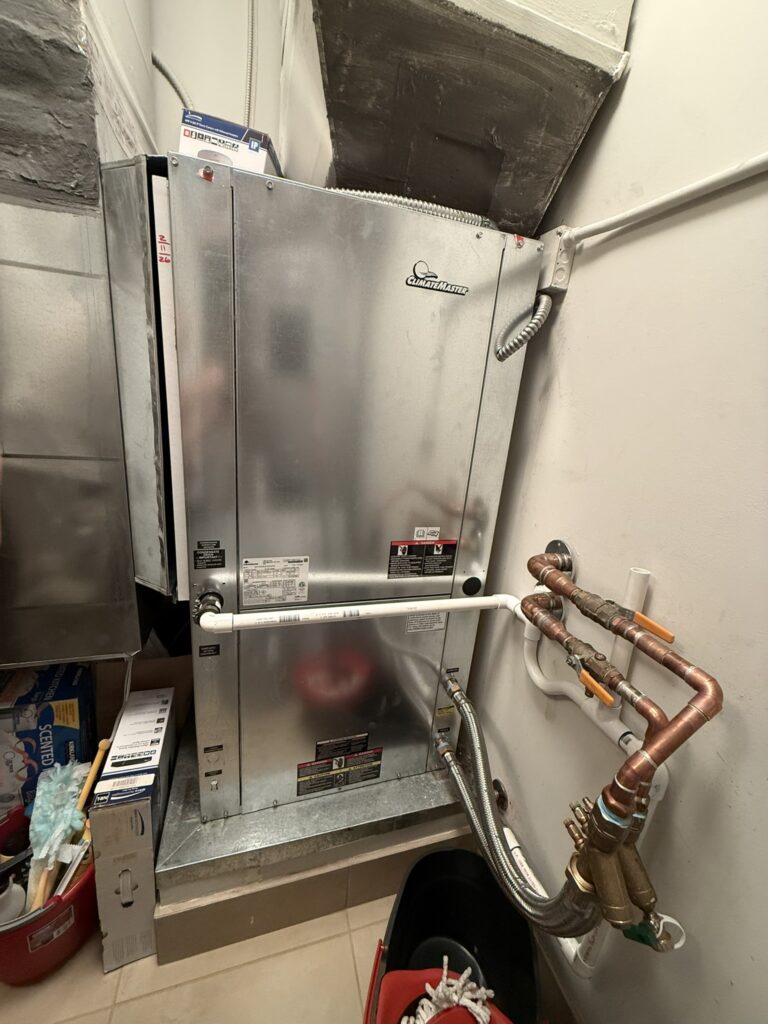
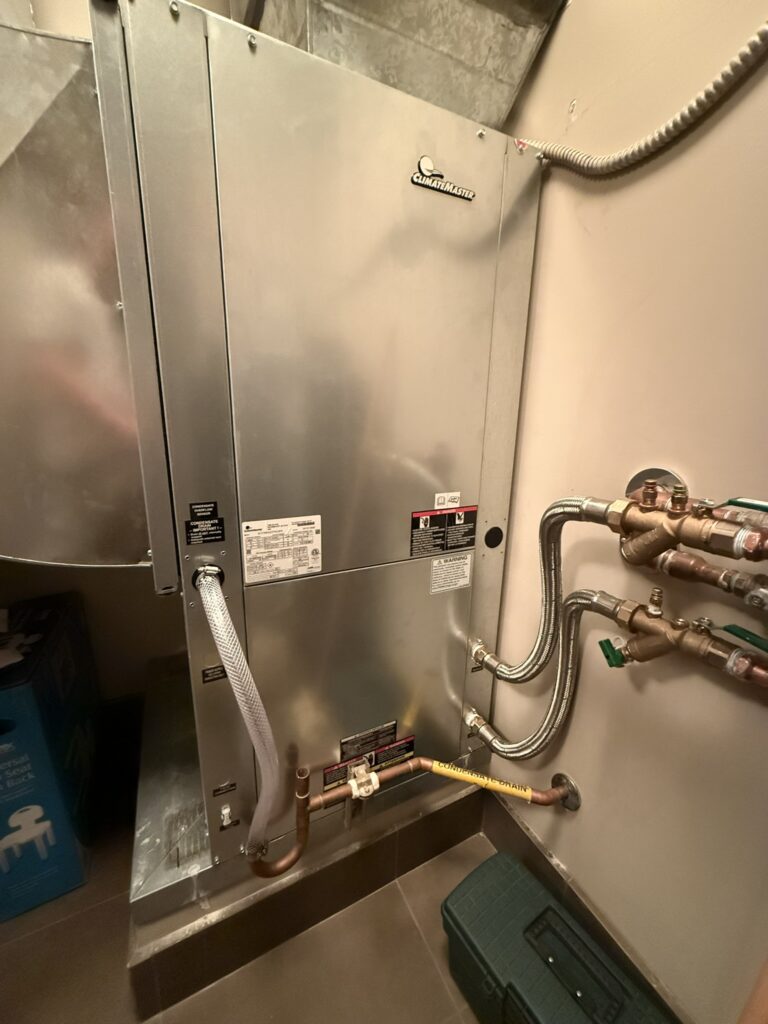
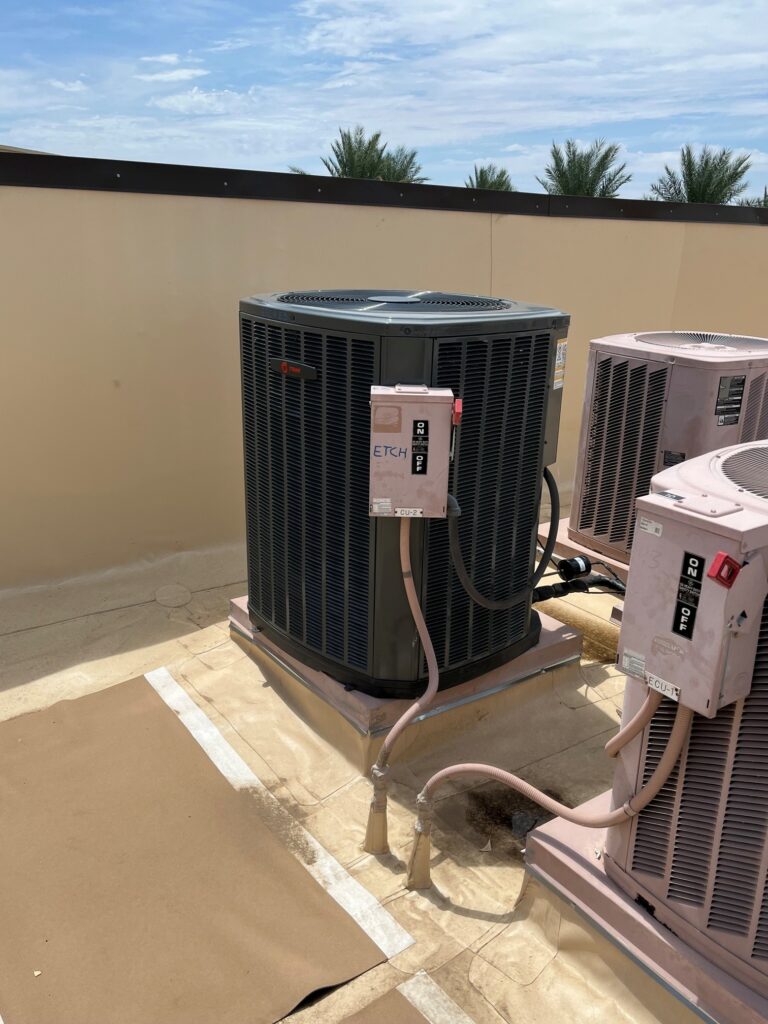
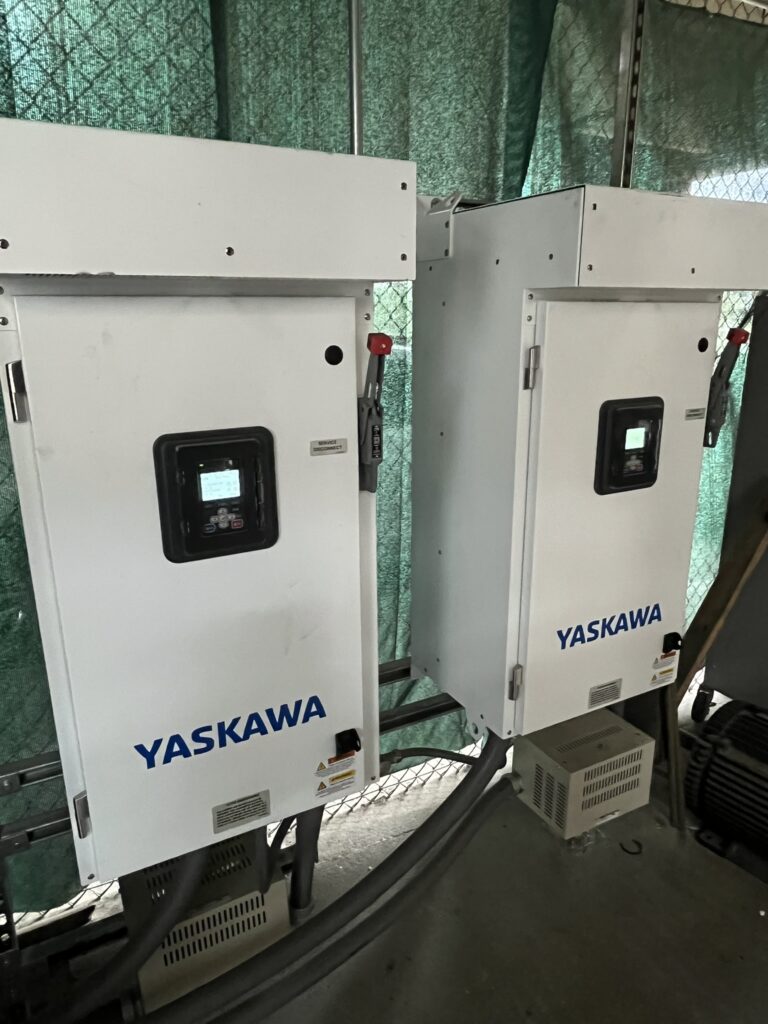
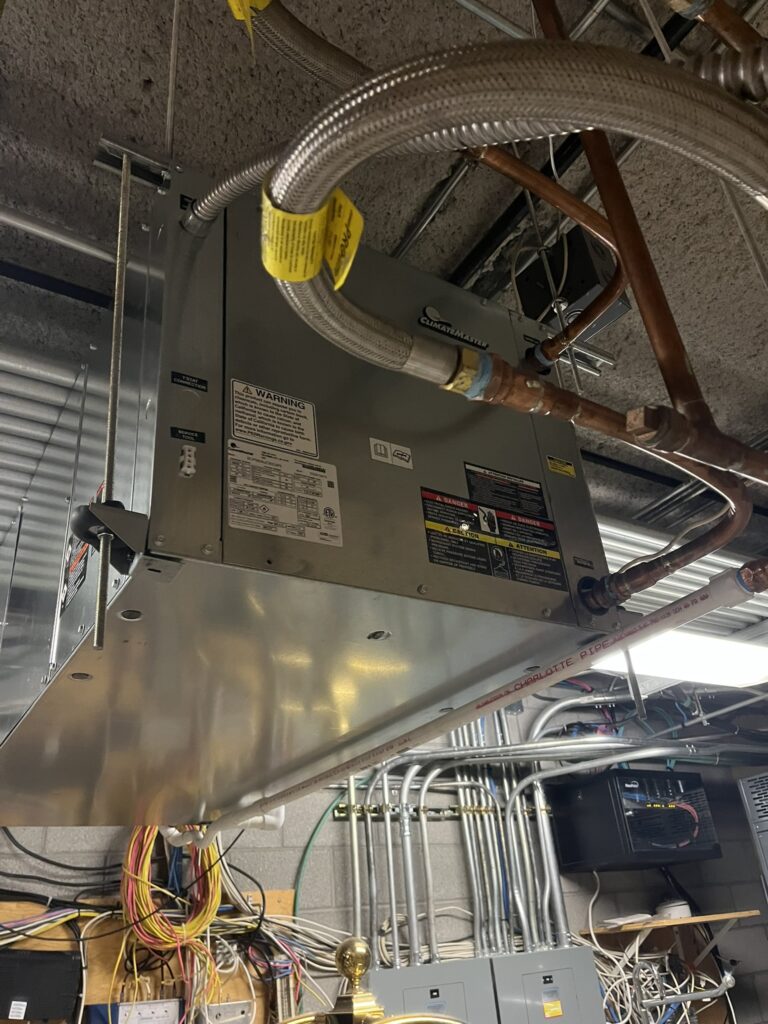
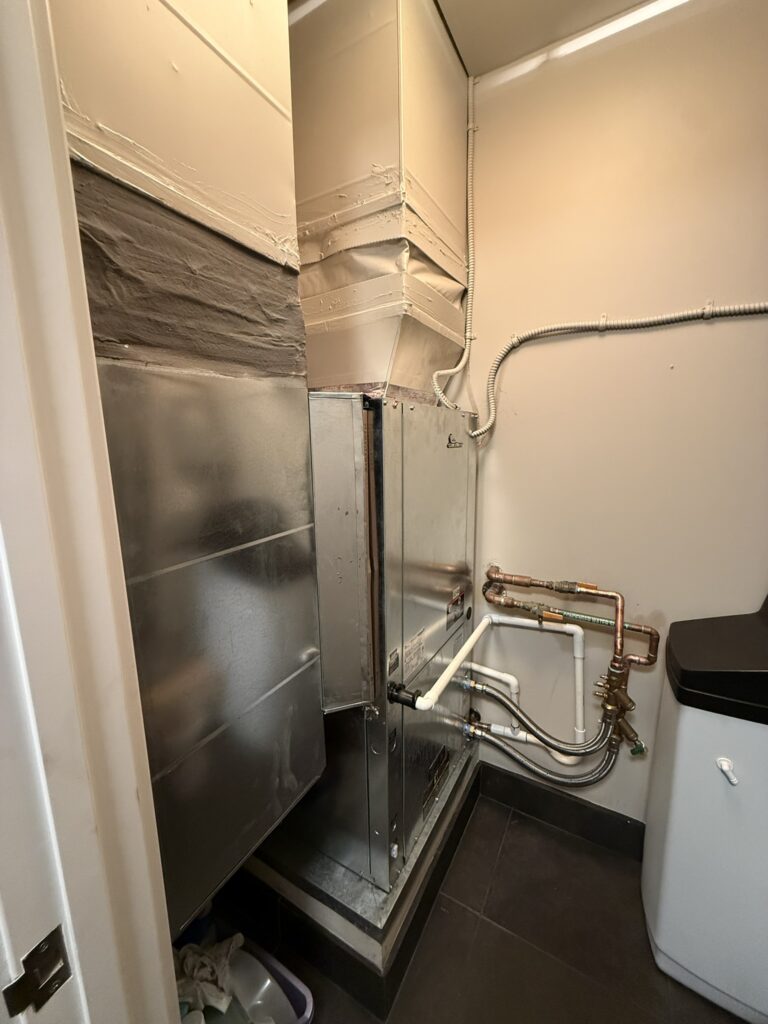
Photos from our own commercial projects across the Phoenix metro — equipment we installed, in buildings we service.
How the job typically runs.
Access is planned before dispatch. Cannabis-related sites often have locked rooms, camera coverage, visitor logs, limited entry windows, and areas where staff must escort vendors. We follow the site’s access process and keep the HVAC work focused. We do not handle product, make cultivation decisions, or give legal advice. Before arrival, we try to understand which rooms are affected, whether the symptom is temperature, humidity, condensate, odor movement, or equipment failure, and what areas the technician can access.
Diagnostics are done in person because room load, moisture load, equipment placement, and airflow cannot be understood from a phone description. The diagnostic/service-call fee is disclosed at booking and credited as stated when approved work proceeds. After inspection, Yeti Pros provides flat-rate written quotes and documents the scope in writing. We look at what the room is doing under its actual schedule, including lights-on and lights-off behavior when that information is available, because a system can pass a quick temperature check and still fail during the moisture-heavy part of the cycle.
For emergency service, we prioritize failures that threaten room stability: no cooling, failed dehumidification, condensate overflow, controls stuck in the wrong mode, electrical faults, or odor-control airflow conflicts. We focus first on stabilizing the mechanical condition, then on explaining the repair or replacement path without overstating what HVAC service can certify. Repairs include a 2-YEAR written workmanship warranty and a 1-YEAR manufacturer parts warranty on repair parts. Financing is available.
- 01 Booking, with the diagnostic fee disclosed
- 02 In-person diagnosis with real readings
- 03 Written flat-rate quote before work begins
- 04 The work: repair, install, or maintenance
- 05 Startup, documentation, and warranty handoff
Queen Creek cannabis facility HVAC work must be separated from cannabis licensing advice. We service HVAC systems, document what we do, and identify permit-sensitive mechanical scope. We do not certify cleanrooms, certify grows, issue health-code rulings, approve security plans, or give legal advice. Much of Queen Creek is in Maricopa County, some is in Pinal County, and incorporated properties generally work through the Town of Queen Creek permitting process when permits apply. The building type matters, because a flex suite, service building, or edge property can have different mechanical access, roof conditions, and utility questions.
Utility conditions may involve SRP, not APS. Replacement equipment, new dedicated dehumidification, electrical changes, penetrations, roof work, or duct alterations can trigger review. Odor-control airflow, condensate routing, and equipment support can also affect how a scope is described, even when the main request started as a comfort or humidity complaint. Arizona ROC workmanship expectations are available here: Arizona ROC Minimum Workmanship Standards.
Pricing, financing & the 10% military & first responder discount.
Cannabis HVAC cost depends on room count, canopy-adjacent moisture load, lighting schedule, dehumidification capacity, odor-control airflow, controls, roof or equipment access, condensate routing, electrical limitations, and whether the space is a purpose-built suite or a conversion. Queen Creek’s mix of newer commercial shells, service buildings, and edge properties means the same grow load can require very different mechanical work. A small repair to a cooling circuit is not the same scope as correcting short-cycling, adding dehumidification support, addressing condensate overflow, or documenting a replacement path for a room that has outgrown ordinary comfort equipment.
Yeti Pros provides flat-rate written quotes after an in-person look, with scopes documented in writing. The diagnostic/service-call fee is disclosed at booking and credited as stated. Financing is available. A 10% military, veteran & first responder discount is available at /military-discount/. Call (520) 556-8929 for site-specific scheduling.
- 01 Flat-rate written quote after an in-person look
- 02 Diagnostic fee disclosed at booking, credited to the repair
- 03 Financing available on replacements
- 04 2-year workmanship warranty; 1-year manufacturer parts warranty
- 05 10% military, veteran & first responder discount
Why a licensed HVAC contractor matters.
FAQs: HVAC for Cannabis Facilities in Queen Creek, AZ.
Do you work on cannabis grow HVAC in Queen Creek?
Yes, for HVAC service, repair, diagnostics, documentation, and replacement planning. Queen Creek has limited large-format cannabis facility presence, so many calls are for small controlled environments, proposed conversions, or satellite operations. We do not provide legal advice, cannabis licensing guidance, cleanroom certification, health-code rulings, or cultivation consulting. We service the HVAC and document the scope. That includes cooling, dehumidification symptoms, condensate problems, controls, airflow, odor-control interaction, and equipment replacement planning when the existing building system is not keeping up.
Why is humidity high even when the grow room temperature is on setpoint?
Standard cooling equipment can satisfy temperature before it removes enough moisture, especially with irrigation, plant transpiration, sealed-room operation, and lighting cycles. The result is a room that looks fine on temperature but still has high moisture load. We check equipment runtime, airflow, dehumidifier operation, condensate removal, controls, and staging before recommending changes. In Queen Creek heat, short cycling can be deceptive because the thermostat is satisfied while the room still needs moisture removal. We look for the sequence problem instead of assuming the answer is only a lower setpoint.
Can you help with odor control HVAC issues?
We can evaluate airflow, duct leakage, fan interaction, pressure relationships, and HVAC conditions that affect odor movement. We do not certify odor compliance or issue legal findings. If carbon filtration, exhaust, or pressure control is causing cooling or humidity problems, we document what the HVAC system is doing and what mechanical corrections are appropriate. We also look at whether door cycles, return paths, duct leakage, or fan pressure are pulling conditioned air out of the room or pushing air into areas where it does not belong.
Do grow HVAC changes in Queen Creek need permits?
Some scopes may. New equipment, replacement equipment, electrical modifications, roof work, duct alterations, condensate routing, or penetrations can affect permitting. Incorporated Queen Creek properties generally involve the Town of Queen Creek when permit review applies. The area also includes Maricopa County and some Pinal County. We identify the HVAC scope clearly so the correct path can be followed. We do not make legal determinations or certify cannabis compliance, but clear mechanical documentation helps the owner, property manager, or design professional understand what is being changed.
Can you respond if dehumidification fails after hours?
Yes. We provide 24/7 emergency service. For cannabis-related sites, we confirm access rules, escort requirements, room entry limits, and contact procedures before dispatch whenever possible. Emergency calls usually focus on no cooling, failed dehumidification, condensate overflow, controls problems, or equipment faults that threaten room stability. After-hours response is often important because moisture problems do not wait for business hours, especially when lights, irrigation, and sealed-room operation continue on schedule. We stabilize the HVAC issue and document the repair path.
What warranty applies to cannabis facility HVAC repairs?
Yeti Pros provides a 2-YEAR written workmanship warranty and a 1-YEAR manufacturer parts warranty on repair parts. We are veteran-owned & operated, AZ ROC #363372 · ROC #363423. Approved work is documented in writing so the owner, operator, or facility contact has a clear HVAC record. That record is useful for internal operations, future troubleshooting, and coordination with other specialists, especially when temperature, humidity, odor-control airflow, and condensate management all affect the same room.
Every major brand, serviced and installed.



Phoenix metro: Most days a tech is already working somewhere in the Valley, so same-day appointments happen when the schedule allows. After-hours emergencies are dispatched when a licensed tech is available — a real person answers and tells you the ETA on the call.
Call (520) 556-8929Request an estimate.
No pressure, no door knockers. We look at the HVAC system, tell you what it needs (and what it doesn’t), and put the number in writing.
Need cannabis facilities in Queen Creek? A real person answers.
Other services we run in Queen Creek.
Cannabis Facilities in nearby cities.
Looking for something else nearby? All HVAC services in Queen Creek