
Mesa
Commercial AC Installation in Mesa, AZ.
- (520) 556-8929
- Serving the entire Phoenix metro — we come to you
- Office: Mon–Fri 8:00 AM – 5:00 PM · 24/7 emergency service
- 2-year workmanship warranty · 1-year parts warranty
- Veteran-owned & operated · residential + commercial
- 23 five-star Google reviews
Few East Valley cities ask a commercial HVAC contractor to solve as many different problems in a week as Mesa does. In a single day we might scope a rooftop fleet on an 80s-vintage Main Street retail strip, rebuild the make-up air for a food-service tenant, design a precision system for a light-industrial shop near Falcon Field, and plan a change-out on a sprawling healthcare campus. That range is exactly why choosing the right partner for commercial AC installation Mesa businesses depend on comes down to breadth — a shop that has actually installed across aerospace, big-box, medical, and restaurant occupancies, not one that knows a single equipment line and forces every building to fit it. Yeti Pros is veteran-owned and operated, licensed under ROC #363372 and ROC #363423, and we design and install cooling for tenant improvements, new build-outs, and end-of-life replacements across every one of those building types. Mesa's commercial core also carries a lot of hard mileage: rooftop equipment installed through the 80s and 90s is now well past its economic life, much of it still cycling scarce R-22, and it fails on the days a building can least afford it. We run installation as design-build — one contractor owning the load engineering, equipment selection, crane logistics, permits, and commissioning — so accountability never falls into the gap between a designer's assumptions and an installer's excuses. Fiesta-district big boxes, Gateway-corridor warehouses, and Main Street storefronts all need commercial AC installation built around the space. A real person answers at (520) 556-8929, around the clock. We handle a storefront swap or a phased campus program with equal rigor.
ZIPs served: 85201, 85203, 85204, 85205, 85210, 85213
What AC Installation covers in Mesa.
Commercial Load Calculation
Mesa's building types could not differ more — an aerospace shop, a hospital pharmacy, and a taqueria each throw off heat a square-footage guess can't capture. We calculate the real load: process and kitchen gains, occupant density, ceiling stratification in high-bay industrial, and the code-mandated outside air cooled from 110-plus degrees, so it holds all afternoon.
Equipment Selection: RTU, Split, VRF
Rooftop packages fit most of Mesa's retail, industrial, and big-box footprints and keep service access simple. Dedicated splits solve suites where the roof can't take another curb or a tenant needs its own metered equipment. VRF makes sense in mixed-use medical and office buildings with many zones. We match the platform to your building and its hours.
Phased Cutover Around Operations
A Mesa store, clinic, or plant that can't close gets a staged change-out. We take one unit offline at a time, keep the rest of the roof loaded, and rotate through until the fleet is new, so no zone bakes while its neighbor is swapped. Heavy work slots into slow hours, and cooling returns fast.
Crane and Structural Coordination
Swapping rooftop units on Mesa's older buildings means a crane pick over occupied space and, often, structure never engineered for today's heavier equipment. We confirm the roof carries the new load before booking the lift, cone off staging, take the early window before wind, and set curb adapters with a roofer on hand so flashing doesn't leak.
Permits and Mechanical Plan Review
Mesa's building department runs its own review, and a change of use or build-out hinges on getting submittals right the first time. We produce sealed mechanical drawings when the scope demands them, take the lighter path on like-for-like swaps, and build real review windows into your timeline. For food-service spaces, NFPA 96 is drawn in early.
Commissioning Documentation
Running isn't the same as right, so we commission every install to prove it performs. We measure delivered airflow against the design, confirm refrigerant charge by pressures and temperatures, and cycle the controls and safeties. The closeout package — start-up data, balance readings, permit finals, and warranty registrations — becomes your maintenance record for its full life.
What we see for AC installation in Mesa.
Mesa's commercial map is a museum of every era of Valley construction, and each layer breaks in its own way. The Main Street and Fiesta-district retail built decades ago carries rooftop units that have outlived their design life twice over; owners nurse them with repair after repair until a compressor lets go in August and the calculus finally tips toward replacement. Older strip centers hide a second problem — units mismatched to spaces re-partitioned years ago, so one tenant freezes while the suite next door never cools no matter how hard it runs. Food service across the city fights the same battle: fryers and griddles pour sensible heat into dining rooms, and where the original make-up air was undersized or omitted, the kitchen starves the dining room of conditioned air and drags the front door shut behind every entering customer. The light-industrial and aerospace shops around Falcon Field and Gateway bring loads a generic design never anticipates — process heat from equipment, high ceilings that stratify, and areas where humidity and particulate control matter to what's being built or stored. The hospital and outpatient campuses raise the stakes further, with pharmacy storage, imaging suites, and patient areas that cannot tolerate a system drifting off setpoint even briefly. Underneath all of it is the R-22 reality: the metro's aging fleet still leans on a refrigerant no longer manufactured, so every recharge on an old unit costs more and buys less time than the last one did. What we see, over and over, is a building limping along on equipment that has quietly become the most expensive thing on the roof — burning demand charges, eating repair dollars, and one hot afternoon from an unplanned closure. The Mesa job is reading which buildings are past that tipping point. Across every category, APS and SRP demand charges quietly punish the oversized, short-cycling equipment old rules of thumb left behind, and engineering the replacement that fits the operation underneath is the rest of the job.
- 01 Airflow and static pressure
- 02 Electrical: capacitors, contactors, draws
- 03 Refrigerant-circuit behavior
- 04 Drains, safeties, and float switches
- 05 Thermostat, controls, and cycling
- 06 Ducts, returns, and room-by-room comfort
Commercial jobs we have documented.
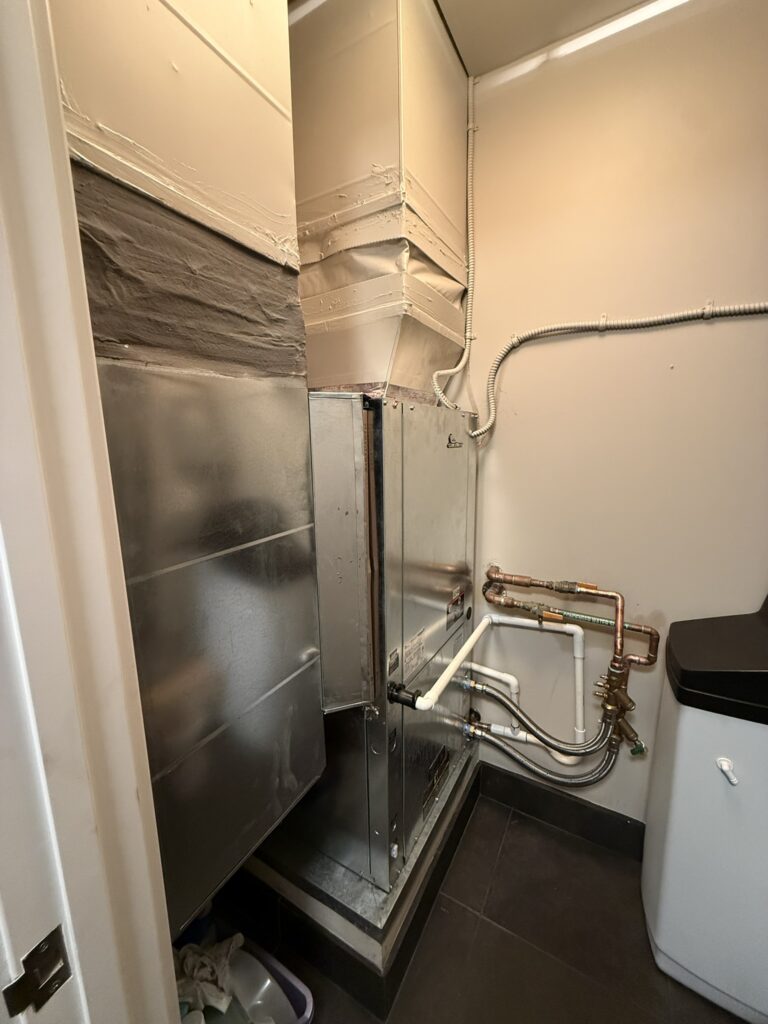
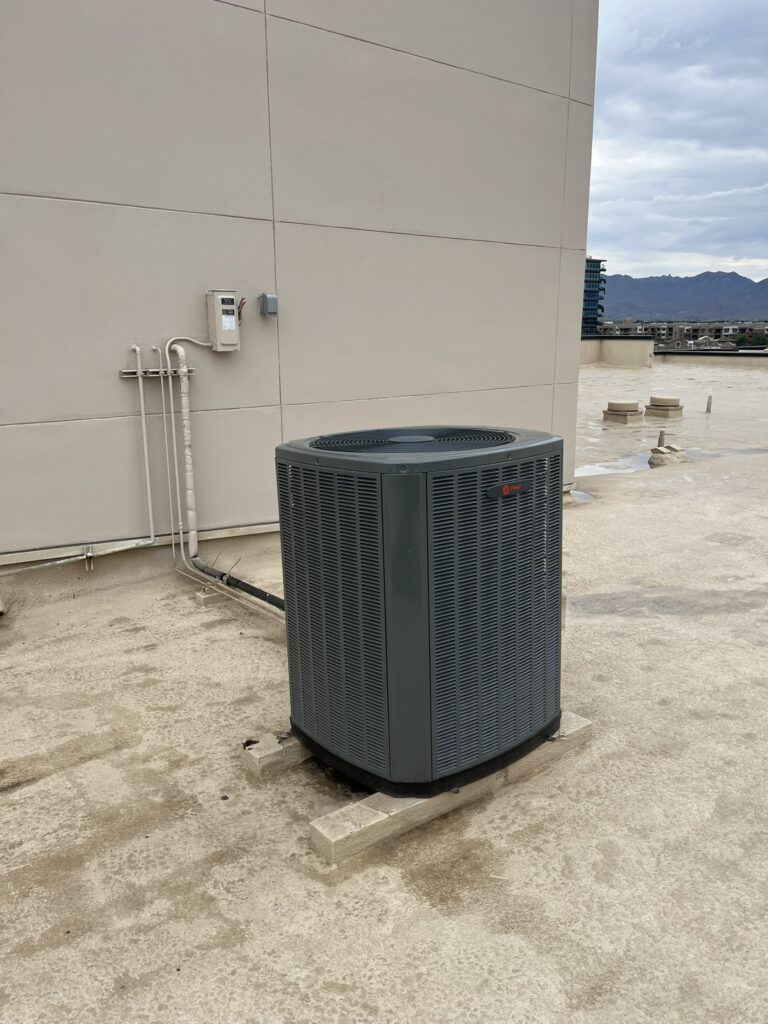
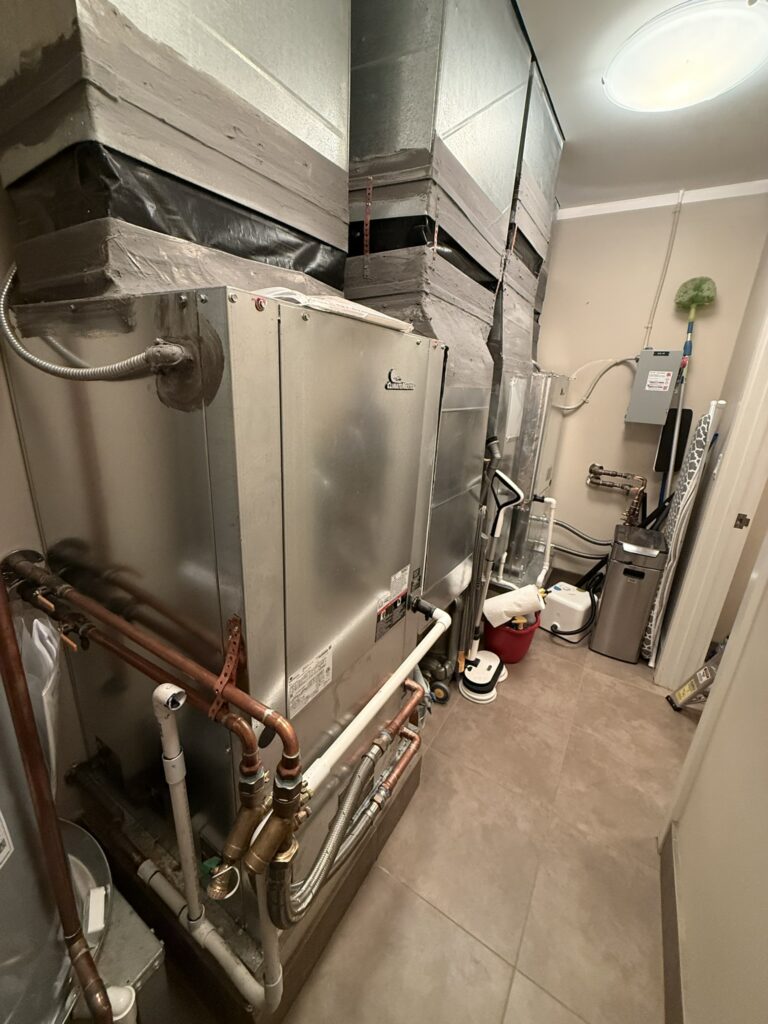
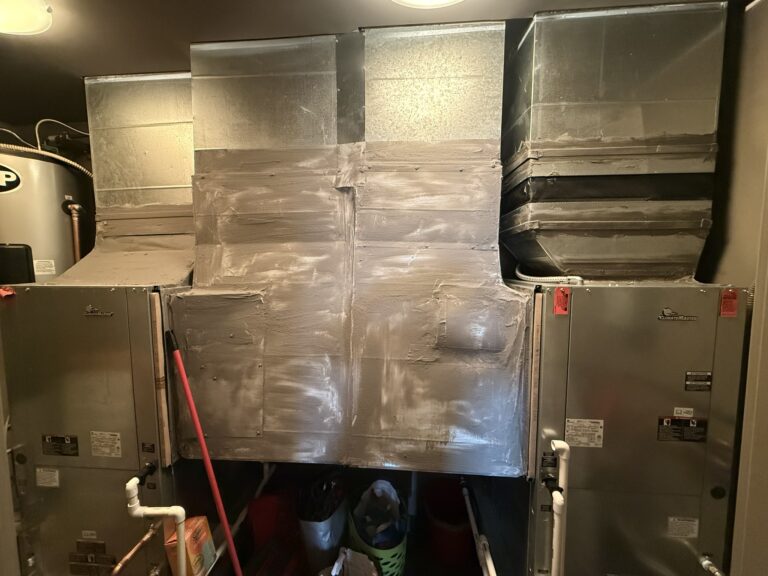
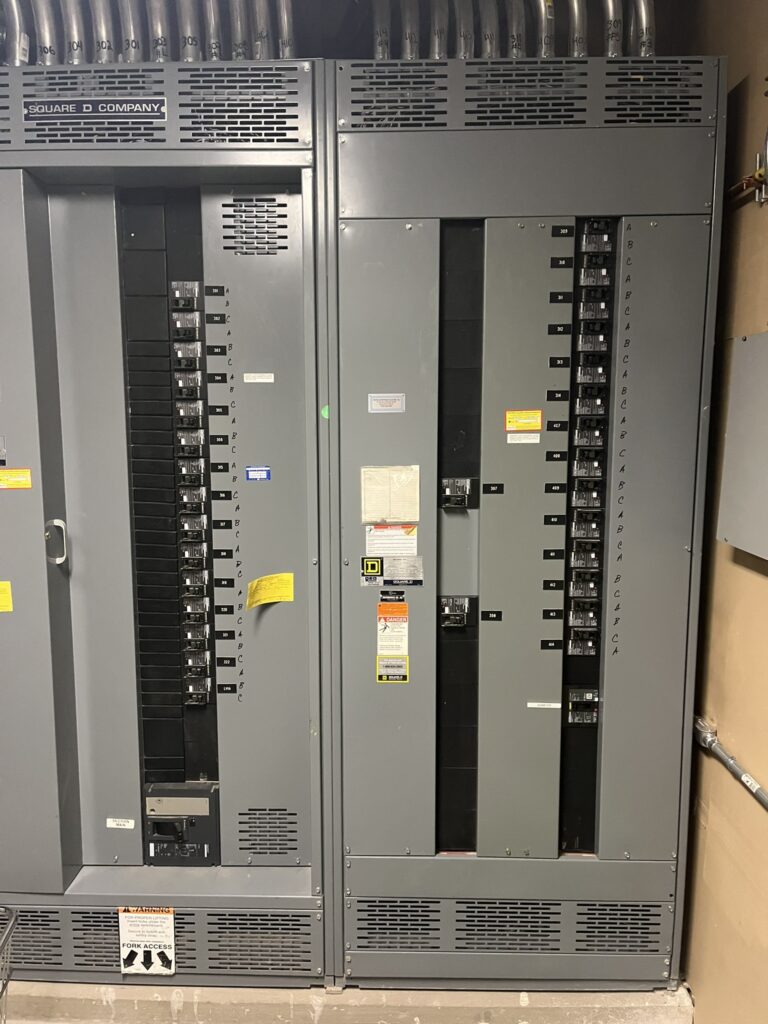
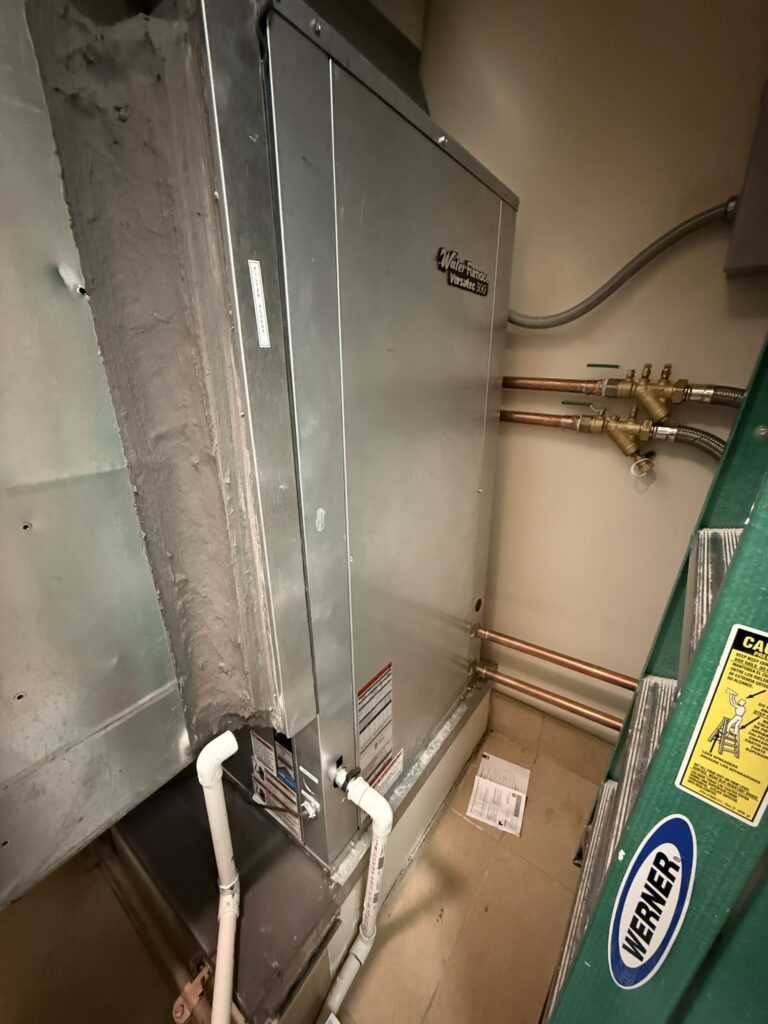
Photos from our own commercial projects across the Phoenix metro — equipment we installed, in buildings we service.
How the job typically runs.
Call us and a person picks up — not a service that takes a message. We name the service-call fee when you schedule and credit it against the job, so nothing about the first visit is a mystery. On the roof or in the mechanical room, we find the actual problem and walk you through it in plain terms: the seized compressor, the curb that predates three refrigerant changes, the return that was never sized for the current floor plan. Then we put a flat-rate price on a written scope — a fixed number for defined work, not a range that drifts upward once the panels come off. For a store or clinic that has to stay open, we schedule around your hours, stage carefully in shared parking, and sequence multi-unit work so no part of the building loses cooling for long. Once equipment is set, we prove it out instead of assuming it: airflow measured against target, charge confirmed by pressures and temperatures, controls and safeties run through their paces. You get a documented closeout — start-up readings, permit finals, warranty paperwork. And because a new unit only reaches old age in this climate if it's maintained from the start, every install we finish can move directly onto a planned maintenance contract. Nights and weekends are options when your floor needs them. All refrigerant work is EPA 608-certified.
- 01 Booking, with the diagnostic fee disclosed
- 02 In-person diagnosis with real readings
- 03 Written flat-rate quote before work begins
- 04 The work: repair, install, or maintenance
- 05 Startup, documentation, and warranty handoff
In Mesa, commercial mechanical installation is permitted and inspected through the city's own building department, on its own timeline. A tenant build-out or a change of use usually calls for sealed mechanical drawings and formal plan review, while a straight like-for-like rooftop replacement generally follows a lighter permit track. When the project involves a commercial kitchen — common across Mesa's dense food-service stock — the hood, exhaust, and make-up air come under NFPA 96, and that has to be designed in from the outset rather than bolted on after the inspector flags it. Every bit of refrigerant handled on the job is recovered and logged to EPA 608 requirements, not released to atmosphere. We assemble the submittal package, coordinate with plan reviewers and inspectors, and fold honest review timelines into the schedule so a permitting delay doesn't blindside a tenant counting on an opening date. The baseline beneath any city's code is the state's own — the Arizona ROC's Minimum Workmanship Standards — the minimum a licensed contractor owes, and our written warranty clears that mark by a wide margin.
Pricing, financing & the 10% military & first responder discount.
Our pricing on a Mesa project is flat-rate and written down: a fixed figure tied to a scope you can read and hold us to, delivered before we start. The diagnostic fee is quoted when you book and comes off the final bill, so an assessment visit is never wasted spend. We steer clear of open-ended time-and-materials language, because a facility manager shouldn't have to defend an invoice that grew after the fact. On bigger replacements and multi-unit build-outs, we'll lay out financing and staged-payment options so a capital expense doesn't have to hit one budget cycle. As a veteran-owned company, we extend a thank-you that lives on the residential side: if you or someone on your crew served, our 10% military, veteran & first responder discount applies to home HVAC work — a gesture for the individual, never in a commercial bid. Business projects are priced strictly on their engineering and access. The one thing we won't hand you is a soft number that hardens into change orders once you're committed. The figure you approve is the figure we work to.
- 01 Flat-rate written quote after an in-person look
- 02 Diagnostic fee disclosed at booking, credited to the repair
- 03 Financing available on replacements
- 04 2-year workmanship warranty; 1-year manufacturer parts warranty
- 05 10% military, veteran & first responder discount
Why a licensed HVAC contractor matters.
FAQs: Commercial AC Installation in Mesa, AZ.
We keep repairing an 80s rooftop unit — when does replacement finally make sense?
When the repairs stop being cheaper than the risk. A unit from Mesa's 80s and 90s building boom is usually past its economic life, still running R-22 that climbs in price every season, and one failure from an unplanned closure on a July afternoon. Once you're into a second breakdown in a season, a failing compressor, or a coil leak on scarce refrigerant, a new staged system almost always wins on reliability and operating cost. We show you the honest math both ways, without pressure.
Can you install for a light-industrial or aerospace shop near Falcon Field?
Yes, and those spaces need a design that respects their actual loads. Process equipment throws off heat a generic office calculation ignores, high-bay ceilings stratify hot air, and some operations near Falcon Field and Gateway require humidity or particulate control for what's being built or stored. We size to the real conditions, choose equipment suited to the ceiling height and zoning, and coordinate crane and structural work around a running shop floor. The goal is stable conditions that protect production. Your production stays protected throughout.
What does commercial ac installation Mesa involve for a restaurant or food-service tenant?
It starts with the kitchen. A commercial ac installation Mesa food-service tenants can rely on has to solve make-up air and hood exhaust under NFPA 96, not just drop a rooftop unit and hope. We calculate the sensible heat your cooking line dumps into the dining room, size the make-up air so the kitchen isn't stealing conditioned air from your guests, and coordinate the mechanical scope with plan review before drywall. You get a flat-rate scope and documentation the inspector accepts, and a comfortable dining room.
Do you work around our hospital or clinic staying fully operational?
We plan for it from the first site visit. Healthcare campuses have zones that cannot drift — pharmacy storage, imaging, patient care — so we sequence change-outs one system at a time and keep critical areas cooled throughout. Heavy lifts and noisy work are scheduled into low-activity windows, staging stays clear of ambulance and patient routes, and we restore full cooling before it's needed. Every phase is coordinated with your facilities team so infection-control and access protocols are respected. The install works around the operation, always.
How much of our parking lot or roof access do you need on install day?
Less than you'd fear, and we plan it with you in advance. A crane pick needs a staged, coned-off footprint for the lift and a clear swing path, which on a busy Mesa retail or big-box lot means an early-morning window before the lot fills. We map staging, delivery, and the boom's reach ahead of time, coordinate with neighboring tenants if the swing crosses a property line, and keep customer access open. Most single-unit swaps are cleared within a single morning, lot normal by opening.
Will a new system actually lower our utility bills here?
In Mesa's climate, meaningfully. Cooling equipment runs close to nonstop for months, so efficiency gains that would take a decade to matter elsewhere show up within a billing cycle or two on your SRP or APS statement. Because commercial rates charge for peak demand as well as consumption, staged and inverter-driven equipment cuts the bill from both sides — fewer kilowatt-hours and a lower billed peak. We put that projection in writing; if 179D might apply, we supply the documentation. Your CPA makes the eligibility call.
Every major brand, serviced and installed.




Phoenix metro: Most days a tech is already working somewhere in the Valley, so same-day appointments happen when the schedule allows. After-hours emergencies are dispatched when a licensed tech is available — a real person answers and tells you the ETA on the call.
Call (520) 556-8929Request an estimate.
No pressure, no door knockers. We look at the HVAC system, tell you what it needs (and what it doesn’t), and put the number in writing.
Need AC installation in Mesa? A real person answers.
Other services we run in Mesa.
AC Installation in nearby cities.
Looking for something else nearby? All HVAC services in Mesa