
Mesa
Chiller Repair in Mesa, AZ.
- (520) 556-8929
- Serving the entire Phoenix metro — we come to you
- Office: Mon–Fri 8:00 AM – 5:00 PM · 24/7 emergency service
- 2-year workmanship warranty · 1-year parts warranty
- Veteran-owned & operated · residential + commercial
- 23 five-star Google reviews
Mesa runs the broadest commercial mix in the East Valley, and its chilled-water plants sit under the buildings where cooling is infrastructure rather than comfort: the large hospital campuses that cannot tolerate a temperature excursion, the light-industrial and aerospace shops around Falcon Field and Gateway that need process cooling year-round, the aging office and institutional buildings whose plants have quietly worked since the 1980s, and the older Main Street retail and food-service strips leaning on the same equipment. Yeti Pros provides chiller repair Mesa facility managers can count on when a plant that has run for thirty summers finally shows its age. We are veteran-owned and operated, licensed under ROC #363372 and ROC #363423, and a real person answers our phone around the clock, every day of the year. When a chiller serving an operating suite, a lab, or an industrial process loses capacity, the cost is not a warm room — it is canceled cases, spoiled runs, and equipment that cannot hold tolerance. Our technicians treat the plant as the engineered loop it is: chiller, pumps, piping, controls, and any cooling tower, diagnosed by someone who reads plant drawings and honors the sequence of operations the design engineer intended. Each visit closes with a flat-rate written quote before work starts and documentation a biomedical or facilities department can file. Mesa's healthcare, industrial, and institutional operators need chiller decisions shaped by plant age and criticality. Tell us the machine, the load it carries, and how much downtime that load can survive, and we send an EPA 608-certified chiller technician who has seen the older equipment Mesa still runs. Call (520) 556-8929.
ZIPs served: 85201, 85203, 85204, 85205, 85210, 85213
What Chiller Repair covers in Mesa.
Air-Cooled & Water-Cooled Diagnostics
Mesa runs both — air-cooled machines on institutional roofs and older water-cooled plants with towers at hospital and industrial sites. We diagnose either from data, reading pressures, temperatures, and approach against the design engineer's numbers, then name the fault plainly. On a thirty-year-old plant patched by many hands, that disciplined read matters more than any nameplate.
Refrigerant Leak & Compressor Service
Decades of thermal cycling open leaks at aging joints and coil circuits, and a slow leak carried through a hard hospital season is what finally kills a compressor. Our EPA 608-certified technicians locate and seal the leak, log the charge, and trace the compressor's underlying cause before condemning a costly machine — never an annual top-off program.
Pump & Motor Repair
On older Mesa loops, chilled-water and condenser-water pumps fail from worn seals, corroded impellers, and cooked windings, and a dead pump strands a plant as completely as the chiller. We rebuild or swap the pump or motor, check alignment, and prove the loop moves its rated flow — critical where hospital redundancy hides a weak pump.
Low-Flow & Control Faults
A chiller tripping on proof-of-flow may hide a real pump failure — or a strainer packed with pipe scale, a trapped air pocket, a failing flow switch, or a sensor drifting on old controls. We trace the true cause rather than jumping the switch, confirm sensor readings against calibrated gauges, and give an older plant back stable control.
Condenser Coil Cleaning
Air-cooled machines on Mesa's institutional roofs collect monsoon dust and years of grime, and a fouled coil is lost capacity, not cosmetics. One haboob can pack a season into the fins and pull double-digit tonnage right when a hospital census peaks. We wash the coil through to its core at low pressure with the right chemistry, saving the fins.
Trend-Log & Approach Analysis
On critical Mesa plants, diagnosis is arithmetic first. Approach temperature is the clearest health signal a chiller gives, and building-automation trend logs frequently expose an intermittent fault that embarrassed earlier visits. We pull the data, weigh it against design and last year's numbers, and leave the readings in your records so the next diagnosis starts from a baseline.
What we see for chiller repair in Mesa.
Mesa's plants carry the fingerprints of buildings that predate most of the metro's growth. On 1980s and 90s office and institutional stock, we meet original chillers and pumps that have never been overhauled — refrigerant charges wandering as decades-old joints seep, control systems built on pneumatic or first-generation electronics, and sequence logic patched by a dozen prior contractors. Hospital campuses run their plants hard and continuously, so we find compressors and pumps worn by sheer hours and redundancy strategies that mask a failing machine until the backup is asked to carry the whole load on a July afternoon. Around Falcon Field and Gateway, aerospace and light-industrial process loads demand chilled water that holds tolerance regardless of the weather outside, and a drifting plant there ruins a run, not just a room. Big-box centers and older Main Street strips round out a portfolio no other East Valley city matches for range.
The desert supplies the same relentless stress every Valley plant endures, but Mesa's older air-cooled machines meet it with the least margin. Condenser coils packed with monsoon dust and years of institutional-roof grime choke heat rejection until condensing pressure climbs and capacity collapses on the hottest day of the year. Low-flow lockouts on these systems trace to fouled strainers, corroded piping, and tired pumps just as often as the chiller. Older controls drift out of calibration and hand the machine bad data to act on, and on the industrial side that shows up as a process losing its setpoint rather than merely a warm office. Because Mesa buildings tend to run equipment until it dies, we see the aftermath of deferred maintenance more here than almost anywhere — a known-marginal plant that finally quits under peak load, with no cool-weather window left to work in. Facilities that break the pattern put their plants on planned maintenance contracts, catching seeping joints and fouled coils in winter rather than at a hospital census peak.
- 01 Airflow and static pressure
- 02 Electrical: capacitors, contactors, draws
- 03 Refrigerant-circuit behavior
- 04 Drains, safeties, and float switches
- 05 Thermostat, controls, and cycling
- 06 Ducts, returns, and room-by-room comfort
Commercial jobs we have documented.
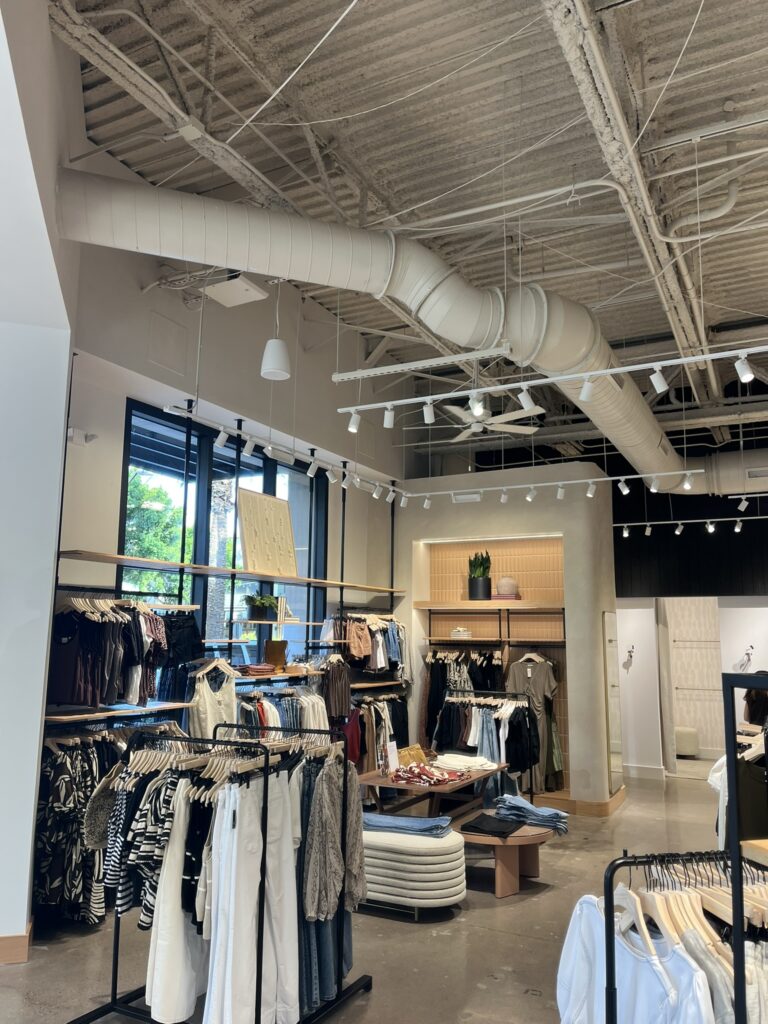
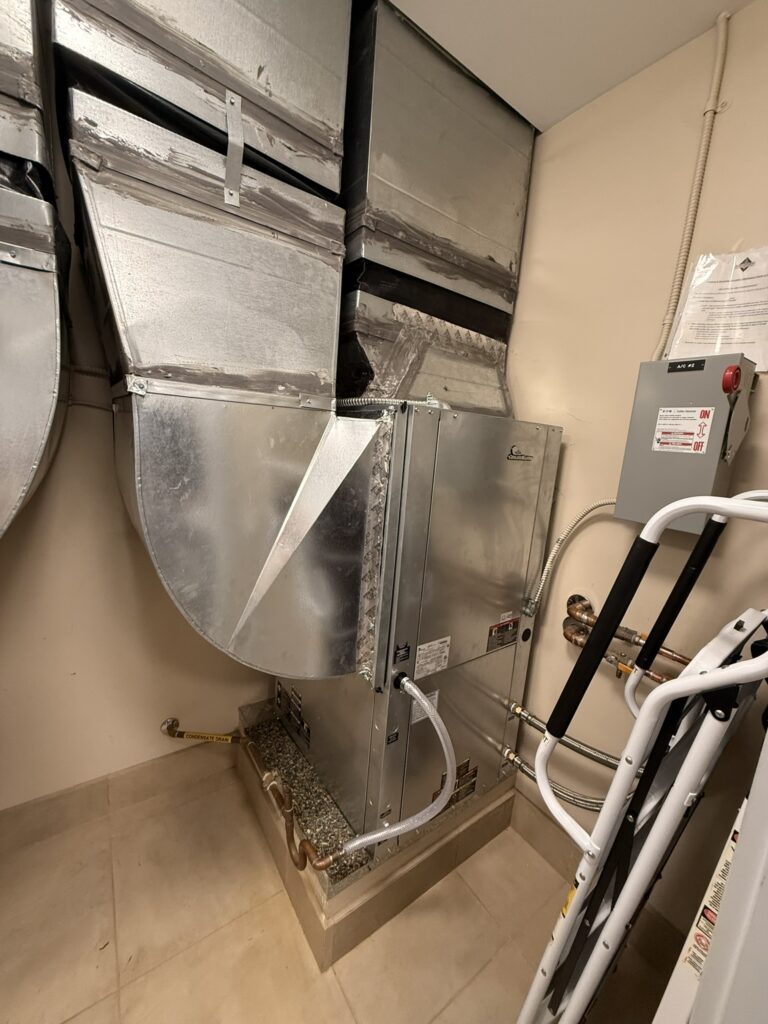
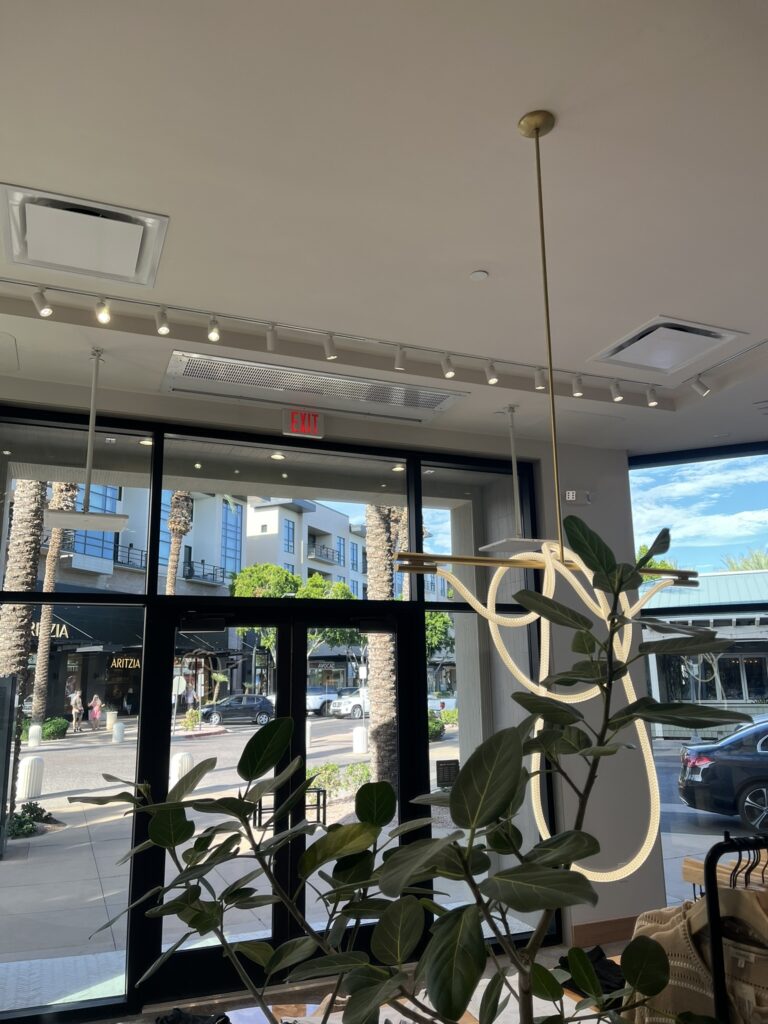
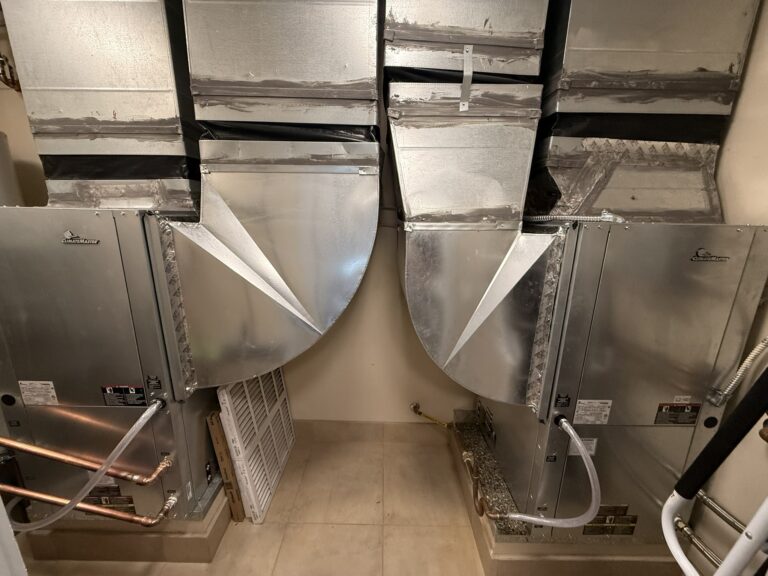
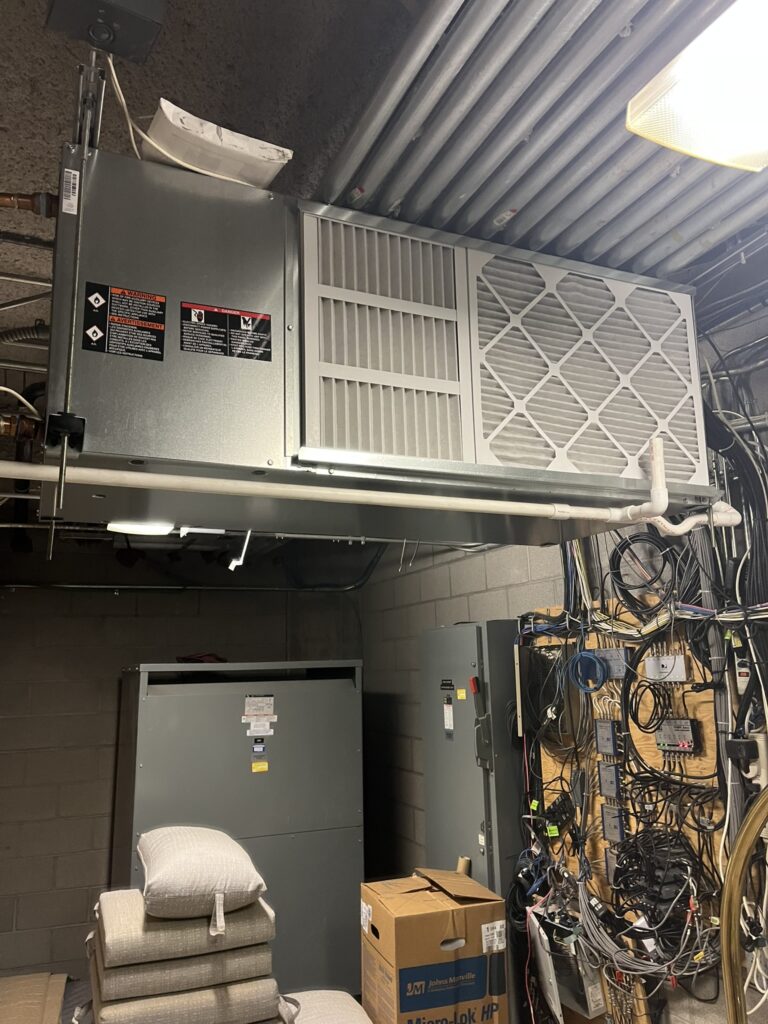
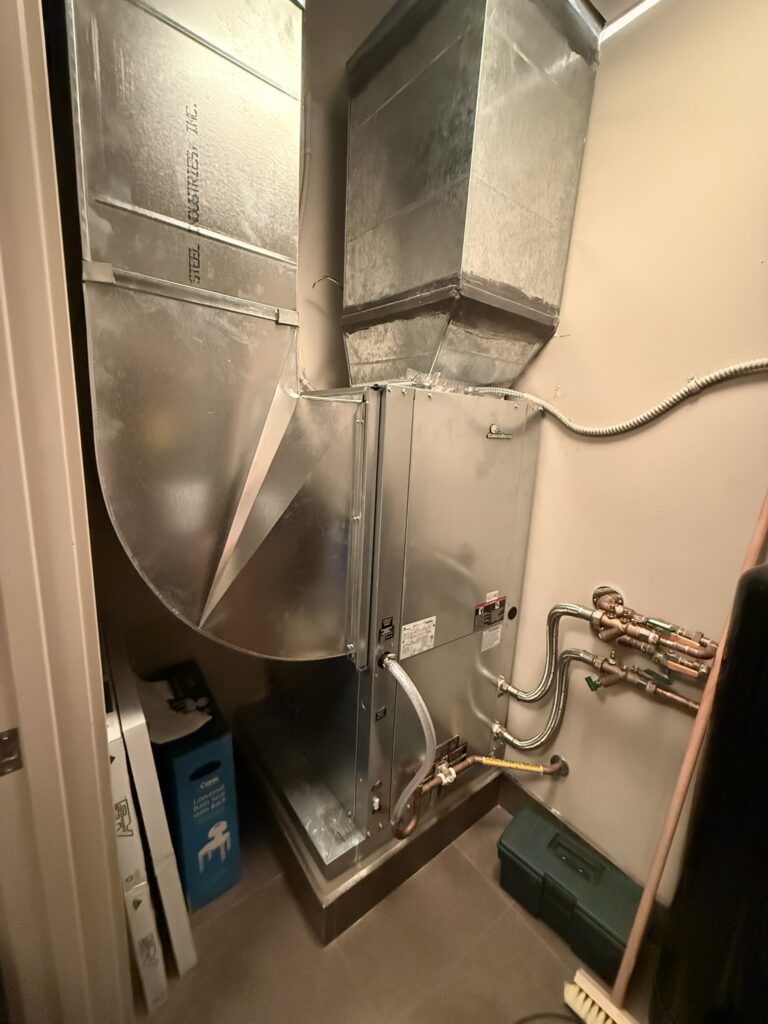
Photos from our own commercial projects across the Phoenix metro — equipment we installed, in buildings we service.
How the job typically runs.
The engagement opens with the service-call fee named up front at booking and credited against the repair the instant you approve it, so an aging plant never becomes an open-ended bill. Mesa's hospital and industrial buildings usually run continuously, so we plan around your operations rather than a nine-to-five clock — coordinating outage windows with biomedical or plant-engineering staff, working redundant machines one at a time to keep the load covered, and staging parts before we open anything. On site, the technician diagnoses the real fault and then shows it to you: a compressor drawing the wrong current, an evaporator approach that says the tubes are fouling, a pump cavitating on a starved suction. Only then does a quote exist, and it is a flat-rate written figure rather than an hourly meter. EPA 608-certified technicians handle and document all refrigerant work. After the repair, we load the plant and confirm it holds — approach, pressures, flow, and amp draws checked against design — because a machine that behaves at idle but folds under census or full production has not been fixed. Every call closes with a written report of findings, parts, readings, and photos where they help, noted against the machine's tag so a multi-chiller plant keeps a clear history. When a plant serving a critical load is down, it goes straight to the front of the schedule.
- 01 Booking, with the diagnostic fee disclosed
- 02 In-person diagnosis with real readings
- 03 Written flat-rate quote before work begins
- 04 The work: repair, install, or maintenance
- 05 Startup, documentation, and warranty handoff
Component-level chiller repair in Mesa — swapping a compressor, pump, motor, sensor, or control board like-for-like — usually does not require a City of Mesa mechanical permit. A permit becomes necessary once a repair grows into a replacement, once piping is reworked, or once the machine's power supply is modified, and those scopes carry a mechanical permit and inspection that we pull and manage rather than leave to your staff. Hospital and institutional work often layers additional health-facility and life-safety review on top of the municipal permit, and we operate within those requirements. Where a chiller feeds a commercial kitchen's hood and make-up air, NFPA 96 dictates the interaction, and we keep to its clearances. Refrigerant recovery, charging, and leak repair are handled and logged by EPA 608-certified technicians, exactly as federal law requires. Arizona licenses this work through the Registrar of Contractors, and each contractor is bound by the state's Minimum Workmanship Standards. Our written warranty deliberately exceeds that minimum floor — it is what we promise your facilities group, not the least the state accepts.
Pricing, financing & the 10% military & first responder discount.
We quote flat-rate and in writing before any work begins, so an eighties-vintage plant does not turn into an hourly surprise. You approve a fixed number, and the service-call fee disclosed at booking credits toward the repair once you authorize it. On older Mesa equipment, where a diagnosis can uncover several tired components, we still put a firm figure in front of you before the wrench turns rather than revealing the total afterward. When repair costs approach the price of replacing a decades-old machine, we set both numbers side by side so your finance and facilities teams decide with real data. For hospital campuses and multi-building sites, we can structure scheduled coverage that flattens budgeting and builds in priority dispatch. Rebate amounts and contract pricing only belong in the conversation when they can be verified and honored. One note for the people who keep these buildings running: our 10% military, veteran & first responder discount is a residential offer for the homes of owners and staff who served — their own houses, not a commercial invoice — and we raise it because Mesa's payrolls carry many veterans.
- 01 Flat-rate written quote after an in-person look
- 02 Diagnostic fee disclosed at booking, credited to the repair
- 03 Financing available on replacements
- 04 2-year workmanship warranty; 1-year manufacturer parts warranty
- 05 10% military, veteran & first responder discount
Why a licensed HVAC contractor matters.
FAQs: Chiller Repair in Mesa, AZ.
Do you handle chiller repair Mesa hospital campuses can schedule around patient care?
Yes. Chiller repair Mesa hospital campuses need has to fit around census and clinical schedules, so we coordinate outage windows with your biomedical and plant-engineering staff, work redundant machines one at a time to keep the load covered, and stage parts before opening anything. Critical loads move to the front of our schedule, and a live person answers our line around the clock. We leave documentation your facilities and biomedical departments can file, so the repair lands with no impact a patient feels.
Our chiller is from the early nineties — is it worth repairing?
Often, yes. Plenty of Mesa's institutional plants from the eighties and nineties have good bones, and a targeted repair or overhaul can add years while replacement capital is budgeted. We answer with data — the machine's condition, refrigerant type, efficiency against current models, and repair history — not a reflexive push to replace. R-22 plants do grow costlier every season. You get the repair figure and the change-out figure side by side, in writing, and the decision stays with your teams.
Can you keep an industrial process cool during the repair?
That depends on your plant's design, but around Falcon Field and Gateway most process-critical shops run some redundancy or can schedule a controlled window, and we plan the repair to protect the run. Where a machine can be isolated, we work it while a second carries the load; where it cannot, we stage every part and prep the job to compress the outage. We confirm the plant holds tolerance under real load before calling it done, because process cooling that drifts ruins product.
Why does our chiller lose capacity worst on the hottest afternoons?
Because an air-cooled machine's ability to reject heat depends on its condenser coils breathing freely, and mid-afternoon is when Mesa's ambient peaks and that margin disappears. Coils matted with monsoon dust, a failed condenser fan, blocked airflow, or an overcharge all narrow the margin until the plant safeties out at the worst moment. On older equipment the effect is sharper, with less headroom to begin with. We start with a coil cleaning plus a fan and charge check, then verify it under load.
Will you coordinate with our plant engineers and prior contractors' work?
Yes. Mesa's older plants have usually been touched by many hands, and we work as an extension of your on-staff engineers rather than over them. We check in before touching the machine, honor lockout and tagout, read the existing sequence of operations before changing anything, and document every setpoint and reading we alter. Where prior contractors left patched logic or undocumented modifications, we map what is actually there before we quote. Your engineers keep ownership; we bring the diagnostics and records.
Which chiller brands do you service?
We work on the major commercial machines across Mesa's older and newer buildings — Carrier, Trane, York, and Daikin/McQuay among them — in scroll, screw, and centrifugal configurations. Because so much Mesa equipment predates current controls, our first move is reading the plant's real data rather than trusting a nameplate. If a repair genuinely needs factory-proprietary software we cannot access, we say so plainly. From a small unit to a large hospital plant, the method does not change.
Every major brand, serviced and installed.





Phoenix metro: Most days a tech is already working somewhere in the Valley, so same-day appointments happen when the schedule allows. After-hours emergencies are dispatched when a licensed tech is available — a real person answers and tells you the ETA on the call.
Call (520) 556-8929Request an estimate.
No pressure, no door knockers. We look at the HVAC system, tell you what it needs (and what it doesn’t), and put the number in writing.
Need chiller repair in Mesa? A real person answers.
Other services we run in Mesa.
Chiller Repair in nearby cities.
Looking for something else nearby? All HVAC services in Mesa