
Glendale
Commercial AC Installation in Glendale, AZ.
- (520) 556-8929
- Serving the entire Phoenix metro — we come to you
- Office: Mon–Fri 8:00 AM – 5:00 PM · 24/7 emergency service
- 2-year workmanship warranty · 1-year parts warranty
- Veteran-owned & operated · residential + commercial
- 23 five-star Google reviews
When a Westgate arena empties three thousand people into the restaurants next door at once, the cooling either holds the room or it loses the table, and a lost table on a sold-out night is real money. Yeti Pros builds and replaces commercial cooling for exactly that reality across Glendale, from the hospitality clustered around the entertainment district to the big-box retail off the Loop 101 and the older warehousing that fills the west side. We are veteran-owned and operated, licensed under ROC #363372 and ROC #363423, and every proposal leaves here as a flat-rate written number tied to a defined scope rather than a guess that swells once the ceiling is open. A design-build approach to commercial ac installation Glendale operators can plan around means one contractor owns the load math, the equipment choice, the permit trail, and the start-up data, with no daylight between what a designer assumed and what an installer will later admit. For a tenant improvement turning a shell suite into a sports bar or a medical office, that coordination starts before drywall, when an undersized system or a missing make-up air unit still costs a phone call instead of a demolition crew. For an end-of-life change-out on a strip center that has cooled the same tenants since the nineties, it means sequencing the swap around a business that cannot lock its doors for a week. Commercial AC installation should account for occupancy load, RTU-versus-VRF selection, and commissioning before the job is truly scoped. Glendale brings event swings, aging west-side roofs, and downtime that turns a full dining room into lost revenue. Call (520) 556-8929 and we start with the building.
ZIPs served: 85301, 85302, 85304, 85305, 85308
What AC Installation covers in Glendale.
Commercial Occupancy Load Calculation
Event-district buildings swing from empty to packed in an hour, so we size for the surge, not an average. We tally occupant density, kitchen and equipment heat, west glass, and code-required ventilation air, then set capacity from this room's real occupancy, the line between holding a full house on game day and losing the afternoon.
Equipment Selection: RTU, Split, VRF
Platform follows building. Packaged rooftops stay the Glendale default for retail and warehousing with the structure to bear them; splits fit a suite wanting its own metered cooling; VRF earns its place in multi-tenant medical and hospitality. We weigh each with lifecycle and demand math, since APS and SRP charge for peak, and staging governs it.
Phased Cutover Around Operations
Arena-area hospitality and Grand Avenue production floors rarely close, so we drop one system at a time, never the whole roof. Lifts run nights and weekends, cooling is back before doors reopen, and where a gap is unavoidable you learn its length before signing, with temporary cooling for a space that cannot ride it out.
Crane and Structural Coordination
A rooftop swap is a crane pick: staging room, an early lift window before the wind, and neighbor coordination when the boom crosses a shared roofline. Since new units rarely match the old footprint, adapters bridge the opening with a roofer where flashing is cut, and we verify the deck carries the weight before booking.
Permits and Mechanical Plan Review
We carry Glendale's mechanical permits end to end, sealed drawings and formal review for a build-out or the lighter path for a straight swap. We assemble the submittals, set the inspection, and meet the inspector on site. Timelines go into the schedule up front, because a permit that idles a general contractor's crew bills by the day.
Commissioning Documentation
The install is finished when the numbers check, not when the unit hums. We record start-up fully, airflow against design, charge verified by superheat and subcooling, economizer and controls run, safeties confirmed, then hand you a closeout of start-up data, balancing, warranty registrations, and sign-offs that answers questions a decade out. All refrigerant work meets EPA 608.
What we see for AC installation in Glendale.
Glendale's defining commercial challenge is the load that refuses to sit still. A restaurant or hotel near the entertainment district runs a near-empty dining room at two in the afternoon and a packed one two hours later when an event lets out, and a system sized for the average of those two states satisfies neither. Single-stage equipment picked off a square-footage chart short-cycles through the quiet hours and then falls behind the moment the crowd and the kitchen heat arrive together. We size these buildings for the surge, not the mean, and lean toward staged or inverter-driven capacity that can throttle down between events instead of running full-bore or nothing. Nearby hotels and healthcare share that same swing, with even less slack for a warm lobby or waiting room. The west side tells a second story. Grand Avenue and the industrial blocks around 43rd carry a large population of rooftop units set in the late nineties and early two-thousands, plenty still limping on R-22 that costs more every year in service. When the repair math on one of those finally tips, the replacement lands on a warehouse or shop that runs a shift and cannot go dark, so the change-out is choreographed rather than simply scheduled. Older big-box and strip retail along the 101 hides another pattern: refrigerated equipment bolted onto ductwork and curbs that were undersized when they went in, so swapping the box without correcting the airflow just buys a newer unit that struggles the same way. Kitchens add their own layer, since a conversion into a full-service restaurant drags hood exhaust, make-up air, and NFPA 96 into the mechanical scope, and skipping that in design is how a build stalls at plan review. Across all of it, the through-line is that Glendale buildings punish assumptions. The system that holds a full house on a 113-degree game day is the one designed around this building's real occupancy and this roof's real structure, not a number borrowed from the last job.
- 01 Airflow and static pressure
- 02 Electrical: capacitors, contactors, draws
- 03 Refrigerant-circuit behavior
- 04 Drains, safeties, and float switches
- 05 Thermostat, controls, and cycling
- 06 Ducts, returns, and room-by-room comfort
Commercial jobs we have documented.
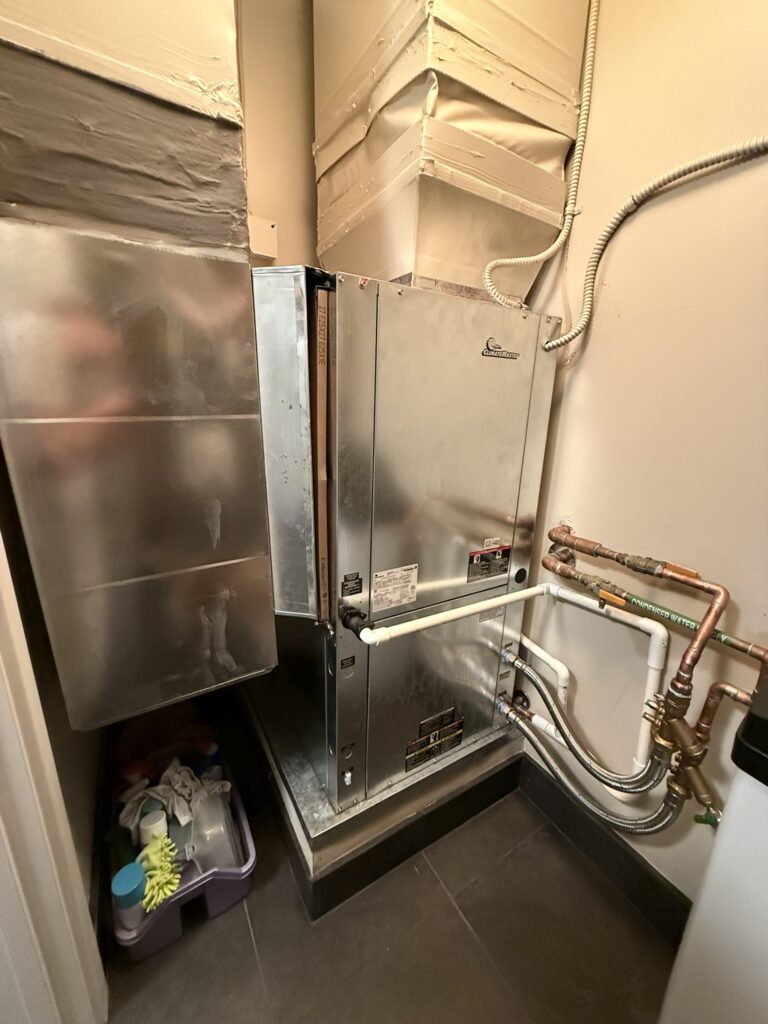
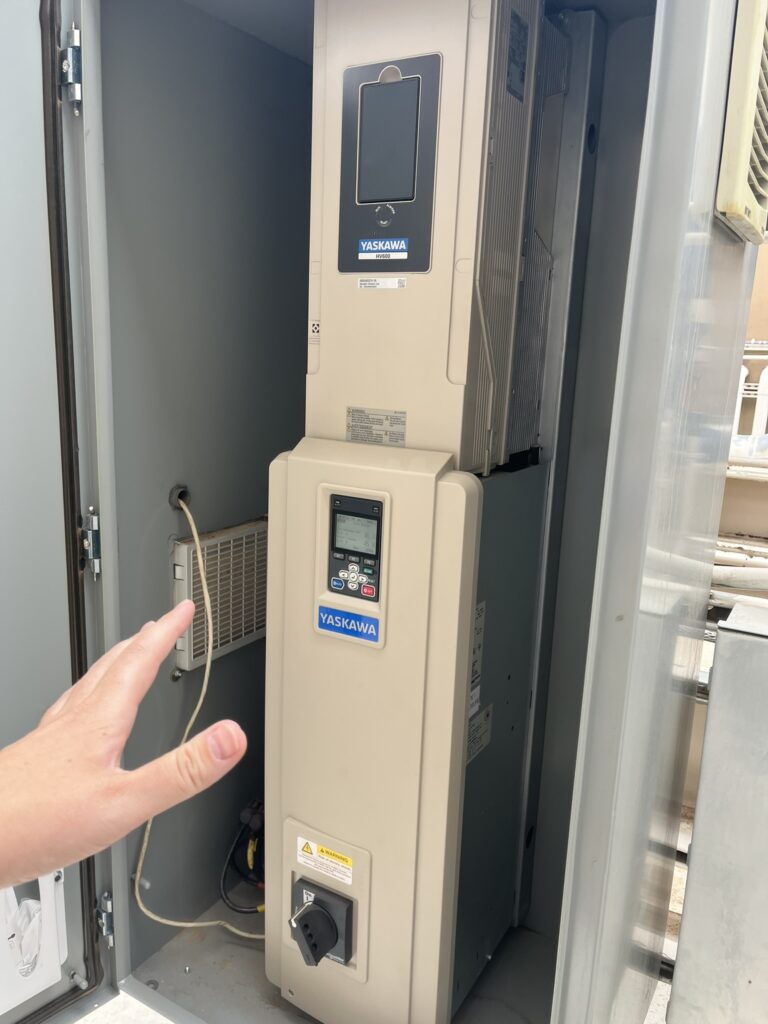
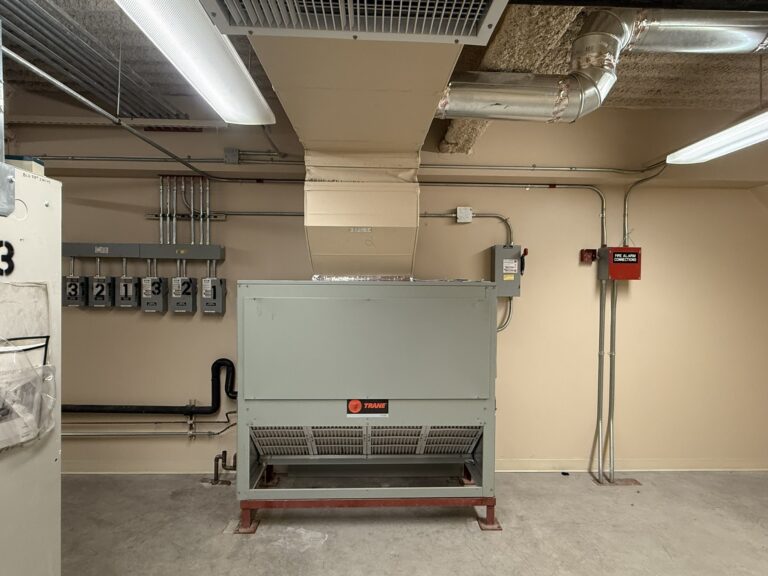
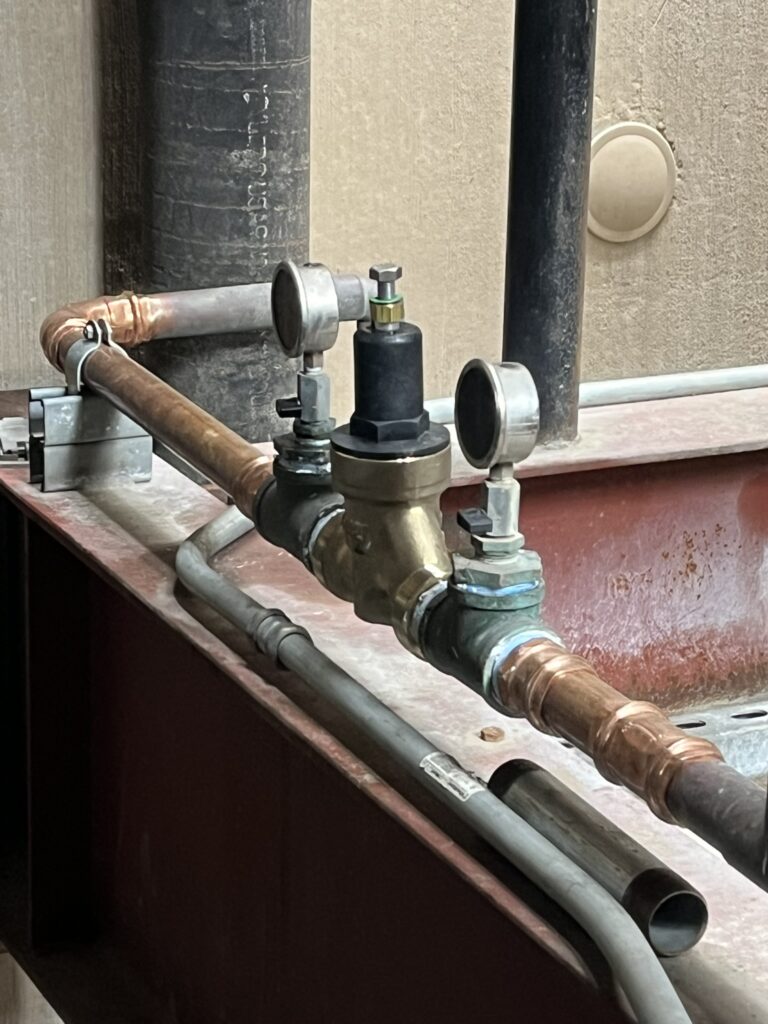
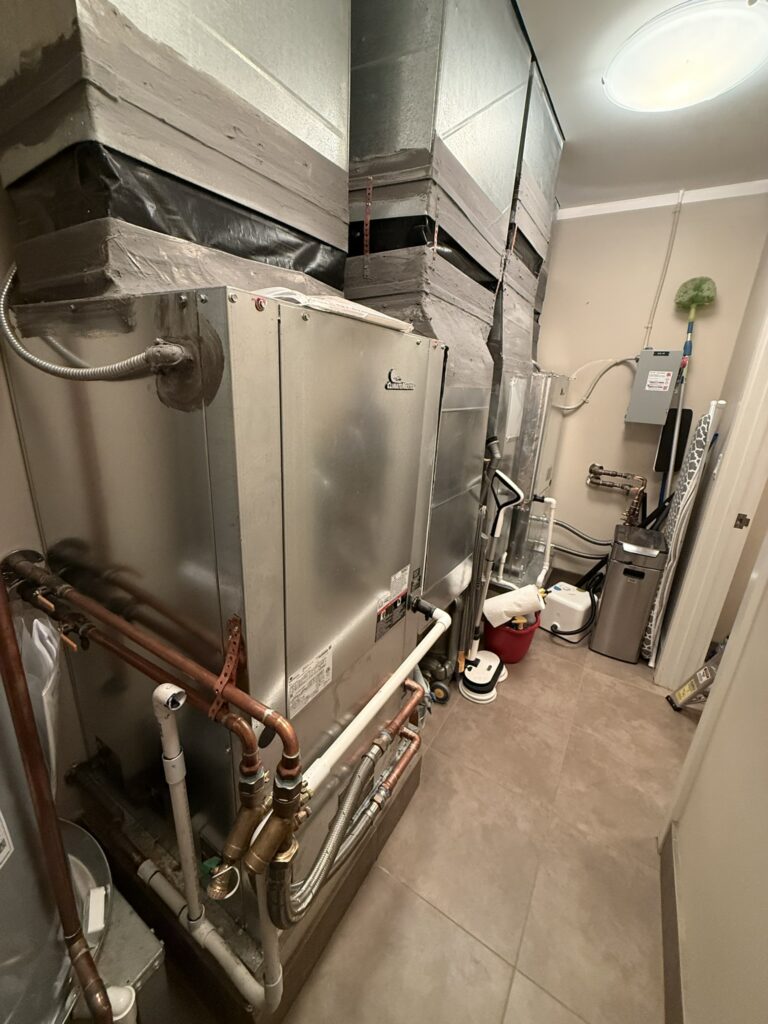
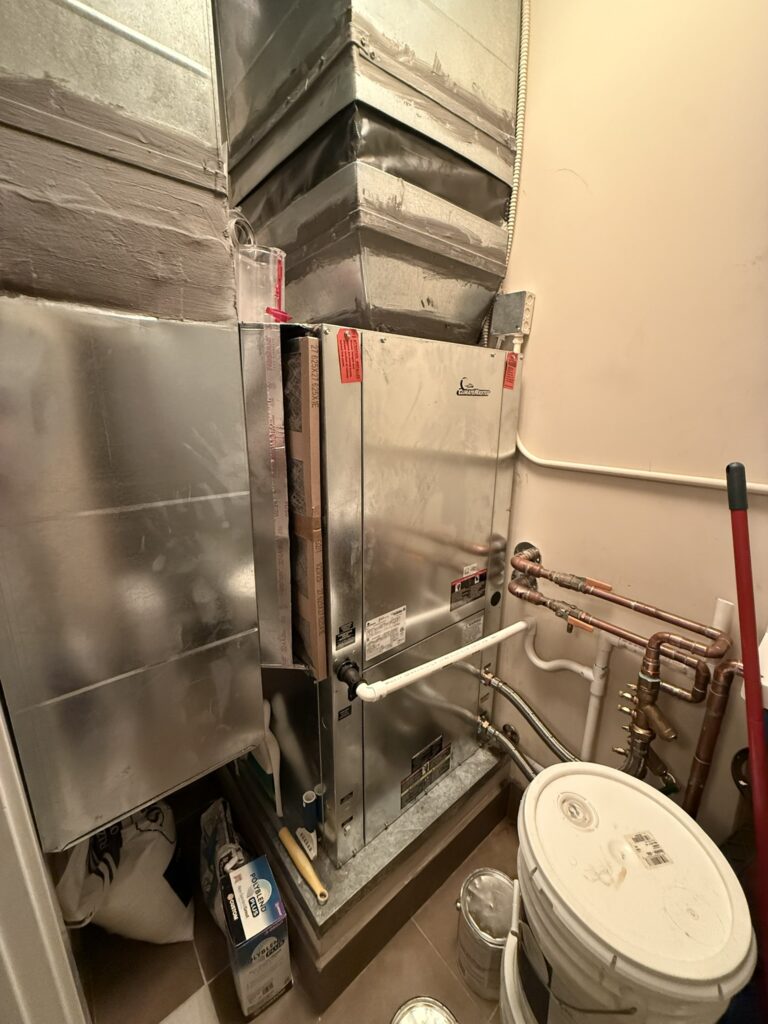
Photos from our own commercial projects across the Phoenix metro — equipment we installed, in buildings we service.
How the job typically runs.
A commercial project with us runs on disclosure from the first call. The service-call fee is stated at booking, before anyone drives out, and it credits toward the work if you move forward. On site we diagnose the actual building, measuring the load, examining the roof structure and the existing curbs, and showing you what we find rather than describing it from the truck. From that comes a flat-rate written quote: a fixed number against a defined scope, with the equipment platform and the cutover plan spelled out so a facility manager can take it upstairs without footnotes. Because Westgate-area hospitality and west-side production floors mostly cannot close, the work bends around your hours, with night and weekend crane picks, phased cutovers that drop one system at a time instead of the whole roof, and cooling restored before doors reopen. A real person answers around the clock, so an install week that hits a snag at nine at night reaches a human, not a machine. When the equipment is running we verify it, checking measured airflow, confirming charge by superheat and subcooling, and exercising the control sequences, then hand over a documented closeout. Every system we set can roll straight into a planned maintenance contract so the asset stays on its design curve from year one. The order holds on every job, because each step is what makes the next one trustworthy.
- 01 Booking, with the diagnostic fee disclosed
- 02 In-person diagnosis with real readings
- 03 Written flat-rate quote before work begins
- 04 The work: repair, install, or maintenance
- 05 Startup, documentation, and warranty handoff
Commercial mechanical work in Glendale is permitted work, and the city runs its own submittal and inspection process through development services. A tenant improvement usually needs sealed mechanical drawings through formal plan review, while a like-for-like rooftop change-out generally rides a lighter permit path. We prepare the submittals, meet the inspector, and build review timelines into the schedule so a permit surprise never idles a GC. Where the project involves a commercial kitchen, common in restaurants feeding the entertainment-district crowds, hood exhaust and make-up air pull NFPA 96 into scope, and that belongs in the mechanical design from the first sketch rather than discovered at inspection. All refrigerant handling is performed and logged to EPA 608 standards. We also coordinate any electrical and structural sign-offs a change-out can trigger, so one trade never stalls another. Underneath every licensed job sits Arizona's baseline, the Registrar of Contractors' Minimum Workmanship Standards, the least a contractor may legally deliver. Our written warranty and documented commissioning are built to clear that floor by a wide margin, and the paperwork proving it stays with you.
Pricing, financing & the 10% military & first responder discount.
Glendale pricing starts with an honest admission: a shell-to-restaurant tenant improvement and a like-for-like rooftop swap live in different worlds, and no phone estimate can tell them apart. So we quote after the assessment, in writing, as a flat-rate number attached to a scope you can read line by line. The service-call fee disclosed at booking is credited toward the job when you proceed, so the diagnostic is never a sunk cost. Financing is available on approved credit, which for many operators is the difference between replacing a dying system on a planned timeline and scrambling during an event weekend in July; we will walk the terms without pressure. Multi-unit sites can be phased so the spend spreads across a season. Commercial projects are priced on their own defined scope. Separately, because we are a veteran-owned shop, if you or anyone on your staff served, our 10% military, veteran & first responder discount applies to residential HVAC work at home, a thank-you for the person rather than a line we promise on a commercial invoice. The number you approve is the number you pay.
- 01 Flat-rate written quote after an in-person look
- 02 Diagnostic fee disclosed at booking, credited to the repair
- 03 Financing available on replacements
- 04 2-year workmanship warranty; 1-year manufacturer parts warranty
- 05 10% military, veteran & first responder discount
Why a licensed HVAC contractor matters.
FAQs: Commercial AC Installation in Glendale, AZ.
How do you price a commercial AC installation for a Glendale business?
We price after seeing the building, never before. A tenant-improvement fit-out near Westgate and a rooftop swap on an older strip center sit in different ranges, so a firm phone figure would be a guess. What you get instead is a flat-rate written quote tied to a defined scope, with the service-call fee credited toward the work. Every commercial ac installation Glendale operators sign with us shows the equipment, the cutover plan, and options in plain numbers, and the figure you approve is the figure you pay.
Can you replace our rooftop units without shutting the restaurant down?
In most Glendale buildings, yes. Hospitality around the entertainment district lives on event nights, so we schedule change-outs for the dead hours, late nights, slow mornings, off-event days, and run phased cutovers that keep partial cooling online throughout. The crane picks when the lot is empty, and cooling is back before the doors reopen. Where a single-system building faces an unavoidable gap, we give you the exact window well in advance and can stage temporary cooling so the dining room never loses a single service.
Why size for events instead of square footage?
Because Glendale's crowds do not read the square-footage chart. A venue-adjacent bar or hotel restaurant sits nearly empty mid-afternoon and then fills the moment an event lets out, dragging kitchen and body heat in together. A single-stage system picked off a rule of thumb short-cycles through the quiet and falls behind the moment the room is full and paying. We run a real occupancy load calculation and lean toward staged capacity, so the system holds setpoint on a packed game day instead of surrendering the afternoon.
Our west-side warehouse still runs R-22 rooftops. When should we replace?
When the repair math stops working, which for late-nineties R-22 equipment arrives sooner every year. Around Grand Avenue and the 43rd Avenue industrial blocks we see plenty of units limping through summers on refrigerant that costs more each season and a compressor nobody wants to gamble on in July. Planning the change-out on your schedule beats an emergency during a production week: you compare equipment tiers calmly, we choreograph the cutover around your shift, and the new system arrives before the old one strands you.
Do we need sealed drawings and plan review for a tenant improvement?
Usually, yes. A Glendale shell space becoming a restaurant or medical suite typically needs sealed mechanical drawings through formal plan review, while a like-for-like rooftop replacement generally rides a lighter permit path. Scope and city thresholds decide which. We prepare the submittals either way, meet the inspector, and fold realistic review timelines into the schedule up front. For restaurant conversions, hood exhaust and make-up air bring NFPA 96 into the mechanical design, so we build that in from the first sketch rather than at inspection.
What do utility demand charges have to do with equipment choice?
A great deal, because APS and SRP bill commercial accounts for peak demand, not only total consumption. An oversized single-stage unit that slams to full output sets a high billed peak monthly, while staged equipment matches capacity to the moment and shaves that peak. In an event-driven Glendale building, where load spikes hard and then relaxes, matched staging saves twice, through fewer kilowatt-hours and a lower demand charge. We put the projection in writing at your real rate schedule, so the equipment tier is a business decision.
Every major brand, serviced and installed.



Phoenix metro: Most days a tech is already working somewhere in the Valley, so same-day appointments happen when the schedule allows. After-hours emergencies are dispatched when a licensed tech is available — a real person answers and tells you the ETA on the call.
Call (520) 556-8929Request an estimate.
No pressure, no door knockers. We look at the HVAC system, tell you what it needs (and what it doesn’t), and put the number in writing.
Need AC installation in Glendale? A real person answers.
Other services we run in Glendale.
AC Installation in nearby cities.
Looking for something else nearby? All HVAC services in Glendale