
Mesa
Commercial HVAC Maintenance in Mesa, AZ.
- (520) 556-8929
- Serving the entire Phoenix metro — we come to you
- Office: Mon–Fri 8:00 AM – 5:00 PM · 24/7 emergency service
- 2-year workmanship warranty · 1-year parts warranty
- Veteran-owned & operated · residential + commercial
- 23 five-star Google reviews
Mesa runs the widest commercial deck in the East Valley, and its HVAC reflects that spread. Light industrial and aerospace shops cluster around Falcon Field and Phoenix-Mesa Gateway, hospital campuses carry life-safety loads that never pause, big-box centers and older Main Street strips hold retail and food service, and much of it sits on rooftop equipment installed when these buildings went up in the 1980s and 90s. That aging fleet is the quiet story here: units still turning over, but past design life and bleeding efficiency. Reliable commercial HVAC maintenance Mesa facility managers can count on starts by taking that reality seriously, measuring what the equipment actually does instead of assuming a 30-year-old RTU still behaves like its nameplate. Yeti Pros performs scheduled preventive work across Mesa's mix, covering package rooftop units, split systems, air handlers, and the refrigeration behind grocery and restaurant floors. Veteran-owned and operated, our EPA 608-certified Mesa technicians capture readings, trend them from one visit to the next, and leave a per-asset report a facilities director can put in front of ownership or a capital committee. We hold Arizona ROC #363372 and ROC #363423 and cover the full metro. Older equipment does not mean guesswork; it means the numbers matter more, because a failing compressor on a legacy unit is a change-out to plan for, not a surprise to absorb in July. Start with what your portfolio looks like, and we will match the commercial HVAC maintenance scope to it. A real person answers at any hour, every quote is flat-rate and in writing, and the service-call fee is disclosed at booking and credited toward the repair. Call (520) 556-8929 to schedule a no-pressure Mesa site walk.
ZIPs served: 85201, 85203, 85204, 85205, 85210, 85213
What HVAC Maintenance covers in Mesa.
Scheduled RTU & split-system PM
The full visit for Mesa's rooftops and air handlers. Capacitors are measured against rating, contactors inspected for pitting, motor amps checked to nameplate, refrigerant performance verified, and condensate serviced. On the legacy equipment around Main Street and older business parks, this is where a tired compressor gets flagged in spring, ahead of a four-week July parts wait.
Coil cleaning as capacity insurance
Dust is a condenser coil's insulation, and Mesa's air near Falcon Field and Gateway loads coils fast. As a coil fouls, the unit strains to move less cooling, punishing an aging compressor already short on margin. We scrub condensers before summer and rinse them after monsoon dust. On a demand bill, this line reads most clearly.
Belt, bearing & motor service
Older Mesa rooftops run belt-drive blowers that heat and runtime chew through fast. We check tension, alignment, and glazing, inspect pulleys, lubricate bearings, and catch the early howl before a blower seizes and takes the motor. On a grocery or big-box unit, a spring bearing swap beats an emergency motor call during peak July hours.
Economizer & controls verification
Legacy economizers are where free cooling quietly dies, with dampers seized, actuators failed, and sensors drifted after decades on a Mesa roof. We work the dampers through their stroke, confirm actuators and sensors, and free seized linkages so mild winter nights offset load. On older strip-center units, a jammed damper often explains a demand charge nobody chased.
Filter program management
Filtration fails on wrong rating or wrong cadence, and Mesa's industrial dust near Falcon Field forces the issue. We match MERV to each space, heavier for medical and office suites, balanced against an aging blower's static, and log each size and rating. Shop bays and dusty strips off bare lots earn filter-only visits between full PMs.
Written per-asset condition reports
On a portfolio of aging Mesa buildings, the report is the plan. Each asset earns a condition grade and a remaining-life estimate, every reading trended against the prior visit, with photos where they explain faster. A legacy RTU sliding year over year becomes a budget line you schedule, not a July surprise you scramble to absorb.
What we see for HVAC maintenance in Mesa.
Mesa's commercial buildings tell their age on the roof. Much of the metro's 1980s and 90s inventory landed here, and the equipment on top of it has weathered more Arizona summers than most techs have been alive. Here is what keeps surfacing.
- Legacy RTUs past design life. Twenty- and thirty-year-old rooftops still limp along, but capacitors, contactors, and compressors are all deep into borrowed time. On these units, a missed reading is not a minor oversight, it is the gap between a planned change-out and a July failure with a four-week wait for a part nobody stocks anymore.
- Aerospace and light industrial around Falcon Field. Shop environments load coils and filters with fine particulate fast, and process heat plus tight run schedules push equipment harder than a typical office ever would. Airflow and static pressure drift here in months, not years.
- Healthcare campuses with zero tolerance for drift. Mesa's hospital and medical office buildings run pressure relationships, humidity control, and ventilation that cannot wander, so the maintenance bar is code-driven and the documentation has to hold up.
- Grocery and restaurant refrigeration on Main Street and in the big-box centers. A walk-in condenser fouling through June is a spoiled-inventory claim with a date already attached, and older strip-center rooftops breathe the same neglected air.
- Orphaned rooftops on multi-tenant strips. Along Main Street and Broadway, small-bay tenants inherit rooftop units nobody has serviced in years, and undersized returns leave one suite baking while the bay next door overcools.
Then the desert does its work. Between visits, Mesa's dust packs condenser coils, evaporators, and economizer screens, and each haboob fouls a coil in an hour. Monsoon season brings water at tired roof penetrations, wind on panels already loose, and grid surges legacy control boards do not shrug off the way new ones do. On aging equipment none of that is theoretical; it is the precise sequence that turns a deferred repair into an emergency dispatch during the single hottest week of the year.
- 01 Airflow and static pressure
- 02 Electrical: capacitors, contactors, draws
- 03 Refrigerant-circuit behavior
- 04 Drains, safeties, and float switches
- 05 Thermostat, controls, and cycling
- 06 Ducts, returns, and room-by-room comfort
Commercial jobs we have documented.
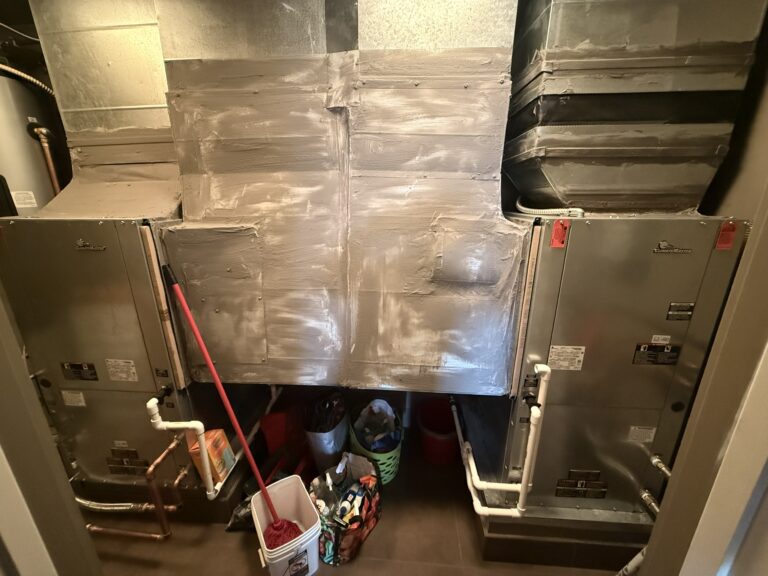
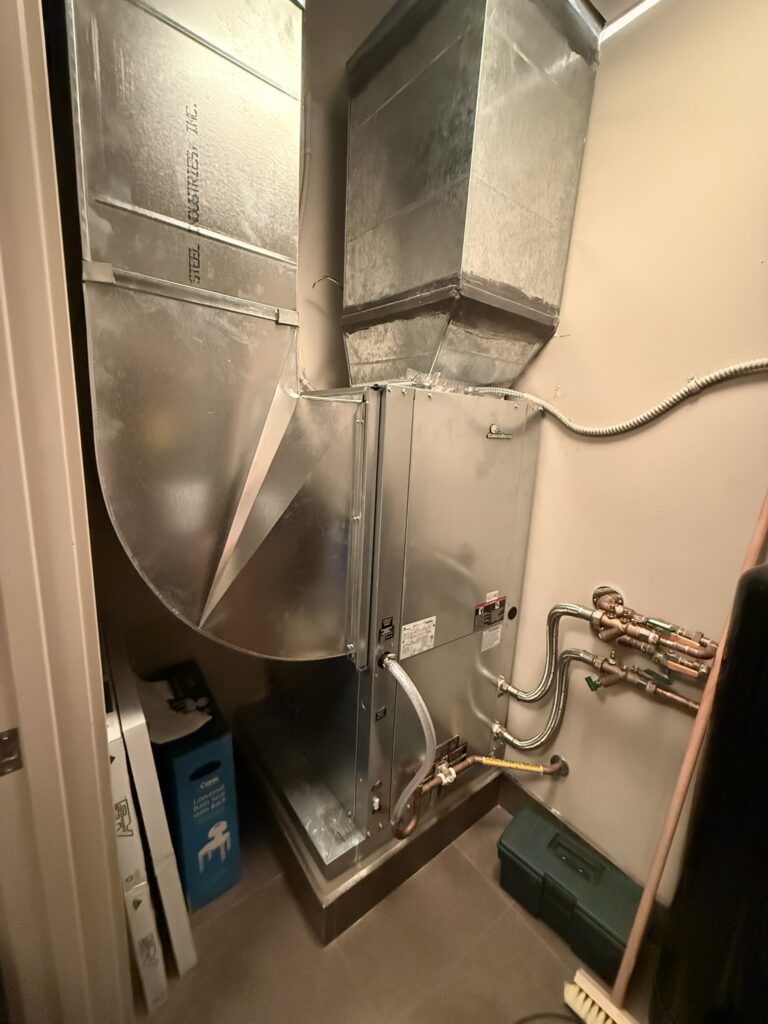
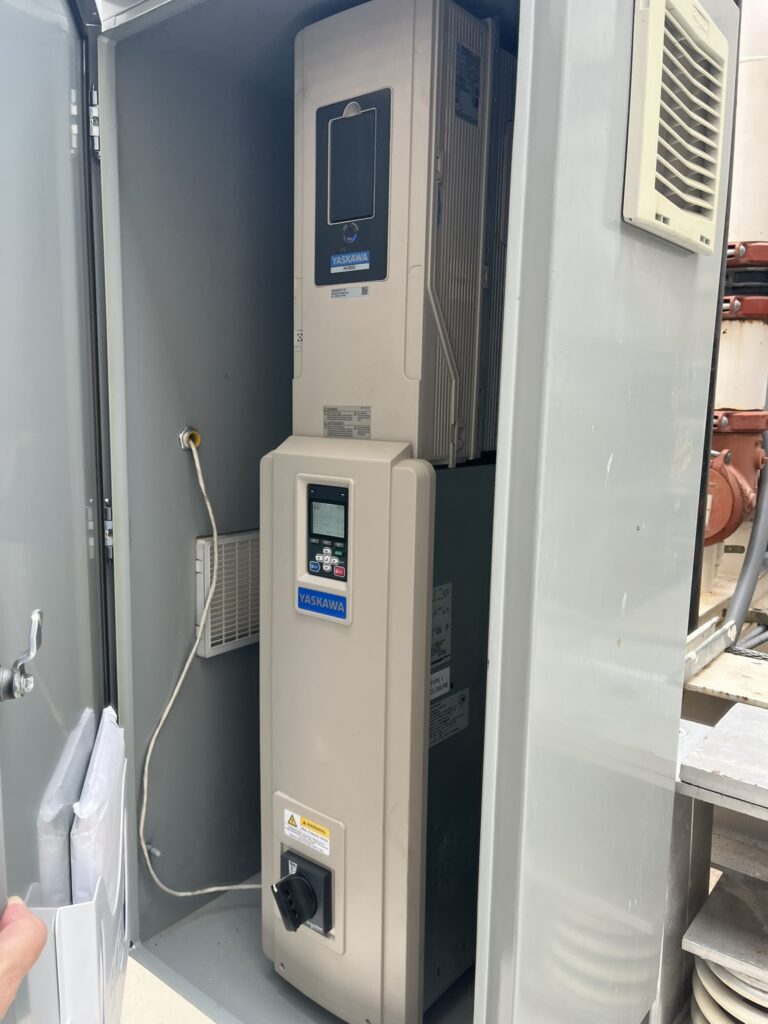
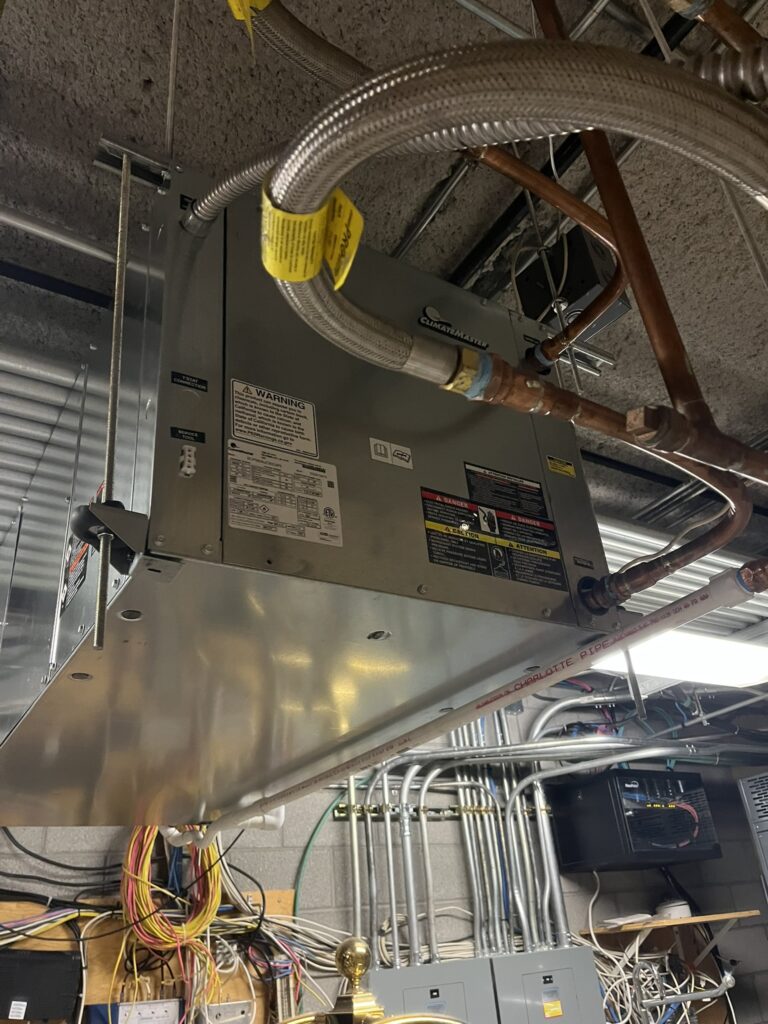
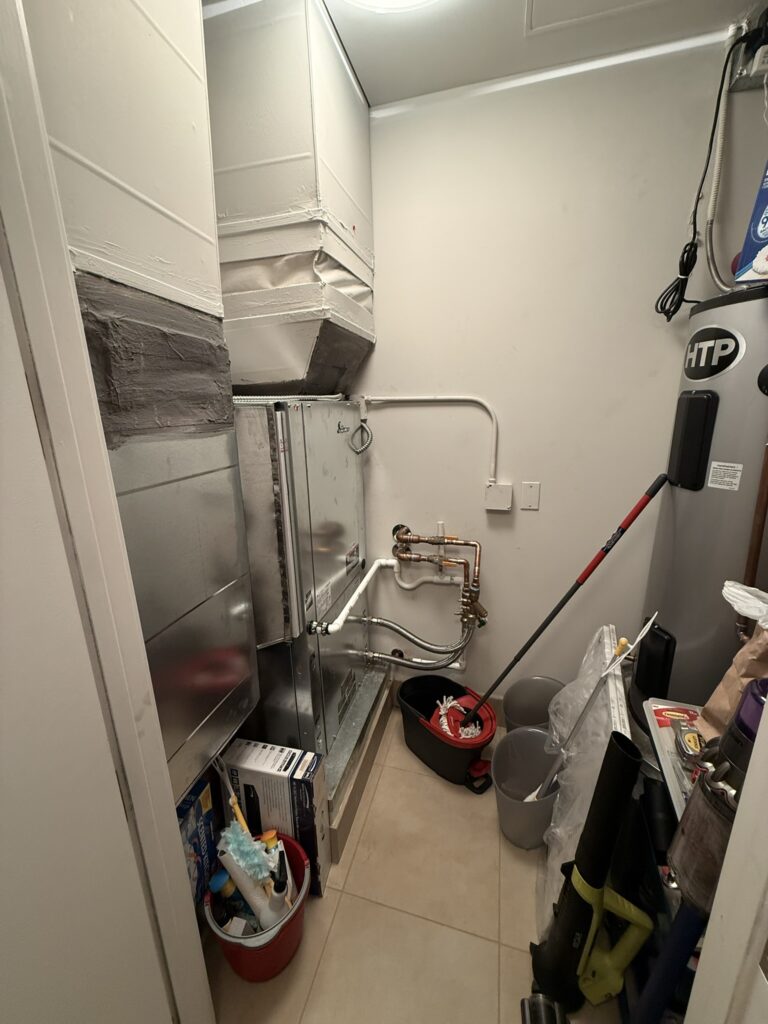
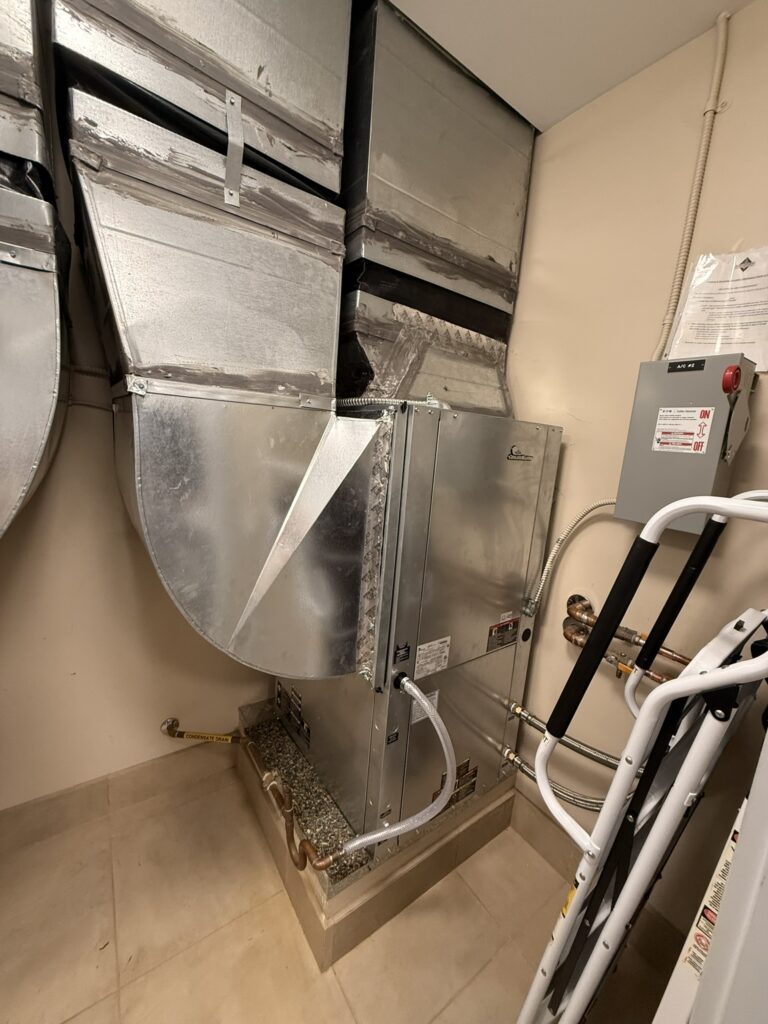
Photos from our own commercial projects across the Phoenix metro — equipment we installed, in buildings we service.
How the job typically runs.
A Mesa visit is built around your operation, whether that is a 24-hour hospital wing, a shift-based shop near Gateway, or a strip center that cannot lose retail hours. We set windows clear of your busiest stretch, and the service-call fee is stated when you book, never a line you discover on the invoice, and credited toward any repair that follows.
On site, techs work the full asset list, log the numbers, and photograph what a picture explains faster. When a reading falls out of spec, you get shown the measurement and what it means for that specific unit, not a vague warning built to sell a part. On Mesa's older equipment that candor matters most: we will tell you plainly when a legacy RTU is worth one more repair and when it is throwing good money after a compressor that will not see another summer. Repairs come back as flat-rate written quotes you approve before any work starts.
We verify after the fix, re-reading to confirm the unit is genuinely carrying its load, and close every visit with per-asset documentation your facilities team can file or route to a capital plan. For a portfolio of aging buildings, that trended record is what turns scattered breakdowns into a budgetable replacement schedule. When something surfaces between stops, a real person answers our line 24/7 and knows your equipment's history before dispatch.
- 01 Booking, with the diagnostic fee disclosed
- 02 In-person diagnosis with real readings
- 03 Written flat-rate quote before work begins
- 04 The work: repair, install, or maintenance
- 05 Startup, documentation, and warranty handoff
The routine PM itself, meaning coil cleaning, electrical testing, tuning, filter swaps, and one-for-one wear parts, carries no permit. Scope changes the answer: replacing a rooftop unit, altering ductwork, or reworking gas piping pulls a City of Mesa mechanical permit and inspection, which surfaces often as so much legacy equipment reaches change-out age. We pull those permits rather than skip them, and on healthcare campuses we work to the tighter ventilation and pressure standards those facilities carry. Commercial kitchens on Main Street and in the big-box centers fall under NFPA 96 for hood, make-up air, and grease-bearing exhaust, coordinated as its own discipline. Refrigerant handling is federal, so recovery and charging are documented by our EPA 608-certified technicians. Everything we install or repair is held to the Arizona ROC's Minimum Workmanship Standards, and our written warranty sits above that baseline on purpose, because on thirty-year-old equipment the workmanship floor is exactly where corners get cut when nobody is checking. On an occupied hospital wing or a busy strip center, we schedule permitted work and inspection around your hours, so compliance never shutters the doors.
Pricing, financing & the 10% military & first responder discount.
On aging Mesa equipment, honest pricing is the whole relationship. Repairs found during a visit come back as flat-rate written quotes tied to a reading, so you see the number before anyone commits, with no hourly clock ticking while a tech decides. The service-call fee is disclosed at booking and credited toward the repair, so a diagnostic trip never feels like wasted money. Because so many legacy units sit at the repair-or-replace line, we show you the math both ways and let the numbers decide. Facilities with scheduled visits, peak-season priority dispatch, and preferred labor rates across a portfolio need a recurring maintenance structure. Financing is available on larger repairs and full change-outs, which matters when a legacy unit ages out and the bill lands at once. Note that the 10% military, veteran & first responder discount stays on the residential side and will not land on a commercial invoice, though any owner or crew member who served can put that military discount toward their own home.
- 01 Flat-rate written quote after an in-person look
- 02 Diagnostic fee disclosed at booking, credited to the repair
- 03 Financing available on replacements
- 04 2-year workmanship warranty; 1-year manufacturer parts warranty
- 05 10% military, veteran & first responder discount
Why a licensed HVAC contractor matters.
FAQs: Commercial HVAC Maintenance in Mesa, AZ.
Is it worth maintaining a 25-year-old rooftop unit, or should we replace it?
Both answers are legitimate, and the numbers decide. Plenty of Mesa's 1980s and 90s rooftops have years left if the compressor and coil are sound, and measured PM keeps them limping economically. But when readings show a failing compressor or repeated repairs stacking up, we show you the repair-versus-replace math instead of selling another band-aid. The advantage of trended documentation is that the decision arrives early, on a spring visit with time to plan a change-out, rather than as an emergency during the first 115-degree week.
How often should commercial HVAC maintenance Mesa businesses schedule visits?
Quarterly is the baseline for comfort-cooling equipment here, and Mesa's dusty industrial pockets near Falcon Field and Gateway often push shorter. Runtime and particulate load drive the interval; a shop bay fouls filters and coils far faster than a climate-controlled office, and aging equipment tolerates neglect poorly. Healthcare campuses run tighter schedules by code. The right cadence comes from a site walk that weighs your actual roof, your run hours, and your surroundings, not a one-size interval pulled off a brochure that never saw the building.
Can you handle our walk-in coolers and freezers along with the rooftops?
Yes. Mesa's grocery, big-box, and Main Street food service run refrigeration we fold into the same visit, including walk-in door gaskets and sweeps, evaporator and condenser coil condition, defrost operation, and drain lines, plus condition checks on reach-ins and prep equipment. A walk-in condenser fouling through June is a spoiled-inventory claim waiting to happen, and it usually shares neglected air with the comfort-cooling units on the same roof. Servicing both together means nothing on the roof falls between a separate refrigeration vendor and an HVAC contractor.
Do you meet the documentation standards our hospital campus requires?
Yes. Healthcare facilities in Mesa carry ventilation, pressure, and humidity requirements that do not tolerate drift, and the paper trail has to hold up to review. Our per-asset reports record every reading, including pressures, amp draws, and temperature splits, trended visit to visit, so a facilities director has defensible documentation rather than a checkmark. We work to the tighter standards these environments demand and coordinate around life-safety loads that never pause. If a finding touches a critical space, we schedule the corrective work around your operation.
What does the desert dust actually do to our equipment between visits?
It steadily strangles capacity. Fine Mesa dust settles into condenser coils, evaporators, and economizer screens, and a single haboob can foul a coil in an hour, undoing weeks of clean-running efficiency. As coils load up, the unit burns more power to deliver less cooling, and on aging equipment that extra strain accelerates a compressor already near the end. That is why coil cleaning and filter cadence are set by your environment rather than a calendar, and why high-dust sites earn filter-only stops between full visits.
What happens if a unit fails between scheduled maintenance visits?
You reach a live person on our line at any hour, not a machine, when a rooftop quits during a Mesa summer. Because we already maintain the equipment, we arrive knowing its history, its readings, and its quirks, which shortens diagnosis on legacy units where undocumented repairs pile up. Any diagnostic fee is disclosed up front and credited toward the repair, and the quote is flat-rate and in writing. Maintenance does not erase every failure, but it moves most of them off the worst possible afternoon.
Every major brand, serviced and installed.



Phoenix metro: Most days a tech is already working somewhere in the Valley, so same-day appointments happen when the schedule allows. After-hours emergencies are dispatched when a licensed tech is available — a real person answers and tells you the ETA on the call.
Call (520) 556-8929Request an estimate.
No pressure, no door knockers. We look at the HVAC system, tell you what it needs (and what it doesn’t), and put the number in writing.
Need HVAC maintenance in Mesa? A real person answers.
Other services we run in Mesa.
HVAC Maintenance in nearby cities.
Looking for something else nearby? All HVAC services in Mesa