
Queen Creek
HVAC for Food Processing Facilities in Queen Creek, AZ.
- (520) 556-8929
- Serving the entire Phoenix metro — we come to you
- Office: Mon–Fri 8:00 AM – 5:00 PM · 24/7 emergency service
- 2-year workmanship warranty · 1-year parts warranty
- Veteran-owned & operated · residential + commercial
- 23 five-star Google reviews
Food processing HVAC in Queen Creek is a narrow category, and it should be written that way. The town’s roots are agricultural and equestrian, but today’s commercial base is more suburban, family-growth, retail, service, and small-format production than heavy industrial processing. The realistic Queen Creek audience is a commissary kitchen, bakery production room, beverage prep space, small packaged-food operation, agricultural value-add room, meal-prep kitchen, or owner looking at a light-production site near 85142, 85144, Queen Creek Marketplace, or the commercial corridors serving Encanterra, Cortina, Sossaman Estates, and Hastings Farms. These operators deal with heat from ovens, washdown-adjacent moisture, makeup air, odor, dust, refrigeration interaction, and staff comfort in compact rooms. The building may look like a retail suite from the front and behave like a production room in back, especially when doors open for deliveries and equipment runs through the hottest part of the day. Yeti Pros is veteran-owned & operated, AZ ROC #363372 · ROC #363423, and we come to you for commercial food processing HVAC. We service and document HVAC; we do not issue health-code rulings, certify food safety, or give legal advice.
ZIPs served: 85142, 85144
What Food Processing Facilities covers in Queen Creek.
Production Room Cooling
Repair and troubleshooting for hot prep, packaging, bakery, commissary, and production rooms. We check the HVAC equipment, airflow path, controls, heat sources, exhaust effects, and whether the system is serving the actual work area.
Moisture And Drain Issues
Service for condensate problems, ceiling leaks, clogged drains, moisture-affected components, and HVAC symptoms around cleaning or dish areas. We document HVAC conditions without claiming to certify sanitation or food-code compliance.
Rooftop Unit Service
Maintenance and repair for package units serving kitchens, food prep suites, and small production spaces. Work includes coils, filters, electrical components, refrigerant symptoms, economizers where present, drains, belts, motors, and controls.
Exhaust Interaction Review
HVAC-side review when exhaust, makeup air, doors, and production heat are fighting the cooling system. We identify symptoms and document what is HVAC repair versus a broader design or trade coordination issue.
Emergency HVAC Service
24/7 emergency response for cooling loss, leaks, failed rooftop units, and production-area comfort failures. We coordinate around prep, cleaning, delivery, and access windows so the site contact controls the work path.
Equipment Replacement
Replacement planning for worn or wrong-fit HVAC serving small food-production spaces. We account for Queen Creek utility territory, roof access, moisture exposure, duct limits, condensate routing, and written scope documentation.
What we see for food processing facilities in Queen Creek.
Queen Creek food-production spaces usually have a heat and moisture problem before they have a simple “AC is broken” problem. Ovens, proofers, dish areas, prep sinks, packaging equipment, walk-in boxes, and people working close together can overwhelm a comfort system that was selected for a retail or office shell. A rooftop unit may be cooling the dining or front counter area while the back production room stays hot, humid, or negative because exhaust and makeup air are not balanced well. In summer, roof heat and long runtime reduce the margin even further, so a system that seemed acceptable in mild weather can struggle during real production.
Washdown-adjacent environments need careful HVAC attention even when the space is not a full industrial washdown facility. Moisture, cleaning routines, floor drains, steam, and airborne residue can corrode components, clog filters, affect electrical connections, and create ceiling or duct concerns. We look at where air is being pulled from, where condensation is forming, whether drains are working, and whether equipment is placed in a serviceable location. We do not certify sanitation; we make the HVAC conditions visible and documented. That distinction matters when a manager needs to know whether the problem is a clogged drain, a failing blower, a negative-pressure symptom, or a broader process issue.
Small food operators in Queen Creek often occupy spaces that were not originally built for production. A bakery may be in a retail pad. A meal-prep kitchen may be in a converted suite. A rural value-add operation may sit on a large-lot property with dust, access gates, and utility constraints. Some fringe locations may have well and septic considerations that affect site planning, condensate routing, and equipment placement. These buildings can work, but the HVAC has to match the actual process load. We look at supply placement, return paths, exhaust influence, roof access, filter loading, and whether refrigeration equipment is rejecting heat into the same room staff are trying to work in.
Temperature-critical production complaints need clear boundaries. HVAC can support room temperature, ventilation, comfort, moisture control, and equipment heat removal. Refrigeration equipment, product temperature rules, food-safety programs, and official compliance decisions may involve other specialists or authorities. We coordinate our HVAC work cleanly: inspect package units, split systems, exhaust interaction, makeup-air symptoms, controls, drains, duct conditions, and service access, then write what we found without pretending to be the health department or a process engineer. Clear documentation helps owners decide whether they need repair, maintenance, replacement planning, or coordination with another trade.
- 01 Airflow and static pressure
- 02 Electrical: capacitors, contactors, draws
- 03 Refrigerant-circuit behavior
- 04 Drains, safeties, and float switches
- 05 Thermostat, controls, and cycling
- 06 Ducts, returns, and room-by-room comfort
Commercial jobs we have documented.
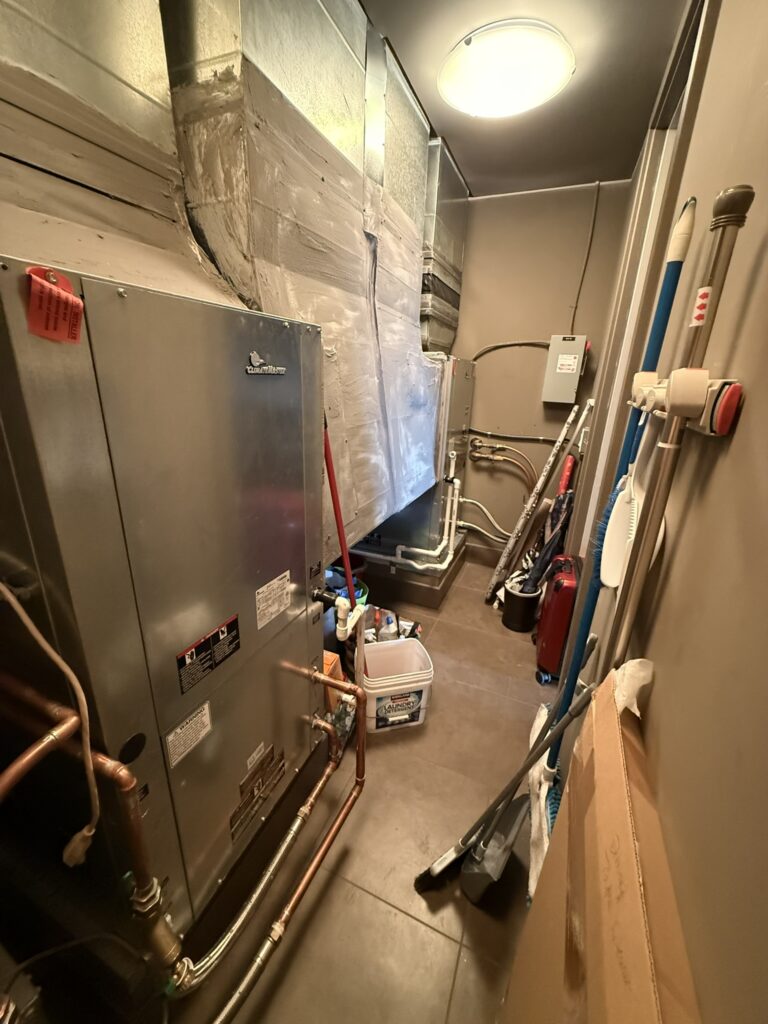
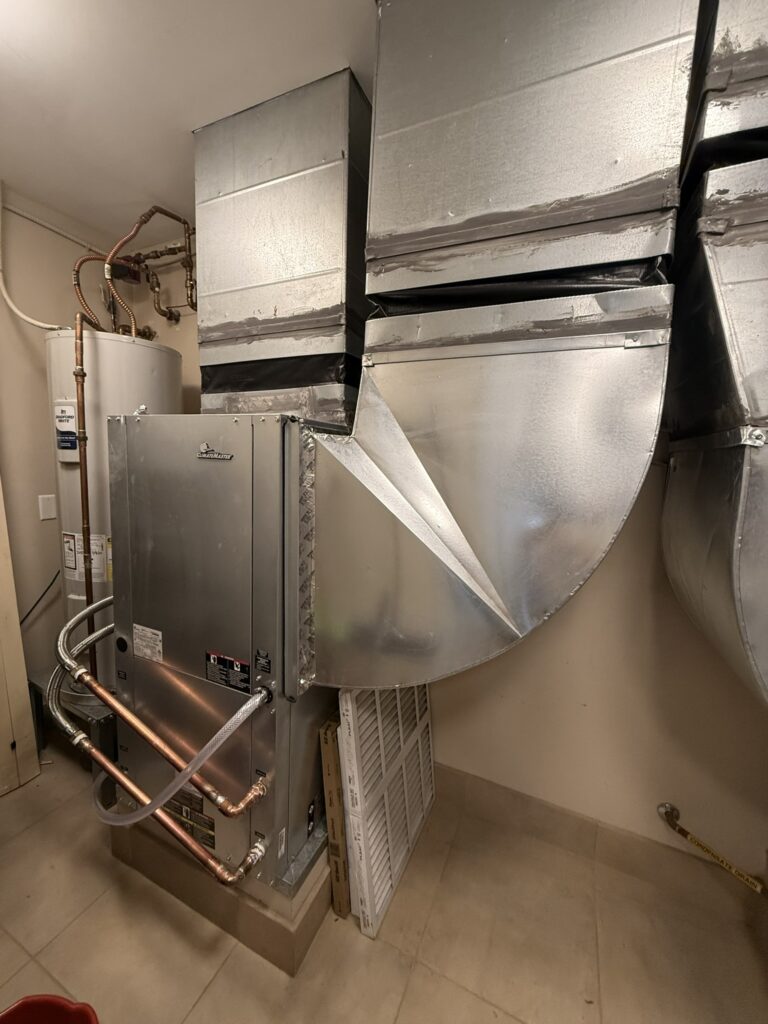
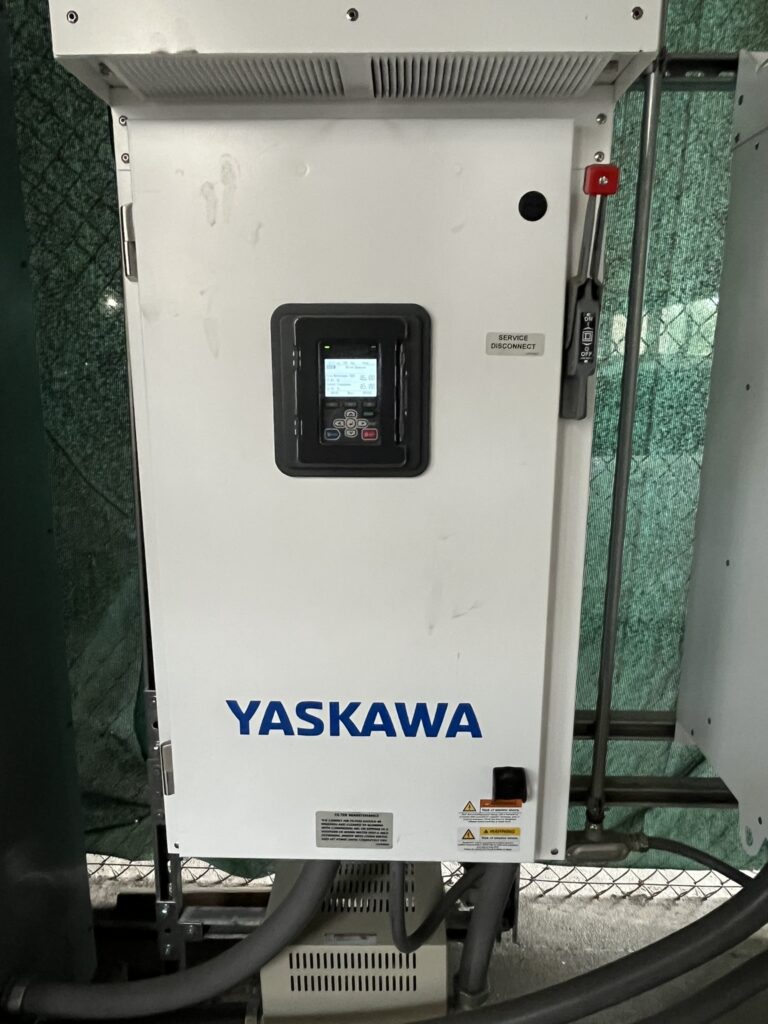
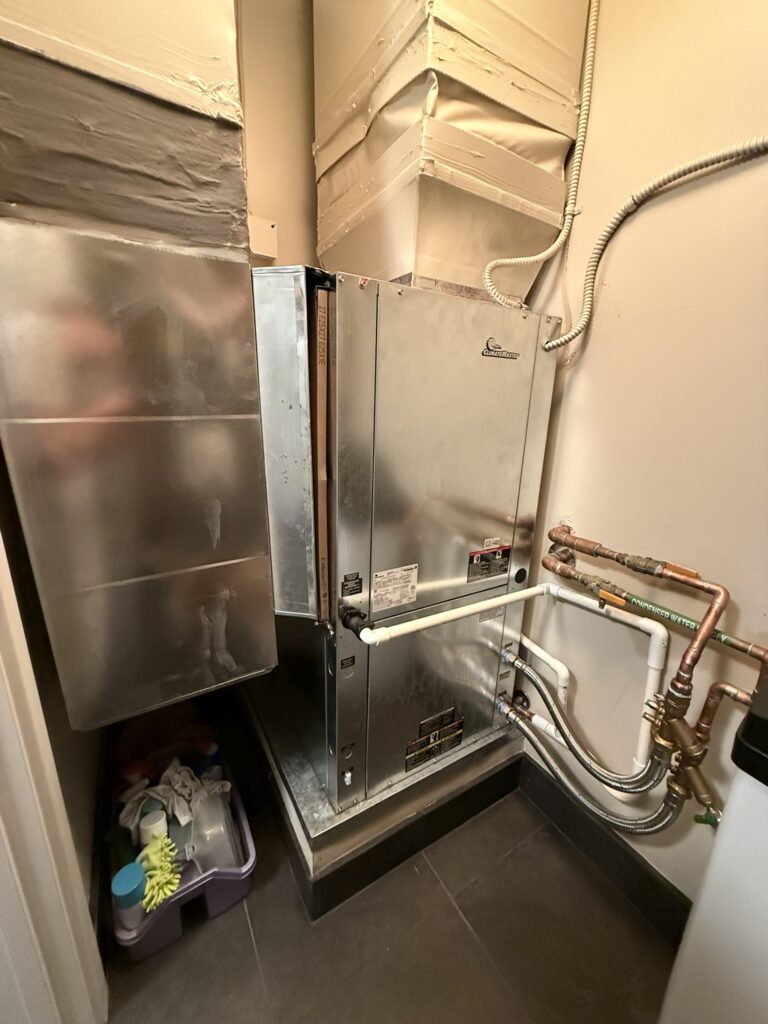
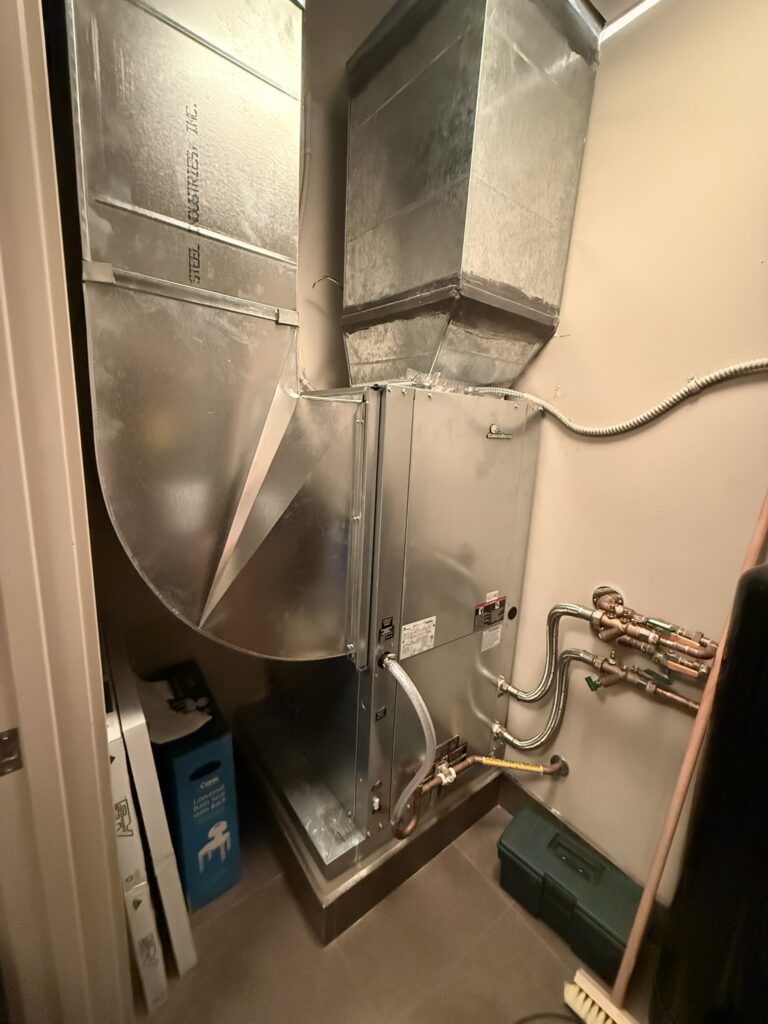
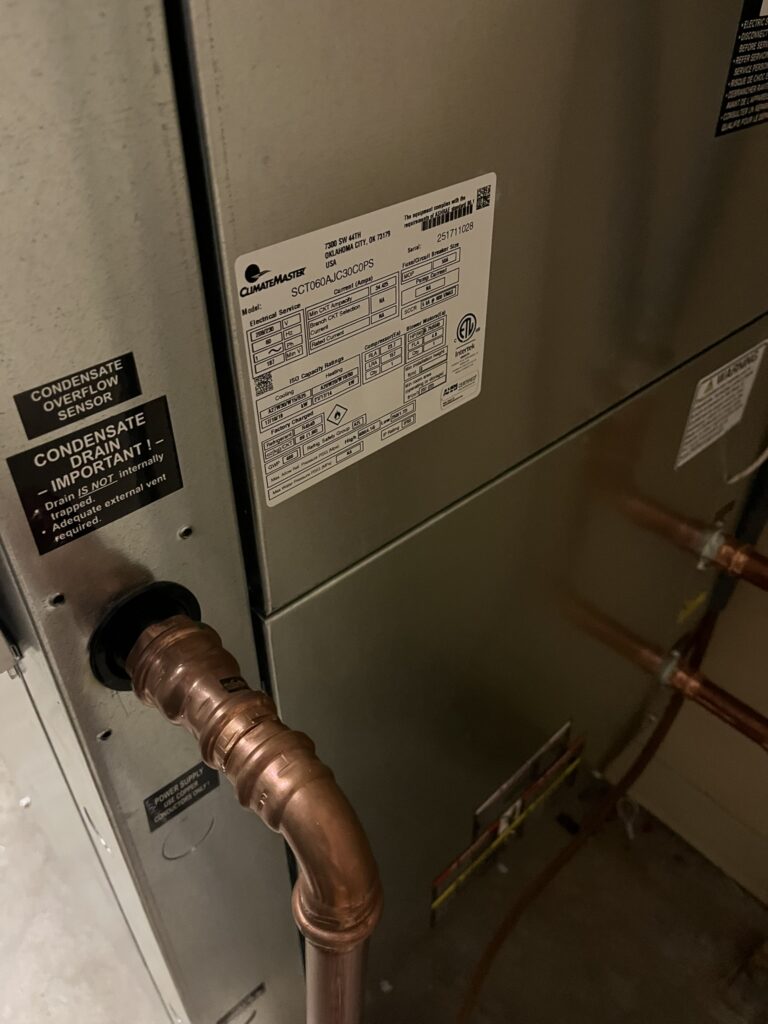
Photos from our own commercial projects across the Phoenix metro — equipment we installed, in buildings we service.
How the job typically runs.
Food-production service is scheduled around prep windows, cleaning windows, deliveries, and production runs. Before dispatch, we confirm the contact, best access door, roof or mechanical-room access, whether equipment can be shut down, and whether the technician must avoid active prep, packaging, or cleaning areas during certain times. A short cooling shutdown can affect dough, staff comfort, packaging flow, or cleanup timing, so the access plan is part of the job.
During inspection, we check comfort equipment, airflow, filters, coils, condensate, controls, electrical components, refrigerant symptoms, exhaust or makeup-air interactions, and visible moisture impacts. We document HVAC findings in writing and separate repair work from design or coordination issues that may require other trades or specialists. We also note practical conditions such as dusty roof equipment, blocked returns, hot back rooms, condensation complaints, door-opening patterns, and whether the equipment can be serviced safely without disrupting active food handling areas.
Office hours are Mon–Fri 8–5 with 24/7 emergency service. If a production room loses cooling before a prep run or a rooftop unit fails during summer heat, call (520) 556-8929. Yeti Pros is a service-area business with no public street address; we come to your Queen Creek site.
- 01 Booking, with the diagnostic fee disclosed
- 02 In-person diagnosis with real readings
- 03 Written flat-rate quote before work begins
- 04 The work: repair, install, or maintenance
- 05 Startup, documentation, and warranty handoff
Food-production HVAC scope in Queen Creek depends on the property, jurisdiction, and work type. Incorporated locations generally involve Town of Queen Creek permits, while some addresses fall in Maricopa County or Pinal County. Utility service is SRP, not APS. Replacing a unit, modifying exhaust or makeup air, changing curbs, adding circuits, or altering ductwork can trigger different requirements than a basic repair. The same is true when a retail shell is being used more like a production suite and the HVAC scope affects ventilation, electrical load, condensate routing, or roof penetrations.
We service and document HVAC systems. We do not issue health-code rulings, food-safety certifications, cleanroom certifications, or legal advice. Our role is to identify the HVAC work, document what we observe, and write the scope clearly so the owner can coordinate with the proper authority, landlord, engineer, equipment vendor, or other trade when needed. For workmanship context, see the Arizona ROC Minimum Workmanship Standards. Yeti Pros provides a 2-YEAR written workmanship warranty and a 1-YEAR manufacturer parts warranty on repair parts. AZ ROC #363372 · ROC #363423.
Pricing, financing & the 10% military & first responder discount.
Food processing HVAC pricing in Queen Creek is driven by heat load, moisture exposure, roof access, corrosion, filter loading, exhaust and makeup-air interaction, equipment size, electrical capacity, duct condition, condensate routing, and whether work must be staged around production or cleaning. A repair to a package unit is not the same scope as correcting a hot production room affected by ovens and exhaust. Pricing also depends on whether the issue is a failed component, a maintenance backlog, an airflow problem, or a building-use mismatch that needs written documentation before the owner makes a larger decision.
Yeti Pros provides flat-rate written quotes after an in-person look, with scopes documented in writing. Financing is available. A 10% military, veteran & first responder discount is available through our military discount. The diagnostic/service-call fee is disclosed at booking and credited. Call (520) 556-8929 to schedule Queen Creek food-production HVAC service.
- 01 Flat-rate written quote after an in-person look
- 02 Diagnostic fee disclosed at booking, credited to the repair
- 03 Financing available on replacements
- 04 2-year workmanship warranty; 1-year manufacturer parts warranty
- 05 10% military, veteran & first responder discount
Why a licensed HVAC contractor matters.
FAQs: HVAC for Food Processing Facilities in Queen Creek, AZ.
Do you handle food processing HVAC Queen Creek work for small operators?
Yes. In Queen Creek, food processing usually means small-format production: commissary kitchens, bakeries, meal-prep spaces, packaged-food rooms, beverage prep, or agricultural value-add operations. We work on the HVAC equipment and airflow serving those spaces. We do not pretend a small production suite is a large industrial plant, and we do not issue food-safety certifications. We look at real operating conditions: ovens, exhaust, washdown-adjacent moisture, door openings, staff work areas, refrigeration heat, dust, roof access, and service timing. We inspect the equipment, heat load, airflow, drains, controls, and access conditions, then document the HVAC scope in writing.
Can HVAC help a bakery or prep room that gets too hot?
Often, yes, but the cause has to be identified first. Ovens, proofers, exhaust fans, makeup-air issues, solar exposure, door openings, and poor duct layout can all make a production room hot even when the unit is running. In Queen Creek, summer roof heat and dust-loaded outdoor coils can make those problems show up sooner and last longer through the day. Sometimes the fix is repair, coil cleaning, controls, or airflow correction. Sometimes the existing design cannot handle the process load. We inspect before writing a flat-rate quote so the scope matches the building.
Do you certify food-code or health-department compliance?
No. We service and document HVAC; we do not issue health-code rulings, food-safety certifications, cleanroom certifications, or legal advice. If your operation needs regulatory interpretation, that should come from the proper authority or specialist. Our documentation can show HVAC findings, repairs, equipment condition, access notes, moisture symptoms, drain issues, and written scopes. That keeps the record clean without overstating what an HVAC contractor can certify. It also helps an owner, landlord, equipment vendor, or other trade understand what was observed on the HVAC side.
How do washdown or cleaning areas affect HVAC?
Moisture and cleaning routines can affect filters, coils, electrical connections, corrosion, drain performance, ceiling materials, and where air is pulled from. Even if the room is only washdown-adjacent, HVAC equipment can suffer when humidity, steam, residue, or negative pressure are unmanaged. We check visible HVAC impacts and serviceable components, including condensate paths, return air conditions, filter loading, and moisture around nearby equipment. If the issue crosses into process design, sanitation, or building engineering, we document the HVAC side clearly so the right next step is obvious.
Can you work around production schedules?
Yes. We coordinate with the site contact around prep, packaging, cleaning, deliveries, and staff access. Before dispatch, we ask about roof access, shut-down limits, active production areas, and the best entry path. We also ask when ovens, exhaust, dish areas, or packaging lines are active because those conditions can affect both diagnosis and timing. Some work can happen during normal hours, while disruptive repairs or replacements may need a planned window. Office hours are Mon–Fri 8–5, and 24/7 emergency service is available when cooling loss cannot wait.
What makes Queen Creek food-production HVAC different from a normal office call?
The building may look like a retail suite or rural support structure, but the load is different. Production equipment adds heat, cleaning adds moisture, exhaust changes pressure, doors open for deliveries, and staff may work in one compact room for long periods. Queen Creek also brings dust, new construction, large-lot access issues, and SRP utility territory. A normal office call may focus mostly on comfort; a food-production call has to consider process heat, moisture, drains, exhaust interaction, access timing, and documentation boundaries. We inspect those site-specific conditions before writing the repair or replacement scope.
Every major brand, serviced and installed.
Phoenix metro: Most days a tech is already working somewhere in the Valley, so same-day appointments happen when the schedule allows. After-hours emergencies are dispatched when a licensed tech is available — a real person answers and tells you the ETA on the call.
Call (520) 556-8929Request an estimate.
No pressure, no door knockers. We look at the HVAC system, tell you what it needs (and what it doesn’t), and put the number in writing.
Need food processing facilities in Queen Creek? A real person answers.
Other services we run in Queen Creek.
Food Processing Facilities in nearby cities.
Looking for something else nearby? All HVAC services in Queen Creek