
Queen Creek
HVAC for Hospitals in Queen Creek, AZ.
- (520) 556-8929
- Serving the entire Phoenix metro — we come to you
- Office: Mon–Fri 8:00 AM – 5:00 PM · 24/7 emergency service
- 2-year workmanship warranty · 1-year parts warranty
- Veteran-owned & operated · residential + commercial
- 23 five-star Google reviews
Hospital HVAC in Queen Creek has to be described honestly. Queen Creek is a fast-growing suburban and rural-edge town, not a dense medical district filled with major hospital campuses. The real local audience is smaller hospital-adjacent support space, outpatient medical buildings, administrative suites, imaging or clinic support areas, urgent-care style facilities, medical offices, and owners evaluating healthcare-related space near Queen Creek Marketplace, Ellsworth, Ocotillo, Rittenhouse, Encanterra, Cortina, Sossaman Estates, and Hastings Farms. We service commercial HVAC in support spaces; we do not certify operating rooms, cleanrooms, isolation rooms, or clinical compliance. That distinction matters because comfort work in a medical office still has higher expectations than ordinary retail service: staff need usable rooms, patients wait in finished spaces, equipment may add heat, and administrators need clear records instead of vague verbal notes. Yeti Pros is Veteran-owned & operated, service-area based, and we come to you. For the metro vertical overview, see our hospital HVAC page.
ZIPs served: 85142, 85144
What Hospitals covers in Queen Creek.
Support-space HVAC repair
We repair HVAC serving waiting rooms, administrative suites, staff areas, storage rooms, medical office spaces, and non-OR-critical support areas. Diagnostics include airflow, electrical components, coils, drains, thermostats, and rooftop unit performance, with written findings for administrators or property managers.
Rooftop unit diagnostics
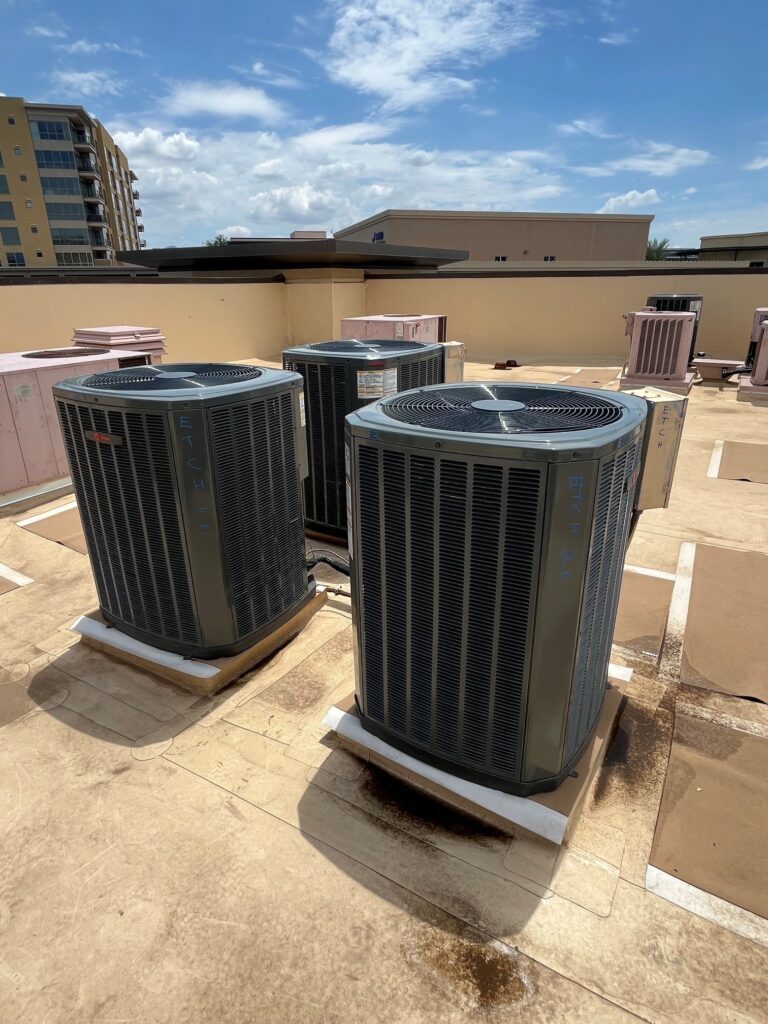
Many Queen Creek medical and hospital-adjacent spaces use packaged rooftop units. We troubleshoot compressor faults, fan failures, electrical wear, dirty coils, refrigerant performance, economizer issues, and controls, then document what the unit needs to restore dependable operation.
Preventive maintenance
Maintenance for healthcare support spaces focuses on reliability and records. We inspect filters, coils, drains, motors, belts, electrical components, temperatures, and controls, then provide written notes so facility managers can track asset condition before summer failures.
Controls and zone review
Adapted medical suites often have exam rooms, offices, waiting areas, and staff rooms served by imperfect zoning. We review thermostat placement, schedules, airflow, sensor behavior, and zone complaints so comfort problems are tied to actual mechanical causes.
Commercial replacement scopes
When replacement is needed, we document equipment options, utility considerations, roof access, curb conditions, electrical or gas concerns, permit triggers, and scheduling limits. The result is a clear written scope for administrators, owners, and property managers.
Emergency healthcare support HVAC
Our 24/7 emergency service covers Queen Creek support spaces when cooling failure affects staff work, waiting rooms, storage areas, or administrative operation. We focus on practical restoration and written follow-up without claiming clinical certification authority.
What we see for hospitals in Queen Creek.
Queen Creek healthcare-related HVAC is usually packaged rooftop units, split systems, mini-splits for small support rooms, exhaust fans, thermostats, zoning dampers, and conventional commercial controls. In support spaces, the problems look familiar but the tolerance is lower: warm waiting rooms, hot admin offices, uncomfortable staff workrooms, weak airflow in storage areas, condensate leaks near finished interiors, and rooftop units that cannot recover quickly after a hot afternoon door load. A front entry facing afternoon sun, a busy check-in window, or repeated exterior-door traffic can make a marginal unit feel much worse by midafternoon.
Medical office and hospital-adjacent spaces often start in retail, office, or low-rise commercial shells. A suite may have been adapted over time with more exam rooms, charting space, equipment rooms, medication storage, or staff areas. Those changes can alter return air, diffuser placement, door pressure, and heat load. A former open office can become a series of closed rooms with different occupancy patterns, closed doors, added computers, small refrigerators, imaging support equipment, or storage demands. We inspect what is installed and document HVAC conditions, but we do not represent that a space meets healthcare licensing, infection-control, or clinical certification requirements.
Queen Creek’s environment adds predictable stress. Dust from construction, rural roads, equestrian properties, landscaping, and monsoon debris can foul filters and coils. Long summer runtime wears capacitors, contactors, blower motors, condenser fan motors, and compressors. Rooftop units can look serviceable from the parking lot while condenser coils are packed, drain lines are slow, panels are loose, or electrical components are heat-aged. Some facilities near the edges of town may also have site conditions tied to large lots, well and septic properties, or mixed county jurisdiction, which makes access and planning more important than it first appears.
We also see comfort complaints that are really control or layout problems. A thermostat in a hallway may satisfy before exam rooms recover. A storage room may have no practical airflow. A staff room can be overloaded by appliances and closed doors. Waiting rooms may feel fine early and drift warm when patient volume, glass exposure, and exterior traffic stack together. Those details matter because simply replacing a part without understanding the affected zone can leave the same complaint in place.
Documentation is the main difference between this work and ordinary retail service. Facility managers, practice administrators, property managers, and clinical leadership need written findings, clear limits of scope, equipment information, repair options, and service records. We service and document HVAC. We do not issue health-code rulings, legal advice, cleanroom certification, or OR-critical system certification. AZ ROC #363372 · ROC #363423.
- 01 Airflow and static pressure
- 02 Electrical: capacitors, contactors, draws
- 03 Refrigerant-circuit behavior
- 04 Drains, safeties, and float switches
- 05 Thermostat, controls, and cycling
- 06 Ducts, returns, and room-by-room comfort
Commercial jobs we have documented.
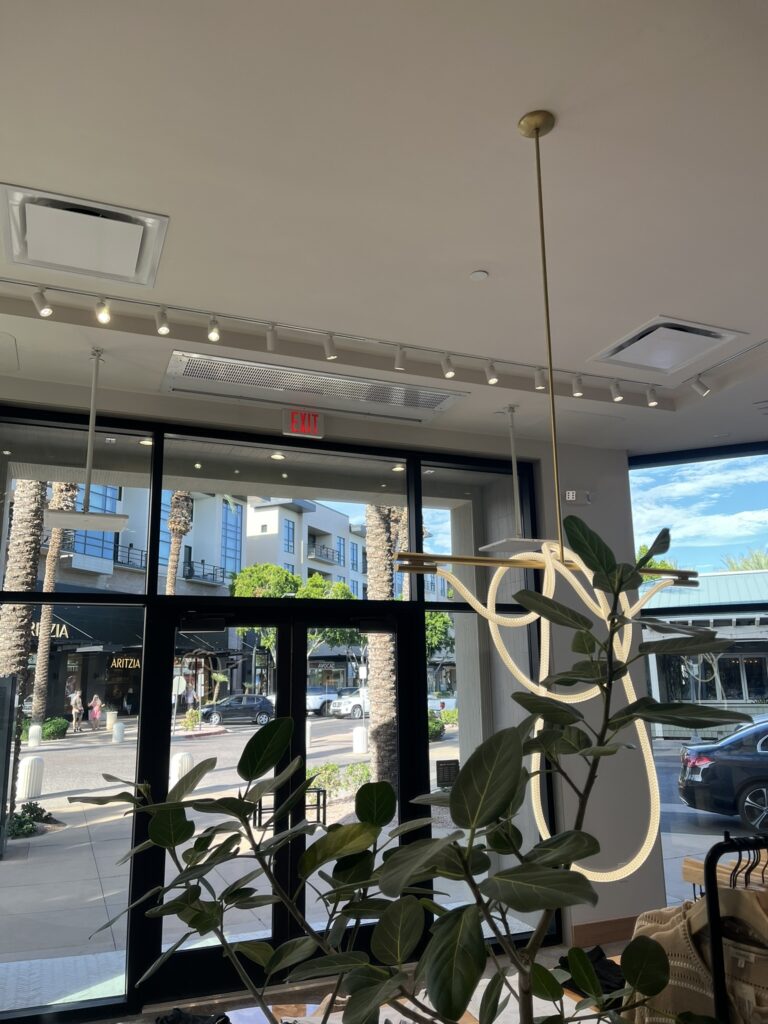
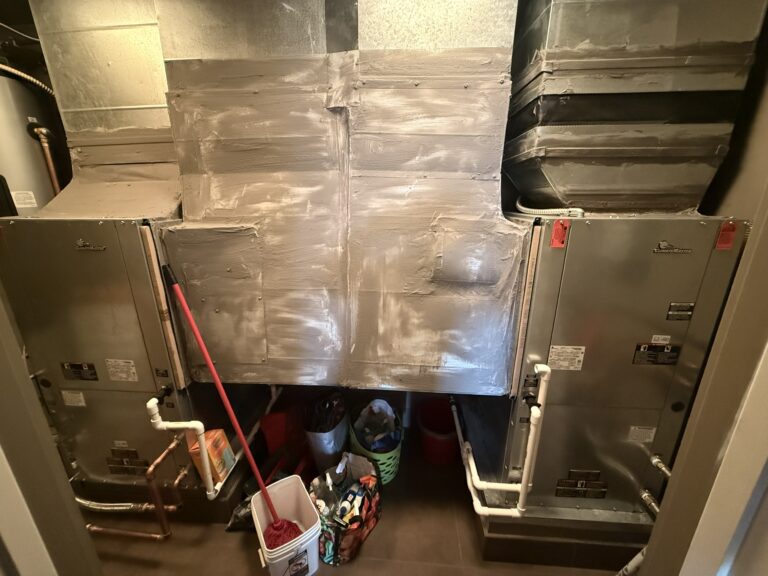
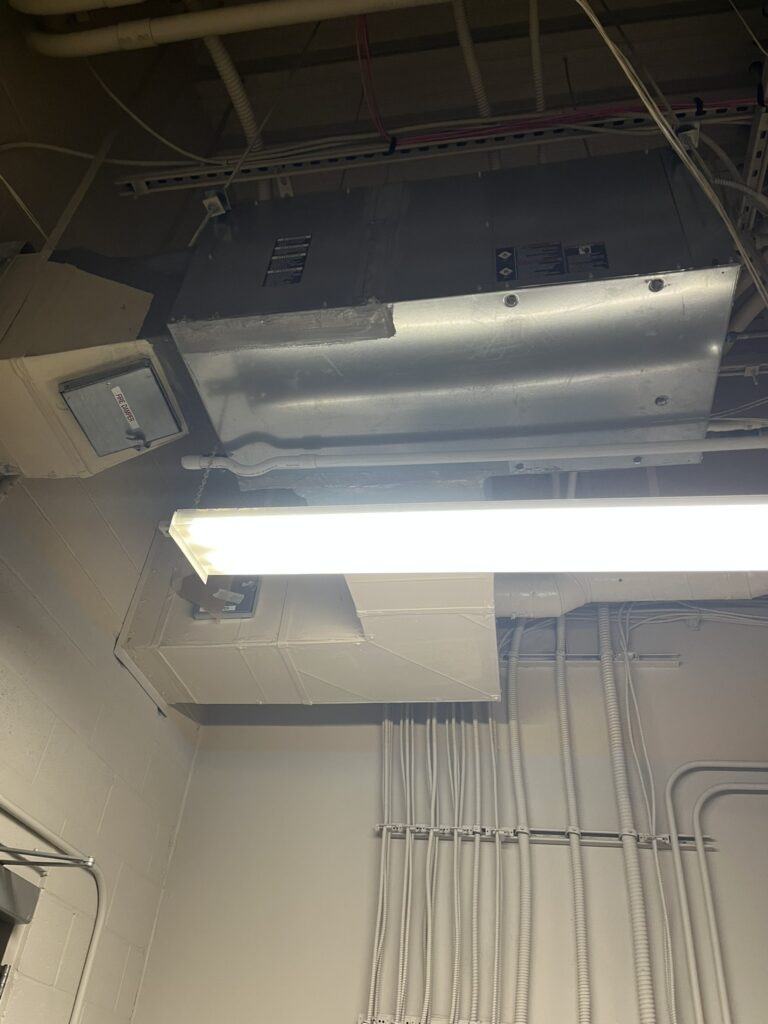
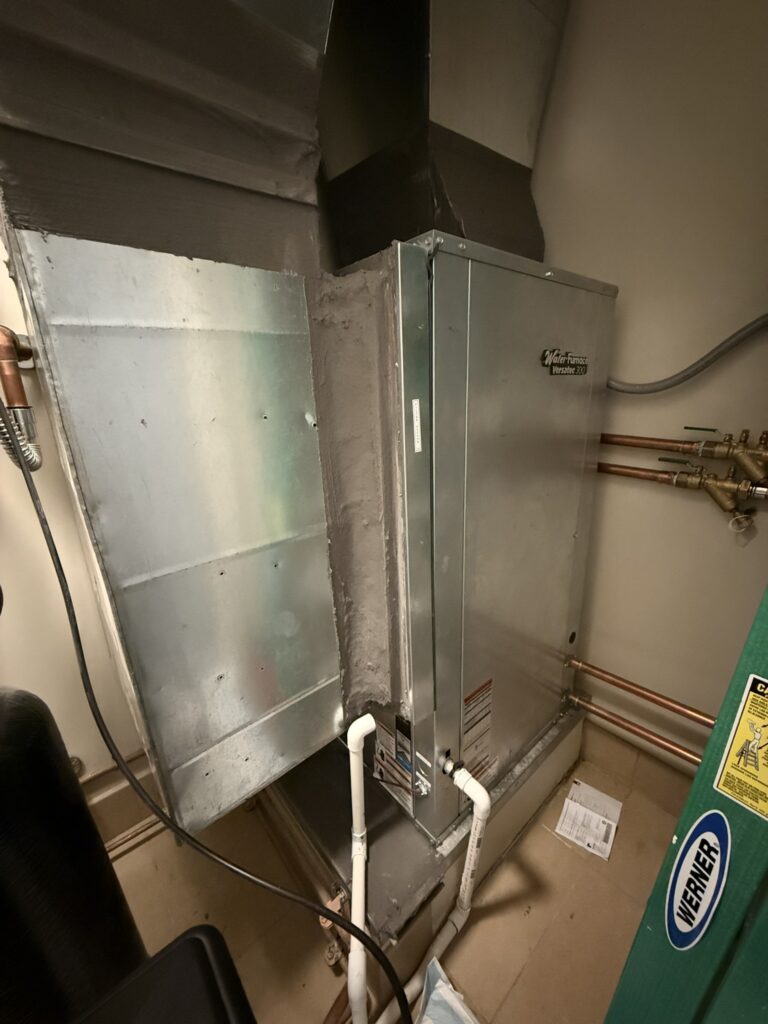
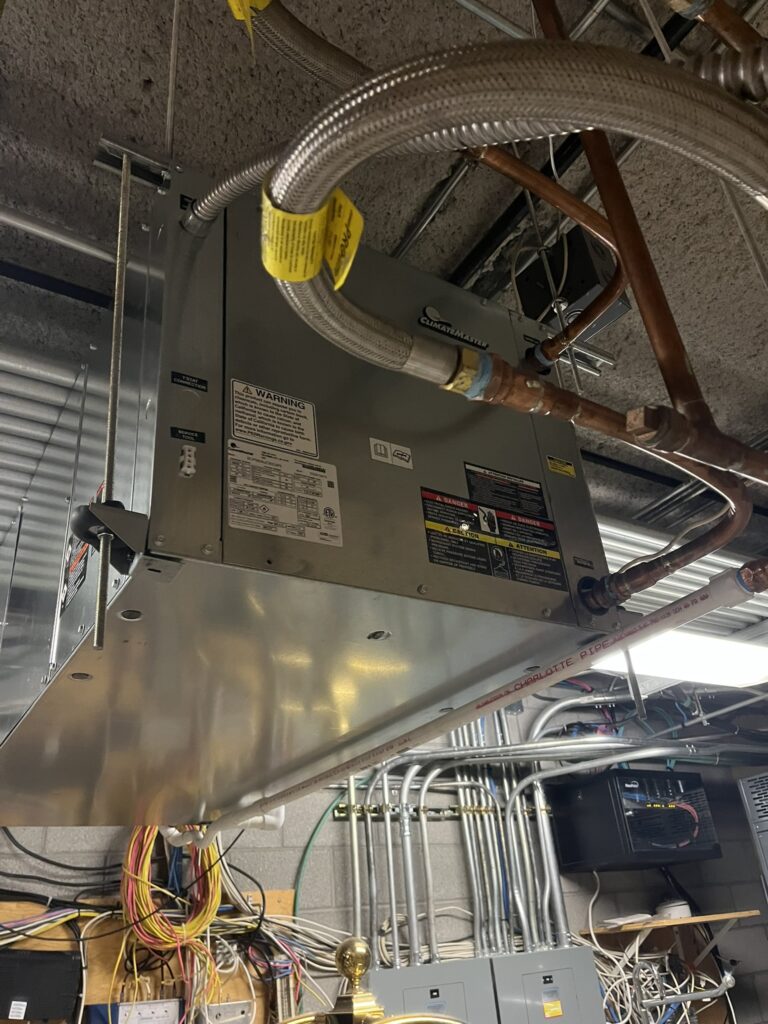
Photos from our own commercial projects across the Phoenix metro — equipment we installed, in buildings we service.
How the job typically runs.
We begin by defining the space. Is the call for a waiting area, administrative suite, staff room, mechanical support area, medical office, storage room, or another non-OR-critical area? That answer shapes access, scheduling, documentation, and whether work can occur during patient hours. We ask about site rules before dispatch, including roof access, parking, patient flow, alarmed areas, property-management approval, and whether the affected space contains temperature-sensitive non-critical storage or occupied staff work areas.
The quote comes after an in-person look. We inspect equipment, airflow, electrical components, coils, drains, thermostats, visible ventilation-related HVAC components, and access conditions. We look for the practical causes behind the complaint: plugged filters, fouled condenser coils, weak motors, failed capacitors, slow drains, poor thermostat location, stuck dampers, control settings, and rooftop unit performance under actual Queen Creek heat. Flat-rate written quotes are provided after that inspection, and scopes are documented in writing with clear notes on what we did and did not evaluate.
Office hours are Mon–Fri 8–5, with 24/7 emergency service for failures affecting support operations, staff areas, waiting rooms, or temperature-sensitive non-critical spaces. The diagnostic/service-call fee is disclosed at booking and credited. We coordinate with property management, administrators, and onsite staff to reduce disruption. When a repair requires equipment downtime, ceiling access, ladder access, or roof work, we make the operational impact clear so the site can plan around patients, staff, and room use.
- 01 Booking, with the diagnostic fee disclosed
- 02 In-person diagnosis with real readings
- 03 Written flat-rate quote before work begins
- 04 The work: repair, install, or maintenance
- 05 Startup, documentation, and warranty handoff
Queen Creek healthcare-related HVAC work may involve Town of Queen Creek permits where incorporated, with some locations raising Maricopa County or Pinal County jurisdiction questions. Electric utility context is SRP, not APS. Routine repair may not require the same steps as replacement, but rooftop unit replacement, electrical modifications, gas changes, curb work, ventilation alterations, or structural impacts can trigger permitting and review. Healthcare-adjacent spaces can also involve landlord standards, property-management rules, roof access controls, and documentation requests before work is approved. We document the HVAC scope, equipment data, and site conditions so the appropriate party can route approvals. We do not certify clinical compliance, cleanrooms, isolation rooms, operating rooms, or health-code status. Arizona workmanship standards are published here: ROC minimum workmanship standards.
Pricing, financing & the 10% military & first responder discount.
Pricing drivers for Queen Creek hospital-adjacent and healthcare support HVAC include access rules, patient-hour scheduling, equipment size, refrigerant type, rooftop condition, controls, documentation requirements, filter loading, and whether a landlord or property manager must approve the work. Support spaces with temperature-sensitive use may also need faster response or temporary planning. A single thermostat or drain issue is scoped differently from a rooftop unit serving a waiting room, a staff corridor, and multiple closed offices. Roof access, dirty coils, electrical wear, control problems, repeated dust loading, and the need to work around occupied rooms all affect the written scope.
We provide flat-rate written quotes after an in-person inspection, with scopes documented in writing. Financing is available where appropriate. Yeti Pros offers a 10% military, veteran & first responder discount; details are at military discount. The diagnostic/service-call fee is disclosed at booking and credited. Call (520) 556-8929.
- 01 Flat-rate written quote after an in-person look
- 02 Diagnostic fee disclosed at booking, credited to the repair
- 03 Financing available on replacements
- 04 2-year workmanship warranty; 1-year manufacturer parts warranty
- 05 10% military, veteran & first responder discount
Why a licensed HVAC contractor matters.
FAQs: HVAC for Hospitals in Queen Creek, AZ.
Do you service hospital HVAC in Queen Creek?
We service commercial HVAC for hospital-adjacent and healthcare support spaces in Queen Creek, including waiting areas, administrative suites, staff rooms, medical offices, storage rooms, and non-OR-critical areas. Queen Creek does not have the same hospital-campus density as central medical districts, so we are direct about scope. We can help with rooftop units, split systems, mini-splits, thermostats, airflow complaints, drains, filters, coils, and conventional controls serving support areas. We do not certify operating rooms, cleanrooms, isolation rooms, or clinical compliance. Yeti Pros is Veteran-owned & operated, AZ ROC #363372 · ROC #363423, and we come to you.
Can you provide documentation for healthcare support spaces?
Yes. We document HVAC findings, affected equipment, observed failures, repair recommendations, and written scopes. That documentation can help administrators, facility managers, property managers, or owners track service history and approve repairs. It can also help separate a comfort repair from a larger replacement discussion or a landlord approval issue. We stay within the HVAC scope. We do not issue health-code rulings, legal advice, cleanroom certification, or clinical compliance statements. Our role is to service and document the mechanical system accurately.
What Queen Creek healthcare HVAC problems do you see most?
Common problems include rooftop units struggling in summer heat, warm waiting rooms, uneven exam or office temperatures, dirty coils, fast-loading filters, weak blower motors, failed capacitors, clogged condensate drains, thermostat placement issues, and adapted suites with poor return air. Queen Creek’s construction dust, rural edges, equestrian properties, and long cooling season add wear. We also see rooms changed over time without matching airflow changes, which can leave closed offices or support rooms uncomfortable. We inspect the actual equipment before recommending a repair.
Do you work during patient hours?
We can coordinate service during or around patient hours depending on the site, access rules, and the type of work. Some diagnostics can be done with limited disruption; other repairs require equipment downtime, roof access, ceiling access, or coordination with property management. We ask which areas are occupied, whether staff can escort us, and whether noise or room access needs to be limited. Office hours are Mon–Fri 8–5, and 24/7 emergency service is available for urgent support-space failures. We ask about patient flow and access restrictions before dispatch.
Do you certify medical HVAC compliance?
No. We service and document HVAC systems, but we do not certify operating rooms, cleanrooms, isolation rooms, infection-control performance, health-code compliance, or legal status. If a Queen Creek healthcare space needs certification or regulatory interpretation, that should be handled by the appropriate qualified party. We are careful about this boundary because a comfort repair record is not the same thing as a clinical compliance determination. We can provide the mechanical service record, observed HVAC conditions, repair scope, and equipment information needed for your internal files.
How are healthcare support HVAC repairs quoted?
We provide flat-rate written quotes after an in-person look. The diagnostic/service-call fee is disclosed at booking and credited. Your written scope identifies the equipment, the failure or condition found, the recommended repair, access considerations, and warranty terms. For healthcare support spaces, we also note practical limits such as roof access, patient-hour scheduling, property-management approval, and what parts of the system were observed. Repair workmanship carries a 2-YEAR written workmanship warranty, and repair parts carry a 1-YEAR manufacturer parts warranty. Financing is available where appropriate.
Every major brand, serviced and installed.

Phoenix metro: Most days a tech is already working somewhere in the Valley, so same-day appointments happen when the schedule allows. After-hours emergencies are dispatched when a licensed tech is available — a real person answers and tells you the ETA on the call.
Call (520) 556-8929Request an estimate.
No pressure, no door knockers. We look at the HVAC system, tell you what it needs (and what it doesn’t), and put the number in writing.
Need hospitals in Queen Creek? A real person answers.
Other services we run in Queen Creek.
Hospitals in nearby cities.
Looking for something else nearby? All HVAC services in Queen Creek