
Glendale
HVAC for Laboratories in Glendale, AZ.
- (520) 556-8929
- Serving the entire Phoenix metro — we come to you
- Office: Mon–Fri 8:00 AM – 5:00 PM · 24/7 emergency service
- 2-year workmanship warranty · 1-year parts warranty
- Veteran-owned & operated · residential + commercial
- 23 five-star Google reviews
Laboratory hvac glendale work is not a copy-paste commercial service call. Glendale has a small but real lab footprint: dental labs, testing rooms, school science buildings, medical-adjacent suites, product rooms tied to light manufacturing, and back-of-house instrument spaces inside the older core and the newer Arrowhead and Westgate medical-office stock. In Historic Downtown and Catlin Court, lab-like spaces often live inside converted buildings where exhaust, makeup air, and comfort cooling were never designed together. Around Arrowhead Ranch and the 85308 medical corridors, the buildings are newer, but rooftop units from the 1990s and 2000s are now aging into coil, economizer, and controls problems. In Glendale, APS and SRP service can change by neighborhood, so replacement planning also has to account for utility-side details. Yeti Pros is veteran-owned and operated, AZ ROC #363372 · ROC #363423, and we come to you. We service and document HVAC systems; we do not certify cleanrooms, issue health-code rulings, or give legal advice. For broader metro context, see our commercial laboratory HVAC service.
ZIPs served: 85301, 85302, 85304, 85305, 85308
What Laboratories covers in Glendale.
Lab RTU diagnostics
We troubleshoot rooftop package units serving instrument rooms, dental labs, school labs, and testing spaces. That includes compressors, coils, blower assemblies, contactors, capacitors, economizers, safeties, thermostat inputs, and condensate issues, with written findings that separate unit failure from ventilation or room-use problems.
Exhaust and makeup-air coordination
We inspect how exhaust fans, returns, door pressure, and cooling supply air interact. We do not certify ventilation performance, but we identify obvious HVAC conflicts, document what we observe, and coordinate with engineers, certifiers, or specialty vendors when lab pressure or process requirements exceed standard service work.
Temperature-sensitive room repair
Analyzer rooms, sample rooms, and equipment closets can fail even when the front office feels fine. We look at sensor placement, heat gain, airflow volume, short cycling, filter loading, and run-time patterns so repairs target the room that matters instead of only resetting the unit.
Preventive maintenance
Glendale lab spaces need coils, belts, drains, electrical components, filters, and controls checked before peak heat. We build maintenance around operating hours, roof access, tenant rules, and exhaust schedules, then document the condition of each unit so replacements are not a surprise.
Rooftop unit replacement
When an aging RTU is past practical repair, we plan replacement around building access, crane or lift constraints, utility area, curb condition, controls, duct connections, and lab operating windows. Quotes are written after an in-person look and include the documented replacement scope.
Emergency cooling service
When a lab room in Glendale loses cooling after hours, we provide 24/7 emergency service. The first goal is to identify whether the issue is unit failure, electrical failure, condensate shutdown, thermostat error, or an exhaust-driven condition, then stabilize what can be stabilized.
What we see for laboratories in Glendale.
Small Glendale labs usually fail at the intersection of ventilation and temperature control. A dental lab near the older 85301 core may have polishing dust, heat-producing bench equipment, and a split system trying to condition a room with negative pressure. A medical testing suite near Arrowhead may have a dedicated exhaust fan, a rooftop package unit, and a thermostat mounted where staff traffic or equipment heat distorts the reading. Once exhaust runs longer than the cooling cycle, the room pulls in unconditioned air from corridors, ceiling cavities, or exterior leaks. That is where comfort complaints become instrument complaints.
In converted Glendale buildings, we often find undersized returns, abandoned duct runs, ceiling plenums used as shortcuts, and exhaust fans that were added after the original HVAC design. The old working-class core has plenty of 1950s through 1970s commercial shells where a lab tenant moved into a space built for retail, office, or light service use. Those buildings can run, but they need honest documentation of what exists before anyone promises tight performance. We check airflow direction, filter condition, coil cleanliness, condensate drainage, fan operation, thermostat placement, and whether exhaust is fighting the unit.
In the Arrowhead and Westgate side of Glendale, the pattern is different. The building stock is newer, but many systems are now old enough to have drifting sensors, weak blower motors, sun-baked rooftop wiring, failing contactors, and economizers stuck in positions that make a temperature-sensitive room unstable. Sports district demand also means some lab-adjacent spaces sit near restaurants, hotels, and event operations where roof access, parking, and noise windows matter. When multiple tenants share a roof, the wrong shutdown can affect more than one suite.
The Arizona load is not only outdoor temperature. Lab rooms can stack heat from refrigerators, analyzers, compressors, curing equipment, computers, sterilizers, and people working in PPE. A unit that cools an empty room at 8 a.m. may lose control by midafternoon in July. We look at the actual use pattern, not just the nameplate tonnage. If the room depends on exhaust, we document what the HVAC can support and where a mechanical engineer, industrial hygienist, certifier, or equipment vendor needs to be part of the decision.
- 01 Airflow and static pressure
- 02 Electrical: capacitors, contactors, draws
- 03 Refrigerant-circuit behavior
- 04 Drains, safeties, and float switches
- 05 Thermostat, controls, and cycling
- 06 Ducts, returns, and room-by-room comfort
Commercial jobs we have documented.
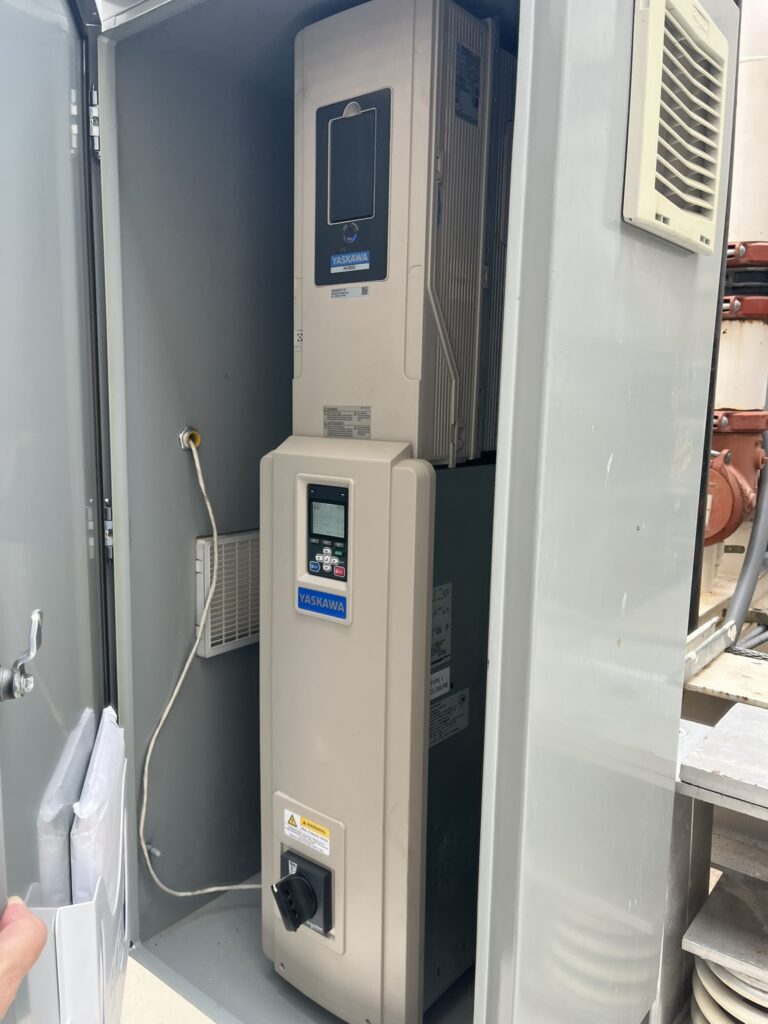
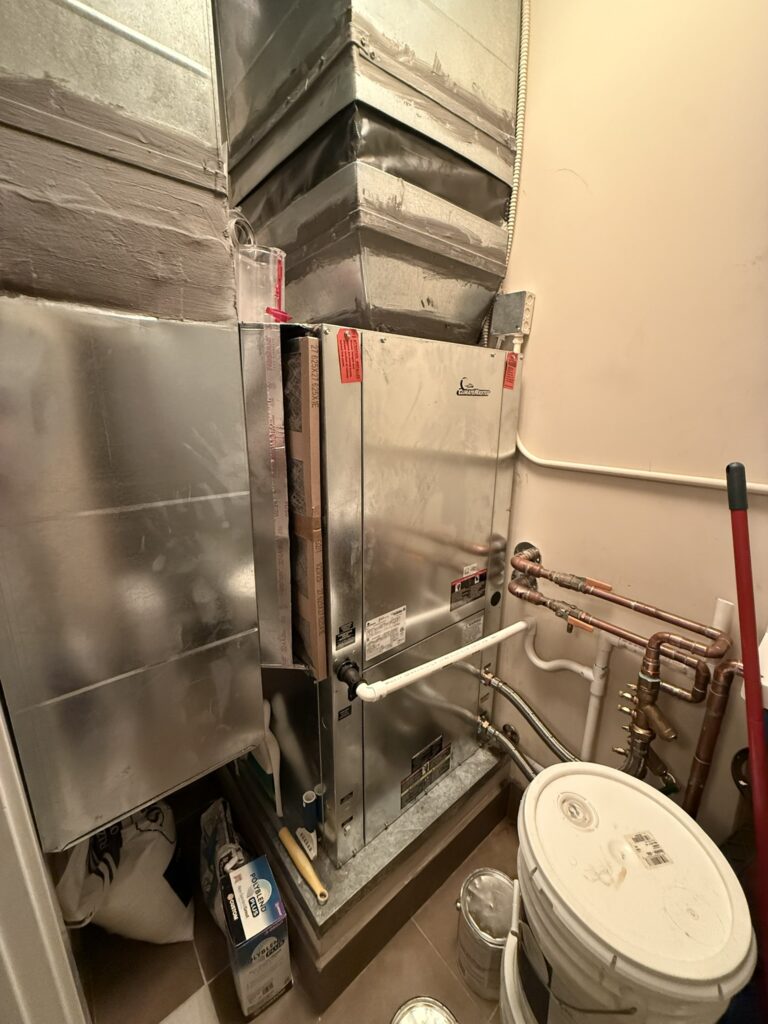
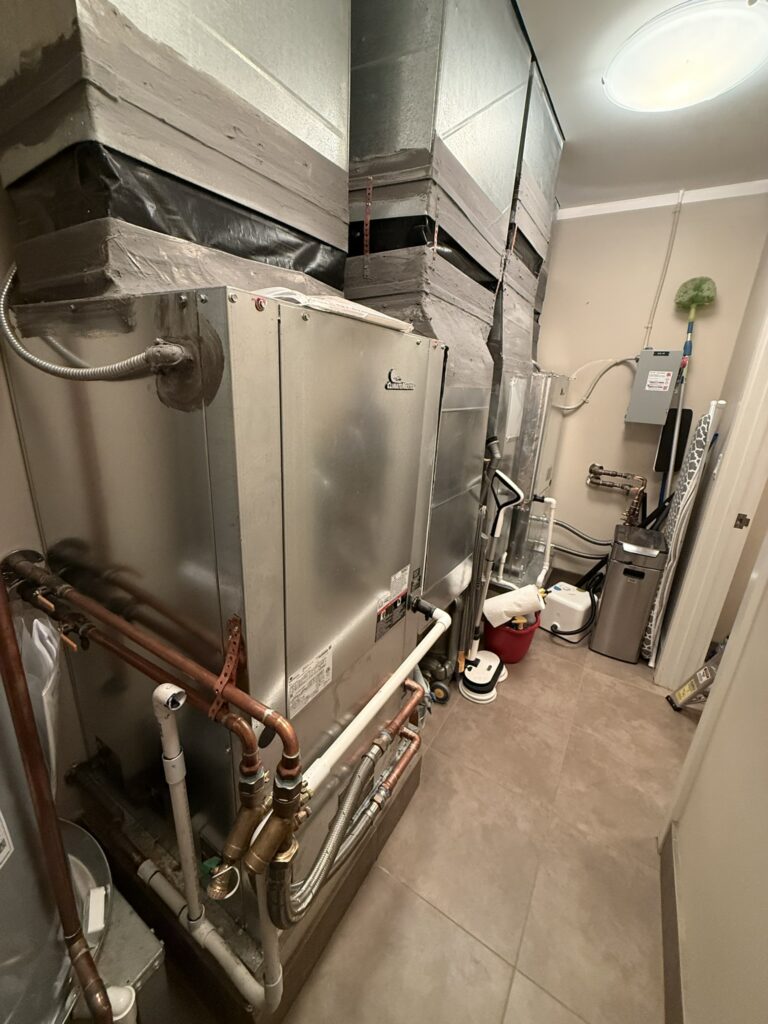
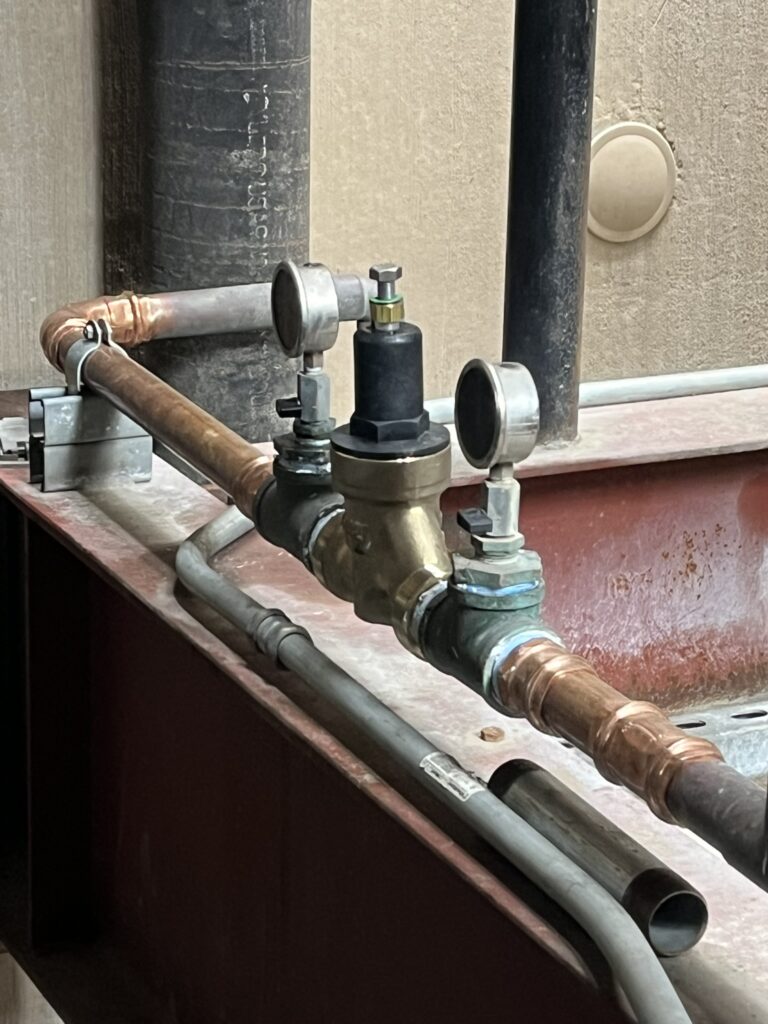
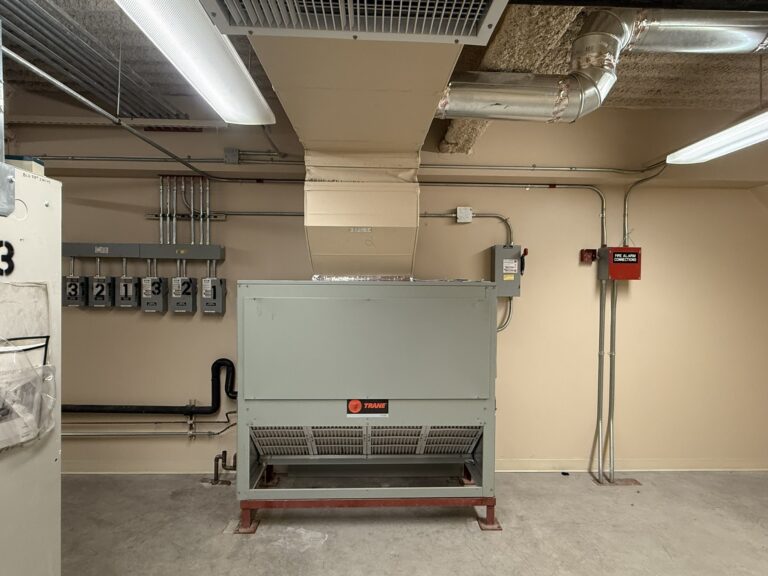
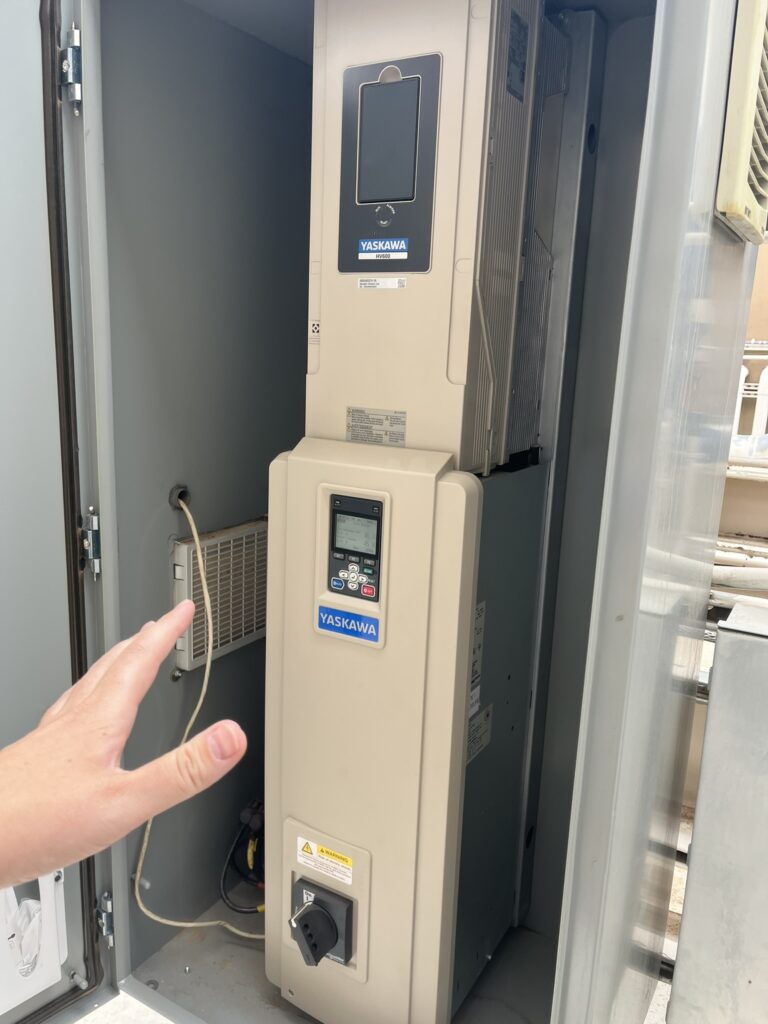
Photos from our own commercial projects across the Phoenix metro — equipment we installed, in buildings we service.
How the job typically runs.
For Glendale labs, the first visit is an in-person look. We confirm the room use, access rules, operating hours, equipment heat sources, exhaust schedules, filter requirements, roof access, utility area, and whether work has to happen around samples, instruments, students, patients, or production. The diagnostic/service-call fee is disclosed at booking and credited. After that look, we provide flat-rate written quotes with scopes documented in writing.
Service is scheduled around the lab’s real constraints. Some suites can only open panels before staff arrive. Others need after-hours roof work because instruments stay powered during the day. School labs may need summer or break-window planning. Small private labs may need a staged repair so one room stays usable while parts are sourced. We do Mon–Fri 8–5 service and 24/7 emergency service when cooling, ventilation, or a critical room condition cannot wait.
We keep the documentation practical: equipment condition, observed failures, repair scope, photos where useful, and notes on coordination points. If exhaust balance, cleanroom certification, chemical exposure control, or code interpretation is outside HVAC service, we say so and coordinate with the right party. Our role is to repair, replace, maintain, and document the HVAC system so the facility decision-maker can make the next call with facts.
- 01 Booking, with the diagnostic fee disclosed
- 02 In-person diagnosis with real readings
- 03 Written flat-rate quote before work begins
- 04 The work: repair, install, or maintenance
- 05 Startup, documentation, and warranty handoff
Glendale lab work may involve Maricopa County, the City of Glendale, utility requirements, building ownership rules, and the Arizona Registrar of Contractors standards. A like-for-like service repair is different from replacing a rooftop unit, adding exhaust, changing ductwork, or modifying electrical service. We identify where the HVAC scope appears to cross into permit, engineering, or owner approval territory and document that before work starts. For lab spaces, ventilation changes can affect pressure relationships, adjacent rooms, and equipment performance, so we avoid casual field redesign. Yeti Pros is AZ ROC #363372 · ROC #363423. The Arizona ROC workmanship standards are published here: Arizona minimum workmanship standards. We service and document HVAC; we do not certify cleanrooms, approve lab processes, issue health-code rulings, or give legal advice.
Pricing, financing & the 10% military & first responder discount.
Lab HVAC pricing in Glendale is driven by access, equipment type, exhaust interaction, controls complexity, filter needs, refrigerant condition, roof safety, parts availability, and whether the repair can be isolated to one room or affects the whole suite. Older core buildings may require more diagnostic time because previous tenants changed ductwork, returns, and electrical paths. Arrowhead and Westgate suites may involve shared roofs, landlord approval, and scheduled access. We do not quote sight unseen for lab spaces. We come to you, inspect the system, disclose the diagnostic/service-call fee at booking, then issue a flat-rate written quote with the scope documented. Repair parts carry a 1-year manufacturer parts warranty, and our workmanship is backed by a 2-year written workmanship warranty. Financing is available. Military, veterans, and first responders can use our 10% discount.
- 01 Flat-rate written quote after an in-person look
- 02 Diagnostic fee disclosed at booking, credited to the repair
- 03 Financing available on replacements
- 04 2-year workmanship warranty; 1-year manufacturer parts warranty
- 05 10% military, veteran & first responder discount
Why a licensed HVAC contractor matters.
FAQs: HVAC for Laboratories in Glendale, AZ.
Can you service a small lab in an older Glendale storefront?
Yes. Many Glendale lab-like spaces are not purpose-built laboratories; they are dental labs, testing rooms, school labs, or specialty workrooms inside older retail or office shells. We start by documenting the actual HVAC layout: unit type, duct routing, return path, exhaust fan operation, thermostat location, roof access, and any equipment adding heat. If the system is fighting exhaust or building leakage, we explain that clearly instead of treating the call like a standard office comfort complaint. We repair HVAC equipment and coordinate where engineering or certification is needed.
Do you certify cleanrooms or lab ventilation in Glendale?
No. We service, repair, replace, and document HVAC systems. We do not certify cleanrooms, issue health-code rulings, provide legal advice, or sign off on lab process compliance. If your Glendale facility needs formal certification, balancing, environmental testing, or engineering documentation, we can coordinate our HVAC scope with the appropriate certifier, engineer, or specialty vendor. That keeps roles clear. Our written scope covers the HVAC work we perform, the equipment condition we observe, and the coordination items that affect temperature, ventilation, and system operation.
Why does our lab room get hot when the rest of the suite is comfortable?
That usually points to local heat gain, airflow imbalance, sensor placement, or exhaust pulling conditioned air out faster than the HVAC can replace it. In Glendale, afternoon roof heat and sun exposure add to the problem, especially in 1990s and 2000s buildings around Arrowhead and Westgate with aging rooftop units. We check the room load, supply airflow, return path, thermostat reading, filters, coils, blower operation, and exhaust schedule. The fix may be a repair, controls correction, airflow change, maintenance, or a larger redesign discussion.
Can you work around samples, instruments, or school schedules?
Yes, within the limits of the HVAC work and site access. We ask about operating hours, sensitive instruments, sample handling, student schedules, roof access, noise limits, and any shutdown restrictions before quoting. Some Glendale labs need early morning diagnostics. School labs may need break or summer planning. Small private labs may need staged repairs so one zone stays usable. We document the work scope in writing and schedule around the facility’s constraints wherever practical.
Do APS and SRP differences matter for a lab HVAC replacement?
They can. Glendale utility service is split between APS and SRP by neighborhood, and replacement planning can depend on electrical service, disconnects, equipment load, utility coordination, and building rules. A simple repair usually does not raise that level of planning, but a rooftop unit replacement or system change may. During the in-person look, we identify the equipment, electrical condition, roof access, and any utility-related details that need attention before a written quote is issued.
What should we do if a lab HVAC system fails after hours?
Call (520) 556-8929 and describe the room, equipment served, current temperature condition, alarms, odors, water leaks, and whether exhaust or process equipment is running. We provide 24/7 emergency service. The technician’s first job is to determine whether the failure is mechanical, electrical, controls-related, condensate-related, or tied to ventilation. We will not guess at lab compliance or product viability. We focus on HVAC diagnosis, practical stabilization, and written documentation of the observed issue and repair options.
Every major brand, serviced and installed.
Phoenix metro: Most days a tech is already working somewhere in the Valley, so same-day appointments happen when the schedule allows. After-hours emergencies are dispatched when a licensed tech is available — a real person answers and tells you the ETA on the call.
Call (520) 556-8929Request an estimate.
No pressure, no door knockers. We look at the HVAC system, tell you what it needs (and what it doesn’t), and put the number in writing.
Need laboratories in Glendale? A real person answers.
Other services we run in Glendale.
Laboratories in nearby cities.
Looking for something else nearby? All HVAC services in Glendale