
Queen Creek
HVAC for Medical Offices in Queen Creek, AZ.
- (520) 556-8929
- Serving the entire Phoenix metro — we come to you
- Office: Mon–Fri 8:00 AM – 5:00 PM · 24/7 emergency service
- 2-year workmanship warranty · 1-year parts warranty
- Veteran-owned & operated · residential + commercial
- 23 five-star Google reviews
A Queen Creek medical office cannot treat comfort like a lobby amenity. Gowned patients feel small temperature swings immediately, exam rooms build heat from equipment and closed doors, and front-desk staff sit near glazing and entry traffic all day. Medical office hvac queen creek work has to fit a town where healthcare is following family growth into Queen Creek Marketplace, newer retail pads, professional suites, and neighborhood centers serving Encanterra, Cortina, Sossaman Estates, Hastings Farms, and the large-lot edges.
This is not a dense hospital corridor. It is a rapidly suburbanizing far southeast Valley community with former agricultural and equestrian character, affluent-leaning households, master-planned subdivisions, horse properties, and some fringe sites with well and septic conditions. Medical tenants may occupy newer shells, converted professional space, dental and primary-care suites, therapy offices, imaging-adjacent spaces, or small specialty clinics. Utilities are SRP, not APS. Yeti Pros is veteran-owned and operated, service-area based with no street address, and we come to you. For broader metro coverage, see our medical office HVAC page.
The practical challenge is that healthcare rooms are used harder than the shell often suggests. A waiting room may have steady occupancy and open volume, while an exam room has a shut door, bright task lighting, a computer, a caregiver moving in and out, and a patient who cannot compensate with normal clothing. In Queen Creek’s long cooling season, those small differences become daily complaints unless airflow, controls, filtration, and equipment condition are all looked at together.
ZIPs served: 85142, 85144
What Medical Offices covers in Queen Creek.
Exam-room comfort diagnosis
We trace hot or cold exam rooms through airflow, thermostat placement, closed-door pressure, filter condition, equipment heat, and rooftop unit performance. The goal is practical comfort for patients and staff without pretending HVAC service is a clinical certification.
Rooftop unit repair
Many Queen Creek medical suites depend on packaged rooftop units over retail or professional buildings. We diagnose motors, capacitors, contactors, coils, drains, belts, controls, refrigerant-side symptoms, and airflow issues, then document the repair scope in writing.
Preventive maintenance
Maintenance covers filters, coils, drains, electrical checks, blower components, control operation, and visible wear. For medical offices near construction corridors or dusty large-lot edges, filter and coil condition can directly affect exam-room recovery and staff comfort.
Airflow and zoning review
Tenant improvements can leave exam rooms with weak supplies, poor returns, or thermostats reading the wrong area. We inspect the HVAC-side conditions behind uneven rooms and document whether the issue appears to be maintenance, controls, ductwork, or equipment capacity.
After-hours emergency service
When cooling failure threatens the next clinic day or affects sensitive rooms, 24/7 emergency service is available. We focus on restoring HVAC operation, documenting the cause, and identifying any follow-up that should be scheduled around appointments.
Written HVAC documentation
We provide written scopes after an in-person look and document completed HVAC work. Practice managers can keep those records with maintenance files while understanding that we service HVAC and do not issue health-code, cleanroom, or legal certifications.
What we see for medical offices in Queen Creek.
Medical office HVAC problems in Queen Creek usually come from zoning, load separation, and access constraints. A suite may have exam rooms, procedure rooms, admin offices, waiting areas, nurse stations, labs, sterilization rooms, imaging rooms, storage, and staff areas under one or two rooftop units. The thermostat may be in a hallway or front office, while the real complaint is a closed exam room with a patient in a gown and equipment adding heat.
Equipment heat is a constant issue. Dental compressors, sterilizers, refrigerators, imaging equipment, computers, lighting, and small lab equipment can raise room temperature even when the rest of the suite looks satisfied. In newer Queen Creek retail and professional buildings, the shell may be efficient but the tenant improvement may have added walls and rooms without enough return path or supply adjustment. The result is one room that runs hot, another that is too cold, and staff using portable fans that make airflow complaints harder to diagnose.
Dust and construction are also part of the local profile. Queen Creek growth means buildouts, road work, and nearby undeveloped parcels can load filters and coils faster than expected. On the equestrian and large-lot edges, outdoor condensers and rooftop units may see more dust exposure than a sealed urban medical campus. Dirty filters reduce airflow, lower coil performance, and make temperature complaints show up first in small rooms with closed doors.
Access often shapes the repair as much as the equipment does. Ceiling tiles may be above exam tables, return grilles may sit over charting areas, and roof access may require landlord timing in a multi-tenant center. A medical office also has rooms that cannot simply be opened while occupied. We look for the mechanical cause while respecting how the suite actually runs: which rooms are private, which rooms turn over quickly, where supplies are stored, and where staff can safely give us access.
Drainage and controls deserve special attention in desert medical offices because cooling systems can still produce condensate while roof temperatures, dust, and long runtimes stress the equipment. A slow drain, weak blower, dirty coil, misread thermostat, or sensor in the wrong zone can look like a random comfort problem until the room schedule is compared with the unit’s behavior. We separate a true equipment fault from a layout problem when the evidence allows.
Documentation matters more in medical offices, but the boundary has to be clear. We service and document HVAC: equipment condition, repairs, maintenance, observed airflow concerns, thermostat behavior, filter condition, drain issues, and recommended follow-up. We do not certify cleanrooms, issue health-code rulings, validate infection-control programs, or give legal advice. That distinction keeps the HVAC record useful without pretending a service call replaces the office's compliance process.
- 01 Airflow and static pressure
- 02 Electrical: capacitors, contactors, draws
- 03 Refrigerant-circuit behavior
- 04 Drains, safeties, and float switches
- 05 Thermostat, controls, and cycling
- 06 Ducts, returns, and room-by-room comfort
Commercial jobs we have documented.
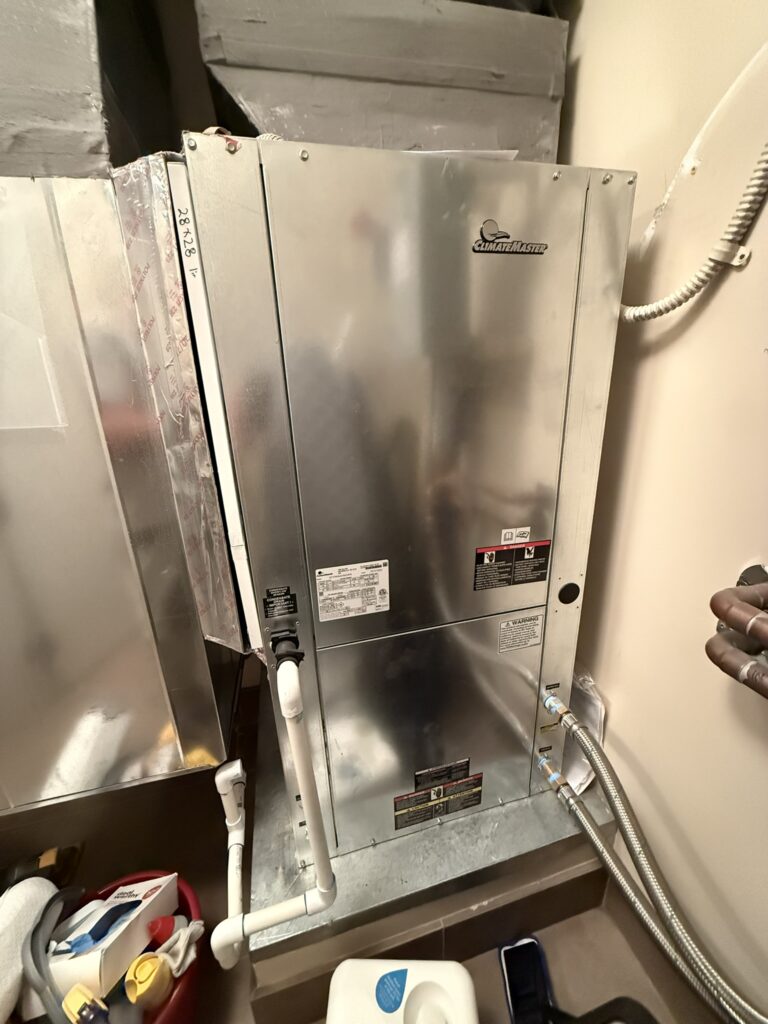
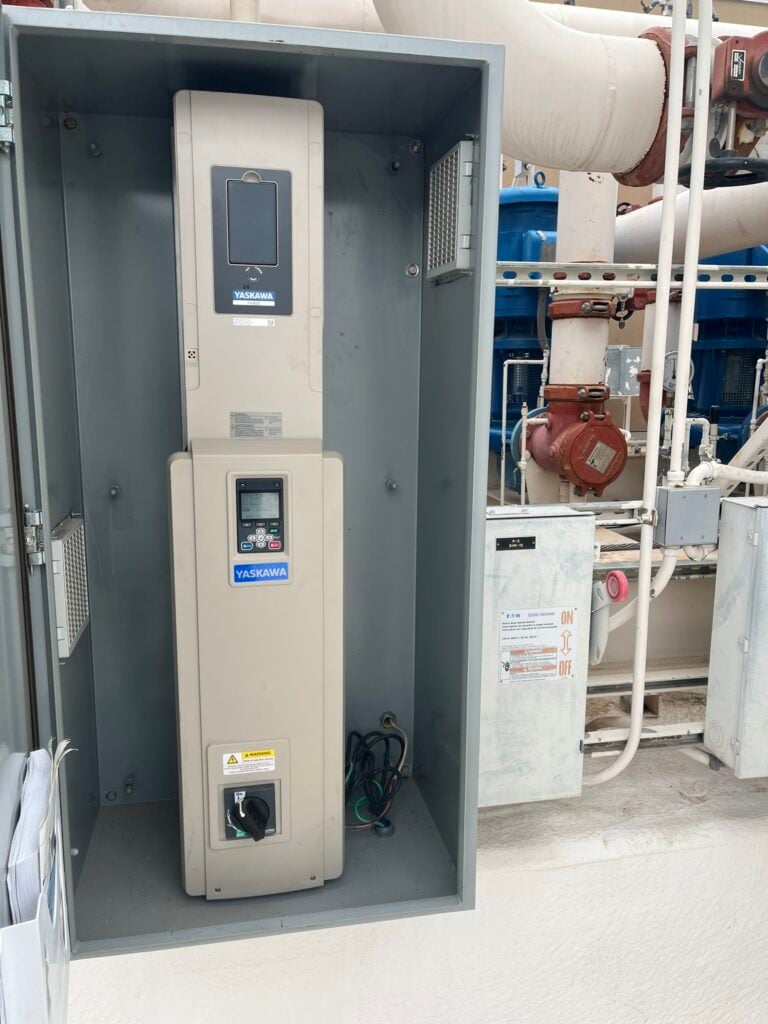
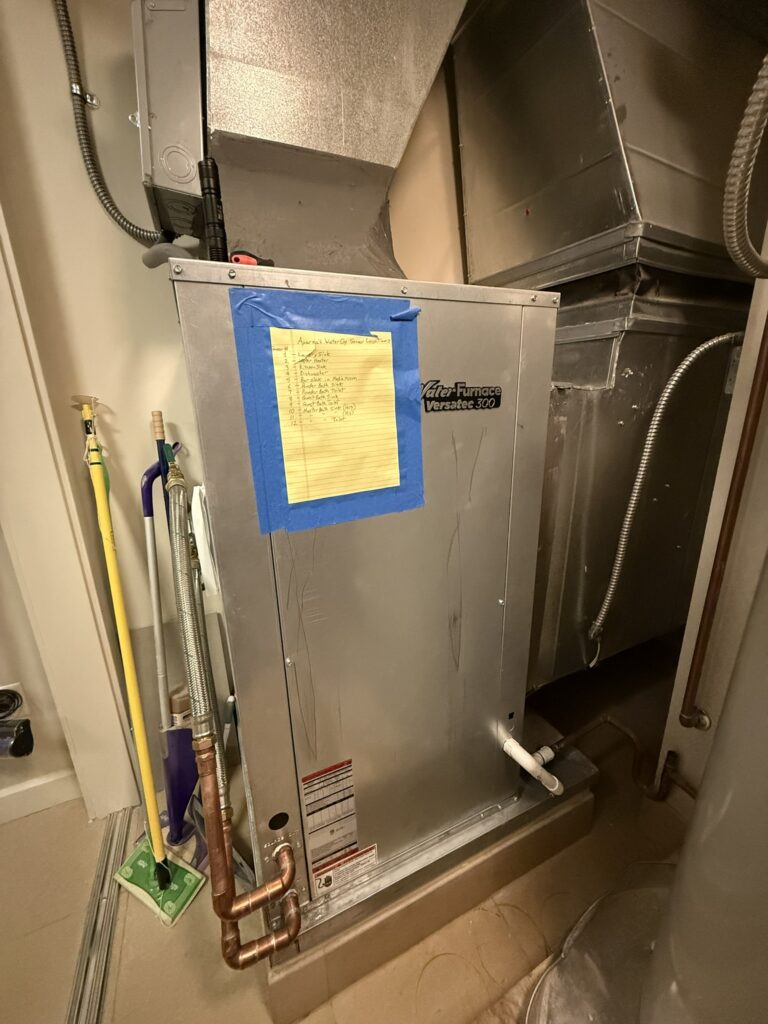
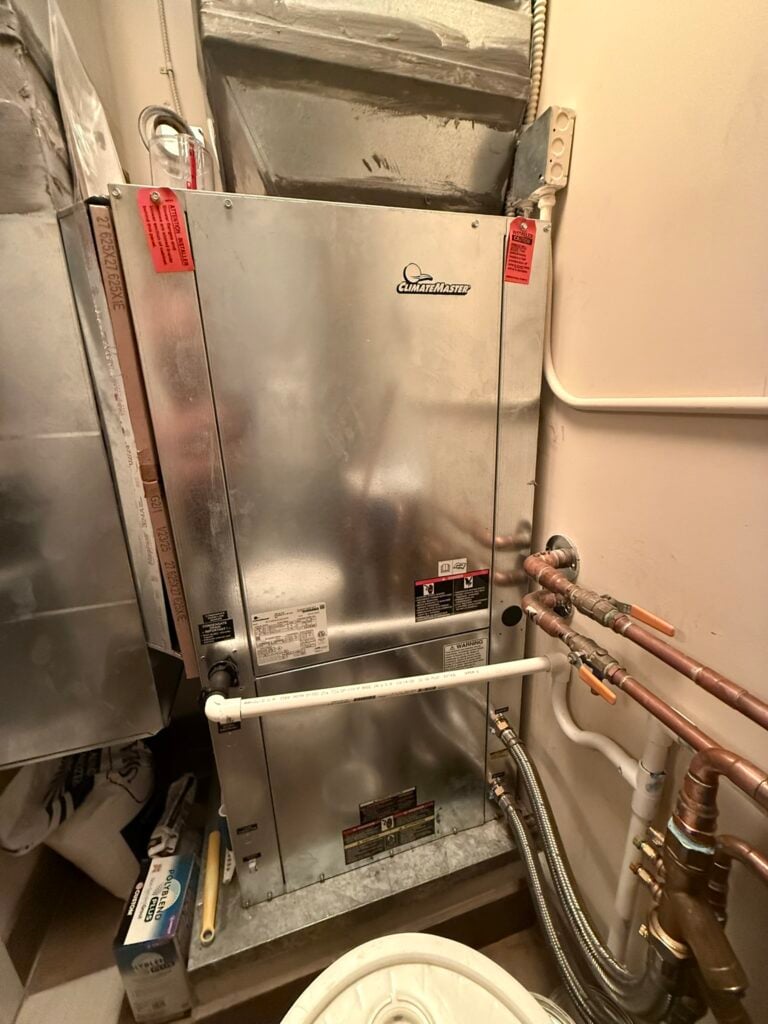
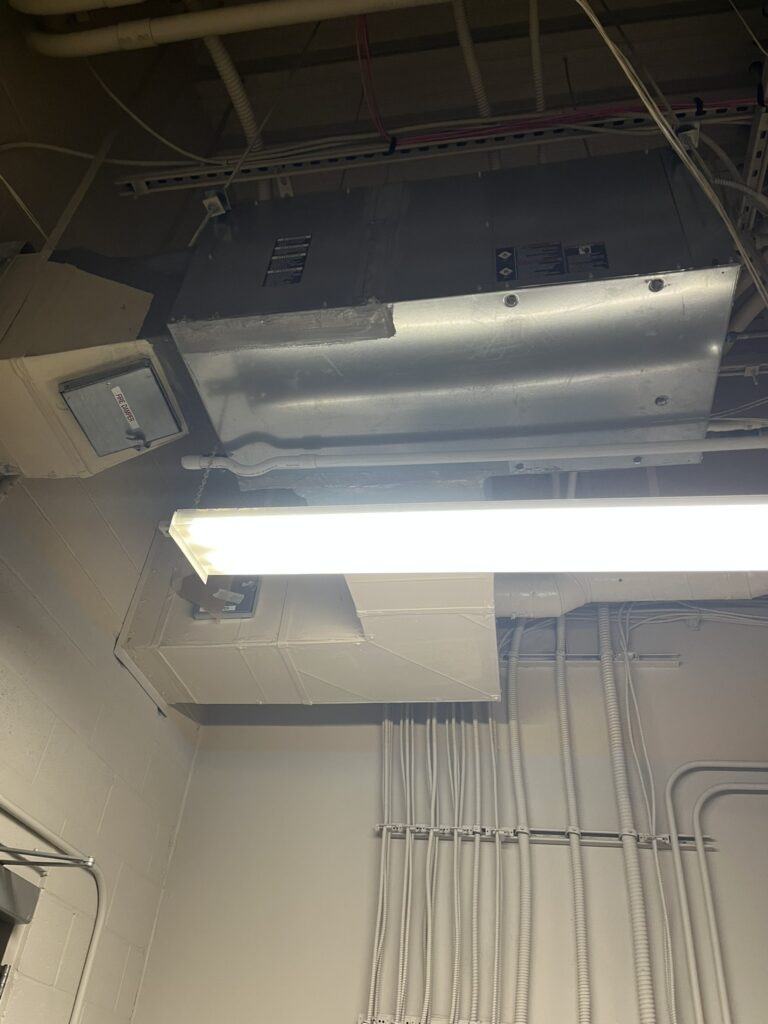
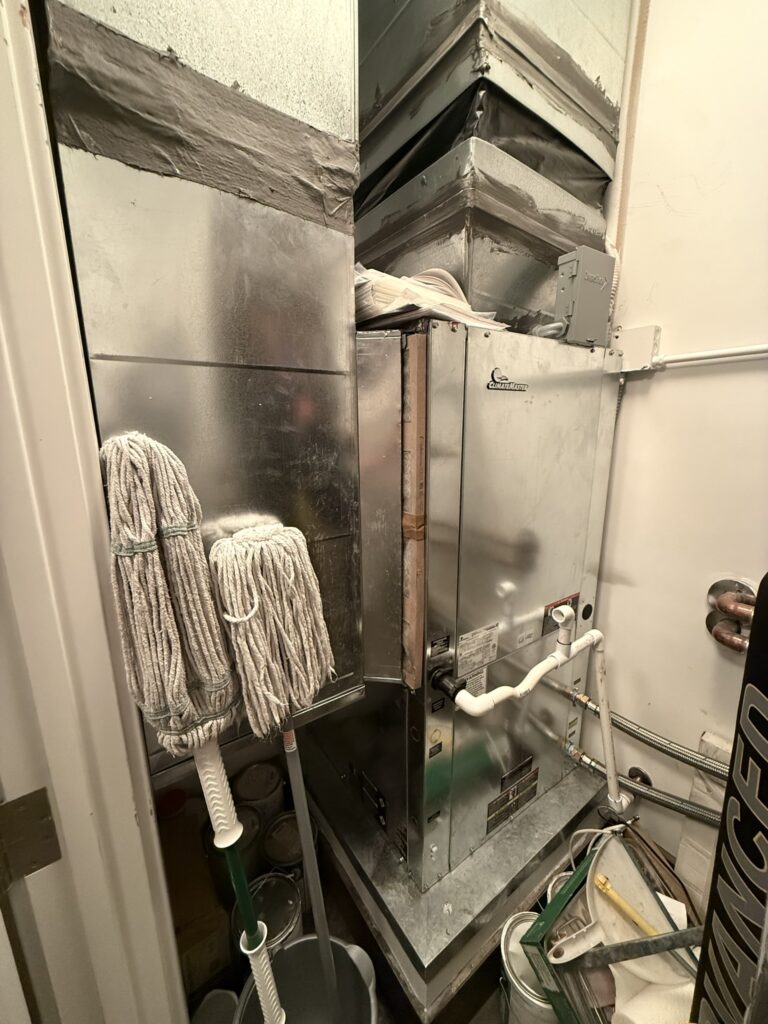
Photos from our own commercial projects across the Phoenix metro — equipment we installed, in buildings we service.
How the job typically runs.
Medical offices run on appointment flow, so HVAC work has to respect room turnover, patient privacy, staff access, and clinical equipment. We ask which rooms are affected, when patients are scheduled, whether ceiling access is above active exam areas, and whether rooftop or mechanical access requires landlord coordination. A warm exam room at 2 p.m. is handled differently than a planned maintenance visit after morning appointments.
When we arrive, the useful information is specific: room names, complaint times, thermostat location, whether doors stay closed, which equipment is operating, and whether the issue changes during lunch, late afternoon, or after a filter change. Queen Creek medical suites can heat soak through the day, especially when west-facing glass, rooftop exposure, and continuous internal loads stack together. We use that operating pattern to keep the diagnosis tied to real use rather than a single reading in an empty room.
Yeti Pros schedules commercial HVAC service Mon-Fri 8-5, with 24/7 emergency service when a failure cannot wait. The diagnostic/service-call fee is disclosed at booking and credited. After an in-person look, we provide flat-rate written quotes with scopes documented in writing. That written scope helps practice managers, landlords, and ownership separate immediate repair from planned work.
We document HVAC work in plain terms: unit served, observed condition, repair performed, limitations, and recommendations. AZ ROC #363372 and ROC #363423. Phone (520) 556-8929.
- 01 Booking, with the diagnostic fee disclosed
- 02 In-person diagnosis with real readings
- 03 Written flat-rate quote before work begins
- 04 The work: repair, install, or maintenance
- 05 Startup, documentation, and warranty handoff
Medical office HVAC work in Queen Creek can involve Town of Queen Creek permitting when the property is incorporated and the scope triggers review. Some edge locations may involve Maricopa County or Pinal County. Utility coordination can involve SRP. Tenant improvements, rooftop unit replacements, duct changes, gas work, electrical changes, condensate routing, and added ventilation equipment can all affect the path.
Medical tenants also need clean responsibility lines because the HVAC contractor, landlord, tenant-improvement contractor, utility, inspector, and practice manager may all touch different pieces of the same project. A rooftop unit swap may be straightforward mechanically but still require access planning, curb verification, electrical review, condensate attention, and coordination with the building owner. Duct or ventilation changes inside the suite can affect ceilings, rooms, schedules, and other trades.
We keep HVAC documentation clear so practice managers, landlords, and contractors can coordinate the right next step. We do not certify cleanrooms, issue health-code rulings, approve clinical operations, or provide legal advice. Arizona workmanship expectations are available through the Arizona ROC minimum workmanship standards.
Pricing, financing & the 10% military & first responder discount.
Medical office HVAC cost is driven by access, equipment type, room sensitivity, scheduling limits, parts condition, and whether the problem is isolated or tied to zoning and airflow. A failed capacitor on a rooftop unit is different from a suite with poor return paths, hot exam rooms, dirty coils, and control placement problems. Work that must avoid patient hours or coordinate with a landlord can change the schedule and scope.
Queen Creek conditions can add practical drivers without changing the basic quoting process. Rooftop equipment may need attention to dust-loaded coils, sun exposure, drain condition, and safe roof access. Interior work may require moving around exam rooms, ceiling grids, stored supplies, and staff areas that cannot be disrupted during patient care. If a complaint involves multiple rooms, we look at whether the issue is one component, a maintenance condition, a control problem, or a larger airflow pattern.
We provide flat-rate written quotes after an in-person look, and scopes are documented in writing. Financing is available. Yeti Pros offers a 10% military, veteran and first responder discount through our military discount page. Repairs include a 2-YEAR written workmanship warranty and a 1-YEAR manufacturer parts warranty on repair parts.
- 01 Flat-rate written quote after an in-person look
- 02 Diagnostic fee disclosed at booking, credited to the repair
- 03 Financing available on replacements
- 04 2-year workmanship warranty; 1-year manufacturer parts warranty
- 05 10% military, veteran & first responder discount
Why a licensed HVAC contractor matters.
FAQs: HVAC for Medical Offices in Queen Creek, AZ.
Why are our Queen Creek exam rooms warmer than the waiting room?
Exam rooms are often closed, smaller, and loaded with computers, lights, diagnostic equipment, refrigerators, or other heat sources. If the thermostat is in a hallway or front area, the rooftop unit may shut off before the exam room recovers. Poor return paths, dirty filters, weak airflow, or tenant-improvement duct changes can make the difference worse. In Queen Creek, afternoon roof heat and dusty filters can make that imbalance show up quickly. We inspect the actual room layout and HVAC conditions together.
Can you provide HVAC documentation for a medical office compliance file?
We provide HVAC service documentation: observed conditions, completed repairs, maintenance items, equipment information where accessible, and written scopes. We do not certify cleanrooms, issue health-code rulings, validate infection-control programs, or give legal advice. Many practice managers still keep our HVAC documentation with their facility records because it shows what was inspected, repaired, and recommended on the mechanical side.
Do you work around patient schedules?
Yes. We coordinate with the practice manager around appointments, room turnover, ceiling access, rooftop access, and landlord requirements. Some checks can happen while the office is open; others are cleaner after patients leave or before the schedule starts. We offer Mon-Fri 8-5 service and 24/7 emergency service for HVAC failures that cannot wait.
Do Queen Creek medical offices need permits for HVAC changes?
Permit needs depend on location and scope. Incorporated Queen Creek sites typically follow Town of Queen Creek requirements, while some edge locations may involve Maricopa County or Pinal County. Rooftop unit replacement, duct changes, electrical changes, gas work, condensate routing, or added ventilation equipment may trigger review. We document the HVAC scope and coordinate the mechanical work without providing legal advice.
Can you fix HVAC problems caused by a tenant improvement buildout?
We can diagnose and repair the HVAC-side problems we find, such as airflow restrictions, poor control placement, dirty equipment, weak blower performance, drain issues, or duct-related comfort complaints. Some buildout problems may require design work, landlord approval, or additional trades. After an in-person look, we provide a flat-rate written quote for our scope and document any limitations clearly.
What should a Queen Creek medical office expect when calling Yeti Pros?
Call (520) 556-8929. We disclose the diagnostic/service-call fee at booking and credit it. A technician comes to your site, inspects the HVAC issue, and provides a flat-rate written quote after the in-person look. Yeti Pros is veteran-owned and operated, AZ ROC #363372 and ROC #363423. Repairs include a 2-YEAR written workmanship warranty and a 1-YEAR manufacturer parts warranty on repair parts.
Every major brand, serviced and installed.


Phoenix metro: Most days a tech is already working somewhere in the Valley, so same-day appointments happen when the schedule allows. After-hours emergencies are dispatched when a licensed tech is available — a real person answers and tells you the ETA on the call.
Call (520) 556-8929Request an estimate.
No pressure, no door knockers. We look at the HVAC system, tell you what it needs (and what it doesn’t), and put the number in writing.
Need medical offices in Queen Creek? A real person answers.
Other services we run in Queen Creek.
Medical Offices in nearby cities.
Looking for something else nearby? All HVAC services in Queen Creek