
Peoria
HVAC for Restaurants in Peoria, AZ.
- (520) 556-8929
- Serving the entire Phoenix metro — we come to you
- Office: Mon–Fri 8:00 AM – 5:00 PM · 24/7 emergency service
- 2-year workmanship warranty · 1-year parts warranty
- Veteran-owned & operated · residential + commercial
- 23 five-star Google reviews
Restaurant HVAC in Peoria is not one building type. Old Town Peoria has older low-roof spaces where kitchen heat, undersized returns, patched duct runs, and tight service access show up fast during lunch. Around the sports complex and the retail corridors serving 85381 and 85382, dining rooms take spring-training crowd swings that can turn a decent unit into a complaint machine. Farther north toward Vistancia, Westwing, Fletcher Heights, and the Lake Pleasant corridor, newer pads and end-cap restaurants often have better shells but still fight west glass, roof exposure, long cooling cycles, and makeup air that was never balanced for the actual cook line.
Yeti Pros is a veteran-owned & operated commercial HVAC contractor serving Peoria restaurants across Maricopa County. We come to you; we do not publish a shop address as a walk-in service counter. For broader metro restaurant work, see commercial restaurant HVAC. AZ ROC #363372 · ROC #363423. Call (520) 556-8929 for booking, Mon–Fri 8–5, with 24/7 emergency service when a dining room, kitchen, bar, office, or walk-in-adjacent space cannot wait.
ZIPs served: 85345, 85381, 85382, 85383
What Restaurants covers in Peoria.
Dining room cooling repair
We diagnose and repair package units, split systems, thermostats, airflow restrictions, failed capacitors, contactors, motors, belts, coils, drains, and refrigerant circuit issues that show up as hot tables, uneven sections, or long recovery after a rush.
Kitchen-adjacent airflow correction
We evaluate HVAC-side airflow near cook lines, pass-throughs, dish areas, prep zones, and service stations, then document repairs or adjustments that reduce pressure problems without pretending to certify the hood or health-code side of the operation.
Commercial HVAC maintenance
Restaurant maintenance focuses on coils, filters, belts, drains, electrical components, economizers, thermostat behavior, airflow, and early failure signs caused by grease vapor, dust, roof exposure, monsoon moisture, and long Peoria cooling seasons.
Rooftop unit replacement
When a restaurant RTU is past sensible repair, we size and quote replacement after reviewing the existing curb, duct connections, electrical, access, zoning, controls, and load problems that affected the old unit.
Controls and zoning fixes
We correct thermostat placement, failed sensors, bad schedules, and zoning problems that make one part of the dining room overcool while bar seating, host areas, patio-adjacent sections, or kitchen-adjacent tables stay warm.
24/7 restaurant emergency service
For Peoria restaurants dealing with failed cooling, water leaks, electrical faults, drain backups, or a unit that cannot support service, we provide emergency HVAC response outside normal office hours.
What we see for restaurants in Peoria.
In Old Town Peoria restaurant spaces, the equipment is often a mix of aging package units, added mini-splits, and ductwork that has followed remodels instead of a clean mechanical plan. Kitchens pull air hard through hoods, doors, and pass-through openings. If makeup air is weak or badly tempered, the dining room goes negative, outside air gets dragged through every crack, and the unit runs without catching up. The symptom the manager sees is simple: hot tables, sticky floors, staff propping doors because the kitchen feels boxed in, and guest complaints that start before the equipment has technically failed. Low roofs and tight ceiling spaces can make access part of the repair plan.
Along Peoria’s retail corridors and sports-complex trade area, we see roof package units that are technically cooling but not controlling comfort during crowd load. A dining room full of guests adds heat and moisture, servers move through exterior doors constantly, and glass facing the afternoon sun pushes supply air farther than the layout allows. Filters load with flour, grease vapor, dust, and parking-lot debris. Coils lose capacity slowly, belts stretch, blower sections get dirty, and drains can struggle during humid monsoon periods. Then the first heavy weekend exposes the problem.
Newer restaurant pads north toward Fletcher Heights, Westwing, Vistancia, and the Lake Pleasant corridor have a different pattern. The shells are newer, but the buildouts often depend on value-engineered zoning. One unit handles dining, another catches kitchen-adjacent space, and the thermostat may be mounted where it reads the wrong condition. A thermostat near a supply stream or warm service station makes the unit short-cycle or overcool the wrong zone while the real problem area stays uncomfortable. End-cap spaces can pick up sun on multiple exposures, and patio doors can change the load every time staff moves between inside and outside service.
Peoria is mostly APS territory, with some southern pockets on SRP, so demand and runtime show up differently depending on the service address. We do not diagnose utility bills from the sidewalk. We look at nameplates, economizer condition, belts, refrigerant circuit behavior, airflow, controls, hood makeup influence, roof exposure, filters, drains, and whether the equipment is being asked to do a job the restaurant layout no longer matches. For repair scope, replacement planning, or maintenance, the useful question is not whether the unit runs. It is whether it supports the way the restaurant actually operates in Peoria heat.
- 01 Airflow and static pressure
- 02 Electrical: capacitors, contactors, draws
- 03 Refrigerant-circuit behavior
- 04 Drains, safeties, and float switches
- 05 Thermostat, controls, and cycling
- 06 Ducts, returns, and room-by-room comfort
Commercial jobs we have documented.
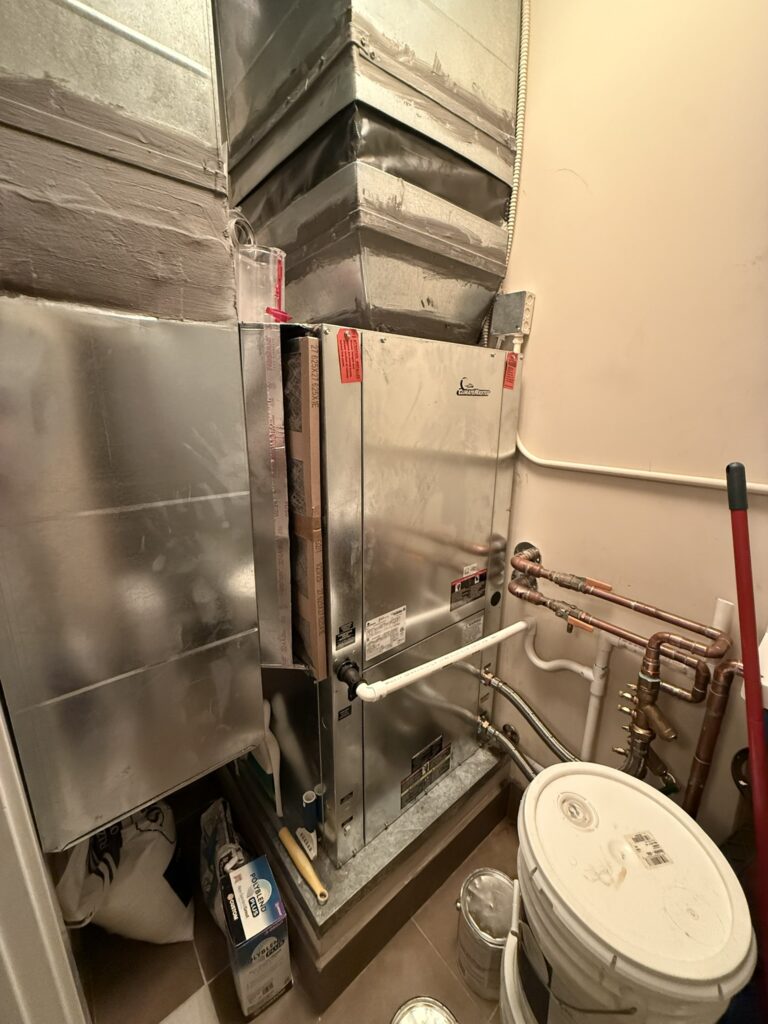
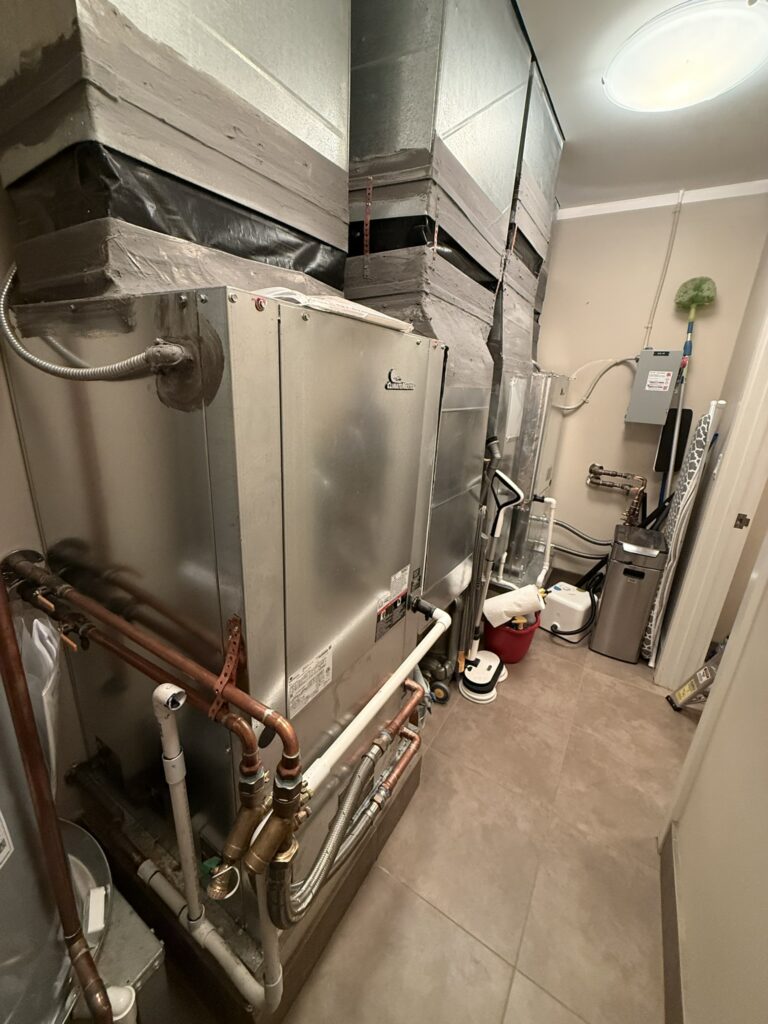
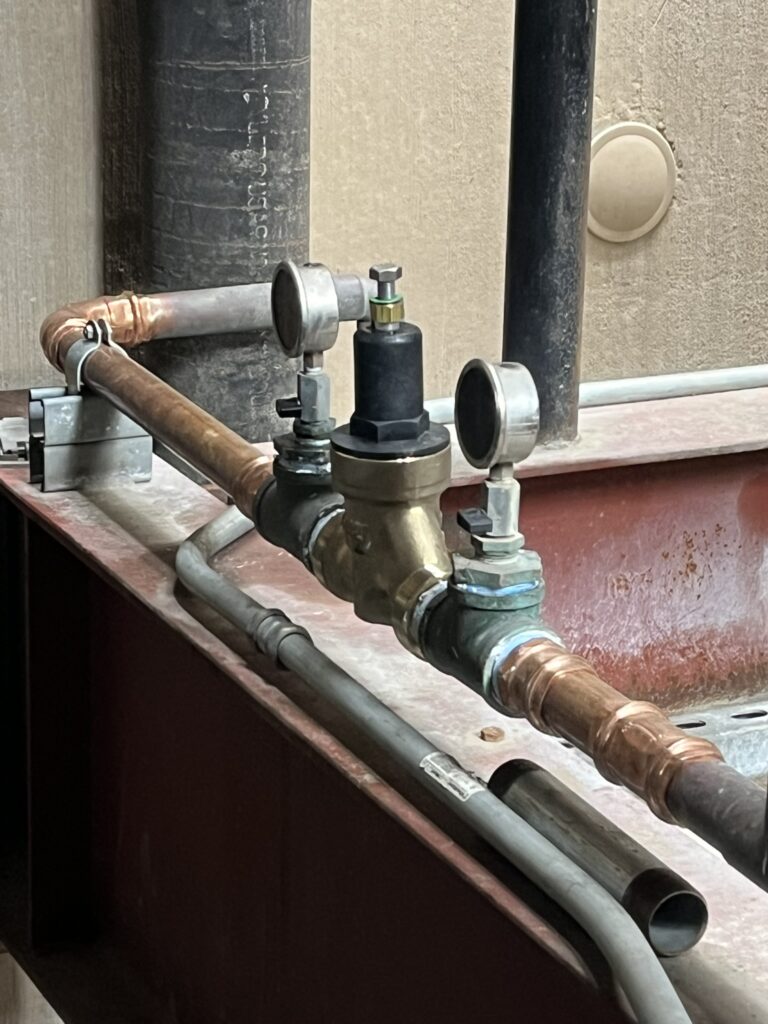
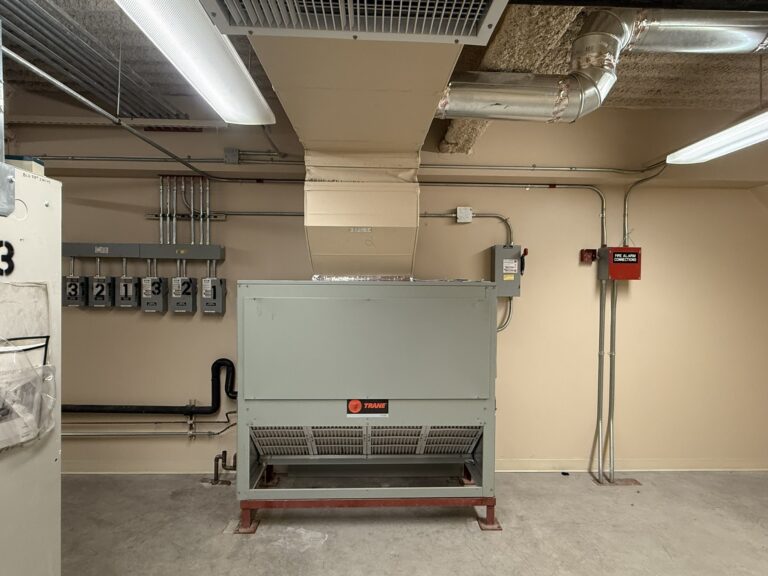
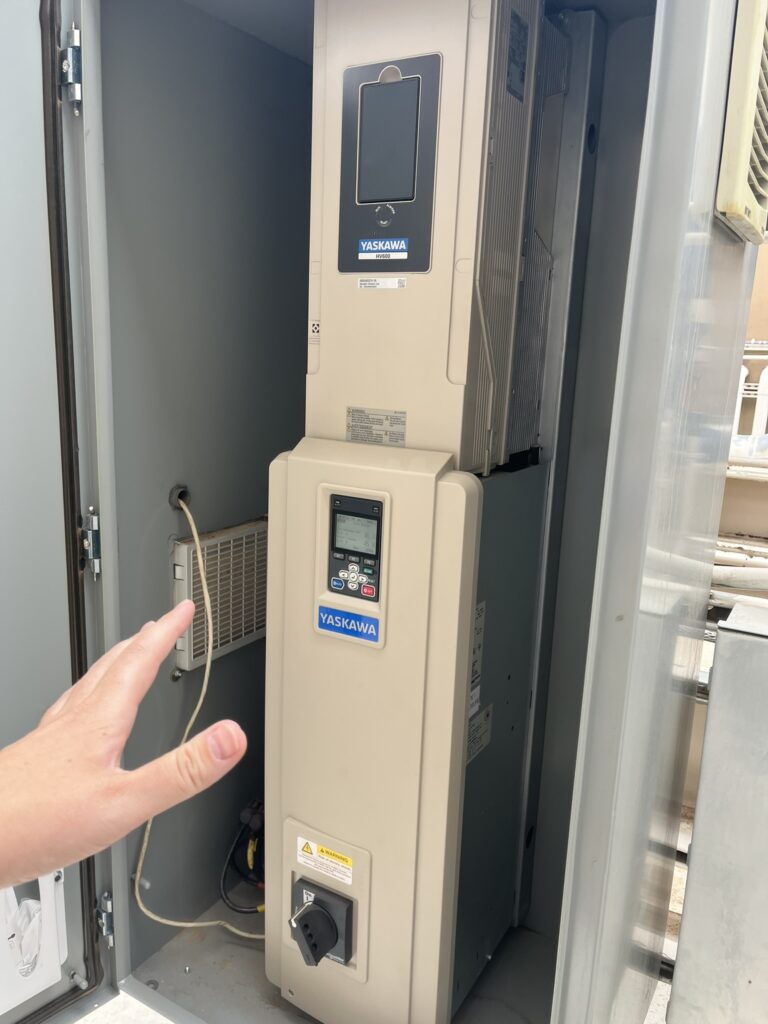
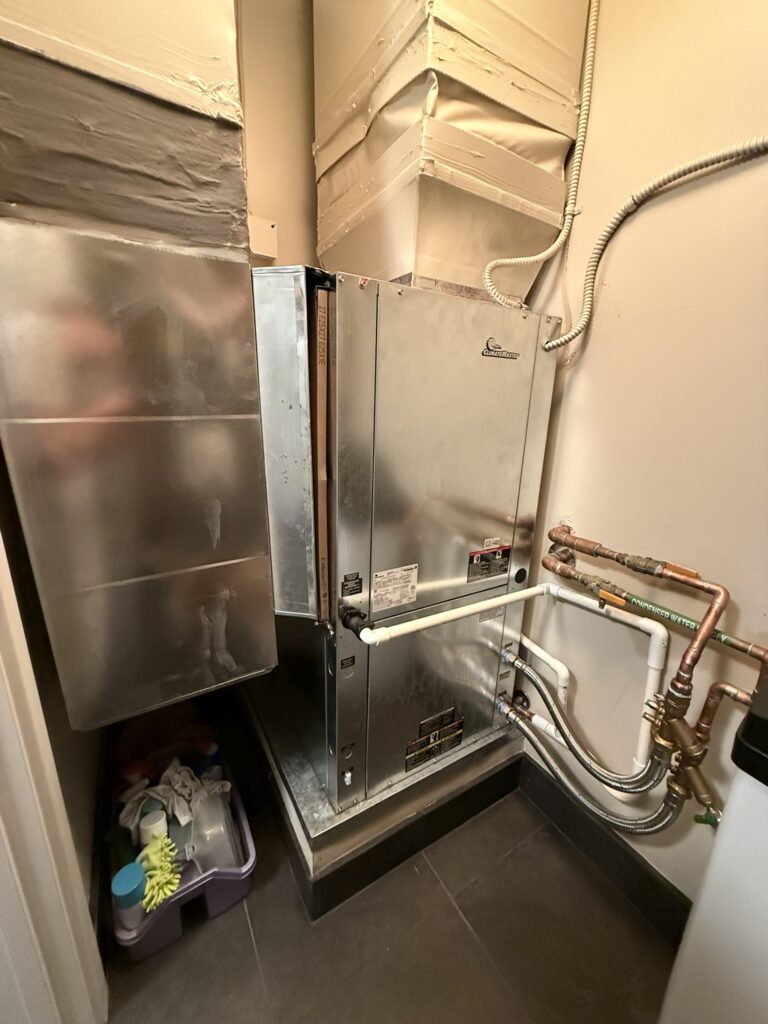
Photos from our own commercial projects across the Phoenix metro — equipment we installed, in buildings we service.
How the job typically runs.
Restaurants rarely have clean access windows. We schedule around prep, lunch, dinner, delivery traffic, patio service, staff movement, and after-close work when roof access or ceiling work would disrupt the floor. The diagnostic/service-call fee is disclosed at booking and credited as stated when work proceeds. After an in-person look, we provide flat-rate written quotes with the scope documented in writing, so a manager or owner can approve the work without guessing what is included. We ask for roof access details, alarm procedures, unit locations, and the best contact on site because restaurant calls lose time when the manager is pulled into service.
Our technicians separate comfort complaints from kitchen-air problems. We check the HVAC equipment, but we also pay attention to hood makeup air, door pressure, thermostat placement, filter condition, drain behavior, and whether the dining room is being pulled negative. A cooling complaint can come from a failed electrical part, a dirty coil, a weak blower, a bad thermostat location, or the hood system overpowering the conditioned space. We service and document HVAC; we do not issue health-code rulings or act as an inspection authority. When documentation is needed for management files, we write what we serviced, found, and recommended.
Emergency calls are handled 24/7 because a failed dining-room unit during a Peoria weekend service can change revenue, staffing, guest comfort, and food-safety decisions fast. Routine maintenance is usually set before opening, between meal periods, or after close. For targeted repairs, commercial AC repair is scoped to the unit, access, and operating issue instead of a generic parts swap. When equipment is near the end of useful repair, we document replacement considerations so the operator can plan around service windows.
- 01 Booking, with the diagnostic fee disclosed
- 02 In-person diagnosis with real readings
- 03 Written flat-rate quote before work begins
- 04 The work: repair, install, or maintenance
- 05 Startup, documentation, and warranty handoff
Restaurant HVAC work in Peoria has to respect the building’s actual mechanical setup: roof units, curb condition, electrical disconnects, condensate routing, duct changes, hood makeup-air interactions, and access over occupied dining or kitchen areas. Some repairs are straight service. Equipment replacement, curb alterations, electrical changes, or duct modifications may require permit coordination with the City of Peoria and Maricopa County expectations. Older spaces may also have undocumented remodel history, while newer pads may have landlord standards, roof access procedures, or tenant-improvement records that affect the mechanical scope.
Yeti Pros is licensed as AZ ROC #363372 · ROC #363423. We document HVAC service and installation scope in writing, and we keep the mechanical side clear. We do not certify hoods, issue health-code opinions, or provide legal advice. For Arizona workmanship standards, see the ROC’s minimum workmanship standards. Restaurant operators should keep service records with their facility files because the equipment history matters when repairs, inspections, insurance questions, utility coordination, or landlord conversations come up.
Pricing, financing & the 10% military & first responder discount.
Restaurant HVAC cost in Peoria is driven by access, equipment size, refrigerant circuit condition, roof safety, age of the curb, controls, duct layout, drain condition, and how much the kitchen exhaust system is affecting the conditioned space. A small Old Town suite with one package unit is a different job than a multi-zone sports-corridor restaurant with separate dining, bar, kitchen-adjacent, office, and storage areas. After-hours access, roof constraints, parts availability, and whether the space can stay open during work also affect the practical scope.
We give flat-rate written quotes after an in-person look, with the scope documented in writing. The diagnostic/service-call fee is disclosed at booking and credited as explained when the appointment is set. Financing is available. Yeti Pros also offers a 10% military, veteran & first responder discount. Repair workmanship carries a 2-YEAR written workmanship warranty, and repair parts carry a 1-YEAR manufacturer parts warranty.
- 01 Flat-rate written quote after an in-person look
- 02 Diagnostic fee disclosed at booking, credited to the repair
- 03 Financing available on replacements
- 04 2-year workmanship warranty; 1-year manufacturer parts warranty
- 05 10% military, veteran & first responder discount
Why a licensed HVAC contractor matters.
FAQs: HVAC for Restaurants in Peoria, AZ.
Do you service restaurant HVAC in Old Town Peoria?
Yes. Old Town Peoria restaurant spaces often have older package units, low-roof access, remodeled ductwork, tight ceiling areas, and kitchen exhaust effects that need a practical field diagnosis. We check the equipment and the way the space is being used now, not just the nameplate. We come to you, document findings in writing, and quote repair or replacement after an in-person look.
Can you work after we close?
Usually, yes. Restaurant work is often scheduled before opening, between service periods, or after close so technicians are not blocking staff, guests, deliveries, prep, or closing work. Emergency service is available 24/7. When booking, we discuss roof access, alarm procedures, manager contact, equipment location, parking, and whether work can happen while kitchen staff are still closing.
Why is our dining room hot when the AC is running?
Common causes include dirty coils, weak blower performance, low refrigerant charge, failed economizer parts, poor thermostat location, blocked returns, overloaded zones, clogged filters, or negative pressure from kitchen exhaust and weak makeup air. In Peoria restaurants, afternoon sun, roof heat, patio door traffic, and crowd load can expose problems that seem invisible during prep. We test the unit and document what is actually limiting capacity.
Do you handle hood makeup air?
We evaluate the HVAC-side impact of hood makeup air, pressure, and tempered air where it affects comfort and equipment performance. We do not certify hoods, issue health-code rulings, or replace the role of a hood specialist when that scope is required. If the air balance is pulling the dining room negative, making doors hard to open, or dragging hot outside air through the space, we document the HVAC findings clearly.
Do Peoria restaurants usually need replacement or repair?
It depends on equipment age, compressor condition, coil condition, refrigerant type, curb condition, electrical condition, controls, airflow, and whether the unit is sized for the current restaurant layout. Many units can be repaired. Others keep failing because the space changed around them, the kitchen load increased, or the equipment has been running hard through long Peoria cooling seasons. We explain the repair path and replacement path in writing after seeing the equipment.
What should I have ready before calling?
Have the restaurant ZIP code, unit location, symptoms, hours when access is possible, roof access details, alarm or gate instructions, and any recent service notes if available. Tell us whether the issue affects the dining room, kitchen, bar, office, storage area, walk-in-adjacent space, or the entire building. Call (520) 556-8929. Office hours are Mon–Fri 8–5, with 24/7 emergency service.
Every major brand, serviced and installed.

Phoenix metro: Most days a tech is already working somewhere in the Valley, so same-day appointments happen when the schedule allows. After-hours emergencies are dispatched when a licensed tech is available — a real person answers and tells you the ETA on the call.
Call (520) 556-8929Request an estimate.
No pressure, no door knockers. We look at the HVAC system, tell you what it needs (and what it doesn’t), and put the number in writing.
Need restaurants in Peoria? A real person answers.
Other services we run in Peoria.
Restaurants in nearby cities.
Looking for something else nearby? All HVAC services in Peoria