
Scottsdale
HVAC for Self-Storage Facilities in Scottsdale, AZ.
- (520) 556-8929
- Serving the entire Phoenix metro — we come to you
- Office: Mon–Fri 8:00 AM – 5:00 PM · 24/7 emergency service
- 2-year workmanship warranty · 1-year parts warranty
- Veteran-owned & operated · residential + commercial
- 23 five-star Google reviews
Self storage in Scottsdale is not just rows of roll-up doors off a frontage road. Around Scottsdale Airpark, 85260 business parks, McCormick Ranch, and the south Scottsdale corridors feeding Old Town, climate-controlled units are the product customers are paying for. In far-north areas near DC Ranch, Grayhawk, Troon, and Desert Mountain, stored contents often belong to homeowners moving between custom homes, seasonal residents, contractors, designers, and medical or office tenants that expect clean, steady indoor conditions. Self storage HVAC Scottsdale work has to respect that mix: long corridors, metal buildings, office fronts, dusty drive aisles, high door traffic, and customers who notice when a hallway smells hot or a unit feels stale.
Yeti Pros is a veteran-owned & operated commercial HVAC contractor serving Scottsdale facilities, with no storefront counter to visit; we come to you. For broader metro context, see our self storage HVAC service page. We service SRP territory across most of Scottsdale and account for APS pockets farther north. AZ ROC #363372 · ROC #363423. Phone (520) 556-8929.
ZIPs served: 85250, 85251, 85254, 85255, 85258, 85260
What Self-Storage Facilities covers in Scottsdale.
Climate Corridor Diagnostics
We trace warm corridor complaints back to equipment operation, airflow, filters, return paths, controls, doors, and obvious envelope losses. The goal is to separate an HVAC failure from a building-condition issue so managers can authorize the right repair instead of chasing thermostat readings across unit banks.
Rooftop Unit Repair
Most Scottsdale storage sites depend on packaged rooftop units for offices and climate-controlled halls. We repair motors, contactors, capacitors, compressors, drains, controls, belts where applicable, and coil-related airflow problems, with written findings that ownership can keep in the facility file.
Preventive Maintenance
Storage HVAC maintenance needs to account for monsoon dust, roof heat, move-in traffic, and long summer runtime. We clean, inspect, test, and document the equipment serving customer corridors, leasing offices, manager spaces, and utility rooms so small failures are caught before tenants notice.
Door-Seal and Load Review
HVAC cannot hold climate corridors steady if roll-up doors, exterior doors, vestibules, or loading areas are bleeding conditioned air. We flag visible seal and access problems during HVAC service and document how those conditions affect equipment runtime and tenant-facing comfort.
Controls and Thermostat Service
We service thermostats, sensors, control wiring, schedules, and basic zoning problems that create hot and cold stretches in storage corridors. For multi-zone properties, we document which areas are controlled together so managers understand what a setpoint change can and cannot fix.
Equipment Replacement Planning
When repair no longer makes sense, we evaluate capacity, curb fit, electrical requirements, utility territory, roof access, and corridor load. Scottsdale operators often need premium equipment conversations and clean documentation before approving replacement, especially for customer-facing climate-controlled inventory.
What we see for self-storage facilities in Scottsdale.
Climate-controlled storage failures in Scottsdale usually show up as uneven corridors before a full outage. One run of units near an exterior wall starts drifting warm, while interior units stay acceptable. Doors get propped open during move-ins. Roll-up door seals shrink, tear, or stop landing tight. A rooftop unit may be doing exactly what it can, but the building envelope is bleeding conditioned air into drive aisles, loading zones, or an unconditioned stairwell. In older south Scottsdale storage properties, especially where light-industrial shells were converted, duct paths and returns are often the weak point.
On Airpark and 85260 properties, we see packaged rooftop units serving office pods, leasing counters, manager apartments, and long climate corridors. The equipment gets punished by summer roof temperatures, monsoon dust, clogged condenser coils, and long runtime during move-in weekends. If filters are treated as an office task instead of a corridor-conditioning task, coils load up fast. Once airflow drops, tenants start describing the building as humid, stale, or warm even when the thermostat says the space is close.
Farther north, storage properties may be newer and cleaner, but the expectations are higher. Customers storing furniture, art, business records, golf equipment, staging inventory, or seasonal household goods are less tolerant of temperature swings and odor. These sites often have better controls, newer package units, and tighter front offices, but they still fail at transition points: vestibules, elevator lobbies, overhead doors, and corridors exposed to afternoon sun. A polished office does not help if the climate hallway behind it feels neglected.
We also see confusion between comfort cooling and product-level climate control. Storage HVAC is not the same as conditioning a retail showroom. The system has to handle long narrow zones, minimal internal load in some areas, sudden door openings, and customers moving through at unpredictable times. We service, repair, replace, and document HVAC equipment; we do not certify stored property conditions or make legal determinations about customer claims. Our work is to restore the equipment, document what we found, and give managers a clear written scope.
- 01 Airflow and static pressure
- 02 Electrical: capacitors, contactors, draws
- 03 Refrigerant-circuit behavior
- 04 Drains, safeties, and float switches
- 05 Thermostat, controls, and cycling
- 06 Ducts, returns, and room-by-room comfort
Commercial jobs we have documented.
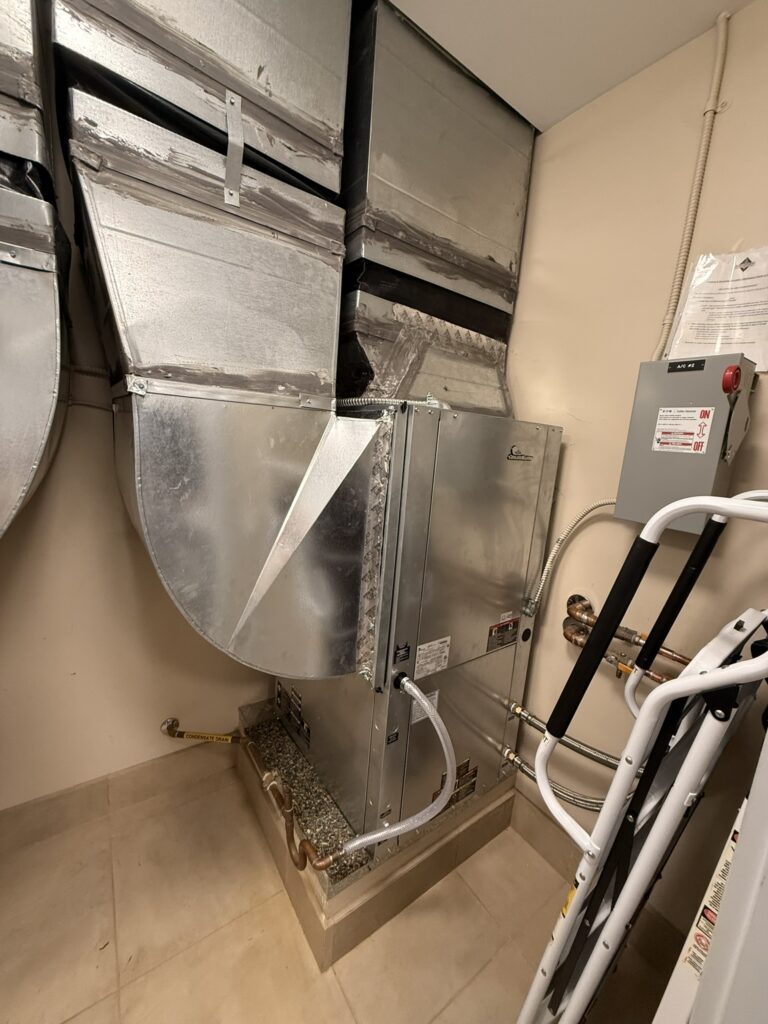
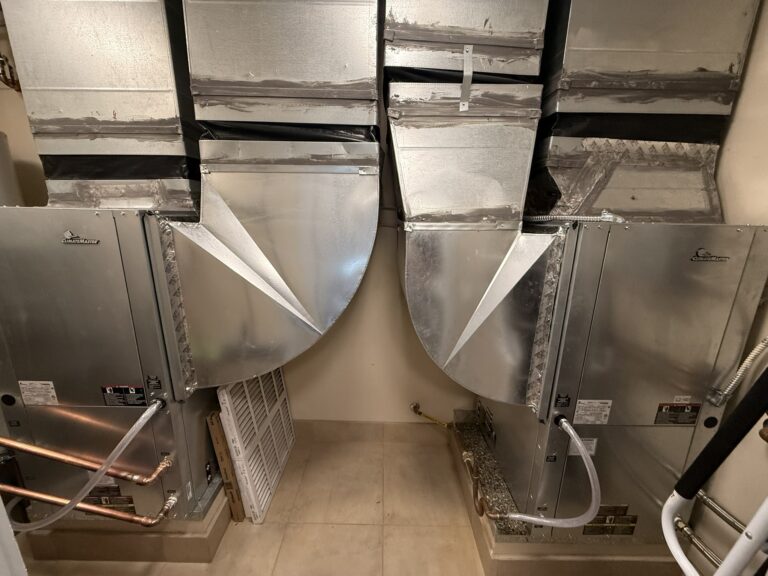
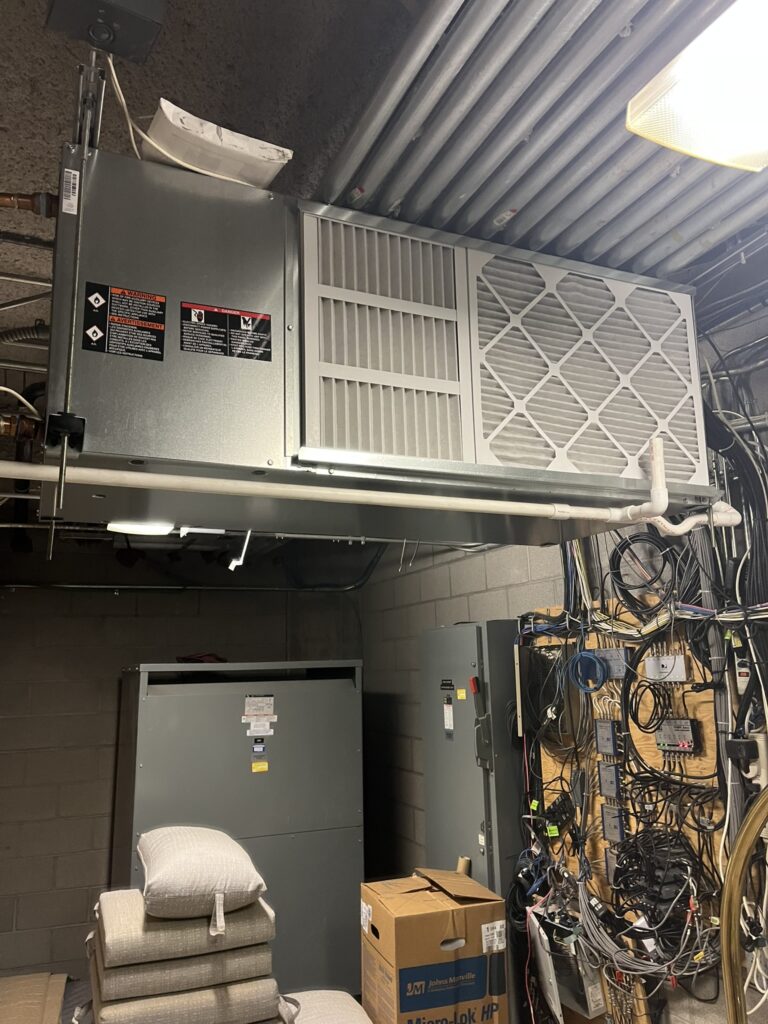
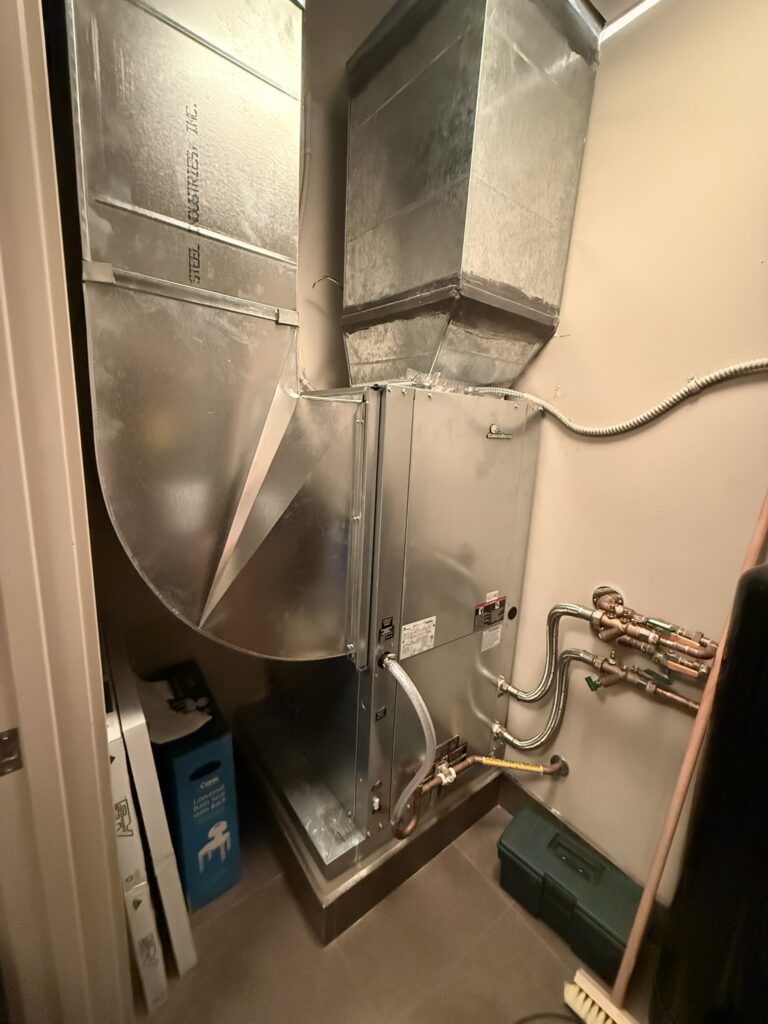
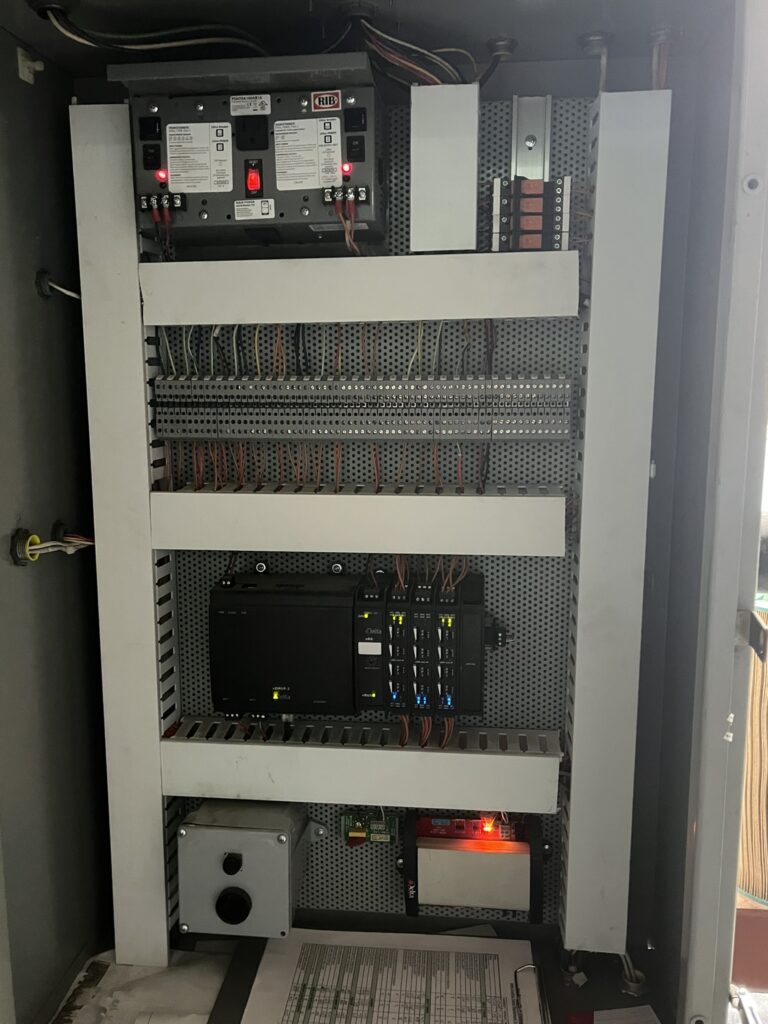
Photos from our own commercial projects across the Phoenix metro — equipment we installed, in buildings we service.
How the job typically runs.
Storage facilities need HVAC work that does not block gates, trap customers in corridors, or shut down the leasing office during peak move-in windows. We book the visit with the site manager, disclose the diagnostic/service-call fee at booking, and credit it as applicable. On arrival, we verify access to roof ladders, electrical rooms, corridor thermostats, unit banks, and any occupied office areas before we start moving through the property.
For a warm corridor complaint, we do not stop at the thermostat. We check equipment operation, airflow, filters, belts where applicable, drains, coil condition, economizer position, return paths, door seals, and obvious envelope losses. If several zones are involved, we separate equipment failure from distribution or building issues so the written quote does not pretend one repair will fix a layout problem.
Office hours are Mon–Fri 8–5, with 24/7 emergency service for failures that cannot wait. After an in-person look, we provide flat-rate written quotes with scopes documented in writing. That matters for ownership groups, regional managers, and Scottsdale operators who need clean records before authorizing rooftop repairs, controls work, or replacement planning.
- 01 Booking, with the diagnostic fee disclosed
- 02 In-person diagnosis with real readings
- 03 Written flat-rate quote before work begins
- 04 The work: repair, install, or maintenance
- 05 Startup, documentation, and warranty handoff
Self storage HVAC work in Scottsdale can involve service-only repairs, like motors, contactors, capacitors, belts, filters, drain clearing, and controls troubleshooting, or larger work that may require permit handling, utility coordination, curb-adapter planning, crane access, and equipment documentation. We identify that during the site visit instead of guessing from photos. Most Scottsdale sites are in SRP territory, while some far-north pockets are APS, and that can affect electrical coordination when equipment replacement is being planned.
Yeti Pros is licensed in Arizona: AZ ROC #363372 · ROC #363423. We document scopes in writing and stand behind our work with a 2-YEAR written workmanship warranty and a 1-YEAR manufacturer parts warranty on repair parts. The Arizona Registrar of Contractors publishes workmanship standards here: ROC minimum workmanship standards PDF.
Pricing, financing & the 10% military & first responder discount.
For Scottsdale storage properties, HVAC cost is driven by access, roof condition, unit size, refrigerant type, control complexity, how many corridors are affected, whether duct or door-seal issues are part of the problem, and whether the repair can be completed without interrupting rentals. A single leasing-office unit is a different job than restoring multiple climate corridors after a package unit failure during summer.
We provide flat-rate written quotes after an in-person look. The diagnostic/service-call fee is disclosed at booking and credited. Financing is available for larger repairs or replacements, and Yeti Pros offers a 10% military, veteran & first responder discount. Phone (520) 556-8929. We come to you; there is no service counter or showroom address.
- 01 Flat-rate written quote after an in-person look
- 02 Diagnostic fee disclosed at booking, credited to the repair
- 03 Financing available on replacements
- 04 2-year workmanship warranty; 1-year manufacturer parts warranty
- 05 10% military, veteran & first responder discount
Why a licensed HVAC contractor matters.
FAQs: HVAC for Self-Storage Facilities in Scottsdale, AZ.
Why are some climate-controlled storage corridors warm while others feel fine?
In Scottsdale storage buildings, uneven corridors usually come from airflow loss, return-air problems, failing rooftop equipment, control issues, or doors that are leaking conditioned air into unconditioned areas. Long hallways make the symptom more obvious because one weak unit or blocked return can affect a whole run of units. We check equipment operation first, then look at filters, coils, drains, belts where applicable, thermostats, duct paths, and visible door-seal problems. The written scope explains whether the issue is a repair, a maintenance problem, a control problem, or a building-condition issue.
Do you service self storage HVAC after hours in Scottsdale?
Yes. Office hours are Mon–Fri 8–5, and Yeti Pros provides 24/7 emergency service when a failure cannot wait. For storage facilities, after-hours service is often used when climate corridors are down during summer, the leasing office has no cooling, or equipment failure affects customer access areas. We coordinate with the manager on gate codes, roof access, alarm procedures, electrical rooms, and any areas where customers may still be moving in or out. The diagnostic/service-call fee is disclosed at booking and credited as applicable.
Can one rooftop unit cool an entire climate-controlled storage building?
Sometimes, but Scottsdale storage layouts vary too much to assume that from the ground. Smaller converted buildings may rely on one or two packaged units, while larger properties use multiple rooftop units and zones for offices, corridors, and support spaces. Capacity depends on corridor length, insulation, sun exposure, door traffic, duct design, return-air paths, and how often exterior doors open during move-ins. We evaluate the actual site before recommending repair, zoning changes, or replacement, then put the scope in writing for the operator or ownership group.
Do you certify climate control for customer storage claims?
No. We service and document HVAC equipment; we do not certify stored property conditions, issue legal opinions, or decide customer claims. For Scottsdale self storage operators, we can inspect the equipment, record operating conditions we observe, document failed components, note visible airflow or access problems, and provide a written repair scope. That documentation can support internal records, but it is not a guarantee about every unit’s contents or a ruling on contract language. Our role is HVAC repair, maintenance, replacement, and clear documentation.
What causes storage HVAC to fail faster in Scottsdale?
Summer roof temperatures, monsoon dust, long runtimes, dirty condenser coils, neglected filters, weak electrical components, and frequent door openings all shorten equipment life. South Scottsdale properties with older converted shells may also have duct and return-air weaknesses that make units run harder. North Scottsdale sites may have newer systems, but premium expectations mean small comfort problems get noticed quickly. Preventive maintenance helps by keeping airflow, coils, drains, electrical components, and controls from drifting until a corridor becomes a tenant complaint.
Can you replace storage HVAC without shutting down the whole facility?
Often, yes, but it depends on roof access, crane placement, electrical work, curb fit, unit location, and which corridors or offices the equipment serves. Scottsdale sites near Old Town, McCormick Ranch, Kierland, and Airpark can have tighter access and customer traffic that needs planning. We look at the site in person, identify the affected zones, coordinate timing with management, and provide a written replacement scope. If temporary operating limits are needed during the work, we document them clearly before the job starts.
Every major brand, serviced and installed.



Phoenix metro: Most days a tech is already working somewhere in the Valley, so same-day appointments happen when the schedule allows. After-hours emergencies are dispatched when a licensed tech is available — a real person answers and tells you the ETA on the call.
Call (520) 556-8929Request an estimate.
No pressure, no door knockers. We look at the HVAC system, tell you what it needs (and what it doesn’t), and put the number in writing.
Need self-storage facilities in Scottsdale? A real person answers.
Other services we run in Scottsdale.
Self-Storage Facilities in nearby cities.
Looking for something else nearby? All HVAC services in Scottsdale