
Phoenix Metro
HVAC for Self-Storage — Phoenix Metro.
- (520) 556-8929
- Serving the entire Phoenix metro — we come to you
- Office: Mon–Fri 8:00 AM – 5:00 PM · 24/7 emergency service
- 2-year workmanship warranty · 1-year parts warranty
- Veteran-owned & operated · residential + commercial
- 23 five-star Google reviews
Commercial jobs we have documented.
Photos from our own commercial projects — equipment we installed, in buildings we serviced.
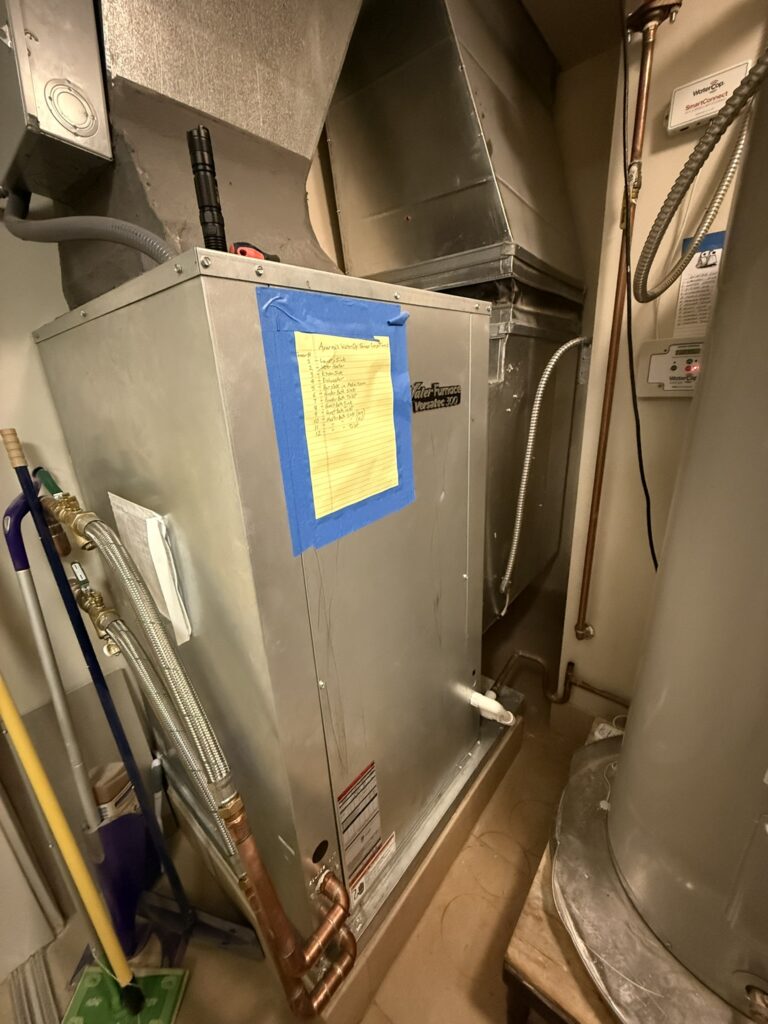
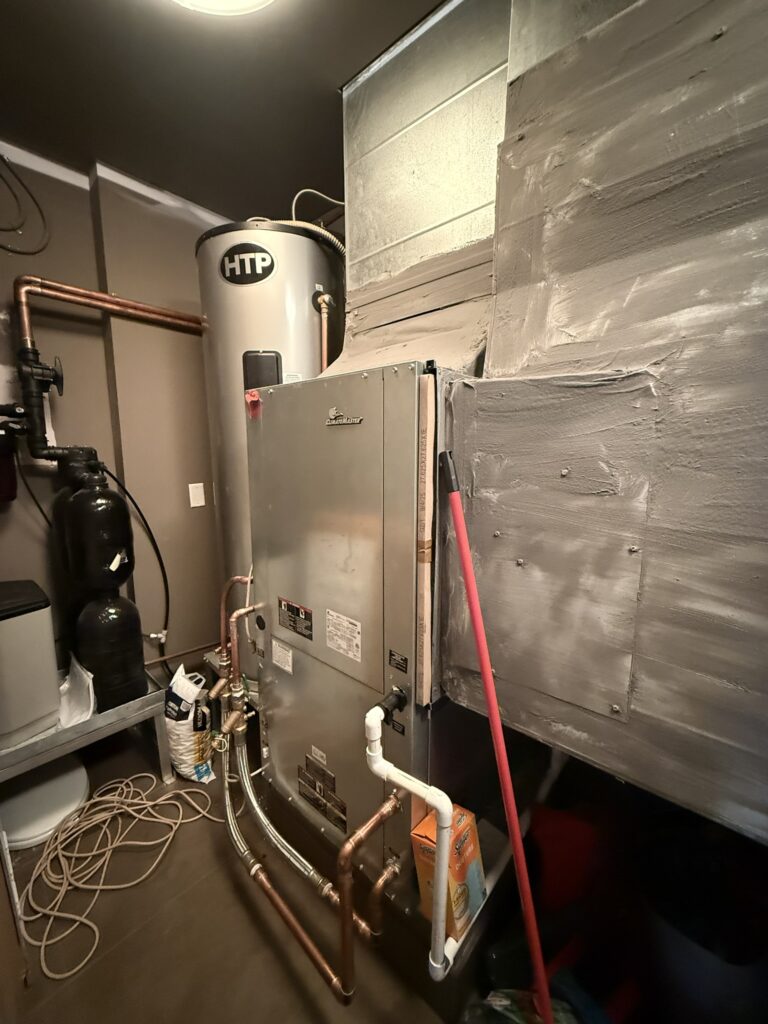
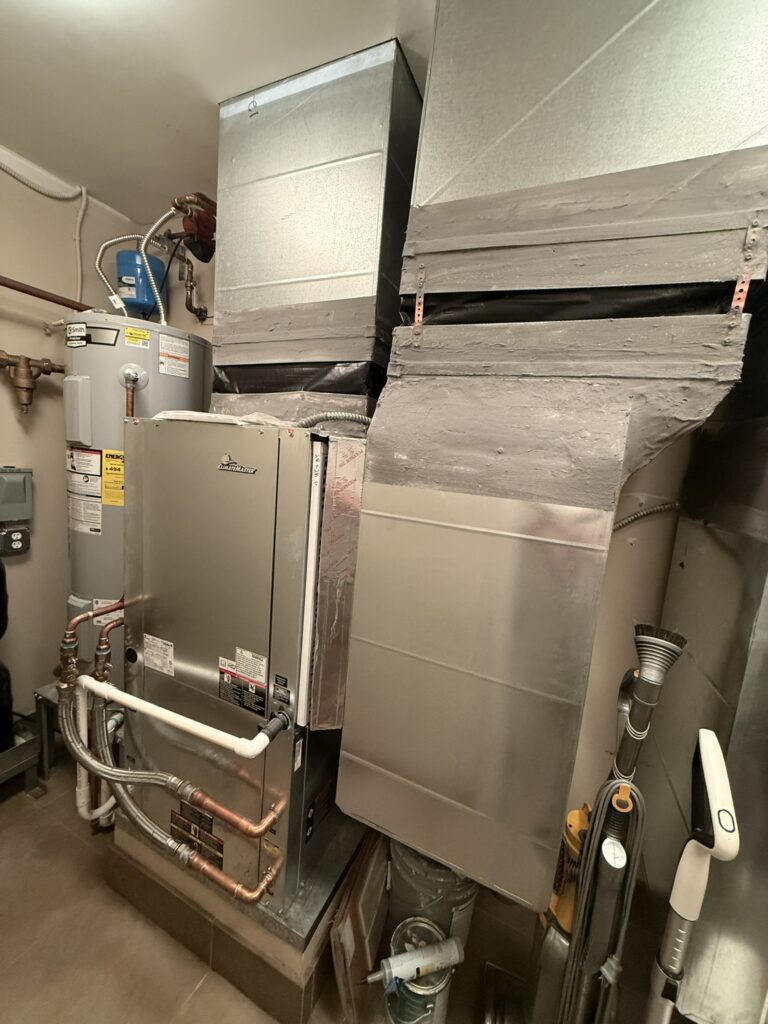
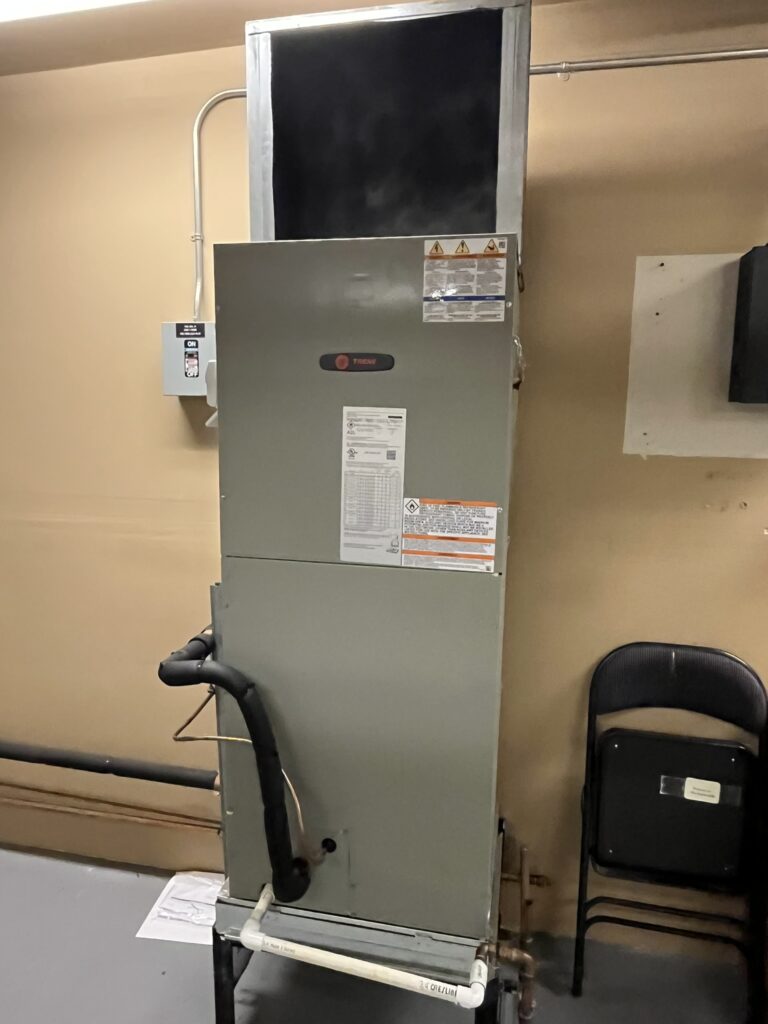
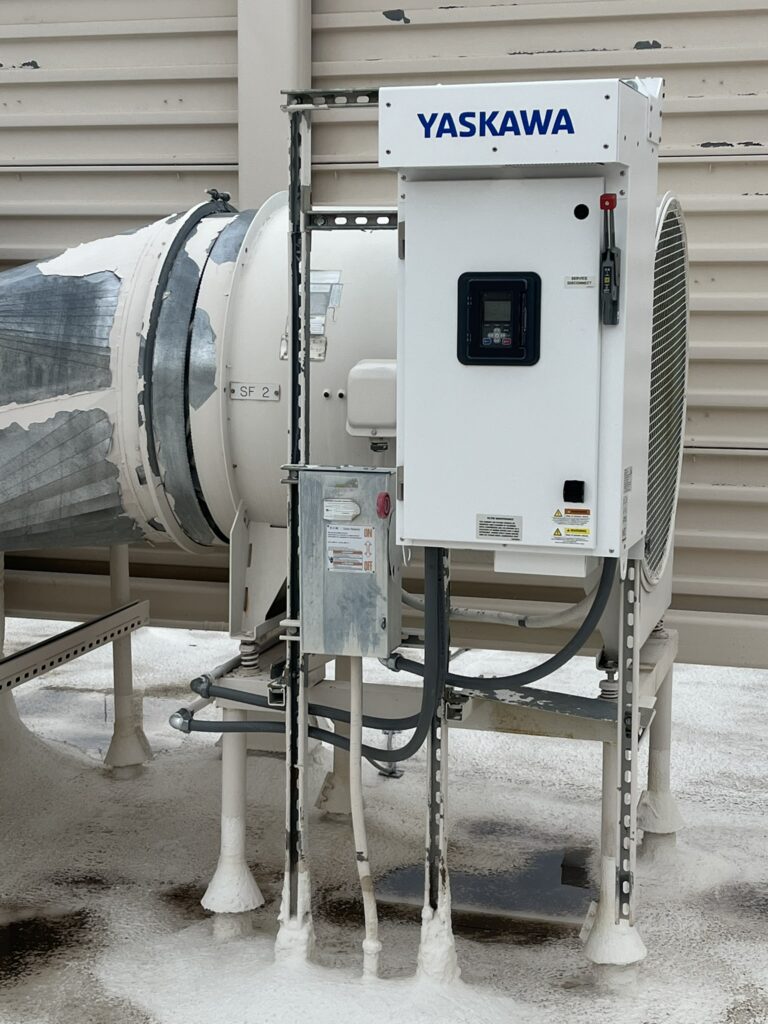
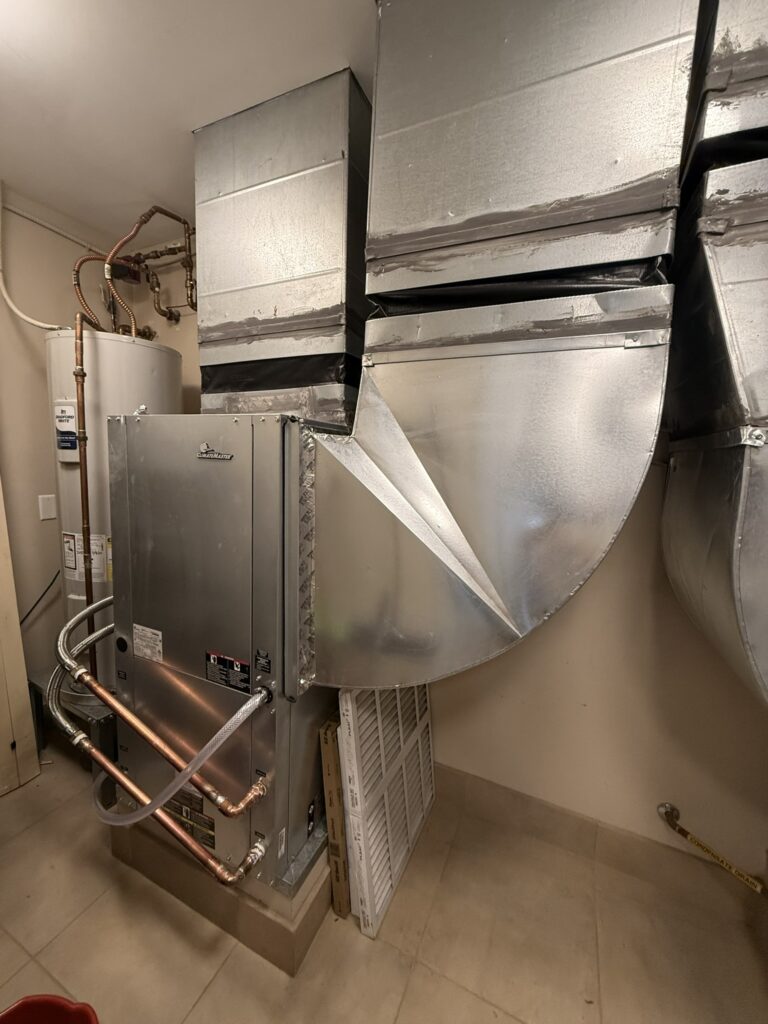
Self-storage HVAC is tied directly to the product you sell: climate-controlled space that customers trust for their belongings. In Phoenix and the Valley, that means conditioning long corridors, protecting office comfort, watching door seals, and keeping rooftop units or split systems from drifting during long summer runtime. A warm hallway becomes a business problem fast.
The HVAC Reality For Self-Storage In The Valley
Climate-controlled storage is not the same as cooling a small office. The conditioned area may include:
- long corridors
- banks of roll-up doors
- interior units
- elevators
- leasing offices
- restrooms
- and sometimes multi-story zones with different sun exposure.
Customers may not know what the HVAC system looks like, but they notice when a hallway feels hot or damp.
In Phoenix and the Valley, climate control has to fight heat gain from:
Doors, loading activity, and a door left open during move-in can dump heat into a corridor quickly.
Heat gain from exterior walls and roof load.
Heat gain from customer traffic.
Worn door seals or gaps around conditioned areas can make a unit run longer without satisfying the space.
The equipment may be working, but the building can still leak away the comfort customers are paying for.
Self-storage facilities often combine different HVAC needs:
The leasing office needs customer-facing comfort.
The climate-controlled storage section needs stable corridor conditioning.
Electrical and IT areas may have their own needs.
A manager’s apartment or workroom, where present, may have separate equipment.
A single complaint can require tracing which unit serves which area before anyone can quote the right repair.
Rooftop package units are common, and they take the same punishment as other Phoenix commercial systems:
115 degree roofs.
Monsoon dust on coils.
Long cooling seasons.
Electrical component stress.
For self-storage, the risk is not just staff discomfort. It is the credibility of a premium storage offering. If climate control is advertised, the facility needs a service process that documents conditions and repairs clearly.
The duty cycle can be severe because storage areas may need steady conditioning for long blocks even when customer traffic is uneven.
A quiet corridor at opening can become difficult after several move-ins, elevator trips, and loading-door cycles. Upper floors can behave differently from shaded lower corridors.
West-facing walls, hot pavement, roll-up doors, and open vestibules can add load faster than the equipment can remove it if the system is dirty, airflow is weak, or seals are worn.
That mix makes diagnosis a building-and-equipment problem, not a thermostat-only problem.
Contracts, Cost Honesty, And Warranty Facts
Self-storage HVAC pricing depends on:
The number of units, roof access, and served areas.
Filters, coil condition, electrical condition, refrigerant work, drainage, and parts availability.
After-hours needs.
Whether the complaint involves equipment or building load.
We provide flat-rate written quotes after an in-person look, with scopes and findings documented in writing. The diagnostic/service-call fee is disclosed at booking and credited toward the repair.
A maintenance plan is often a sensible fit because climate-controlled storage depends on steady operation through long heat seasons. Our commercial maintenance contracts can include scheduled inspection of:
RTUs or split systems.
Coils, filters, drains, electrical components, and belts where applicable.
Written findings for ownership or regional review.
For ownership groups and regional managers, the value is consistency. A maintenance record can show:
Which zones have repeated complaints.
Which units are aging.
Where drains need follow-up.
Whether failures are clustering around heat, monsoon dust, or high-use access points.
That information helps separate immediate repair work from facility corrections and planned maintenance without relying only on customer complaints.
Yeti Pros is veteran-owned & operated. AZ ROC #363372 · ROC #363423. Our work is held to the AZ ROC Minimum Workmanship Standards.
Workmanship Warranty
We provide a 2-YEAR written workmanship warranty.
Parts Warranty
Repair parts carry a 1-YEAR manufacturer parts warranty.
Financing is available, and we offer a 10% military, veteran & first responder discount.
How We Run Service For Self-Storage Facilities
Yeti Pros is a veteran-owned & operated commercial HVAC contractor serving self-storage facilities across Phoenix and the Valley. We are a service-area business with no street address, so we come to you.
Office hours are Mon-Fri 8-5, with 24/7 emergency service for no-cooling and urgent commercial failures.
We begin by identifying the affected area and confirming access:
Is the issue in the office, a corridor, an upper-floor climate zone, a single wing, or all conditioned storage? That matters because a facility may have several units and thermostats.
We work with the manager or facility lead to confirm access, roof routes, electrical panels, locked areas, and the spaces customers are reporting.
Our diagnosis looks at the equipment and the conditions around it. Common findings include:
Dirty coils and clogged filters.
Weak blower operation, failed capacitors, and contactor issues.
Thermostat problems and low airflow.
Refrigerant circuit trouble and condensate drain problems.
Doors or seals that are making the mechanical system fight the building.
We service HVAC; we do not certify storage conditions, but we can document observed equipment performance and visible service factors in writing.
For repair calls, our commercial AC repair process is direct:
Inspect in person.
Document findings.
Explain the repair scope.
Provide a flat-rate written quote.
The diagnostic/service-call fee is disclosed at booking and credited toward the repair. If a unit is limping because of age, repeated failures, or poor heat rejection, we will state what we can verify and what needs planning.
Onsite work is organized around access and operations. Storage facilities may have:
Customer gates, elevators, roof hatches, and locked electrical rooms.
Security procedures.
Active move-ins happening at the same time as service.
We ask which routes are available, whether a lift or ladder location will block traffic, and whether the affected corridor can be checked without interfering with customers. If a thermostat or return is inside a secured area, that access has to be coordinated before the diagnosis can be complete.
We also look for timing patterns.
A corridor that is acceptable in the morning but warm after lunch may point toward roof heat, customer traffic, or a unit that loses capacity under peak conditions.
A wing that warms after loading-door activity may need both mechanical checks and visible envelope notes.
A unit that runs constantly without satisfying may have airflow restriction, dirty coils, electrical weakness, refrigerant circuit concerns, or a building load that is outrunning what the equipment can deliver in its current condition.
For planned maintenance, self-storage facilities need special attention to:
Coils and drains.
Airflow and filters.
Thermostat accuracy.
The effect of high-use access points.
A climate-controlled hallway with poor airflow can create repeated complaints even when the office feels fine. Written notes help managers show ownership groups, boards, or regional managers what was checked and why a repair or correction was recommended.
Decision Points For Self-Storage HVAC
Storage managers need to know whether a complaint is a unit failure, a building condition, or an access issue. The table below is a practical starting point for prioritizing service calls and deciding what deserves immediate attention.
| Symptom Or Situation | What It Usually Means | Priority |
|---|---|---|
| Climate-controlled corridor feels warm | RTU or split system may be underperforming, or doors and seals may be adding load | High priority because it affects the paid storage product |
| Office is comfortable but storage wing is hot | Separate equipment, zoning, thermostat, airflow, or served-area mismatch may exist | Trace equipment to area before approving repairs |
| Unit runs constantly and never satisfies | Dirty coil, weak component, refrigerant issue, poor airflow, or envelope load may be present | Diagnose before the unit fails during peak heat |
| Water appears near ceiling or corridor | Condensate drain, pan, insulation, or frozen-coil thaw may be involved | Urgent because water can disrupt access and finishes |
| Complaints rise after heavy move-in days | Door openings, loading traffic, and heat gain may be overwhelming the zone temporarily | Check equipment and document building factors |
Phoenix-Metro Conditions That Matter For Self-Storage
Self-storage buildings in Phoenix and the Valley take heat from every direction:
Heat from the roof and walls.
Heat from pavement.
Heat from open loading areas.
Heat from repeated door cycles.
The HVAC system has to overcome not only ambient temperature but also customer behavior the manager cannot fully control. A well-running unit can still struggle when doors stay open during long move-ins, which is why equipment condition and building condition both need attention.
Rooftop equipment is exposed to roof heat that can reach brutal levels through the summer. Impacts include:
Condenser coils collect dust.
Fan motors work hard, electrical parts cycle heavily.
Weak components show up when the building needs cooling most.
Monsoon dust can coat coils and filters, then humidity increases condensate load.
A dirty coil or restricted drain may not look dramatic from the ground, but it can drive real service calls.
Monsoon conditions can be especially noticeable in climate-controlled storage because the building may already be fighting long runtimes. Effects include:
Dust reduces heat rejection.
Filters load faster.
Higher humidity can increase the amount of condensate the system has to remove.
If drains are restricted or pans are stressed, water can appear in places that create access, finish, and customer-service problems.
If coils are dirty, the unit may run longer while the corridor still feels heavy or slow to recover.
Corridor conditioning also has a different feel than office comfort. Customers may walk from a hot parking area into a conditioned hallway and expect a clear difference.
If the transition feels weak, the facility’s climate-controlled offering gets questioned.
We do not promise a specific storage outcome. We inspect the HVAC equipment, identify service issues, and document what we observe so managers can make facility decisions with facts.
Utility demand matters in this category because long runtime can become normal without being healthy.
If an RTU is dirty, short on airflow, or fighting bad seals, it may run longer while delivering less comfort.
We will not invent performance savings. We will tell you what is dirty, failing, restricted, worn, or ready for follow-up based on an in-person look.
Multi-story facilities and long buildings need extra attention to served areas. One thermostat may not tell the story of the far end of a corridor, and one comfortable office does not prove the storage wing is performing. We look for practical evidence:
Which unit is calling.
Whether the blower is moving air.
Whether the coil is clean enough to reject heat.
Whether filters are loaded.
Whether supply air reaches the complaint area.
Whether doors or seals are adding obvious load.
That approach keeps the conversation grounded in what can actually be observed and repaired.
Straight Answers
Can you service HVAC for climate-controlled storage units?
Yes. We service the HVAC equipment that conditions climate-controlled storage areas, including rooftop units and split systems where applicable. We inspect the mechanical system, accessible airflow, filters, coils, drains, controls, and electrical components. We document findings in writing so managers and ownership can see what was checked and what repair scope is being recommended.
Why is one storage corridor warm while another is fine?
Different corridors may be served by different equipment or zones. The cause can be an underperforming unit, thermostat issue, airflow problem, door condition, sun load, or customer traffic pattern. We trace the served area, inspect the HVAC equipment, and document whether the issue appears mechanical, operational, or a combination of both.
Do door seals and loading doors matter to HVAC service?
Yes, because the HVAC system has to condition the air the building actually holds. Worn seals, open loading doors, and frequent move-ins can add heat load and make a healthy unit look weak. We can point out visible conditions affecting performance, then separate those notes from repair findings on the mechanical equipment.
How do we book self-storage HVAC service?
Call (520) 556-8929 or use contact. We come to you across the Phoenix metro, disclose the diagnostic/service-call fee at booking, inspect the equipment in person, document the findings, and provide a flat-rate written quote for the repair scope. 24/7 emergency service is available.
Permits and inspections
Most repairs are ordinary service work; bigger scopes can involve city permitting. We perform our work to code, pull the permits our scope requires, and put what we did in writing.
What's covered
Workmanship is covered for two full years, in writing, and repair parts carry a 1-year manufacturer parts warranty — we document installs and repairs so those claims stay simple to make
HVAC for Self-Storage — Phoenix Metro, city by city.
Every city below has its own local page for this industry — local FAQs, utility territory, and dispatch reality included.
Why a licensed HVAC contractor matters.
Commercial HVAC, industry by industry.
Every major brand, serviced and installed.

Phoenix metro: Most days a tech is already working somewhere in the Valley, so same-day appointments happen when the schedule allows. After-hours emergencies are dispatched when a licensed tech is available — a real person answers and tells you the ETA on the call.
Call (520) 556-8929Request an estimate.
No pressure, no door knockers. We look at the HVAC system, tell you what it needs (and what it doesn’t), and put the number in writing.