
Phoenix Metro
HVAC for Laundromats in Phoenix.
- (520) 556-8929
- Serving the entire Phoenix metro — we come to you
- Office: Mon–Fri 8:00 AM – 5:00 PM · 24/7 emergency service
- 2-year workmanship warranty · 1-year parts warranty
- Veteran-owned & operated · residential + commercial
- 23 five-star Google reviews
Commercial jobs we have documented.
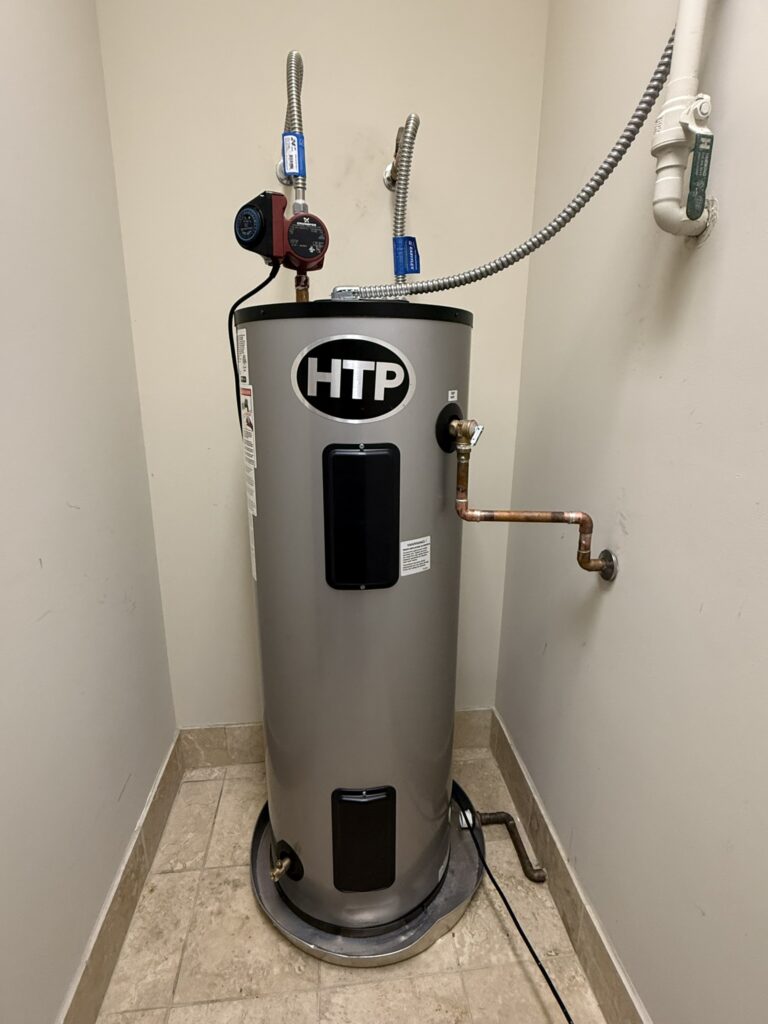
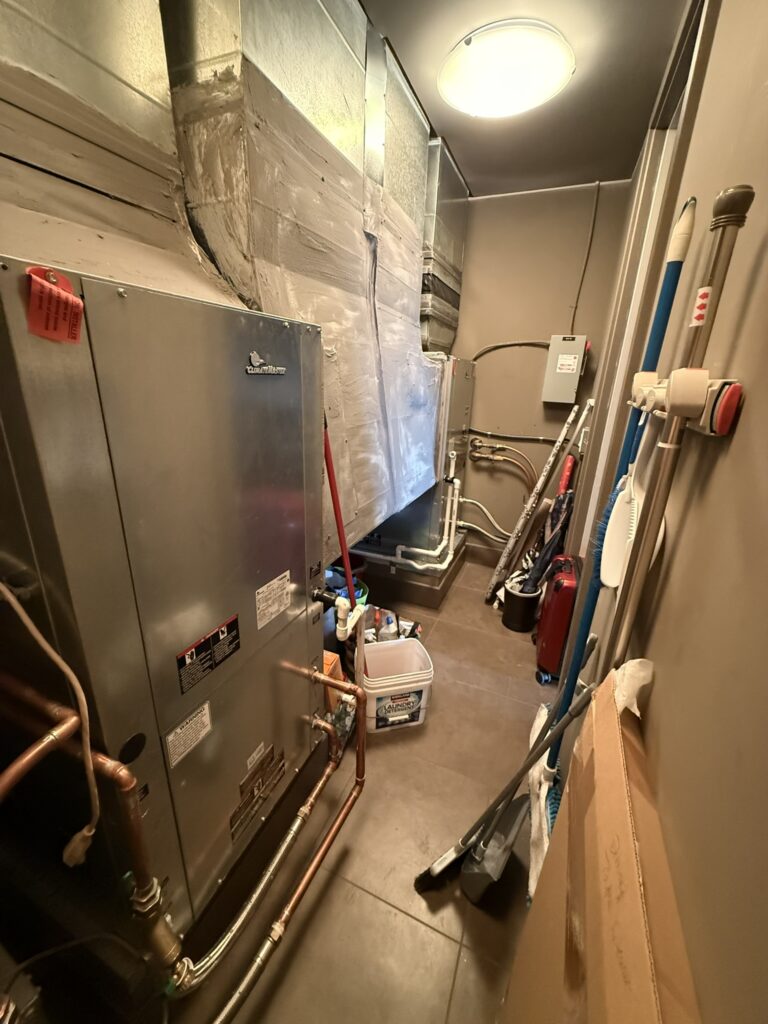
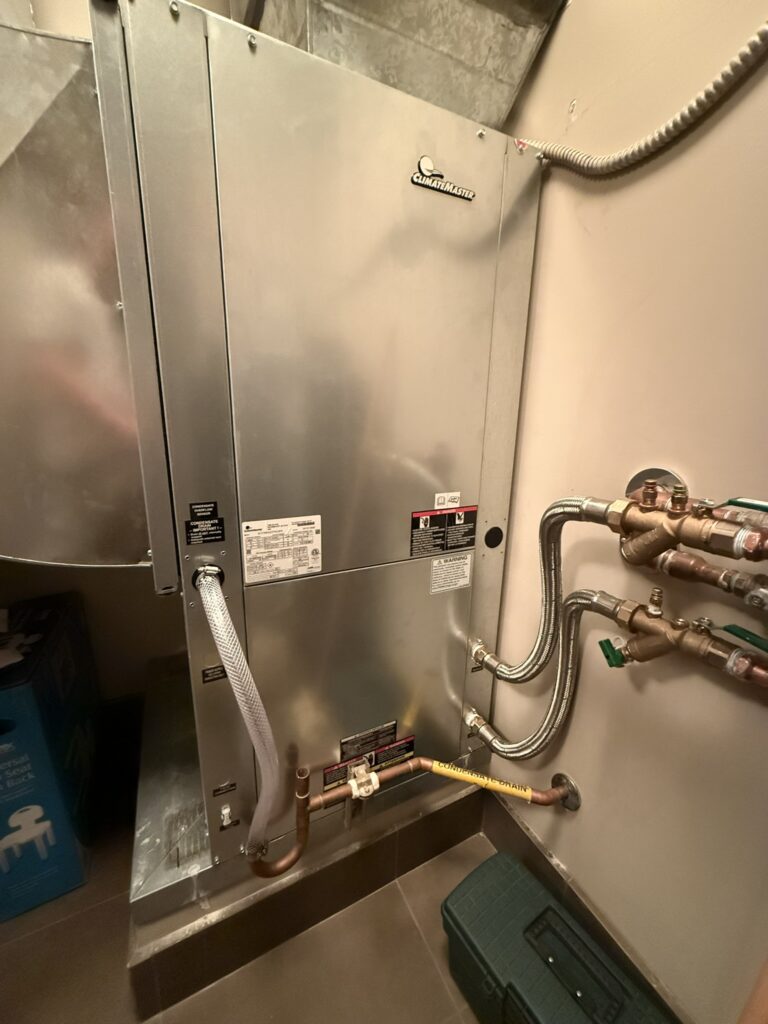
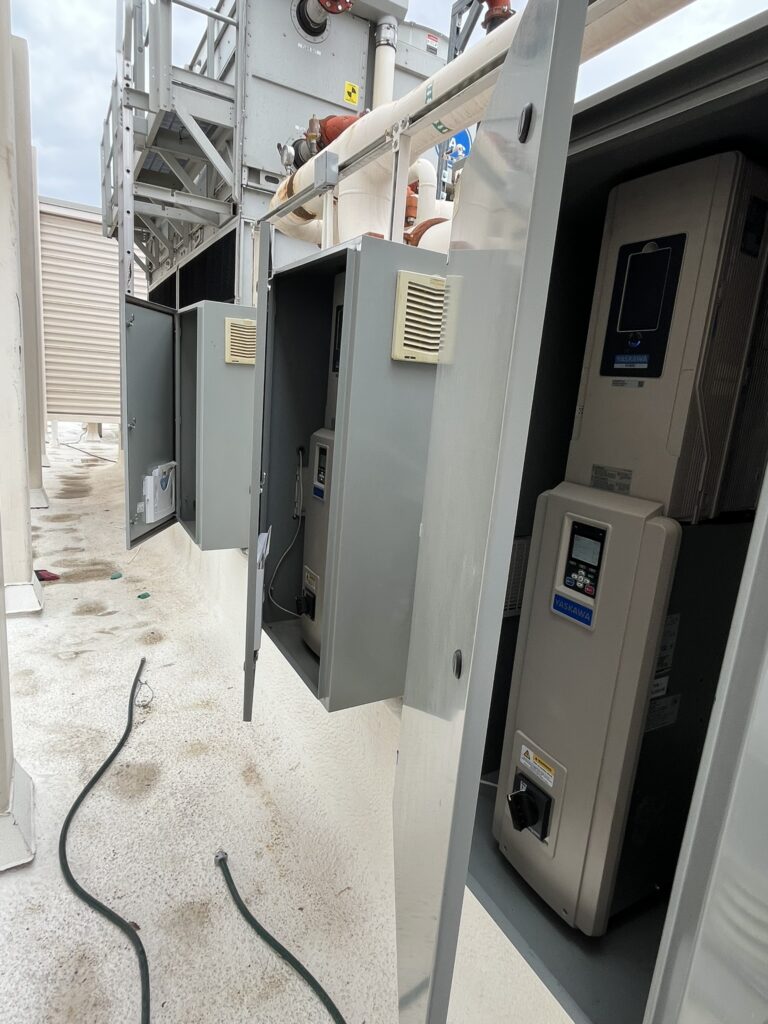
Photos from our own commercial projects — equipment we installed, in buildings we serviced.
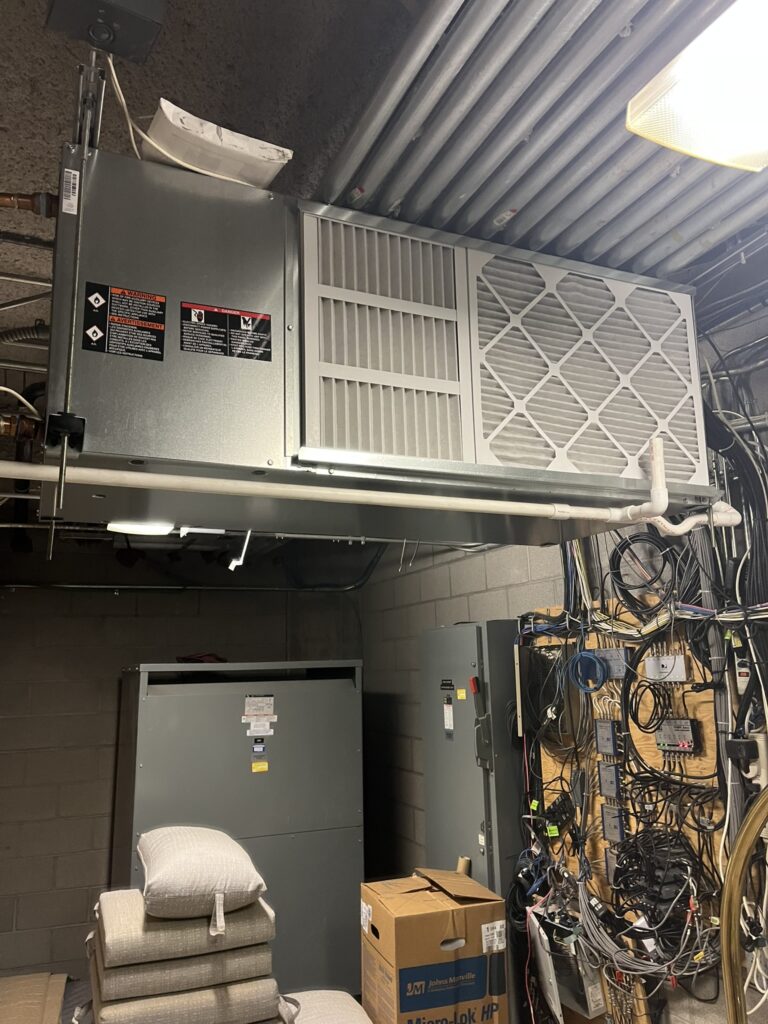
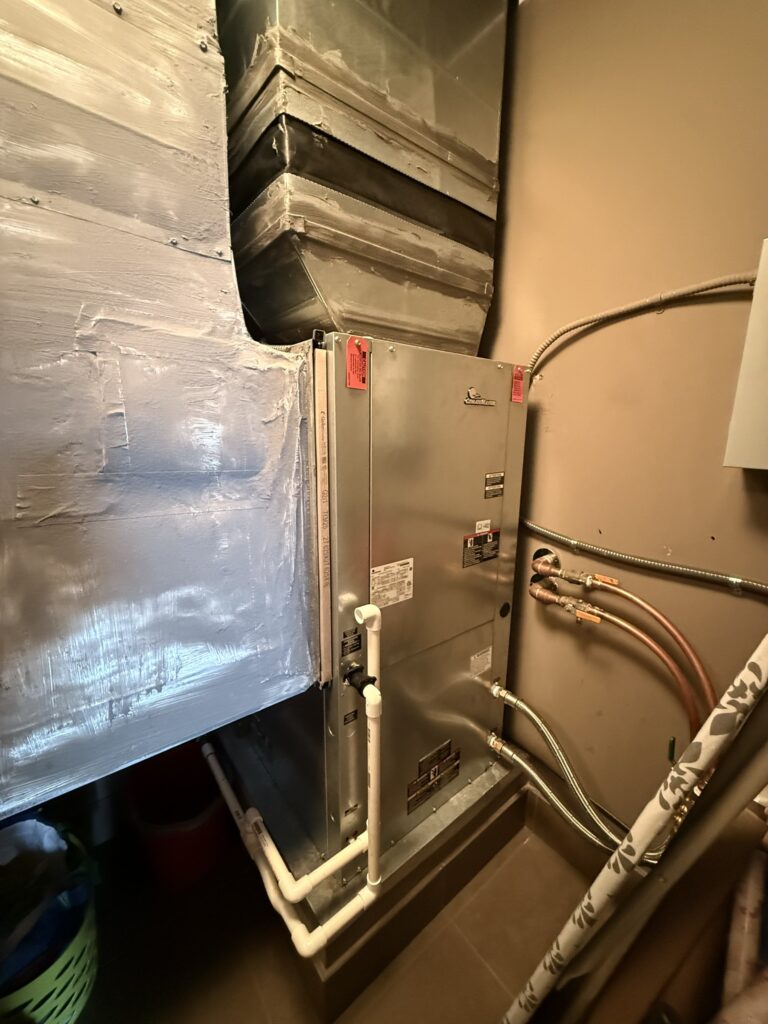
A laundromat manufactures its own weather. A wall of dryers throws off heat for sixteen hours a day, every wash cycle releases moisture into the room, and that indoor climate sits on top of a Phoenix summer that needs no help.
Laundromat HVAC in Phoenix is really three interlocking problems — heat removal, humidity control, and make-up air. Getting any one of them wrong shows up as longer dry times, miserable customers, and machines aging faster than they should.
Yeti Pros keeps Valley laundries balanced, breathable, and survivable in July. Veteran-owned and operated, licensed under ROC #363372 and ROC #363423. If the store is climbing right now, (520) 556-8929 gets a live person, day or night.
A heat and humidity factory, by design
No other small business concentrates this much thermal chaos per square foot. Dryers are heat machines that vent through the roof or wall while radiating into the room; washers dump humidity with every fill, spin, and door-swing of damp laundry; water heaters run hard all day; and a folding area full of warm, fresh loads adds its own contribution. Comfort cooling designed for an ordinary retail suite simply loses this fight.
Laundromat HVAC has to be engineered around the equipment, considering realistic heat and moisture loads.
Airflow must deliver conditioned air where people actually stand, rather than where the ceiling grid was easy.
Capacity must be honest enough to hold the room on a 115°F afternoon with thirty machines running.
Dryer exhaust cleaning: lint is fuel, and it’s costing you gas
Lint packed into shared exhaust runs is a fire load sitting inside your walls and an efficiency tax on every cycle. Restricted ducts force dryers to run longer and hotter to move the same moisture, which shortens machine life at the same time it lengthens dry times. Deep-cleaning those runs is close kin to the commercial exhaust cleaning we perform for Valley kitchens, involving:
Ensuring proper containment during the cleaning process.
Performing full-length duct cleaning rather than just a shop-vac at the termination.
Checking booster-fans and terminations so the entire exhaust path stays clear.
Providing written documentation with photos your insurance carrier will be glad to see.
Put it on a schedule matched to your volume instead of waiting for the day a duct fire or a failed inspection sets the schedule for you.
Make-up air: the number that sets your dry times
Every running dryer pushes air out of the building, and that air has to come from somewhere. Provide it deliberately, through make-up air equipment, and the dryers breathe freely. Fail to provide it and the building goes negative, leading to:
Dryers starve for airflow, causing dry times to stretch and gas burners to run less efficiently.
Exterior doors pull hard and slam due to negative pressure.
The shortfall gets sucked through every gap in the envelope as unfiltered 110°F outdoor air your cooling then has to fight.
Customers experience all of this as one thing — machines that take forever — and in laundromat economics that means fewer turns per machine per day, refund arguments at the change desk, and regulars drifting to the store down the road. We test building pressure, measure what your dryer bank actually demands, and repair or right-size the make-up air so the room breathes in balance.
July in the folding area, where customers wait
Laundromat customers don’t drop in — they stay, often for more than an hour, folding towels ten feet from a bank of running dryers in the hottest month of the year. Whether that hour is tolerable decides whether they come back, and no vending machine or free Wi-Fi compensates for a folding table at 90°F. We concentrate cooling where the waiting actually happens:
Supply air is aimed at folding areas and seating.
Returns are positioned so dryer heat leaves the room instead of drifting across it.
Ceiling fans do the cheap work air conditioning shouldn’t carry alone.
Fast commercial AC repair is provided when the comfort side fails during the exact weeks your store is fullest.
Summer is when everyone’s laundry doubles — it’s your season, and the building has to survive it.
Humidity eats buildings and equipment
A chronically humid laundry corrodes from the inside out, impacting:
Rust blooms on machine cabinets and bolt heads; control boards fail early in the damp; hinges and bearings wear fast.
Ceiling tiles sag, and a sour smell customers notice before owners do develops.
Evaporator coils and drain pans work overtime, and rooftop units ingest lint and monsoon dust into condensers already strained by summer.
Managing indoor moisture is equipment protection as much as comfort, achieved through:
Exhaust and make-up air are kept in balance.
Cooling genuinely dehumidifies because its charge and airflow are correct.
Rooftop unit service keeps coils clean and drains flowing.
The cheapest corrosion repair is the humidity that never happened.
Unattended hours: who notices when it fails?
Plenty of Valley laundromats run unattended for part or all of the day, which means an air conditioner that quits at 5 a.m. greets the first customer as a sauna — and greets every customer after that as a lost sale. You can’t staff your way out of that, but you can instrument it with:
Connected thermostats alert your phone when the store drifts out of range.
Humidity alarms are placed in corners that stay damp.
A 24/7 emergency line ensures a real person answers and dispatches when an alert turns out to be real.
On the prevention side, scheduled maintenance visits catch weak capacitors, dirty coils, and tired motors before they pick their moment — and they always pick summer.
Wash-and-fold changes the math
Add a wash-and-fold or delivery service and the building stops being self-serve retail and becomes a production floor, requiring:
Staff are on shift for hours at a stretch, processing volume the self-serve side never sees.
A counter area needs to be genuinely comfortable rather than merely survivable.
Productivity falls off fast in a hot, humid workroom, and replacing a good employee costs more than duct corrections do. We treat attended service areas as their own zone, implementing:
Dedicated supply air for the work zone.
Thermostat placement is away from the dryer heat plume.
Airflow keeps the work counter comfortable without freezing the customers up front.
How we work with Phoenix laundromat owners
One set of terms applies across the metro, from Avondale to Mesa to Queen Creek.
The trip fee is stated before we roll and applied against the repair when you approve the quote.
Pricing is flat-rate and put in writing before work begins.
Refrigerant is handled by EPA 608-certified technicians with full documentation.
Behind our own warranty stands Arizona’s contractor baseline, the ROC Minimum Workmanship Standards, and our work is built to beat it.
Stores on planned maintenance agreements get priority dispatch and a running service record on every asset.
As a veteran-owned commercial HVAC contractor, owners and employees who served get a 10% military, veteran & first responder discount on HVAC work at their own homes.
Laundromat HVAC questions Phoenix owners ask
Dry times got longer on every machine at once. Dryers or air?
When one dryer slows, suspect the dryer. When they all slow together, suspect the air path: lint-restricted exhaust runs, a failed booster fan, or a make-up air shortfall starving the whole bank. We test building pressure and duct flow to pinpoint it — the fix often costs far less than the revenue those slow cycles were burning.
Why does our front door slam and whistle?
The building is running at negative pressure — the dryers are exhausting more air than the building is being supplied. Beyond the door drama, that means hot, unfiltered outdoor air is being pulled through every crack while your cooling fights a losing battle. Make-up air repair or right-sizing solves it.
How often should the dryer exhaust ducts be cleaned?
It depends on machine count, run hours, and duct layout — a high-volume store with long shared runs loads up far faster than a small store with short dedicated vents. We inspect, show you photos of what’s actually in the duct, and set a schedule based on how quickly your system accumulates lint.
The store is unattended overnight. How do we catch a failure before customers do?
Connected thermostats with temperature and humidity alerts cover most of it — your phone knows the store drifted out of range before the first customer does. Pair the alerts with our around-the-clock line and a 5 a.m. failure becomes a 5:15 service call instead of a lost day.
Would evaporative cooling work for a laundromat here?
Usually not well. Evaporative cooling adds moisture to the air, and a laundromat already has a humidity problem — during monsoon weeks it can make the store feel worse, not better. Refrigerated cooling with balanced make-up air handles both the heat and the moisture. We’ll assess your building rather than guess.
Rust is showing up on machine cabinets. Is that an HVAC issue?
Often, yes. Chronic indoor humidity is the usual culprit, and it points to exhaust, make-up air, or dehumidification that isn’t keeping up. Correcting the moisture balance protects every machine on the floor — plus the control boards and bearings you can’t see corroding.
The thermostat reads 76°F but the folding area feels hot. Why?
The thermostat is telling the truth about its own wall, not about a folding table sitting in a dryer heat plume with damp air around it. Humidity and radiant heat make 76°F feel far warmer. Airflow redirection, return placement, and moisture control usually fix the felt temperature without touching the setpoint.
Keep the machines turning and the folding tables bearable — call (520) 556-8929 for laundromat HVAC across the Phoenix metro. Veteran-owned, ROC #363372 · ROC #363423.
Permits and inspections
Most repairs are ordinary service work; bigger scopes can involve city permitting. We perform our work to code, pull the permits our scope requires, and put what we did in writing.
What's covered
Workmanship is covered for two full years, in writing, and repair parts carry a 1-year manufacturer parts warranty — we document installs and repairs so those claims stay simple to make
Why a licensed HVAC contractor matters.
Commercial HVAC, industry by industry.
Every major brand, serviced and installed.

Phoenix metro: Most days a tech is already working somewhere in the Valley, so same-day appointments happen when the schedule allows. After-hours emergencies are dispatched when a licensed tech is available — a real person answers and tells you the ETA on the call.
Call (520) 556-8929Request an estimate.
No pressure, no door knockers. We look at the HVAC system, tell you what it needs (and what it doesn’t), and put the number in writing.